
There are several kinds of headstones you can select as a memorial for a loved one who has passed away. Headstones can be made of several materials from granite, marble, bronze, sandstone, fieldstone, iron, slate, and even wood.
While most headstones are made of stone, the goal of all tombstones, regardless of size, design, or substance, is to commemorate individuals whose graves they mark for future generations. The term “headstone” refers to any memorial monument on a resting site, regardless of whether your loved one was buried or cremated.
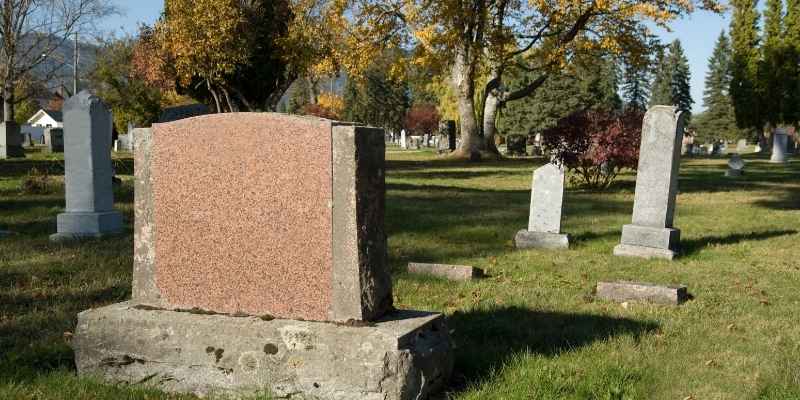
Tombstone materials are inscribed with the individual’s name, birth date, death date, whose grave they mark, and sometimes a short verse, prayer, or religious texts.
This article answers the question, “What are gravestones made of?” and outlines various materials used in making gravestones.
What You Should Consider When Choosing Headstone Material?
There’s more to selecting a headstone than picking the first one that appeals to you or the first reasonably priced one. If you are trying to figure out how to choose the perfect headstone, there are a few things to consider: the material, carvability, price, quality, size, and the cemetery.
Some cemetery’s regulations cover gravestone materials, headstone design, personalization, and even color.
Keep in mind that you should verify with the cemetery to see if what you desire is allowed under their rules. If it doesn’t, you’ll have to adjust the sort of headstone memorial you purchase, or you might want to look for a different cemetery.
What Are Headstones Made Out Of?
The material you choose for a headstone is determined by various criteria, including personal and design preferences. Some materials are better suited to intricate, detailed carvings, while others are better suited to simpler patterns.
Any headstone is intended to be a long-lasting legacy to a much-loved individual, so choosing a material that will last for generations is essential. Granite and marble are two of the hardest and most durable materials for headstones. Granite memorials, in particular, will resist the elements for many years.
Granite-only memorials are common in most traditional cemeteries, as the stone is long-lasting, comes in a wide range of patterns, colors and is easily personalized. Bronze has recently gained popularity as a memorial alternative. It’s gradually becoming a good runner-up in the market since it is a beautiful yet durable material with a wide range of customizing options.
Here’s a breakdown of various headstone materials.
Type of Headstone Materials
1. Granite Stone
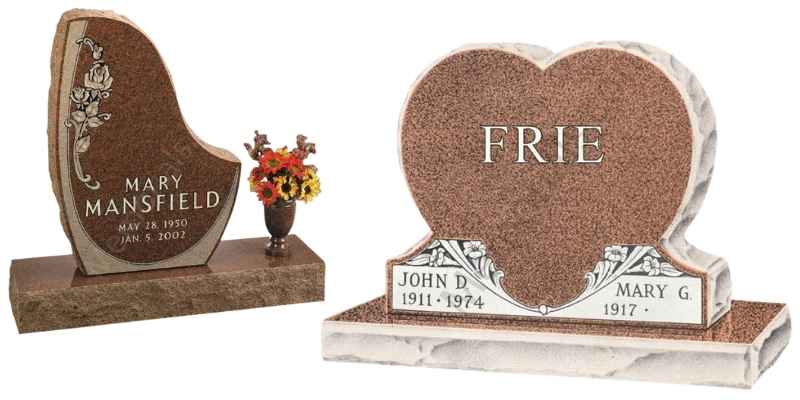
Granite Headstones have been manufactured for centuries, and granite remains the most popular headstone material. People began using granite for memorializing their loved ones because they discovered that other stones, like marble and sandstone, were too fragile and would wear quickly.
Because of its improved durability and aesthetic appeal, granite is amongst the most generally accepted materials for building headstones and burial markers around the world. Granite is a strong natural stone that’s of various colors, from tropical green to jet black, blue pearl, classic grey, light pink, mountain red, and others.
The name “granite” comes from “granum” a Latin word, that means “grain,” and refers to the massive crystal grains observed in this rock. It’s an igneous rock made up of four different minerals; quartz, mica, feldspar, and, in most cases, hornblende.
The rock is formed as lava cools slowly beneath the urn’s surface. Workers use several procedures, including blasting, drilling, and sawing, to extract big granite blocks from the quarries. The granite blocks are then transported to factories, where they are cleaned, polished, and sculpted for various uses, including headstones.
Why Is Granite (Igneous rock) Used for Grave Markers?
Granite can survive high pressure, temperatures, snow, rain, climate fluctuations, sleet, and salt because of its increased strength. It not only withstands the elements and maintains its shape, but it also (and more crucially) keeps inscribed information for a much more extended period than its softer-stone competitors.
Granite stone has long been regarded as one of Earth’s most gorgeous natural stones due to the wide range of hues and patterns available, and as a result, it has been used to construct many of the world’s most elegant structures; in addition, to endless numbers of headstones and tombstones. Its variety in terms of available design options makes granite a top choice for most skilled memorial makers. Granite has been employed in timeless and well-known masterpieces by artists and builders from most of the world’s most famous nations, including Egypt and the Ancient Greeks.
Igneous stone granite is also one of the most cost-effective memorial materials, which is why some church cemeteries only permit granite headstones to keep the cemetery’s uniform appearance.
Other Types Of Tombstone Materials
2. Bronze Grave Markers
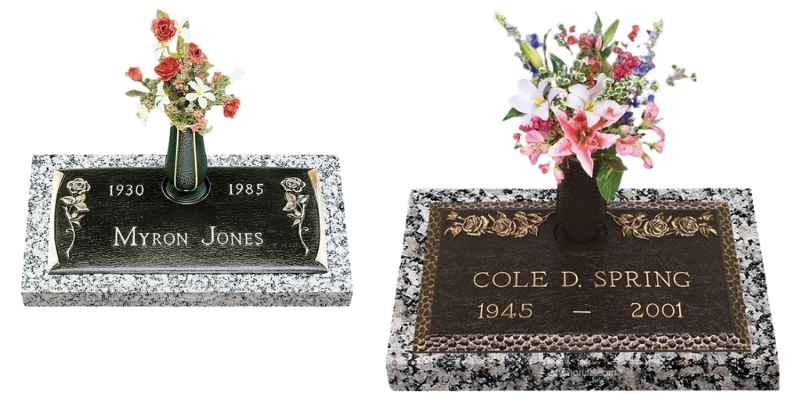
Bronze, a copper alloy commonly employed in manufacturing weapons and tools, gives beautiful decoration to headstone designs. This isn’t a stone in the traditional sense (obviously). It is, nevertheless, a popular choice for burial markers, ranging from flat and ground-level to statuary-level markers. Flat bronze plaque are often placed on top of granite or, in some cases, concrete base grave markers.
While bronze is valued for its weather resistance and durability, it develops a green patina that is not to everyone’s liking. Many treatments and lots of elbow grease are required to restore it to its original luster.
3. Marble
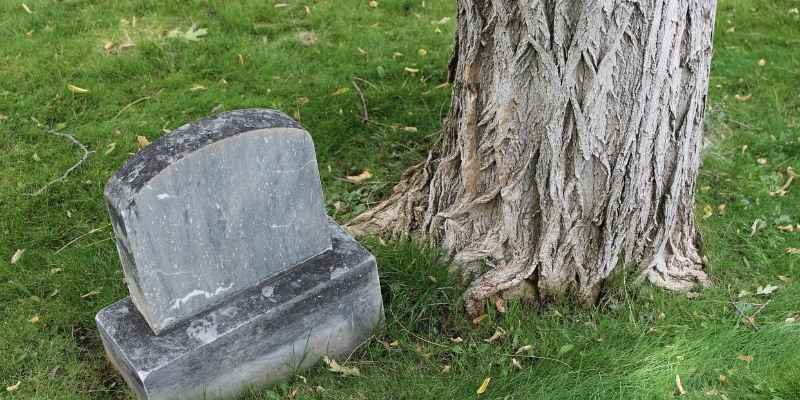
Marble is a “matured” limestone. To put it another way, marble is limestone that has been solidified. The heat that changes limestone into marble removes all traces of marine fossils from the new crystalline matrix. From the 1850s to around the 1900s, marble was the preferred stone in the United States. It wasn’t pricey at the time and could be found all over the grounds in the older sections of most cemeteries.
Adding an angel or other highly carved marble statue to a grave was fashionable. Because it’s a softer stone than granite, it’s considerably easier to carve and get fine details. However, despite the fact that marble polishes well, moisture tends to erode details from the stone over time, blurring dates, names, and other engravings.
4. Natural boulder
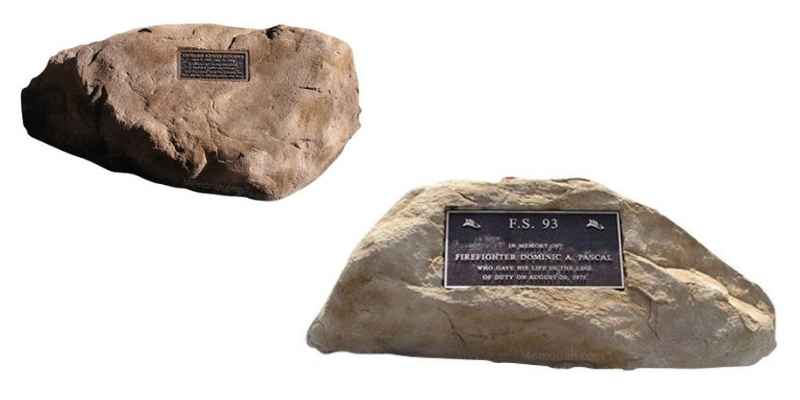
A boulder can be used as a monument in a variety of ways. It can be engraved, polished, and even have color photographs installed. The appearance of a boulder as memorial appeals to some individuals, and they are one-of-a-kind. Assuming you already own one, a natural boulder is also possibly the least expensive grave marker. If you have a large stone on your property that you would like to use as a gravestone, you might be permitted to do so.
Several companies out there can engrave your stone for you if you have your own. You could rent one from a monument company if you don’t have one. Don’t look for one in a state or national park or someone’s backyard.
But before you decide on a natural boulder for your grave marker, check to see if the cemetery allows it. As previously stated, many cemeteries have stringent regulations.
While a boulder can survive a long time, there is no rating system for it like granite. You have no notion how hard (or soft) a boulder is when you find it in a field. Some are quite hard, while others are incredibly soft. Only time will tell if this is true.
Boulders are the cheapest of the three types of headstones, and they don’t require any mining, cutting, or polishing. However, any savings in material costs will be offset by higher engraving and installation charges, as it takes much longer to engrave the rock accurately because it is not flat or polished. Similarly, since the stones’ bottoms are not flat, they take much longer to set in wet concrete at the cemetery properly.
5. Limestone and Sandstone Markers
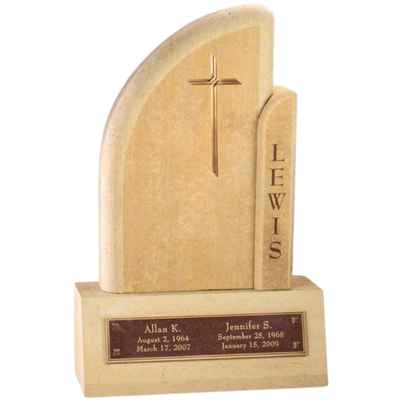
Sandstone and limestone are popular memorial material choices as they’re both easy to carve. Sandstone, is a sedimentary rock created by the compression of rocks at the bottom of a river for decades. Because it is made of compressed sand, it absorbs all of the hues that sand does.
The disadvantage is that it is not very durable. Limestone does not polish well, and the bedding planes are prone to breaking and cracking. Sandstone, just like limestone, is soft and can decay swiftly. It was a popular material for tombstones in Colonial America and supplanted the common stone in the Victorian era. As it became obvious that sandstone deteriorated quickly, marble became the preferred material.
6. Slate
Slate is a common choice for a headstone because of its durability and appealing surface. It is incredibly resistant to the elements, ensuring that your slate gravestone maintains its unique beauty for many years. Slate stone’s particular composition allows for exceptionally detailed carving, making it a good choice for individuals looking for an appropriate headstone material.
7. Fieldstone
Fieldstone is a naturally occurring rock primarily utilized as a building material, and it’s washed, carved, and embellished after being discovered in local fields. Before deciding to use a fieldstone, check the cemetery’s rules. Only particular types of grave markers are permitted in some areas.
8. Wood
Wooden markers have been used for generations since wood is abundant in most places. Carving and painting it is simple, and the most significant disadvantage of wood is that it is readily degraded. Wood has become less popular since approximately 1900, as more durable alternatives have become cheaper.
9. Zinc
Sand-cast zinc was a popular tombstone material. Customers could choose from a range of cast-in-place panel designs that were then welded together. The advantage of these was that the panels could be simply replaced, allowing for the addition of more names to the grave marker. These grave markers were affordable (approximately a quarter of the marble price) in the Victorian era, but they went out of popularity due to their “tackiness.” On the other hand, these markings have outlasted most of their marble counterparts, with many being as legible as the day they were cast.
So these are the top tombstone materials and perfectly answer the question of “what headstones are made of?” Now let’s look at how tombstones are made.
The Headstone Making Process
Headstones were traditionally composed of stone and engraved with inscriptions and motifs. Today, creating headstones has evolved to minimize production time, improve engraving quality, and provide more customized options. So, how do headstones get made? Below are the basic steps in the procedure:
- Material selection: Gravestone material selection is the first step in the gravestone manufacturing process. For those asking “what are tombstones made of,” the top tomb materials include marble, limestone, bronze, granite. To create headstones, blocks of the chosen stone are carved out and molded into individual headstones. Pneumatic drills can be used to cut. Water jet cutting is also becoming more common due to its efficiency, effectiveness, and precision.
- Polishing: The stone is polished after being cut and sculpted to achieve a smooth, appealing surface. The stones are then polished using machines with varied grit levels to smooth the surface before being coated with tin oxide powder or aluminum to give them a lustrous shine.
- Shaping and finishing: After that, the stone is carved into shape and finished to the client’s particular shape and proportions. To guarantee that the ultimate item meets the exact specifications, the finishing touches are frequently done by hand.
- Headstone Engraving: The headstone is etched using a sandblasting procedure once it has been shaped and finished. The headstone is first covered in glue. Next, a rubber stencil is applied, and then a carbon-backed design arrangement. The individual carving the headstone then chop out the design arrangement to prepare it for the sandblasting process after being transferred to the rubber stencil. After that, the artist carving the grave stone will engrave the selected design in the stone using either manual or automatic sandblasting equipment.
- Cleaning: The stone is treated with pressurized steam to remove any sandblasting or carving residue after sandblasting. The stone is ready to be sent to the client once cleaned.
In conclusion, we’ve answered the question: what headstones are made of, and outlined various headstone materials. While granite is the most popular gravestone material, there are several other options out there.
Again, the headstone or tombstone material you choose will be dependent on your choice and budget. It’s also essential to speak to the cemetery before paying for any tombstone.