🏬Supersize Online Funeral Retailer🪦1000's of Headstones⚱️Over 10,000 Cremation Urns⚰️Caskets Overnight Delivery🛒Funeral & Memorial Superstore🚚FREE Shipping on ALL Orders👨👩👧👦Helping Families for over 20 Years💰Lowest Price Guarantee🏬Supersize Online Funeral Retailer🪦1000's of Headstones⚱️Over 10,000 Cremation Urns⚰️Caskets Overnight Delivery🛒Funeral & Memorial Superstore🚚FREE Shipping on ALL Orders👨👩👧👦Helping Families for over 20 Years💰Lowest Price Guarantee
🏬Supersize Online Funeral Retailer🪦1000's of Headstones⚱️Over 10,000 Cremation Urns⚰️Caskets Overnight Delivery🛒Funeral & Memorial Superstore🚚FREE Shipping on ALL Orders👨👩👧👦Helping Families for over 20 Years💰Lowest Price Guarantee🏬Supersize Online Funeral Retailer🪦1000's of Headstones⚱️Over 10,000 Cremation Urns⚰️Caskets Overnight Delivery🛒Funeral & Memorial Superstore🚚FREE Shipping on ALL Orders👨👩👧👦Helping Families for over 20 Years💰Lowest Price Guarantee
The holiday season can be challenging for people grieving the loss of a loved one. Remembering loved ones at Christmas can cause intense emotions to surface, especially if it’s a recent loss or the first Christmas without the deceased loved one. Doing something special in their honor can help make the Christmas season a little bit easier for those who are grieving.
This article covers the emotional aspects of remembering loved ones at Christmas and provides helpful guidelines for dealing with your grief during the holiday season. For year-round guidance on choosing meaningful gifts during difficult times, see our complete sympathy gift guide. It also explores creative and sentimental ways for family members to honor and remember their lost loved one during Christmas time and touches on how different cultures have different memorial celebrations.
You’ve decorated the Christmas Tree beautifully with Christmas ornaments, and family members are gathered around the dinner table. Everyone’s ready for all the lovely Christmas traditions, but there’s someone special missing. Your deceased loved one’s stocking is not hanging over the fireplace alongside everyone else’s, and there is an empty chair at the table.
As you notice their absence, you’re faced with the stark reality that all the traditions in the world can’t bring back your lost loved one. They will never share another holiday with you again.
If it’s your first Christmas without a loved one, it’s bound to be challenging. Remember that whatever you’re feeling is entirely normal. It’s important to be patient with yourself and your emotions. You will get through the holiday season, and all the fond memories of the person will eventually help ease the pain as you move forward. Even if your loved one died several years ago, it’s okay if you’re still struggling with grief and looking for ways to cope with enjoying a holiday without them near.
Here are some guidelines for remembering loved ones at Christmas but dealing with grief at the same time.
Remember that grief has no rules and no schedule
Everyone has a different experience of grief. For some, it takes years to ease; others bounce back fairly fast. Most people experience grief more intensely on special occasions like Christmas. Happy times are a stark reminder that some of our precious loved ones are no longer present.
Family members and others that were close to the departed can experience a range of emotions during this time, from anger to sadness, joy, confusion, guilt, relief, or any combination of feelings.
The first Christmas after someone close to us died can be the hardest, but grief can surface at any time, even years after the loss. Whatever emotions you’re experiencing, it’s okay to feel them. Whenever you experience these emotions, it’s also okay. There is no right or wrong way to feel and no right or wrong time to feel it.
Don’t put too many expectations on yourself
Going into the holiday season, it may be easy to assume that you’ll spend Christmas like you always did. When grieving, you may feel different about shopping, wrapping gifts, baking, cooking, and celebrating. You don’t have to do any of this.
Be honest with yourself and others about how you feel and what you feel comfortable doing. If you ordinarily take care of Christmas dinner and don’t feel up to it, let another family member do the cooking, go out for a meal this year, or keep it simple with a potluck dinner. Don’t do it if you’re not feeling up to baking Christmas cookies. Even if it’s a long-standing tradition, it’s okay to skip it.
Placing too many expectations on yourself is unfair, be kind. If you feel forced to meet expectations, it can be a way to avoid your emotions which is not healthy for your emotional well-being in the long run. It’s best to create a schedule for the holiday season that contains as much activity as you’re comfortable with while still allowing you to feel what you need to.
Communicate your needs
Everyone handles grief differently. Friends and family members won’t always know what to do or say when others are grieving. While you may still be in a dark cloud of sadness, others may feel more up to Christmas celebrations.
Don’t wait until Christmas day. Express your needs early. Call, text, or email others to give them an idea of how you’re feeling and what you need in support. Let everyone know if you’d like to talk about your deceased loved one or would prefer not to. Tell them where you are emotionally and if there are any activities you feel you may not be up to.
Make sure you tell them whether you’re comfortable with keeping family Christmas traditions or if you want to change things until you feel a little better. The more details you share with one another, the better you’ll be able to provide support. If you run into unsupportive family or friends, be prepared to walk away and put yourself first.
Take all the time you need to be alone
If you need to step away from the Christmas dinner table or have a break from decorating the Christmas tree, it’s okay. Take all the time you require to care for your emotional well-being. Even if you’ve agreed to bake the Christmas cookies or put the angel tree topper on, do it in your own time.
Consider traveling to the family dinner or any other Christmas celebration in your own vehicle. That way, you can spend as much or little time as you like. If Christmas traditions without your lost loved one are causing you to become overwhelmed with emotion, you can leave.
As time passes, you’ll need less time by yourself to process your loss. While you are still struggling, allow your emotions free reign. Remember, it’s not going to feel like this forever. You may never stop remembering loved ones at Christmas, but in time the special memories will become more prevalent than the sorrowful memories you experience in the early days of your loss.
Share your grief
When a loved one dies, the grief you experience may make you feel unable to cope with regular daily life and activities. Talk to a trusted friend or relative about your feelings and what you’re thinking.
If you feel up to it, consider getting together with loved ones at Christmas, especially those close to the deceased. You could even have a special celebration in the deceased’s honor. It can be tremendously therapeutic to share memories of your loved one’s life with others who also had a connection with them.
Opening up to friends and family may bring up a deeply sad emotional response, but the support may be just what you need to get through the Christmas season.
Join a grief support group or talk to a professional
It’s normal for us to feel extra sad about our deceased loved ones at Christmas time. If you don’t feel comfortable speaking to a friend or family member, join a grief support group where you will be able to share stories of your deceased loved one with others who have also suffered a loss.
It can be helpful to know that you are not the only person struggling with grief during a time when most people are having fun singing Christmas carols and putting Christmas ornaments up. Support groups are invaluable during the holiday season when emotions tend to run a little stronger than usual.
If you feel you can’t cope with your emotions, consider talking to a grief therapist to help you to process your grief and plan your holiday season to be as painless as possible. Remembering loved ones at Christmas when they’re no longer present is difficult, but there are ways to make it bearable.
How Memorials and Memorial Activities Can Help With Grief
Losing a loved one is never easy. The grief can be so overwhelming that you may want to steer clear of anything that reminds you of them. Memorials can help shift the focus from the deep sad feelings to a more balanced emotional journey, especially if you share them with family and friends.
Memorials can be incredibly helpful in moving through grief because they help preserve memories in ways that allow those close to them to remember and honor the person who died in a healthy manner. Here are a few more reasons whymemorials can help with grief:
They can comfort those left behind
Even though your deceased loved one can no longer join you for Christmas day celebrations, a thoughtful memorial will make you feel closer to them. It can create a gentle bond with the deceased while allowing you to adapt to your loss without ignoring your grief or trying to suppress memories.
Memorials help you dwell on your loved one’s memory in a loving way instead of focusing on their absence. It provides a comforting way to adapt to the loss while remaining connected to them through something physical and sentimental, whether a physical memorial or a memorial action.
Memorials are a great way to express your love for the deceased
Physical objects and actions play an essential role in the healing process. It can help you to cope with grief and keep your loved one’s memory alive. Whether you memorialize your deceased loved ones at Christmas privately or share it with others, it will help you process grief.
It’s a way to bring loved ones together in the holiday season
If you prefer to grieve privately, that is okay. However, sharing grief can be incredibly helpful for some people. There is something about getting together as friends and family and celebrating the wonderful life someone close to you had. With memorial activities remembering loved ones at Christmas together becomes easier.
Memorials help you to focus on the positive
Doing something special with your dearly departed in your mind and heart can help you to pay attention to the happy memories you shared with the person when they were still alive. Whether you light a special candle and quietly focus on experiences you had together or get together with family and friends for a special event, it will likely be bittersweet.
It’s a way to show your love for the person, even after death
A memorial is a tangible and visible way to show affection to a person who meant a lot to you but is no longer there. Whether you create a memorial in public or privately, it gives you a way to show your care even when there’s an empty seat at the dinner table and your loved one is no longer there to hug, talk to, or tell them you love them.
It’s a way to show respect and honor for the person they were
If your loved one felt strongly about a cause or did charitable deeds while alive, you can honor this in the memorial and share their kindness with others. Continuing their work with a memorial is a beautiful way of showing honor and respect to the deceased person and celebrating a wonderful life lived.
Memorials help you accept the loss without feeling like you have forgotten your loved one
Think of a memorial as a continuity of your relationship with the loved one who died. You don’t have to forget them to come to terms with your loss. The person will always be part of your life, even though they’re no longer present.
You can use a memorial as a bridge between loss and acceptance. With it, you can dwell on your bond with your loved one during Christmas and after it.
Why Timing is Important in Memorials
Memorials can be helpful and healing, but only if the grieving person is ready for it. If the person is not ready to deal with the loss tangibly or even to make a statement about their loss, it’s best to wait. A memorial can have the opposite effect when you force it or do it too quickly. When you create it at the right time, a memorial can bring great comfort and even help bring closure.
If you want to create a memorial for the dearly departed and other relatives are involved, talk to them. It’s important to clearly communicate where everyone’s at in the healing process and whether a memorial would help or harm this.
Christmas Holiday Memorials
There are so many holiday-themed memorial products available for all tastes and budgets. It can be a small keepsake that every friend and family member can keep with them, for example, a small Christmas tree ornament or a pendant. Or it can be a larger memorial, like a memory wreath or Christmas decorations at the grave site.
Losing a loved one should not mean you can no longer include them in Christmas celebrations. It doesn’t matter how long the person has been deceased; grief is different for everyone. Memorials can help some people when they’re struggling with remembering loved ones at Christmas. It can positively affect them and help them deal with their grief more effectively.
If you think it will help you to deal with the missing loved one’s death better, there are many options for Christmas memorials, both ready-made physical memorials and memorial activities.
Ready-Made Christmas Season Memorials
You can purchase pre-fabricated Christmas memorials with general designs like angels, crosses, and other suitable symbols. Or, you can choose more unusual designs suited to your loved one’s unique personality.
No matter which ready-made Christmas memorial you choose, it’s a way to feel close to your loved one in the festive season after they’ve departed. Here are some great ideas you can consider:
#1. Christmas tree ornaments
If your family traditions call for certain types of Christmas tree ornaments, look for something similar that would also honor your deceased loved one. Perhaps get a type of ornament they really liked when they were alive or something in their favorite color.
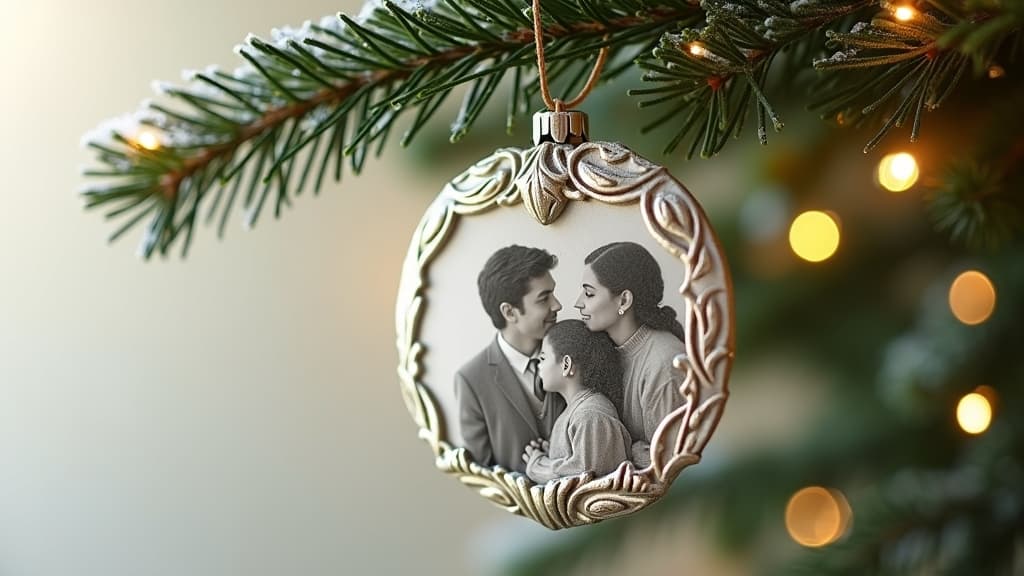
There are also several options available for customized ornaments. You could have a memorable photo printed on the Christmas ornament or engrave the person’s initials. Get a special ornament for each one of your departed loved ones at Christmas. Seeing these sentimental items on the Christmas tree will remind everyone of them and could help them feel closer to the departed.
#2. A memory wreath
Have a memory wreath made in your loved one’s favorite color or with their favorite flowers. The wreath can last through the holidays and bring joy to family and friends as they remember their deceased loved one.
A memory wreath doesn’t have to be temporary or made of flowers; you can make it out of other long-lasting materials or buy a ready-made memorial wreath. There are many beautiful designs available suited to all tastes.
#3. Memorial Christmas statues
Angels are a popular Christmas decoration for memorializing a loved one who has died as you navigate through your grief this season. You could also consider other religious designs or something more holiday-themed. If your loved one was fond of nutcracker statues or nativity scene sets, you could get some to honor them. Or, have a customized snow globe with a special photo made.
#4. Memorial lawn decorations
Remembering loved ones at Christmas can be as modest or elaborate as you’d like them to be. If you love decorating your lawn and the outside of your house during Christmas, you could do it as a memorial. You can incorporate a loving message to a dearly departed family member or friend as part of your decoration.
If the departed enjoyed Christmas carols, you could have an arrangement of singing angels in their honor. If they dressed up as Santa Claus every year, you could install a Santa in their memory.
Memorial Activities for Remembering Loved Ones At Christmas
Although Christmas family traditions usually have tons of good memories attached to them, it may be too much to handle when someone in the family is no longer there. You could skip the old traditions and start a new tradition or two in your loved one’s honor.
Creating new traditions at Christmas can help make the holiday season easier to bear after you’ve lost someone dear to you. Memorial activities can help preserve family holiday traditions or create new traditions and bring friends and family closer together.
Cards are part of that too. The first Christmas after a death brings a stack of them, and friends who want to write something often stall on the first line — our guide to sympathy messages sorts the wording by who is writing to whom.
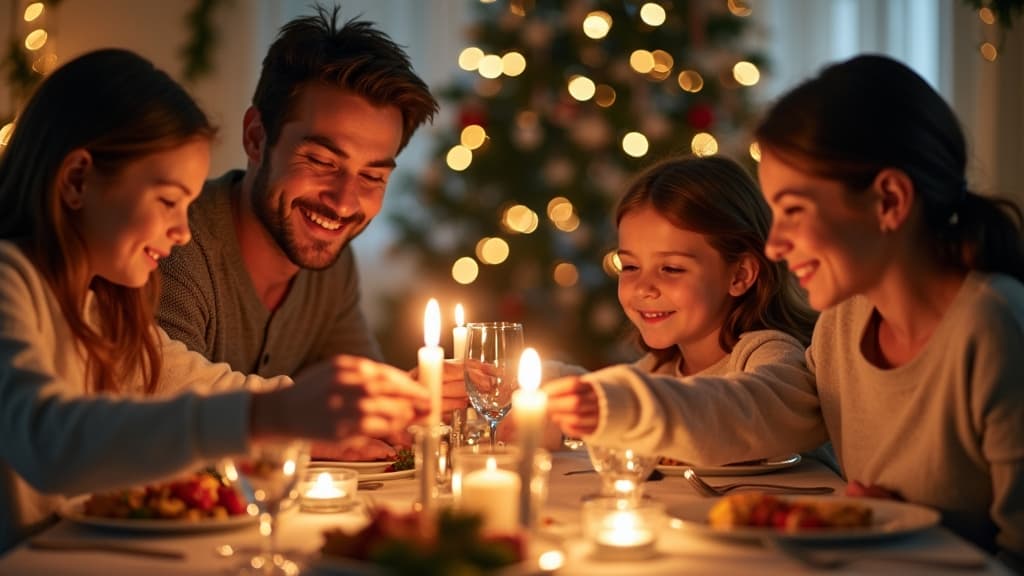
Maybe ask immediate family members to light candles for the lost loved ones at the Christmas eve dinner table, or share stories and memories about them. Or, you could change up Christmas music to be a little more cheerful or forego Christmas carols in favor of the deceased’s favorite playlist.
No matter what new traditions you decide on, remember you don’t have to do them every Christmas. You can go back to old Christmas traditions if you want. If you find that other milestones bring similar emotions, our guide to honoring a loved one on Mother’s Day or Father’s Day may help, and families navigating celebrations like anniversaries or reunions can find comfort in honoring loved ones at a wedding with meaningful memorial tributes. Here are some more great ideas for remembering loved ones at Christmas, even when they’re no longer with us.
#1. Take Christmas gifts to a homeless shelter
One of the most painful Christmas traditions after you’ve lost a loved one, is gift buying. While shopping, you may notice perfect gifts for a deceased family member or friend. Knowing that the person is no longer there is devastating.
Consider buying the gifts anyway and donating them to a homeless shelter. It could be a new tradition that’s also a wonderful way to honor all your deceased loved ones at Christmas while helping someone in need have a better festive season.
If shopping for gifts is too difficult for you to deal with emotionally, consider making a cash donation to a homeless shelter or other charitable cause your loved one would have supported. Use the money you’d have spent on gifts for your loved one. Encourage other family members to do the same.
You could extend this kindness to a nursing home, a hospice care center, or any other center where people are less fortunate.
#2. Light candles in your loved one’s honor
On the days leading up to Christmas, light a special candle every evening as you reflect on your loved one’s life. If you want to, place a memorial photograph of the person next to the candle. The special candle will bring a lovely warmth to the room and remind the family of the warm affection felt for the deceased family member when they were still alive.
If you are religious, you could go for midnight mass on Christmas eve and light a candle at the church for your loved one. You may come across others doing the same and mourning the loss of someone dear to them.
#3. Create a festive memorial paper chain
Use holiday-colored paper to cut out small rectangles to make a paper chain. Think of everyone who attended your loved one’s funeral service and all the other people who featured in their life. Write their names on the shapes and form them into a memorial paper chain. as part of your Christmas tree decorations.
Making a paper chain is an excellent way to remember loved ones at Christmas, whether they’re still with you. It’s also a lovely way to honor everyone who created special memories with your deceased family member.
#4. Visit your loved one’s grave with friends and family
If you visit your loved one’s final resting place regularly, there is no reason not to do so during the holiday season. If not, or if the death is recent, consider scheduling a visit. Invite friends and family to join you if it feels like it’s the right thing to do.
Before you visit, make sure it doesn’t interfere with other holiday activities. When you’re alone or with other loved ones, you can share memories of the deceased, pray, sing Christmas carols, or place a memory wreath on the grave. Whatever feels right for you is the right thing to do.
#5. Honor your loved one with a Christmas tradition they loved
If your loved one put up an elaborate light display last Christmas, consider doing it this year in their honor. If they loved reading, donate Christmas decorations to the local library on their behalf.
Perhaps your deceased loved enjoyed making a special pot of hot chocolate on Christmas eve after dinner for everyone. Make it and share stories as you enjoy the drink. Just because your loved one is no longer there doesn’t mean you can’t carry on their favorite family traditions.
#6. Cook your loved one’s favorite meal or a special treat
If you’re in charge of cooking the Christmas dinner, cook your deceased loved one’s favorite meal or a special treat they enjoyed. There may be an empty chair at the dinner table, but everyone will remember loved ones at Christmas, even when they’re not physically there.
Sitting around the family dinner table on Christmas eve, enjoying your loved one’s favorite meal, is the perfect opportunity to share stories about your lost loved one. Afterward, you could take out old photo albums and reminisce as you celebrate the wonderful life your loved one lived.
If you don’t want a formal Christmas dinner, you could prepare a special treat and take some to a homeless shelter, youth home, or long-term care facility in honor of your loved one.
#7. Set your loved one’s place at the holiday table
In some traditions, people leave an empty place setting for the deceased. If this will give you comfort, consider doing it. For some, it’s a way to remember the person enjoying holiday celebrations with everyone else. You can repeat this tradition for one or many years; it’s entirely up to you.
Some people place photos of deceased loved ones at the table setting. It can be for one or several deceased loved ones.
#8. Write your deceased loved one a letter
Writing a letter to your loved ones at Christmas can help you feel closer to them in the holiday season. Some people write to the dearly departed on Christmas eve every year. They may tell them how they feel at the time, what’s happened over the past year, or simply how much they are missing them.
You don’t have to share the letter with anyone; you can do what you want with it once it’s written. You could place the letter in the empty place setting and read it after dinner. Or, you could read it out at your loved one’s grave, keep it in a keepsake box, place it in your loved one’s stocking, or burn it. It’s about the experience, so whatever works for you is good. There is no right or wrong way to see this tradition through.
#9. Volunteer in your loved one’s honor
Get your friends and family together during Christmas and volunteer to do something charitable. If your loved one spent time in a hospital or hospice, donate a small Christmas tree to them, or take the staff some hot chocolate and cookies on Christmas eve.
If the deceased succumbed to cancer, donate warm hats to those receiving chemotherapy over the holiday season. There are so many charitable causes you could choose from.
#10. Make a special angel tree topper for the Christmas tree
Make your loved one’s memory the focal point on the Christmas tree with a special Christmas tree topper they would have loved. Decide whether you want it to be an annual tradition in their honor or only for that year. When the family takes the Christmas tree down, you can choose what to do with the special topper.
#11. A living Christmas tree
Purchase a living tree and plant it in the deceased’s honor after the season. It could be the start of a memory garden. Later on, you can add benches and flowers, wind chimes, bird feeders, and other garden items, making it is restful space where relatives can visit the dearly departed.
#12. Volunteer at the local library
If your departed loved one was an avid reader, you could honor their memory by volunteering at your local library. Read festive stories to children, deliver books to homebound patrons, or help stack shelves and create festive book displays.
#13. Start a gratitude tradition on Christmas eve
When grieving, it’s easy to become lost in sadness and lose sight of what we should be thankful for. Start a gratitude tradition in the person who died’s honor. Take a moment to reflect on what you’re grateful for during the season. Many families carry this practice into other holidays as well — our guide to remembering loved ones at Thanksgiving offers additional ideas for honoring the absent at holiday gatherings.
Ask everyone to write down a gratitude message and read it out before you start Christmas dinner. It will bring some warmth and peace to the table. Another idea is to start a bonfire on Christmas eve and let everyone burn their letters of gratitude.
#14. Make a new year’s resolution
If your loved one had a bucket list, you could consider making a resolution to tick something off it on their behalf for the new year. Perhaps your loved one wanted to travel somewhere in particular or do something like sky diving or taking an exotic cooking class.
If you do something your dearly departed loved one always wanted to do but did not achieve while they were still alive, it’s an excellent way to feel closer to them and honor their memory.
#15. Donate your loved one’s clothing
If there is still some of your loved one’s clothing left behind, donate it to those less fortunate. It could make their holiday so much nicer. Don’t stop there. Start a group activity collecting old clothing in your local neighborhood, and donate it to a homeless shelter.
You may be surprised how many people still have their loved one’s clothing long after the person dies. For some people, it’s not that easy to just get rid of it. Giving it to someone who will appreciate it can make it easier, especially if it will help them to enjoy the holiday festivities in some small way.
#16. Have a Memorial Home Movie Night
Get everyone who cared for the deceased together on an evening leading up to Christmas for a memorial movie night. Watch old family movies together as you share memories and reminisce about happy times. If your home movies are still in an older format, it could be worth having a company transfer them into digital format to preserve them.
#17. Write your thoughts down
When you experience the emotions of missing and remembering loved ones at Christmas, write down your feelings and thoughts in a journal. You can share memories in the journal, write about things you wish you’d experienced with your loved ones at Christmas, or even write them a letter. There are no rules for expressing your feelings in writing; they’re all great ideas.
If you want to, journalling can be a new tradition for the Christmas season. Taking time every year to write down your feelings and thoughts is therapeutic, and you’ll have your journal as a reference to see how your experience has changed over the years.
#18. Give back to nature to honor the dead
Was your loved one a nature lover? Give back to nature in their honor by creating edible ornaments made out of nuts, seeds, and peanut butter. Hang them in trees in the backyard, where urban animals like squirrels, raccoons, and birds will enjoy a tasty snack.
Christmas Gifts For Remembering Loved Ones At Christmas
If your loved one has recently passed away, you could share a Christmas memorial in the form of a gift with friends and family. It will give everyone a tangible object that will remind them of the departed and that they can keep with them forever. Here are some ideas for memorial Christmas gifts that will help everyone as they’re remembering loved ones at Christmas.
#1. Small Christmas tree ornaments
There are various options of ready-made Christmas tree ornaments that will be beautiful reminders of your loved one in the holiday season. If you want to personalize it, you could have an ornament engraved or a photo transferred onto it.
#2. A photo book
Create a small photo book with snaps of happy memories shared with your loved one. There are many great ideas for creating a memorable photo book. You could try to include photos of every person who will be celebrating the holiday season with you. Have one printed for everyone as a keepsake of the deceased person’s life and the loving moments they shared.
Or you could create a photo book with pictures from every stage of the deceased’s life with a timeline; it’s a creative and sentimental idea for remembering loved ones at Christmas and will make an excellent keepsake for others who are also missing the person who died.
#3. Keychains
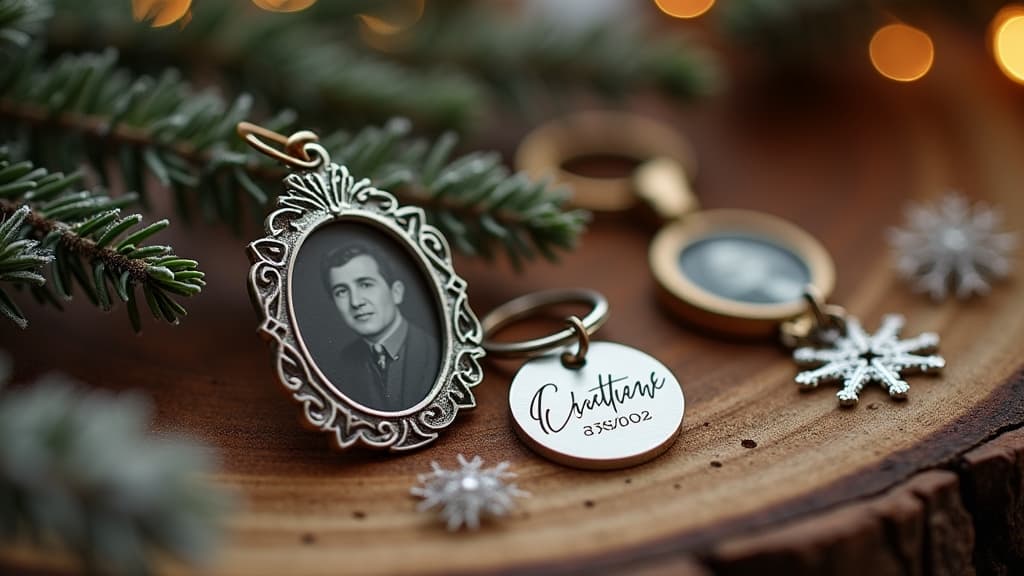
A keychain may be an inexpensive gift, but it can be a wonderful way to create a heartfelt memorial. Have customized keychains made in your loved one’s favorite color with a special message engraved in their honor. Or purchase keychains with their favorite sports team, flower, or anything else that will remind everyone of your deceased family member.
What makes keychains special is that each family member and friend can carry them with them even after the holiday season. It’s not just about remembering loved ones at Christmas.
#4. Prints of handwritten recipe books
Was your deceased loved one’s happy place in the kitchen? If they had a handwritten recipe book, you could share all the food the loved one cooked with the whole family. Prints of the recipe book will make a special gift for everyone.
If there’s just one special recipe they loved to make, why not use a copy of it to create a customized Christmas card? Friends and family will appreciate this gesture, and they could try making the recipe when they’re missing their loved one and want to feel closer to them.
#5. Jewelry
Buy a commemorative piece of jewelry for every family member and friend. It could be your loved one’s initials engraved on the back of a heart pendant or a bracelet. Or, if you’re religious, you could engrave “God Bless” with your loved one’s initials on the back of a cross pendant. Another great idea is an angel pendant or engraving. Angels are commonly used in commemorating the dead.
#5. Socks
For quirky families or those with a sense of humor, buy some themed socks or have customized ones made. If the dearly departed loved cupcakes, why not see if you can find socks with cupcakes or have some made for each person in the family?
The same goes for anything else the deceased enjoyed. So many different sock designs are available; you could get your loved one’s favorite sports team, a holiday theme, or a hobby they enjoyed, like fishing, sewing, or painting.
#6. A calendar
Some families create calendars every year at Christmas. If your family has lost a loved one during the year, dedicate this year’s calendar to them. You can add photos with precious memories to the calendar and have one made for each family member.
#7. A memory wreath
Make a memory wreath in your loved one’s honor for each family member to hang on their front door during the holidays. Decorate the wreath with an angel to symbolize the passing. Even though most visitors won’t know that this Christmas ornament has a special purpose, you and your family will understand that it’s about remembering loved ones at Christmas.
#8. Keepsake Urns
Keepsake cremation urns are small-sized, decorative cremation urns that will hold a tiny amount of the deceased’s ashes. It’s perfect for sharing the ashes among relatives and friends, especially when you’re interring or burying the cremation urn.
If your loved one passed away close to the festive season, you could get keepsake urns in seasonal colors. It’s a special way to have part of the deceased loved one nearby and everyone who cared about them during Christmas time.
Memorials Are Part of Culture
Memorials have existed for thousands of years. People from every part of the world have some form of memorial tradition soon after the death or even months or years later. Although there are cultural and religious differences, grieving people have much in common. They are actively missing the person who died, and it’s a painful process. Memorials help them to deal with these emotions. Since some cultures don’t celebrate Christmas, it’s interesting to observe that they also memorialize the dead during their religious times.
Some memorials are created as an expression of grief, for example, a headstone or other gravesite marker. Others express love, for example, through a memorial gathering or other activity done in the deceased person’s honor. Here are some examples of how different cultures memorialize the dead during their festive times:
India
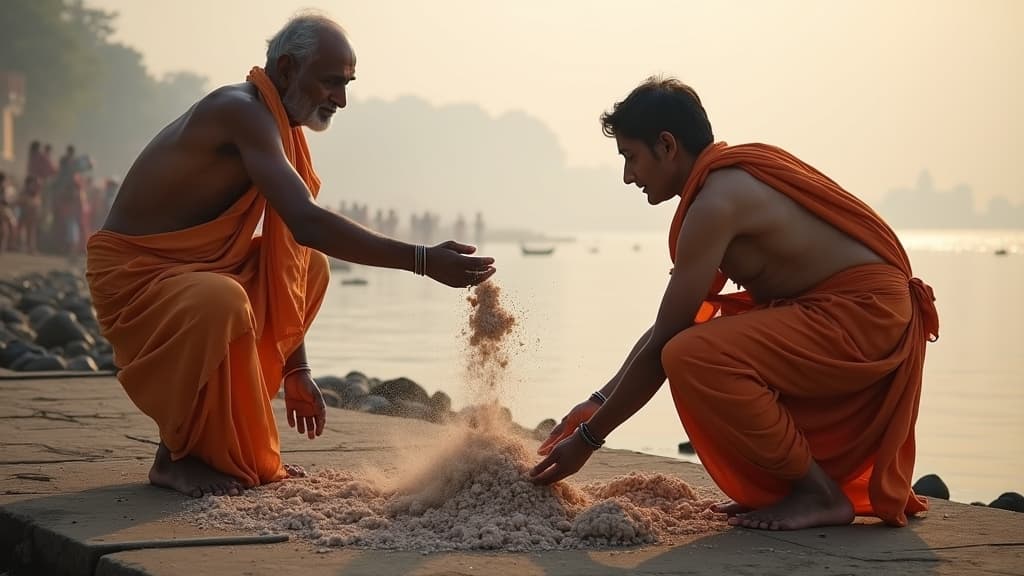
In India, it’s customary to show gratitude for the deceased’s life. In a tradition called “Moksha,” the family brings the remains to a 24-hour cremation Ghat along the Ganges River in Varanasi, an ancient city.
Here, they will scatter the ashes of the departed in the river after the body is cremated, believing that the person will ascend to heaven instead of reincarnating into another life.
Tibet
Tibetan Buddhists perform various memorial tasks to mark each phase of the deceased passing from one world to the next. These tasks can take up to a year and are ceremonial in nature. Some of it involves relatives abstaining from daily chores like washing their faces or hair. They also don’t participate in any type of celebration as part of abstinence.
The body is not buried for as long as four days. This is because of the Buddhist belief that the soul still resides in the body. The family will dress the body during this time, and the lama chants over it. Then they will place memorial light lamps around the body and mourn for 45 days. After a year, the family and others get together for the celebration of life memorial.
Ireland
The memorial tradition of the Irish wake began centuries ago when people were often mistaken for being dead. Loved ones would watch over the deceased to ensure they don’t “wake” before the burial. These days it can be done before or after the burial or cremation and involves mourners entertaining one another by sharing memories and stories about the departed as they toast the stories with a glass of whiskey. Sharing stories helps people deal with grief and move on. When a loved one dies close to Christmas, relatives may repeat this tradition as part of the festivities.
Israel
The Jewish tradition of sitting shiva dates back to biblical times. For a week after the deceased is laid to rest, the family remains at home, processing the loss. During this time, others will visit to offer support and condolences and share the departed’s special memories while making new memories.
The goal is to take the time to mourn and memorialize the loss and accept it. Sitting shiva makes it easier for families to share comfort while processing the death.
South Korea
Since there is limited space for burials in South Korea, families have a tradition of memorializing and honoring their departed loved ones with burial beads. It involves pressing cremated remains into colorful beads and making a creative display of the beads in a bottle or urn.
Madagascar
In Madagascar, there is a memorial tradition called “Famadihana,” in which they bring the bodies of loved ones from their crypts every five to seven years. They wrap them in fresh clothes, spray perfume on them, dance with them, and tell stories about the deceased.
Final Thoughts
Losing a loved one doesn’t only affect us soon after death; it affects our entire lives. The sad emotions usually surface on special occasions, especially when remembering loved ones at Christmas. Not having our loved one around when the whole family is having fun on Christmas day may even feel disrespectful, making it challenging to get into the holiday spirit.
Traditional Christmas activities could trigger an emotional response. From something as simple as putting up a Christmas tree to having a family dinner with loved ones at Christmas, it’s all a reminder of the wonderful life and memories you shared with the deceased loved one.
Remembering loved ones at Christmas or during important times based on their culture with special memorials and memorial activities can help you feel better – even when there is an empty seat at the Christmas dinner table. More than anything else, you should try to remember that your loved one would want you and your family and friends to go on with life, especially during the Christmas holiday season.