🏬Supersize Online Funeral Retailer🪦1000's of Headstones⚱️Over 10,000 Cremation Urns⚰️Caskets Overnight Delivery🛒Funeral & Memorial Superstore🚚FREE Shipping on ALL Orders👨👩👧👦Helping Families for over 20 Years💰Lowest Price Guarantee🏬Supersize Online Funeral Retailer🪦1000's of Headstones⚱️Over 10,000 Cremation Urns⚰️Caskets Overnight Delivery🛒Funeral & Memorial Superstore🚚FREE Shipping on ALL Orders👨👩👧👦Helping Families for over 20 Years💰Lowest Price Guarantee
🏬Supersize Online Funeral Retailer🪦1000's of Headstones⚱️Over 10,000 Cremation Urns⚰️Caskets Overnight Delivery🛒Funeral & Memorial Superstore🚚FREE Shipping on ALL Orders👨👩👧👦Helping Families for over 20 Years💰Lowest Price Guarantee🏬Supersize Online Funeral Retailer🪦1000's of Headstones⚱️Over 10,000 Cremation Urns⚰️Caskets Overnight Delivery🛒Funeral & Memorial Superstore🚚FREE Shipping on ALL Orders👨👩👧👦Helping Families for over 20 Years💰Lowest Price Guarantee
A growing number of Americans are considering green burial options. There are many reasons for this, but most of them point to a desire to care about the environment.
Green funerals are nothing new. It was the usual way of burying people before the mid-nineteenth century. Even now, most Jewish and Muslim funerals are good for the environment and can be considered “green.”
Traditional burials differ from green burials in many ways. They often need significantly fewer resources for corpse care and avoid a lot of standard processes, making them more ideal for the environment. They can also help families save money on funeral expenses.
As people seek ways to reduce their carbon footprint, interest in these simplified, environmentally friendly funerals has surged. According to a survey done by the National Funeral Directors Association and released earlier this year, more than 54% of Americans are thinking about having a green funeral, and 72% of cemeteries are seeing more people wanting to be buried there.
Although death is most likely not on your mind right now, if you’re considering a green burial, here’s what you should know. This is one of many disposition options explored in our cremation planning guide, which covers the full range of choices families face.
What Is a Green Burial?
Today, a typical American funeral includes a few features we’ve come to expect: an expensive coffin, a lot of flowers, embalming for the deceased, and a few other extras.
For a more straightforward green burial definition, eco or green burial practices consist of the process of burying a deceased person’s body in the ground in a way that allows the body to decompose naturally and be recycled.
A green funeral involves eliminating embalming, rethinking the burial casket or coffin, and protecting natural habitats to reduce negative environmental effects. At each stage of the death care process, decisions can be made to reduce waste, cut carbon emissions, and even nurture the surrounding ecology.
The National Funeral Directors Association says that embalming, coffins, and vaults can be expensive and that the average cost of a funeral in the United States is more than $8,500.
Let’s face it. Conventional burial components like coffins are expensive, and replacing all of these with other eco-friendly burial options or removing them completely can save money and the environment since you’re not wasting money on unnecessary products or burying them.
Types of Green Burials
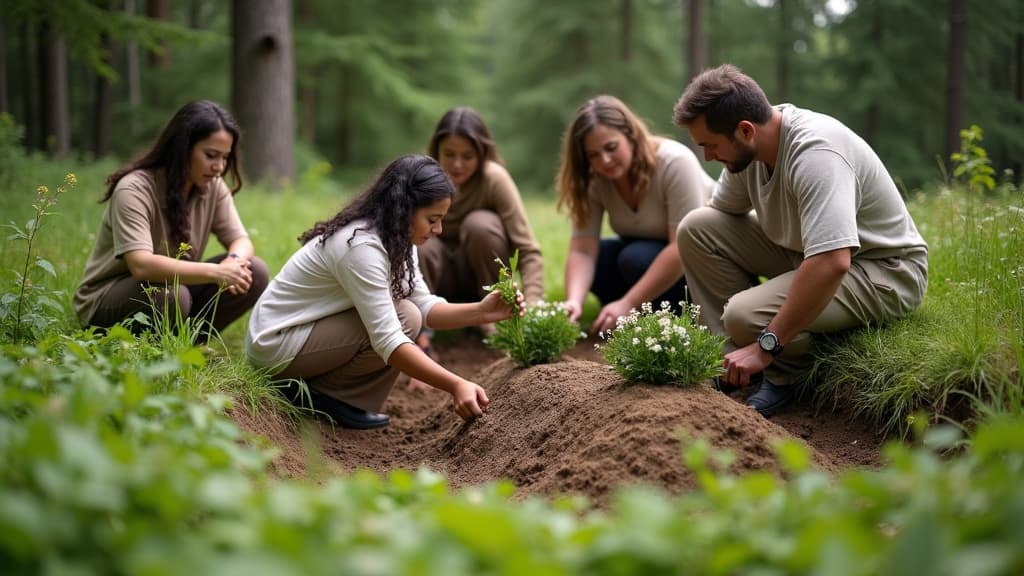
It is up to the person to determine how “green” a funeral can be; the funeral can be as basic as wrapping the dead person in a cotton shroud and then lowering them into the grave. Families can also choose to place a choice of flowers, native plants, or shrubs on the grave.
These aren’t wholly new concepts; several religions, for example, have funeral rites that follow these guidelines. Here are some green funeral ideas, depending on how ecologically conscious you want them to be.
A Green Blended Traditional Funeral
Traditional burials can be extremely damaging to the environment. However, for those who can’t or don’t want to opt for a fully green burial, there are some minor alterations you can make:
Avoid embalming. If visitation is required, choose a closed casket.
Select a more environmentally friendly casket. There are plenty of lovely possibilities. If you like something more conventional, go for a plain hardwood coffin rather than metal, stains, polishes, or metal latches.
A Hybrid Green Funeral
Those interested in going a little greener can make more modifications to traditional funeral plans, including the following.
Locate a green funeral home: Working with a green funeral home or funeral director can make the process go much more smoothly.
Request an environmentally friendly cemetery: They will almost certainly have rules that say you have to use the best methods for the clothing, coffin, headstone, and other things, which will help you help the environment even more.
Skip the viewing: Instead, hold an outdoor memorial service at the gravesite.
If you’re going to use flowers, buy them locally. Many caskets that are good for the environment have woven designs that are perfect for putting flowers and leaves in.
A full green funeral
Consider these suggestions for a truly environmentally friendly funeral.
Hold a funeral at your home or family cemetery (if permitted in your area). Make arrangements with your funeral director to have your loved one stay at home for a day or two.
Add flowers and greenery to their bed.
Select a completely green or natural burial place and follow all of its guidelines.
Choose an organic burial capsule or a full-body mushroom suit.
Hire a horse-drawn carriage or a decorated wagon to take the dead person to their final resting place.
Minimize your travel footprint. Offer a virtual or live streaming option for people who may want to travel from far away.
Encourage people to donate to an environmental charity. This information can be included in an online memorial shared with friends and family.
People frequently inquire about the differences between green burials and more conventional burials. Processes and materials are the most important factors.
Embalming: A conventional funeral followed by a ground burial typically requires using formaldehyde-based embalming fluid and other necessities like land and caskets.
Green burial, on the other hand, advocates using non-formaldehyde-based embalming fluid, dry ice, refrigeration, or other “natural” means of body preservation between death and the day of the funeral service. The necessity for preservation is also reduced by holding the service promptly after the death. This decreases formaldehyde exposure and leakage into the environment for funeral home employees.
Casket Type: The coffin is another significant difference between traditional and green burials. Traditional caskets frequently include non-biodegradable or even hazardous materials.
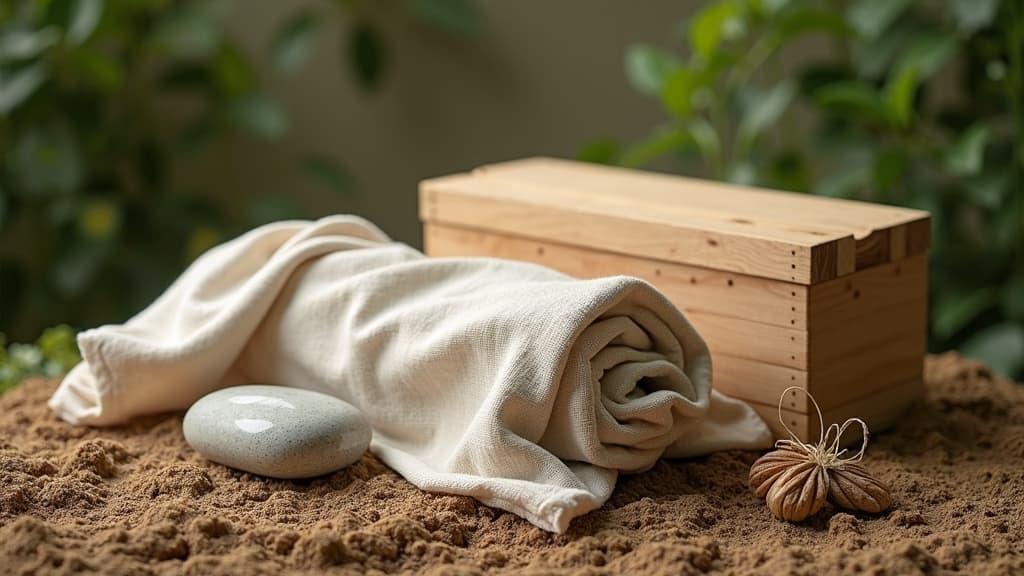
If a casket or coffin is to be used for a green funeral, it should be made of environmentally natural, and biodegradable material. These materials include wool or linen for a shroud; wicker, cardboard, or any other biodegradable material that encourages quick decomposition of the body. Metal fasteners or hardware, such as screws or nails, should not be used.
Clothing: Clothing and accessories matter a lot in a truly green burial. Since the goal is to return to nature, the clothing you choose must be carefully considered. Garments composed of untreated natural fibers, such as linen, cotton, or wool, that decompose quickly are ideal. You can buy an organic burial shroud if you don’t have any clothes that meet these requirements.
Viewing: The concept of viewing is one of the most significant differences between green funerals and their more-traditional counterparts. Embalming and other preservation procedures are not employed in a green burial. A viewing may not be held as a result of this. Green burials may now include a house viewing, in which the body is kept chilled for several days with dry ice to allow mourners to pay their respects. Others prefer not to consider it as part of the mourning process at all.
The Graveyard. Burial Vaults and liners, which are often needed for burial in regular cemeteries, should not be used in eco-friendly cemeteries.
Cremated Remains vs. Green Burial
Cremation has long been thought of as an environmentally friendly alternative to traditional burial in the ground, but the NFDA and GBC say that it is not “green.”
While cremation has the advantage of minimal land consumption compared to traditional burial, it prevents the body’s natural decomposition, stopping it from benefiting the environment.
Also, the whole cremation process itself has the potential to emit harmful airborne emissions.
A form of cremation that’s considered green is flameless cremation, which involves using water instead of flame in the procedure. Flameless cremation accelerates the natural breakdown of the body by using a mix of mild water flow, temperature, and alkalinity to create ashes for inurnment or burial. This process is like what happens naturally during a green burial, but it only takes a few hours instead of years.
It also uses 85% less energy than traditional cremation. To learn more about this emerging process, see our guide to aquamation water cremation.
Why Choose a Green Burial?
The reasons for choosing a green burial differ from person to person. However, the following are the most common causes:
Cost-savings: Since you don’t need to buy a standard casket, green burials are usually less expensive than traditional burials.
Spiritual importance: Many people have a strong bond with nature. A “green burial” allows the deceased to naturally return to the earth. Some families take this a step further with tree burial and tree pod options that transform cremated remains into a living memorial.
Reduce Waste Of Natural Resources: The 2013 Green Burial Council provided an estimate of what’s buried across cemeteries in the United States, including
A green funeral eliminates all this waste, allowing these resources to be channeled to other uses.
It Eliminates The Need For Dangerous Chemicals: Embalming fluid contains formaldehyde, which is a known carcinogen, which has been linked to the development of cancer. Every year, approximately 5.3 million gallons of embalming fluid are used in the United States. Workers in funeral homes are exposed to high levels of formaldehyde.
Reduced Pollution: Cremations have increasingly replaced conventional burials in recent years, but the process is quite disastrous for the environment. Cremation entails heating a furnace to temperatures of between 1,600 and 1,800 degrees Fahrenheit for up to two hours. It releases several pollutants into the atmosphere, like nitrogen oxides, sulfur dioxide, and heavy metals. Our article on the environmental impact of cremation examines these emissions in detail.
How Much Does Green Burial Cost?
Just like with anything, green funeral costs vary depending on the components you want to be included. Here are some of the common costs.
Permits: Tobury a body, dispose of cremated remains, or transport a body, certain jurisdictions require a burial permit. These funeral permit costs between $10 and $40 in most regions. Find out if you need a permit and what it takes to get one by calling your local City Hall or a similar government office.
Service: Green cemeteries often leave funeral arrangements to the next-of-kin. This flexibility allows you to make the service as simple or as elaborate as you wish. If you want a religious leader to recite a prayer or lead a service, you may have to pay an honorarium of between $100 and $300. You might also spend money on food and drinks or hire a musician to play. But, in the end, everything boils down to the deceased’s preferences and the available funds.
Vessel For Burial: Caskets purchased from a regular funeral parlor might harm the environment. However, several excellent eco-friendly alternatives are a fraction of the cost. The cheapest choice is a cardboard casket. They are biodegradable and cost between $50 and $500. Newer innovations like mushroom coffins and burial suits use mycelium to actively enrich the soil during decomposition.
Clothing for Burial: Natural fiber burial apparel, like the burial vessel, will biodegrade completely. If you don’t have biodegradable cloth, you may need to buy one. Bodies may also be buried without clothing or clothed in a burial shroud.
Frequently Asked Questions About Green Funerals
What is a green cemetery and where can you find green cemeteries?
Although some cemeteries offer both green and traditional services, they differ in some ways. For example, instead of being maintained regularly, a green-burial setting would be left to grow naturally. In most cases, a typical headstone is not allowed.
Some green burial cemeteries, on the other hand, allow using a small natural flat stone to mark grave locations. Family members can have the name and date of birth/death of the deceased inscribed on it. Other green cemeteries require only a tree (planted previously or at the time of death) or the GPS coordinates of the green burial site to be utilized.
However, finding a green cemetery is quite difficult, as there are only a few available today. This is one of the most significant disadvantages of green burial.
Oftentimes, people find it difficult to identify a green cemetery nearby, resulting in additional greenhouse gas emissions from the transportation of the deceased and travel for mourners to and from the burial. Traditional burial is frequently offered near the location of the deceased.
If you live in Gainesville, Florida, or nearby, then the Prairie Creek Conservation Cemetery will be a good fit.
How much choice you have is a state-by-state question, and the two ends of it look very different. Our guide to green burial in Wisconsin covers a state with several dedicated preserves and a municipal cemetery that publishes its natural burial price; our guide to green burial in Iowa covers a state with none, where the realistic route is a conventional cemetery willing to waive its vault rule, or a drive across a state line.
You can hire a licensed funeral director, who will be responsible for finding cemeteries that allow a green grave.
What If There Is No Nearby Green Cemetery?
Some traditional cemeteries are reserving areas of their available land for natural burial grounds in response to rising demand. Ask your local cemetery if they offer organic burial options. The more feedback they receive, the more space that does not have a concrete vault will be made available.
If you can’t find a green cemetery around, then you can do the closest eco friendly funeral.
Eliminate embalming and use a shroud or a biodegradable coffin to make any burial more environmentally friendly. If the conventional cemetery allows it, skip the vault. Otherwise, request that the body be placed in a concrete grave box with an open bottom, holes be bored in the bottom of the burial vault, or the vault be inverted without its cover so that the body can return to the soil.
Home burial may be an option if you or a family member owns rural land or a family cemetery where it’s allowed. Families near coastal areas may also consider sea burial and water burial as a natural alternative.
Is a green burial less expensive than a traditional burial?
The funeral costs of any green burial is determined by factors like the products, services, and the burial plot chosen. Natural burial supplies and services are quite inexpensive. A biodegradable casket, for example, is usually less expensive than traditional caskets, that are typically made with varnished hardwood or metal. Several costs are saved because there is no concrete vault or chemical embalming. Furthermore, natural markings—or no marks at all—are significantly less expensive than standard markers.
Green or sustainable burial plots, on the other hand, are more costly than regular burial plots. This is because of the fact that green burial plots are typically larger, sometimes up to twice the size of regular plots.
What is the most environmentally friendly way to be buried?
The most environmentally friendly burial is a full green burial, as explained above. It requires eliminating or limiting any factor that can harm the environment and making use of green cemeteries.
Why are green burials becoming more popular?
Most people choose green burial for a variety of reasons.
Concern for the environment.
Respect for the human body.
A desire to reconnect to nature.
A need for authenticity.
Respect for all religious faiths.
Is it possible to have a “green” burial even if a vault is required?
Yes. You might request that the vault be inverted at the cemetery. This permits the grave’s bottom to be exposed to the earth while the top remains concrete. This is a common request and a “green” option, as several religious traditions already demand that the body be buried in contact with the earth.
What is the Green Burial Council?
The Green Burial Council is an organization that aims to use education and certification to encourage and advocate for environmentally friendly, natural death care.