🏬Supersize Online Funeral Retailer🪦1000's of Headstones⚱️Over 15,000 Cremation Urns⚰️Caskets Overnight Delivery🛒Funeral & Memorial Superstore🚚FREE Shipping on ALL Orders👨👩👧👦Helping Families for over 20 Years💰Lowest Price Guarantee🏬Supersize Online Funeral Retailer🪦1000's of Headstones⚱️Over 15,000 Cremation Urns⚰️Caskets Overnight Delivery🛒Funeral & Memorial Superstore🚚FREE Shipping on ALL Orders👨👩👧👦Helping Families for over 20 Years💰Lowest Price Guarantee
🏬Supersize Online Funeral Retailer🪦1000's of Headstones⚱️Over 15,000 Cremation Urns⚰️Caskets Overnight Delivery🛒Funeral & Memorial Superstore🚚FREE Shipping on ALL Orders👨👩👧👦Helping Families for over 20 Years💰Lowest Price Guarantee🏬Supersize Online Funeral Retailer🪦1000's of Headstones⚱️Over 15,000 Cremation Urns⚰️Caskets Overnight Delivery🛒Funeral & Memorial Superstore🚚FREE Shipping on ALL Orders👨👩👧👦Helping Families for over 20 Years💰Lowest Price Guarantee
When families begin selecting a permanent memorial for a loved one, one of the first practical questions that comes up is: what are headstones made of? The material you choose affects everything — how long the memorial lasts, how much it costs, what kinds of designs and inscriptions are possible, and whether a particular cemetery will accept it. If you are in the early stages of choosing and ordering a headstone, understanding the strengths and limitations of each material will help you make a confident decision.
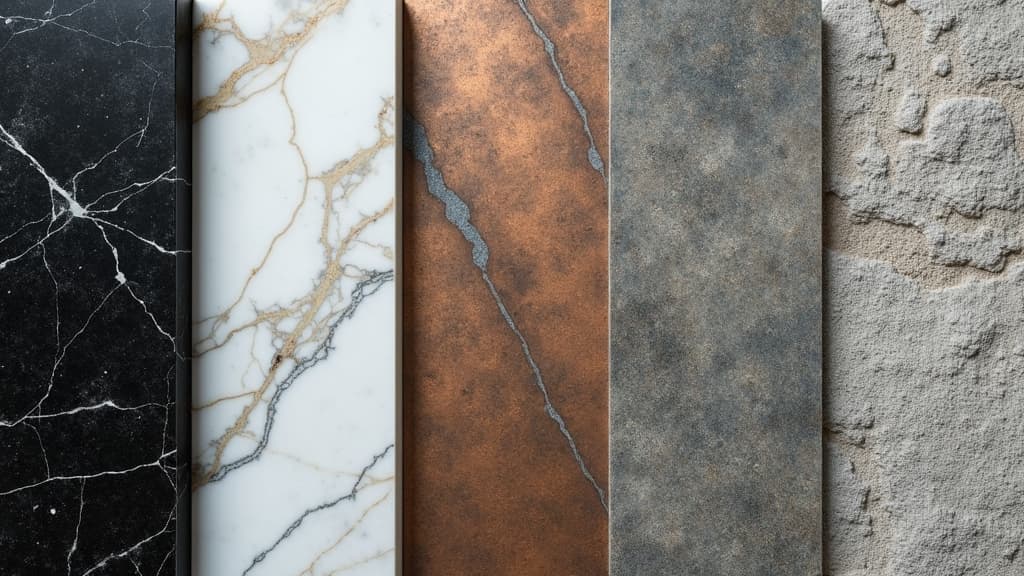
Modern headstones are made from a handful of primary materials: granite, bronze, marble, sandstone, limestone, slate, and occasionally wood or iron. Each has its own characteristics when it comes to durability, engraving quality, maintenance requirements, and appearance. Some materials that were once common in earlier centuries — like sandstone and slate — have largely given way to granite and bronze, which dominate the memorial industry today. Let's look at each one in detail.
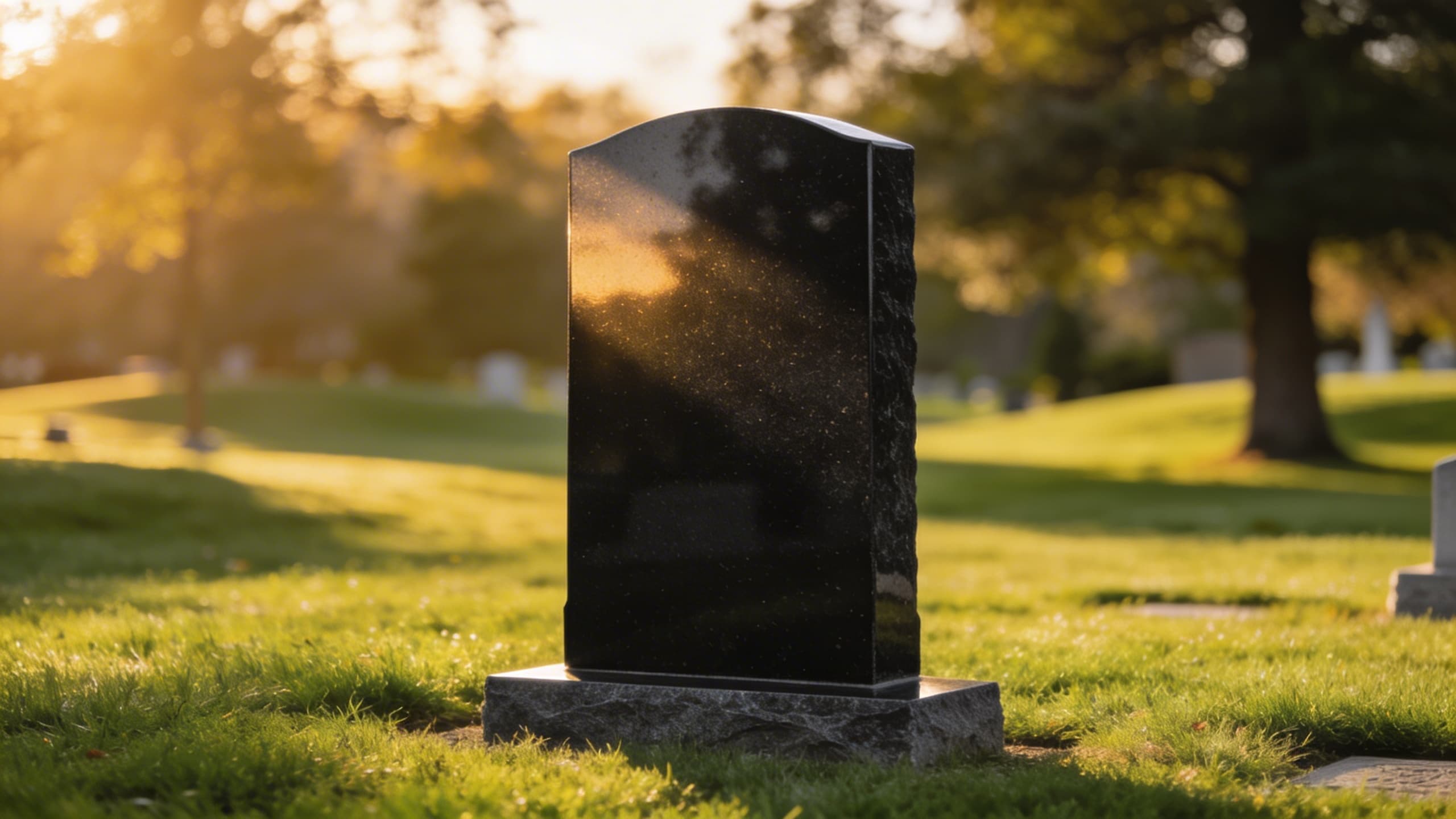
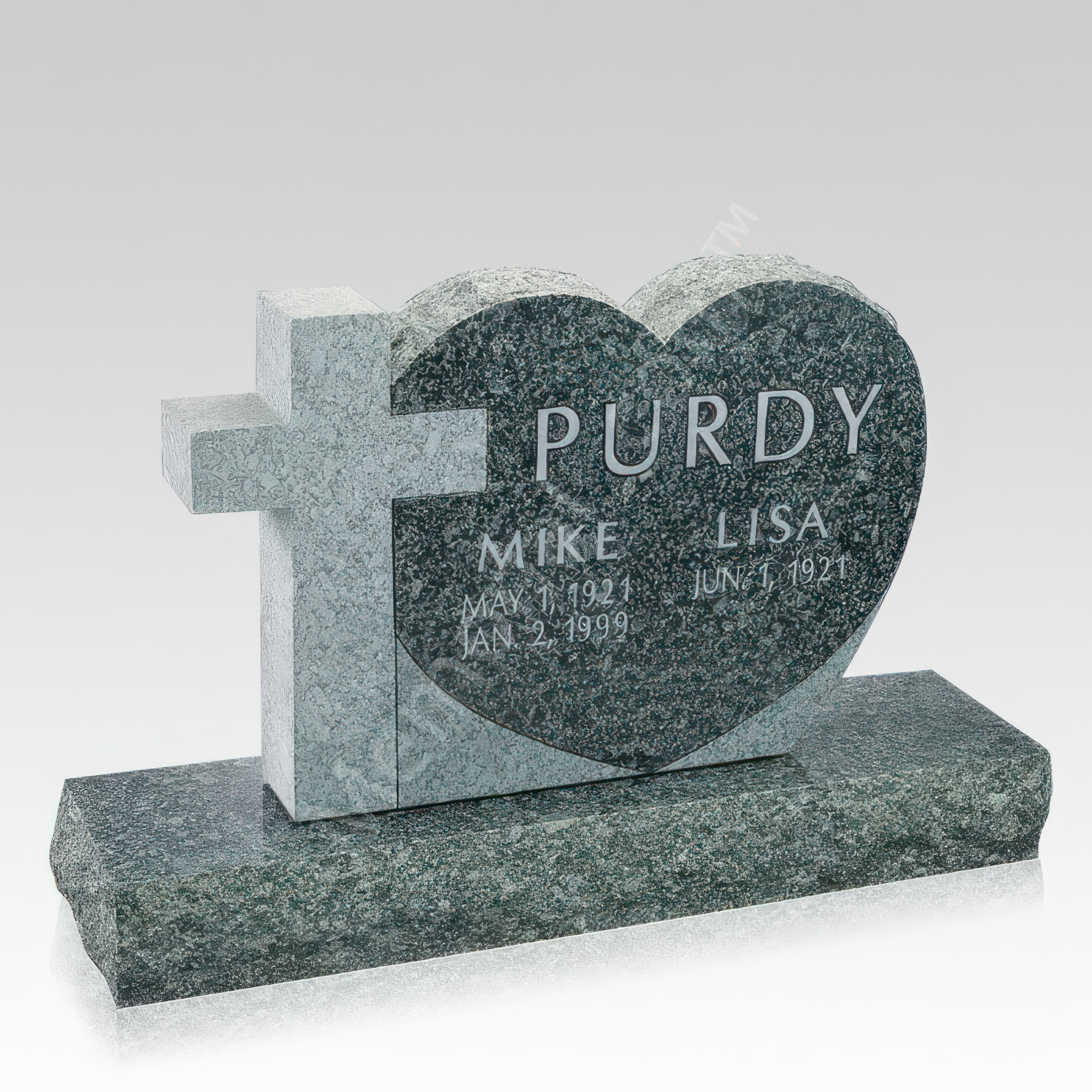
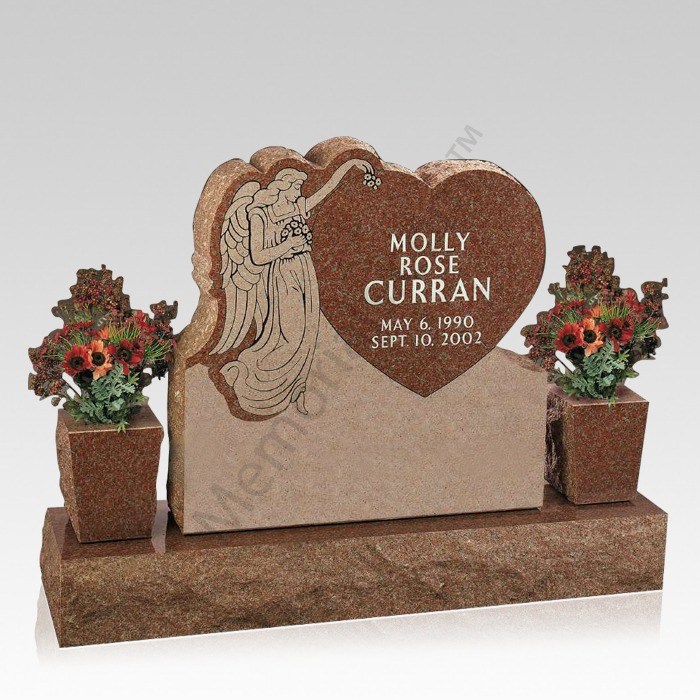
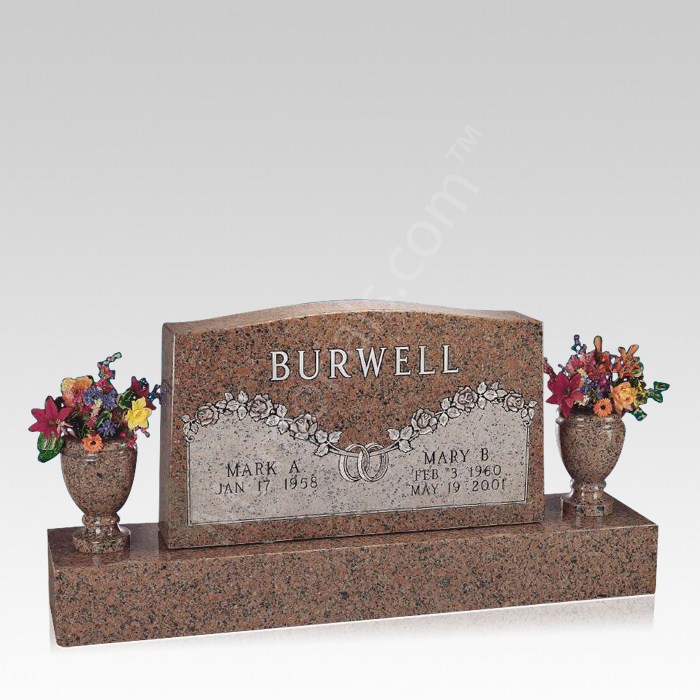
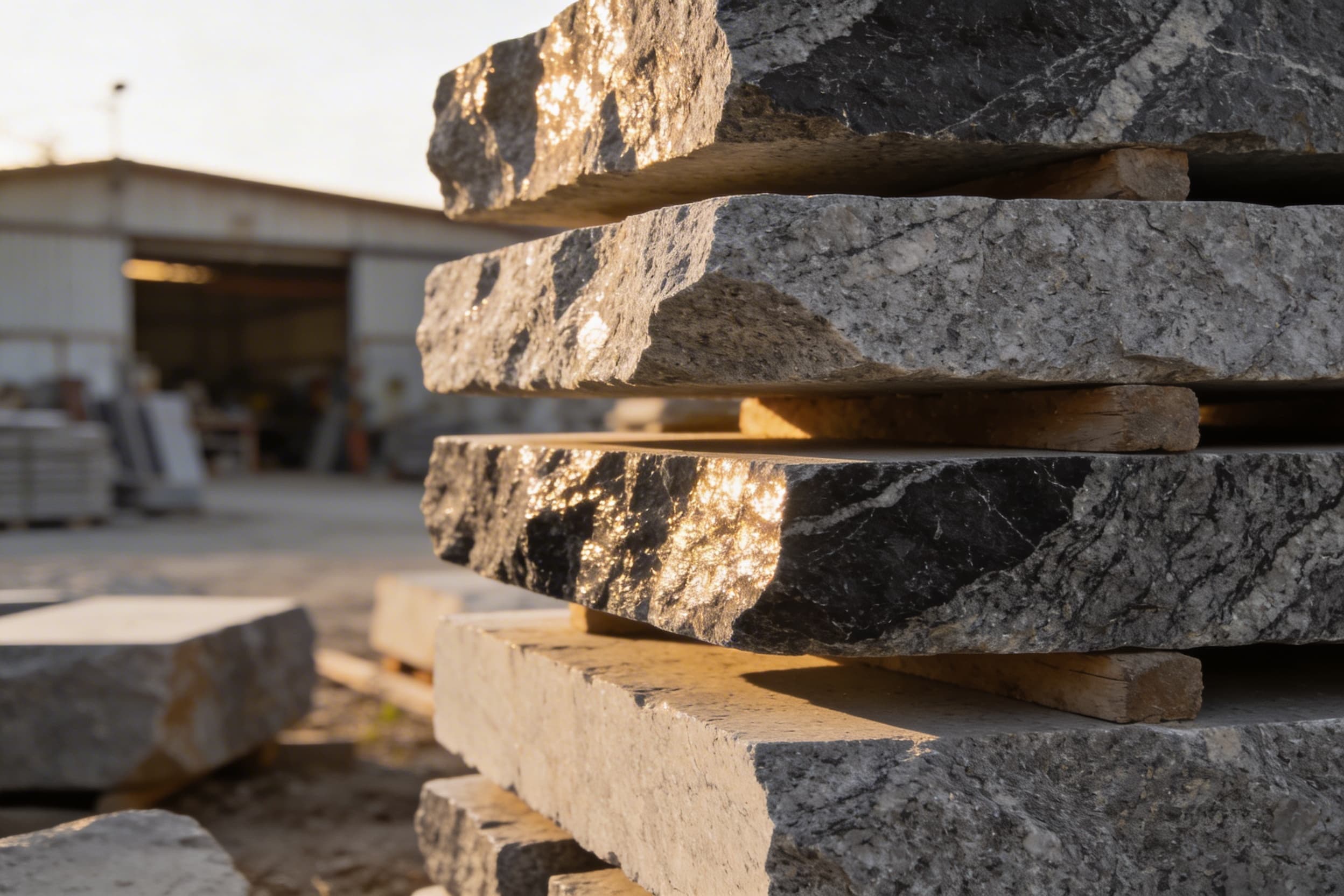
Granite is, by a wide margin, the most widely used headstone material in the world. It is an igneous rock formed deep beneath the earth's surface as magma cools slowly over millions of years, creating a dense, crystalline structure composed mainly of quartz, feldspar, and mica. This geological process gives granite its exceptional hardness and resistance to weathering, making it ideal for outdoor memorials that need to last generations.
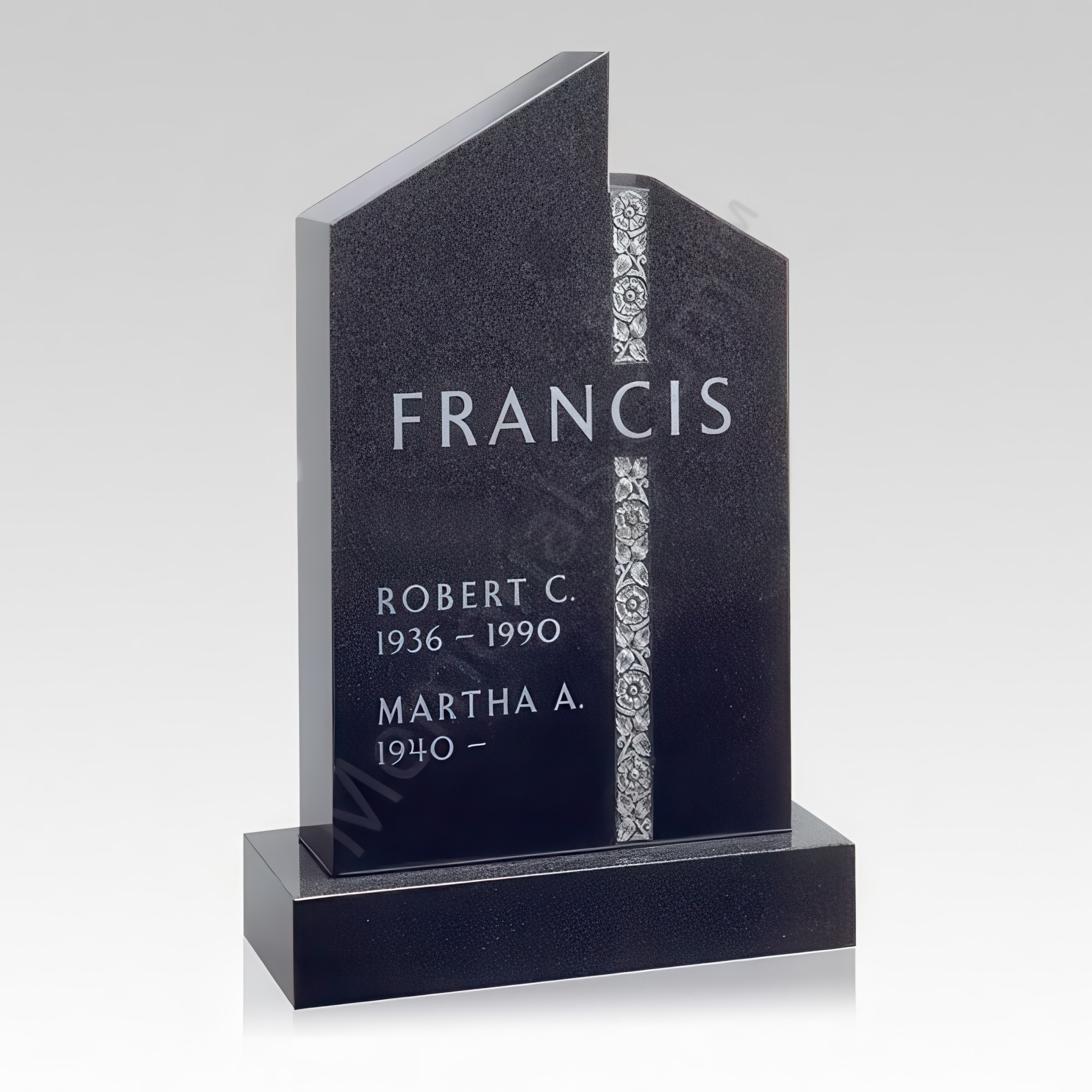
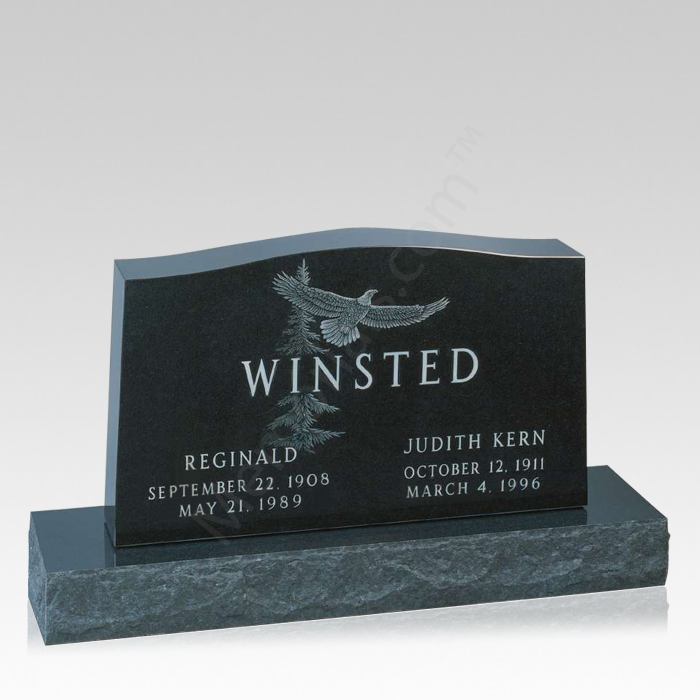
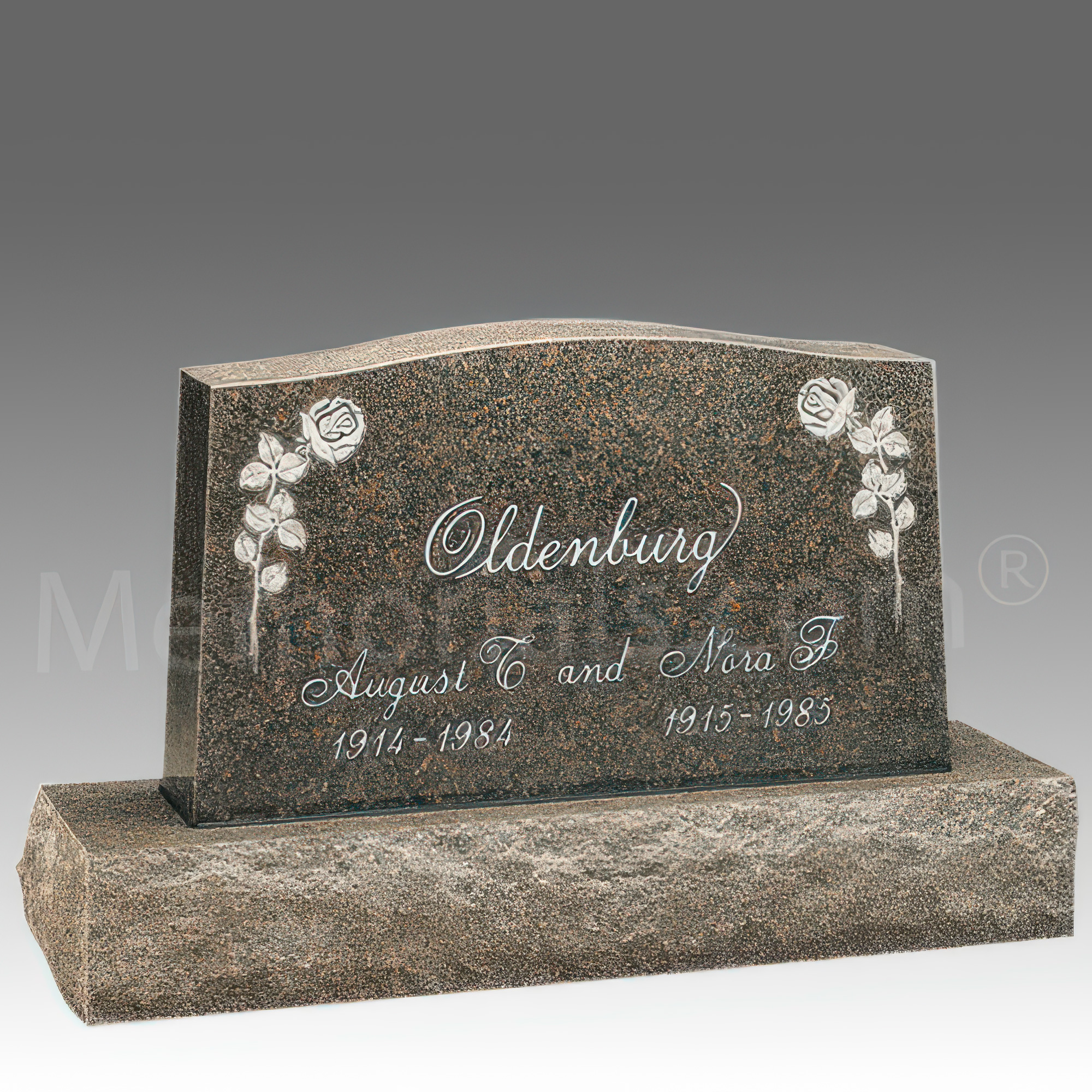
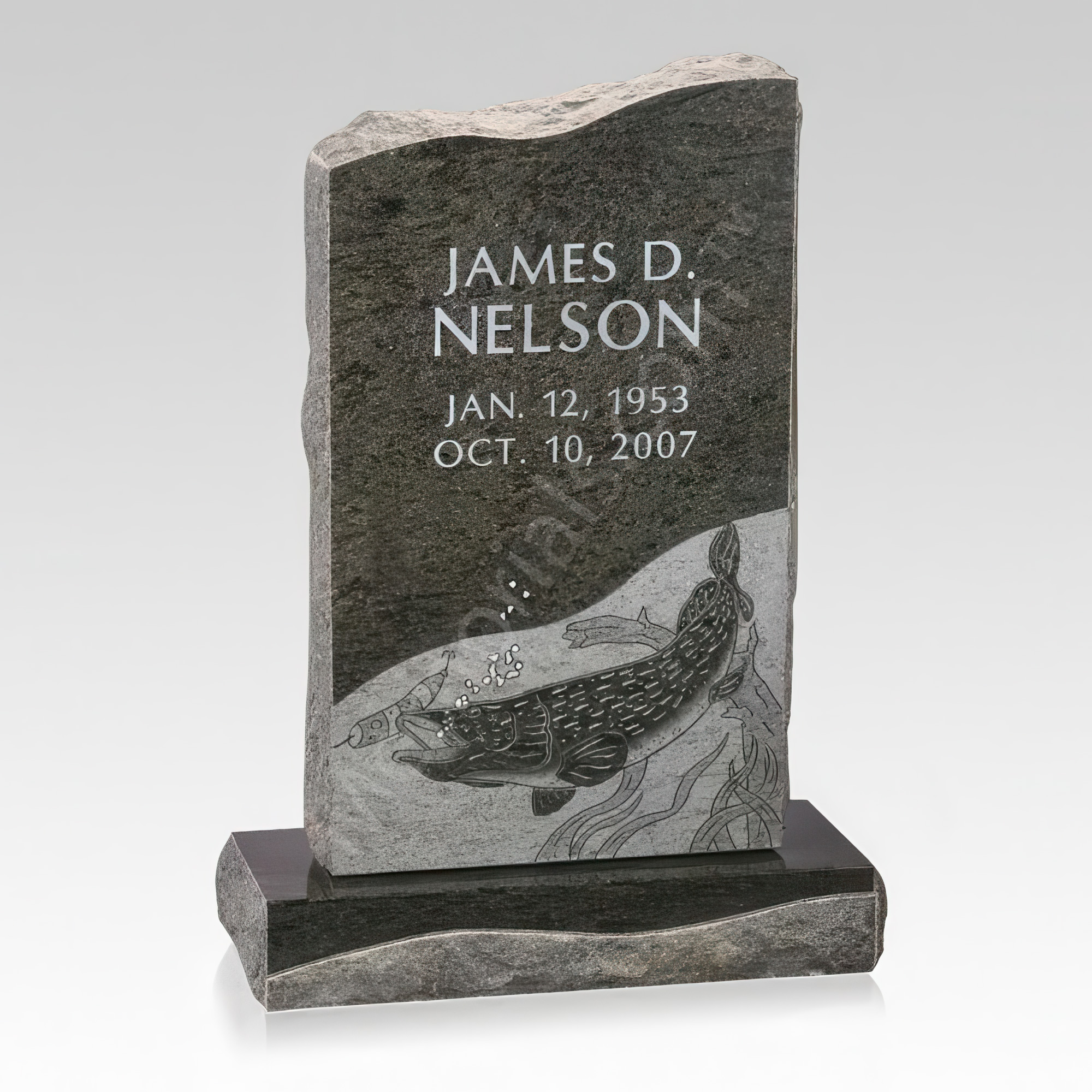
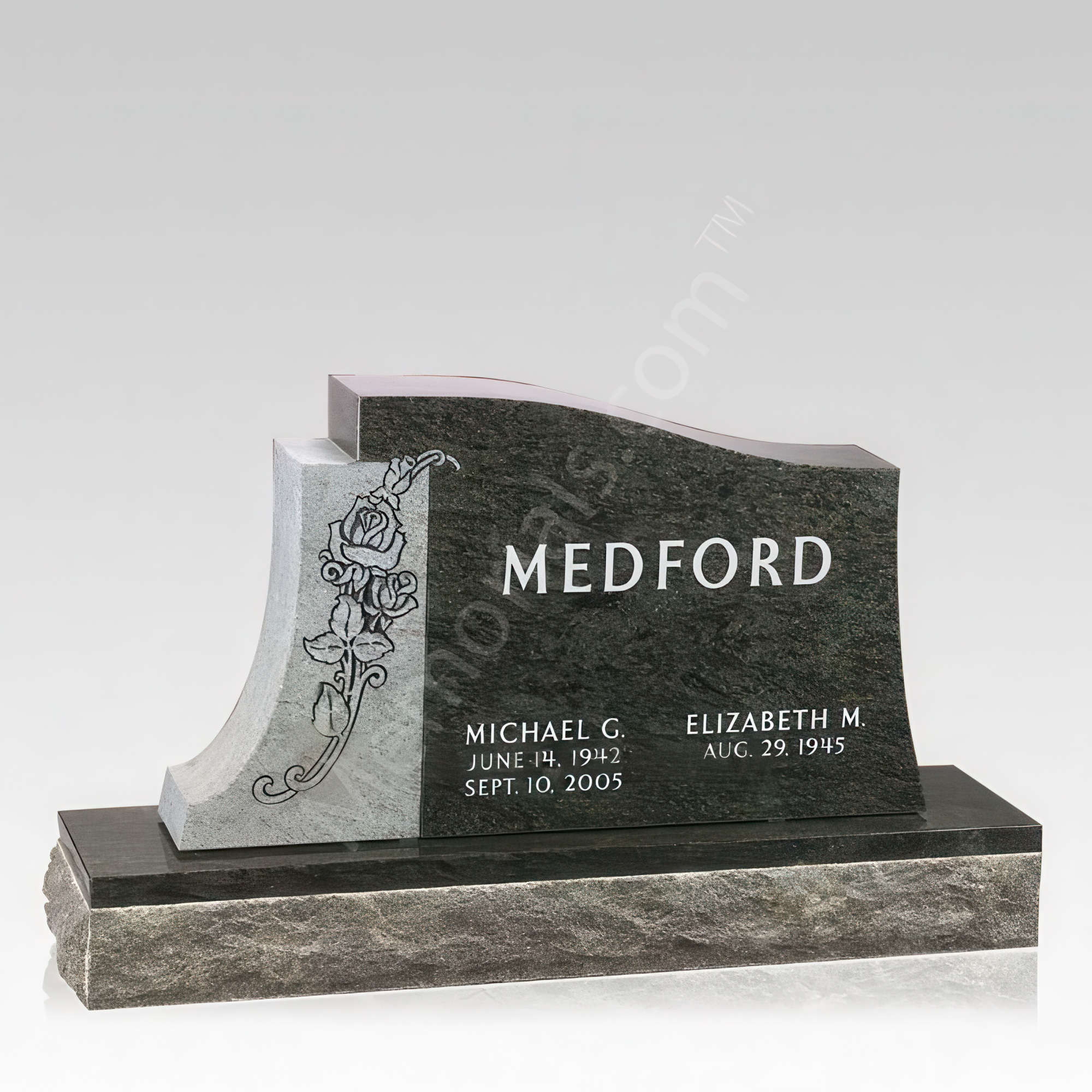
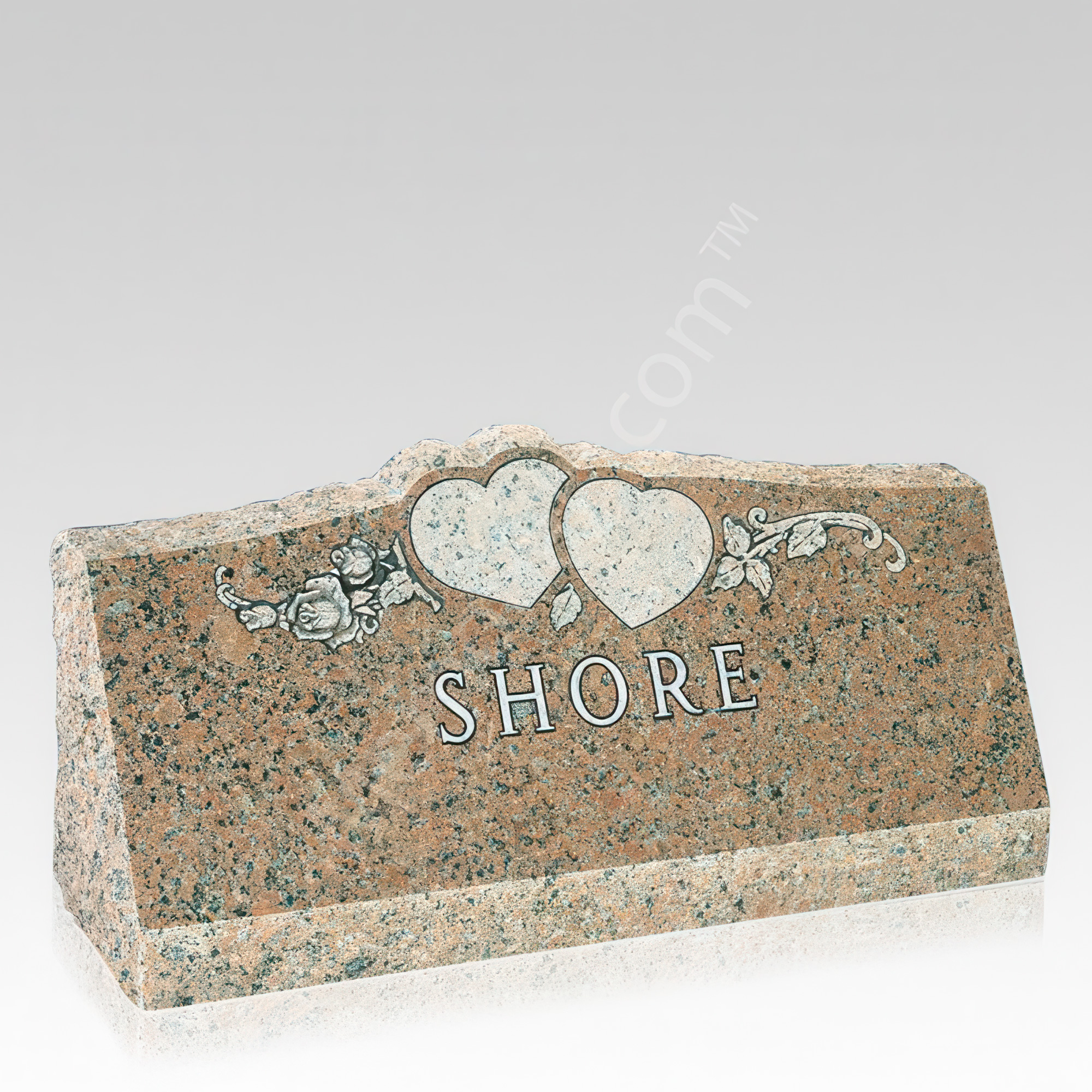
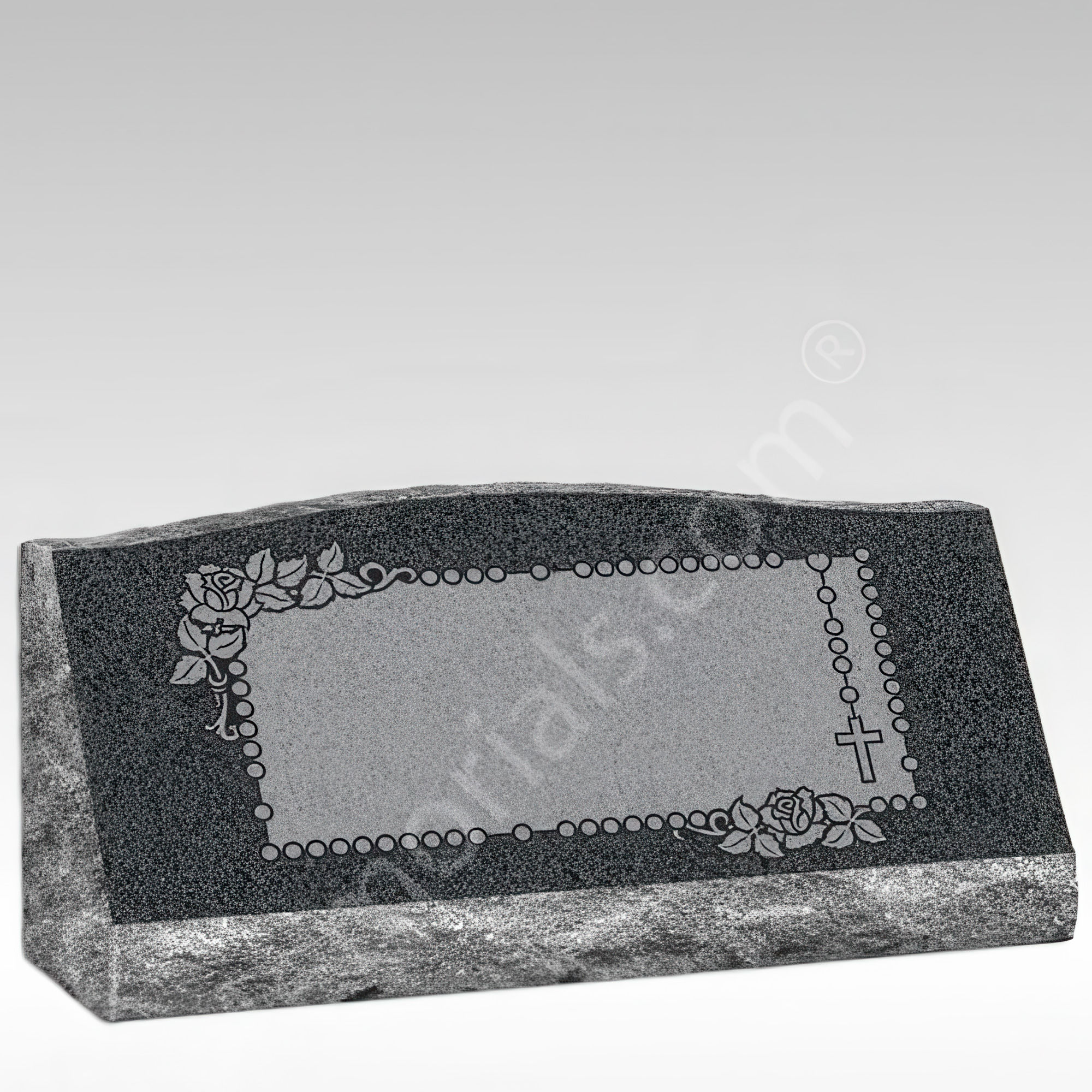
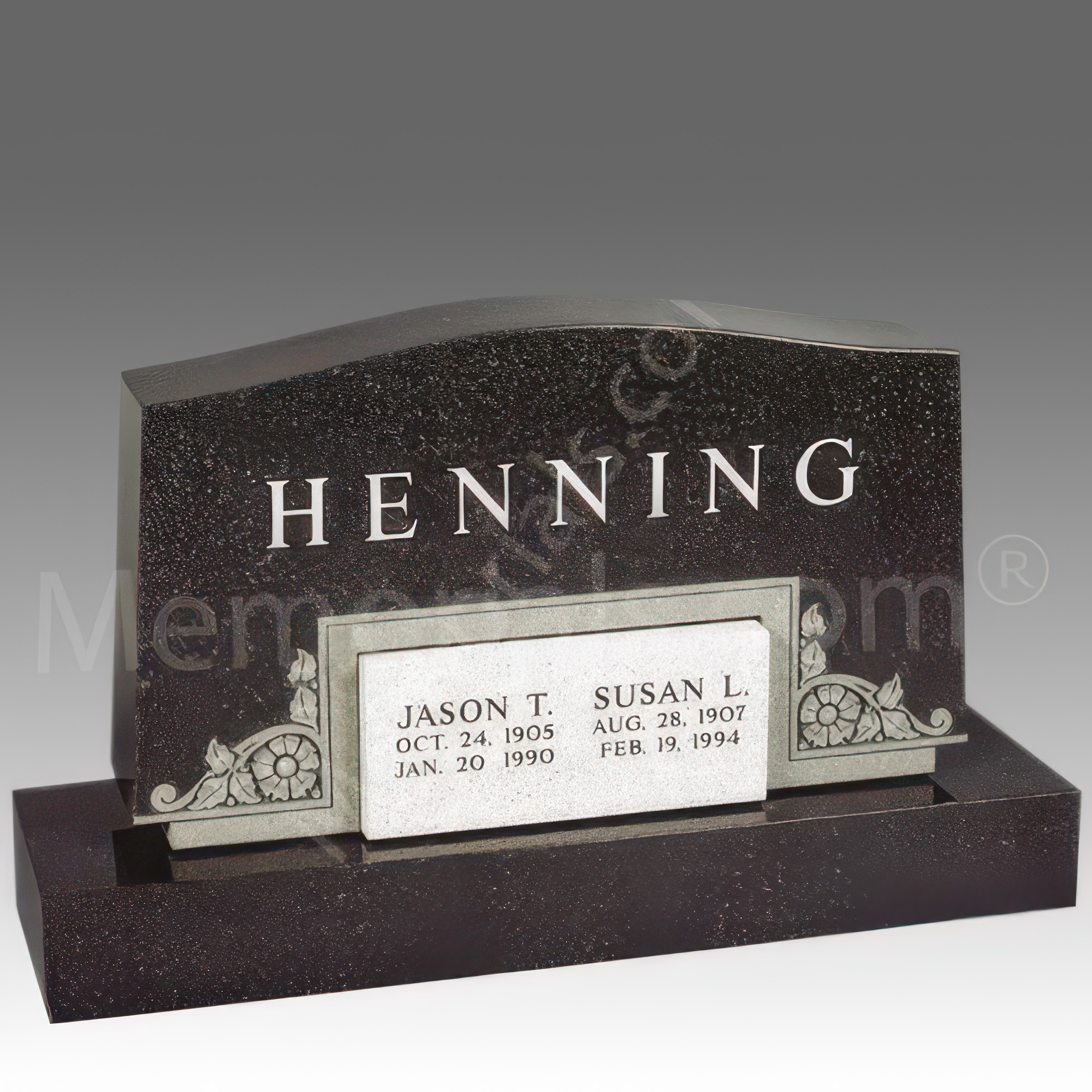
One of granite's greatest advantages is its range of colors. Natural granite comes in dozens of shades including classic gray, jet black, blue pearl, tropical green, mountain red, and light pink. Families exploring black granite headstone designs often discover that darker stones produce especially striking results with laser etching and polished finishes, since inscriptions and images show a dramatic contrast against the dark surface.
Granite is quarried by drilling, blasting, or water-jet cutting to extract large blocks, which are then transported to manufacturing facilities where they are sliced into slabs, polished, and shaped. Modern equipment allows precise shaping and detailed engraving that would have been impossible a century ago. The stone takes a high polish well and holds inscriptions clearly for decades with minimal fading.
From a maintenance standpoint, granite requires very little attention. A gentle wash with water and a soft brush once or twice a year is typically sufficient. It resists staining, does not absorb water easily, and tolerates freeze-thaw cycles, salt air, and temperature extremes without cracking. For families concerned about long-term durability, granite headstones can last several hundred years with legible inscriptions.
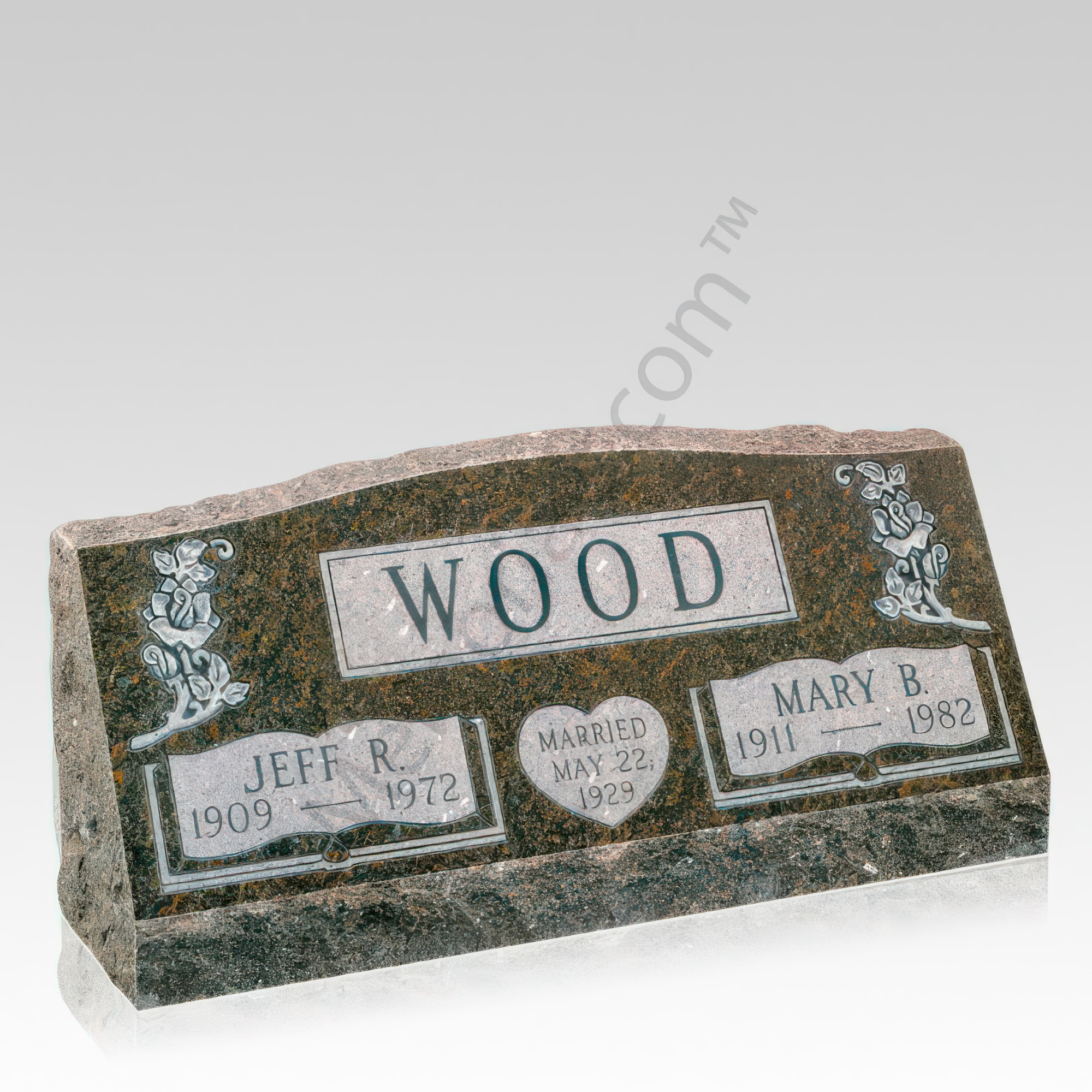
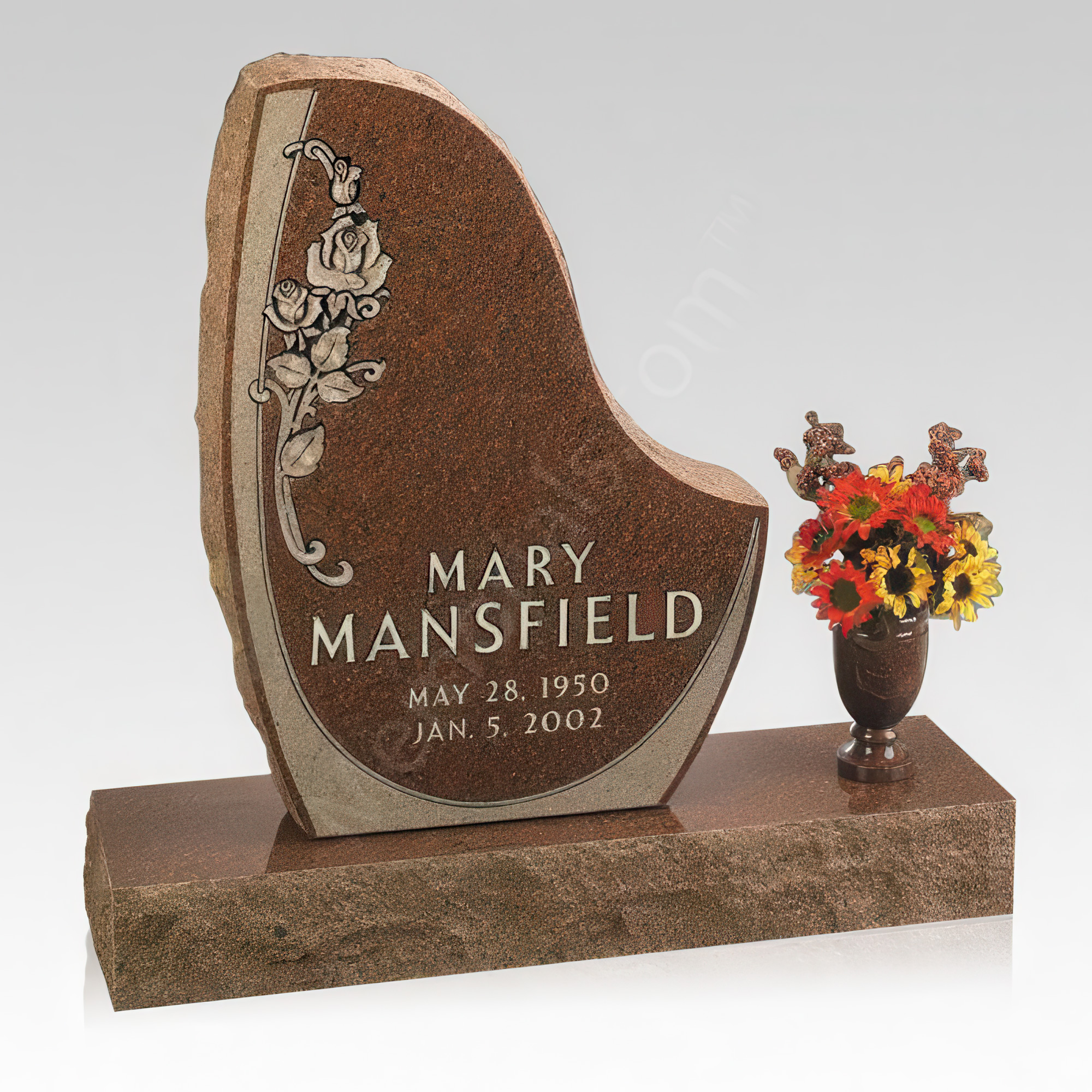
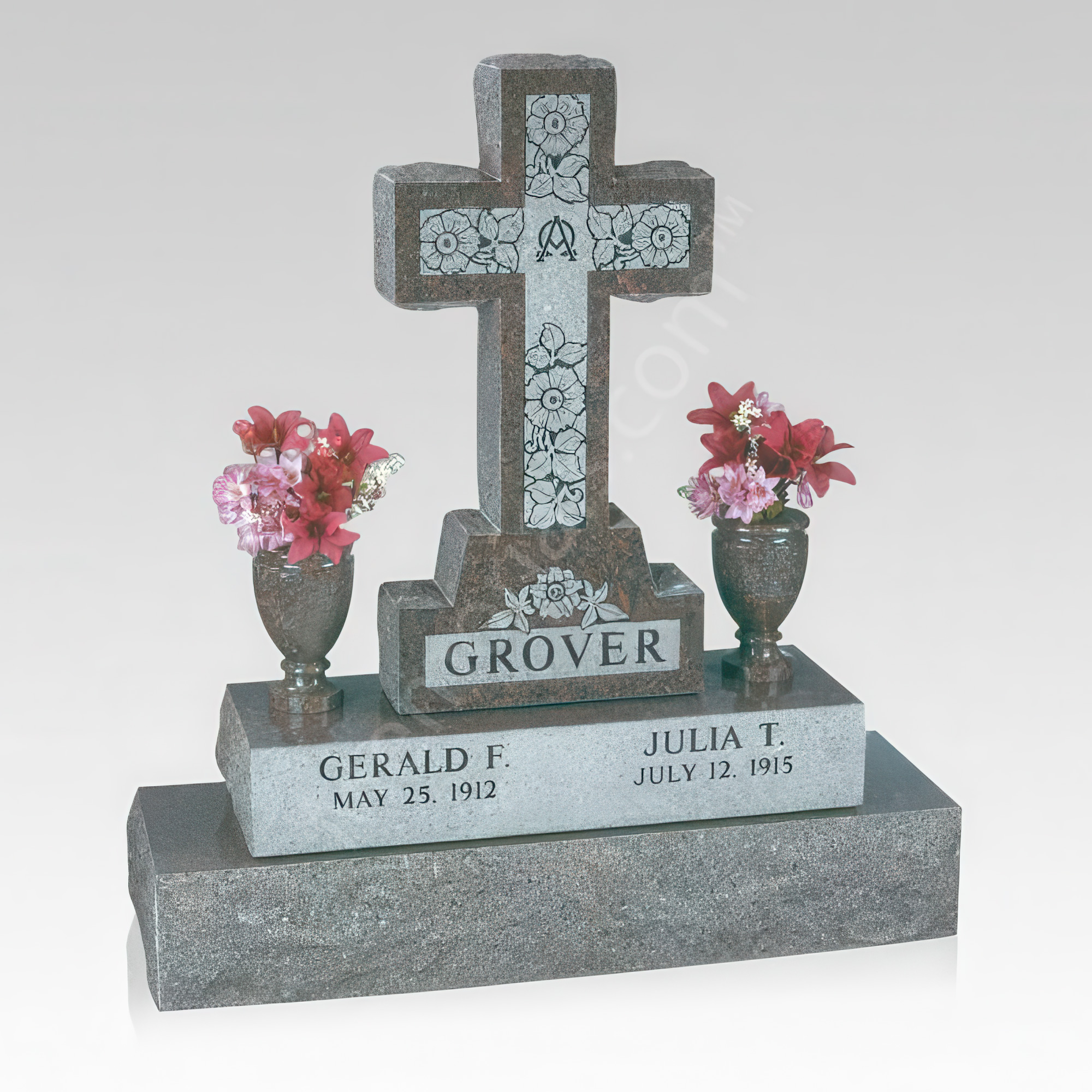
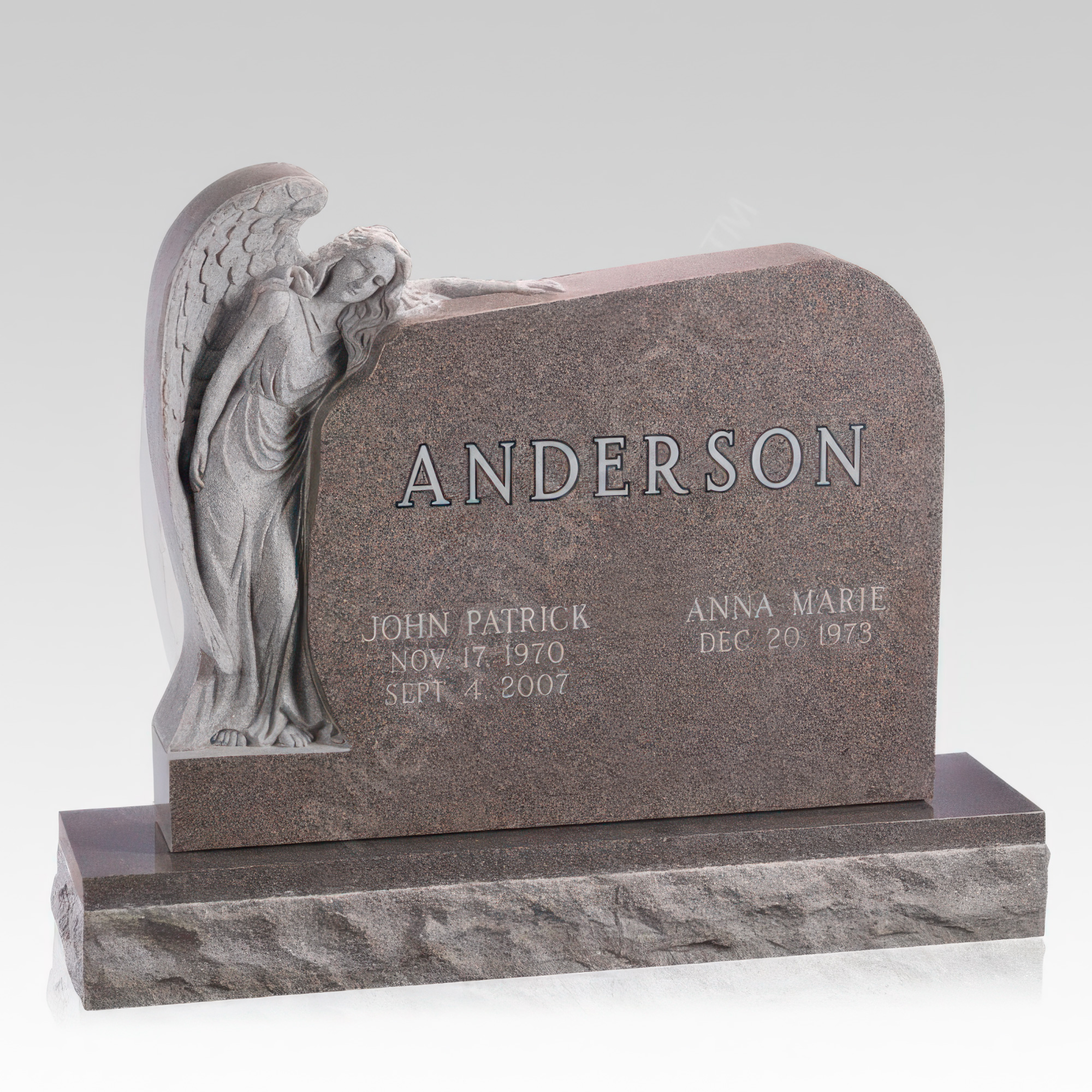
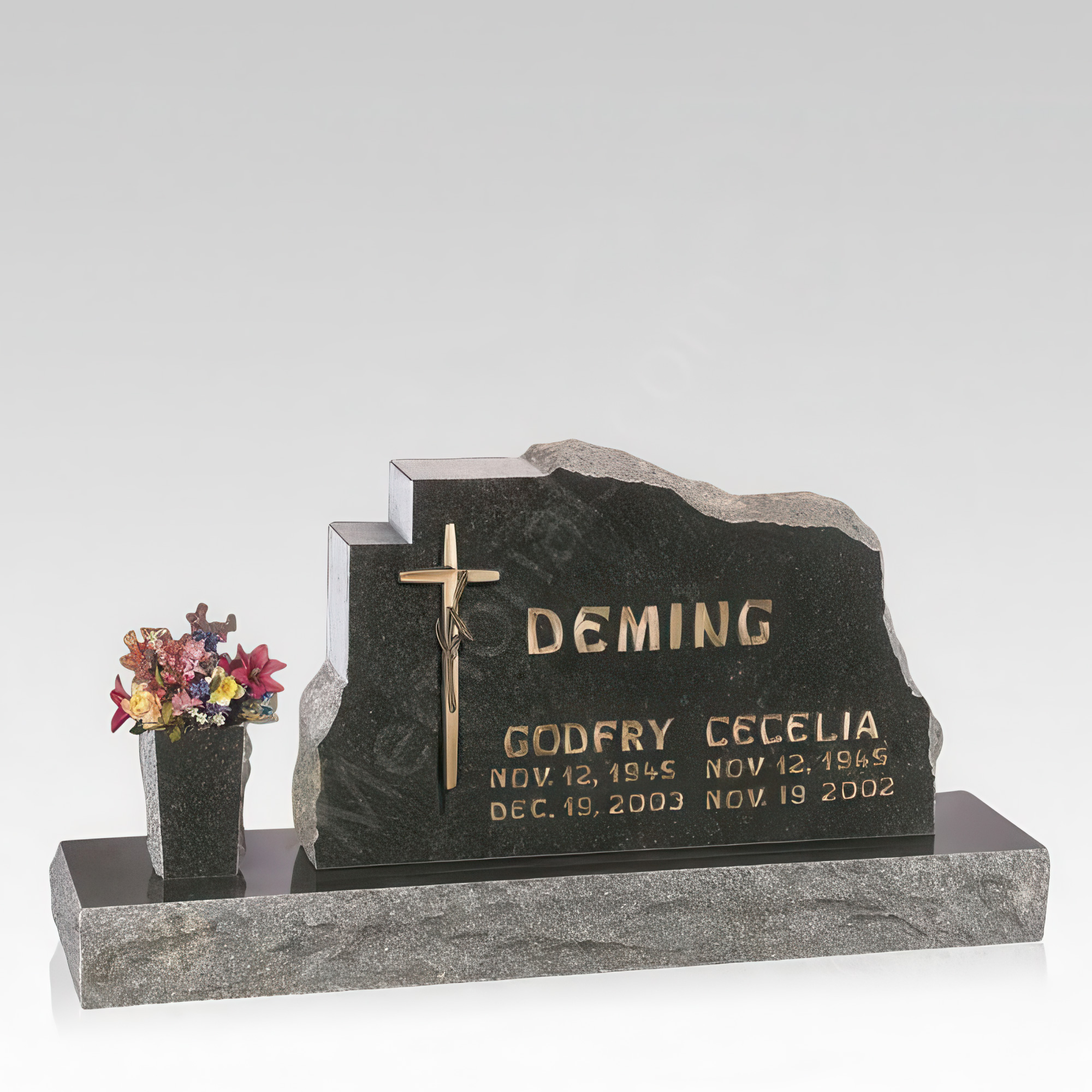
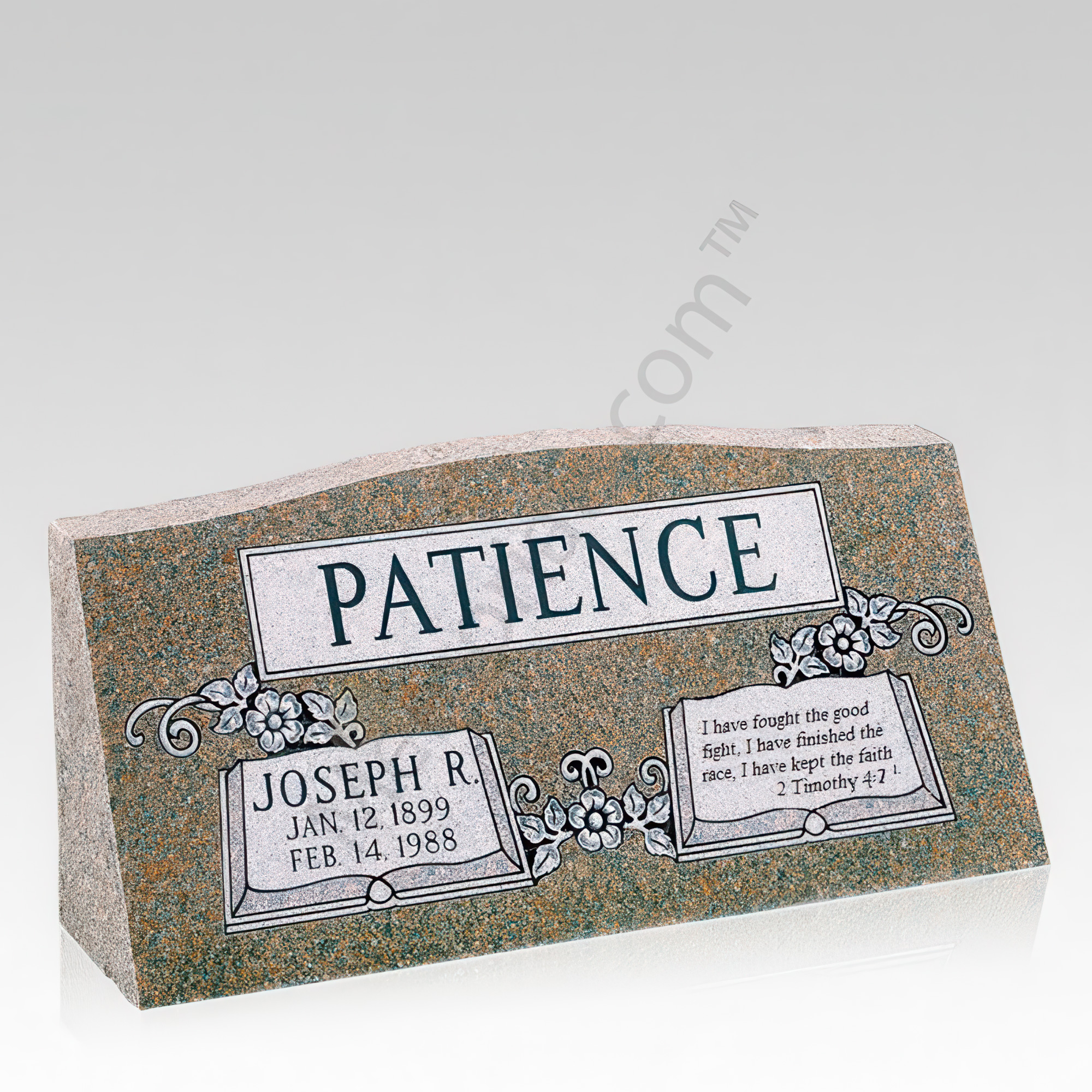
Granite is used across every major headstone style. Whether the memorial is a large upright headstones monument, a low-profile flat headstones flush with the ground, a slant gravestones set at an angle, or even a memorial bench, granite is almost always an available option.
Bronze — Low Maintenance and Lasting Elegance
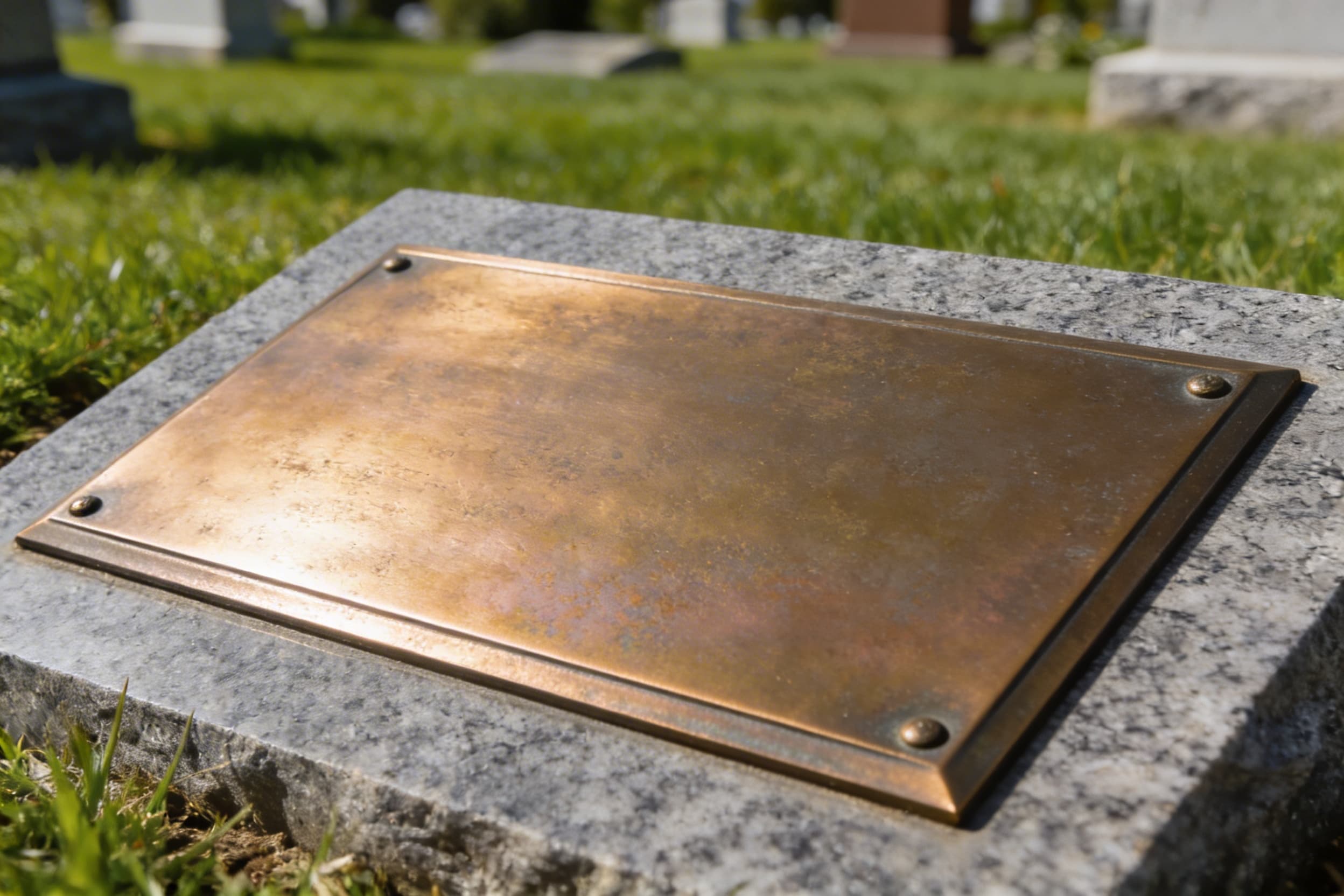
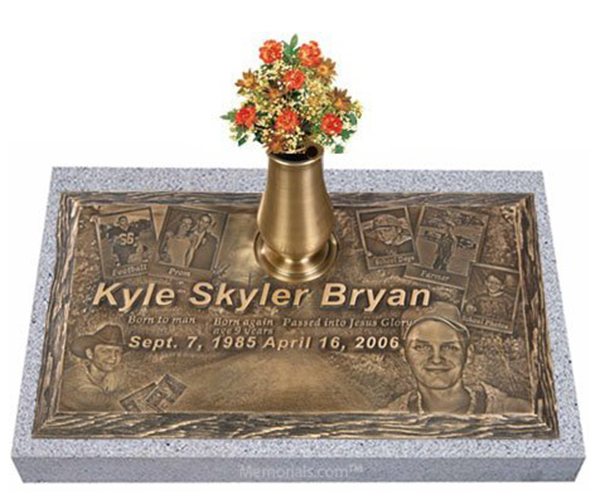
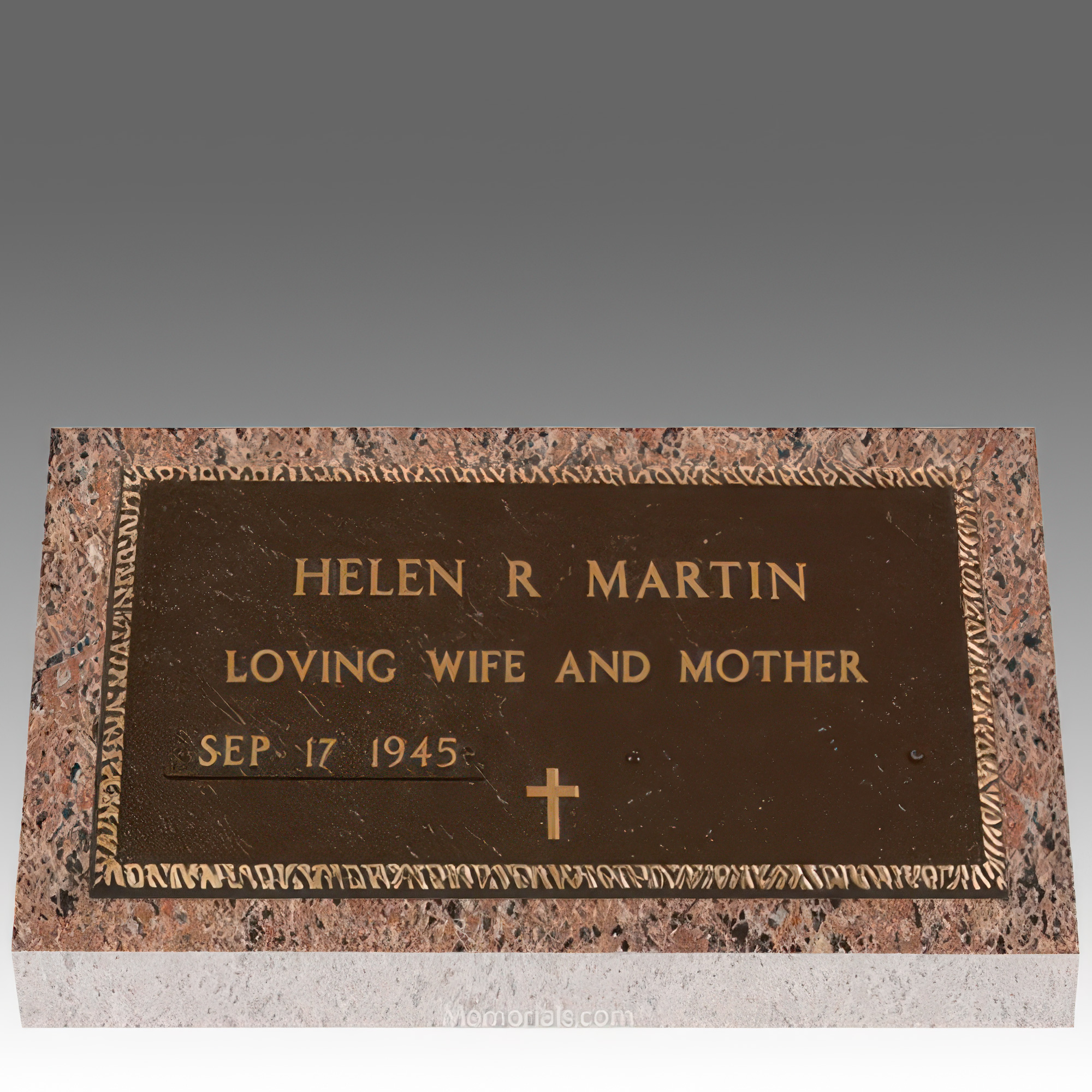
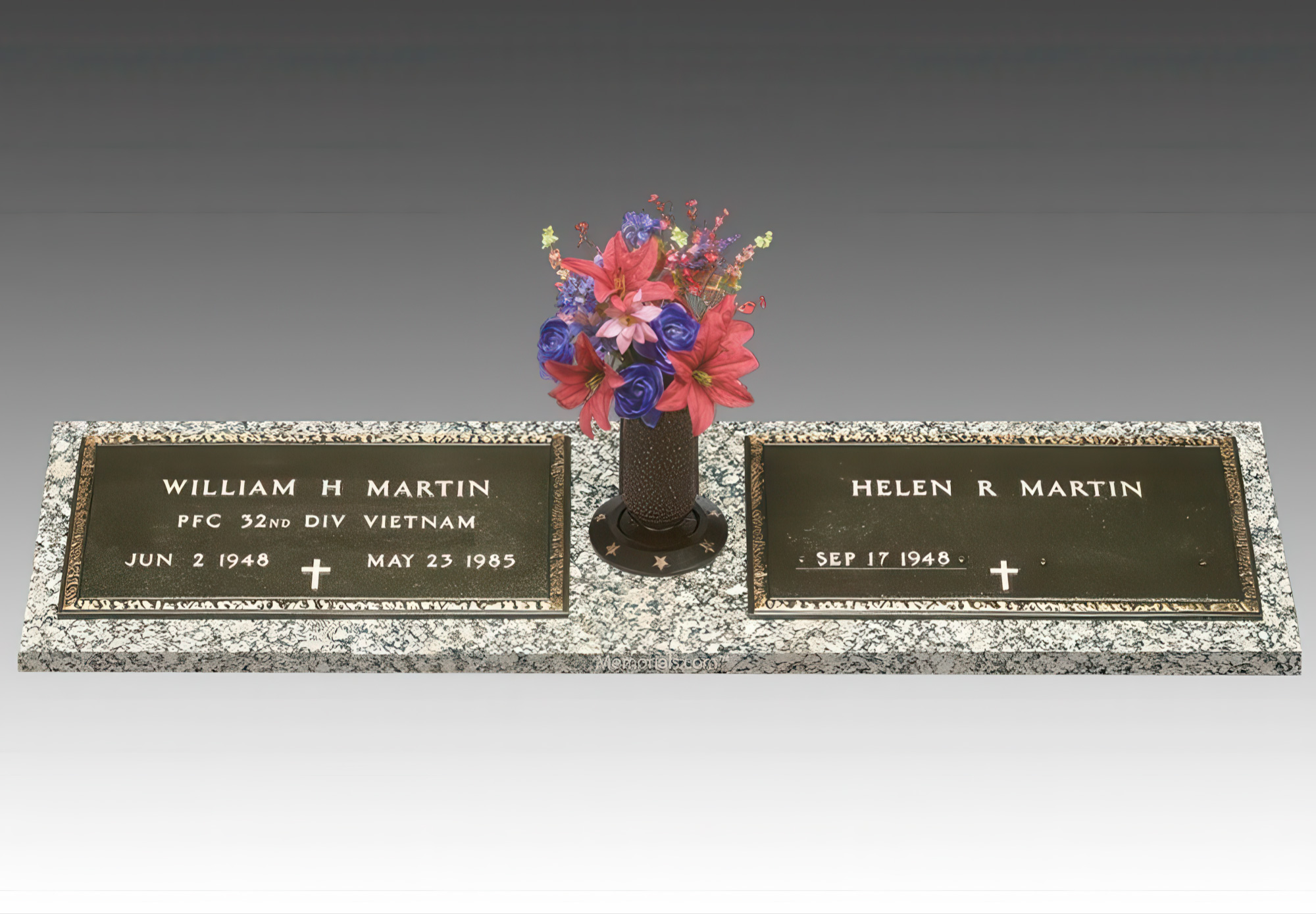
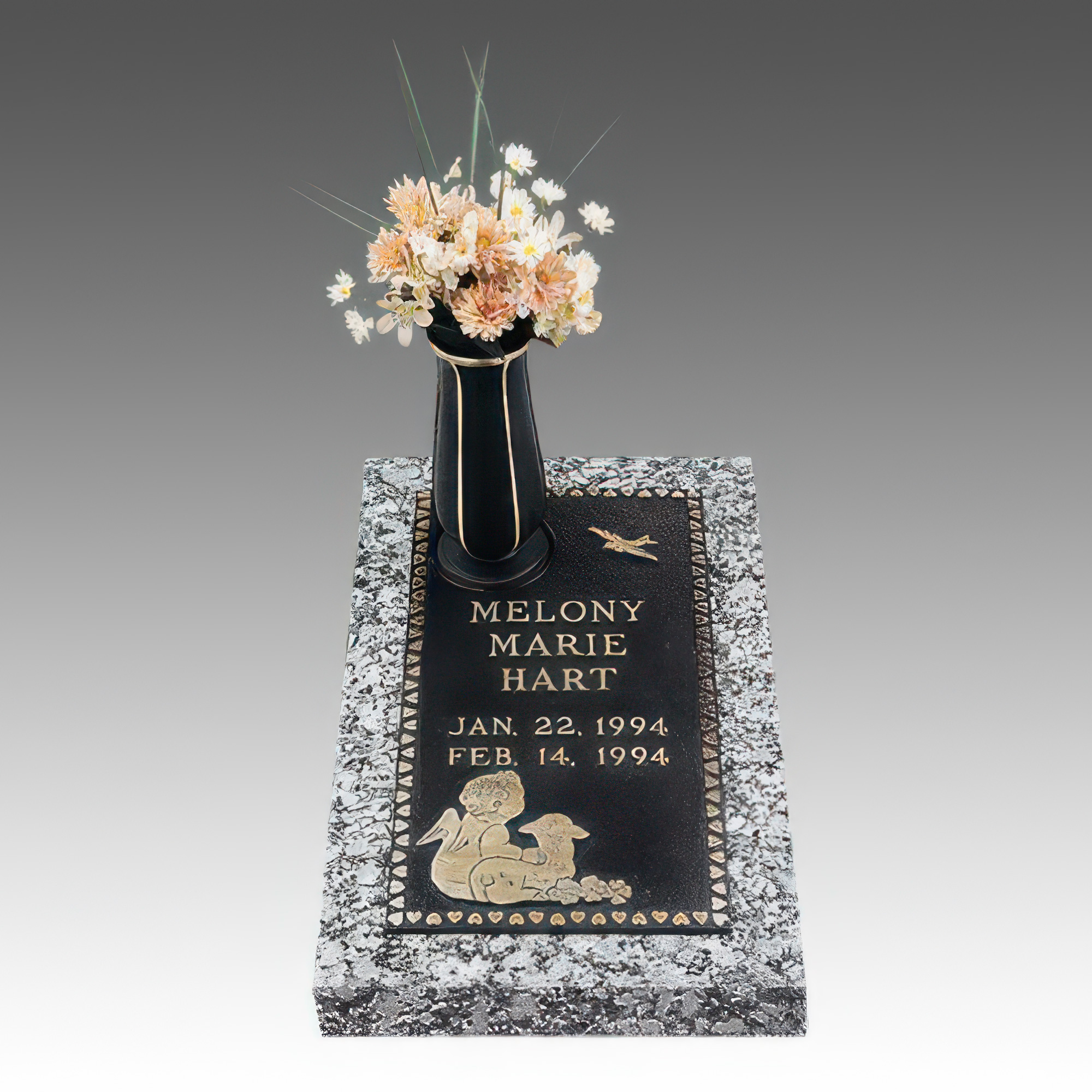
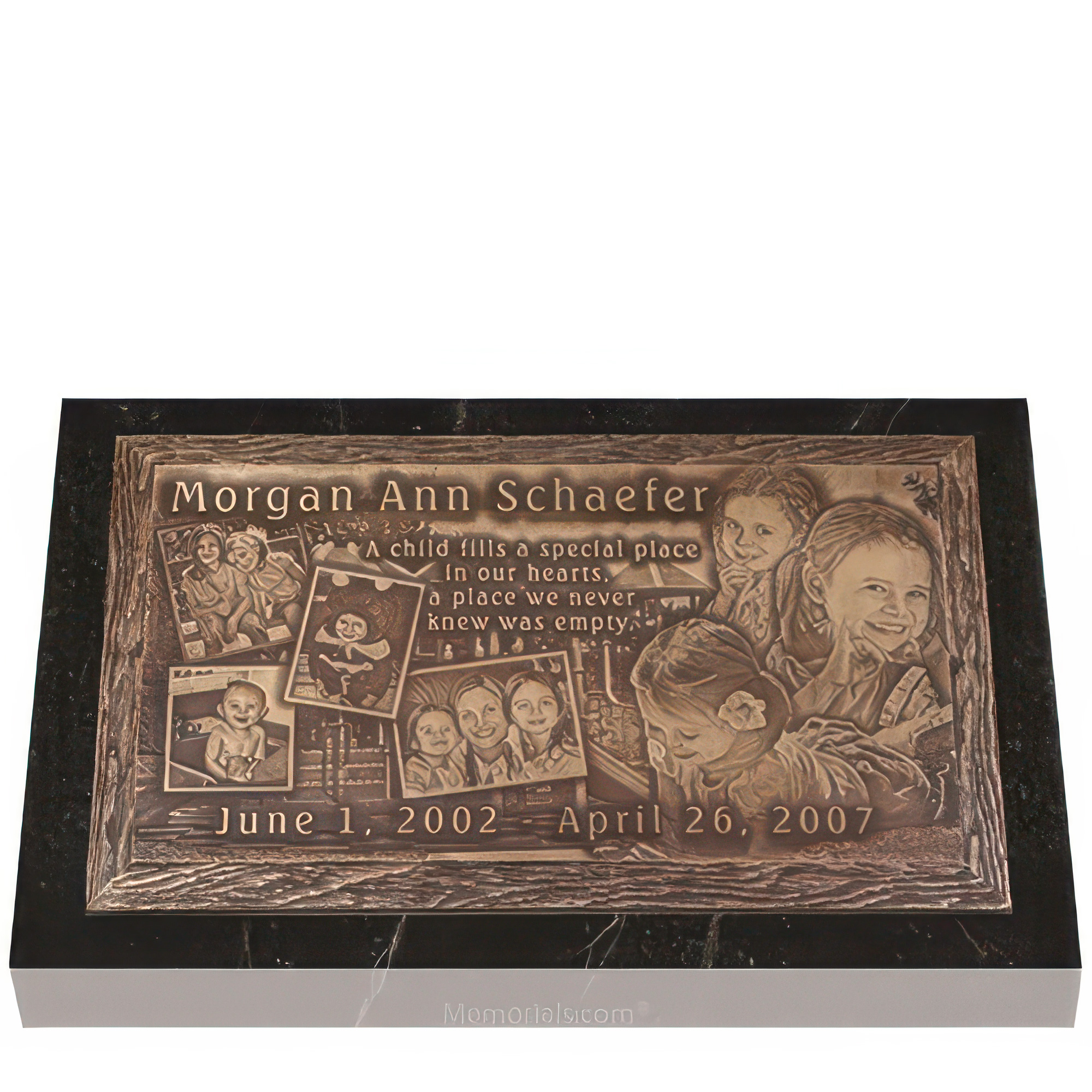
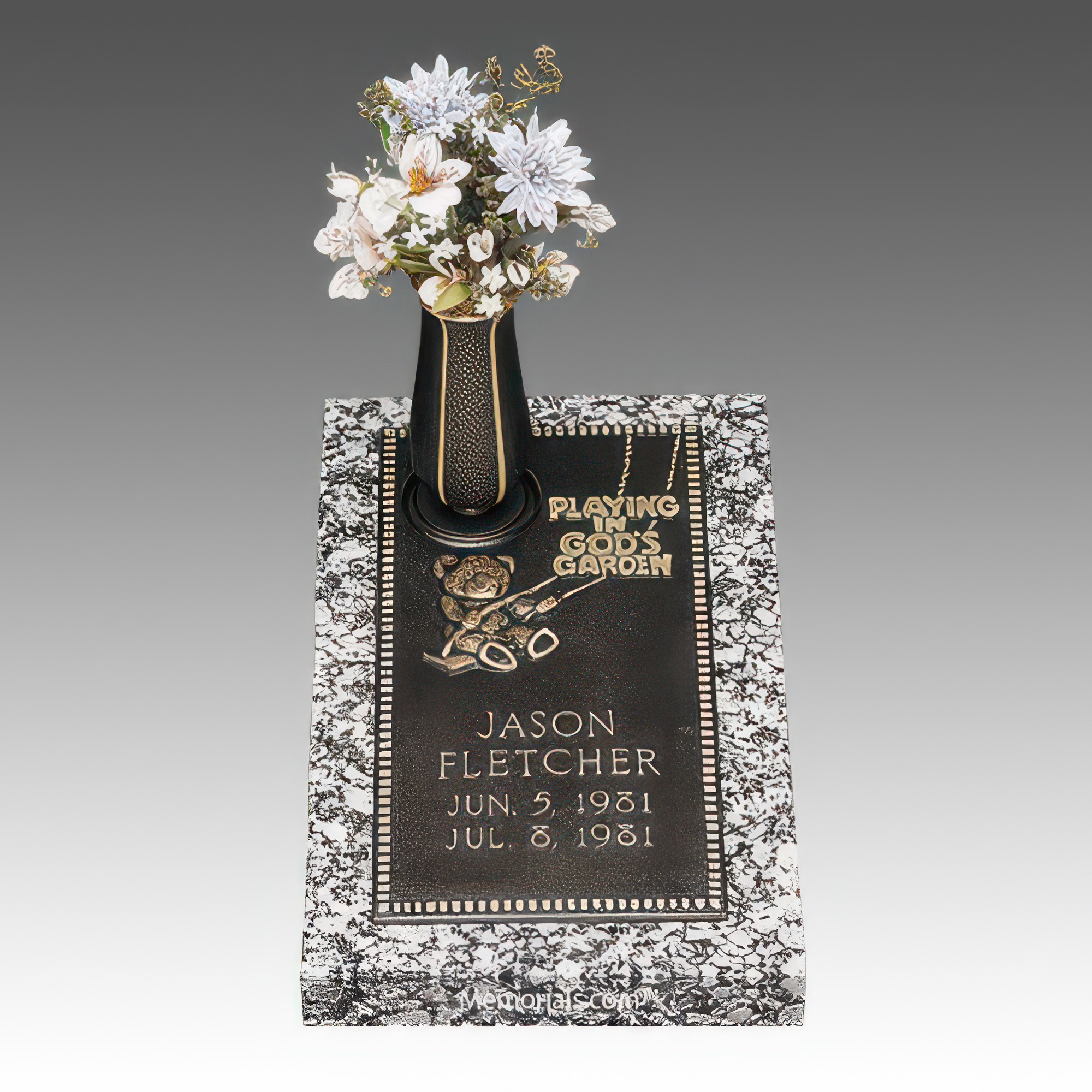
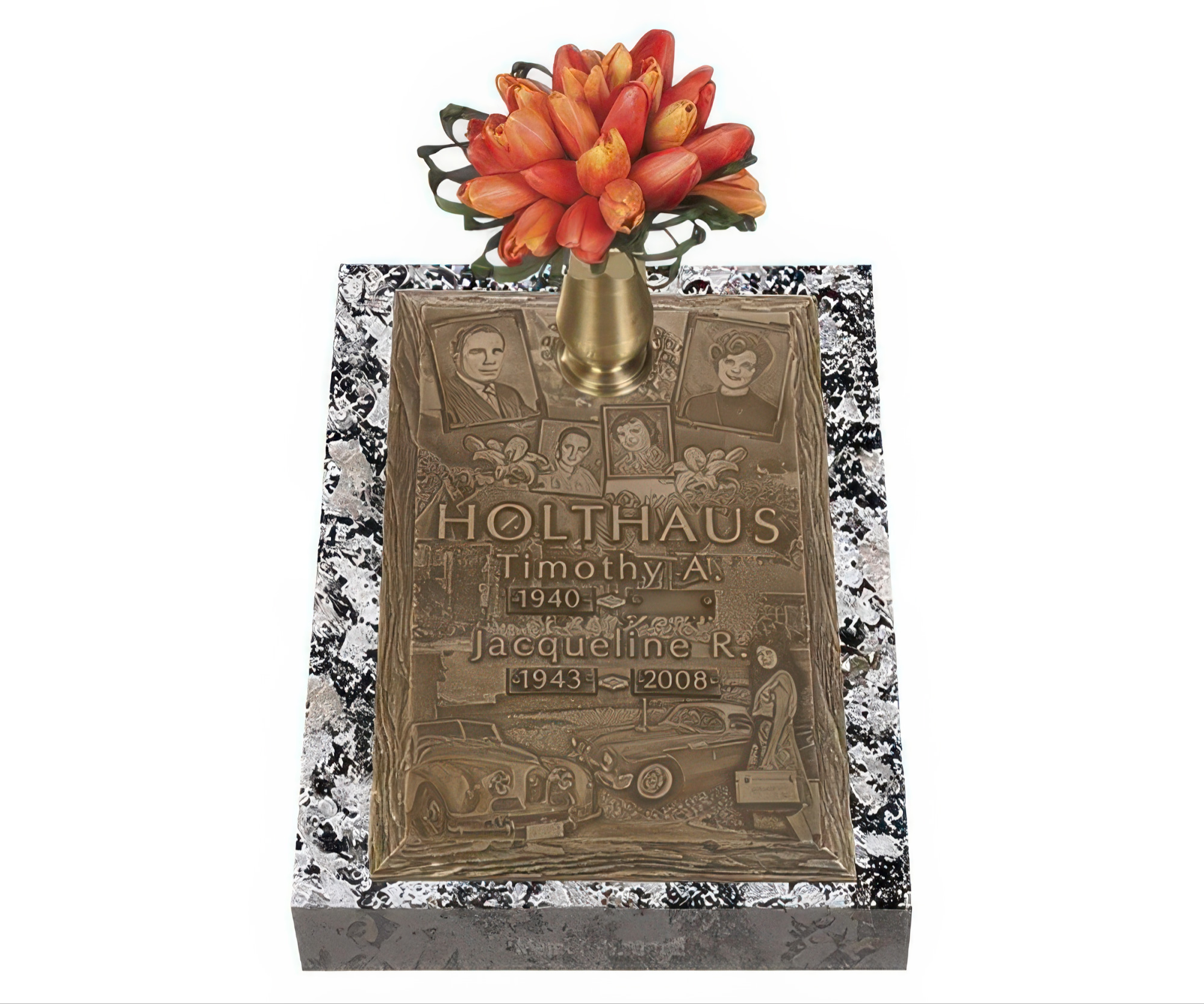
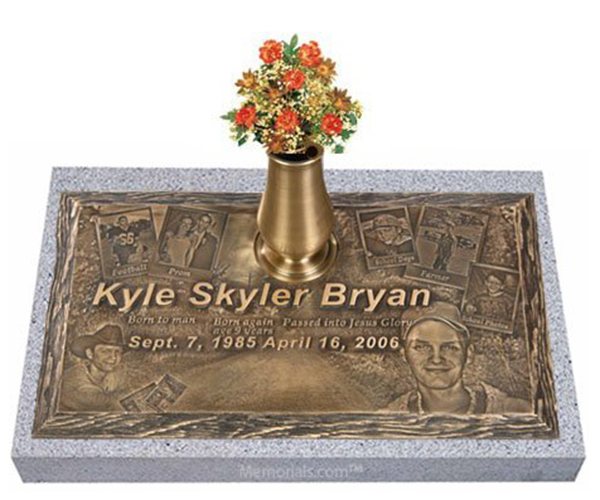
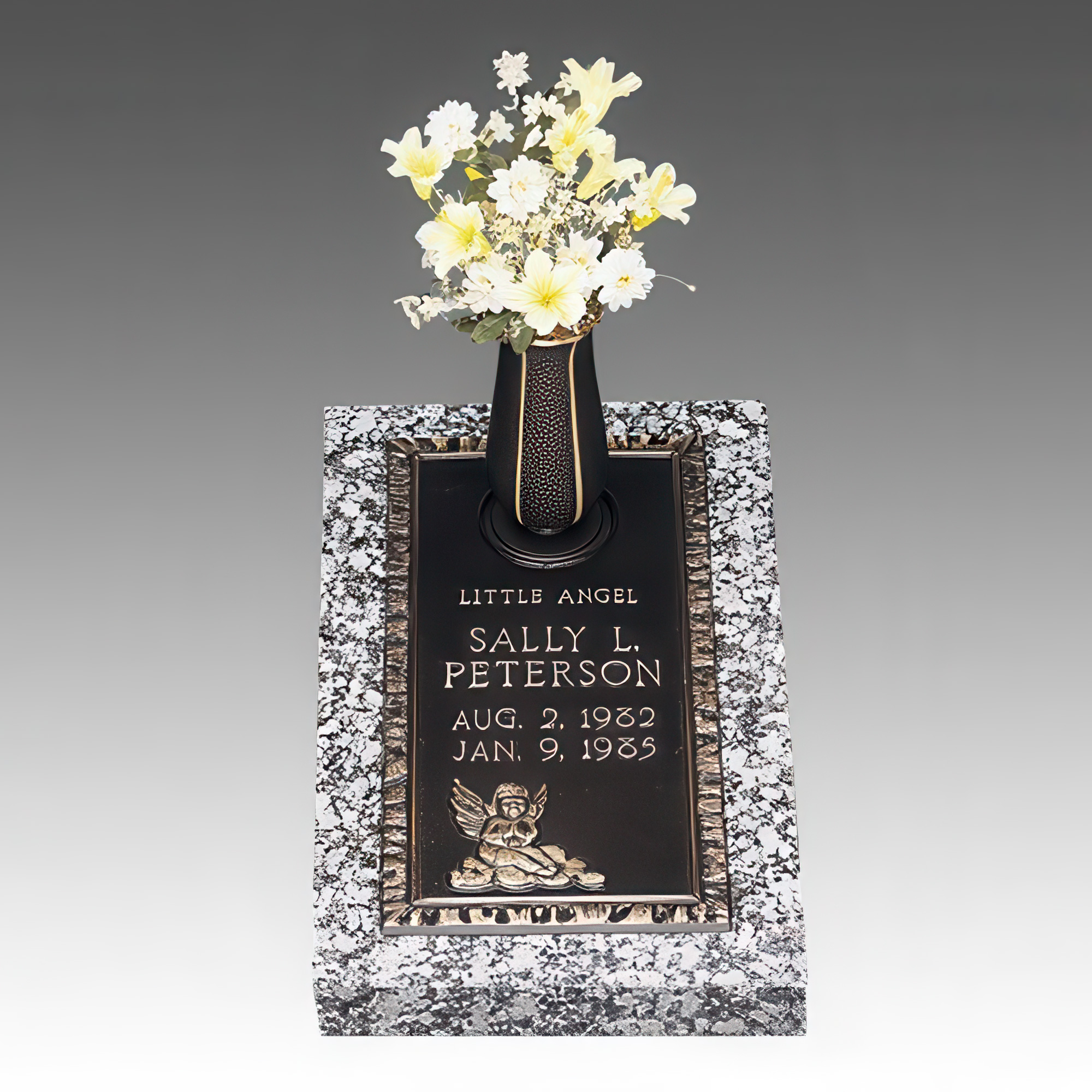
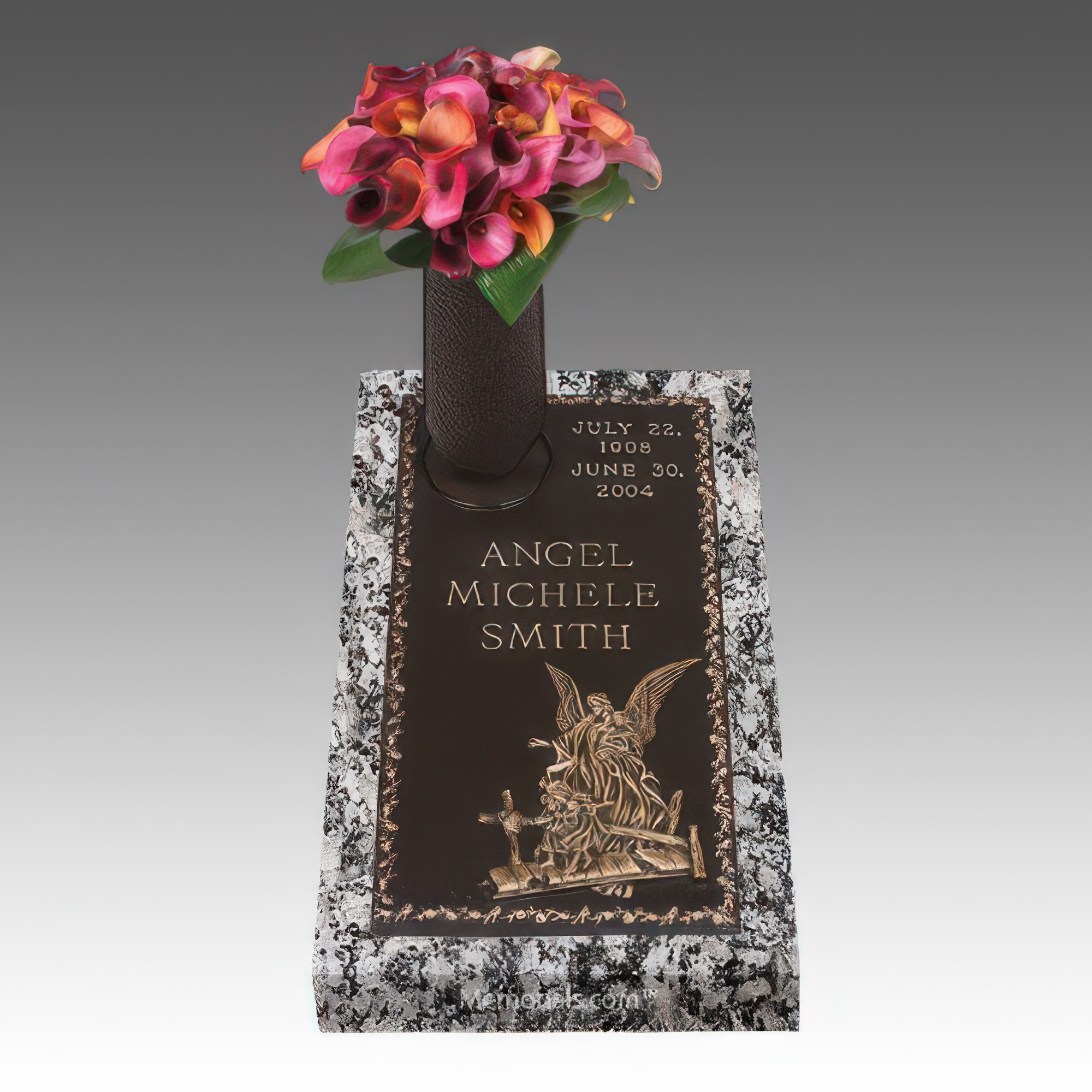
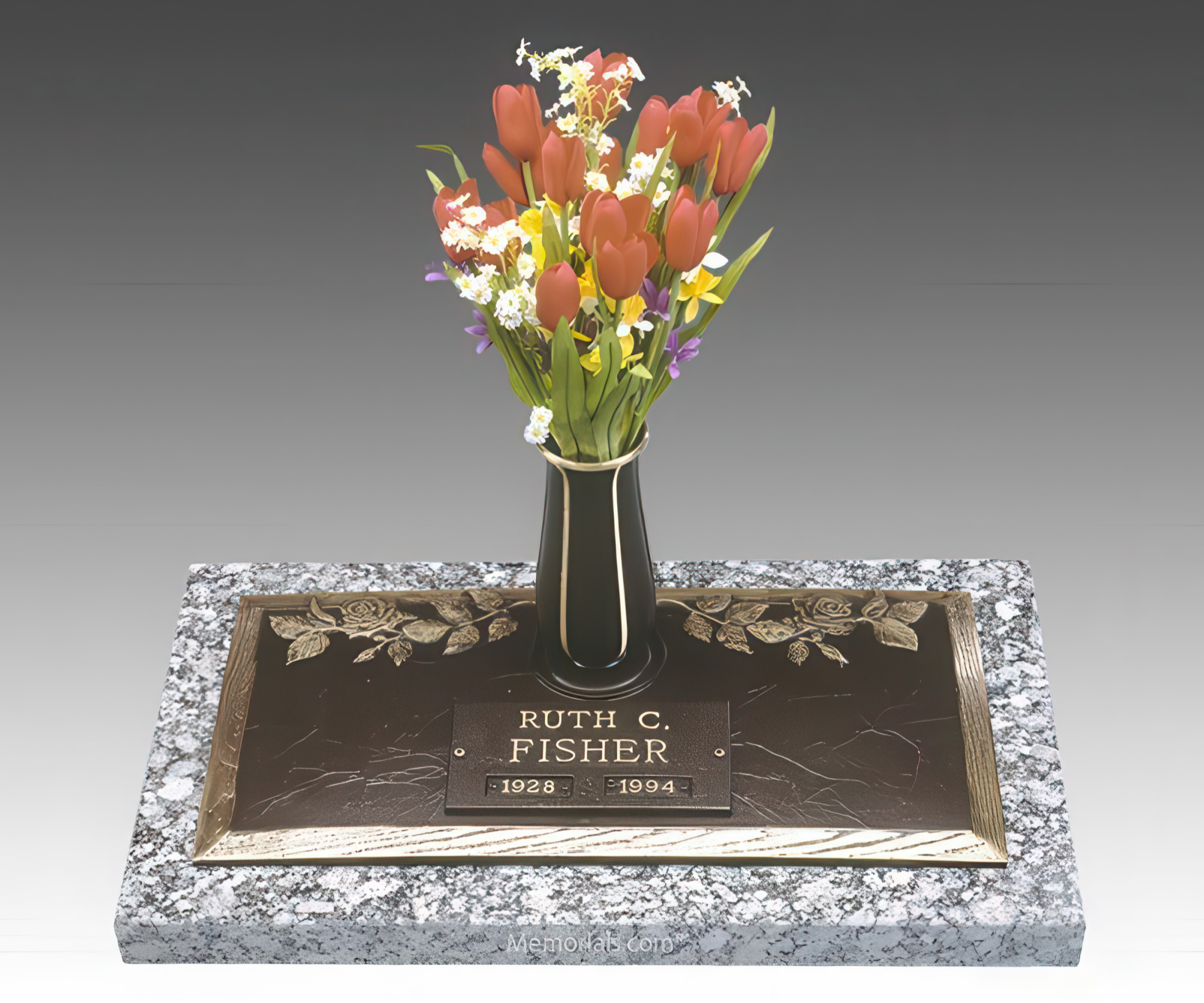
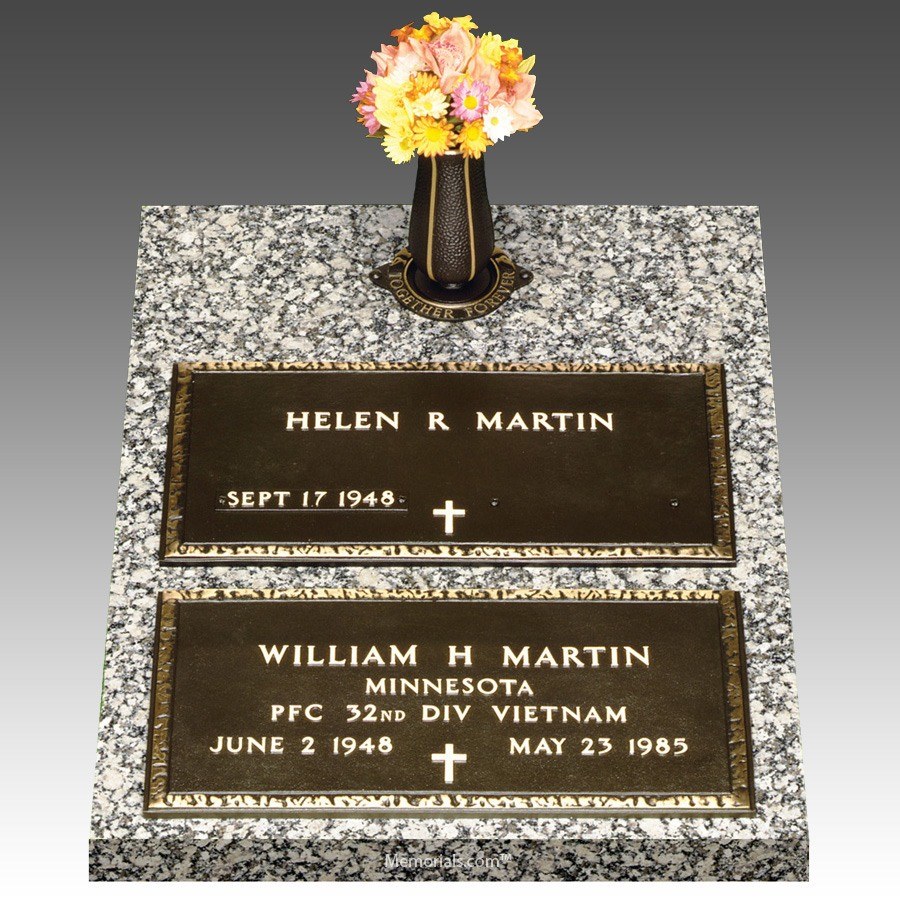
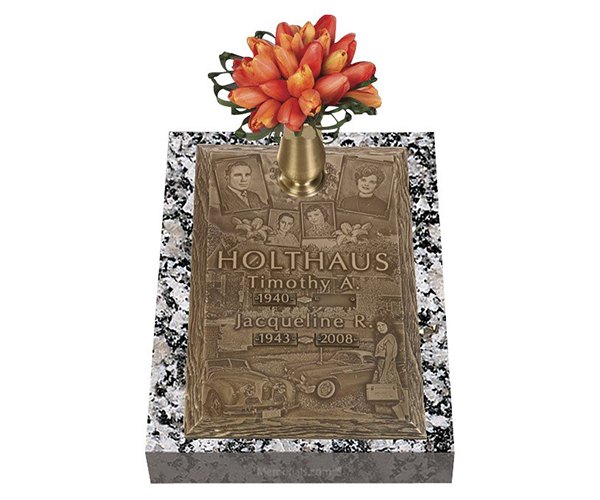
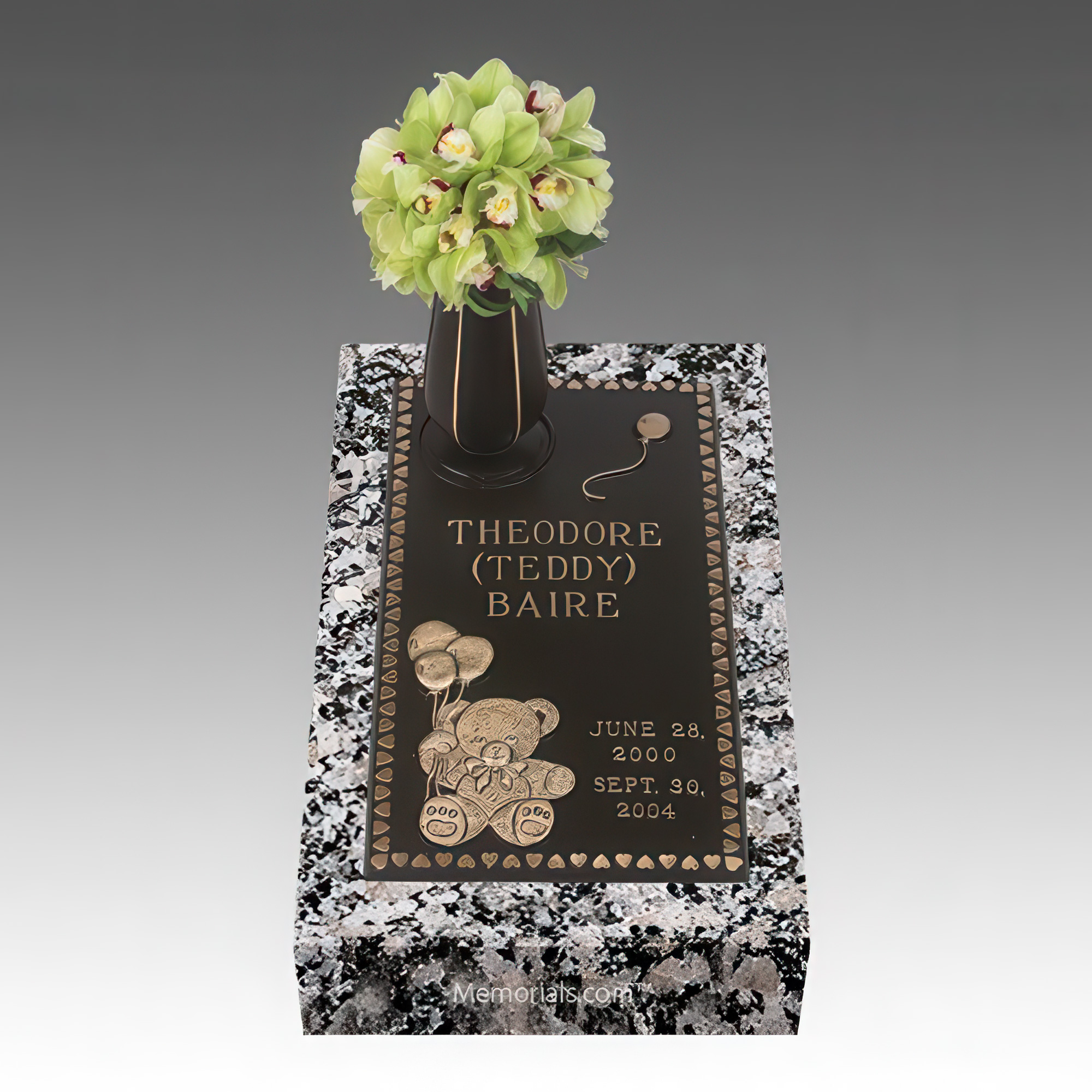
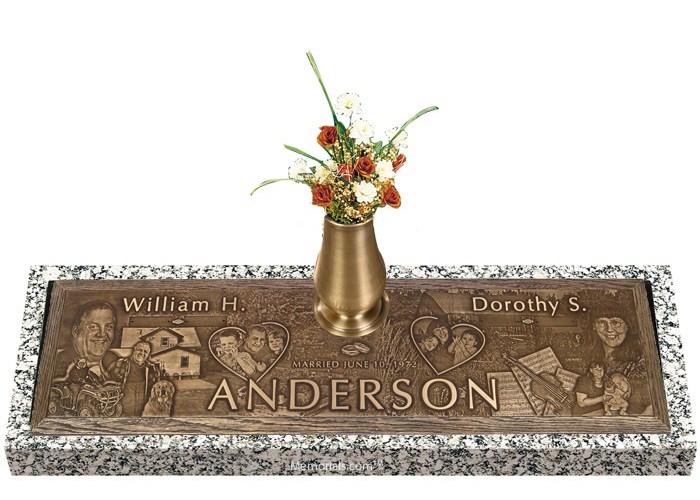
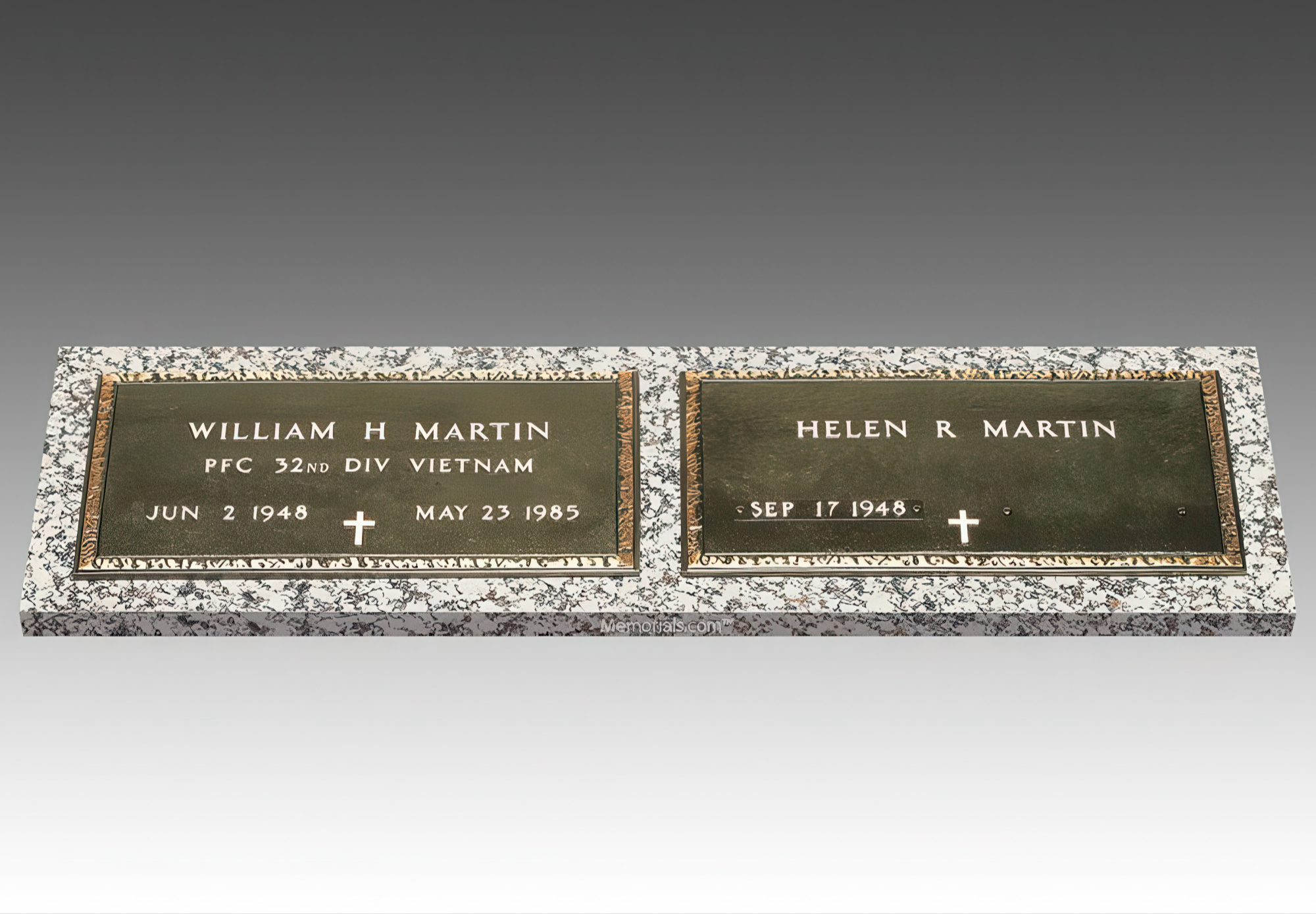
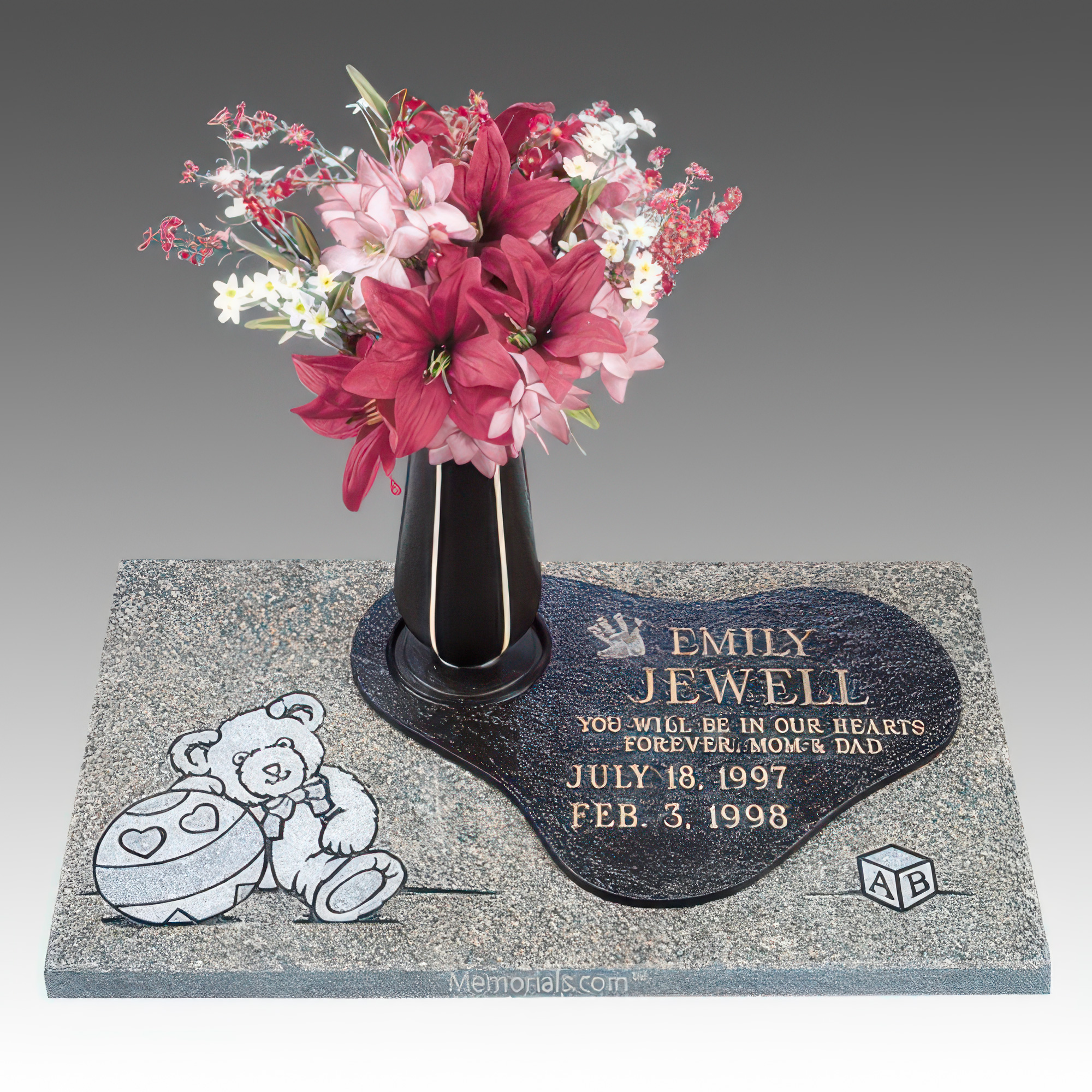
Bronze is the other dominant material in the memorial industry, though it functions differently than stone. Most bronze headstones are actually bronze plaques mounted onto a granite base rather than solid bronze monuments. The bronze plaque holds the inscriptions and design elements, while the granite base provides structural support and grounding.
Bronze is an alloy — a man-made material composed primarily of copper, with additions of tin, lead, and zinc. It is created by melting these metals together at temperatures exceeding 2,000 degrees Fahrenheit and pouring the molten alloy into custom molds. After cooling, artisans smooth and detail the surface in a process called "chasing," then drill the bronze into the granite base for a secure fit.
Bronze does not erode or wear away the way softer stones can, which makes it an extremely durable option for inscriptions. However, bronze naturally develops a patina over time — a greenish-brown surface layer caused by oxidation. Some families appreciate the aged, distinguished look of patina, while others prefer to keep the bronze brighter through occasional cleaning and waxing with appropriate products.
Many cemeteries, especially national cemeteries and those operated by the Department of Veterans Affairs, require bronze markers in certain sections. This is partly because bronze flat markers can be set flush with the ground, which simplifies grounds maintenance. Bronze is also popular for cremation headstones and memorial plaques attached to columbarium walls.
In terms of cost, bronze markers are often less expensive than large granite monuments, though premium custom designs with detailed imagery or photographic reproductions can raise the price significantly. Bronze provides a clean, refined look that pairs well with many cemetery settings.
Marble — Classical Beauty with Practical Trade-Offs
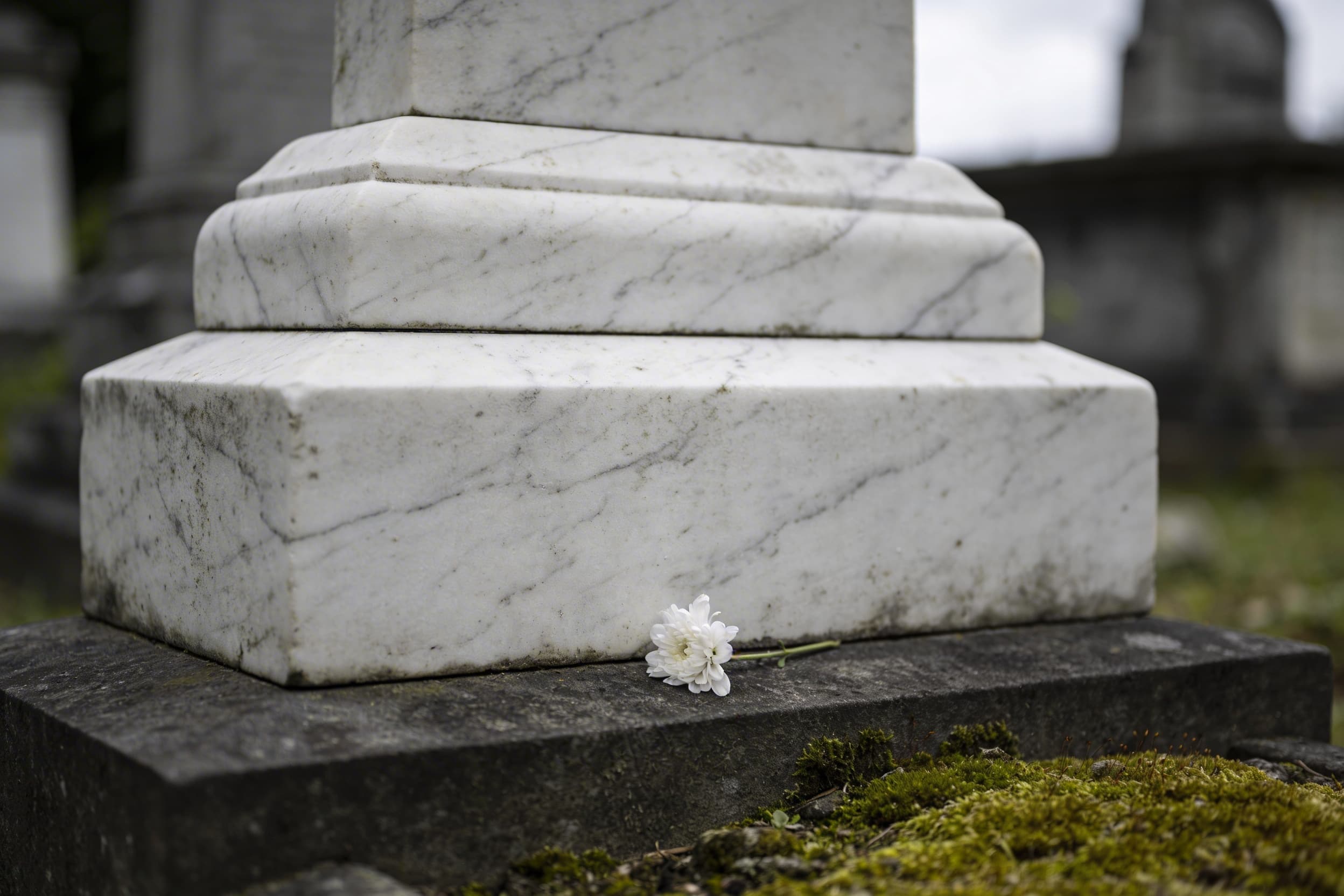
Marble is a metamorphic rock formed when limestone buried deep within the earth is subjected to extreme heat and pressure, causing it to recrystallize into a dense, interlocking structure. The result is a stone with a smooth, luminous surface that can be polished to a high sheen. Marble has been prized for memorial use since antiquity — some of history's most famous monuments, from ancient Greek tombs to Victorian-era cemetery sculptures, were carved from marble.
The appeal of marble lies in its elegant, soft appearance. It typically comes in white, cream, and gray tones, sometimes with delicate veining patterns that give each piece a unique character. Marble takes carving extremely well, which historically made it the stone of choice for ornate designs, figurative sculptures, and deeply engraved inscriptions.
However, marble has a significant drawback: it weathers faster than granite. Because marble is composed mainly of calcium carbonate, it reacts with the mild acids found in rainwater over time. Inscriptions carved into marble gradually soften and become harder to read, and the polished surface dulls. In regions with heavy rainfall, pollution, or freeze-thaw cycles, marble headstones may show noticeable deterioration within 50 to 100 years. You can still find marble headstones in many older cemeteries — they are one of the most recognizable types of old gravestones — but marble has largely fallen out of mainstream use for new memorials in favor of more durable options.
That said, marble remains available from specialty monument makers for families who prefer its classical aesthetic and are willing to accept the maintenance trade-off.
Browse Our Most Popular Headstones & Grave Markers
Handcrafted memorials to honor your loved one for eternity
Sandstone and Limestone — Soft Stones with Historical Significance
Sandstone and limestone were among the earliest materials used for grave markers in North America and Europe. Both are sedimentary rocks, formed over millions of years as layers of sand, silt, and organic material compressed at the bottom of ancient seas and riverbeds.
Sandstone absorbs color from the minerals present during its formation, producing warm hues ranging from sandy tan to reddish brown and gray. It is relatively soft and easy to carve, which made it a practical choice in earlier centuries when all headstone work was done by hand. Limestone shares many of these characteristics — it carves easily and produces a clean, simple surface for inscriptions.
The disadvantage of both materials is limited durability. Sandstone absorbs moisture, which makes it vulnerable to freeze-thaw damage and erosion. Limestone is prone to cracking along its natural bedding planes and does not polish well. Inscriptions on sandstone and limestone headstones often become illegible within a century or less, depending on the local climate.
Today, sandstone and limestone are rarely used for new headstones. They appear primarily in historic cemeteries and churchyards, where they serve as records of earlier burial practices and craftsmanship traditions. If you encounter a weathered sandstone or limestone marker that needs attention, headstone restoration and repair specialists can sometimes stabilize deteriorating stones and recover faded inscriptions using conservation-grade techniques.
Slate — Sharp Inscriptions, Limited Shapes
Slate is a fine-grained metamorphic rock that splits naturally along flat planes, producing thin, smooth slabs. This characteristic — called cleavage — makes slate excellent for flat headstones with crisp, detailed inscriptions. Letters carved into slate often remain legible for 200 years or more, which is why some of the most readable headstones in abandoned or historic burial grounds are made of this material.
Slate comes in dark gray, blue-gray, and sometimes greenish tones. Its fine grain takes shallow carving beautifully, and slate headstones were often highlighted with white paint or gilding to make inscriptions stand out. However, because slate splits along flat planes, it is difficult to shape into three-dimensional forms like sculpted angels or ornate monuments. Slate headstones are almost always simple, flat profiles — elegant in their restraint but limited in design flexibility compared to granite or marble.
Slate was widely used in the colonial era in the northeastern United States and in parts of Wales and England. Like sandstone and limestone, it has largely been replaced by granite for modern memorials, though it still has a devoted following among families who appreciate its historical character.
Other Headstone Materials
While granite, bronze, and marble account for the vast majority of modern headstones, a few other materials appear in specific contexts:
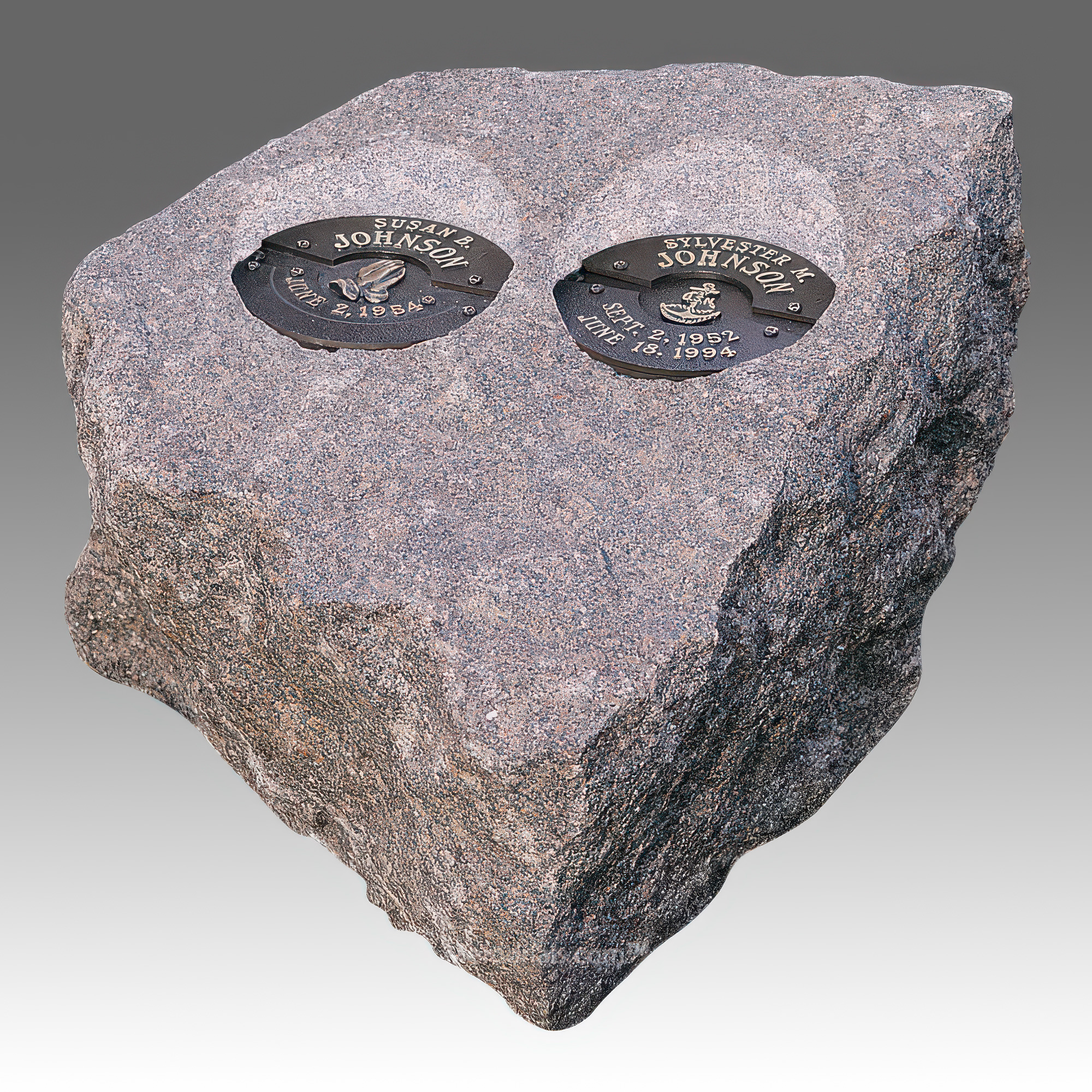
Fieldstone represents the earliest form of grave marking. Natural, uncut stones were placed at the head of a grave and either left blank or scratched with basic information using a metal awl. Fieldstone markers are found in the oldest cemeteries and family burial plots, particularly in rural areas. They were free and required no skilled labor, but they were also impermanent — many have shifted, sunk, or lost any markings they once carried.
Iron was used for grave markers during certain historical periods, particularly wrought-iron crosses in the 19th century. Iron markers were durable when new but are highly susceptible to rust and corrosion. Few iron headstones survive intact today without significant conservation work.
Wood was used for temporary grave markers and in regions where stone was not readily available. Wooden headstones rarely survive more than 50 to 100 years due to rot, insect damage, and weathering. Some families still use wooden crosses as temporary markers while a permanent stone monument is being prepared.
Concrete and composite materials are a more recent development. Modern concrete headstones use additives and sealants that improve their resistance to weathering, and composite materials made from fiberglass and resin offer lightweight alternatives with good design flexibility. These options tend to be more affordable but are less widely accepted by cemeteries and may not carry the same sense of permanence as natural stone.
How Material Choice Affects Style, Cost, and Cemetery Rules
The material you select does more than determine how a headstone looks — it influences which styles are available, how much the memorial costs, and whether your cemetery will approve it.
Understanding the headstone vs grave marker differences helps clarify this connection. Upright monuments, for instance, are almost always granite because the stone's strength supports tall, freestanding structures. Flat markers set flush with the grass may be granite or bronze-on-granite. The choice between flat vs upright headstones often comes down to both personal preference and cemetery section rules — many cemeteries restrict certain areas to flat markers only, which means your material choice and style must work together within those constraints.
Cost is also heavily tied to material. Granite pricing varies by color, origin, and size — a small gray granite flat marker is far less expensive than a large upright monument in premium black or red granite. Bronze markers tend to fall in a moderate price range for standard designs but can escalate with custom artwork. Marble is generally more expensive than granite for comparable sizes and requires more ongoing care.
Cemetery regulations sometimes restrict specific finishes, colors, or materials. Some cemeteries require all markers in a section to match a uniform style — all bronze, for example, or all granite of a certain color. Before ordering a headstone, always confirm the cemetery's material and size requirements to avoid delays or rejection.
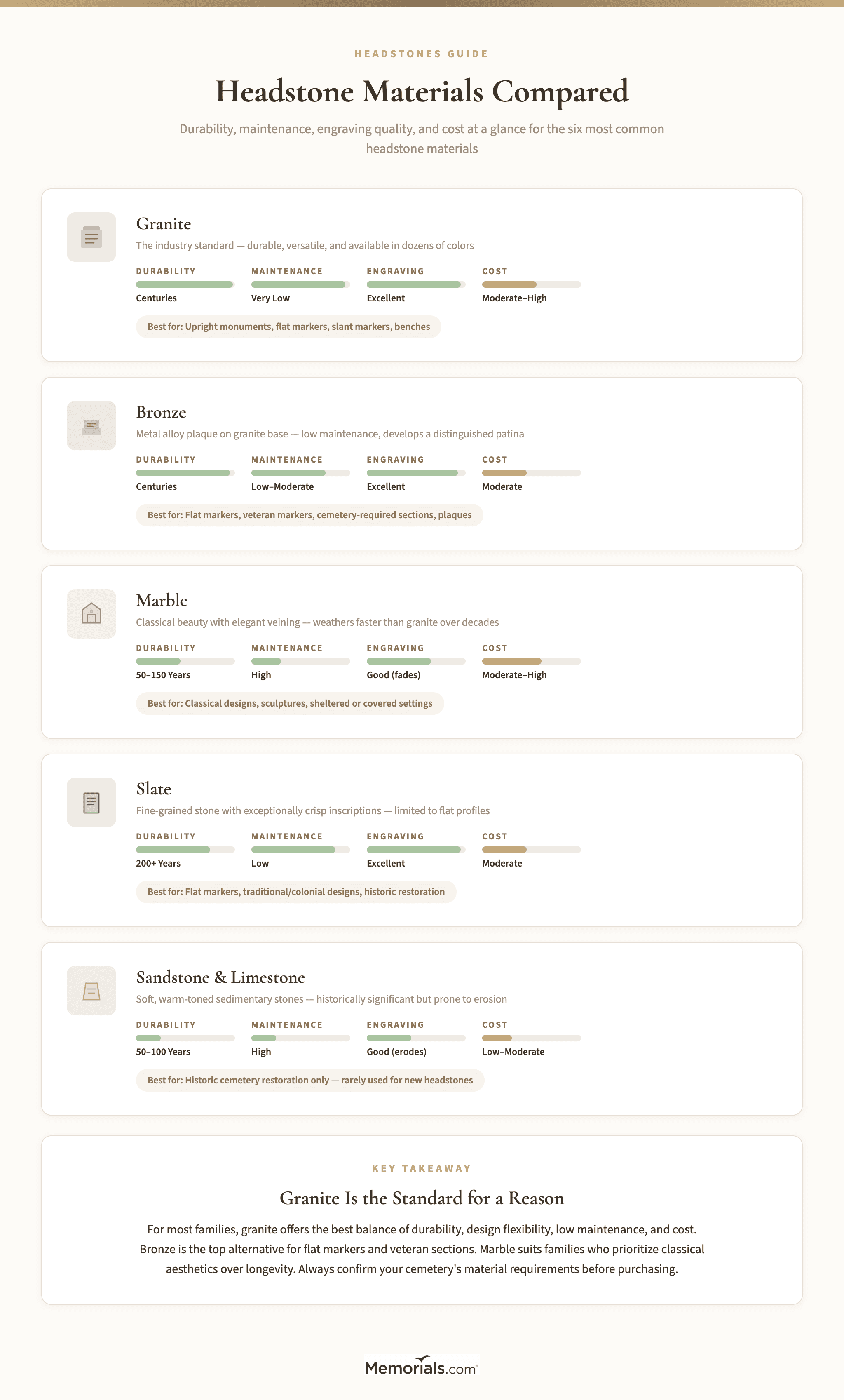
Headstone Materials Comparison
Material
Durability
Maintenance
Engraving Quality
Color Range
Relative Cost
Best For
Granite
Excellent — centuries
Very low
Excellent — holds detail well
Wide (black, gray, red, green, pink, blue)
Moderate to high
Most styles — upright, flat, slant, bench
Bronze
Excellent — does not erode
Low to moderate (patina management)
Excellent — cast and engraved detail
Brown metallic, develops green patina
Moderate
Flat markers, veteran markers, plaques
Marble
Moderate — 50–150 years
High (acid rain, weathering)
Good when new, fades over time
White, cream, gray, veined patterns
Moderate to high
Classical designs, sculptures
Sandstone
Low — 50–100 years
High
Good when new, erodes
Tan, red, brown, gray
Low to moderate
Historic restoration only
Limestone
Low — similar to sandstone
High
Moderate — cracks along bedding
Cream, gray, buff
Low to moderate
Historic restoration only
Slate
Good — 200+ years for inscriptions
Low
Excellent — crisp lettering
Dark gray, blue-gray, green
Moderate
Flat markers, traditional/colonial style
Bronze on granite
Excellent
Low to moderate
Excellent
Bronze plaque + granite base colors
Moderate
Cemetery-required markers, veteran sections
How Headstones Are Manufactured
The manufacturing process varies by material, but the general sequence for stone headstones follows these steps:
Quarrying and extraction. Natural stone is quarried using a combination of drilling, controlled blasting, and water-jet cutting to extract large blocks without fracturing the surrounding rock. Granite quarries operate worldwide, with major sources in India, China, Brazil, Italy, and several U.S. states.
Cutting and shaping. The raw blocks are transported to manufacturing facilities where industrial diamond saws slice them into slabs of the appropriate thickness — typically six inches to one foot for headstones. Each slab is then cut to the ordered dimensions and shaped into its final profile, whether a standard rectangle, a serpentine top, or a custom design.
Surface finishing. The visible surfaces are finished using rotating polishing heads with progressively finer abrasive pads, using water and aluminum oxide powder to achieve a smooth, glossy finish. Some styles call for a rough "rock-pitched" edge on the sides while keeping the front face polished — this creates a natural-meets-refined aesthetic. Not all surfaces are polished; some families prefer a honed (matte) or sandblasted finish.
Engraving and personalization. Inscriptions are applied using sandblasting, laser etching, or diamond-point tooling. Sandblasting is the most traditional method and produces a frosted, recessed inscription. Laser etching is newer and allows for photographic-quality images and extremely fine detail, particularly on dark granite. Many manufacturers now offer computer-guided engraving for consistent lettering and precision.
Bronze manufacturing follows a different process. The bronze alloy is melted and poured into wax molds to create the plaque shape, then cooled, chased (smoothed), and attached to a granite base with adhesive and drilled pins.
Frequently Asked Questions
What is the most durable headstone material?
Granite is considered the most durable natural stone for headstones. Its crystalline structure resists weathering, freeze-thaw cycles, and staining, and inscriptions remain legible for centuries with minimal maintenance. Bronze is equally durable for inscriptions but develops a patina over time.
How long do granite headstones last?
A well-made granite headstone can last 500 years or more. The stone itself does not degrade significantly under normal weather conditions. Inscriptions on polished granite typically remain sharp and readable for at least 100 to 200 years without any restoration.
Is marble a good choice for a headstone?
Marble offers beautiful aesthetics but weathers faster than granite. The calcium carbonate in marble reacts with acidic rainwater, gradually softening inscriptions and dulling the surface. For families prioritizing longevity and low maintenance, granite is usually the better choice. Marble may be appropriate for covered or sheltered settings, or for families who value its classical appearance.
What is the cheapest headstone material?
Concrete and composite materials are generally the least expensive options. Among natural stones, fieldstone boulders require no quarrying or polishing, making the raw material cost very low — though engraving and installation costs on irregular surfaces can offset those savings. Granite flat markers in standard sizes and colors are often the most affordable option that balances cost with long-term durability.
Do cemeteries restrict what materials you can use?
Yes. Many cemeteries have specific rules about acceptable headstone materials, sizes, finishes, and styles for each section. Some require all markers to be bronze-on-granite flat markers. Others allow upright granite monuments in designated areas. Always check with the cemetery before purchasing a headstone to confirm their material requirements.
What are military headstones made of?
Government-furnished headstones provided by the Department of Veterans Affairs are available in marble, granite, or bronze. The VA has used marble since the Civil War era, added granite in 1941, and introduced flat bronze markers in 1940. Today, most VA-furnished headstones in national cemeteries are white marble or granite uprights, while flat bronze markers are common in private cemeteries with size restrictions.
Memorials.com offers a full selection of headstone materials and styles, including granite monuments, bronze markers, and cremation memorials. If you have questions about which material is right for your situation, our customer service team is happy to help.