🏬Supersize Online Funeral Retailer🪦1000's of Headstones⚱️Over 10,000 Cremation Urns⚰️Caskets Overnight Delivery🛒Funeral & Memorial Superstore🚚FREE Shipping on ALL Orders👨👩👧👦Helping Families for over 20 Years💰Lowest Price Guarantee🏬Supersize Online Funeral Retailer🪦1000's of Headstones⚱️Over 10,000 Cremation Urns⚰️Caskets Overnight Delivery🛒Funeral & Memorial Superstore🚚FREE Shipping on ALL Orders👨👩👧👦Helping Families for over 20 Years💰Lowest Price Guarantee
🏬Supersize Online Funeral Retailer🪦1000's of Headstones⚱️Over 10,000 Cremation Urns⚰️Caskets Overnight Delivery🛒Funeral & Memorial Superstore🚚FREE Shipping on ALL Orders👨👩👧👦Helping Families for over 20 Years💰Lowest Price Guarantee🏬Supersize Online Funeral Retailer🪦1000's of Headstones⚱️Over 10,000 Cremation Urns⚰️Caskets Overnight Delivery🛒Funeral & Memorial Superstore🚚FREE Shipping on ALL Orders👨👩👧👦Helping Families for over 20 Years💰Lowest Price Guarantee
After a beloved pet passes, one of the first and most difficult decisions families face is what to do with their companion's remains. The two main paths — cremation and burial — each come with their own costs, legal considerations, memorial possibilities, and emotional weight. Neither choice is inherently better than the other; the right answer depends entirely on your family's situation, values, and what will bring you the most comfort.
This guide walks through both options in detail so you can make a confident, informed decision. If you're navigating these choices for the first time, our complete guide to pet memorials covers the full range of ways to honor a pet's memory, from aftercare decisions through lasting keepsakes.
Pet cremation follows a process very similar to human cremation. The pet's body is placed in a specialized cremation chamber where high temperatures — typically between 1,400°F and 1,800°F — reduce it to bone fragments over a period of 30 minutes to two hours, depending on the animal's size. Those fragments are then processed into a fine, powdery ash and returned to the family.
If you're unfamiliar with the details, our article on how pet cremation works explains each stage of the process and what families can expect from start to finish.
Types of Pet Cremation
There are three main types of pet cremation, and the one you choose affects both cost and whether you'll receive your pet's individual ashes.
Private cremation means your pet is the only animal in the chamber. This guarantees that the ashes returned to you belong solely to your companion. Private cremation is the most expensive option but offers the greatest certainty and peace of mind.
Semi-private (partitioned) cremation places multiple pets in the same chamber with physical dividers between them. While this reduces cost compared to private cremation, there is some possibility of minor comingling of ashes. Many families find this an acceptable middle ground.
Communal cremation is the most affordable option. Multiple pets are cremated together with no separation, and ashes are typically not returned to families. This is a dignified, respectful process, but it doesn't allow you to keep your pet's remains.
For a detailed breakdown of what each type costs, see our guide to pet cremation cost.
What Happens to the Ashes
After a private or semi-private cremation, the crematorium returns the cremated remains — often called cremains — to you, usually within one to seven days depending on the provider. From there, families have several meaningful options. You can place the ashes in a pet urn for display at home, scatter them at a meaningful location, bury them in a garden or pet cemetery, divide them among family members, or have a small portion placed into pet cremation jewelry so you can carry a physical reminder close to your heart. For a full overview of these possibilities, read our guide on what to do with pet ashes.
How Pet Burial Works
Pet burial is the more traditional aftercare option, and it takes two main forms: home burial on private property or burial at a dedicated pet cemetery.
Home Burial
Many families are drawn to the simplicity and intimacy of burying a pet at home, often in a backyard garden or a favorite spot on the property. However, home burial comes with important legal and practical considerations that vary widely by location.
Most municipalities require a minimum burial depth of three feet to prevent disturbance by wildlife. Many cities and urban areas prohibit backyard pet burials entirely, while rural areas tend to be more permissive. There are often rules about distance from water sources, property lines, and utility easements. If your pet was euthanized, the drugs used in the process — particularly pentobarbital — remain in the body and can be toxic to wildlife, other animals, and even groundwater if not buried at adequate depth under proper conditions.
Before proceeding with a home burial, always check your local municipal regulations. Our detailed guide on how to bury a dog covers depth requirements, site selection, legal considerations, and step-by-step instructions for a respectful home burial.
Pet Cemetery Burial
Pet cemeteries offer a formal resting place with many of the same services available at human cemeteries — including caskets, marked plots, headstones, and ongoing maintenance. Some full-service pet cemeteries also offer memorial services, transport of the pet's body, and catering for gatherings.
When choosing a pet cemetery, look for facilities affiliated with the International Association of Pet Cemeteries and Crematories (IAOPCC), which holds members to ethical standards and operational guidelines. Costs vary significantly based on plot size, location, casket choice, and whether you purchase a headstone or marker, but a full pet cemetery burial typically runs between $500 and $5,000 or more.
Families choosing burial will want to consider pet caskets that provide dignified protection for the remains. For an environmentally conscious approach, biodegradable pet caskets are designed to break down naturally over time, making them suitable for both pet cemeteries and home burials where permitted.
Side-by-Side Comparison: Cremation vs. Burial
Understanding how these two options stack up across the factors that matter most can help clarify your decision.
Cost
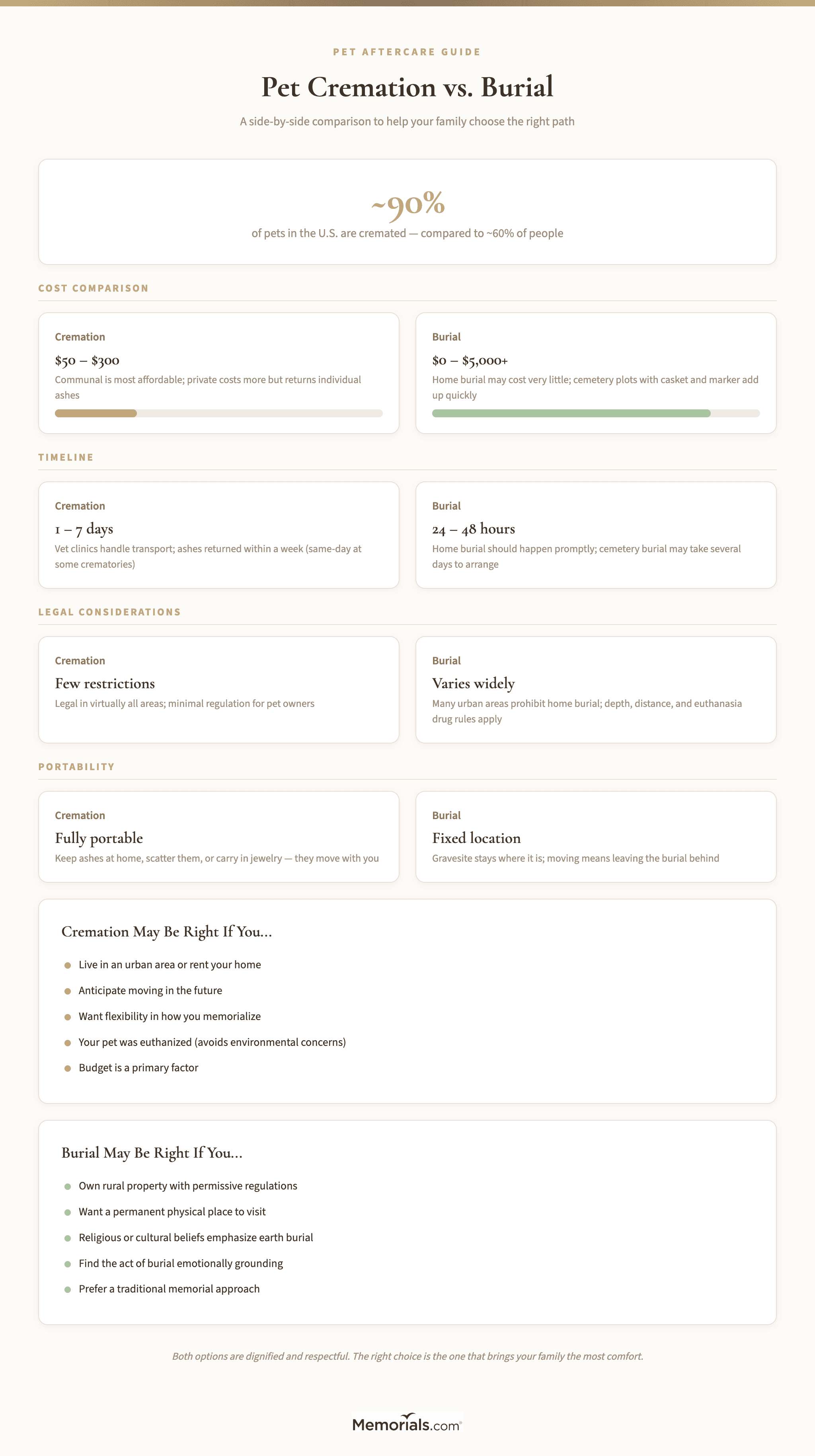
Pet cremation typically costs between $50 and $300, depending on the type (communal, semi-private, or private) and the size of the animal. Larger pets cost more due to the additional time and fuel required. Burial costs vary much more widely. A home burial may cost very little beyond a container and a marker, while a pet cemetery burial — including the plot, casket, grave marker, and annual maintenance — can range from $500 to over $5,000.
Timeline and Logistics
Cremation is generally more convenient from a timing perspective. Most veterinary clinics can arrange cremation directly, and crematories often handle transport. You'll typically receive ashes within one to seven days. Burial requires more immediate action. If you're burying at home, it's best done within 24 to 48 hours. A pet cemetery may take several days to arrange, but some offer temporary refrigerated storage at the veterinary office if needed.
Legal Considerations
Cremation faces very few legal restrictions in most areas. Burial, however, is heavily regulated. Urban areas often prohibit home burial entirely, and even where it's allowed, there are usually strict rules about depth, distance from water sources, and whether euthanized animals may be buried. Pet cemeteries handle these regulatory concerns on your behalf.
Memorialization Options
Both cremation and burial offer meaningful ways to memorialize a pet. Cremation opens up options like decorative urns, scattering ceremonies, cremation jewelry, and memorial art. Burial provides a physical gravesite that can be marked with a pet memorial grave stone or pet headstone, creating a permanent place to visit and reflect.
Environmental Impact
Traditional flame cremation does use energy and produces some carbon emissions, though its overall environmental footprint is relatively modest. Aquamation — an emerging alternative that uses water and alkaline solution instead of flame — reduces energy use by roughly 90% and is available through a growing number of pet aftercare providers.
Burial's environmental impact depends on the method. A home burial with no casket or a biodegradable container has minimal impact. However, if the pet was euthanized, chemical leaching is a genuine concern. Pet cemeteries with traditional caskets and maintained grounds carry a larger footprint due to land use and groundwater considerations.
Portability and Long-Term Flexibility
This is one of the most meaningful practical differences. Cremated ashes are completely portable — you can keep them in an urn, scatter them, or move them if you relocate. Burial sites, whether at home or in a cemetery, stay where they are. If you move after burying a pet at home, you leave the gravesite behind. For families who anticipate relocating, cremation often provides greater peace of mind.
Emotional and Cultural Factors
Some families find comfort in the physical act of burial and in having a specific place to visit. Others prefer the flexibility and closeness that keeping ashes provides. Cultural and religious beliefs may also guide this decision — some traditions emphasize returning the body to the earth, while others are fully supportive of cremation. There is no universally correct answer; the right choice is the one that brings your family the most comfort.
A Decision Framework: Which Is Right for Your Family?
Rather than asking which option is objectively "better," consider which one aligns with your specific circumstances. Here are some guiding questions.
Cremation may be the better fit if:
You live in an urban area where home burial is prohibited or impractical. You rent your home or anticipate moving in the future. Your pet was euthanized (making burial an environmental concern). You want the flexibility to decide later how to memorialize the remains. You'd like the option of keeping ashes at home, wearing a portion in jewelry, or scattering them at a meaningful location. Budget is a primary concern and you prefer a more affordable option.
Burial may be the better fit if:
You own rural property with adequate space and permissive local regulations. Having a permanent, physical place to visit is important to your grieving process. Your religious or cultural beliefs emphasize returning the body to the earth. You want to create a marked gravesite with a headstone or monument. You find the physical act of burial emotionally grounding and helpful for closure. You prefer a traditional approach that aligns with how your family memorializes human loved ones.
A combined approach is also an option. Many families choose private cremation and then bury the ashes — either at home, in a garden, or at a pet cemetery — gaining the legal simplicity of cremation while still having a permanent gravesite to visit.
Common Concerns About Pet Cremation and Burial
Will I receive my pet's actual ashes?
With private cremation, yes — your pet is the only animal in the chamber, and the ashes returned are solely your companion's remains. With semi-private cremation, dividers separate the animals, but minor commingling is possible. With communal cremation, individual ashes are not returned. If receiving your pet's ashes is important to you, always confirm that you are choosing private cremation and verify with your provider.
Is cremation painful for my pet?
Cremation takes place only after the pet has passed. There is absolutely no pain or awareness involved in the process. If your pet is being euthanized, the euthanasia is what ends their life peacefully — cremation occurs afterward.
Can I change my mind after choosing burial?
Exhumation is possible but legally and logistically complicated. If you bury your pet and later wish you had chosen cremation, reversing that decision is difficult and potentially distressing. Conversely, if you choose cremation first and then decide you want a burial site, you can always bury the ashes. This is one reason many families lean toward cremation initially — it preserves the most options.
Can I bury my pet's ashes with my own remains someday?
This is a question more families are asking as the bond between people and pets continues to deepen. Policies vary by cemetery and state, but some human cemeteries do allow cremated pet ashes to be interred alongside human remains. For a thorough look at the legal and practical considerations, see our article on burying pet ashes with human remains.
Memorial Options After Your Decision
Whichever path you choose, creating a meaningful memorial helps preserve your pet's memory and supports the healing process.
After Cremation
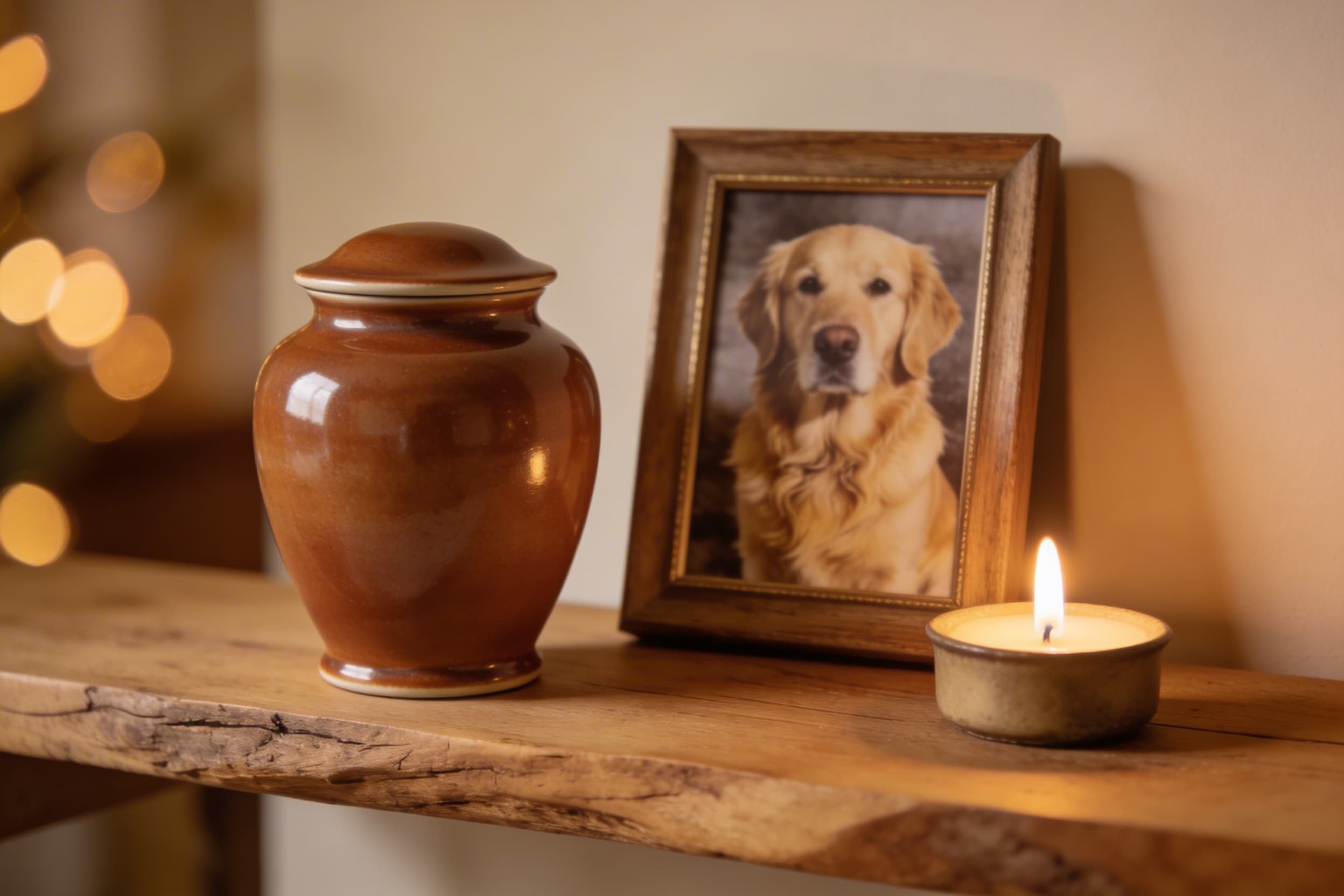
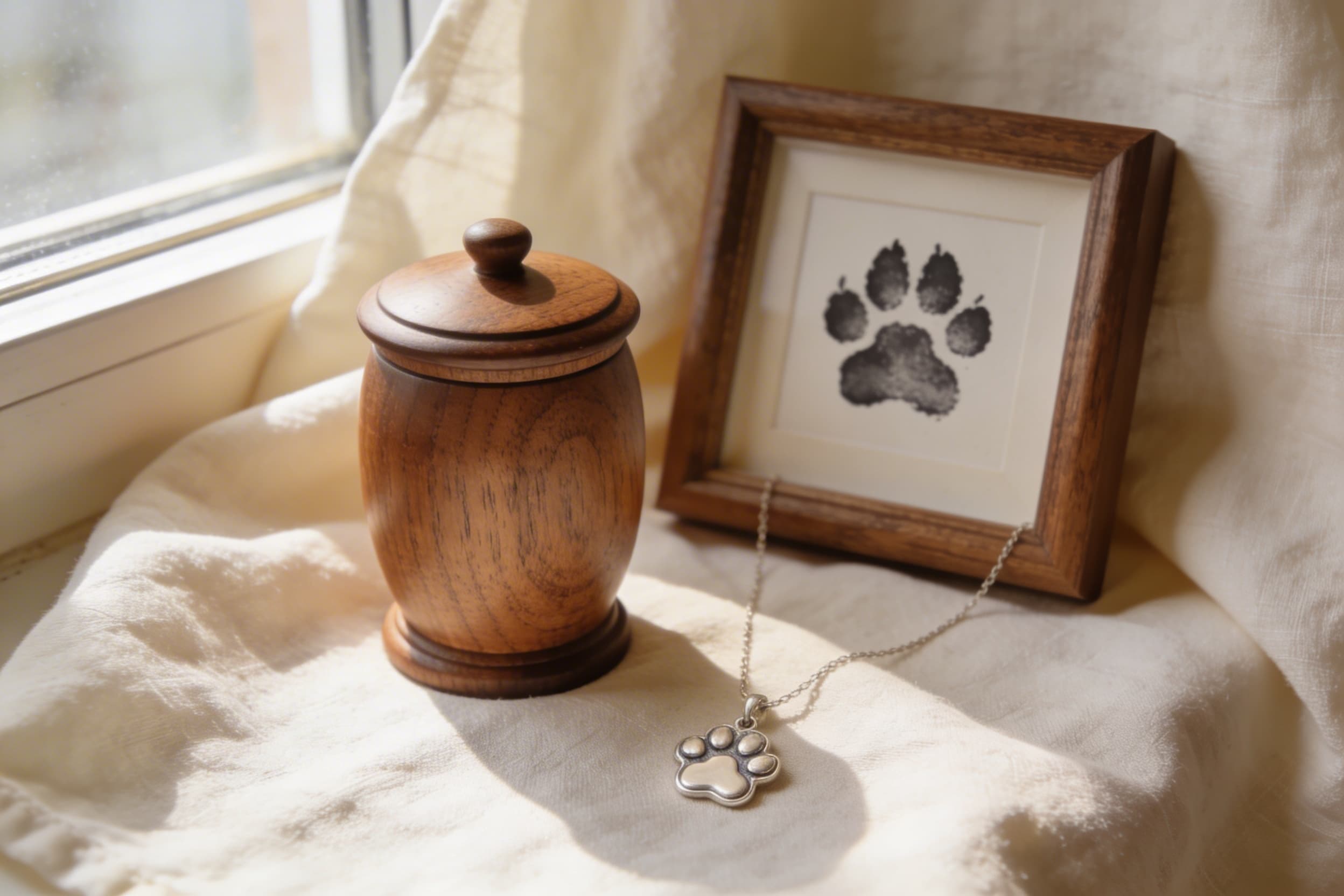
Once you have your pet's ashes, the memorial possibilities are extensive. A decorative urn — whether wood, ceramic, metal, or glass — gives the ashes a dignified home on a shelf, mantel, or in a special nook. For families who prefer to keep their companion nearby at all times, pet cremation jewelry holds a small portion of ashes in a pendant, bracelet, or ring. If you'd like guidance on choosing a pet urn that matches your pet's personality and your home, our selection guide walks through sizes, materials, and styles.
You can also scatter ashes at a meaningful location, plant a memorial tree or garden using a biodegradable urn, create memorial art, or simply keep the urn in a place of honor alongside photos and mementos. Browse our full collection of pet memorials for additional ways to celebrate your companion's life.
After Burial
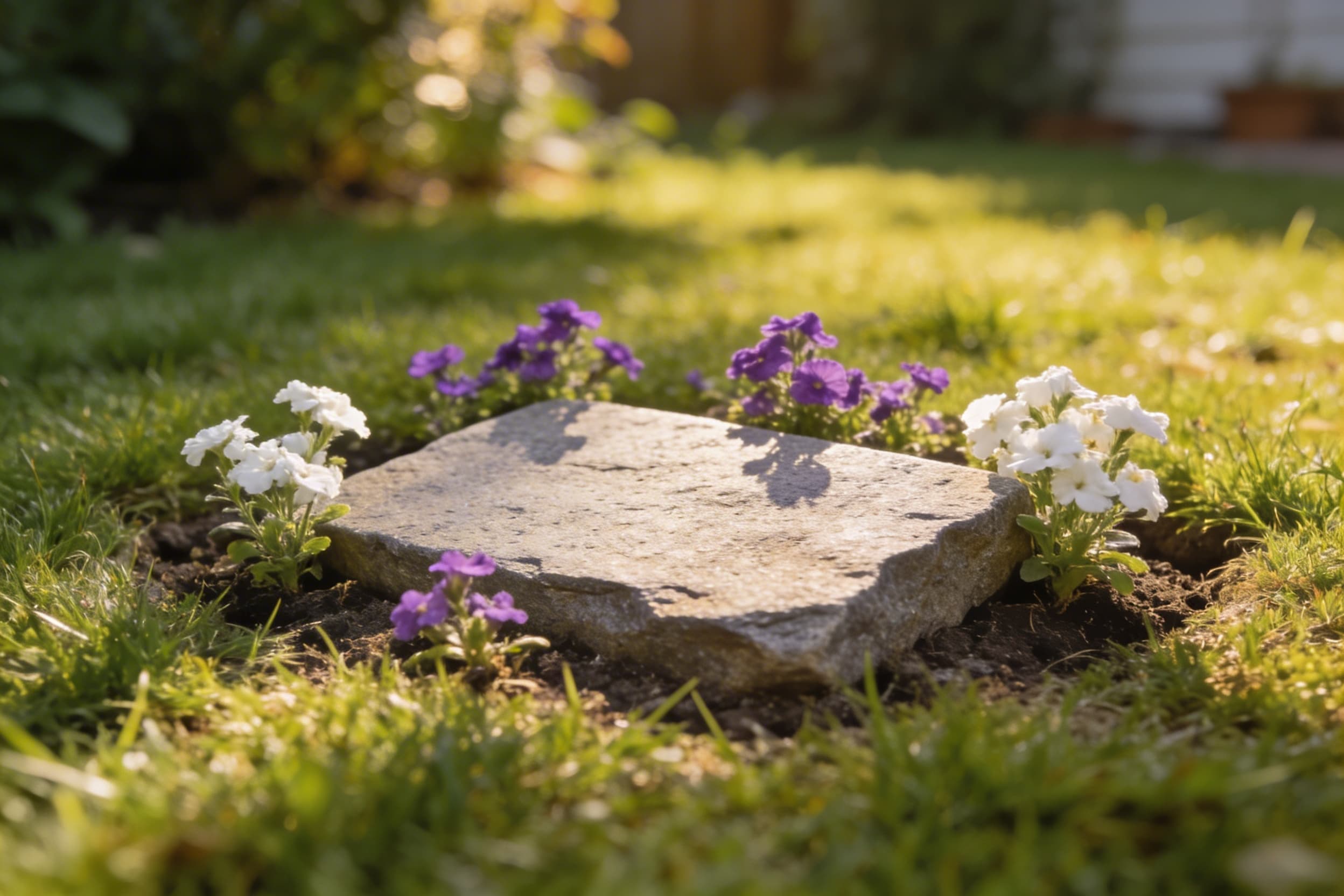
If you've chosen burial, a pet grave marker or headstone transforms the burial site into a lasting tribute. Options range from simple engraved stones to cast bronze markers and upright granite monuments. Many families add personalized engravings with their pet's name, dates, a short verse, or even a ceramic photo portrait.
For home burials, a memorial garden surrounding the gravesite can create a peaceful space for reflection. Planting your pet's favorite plant (or one that blooms during the season they passed) adds a living element to the memorial.
Frequently Asked Questions
How much does pet cremation cost compared to burial?
Pet cremation generally ranges from $50 to $300 depending on the type and pet size, while burial costs can range from minimal (a home burial with a simple marker) to $5,000+ for a full cemetery burial with casket, headstone, and plot. The gap widens significantly for larger animals.
How long after my pet dies do I need to decide?
Most veterinary clinics can keep a pet's remains refrigerated for a few days, giving you time to make a thoughtful decision without rushing. If you're leaning toward home burial and your vet doesn't offer short-term storage, you'll need to act within 24 to 48 hours, especially in warmer climates.
What percentage of pet owners choose cremation?
Current estimates indicate that roughly 90% of pets in the United States are cremated, compared to about 10% that are buried. This rate is significantly higher than the human cremation rate, which sits near 60%, largely because cremation is more affordable and legally straightforward for pets.
Is aquamation available for pets?
Aquamation — also called water cremation or alkaline hydrolysis — is becoming increasingly available through pet aftercare providers. The process uses heated water and an alkaline solution instead of flame, reducing energy use by approximately 90% compared to traditional cremation. It produces a similar powdery ash that can be kept in an urn or scattered. Availability varies by region, so check with local providers.
Can I hold a memorial service regardless of which option I choose?
Absolutely. A memorial service, gathering, or ceremony is appropriate whether you choose cremation or burial. Some families hold a small service before cremation, others gather when the ashes are returned, and burial naturally lends itself to a graveside tribute. There are no rules about timing or formality — do whatever feels meaningful to your family.
Choosing What Feels Right
There is no wrong answer when deciding between cremation and burial for a pet. Both are dignified, respectful ways to care for a companion who gave you unconditional love. What matters most is that the choice aligns with your family's values, practical circumstances, and emotional needs.
If you're still weighing your options, take the time you need. Talk with family members, consult your veterinarian, and explore the memorial products available to you. Whether you choose a beautiful pet urn, a lasting grave marker, or a piece of cremation jewelry to keep your companion close, the tribute you create will reflect the bond you shared.