🏬Supersize Online Funeral Retailer🪦1000's of Headstones⚱️Over 10,000 Cremation Urns⚰️Caskets Overnight Delivery🛒Funeral & Memorial Superstore🚚FREE Shipping on ALL Orders👨👩👧👦Helping Families for over 20 Years💰Lowest Price Guarantee🏬Supersize Online Funeral Retailer🪦1000's of Headstones⚱️Over 10,000 Cremation Urns⚰️Caskets Overnight Delivery🛒Funeral & Memorial Superstore🚚FREE Shipping on ALL Orders👨👩👧👦Helping Families for over 20 Years💰Lowest Price Guarantee
🏬Supersize Online Funeral Retailer🪦1000's of Headstones⚱️Over 10,000 Cremation Urns⚰️Caskets Overnight Delivery🛒Funeral & Memorial Superstore🚚FREE Shipping on ALL Orders👨👩👧👦Helping Families for over 20 Years💰Lowest Price Guarantee🏬Supersize Online Funeral Retailer🪦1000's of Headstones⚱️Over 10,000 Cremation Urns⚰️Caskets Overnight Delivery🛒Funeral & Memorial Superstore🚚FREE Shipping on ALL Orders👨👩👧👦Helping Families for over 20 Years💰Lowest Price Guarantee
Grief changes the shape of a home. A chair can feel louder when it is empty. A song in the kitchen can hit harder than a photo ever did. Creating a memorial at home is one way to give those feelings a place to land, without turning your daily life into a museum.
A home memorial does not need to be permanent, public, or "finished." It can be a single shelf that you return to when you want to speak their name, or a seasonal setup you bring out on birthdays and anniversaries. What matters is that it feels like them and that it feels livable for you. For families navigating the broader question of how to honor someone's memory across many settings, choosing a meaningful sympathy gift can help you find the right gesture for every relationship and occasion.
Start by noticing where your life already pauses. That might be the spot where you drink coffee, the entry table where keys land, or the corner of a bedroom that naturally feels quiet.
Some people want a memorial they pass often, almost like a gentle hello. Others prefer a space they can choose to enter, like a small room, a high shelf, or a private desk. There is no "right" placement, only what supports you.
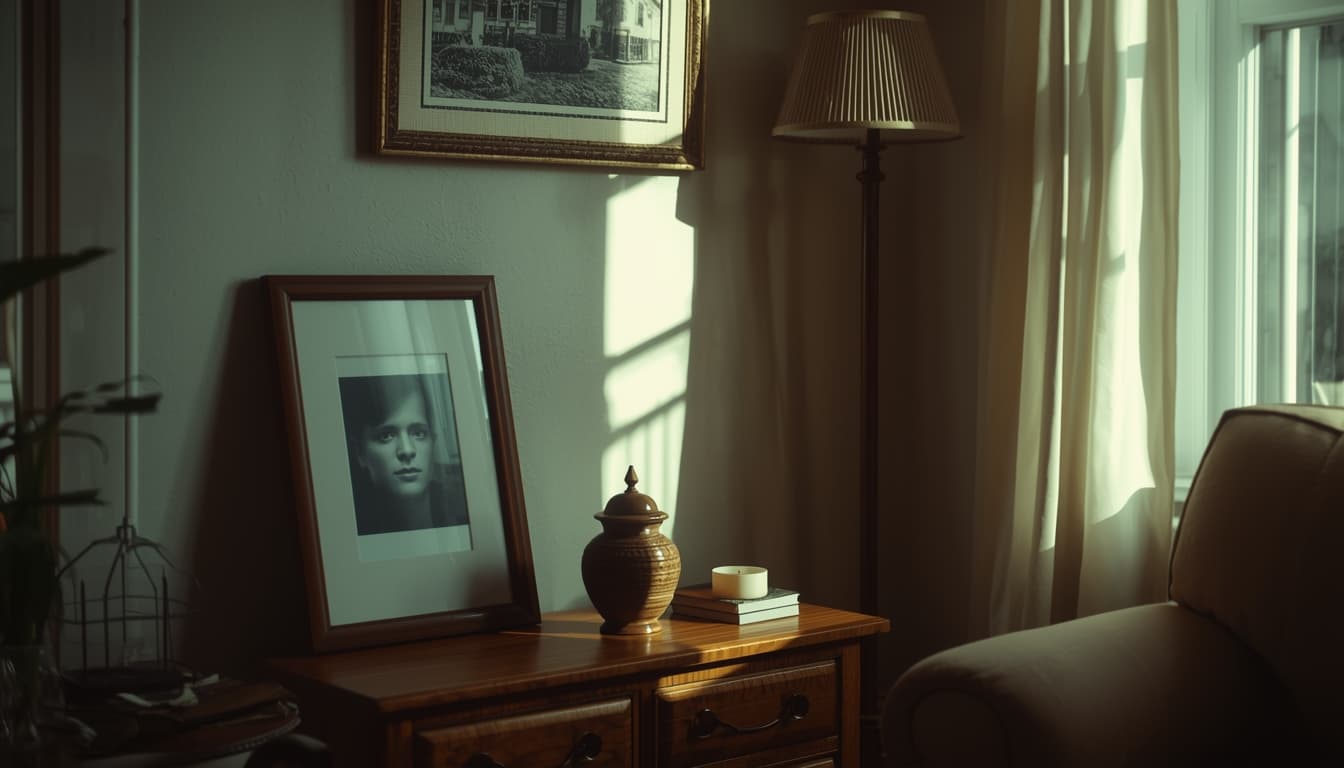
If you plan to include an urn, candle, or fragile keepsakes, pick a stable surface away from pets, small children, heat vents, direct sun, and heavy foot traffic.
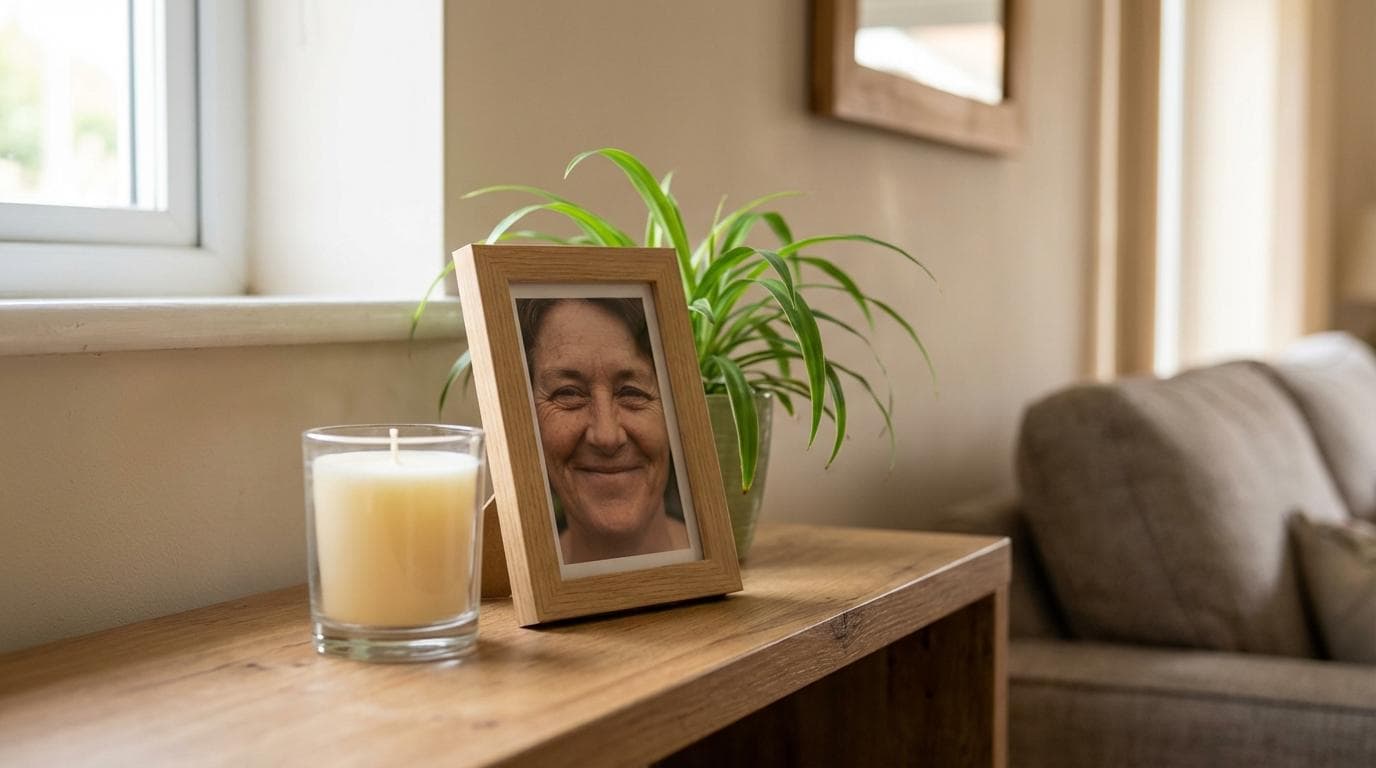
A remembrance corner that can be as simple as three items
A dedicated spot helps because it creates a consistent focal point. Funeral and grief educators often recommend building a small "remembrance corner" that can hold a few meaningful objects, then letting it grow slowly over time.
Think in layers, not in size. A photo gives presence. A small object gives touch. Light gives warmth. Living elements, even a single plant, can soften the feeling of finality.
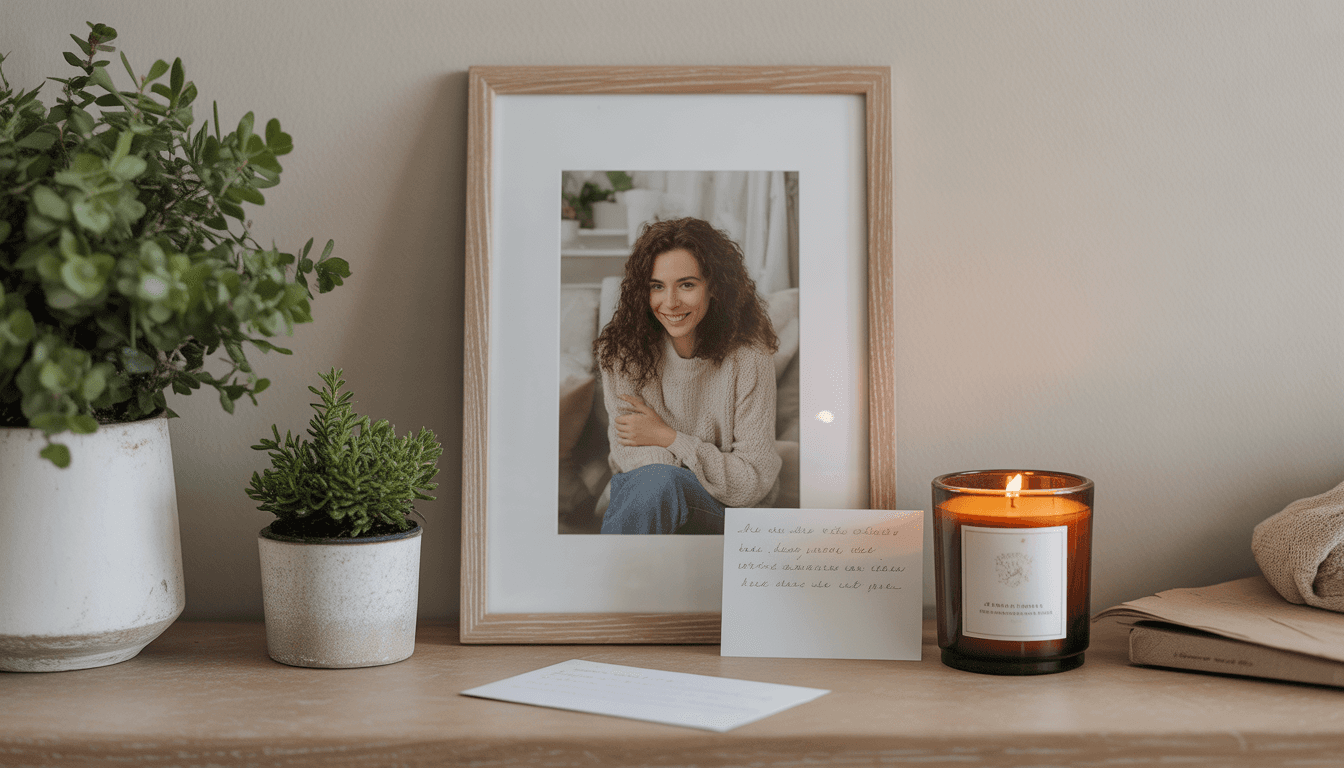
After you choose your surface, it can help to begin with a short starter set:
Framed photo
Candle or small lamp
A keepsake item
Fresh flowers or a small plant
A note card with a name, date, or quote
If you want the space to feel calm (not crowded), leave empty space on purpose. Empty space can be part of the design. Candle holders designed specifically for memorial displays add a warm, steady glow that anchors a remembrance corner without overwhelming it.
Rituals you can repeat without turning it into a performance
Many families find comfort in simple daily or weekly actions: lighting a candle, saying the person's name, or sitting quietly for two minutes before starting the day. Candle lighting, in some form, shows up across many faiths and cultures, and it works well at home because it is clear, contained, and repeatable.
You can keep rituals short. You can also keep them flexible. Skipping a day does not "break" anything.
A few ideas that work in many households:
Candle and name: Light a candle and speak their name out loud, even just once.
Morning offering: Set out a small cup of water, tea, or coffee near a photo, then discard it later with care.
Anniversary candle: Light a longer-burning memorial candle on an anniversary date (some families observe traditions like a Yahrzeit candle).
Memory touchpoint: Hold a small object (a smooth stone, a rosary, a keychain) and take three slow breaths.
Music minute: Play one song that reminds you of them, then stop before it becomes overwhelming.
Safety matters here. Use sturdy candle holders, keep flames away from curtains, and consider LED candles if you want the look of candlelight with less worry.
Borrowing from cultural traditions with respect
Home remembrance is not a new idea. Many households around the world keep ancestor spaces that are tended with small actions: incense, food, flowers, prayers, and daily greetings.
You might recognize forms of this in:
East Asian ancestor altars that include photos or tablets, incense, and offerings
Japanese Buddhist butsudan cabinets that are opened for daily remembrance
Día de los Muertos ofrendas filled with photos, candles, favorite foods, and bright color
You do not need to copy a tradition that is not yours to learn from the principle behind it: repetition, care, and an ongoing relationship with memory. If you do incorporate elements from a culture that is part of your family history, ask relatives what feels appropriate, and keep the focus on respect rather than decoration.
Make it personal by showing the life, not only the loss
The most comforting memorials often feel specific. Not expensive, not elaborate, just specific.
Start with what they loved and how they moved through the world. A gardener might be remembered with seed packets and a small potted herb. A music lover might be remembered with sheet music, a concert ticket stub, or a playlist that stays saved on your phone for hard days. Someone known for humor might be remembered with a framed quote in their handwriting.
Scent can be powerful, too. Research on autobiographical memory suggests smells can bring back vivid personal memories, which is why a familiar cologne, a pine candle, or a favorite soap can feel like an instant time machine. Use that gently; a scent can comfort, and it can also hit hard.
For families who want to preserve something as personal as a touch, fingerprint memorial keepsakes offer a way to keep that connection in physical form — as cremation jewelry, framed prints, or small touchstones for a remembrance shelf.
Choosing materials and objects for a home memorial
Materials can change the feeling of a memorial, too. Wood often reads warm and home-like. Marble and stone can feel quiet and steady. Glass can feel artistic and light. Metal can feel traditional, strong, and protective. There is no best choice, only what fits the person you are honoring and the home you live in.
A home memorial can stay meaningful without staying the same. Some people refresh flowers weekly. Others swap photos with the seasons. Some families add one new note on birthdays or anniversaries, almost like adding a new page to a shared story. Keepsake sculptures can serve as the centerpiece of a remembrance display — their tactile quality invites interaction rather than passive viewing.
If the space ever starts to feel heavy or untouchable, that is information, not failure. You can simplify it, move it, box parts of it up for a while, or turn it into something more private. The goal is not to hold grief in place.
Interactive memorials that invite family and friends in
Some grief feels solitary until someone says, "I remember that, too." Interactive memorials create space for shared remembering without requiring a formal event.
A memory jar where visitors drop in a note. A small guest book near the remembrance corner. A shared playlist that anyone can add to. A "story of the week" frame where family members rotate a favorite memory. These approaches make the memorial a living space rather than a static display.
If you want a gentle structure for a small home gathering, keep it short: one candle, one song, one story from each person who wants to speak, then food or tea. The goal is warmth, not perfection.
Pet memorials at home
Pet loss can be deeply physical because your routines were built around them. A pet memorial at home can honor that daily companionship in a way that feels natural.
A simple pet remembrance spot might include a framed photo, collar or tag, a favorite toy, and a small candle (or LED candle). Some families keep a small urn or keepsake urn nearby, while others prefer a paw print impression, a clipping of fur, or a small shadow box.
If you have children, inviting them to choose one item for the space can help them feel included. Kids often grieve in short waves, and having a place to "visit" can make those waves less confusing.
Photo displays and memory walls
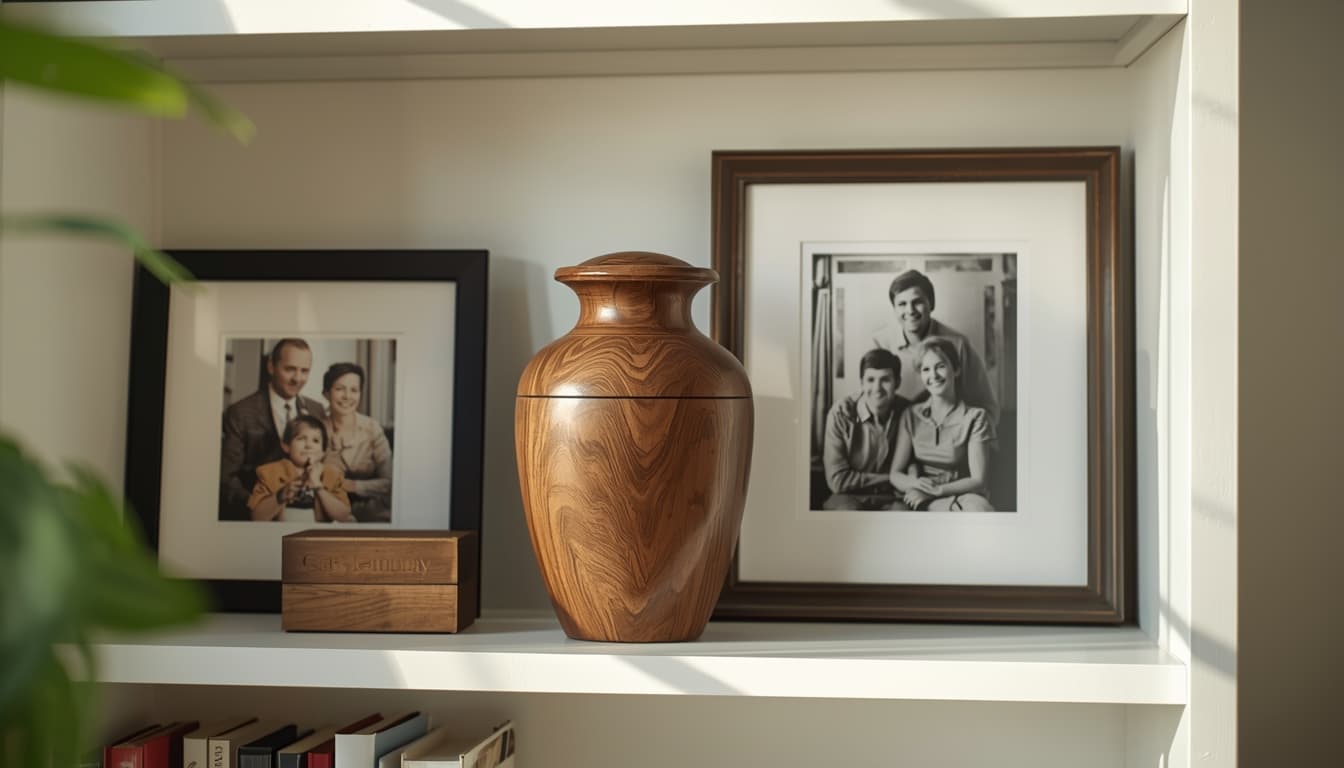
Photo remembrance gifts can anchor an entire home memorial. A single well-chosen photo in the right frame can be more powerful than a gallery wall — though gallery walls work beautifully too, especially when they include candid shots alongside formal portraits.
Consider mixing formats: a framed portrait, a printed snapshot tucked into a frame corner, a digital photo frame cycling through decades of memories. The variety mirrors how memory actually works — some moments are fixed and formal, others are fleeting and ordinary.
Garden memorials that extend the home
If you have outdoor space, a garden memorial can feel like a natural extension of your indoor remembrance. Memorial garden rocks provide a permanent, weather-resistant focal point that grounds a garden tribute. Paired with seasonal plantings or a small bench, a garden stone can become a quiet destination within your own yard.
For broader inspiration on ways to honor someone beyond the home, memorial ideas after loss covers a full range of creative and practical approaches — from charity work and travel to community projects and legacy gifts.
Art and symbolism in memorial spaces
Memorial art can transform a corner from functional to meaningful. The Angel of Grief — the famous sculpture by William Wetmore Story — has inspired generations of memorial art, and smaller reproductions or angel-themed sympathy gifts can bring that same sense of reverent beauty into a home setting.
A memorial that grows with you
The best home memorials are not finished on the day they begin. They shift as grief shifts — sometimes fuller, sometimes simpler, sometimes boxed up during a season of healing and brought back when the time is right. Give yourself permission to change it, expand it, or let it rest. The memorial is for you, and it should serve your healing for as long as you need it.