🏬Supersize Online Funeral Retailer🪦1000's of Headstones⚱️Over 10,000 Cremation Urns⚰️Caskets Overnight Delivery🛒Funeral & Memorial Superstore🚚FREE Shipping on ALL Orders👨👩👧👦Helping Families for over 20 Years💰Lowest Price Guarantee🏬Supersize Online Funeral Retailer🪦1000's of Headstones⚱️Over 10,000 Cremation Urns⚰️Caskets Overnight Delivery🛒Funeral & Memorial Superstore🚚FREE Shipping on ALL Orders👨👩👧👦Helping Families for over 20 Years💰Lowest Price Guarantee
🏬Supersize Online Funeral Retailer🪦1000's of Headstones⚱️Over 10,000 Cremation Urns⚰️Caskets Overnight Delivery🛒Funeral & Memorial Superstore🚚FREE Shipping on ALL Orders👨👩👧👦Helping Families for over 20 Years💰Lowest Price Guarantee🏬Supersize Online Funeral Retailer🪦1000's of Headstones⚱️Over 10,000 Cremation Urns⚰️Caskets Overnight Delivery🛒Funeral & Memorial Superstore🚚FREE Shipping on ALL Orders👨👩👧👦Helping Families for over 20 Years💰Lowest Price Guarantee
Turning cremains into diamonds is real chemistry, not a metaphor. Carbon is extracted from cremated remains, subjected to the pressure and heat that produce diamond in the earth, and what comes out is a diamond in every sense a laboratory can measure.
What families want to know is rarely the chemistry. It is what it costs, how long they will wait, how much of the ashes it consumes, and whether they can be sure the stone they get back contains what they sent. Those are the questions this page answers.
How It Works
The process is the same one used to grow any laboratory diamond, with the carbon source changed.
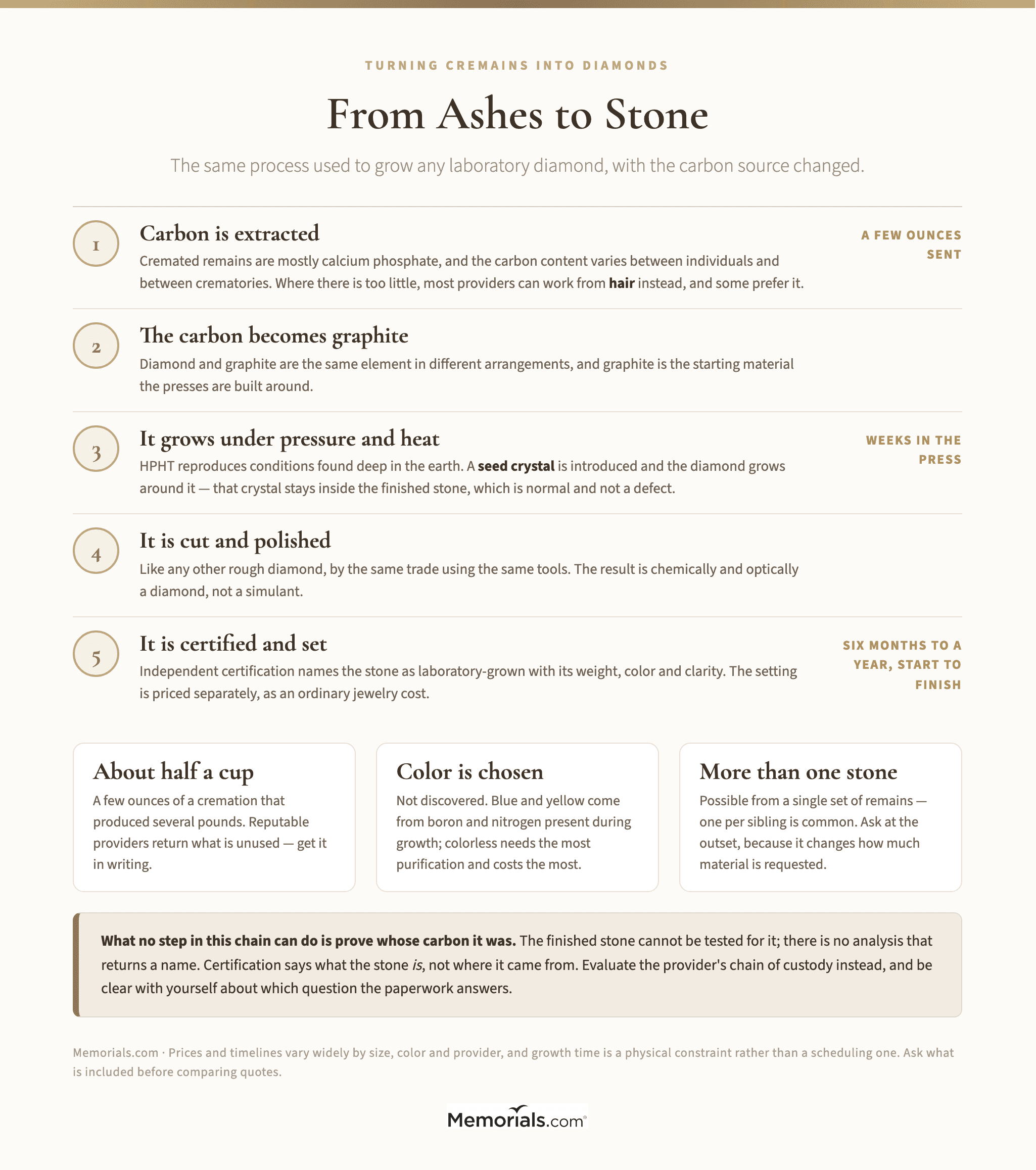
Carbon is extracted. Cremated remains are mostly calcium phosphate, and the carbon content varies considerably between individuals and between crematories. The laboratory isolates and purifies what carbon there is. Where there is too little, most providers can work from hair instead, and some prefer it.
The carbon is converted to graphite. Diamond and graphite are the same element in different arrangements, and graphite is the starting material the presses are built around.
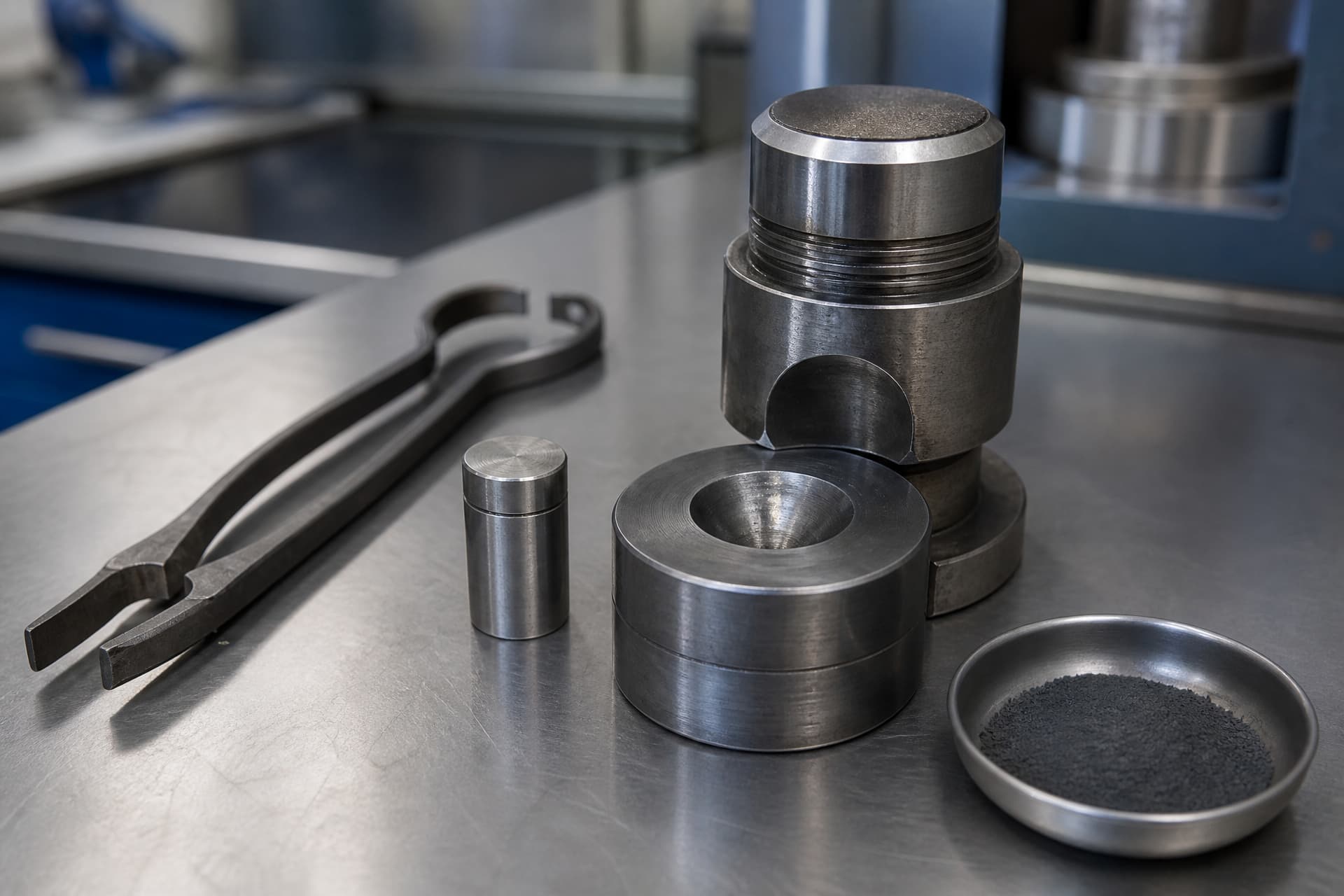
It is grown under high pressure and high temperature. The HPHT method reproduces conditions found deep in the earth — pressures of tens of thousands of atmospheres at temperatures well over a thousand degrees Celsius. A seed crystal is introduced and the diamond grows around it over weeks.
The press is the whole of the difference between graphite and diamond. Tens of thousands of atmospheres at well over a thousand degrees Celsius, held for weeks.
It is cut and polished like any other rough diamond, by the same trade using the same tools.
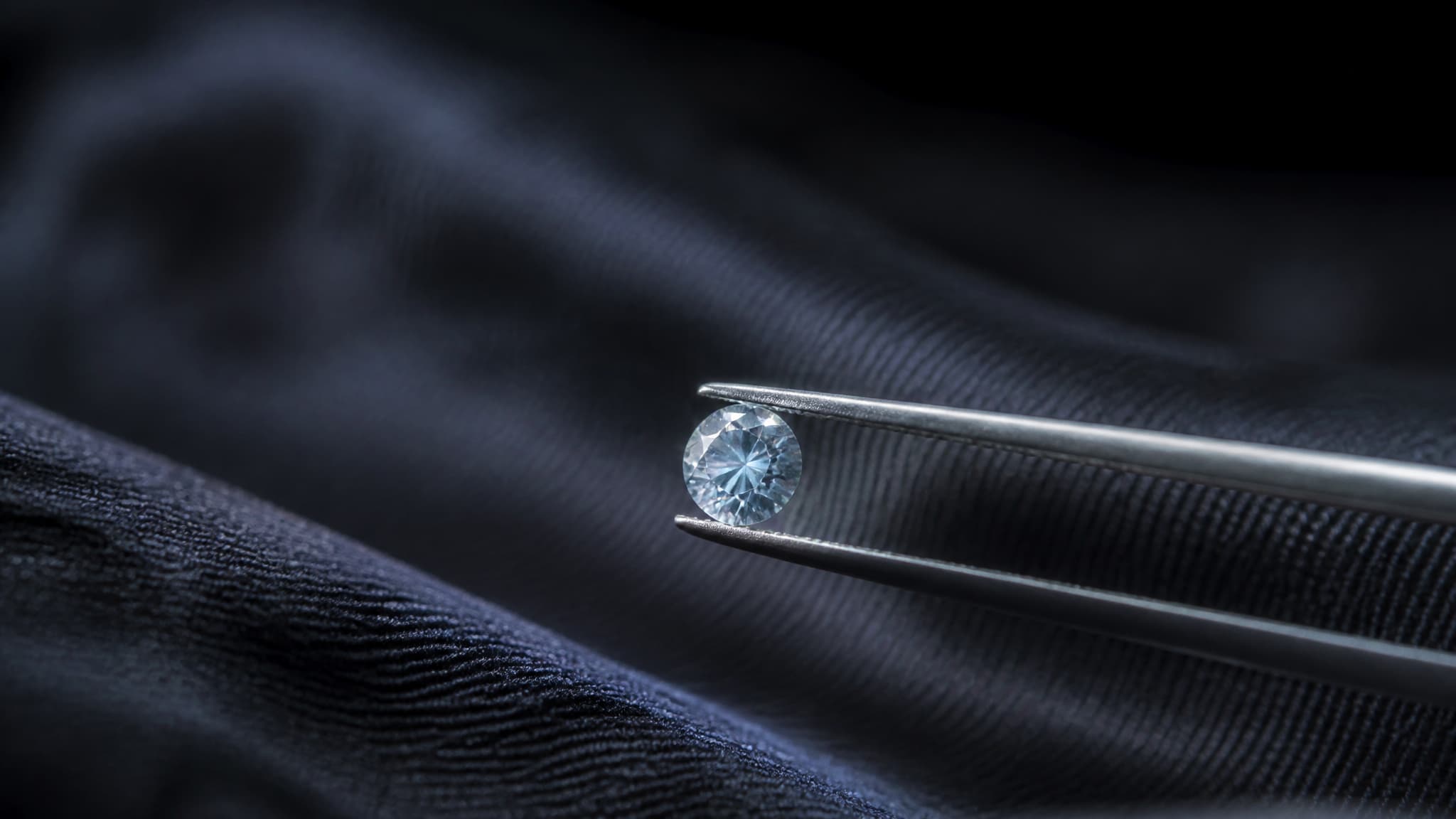
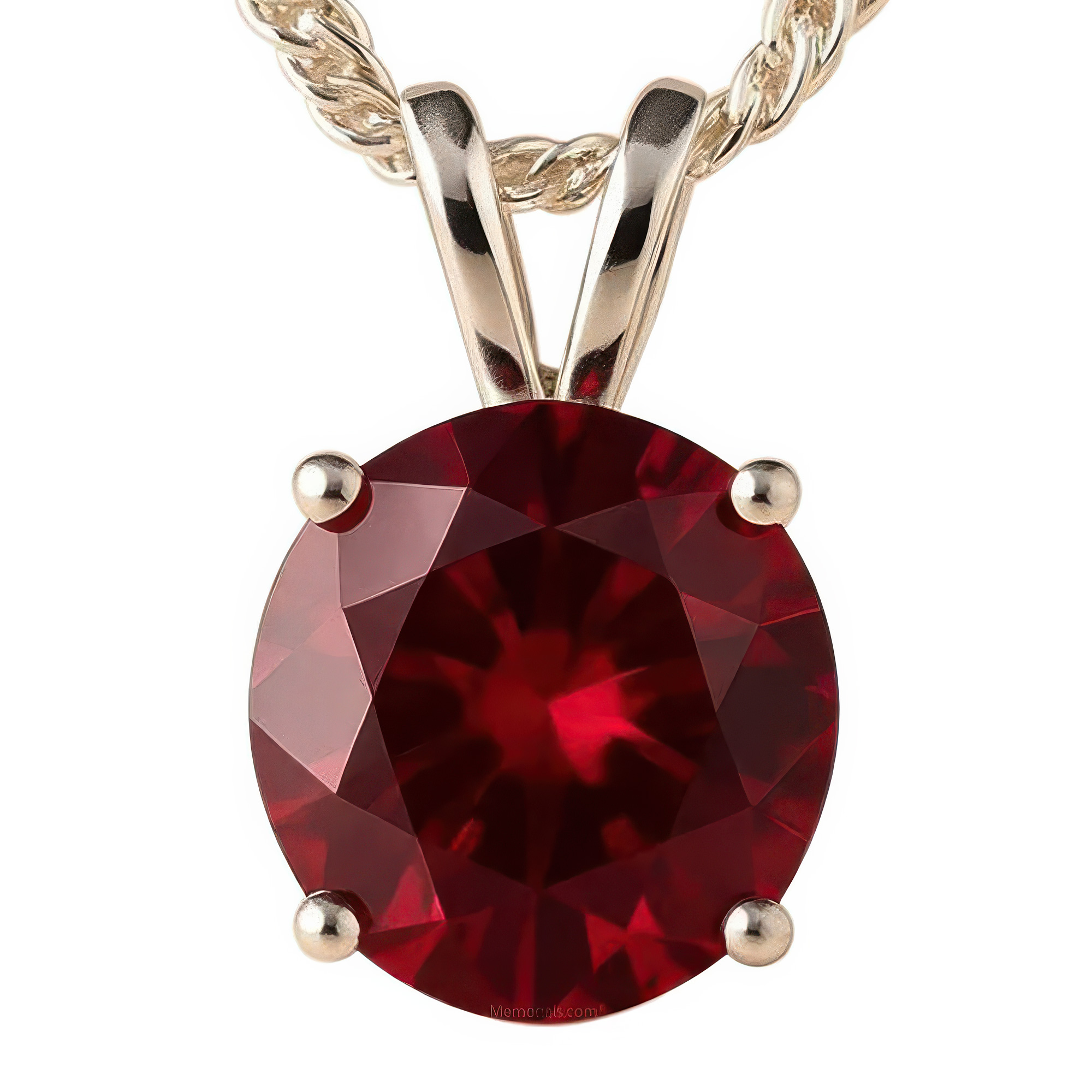
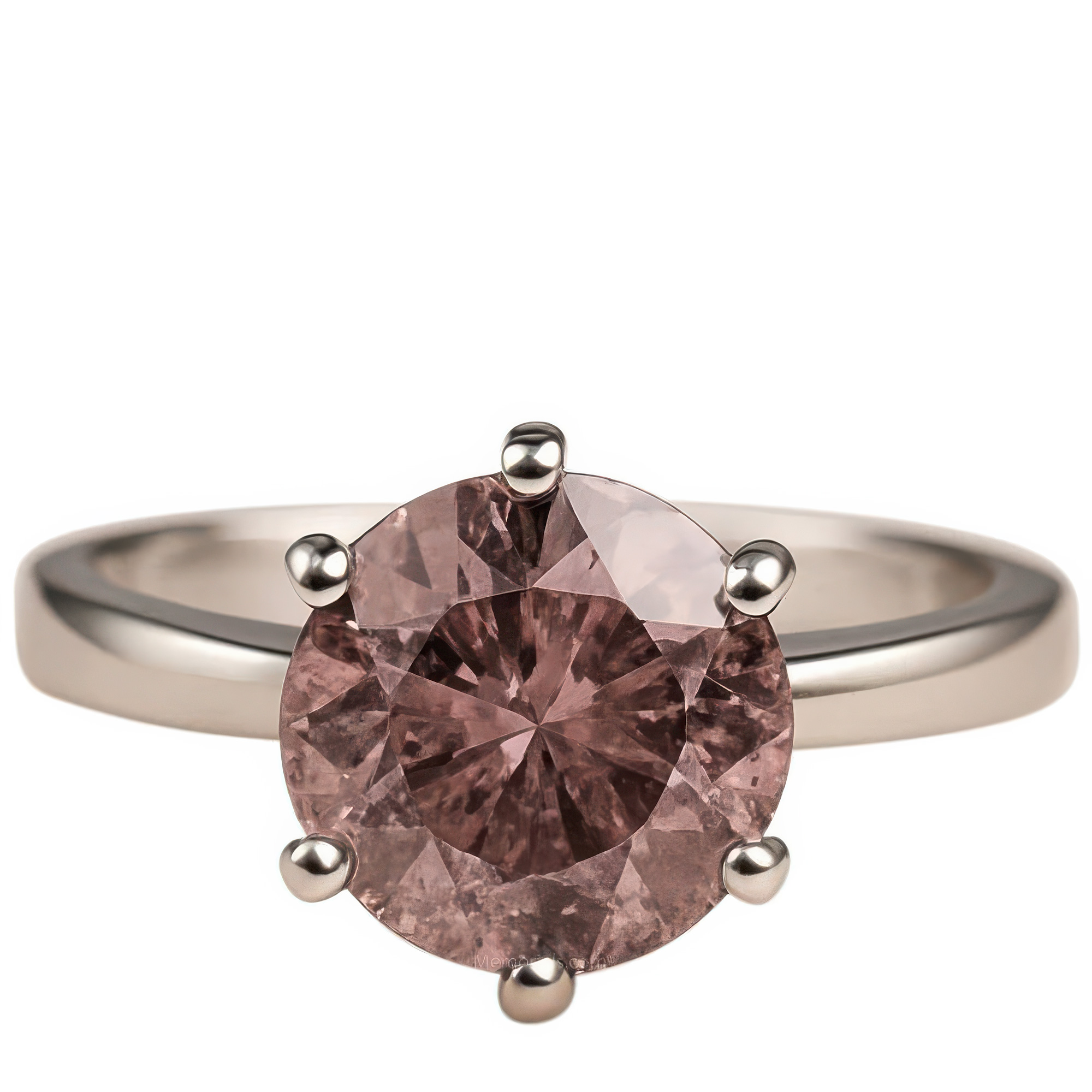
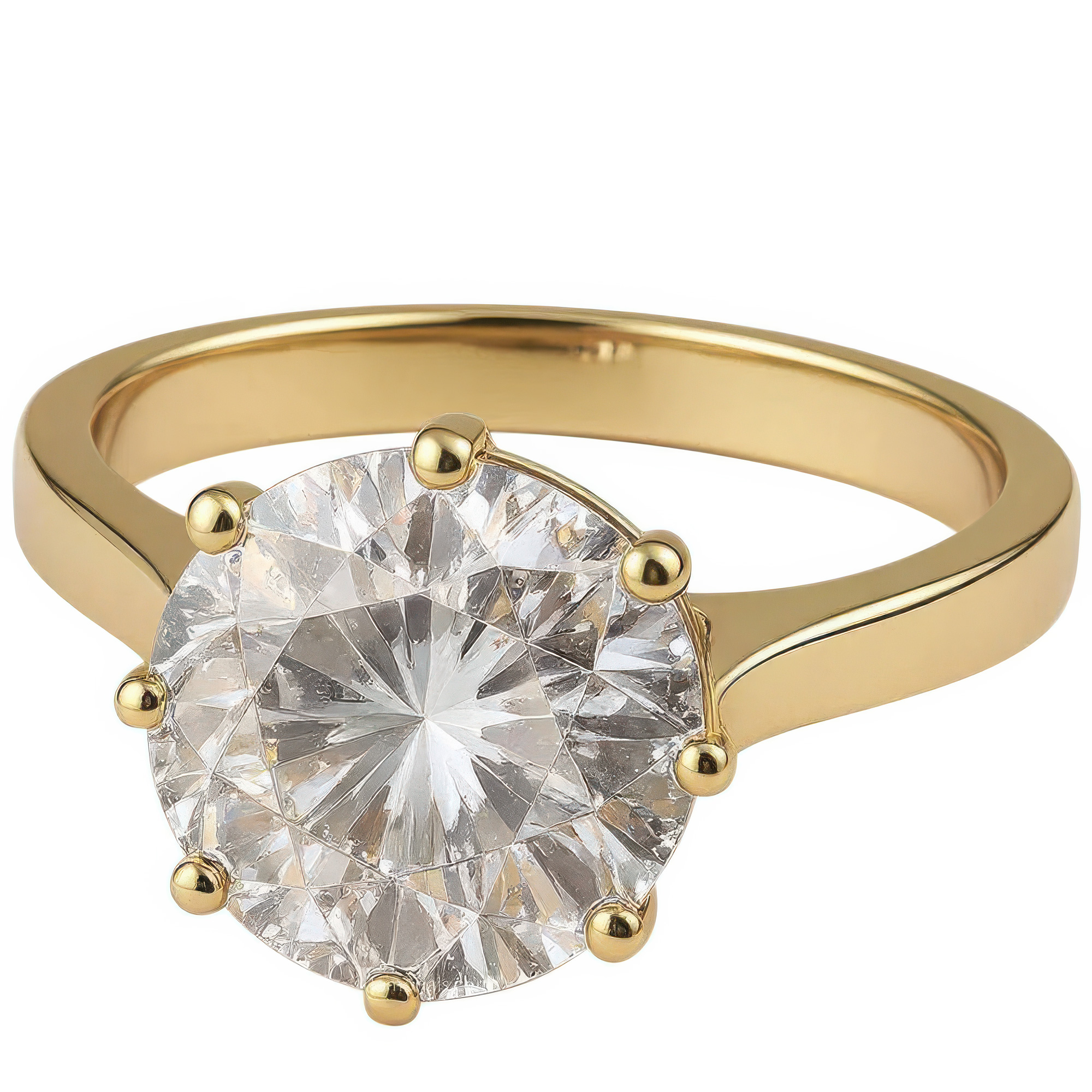
The result is chemically and optically a diamond. It is not a simulant like cubic zirconia or moissanite, and a gemologist testing it will find diamond. What distinguishes it from a mined stone is its origin, which specialist equipment can identify — laboratory diamonds carry growth characteristics that mined ones do not.
Weeks in the press, six months to a year start to finish. The last line is the one worth reading twice: nothing in the chain can prove whose carbon the stone grew from.
Prices vary widely by size, color and provider, and the range quoted publicly is broad. Small stones commonly start in the low thousands of dollars, and larger or more saturated stones run to five figures. Carat weight drives the price more than anything else, and the relationship is not linear — a stone twice the weight costs considerably more than twice as much.
Three things that move the number, worth knowing before you compare quotes:
Size. The dominant factor by a distance.
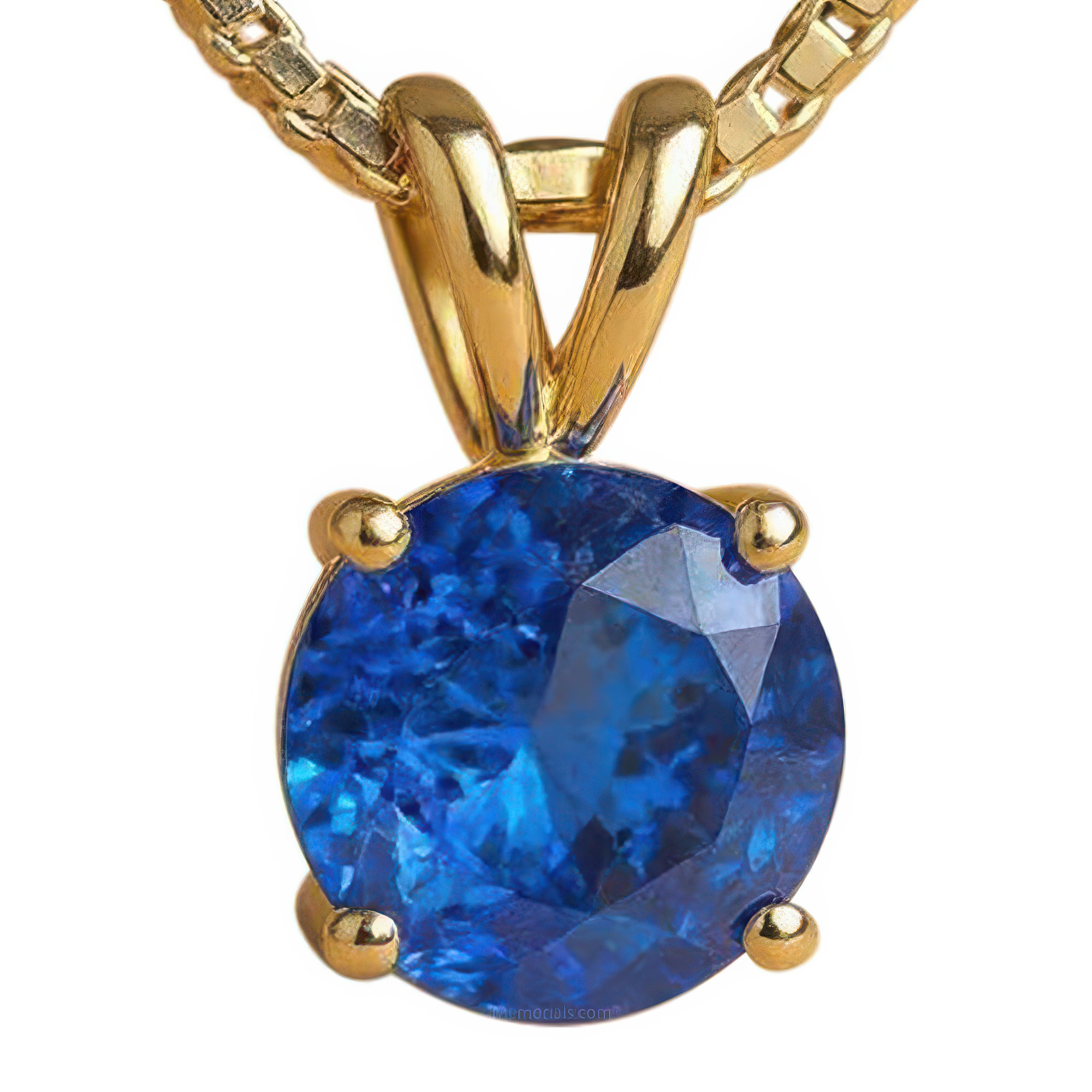
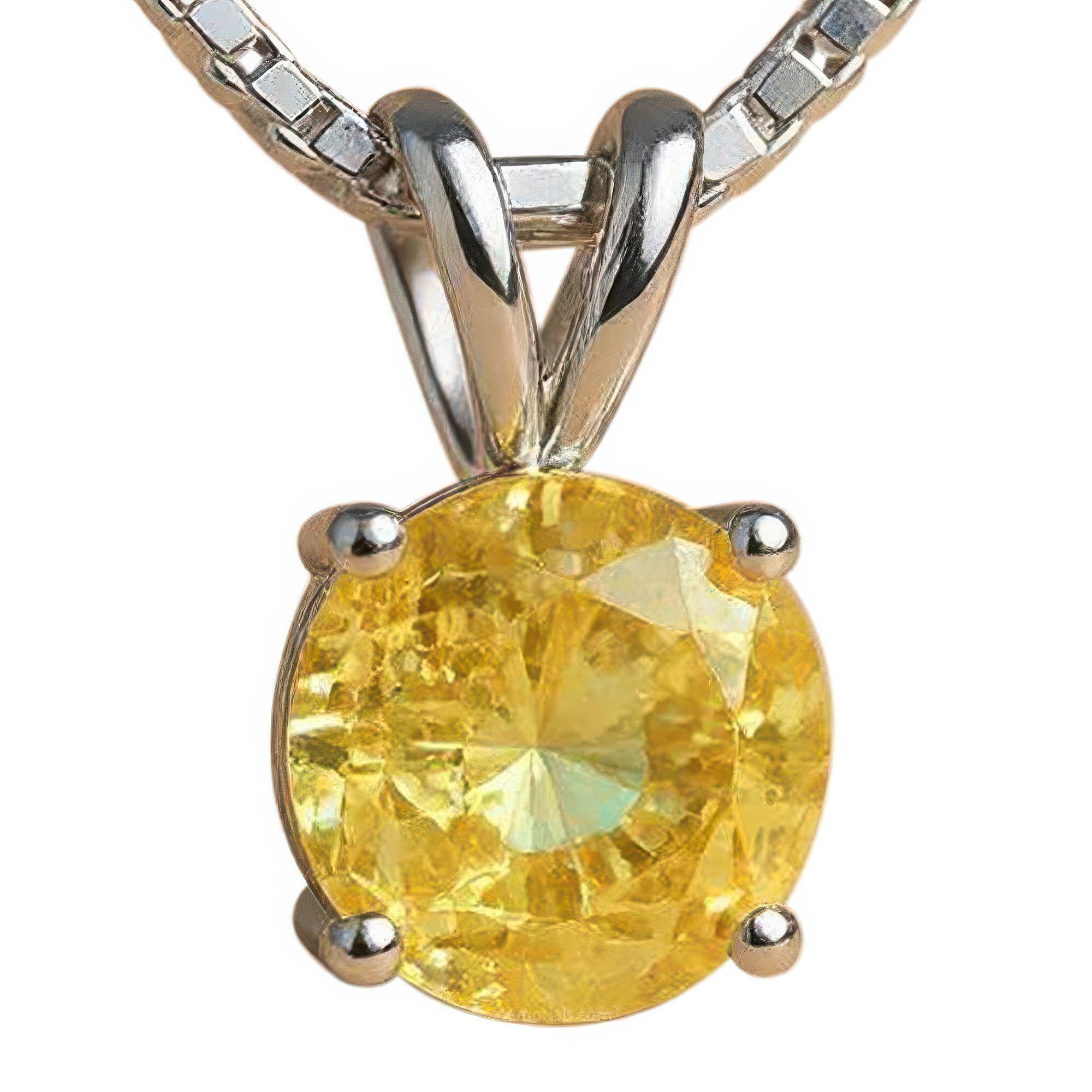
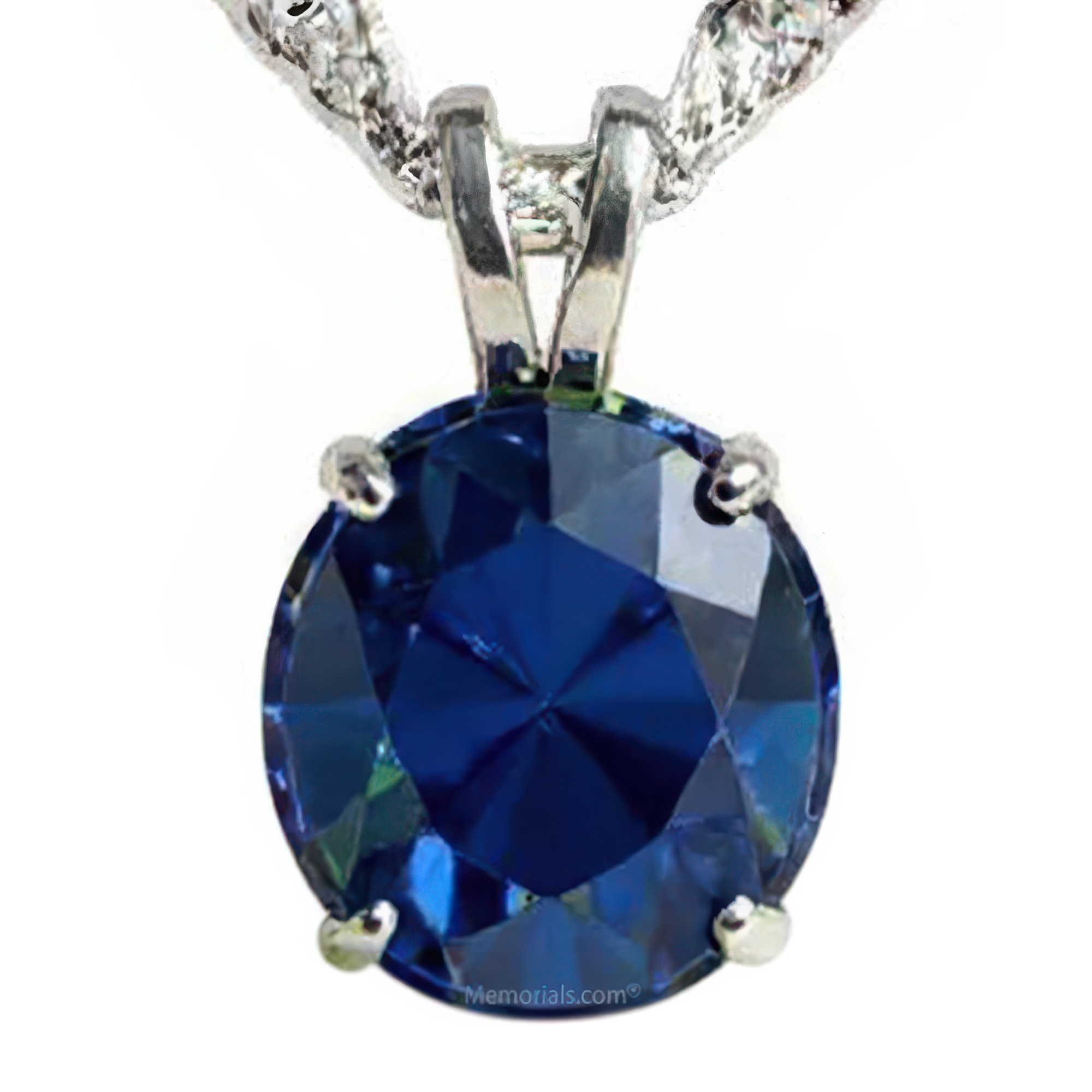
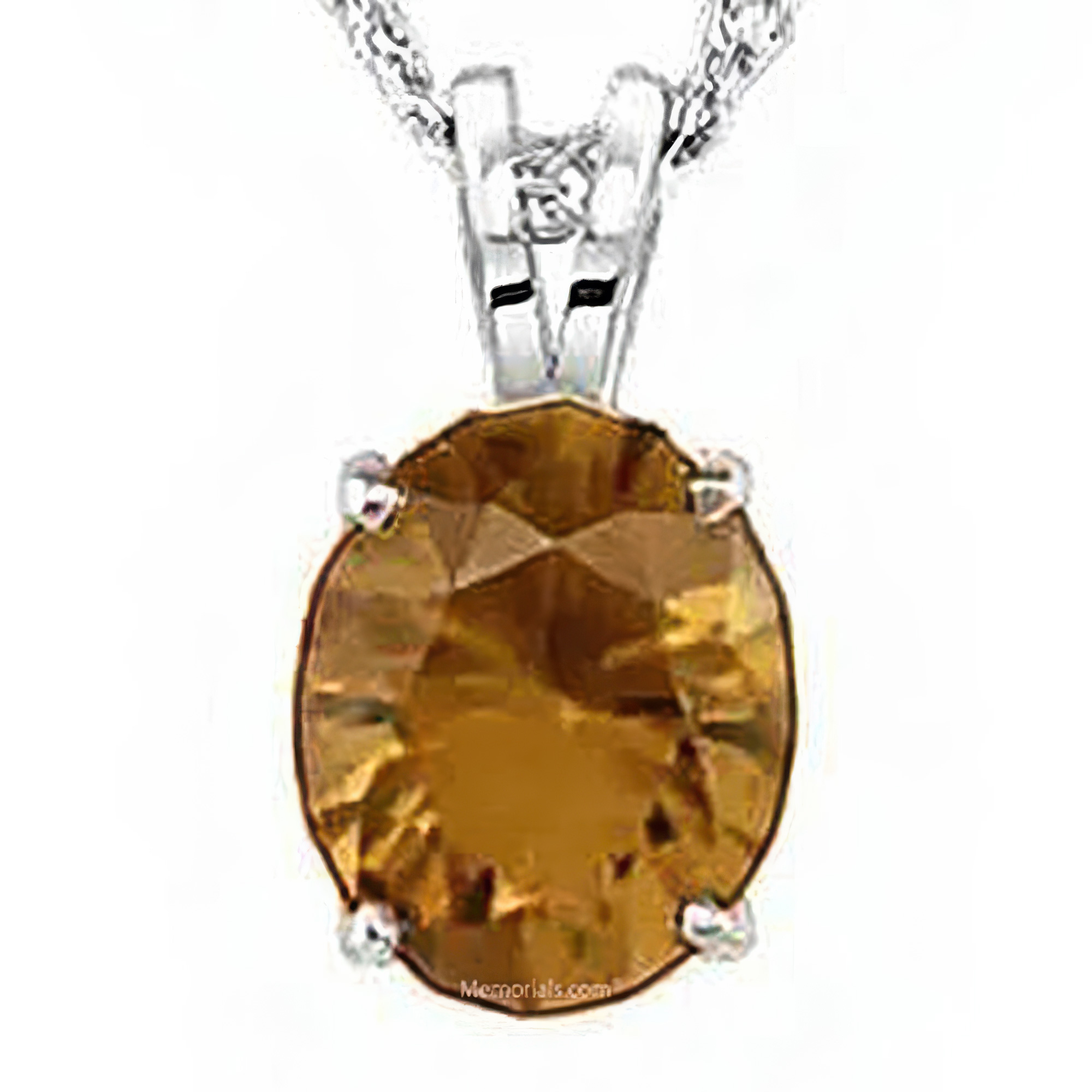
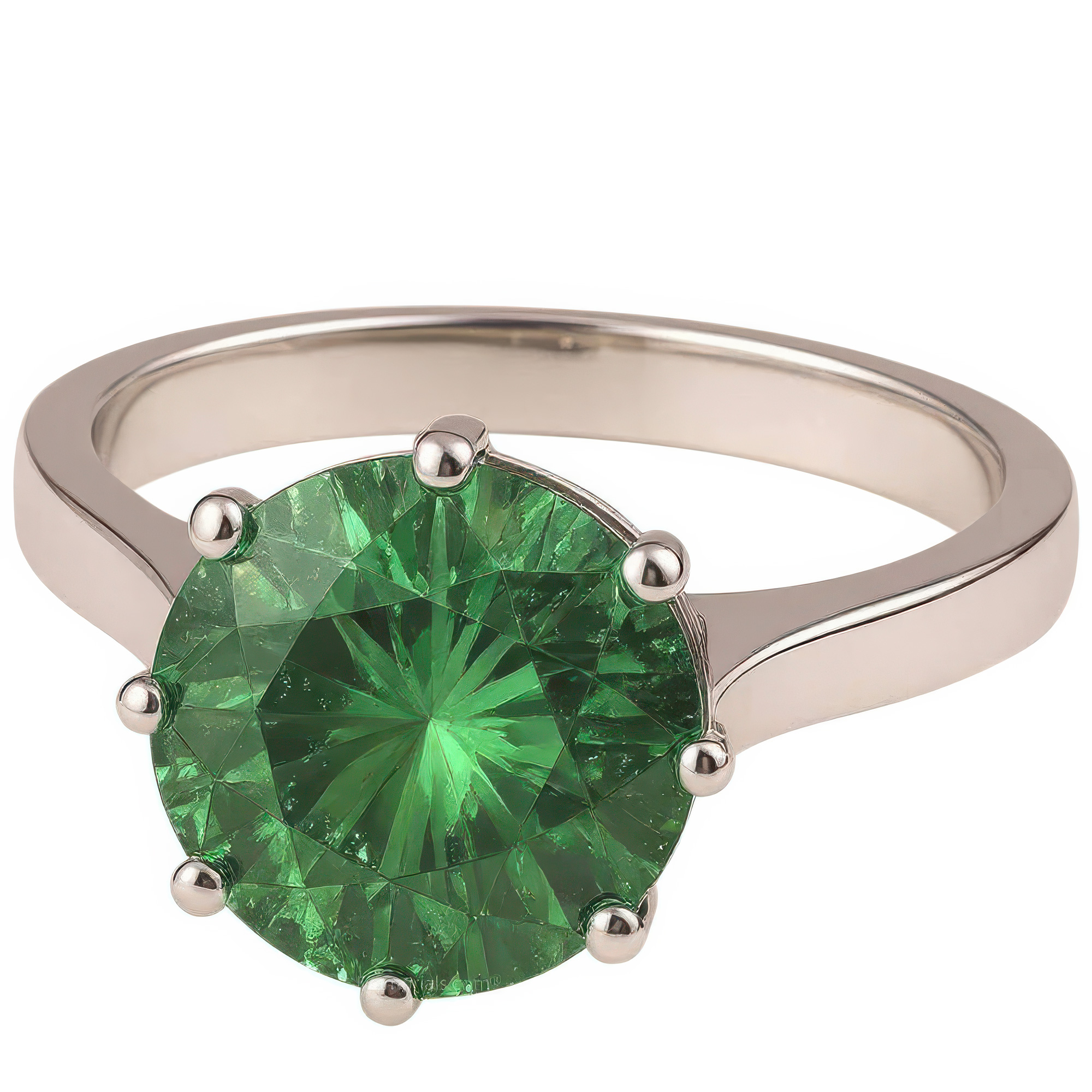
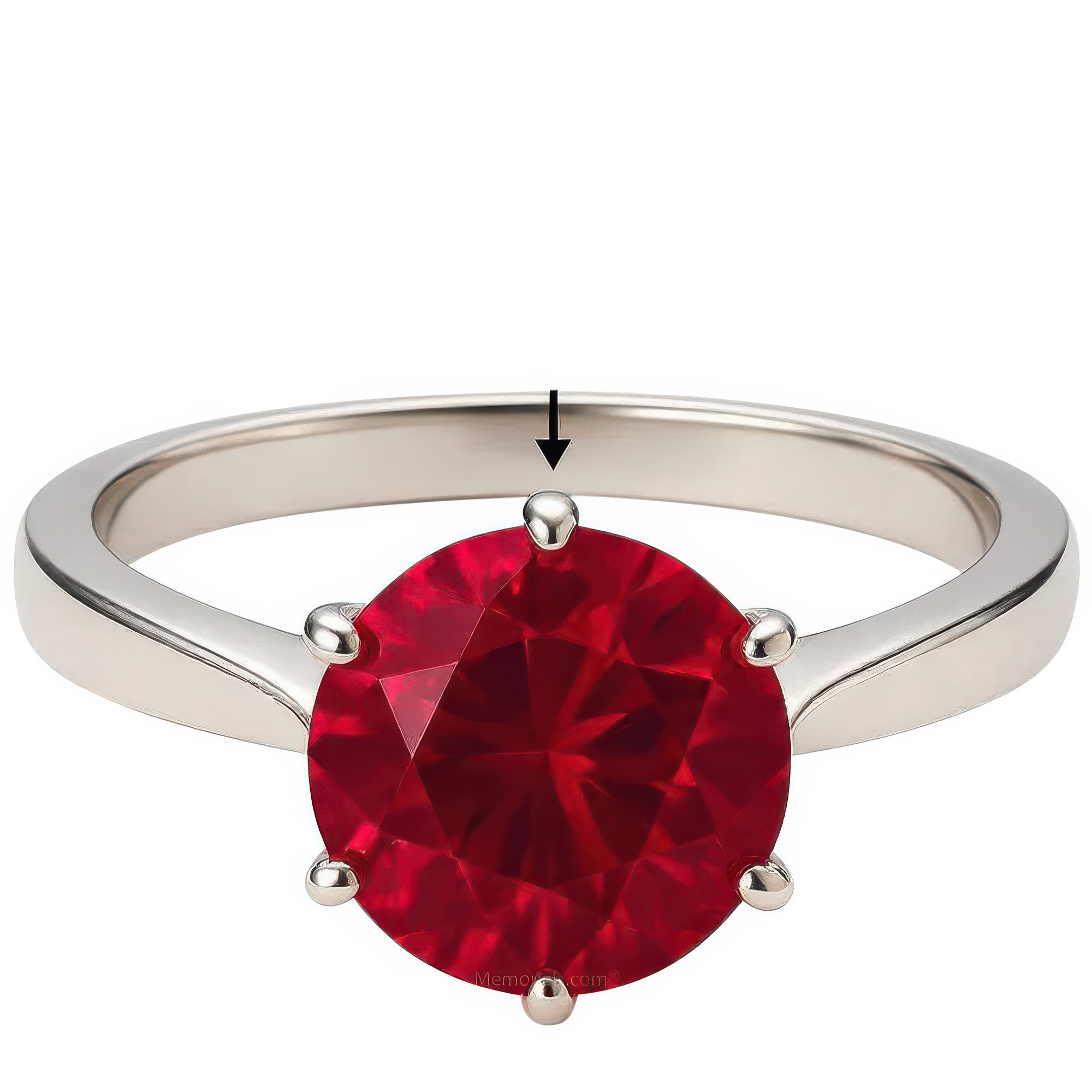
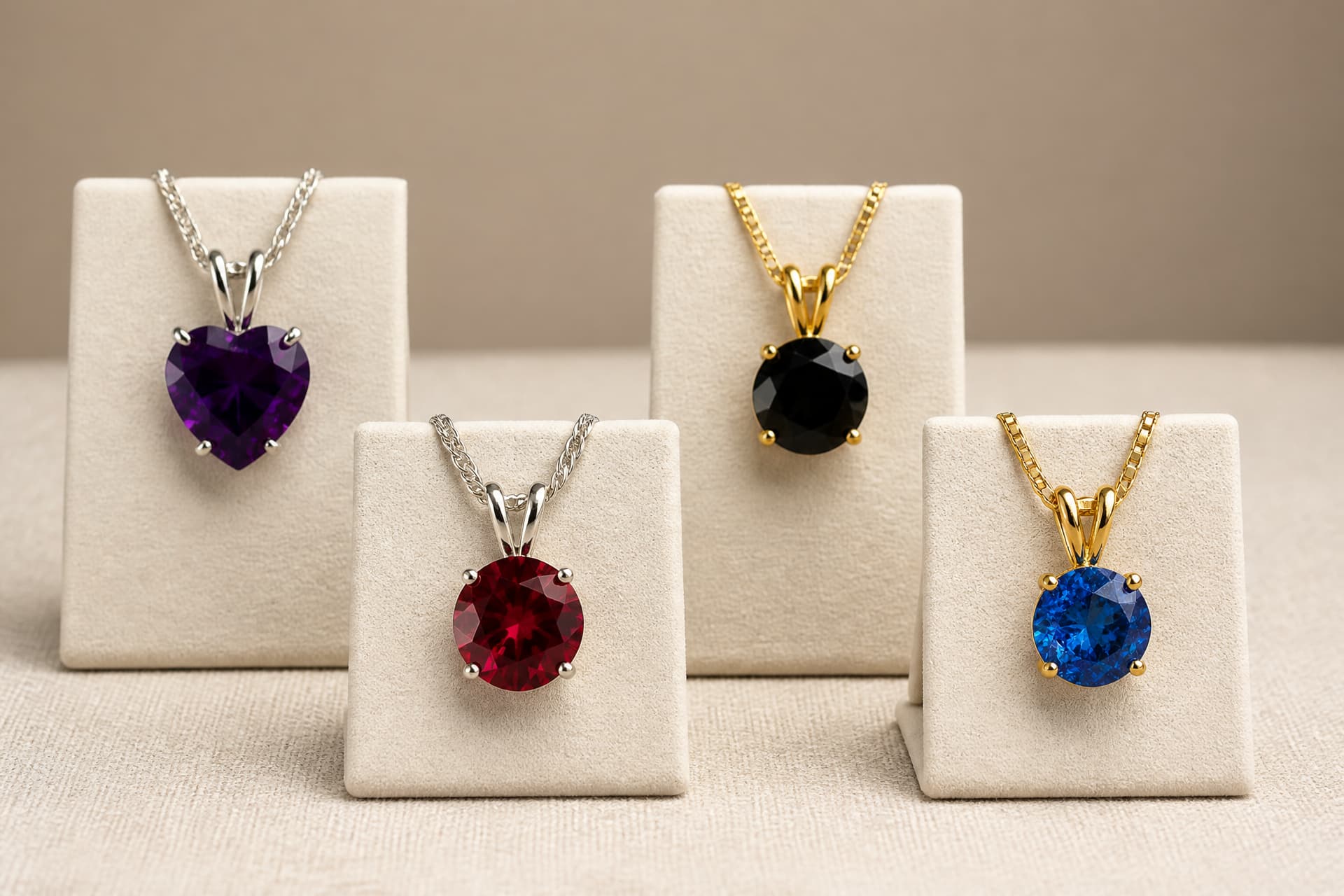
Color. Blue and yellow are produced by trace elements — boron and nitrogen respectively — present during growth. Colorless stones require the most purification and are generally the most expensive.
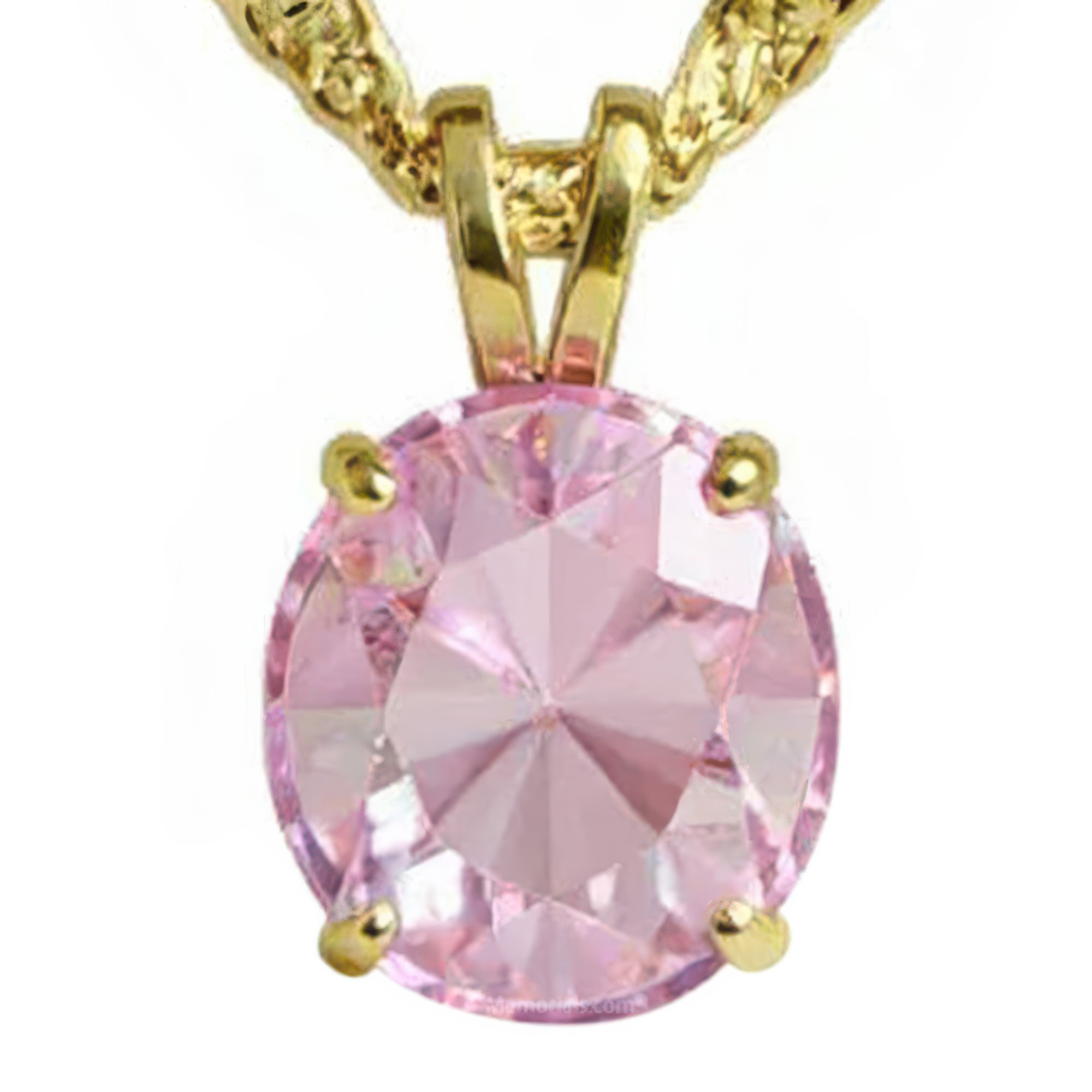
Cut and setting. The stone is priced separately from any ring or pendant it goes into, and the setting is an ordinary jewelry cost on top.
Ask what is included. Certification, shipping, insurance during transit and the setting are variously bundled or extra, and the headline price is not always comparable between providers.
How Long It Takes
Months, not weeks. Commonly quoted timelines run from around six months to a year from receipt of the remains to delivery of the finished stone, depending on size and the provider's queue.
This surprises families, and it is worth planning around. A diamond ordered after a death will not be in hand for the first anniversary, and frequently not for the second. Providers who promise much faster turnaround are worth asking about directly, because growth time is a physical constraint rather than a scheduling one.
How Much of the Ashes It Uses
Less than most families fear, and this is the question that most often decides whether they proceed.
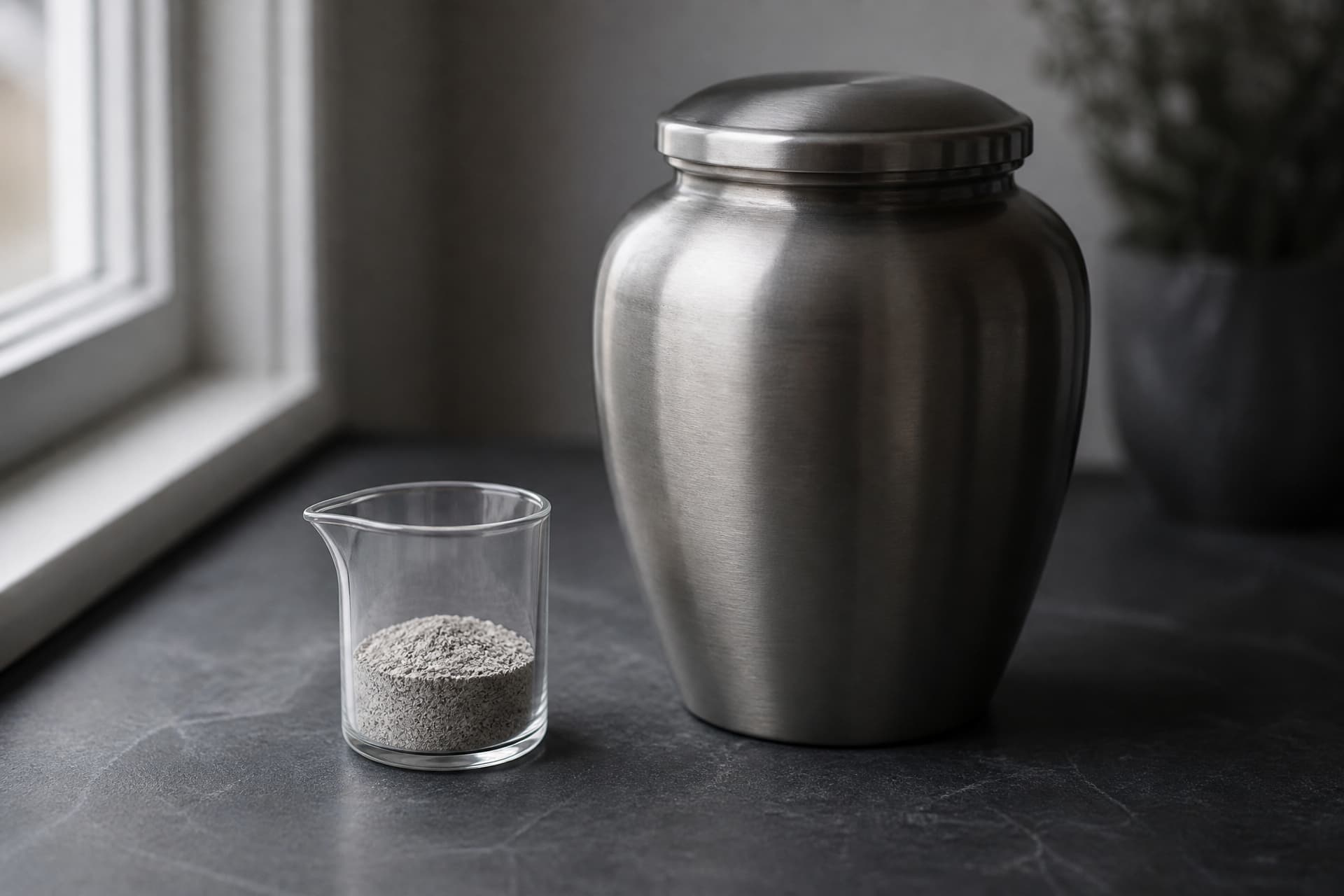
Providers commonly ask for somewhere around half a cup of cremated remains — a few ounces. An adult cremation produces several pounds, so what is requested is a fraction of the whole, and the rest is returned or stays with the family throughout.
Hair is an alternative and many providers accept it, either alongside the ashes or instead. For families unwilling to part with any of the remains, this resolves the objection entirely. It is also the route used when someone wants a diamond made from a living person, which is a real if uncommon request.
Ask what comes back. Reputable providers return unused material. Confirm it in writing before sending anything.
This is the proportion that decides it for most families. A few ounces go to the laboratory; the several pounds an adult cremation produces stay where they are.
The Question Everyone Asks
Can you be certain the diamond contains your loved one's carbon?
This is the honest weak point of the whole category, and it deserves a straight answer: you are relying on the provider's chain of custody. The finished stone cannot be tested to prove whose carbon it grew from. There is no analysis that returns a name.
What you can do is evaluate the process rather than the product:
Ask for documented chain of custody. The better providers track each batch with an identifier from receipt to delivery and will describe the system without being pressed.
Ask whether growth is done in-house. Some firms broker to third-party laboratories, which lengthens the chain.
Ask for certification from an independent gemological laboratory. This certifies what the stone is — a laboratory-grown diamond of a given weight, color and clarity — not whose carbon it came from. It is worth having and it is not proof of origin. Be clear with yourself about which question it answers.
Ask whether you can witness or visit. Some providers accommodate this. A firm that refuses outright is not necessarily doing anything wrong, but the ones that welcome it tend to be the ones with systems they are proud of.
This is not a reason to avoid the idea. It is a reason to choose carefully and to understand what the paperwork does and does not establish.
Turning Ashes to Diamond, or Something Simpler
Turning ashes to diamond is the most elaborate option in a category with several, and it is worth seeing the alternatives before committing months and thousands of dollars.
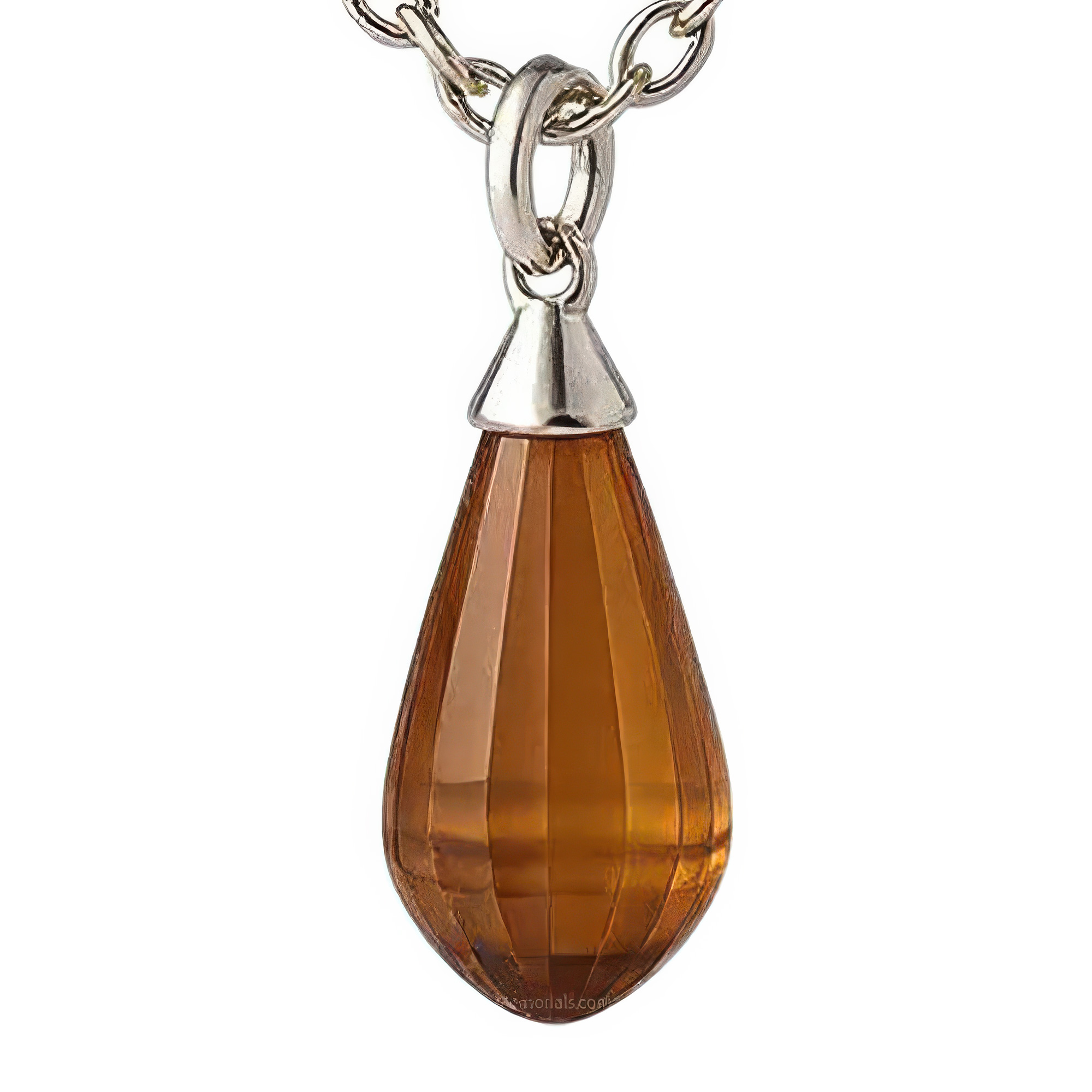
Cremation jewelry that holds ashes directly. A pendant, ring or bracelet with a sealed chamber. Immediate, far less expensive, and the ashes are physically present rather than transformed. Our guide to what cremation jewelry is covers the formats.
Glass art with ashes fused in. Ashes are incorporated into blown or cast glass. Visibly contains the remains, which some families want and others find difficult.
Ashes in tattoo ink. Growing in popularity and carrying its own set of questions.
Dividing the ashes among several pieces. A common solution for a large family, and much cheaper than several diamonds.
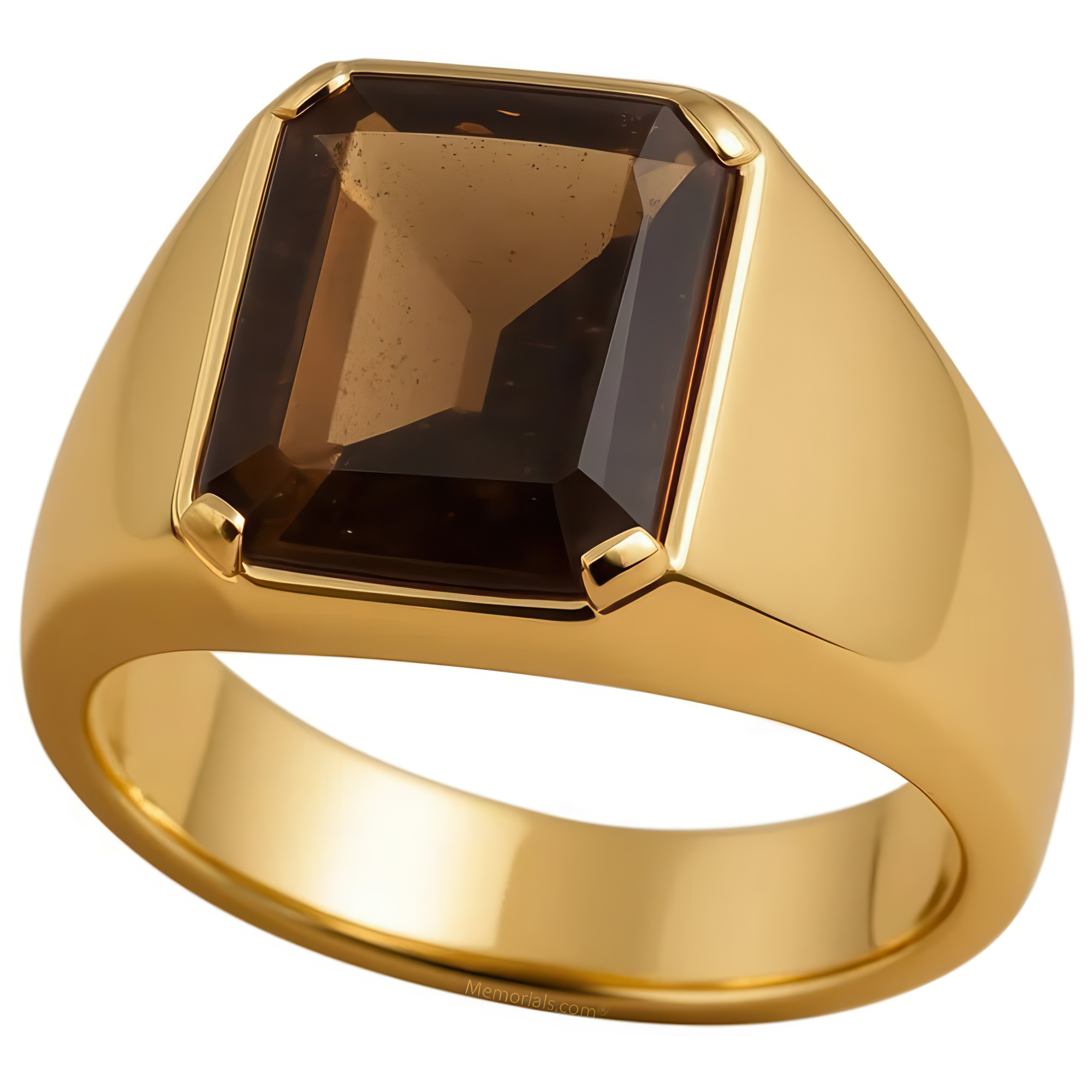
Cremation diamonds as a finished product, if you would rather buy into a settled process than commission one.
The case for the diamond is that it is permanent, portable, wearable, and passes down. The case against is cost, the wait, and the chain-of-custody question above. Families who are certain tend to be certain for the first reason, and it is a good reason.
It can be made years later. There is no time limit. Ashes held for a decade work as well as ashes from last month.
More than one stone is possible from a single set of remains, and several families commission one per sibling. Ask about this at the outset, because it affects how much material is requested.
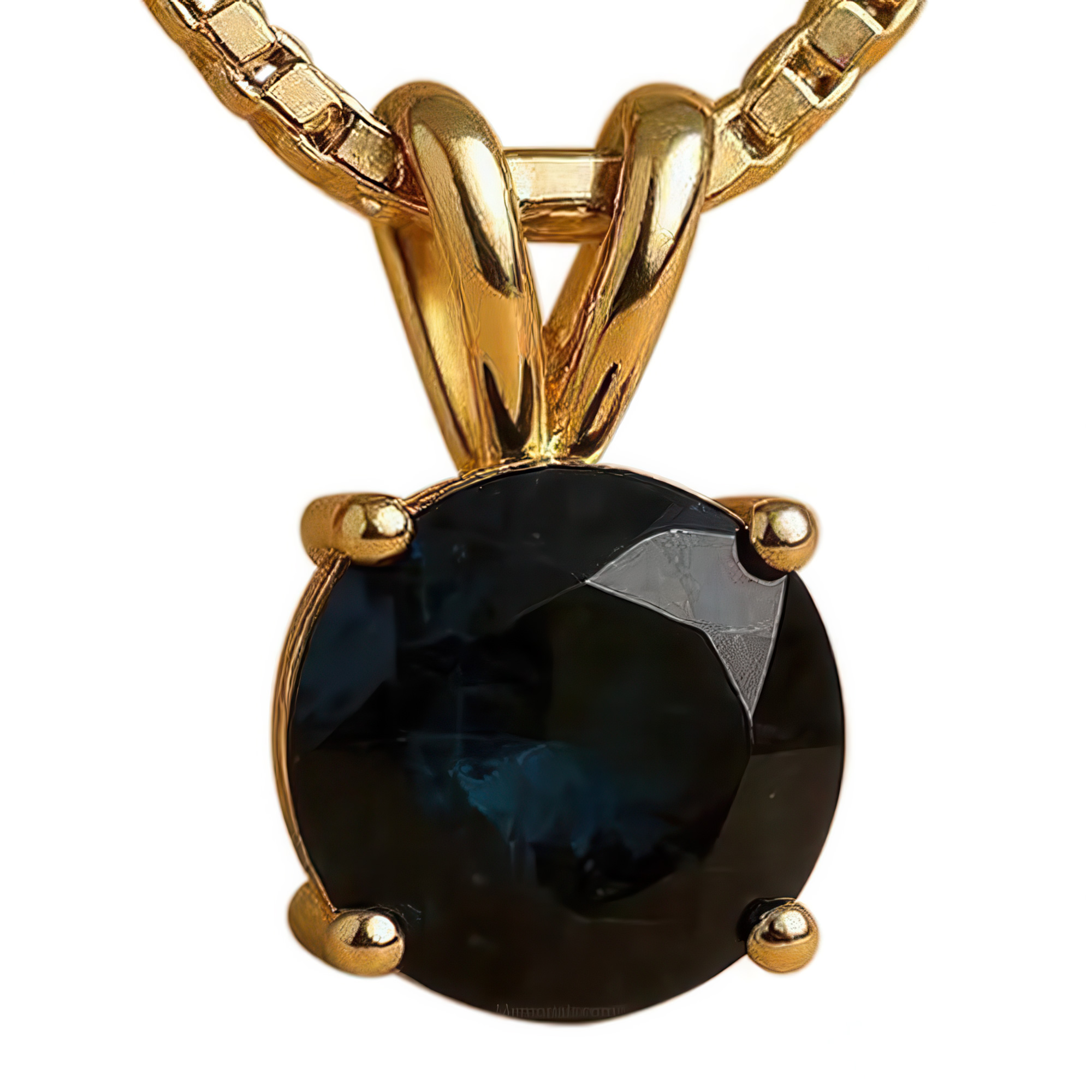
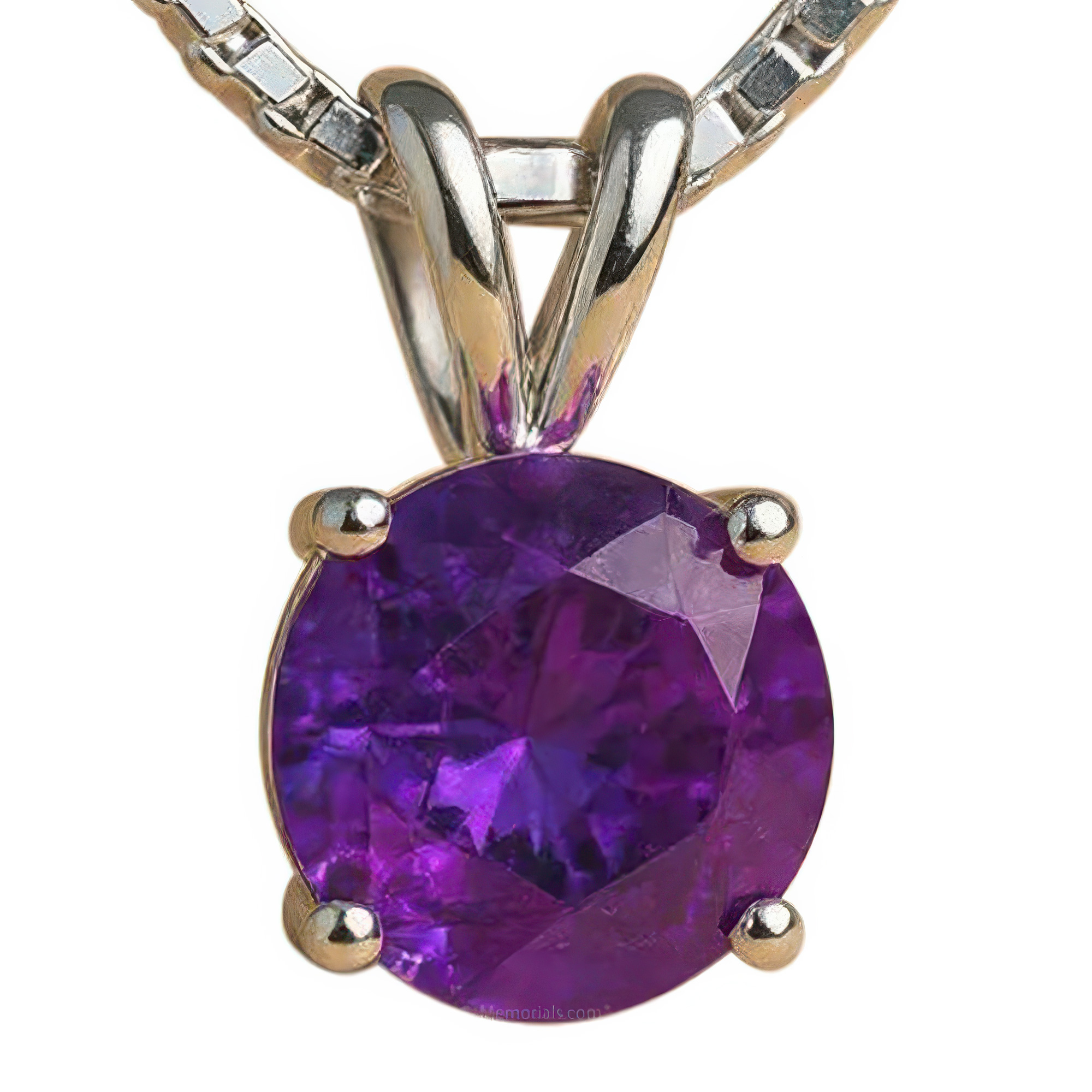
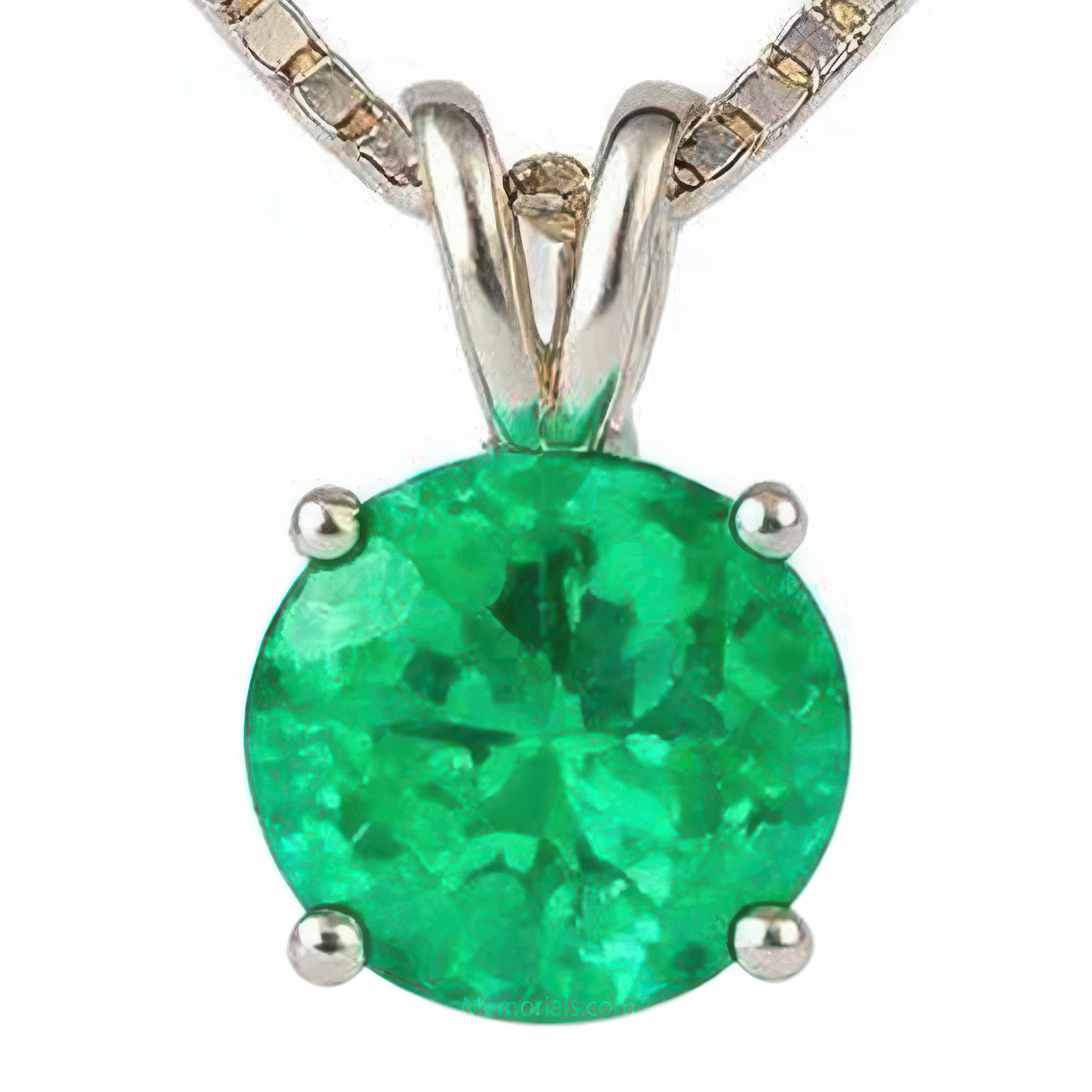
The color is chosen in advance, not discovered. Blue and yellow are the common offerings, and the saturation achieved varies between stones — providers will describe a range rather than guarantee an exact shade.
It can be reset later like any diamond. The stone is not bound to the setting it arrives in.
Insurance is worth arranging. A memorial diamond is an ordinary insurable jewelry item and an extraordinary irreplaceable one. Tell the insurer what it is.
Pets are included. Most providers work from animal remains on the same terms, and it is a substantial part of the market — for some laboratories the larger part of it.
Ask about the seed crystal. Every HPHT diamond grows around a tiny starting crystal, which remains inside the finished stone. It is a normal part of the process and not a defect, but families are occasionally told about it late and find it unsettling. Better to know now.
The category is small, international, and varies more than the marketing suggests. A short list of what separates them.
Where the growing happens. Some firms operate their own presses; others broker to third-party laboratories. Neither is disqualifying, but the first has a shorter chain of custody and can usually answer process questions directly.
What the certificate says. Independent gemological certification is standard from reputable providers and should name the stone as laboratory-grown, with weight, color and clarity. Read it rather than filing it — it is the only independent document in the transaction.
How the remains travel. Ask who ships, whether it is tracked and insured, and what happens if a parcel goes missing. This is the moment of greatest anxiety for most families and a good provider will have a clear answer ready.
What happens if you are unhappy. Growth is not reversible and a finished stone cannot be un-made. Ask what recourse exists if the color is not what was described, and get it in writing.
Whether they will talk to you about the hard question. A provider who becomes evasive about chain of custody is telling you something. The good ones answer it directly, because they are asked constantly.
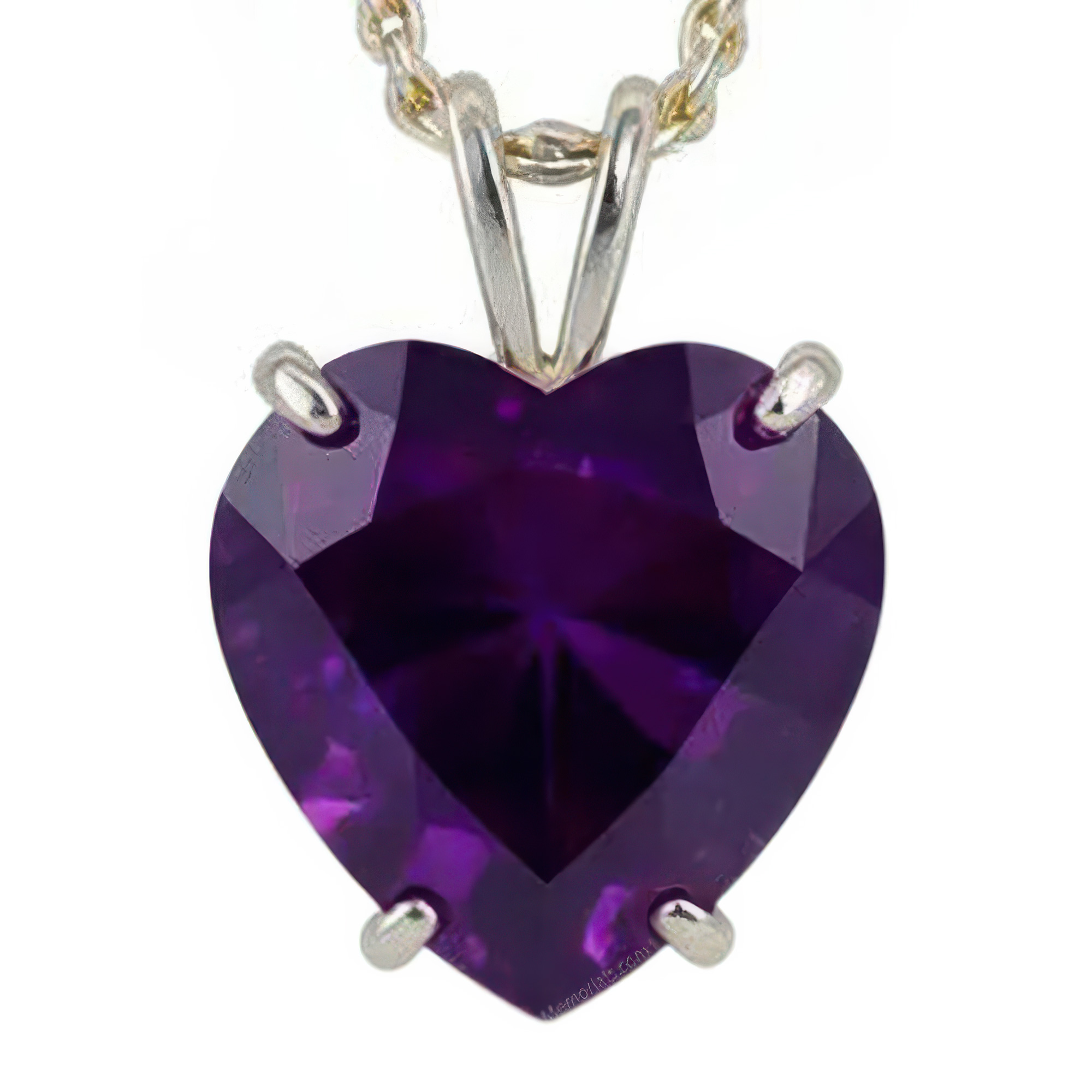
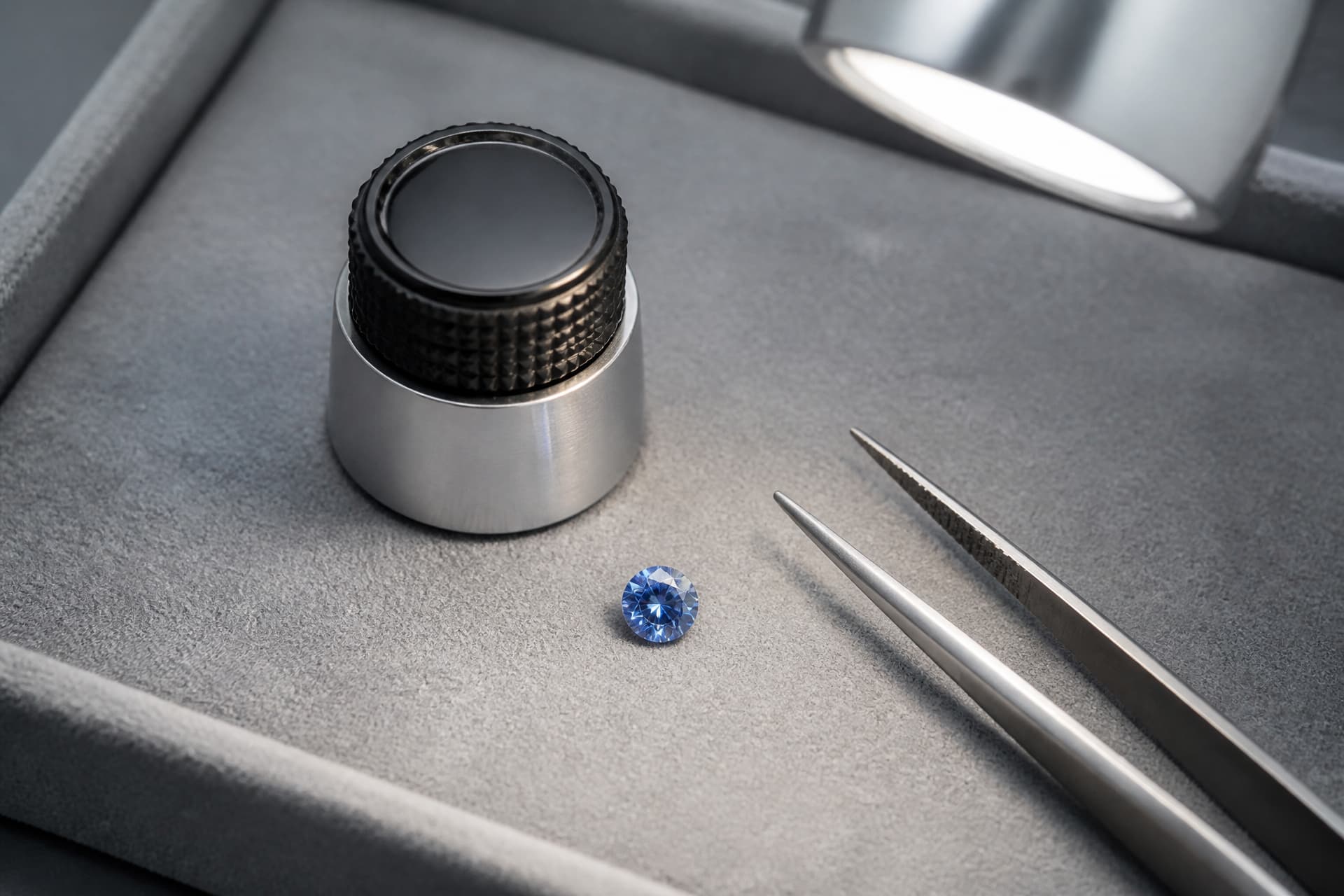
The certificate answers what the stone is, and a loupe answers how well it was cut. Neither answers whose carbon it grew from, which is the question the provider has to answer with process.
What the Family Should Agree First
The practical friction in this decision is rarely with the provider. It is within the family, and it comes later than expected.
Who owns it. A diamond is a single object and cannot be divided. A stone commissioned by one sibling from a parent's remains becomes an heirloom with an owner, and the question of whose it is after that owner dies is worth settling out loud at the beginning.
Whether everyone consents. Cremated remains are not legally property in the ordinary sense, and the person with authority over disposition may not be the only person with strong feelings. A diamond is irreversible. Ask before sending.
What happens to the rest. A few ounces go to the laboratory and several pounds do not. Deciding the fate of the remainder at the same time avoids a second decision in six months.
Whether it will actually be worn. This is worth asking honestly. Some families commission a ring and wear it daily for twenty years. Others find they cannot, and it lives in a box — which is a legitimate outcome but an expensive one to arrive at by accident.
Frequently Asked Questions
Is a cremation diamond a real diamond?
Yes. It is chemically and optically diamond, produced by the same HPHT process used for laboratory diamonds generally. It is not a simulant. Specialist equipment can identify it as laboratory-grown rather than mined, which is a statement about origin rather than authenticity.
How much does it cost?
Small stones commonly begin in the low thousands of dollars and larger or more saturated ones reach five figures. Carat weight is the dominant factor, and the price rises faster than the size.
How long does it take?
Commonly six months to a year from receipt of the remains. Growth time is a physical constraint, so much shorter promises are worth questioning.
How much of the ashes does it use?
Commonly around half a cup — a few ounces from several pounds. Unused material should be returned; confirm that in writing first.
Can it be made from hair instead?
Yes, and many providers prefer it. This is the answer for families unwilling to part with any remains, and it is also how diamonds are made from living people.
Can I prove the diamond contains my loved one's carbon?
No test can establish it. You are relying on the provider's chain of custody, so ask how batches are tracked, whether growth happens in-house, and whether you can visit. Gemological certification confirms what the stone is, not whose carbon grew it.
The Short Version
The chemistry is sound, the stone is a real diamond, and the wait is long — plan on most of a year and a few ounces of ashes.
The part to be careful about is not the science but the custody. Ask how the batch is tracked, get the answer in writing, and understand that the certificate in the box tells you what the stone is and not where it came from. If that is acceptable to you, and for many families it plainly is, it is a memorial that goes on being worn.
And if the wait or the cost rules it out, the simpler options are not lesser ones. A pendant holding ashes directly is in your hand next week, costs a fraction of this, and is worn just as often.