🏬Supersize Online Funeral Retailer🪦1000's of Headstones⚱️Over 10,000 Cremation Urns⚰️Caskets Overnight Delivery🛒Funeral & Memorial Superstore🚚FREE Shipping on ALL Orders👨👩👧👦Helping Families for over 20 Years💰Lowest Price Guarantee🏬Supersize Online Funeral Retailer🪦1000's of Headstones⚱️Over 10,000 Cremation Urns⚰️Caskets Overnight Delivery🛒Funeral & Memorial Superstore🚚FREE Shipping on ALL Orders👨👩👧👦Helping Families for over 20 Years💰Lowest Price Guarantee
🏬Supersize Online Funeral Retailer🪦1000's of Headstones⚱️Over 10,000 Cremation Urns⚰️Caskets Overnight Delivery🛒Funeral & Memorial Superstore🚚FREE Shipping on ALL Orders👨👩👧👦Helping Families for over 20 Years💰Lowest Price Guarantee🏬Supersize Online Funeral Retailer🪦1000's of Headstones⚱️Over 10,000 Cremation Urns⚰️Caskets Overnight Delivery🛒Funeral & Memorial Superstore🚚FREE Shipping on ALL Orders👨👩👧👦Helping Families for over 20 Years💰Lowest Price Guarantee
Cremation Jewelry Guide: How to Choose the Right Memorial Keepsake
cremation
Choosing a way to keep a loved one close after cremation is one of the most personal decisions a grieving family makes. For many people, cremation jewelry offers something meaningful that other memorials cannot: a piece you can wear, carry, and keep with you through an ordinary Tuesday or a difficult anniversary.
This guide covers everything -- what cremation jewelry is, how it works, the types available, how to choose the right piece for yourself or someone else, what materials last, and what you can expect to spend. It's organized to support every situation: shopping for yourself, helping a parent choose, or searching for a gift that carries real weight.
What Is Cremation Jewelry?
Cremation jewelry is any piece of jewelry designed to hold, incorporate, or be made from a small portion of cremated remains, a lock of hair, or another personal memento. It is sometimes called remembrance jewelry or wearable memorial jewelry.
The defining feature is containment or infusion. A cremation pendant has a small interior chamber -- typically accessed through a threaded screw or a bail at the top of the pendant -- that holds a tiny amount of cremation ashes. is infused with ashes during the glassblowing process. are lab-grown gems created from the carbon in cremated remains. Each type works differently, but the intent is the same: to create a physical, wearable bond with someone who has died.
Not all memorial jewelry requires handling ashes. Fingerprint jewelry, for instance, uses a print impression rather than remains. Engraved pieces hold a name, date, or message. For families who find the idea of handling ashes difficult, these are equally meaningful options.
The category is broad. Understanding what's available is the first step toward finding the right piece.
Necklaces and Pendants
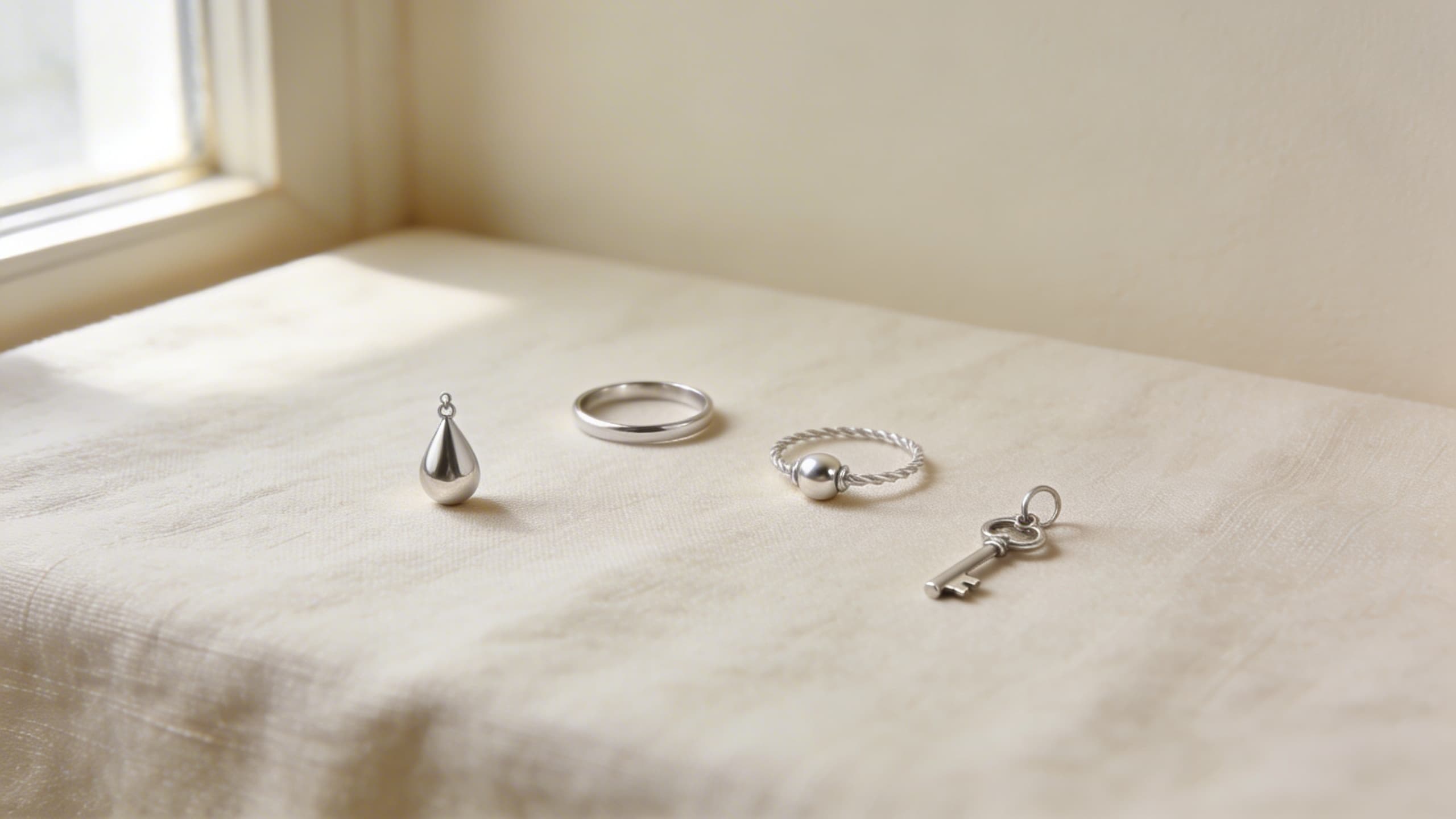
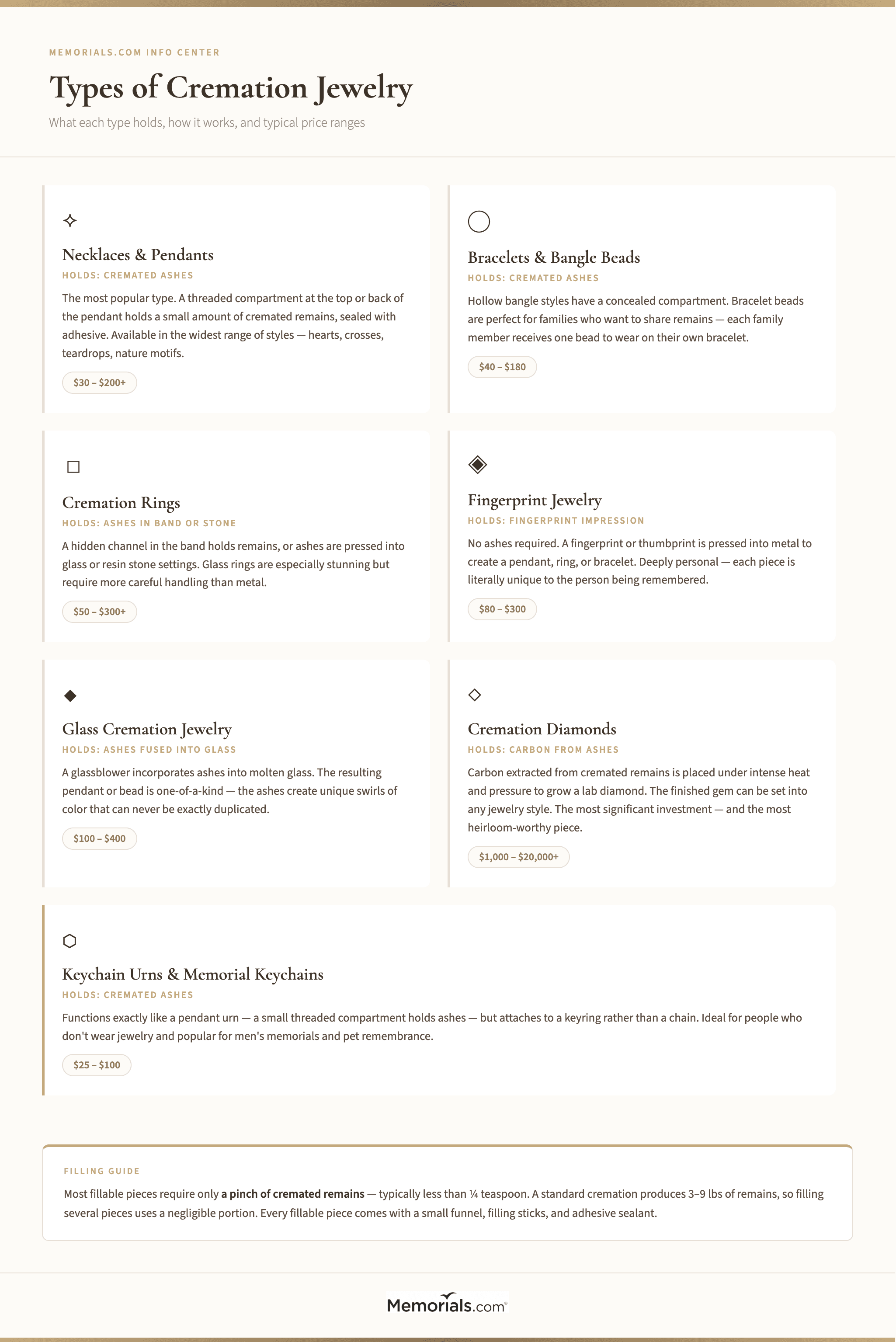
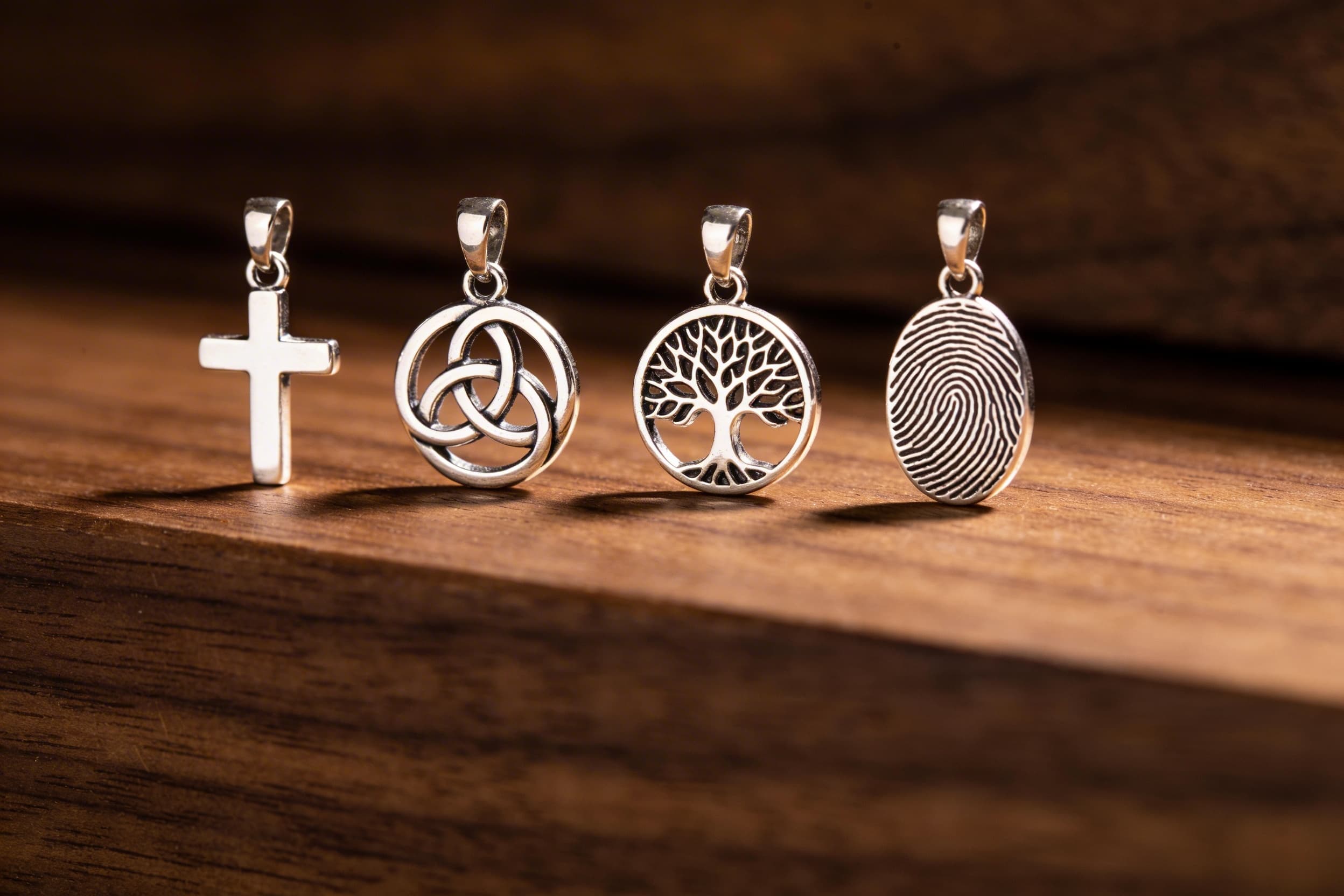
Necklaces for ashes are the most widely chosen form of cremation jewelry, and for good reason: they sit close to the heart, they're easy to wear daily, and they're available in the widest range of styles, from minimalist teardrops to ornate cross pendants.
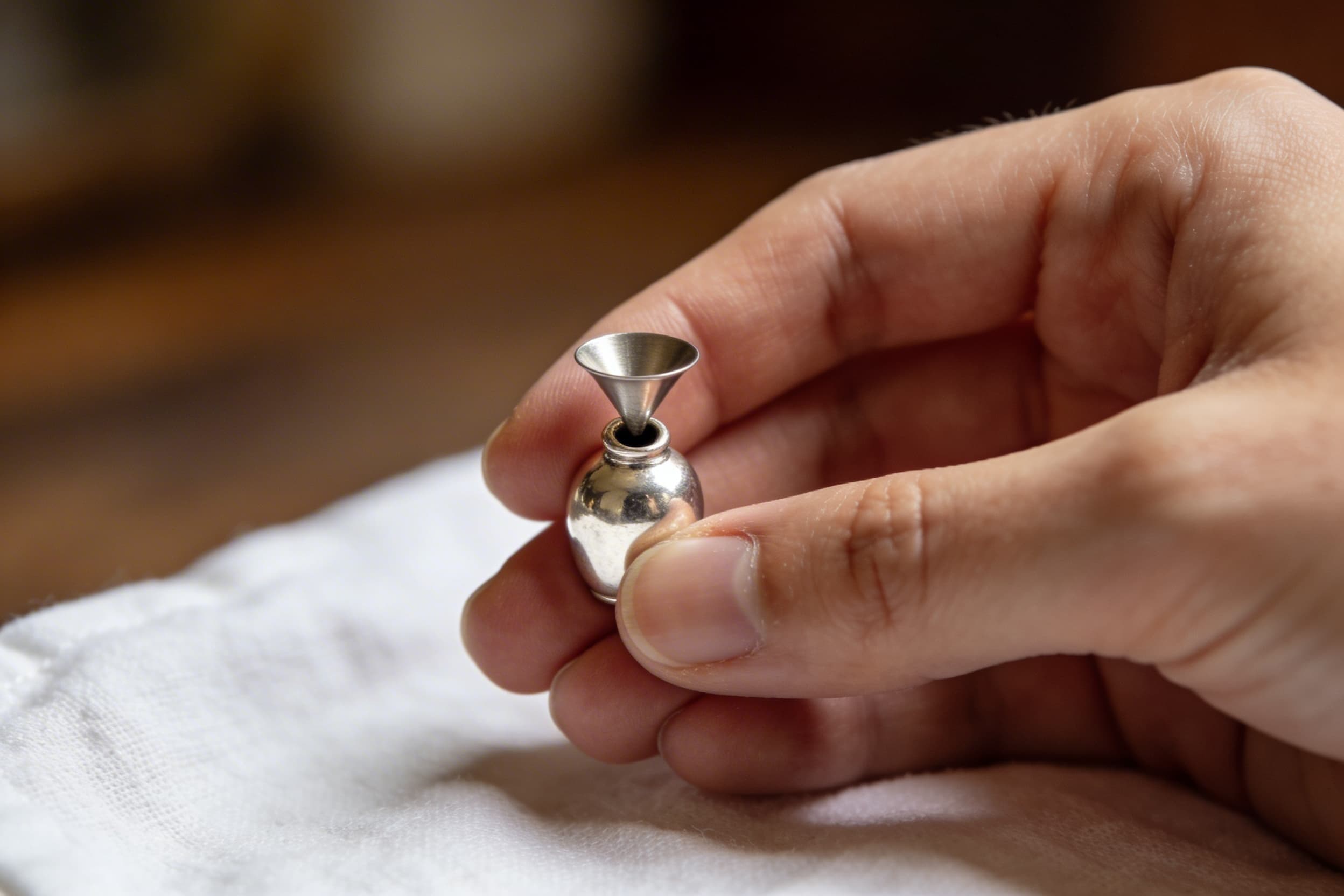
A cremation pendant typically holds a small funnel, filling sticks, and a tube of adhesive. The filling process takes only a few minutes. Once sealed, the ashes are fully enclosed.
Chain options range from simple silver cables to rope-style or box chains. Most pendants come with a standard 20" chain, and many retailers allow you to upgrade to a different length or finish.
Cremation bracelets range from bangle styles with a concealed compartment to charm bracelets with individual bead inserts that each hold a small amount of ashes. Bracelet beads are particularly popular when multiple family members want to share cremated remains: each person receives one bead, and they can wear it on their own bracelet.
Bracelets are also a practical choice for people who don't regularly wear necklaces.
Rings
Cremation rings come in several forms. Some have a small hollow channel inside the band that holds a portion of ashes. Others feature glass or resin elements infused with cremated remains. Still others use ashes pressed into the stone setting itself.
Sizing is important here -- rings typically range from a women's 5-9 to a men's 6-13. Glass-infused cremation rings, while beautiful, can be fragile; many families choose to convert them to pendants by stringing them on a chain.
Keychain Urns
For those who don't wear jewelry regularly, cremation keychains offer an alternative that keeps a loved one close without the commitment of a wearable piece. They function exactly like pendant urns -- a small threaded compartment holds cremated remains -- but attach to a keyring instead of a chain. They're particularly popular as memorial options for men and for pet memorials.
Fingerprint Jewelry
Fingerprint jewelry doesn't involve handling ashes at all. Instead, a print impression -- made from ink, a molding kit, or a scan -- is used to create a pendant, ring, or bracelet that bears an actual thumbprint or fingerprint in the metal surface.
This is among the most personal forms of memorial jewelry available. It doesn't require access to cremated remains and can be made while a person is still living, or from a print taken at the time of death.
Glass Cremation Jewelry
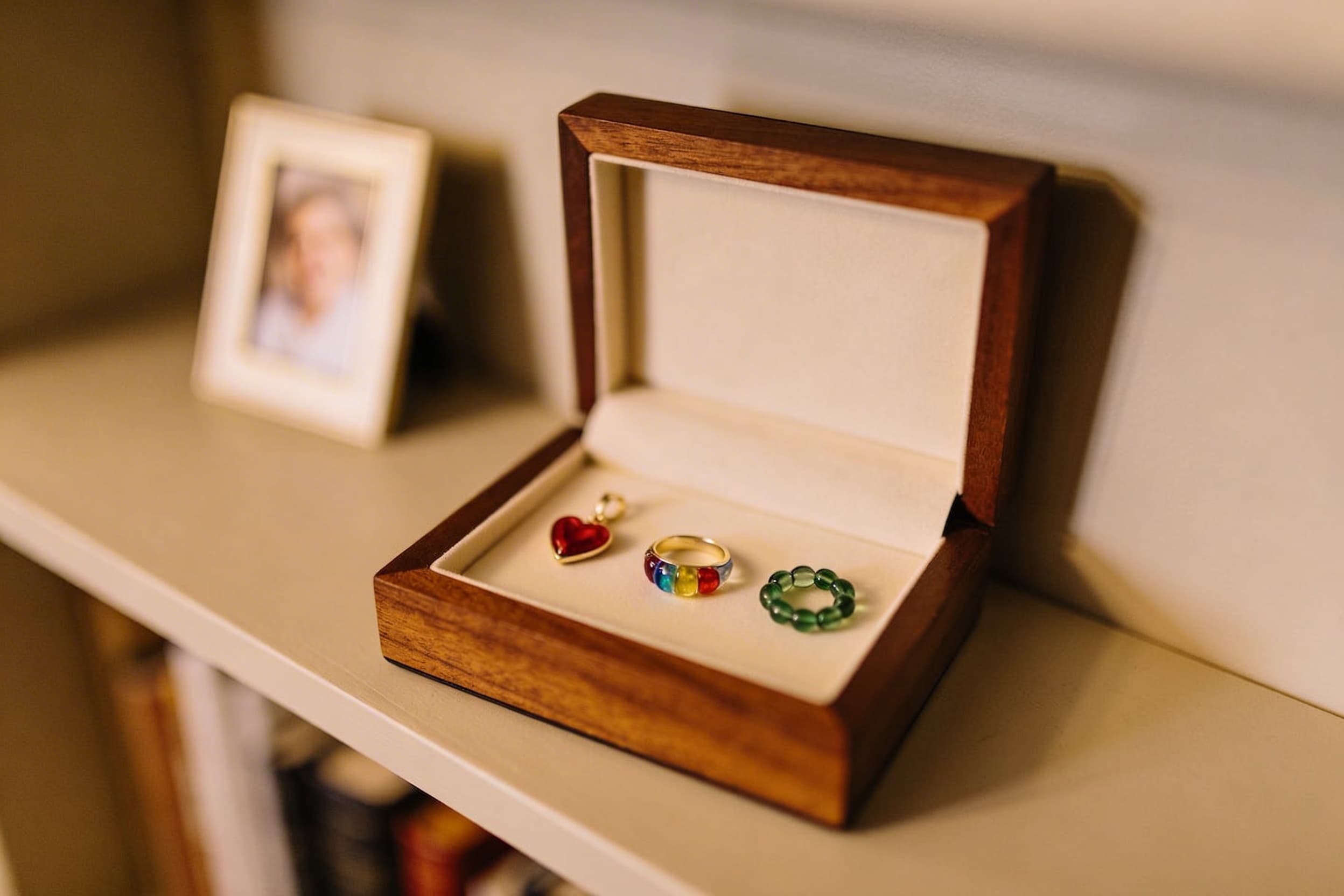
In glass cremation jewelry, a skilled glassblower incorporates a small amount of cremated remains into molten glass during the creation process. The result is a pendant, ring, or bead in which the ashes become part of the glass itself -- suspended inside in swirls of color.
Each piece is unique. The ashes interact differently with every batch of glass, producing individual color patterns that cannot be exactly replicated. For more on the process, see Glass Cremation Jewelry: How Ashes Are Infused Into Glass.
Cremation Diamonds
Cremation diamonds are lab-grown gems created from the carbon extracted from cremated remains. The process replicates the natural diamond formation process under intense heat and pressure. The resulting gem can be set into any piece of jewelry.
Cremation diamonds are the most expensive option in this category and require sending a significant portion of ashes to a specialized manufacturer. The process typically takes weeks to months. For a full cost-benefit analysis, see Are Cremation Diamonds Worth It? Cost, Process and Alternatives.
Beyond Jewelry: Cremation Art and Keepsakes
Some families extend remembrance beyond wearable pieces into objects designed to be displayed, held, or passed down. Cremation art covers a broad range -- from paintings and mixed-media artwork incorporating ashes, to hand-cast sculptures and touchstones shaped to fit in the palm of a hand. These pieces serve a similar emotional purpose to jewelry but live in the home rather than on the body.
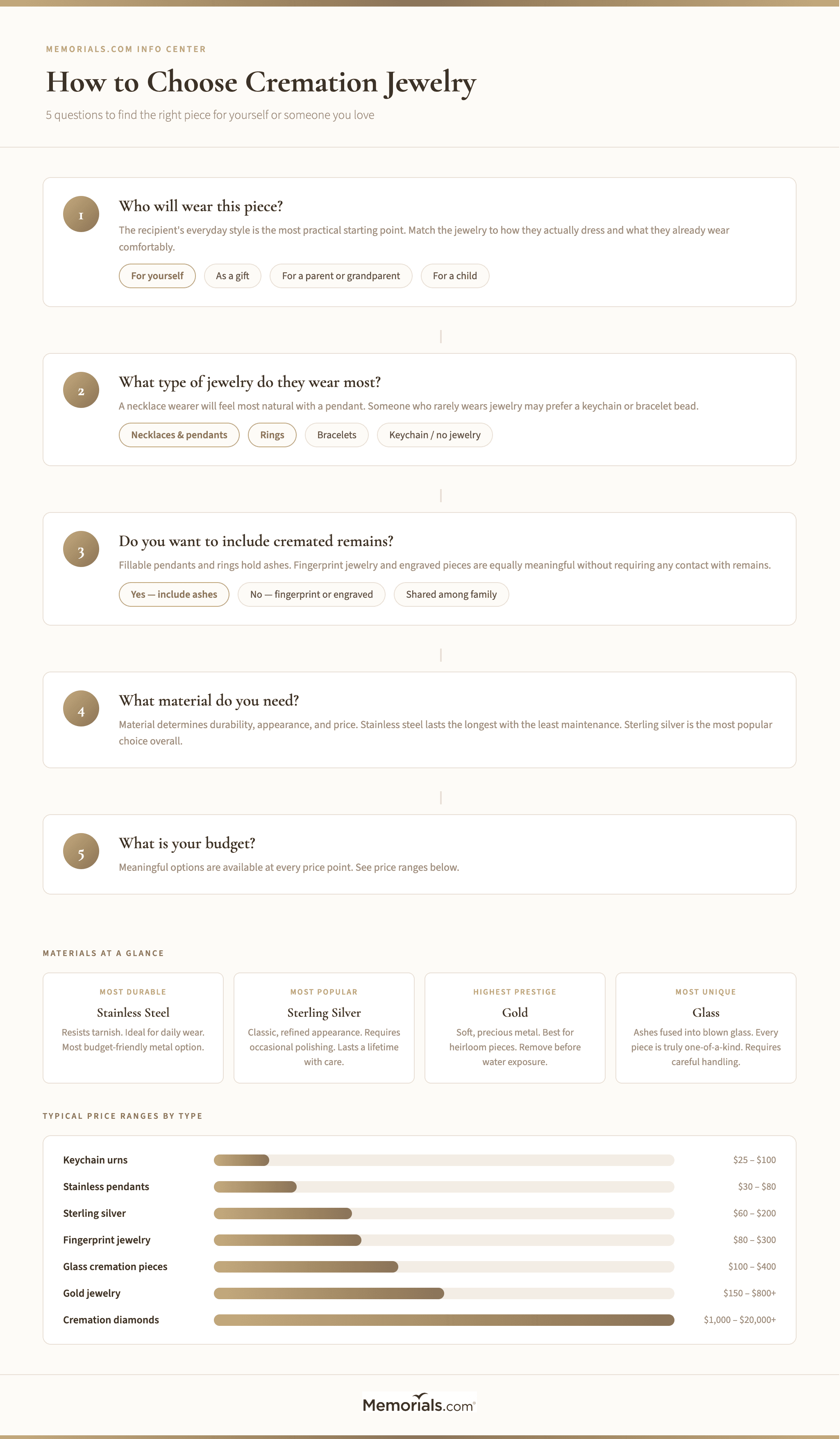
Choosing cremation jewelry is a deeply personal process. These five questions will help narrow the field quickly.
1. Who Will Wear It?
The recipient's everyday style is the most practical starting point. Consider what they wear most often. If they rarely remove their jewelry -- in the shower, at the gym, while sleeping -- durability becomes the primary criterion. If they dress simply, a minimal sterling silver pendant will feel more natural than an ornate design they'll self-consciously avoid wearing.
Necklace wearers will be most comfortable with a pendant. People who don't wear necklaces may find a bracelet bead or keychain more natural. This matters because the jewelry needs to be worn to serve its purpose -- a beautiful piece sitting in a drawer isn't providing the connection it was chosen for.
This is not a given. Many families prefer cremation jewelry that doesn't require handling cremated remains -- engraved pieces, fingerprint jewelry, or symbolic memorial pieces. For others, physically placing a portion of ashes inside the jewelry is exactly the point: the closeness feels different when the memorial is truly literal.
Stainless steel is the most durable and lowest-maintenance option. It resists tarnish, holds up to daily wear, and is the most budget-friendly. It's an especially good choice for people who shower in their jewelry or live in humid climates.
Sterling silver is the most popular choice overall. It has a classic, refined appearance and works across casual and formal styles. It does require occasional polishing -- silver naturally tarnishes with exposure to air and skin -- but with basic care, a sterling piece lasts a lifetime.
Gold -- whether 10k, 14k, or 18k -- is a softer metal than stainless steel and requires more care. It carries the highest price point among the metals. Its warmth and prestige make it the choice for pieces intended as heirlooms.
Glass is the choice for something visually distinctive, where the appearance of the piece matters as much as its function. Glass pieces are typically more fragile and require more careful handling.
5. What Is Your Budget?
Price varies widely. Stainless steel pendants start around $30--$50. Sterling silver ranges from $60--$200 for most styles. Glass pieces typically run $100--$300. Fingerprint jewelry -- which involves custom production -- usually falls in the $100--$300 range. Cremation diamonds begin around $1,000 and can reach $20,000+ depending on carat size.
Most fillable cremation jewelry -- pendants, bracelets, rings with hollow compartments -- comes with a filling kit that includes a small funnel, filling sticks (essentially thin scoops), and a tube of adhesive to seal the opening once filled.
The amount required is small: typically no more than a pinch, or roughly a fraction of a teaspoon. A standard cremation produces around 3-9 pounds of cremated remains, so filling several pieces of jewelry uses a negligible portion of the total.
The process is straightforward but works best in a calm, unhurried setting. Step-by-step instructions with photos are available in How to Fill and Seal Cremation Jewelry.
For glass pieces and cremation diamonds, the process is entirely handled by the jeweler or artist -- you ship a portion of the ashes, and the finished piece is returned to you.
Caring for Cremation Jewelry
With basic care, most cremation jewelry will last for decades. A few practical rules apply regardless of material:
Remove pieces before swimming, showering, or sleeping whenever possible. While stainless steel is far more water-resistant than silver or gold, repeated exposure to chlorinated water, soaps, and shampoos accelerates wear on any metal and can compromise adhesive seals on fillable pieces.
Store pieces in a jewelry box or pouch when not being worn. Avoid letting pieces knock against harder jewelry -- the engraved surfaces and any glass elements are susceptible to scratching.
Clean sterling silver with a soft polishing cloth. Avoid commercial silver dips on pieces that contain an adhesive seal. For gold, a soft cloth and warm water are usually sufficient. Glass pieces should be cleaned with a dry cloth only.
Giving cremation jewelry to someone who is grieving is a meaningful gesture -- one that says you want them to have comfort they can carry. The keys to choosing well as a gift-giver are knowing the recipient's style and being honest about whether they'll be comfortable with ash-containing jewelry.
Engraved pendants and fingerprint jewelry are often the safest gifts because they don't require the recipient to handle remains. If you do know they'd want to incorporate ashes, a bracelet bead is a good option: it lets the recipient choose their own bracelet and decide when and whether to fill it.
Many families find that the symbolism of cremation jewelry is as important as its function. Cross pendants, rosary-style pieces, Celtic knotwork, and nature-inspired designs all carry specific meaning that can deepen the comfort the piece provides.
Cremation jewelry isn't the only way to keep a small amount of remains close. Keepsake urns serve a similar purpose for those who prefer a decorative display piece over a wearable one. The two aren't mutually exclusive -- many families use a full-size urn as the primary memorial and add jewelry or keepsake urns so that multiple family members each have something personal.
The practice of wearing memorial jewelry goes back centuries. During the Victorian era, mourning jewelry was a recognized social tradition -- pieces crafted from jet (a black gemstone), locks of the deceased's hair, and intricately worked gold were worn openly as a public expression of grief and love. The practice carried meaning that modern culture has largely lost: grief was visible, acknowledged, and even celebrated through beautiful objects.
Today's cremation jewelry carries that tradition forward in a more private form. The intent -- to keep the memory of someone you loved woven into your daily life -- is unchanged. For the full history, see Mourning Jewelry: History, Traditions and Modern Memorial Jewelry.
Exploring More Options in This Hub
This guide is the pillar for a full library of cremation jewelry articles. Each topic covered above has a dedicated article that goes deeper:
How much ash does cremation jewelry hold? Most fillable cremation pendants hold between 1/4 and 1/2 teaspoon of cremated remains -- a very small fraction of the total remains from a typical cremation (3-9 pounds). Filling several pieces of jewelry, or combining jewelry with a full-size urn, uses a negligible portion of the overall remains.
Is it okay to wear cremation jewelry every day? Yes, for most materials and most lifestyles. Stainless steel is the most forgiving for daily wear. Sterling silver and gold require more care -- removing them before swimming or showering significantly extends their lifespan. For a thorough answer to safety concerns, see Is Cremation Jewelry Safe to Wear Every Day?
Can I take cremation jewelry through airport security? Generally yes. Small amounts of cremated remains inside jewelry pass through X-ray screening without issue. Airlines and TSA do not have specific restrictions on wearable cremation jewelry. For complete guidance on traveling with remains in any form, see Can You Travel With Cremation Jewelry? TSA Rules and Tips.
What if I want multiple family members to have their own piece? This is very common. Because only a small amount of remains is required per piece, multiple pieces of jewelry can be filled from the same source. Bracelet beads designed specifically for this purpose make it easy for every family member to have their own memorial piece. For more on this, see Sharing Ashes Among Family: Using Jewelry to Keep Everyone Connected.
Can cremation jewelry be engraved? Yes. Most metal cremation jewelry can be engraved with a name, date, initials, or short phrase. The process is handled by the retailer and adds a layer of personalization that makes the piece uniquely tied to the person being remembered.
Where to Browse
Memorials.com carries thousands of styles across every category of cremation jewelry -- from sterling silver pendants to blown glass pieces to fingerprint jewelry. Browse the full collection at cremation jewelry or explore specific subcategories for necklaces, rings, bracelets, and more.