🏬Supersize Online Funeral Retailer🪦1000's of Headstones⚱️Over 10,000 Cremation Urns⚰️Caskets Overnight Delivery🛒Funeral & Memorial Superstore🚚FREE Shipping on ALL Orders👨👩👧👦Helping Families for over 20 Years💰Lowest Price Guarantee🏬Supersize Online Funeral Retailer🪦1000's of Headstones⚱️Over 10,000 Cremation Urns⚰️Caskets Overnight Delivery🛒Funeral & Memorial Superstore🚚FREE Shipping on ALL Orders👨👩👧👦Helping Families for over 20 Years💰Lowest Price Guarantee
🏬Supersize Online Funeral Retailer🪦1000's of Headstones⚱️Over 10,000 Cremation Urns⚰️Caskets Overnight Delivery🛒Funeral & Memorial Superstore🚚FREE Shipping on ALL Orders👨👩👧👦Helping Families for over 20 Years💰Lowest Price Guarantee🏬Supersize Online Funeral Retailer🪦1000's of Headstones⚱️Over 10,000 Cremation Urns⚰️Caskets Overnight Delivery🛒Funeral & Memorial Superstore🚚FREE Shipping on ALL Orders👨👩👧👦Helping Families for over 20 Years💰Lowest Price Guarantee
The American flag is folded into a crisp triangle for a reason. That distinctive shape — only the blue field of stars visible, no red or white showing — mirrors the three-cornered hats worn by colonial soldiers during the Revolutionary War. Whether you are folding a burial flag presented at a military funeral, preparing a flag for storage after daily display, or learning the technique for a ceremony, the process follows the same careful sequence. Our covers the full range of ways families pay tribute, and proper flag folding is one of the most meaningful.
Knowing how to fold the American flag correctly is more than a practical skill. It is a gesture of respect — for the flag itself, for the country it represents, and for the service members who have defended both. The steps below walk through every fold so you can handle the flag with the care it deserves.
How to Fold a Flag into a Triangle: Step-by-Step Instructions
The standard triangle fold works for any size American flag, though it is most commonly performed with the 5×9½-foot burial flag presented to families at military funeral flag etiquette ceremonies. Two people make the process easier, but you can also fold on a clean, flat surface by yourself.
Before you begin, lay the flag out so the stars are in the upper-left corner and the surface is smooth and free of wrinkles. The flag should never touch the ground at any point during folding.
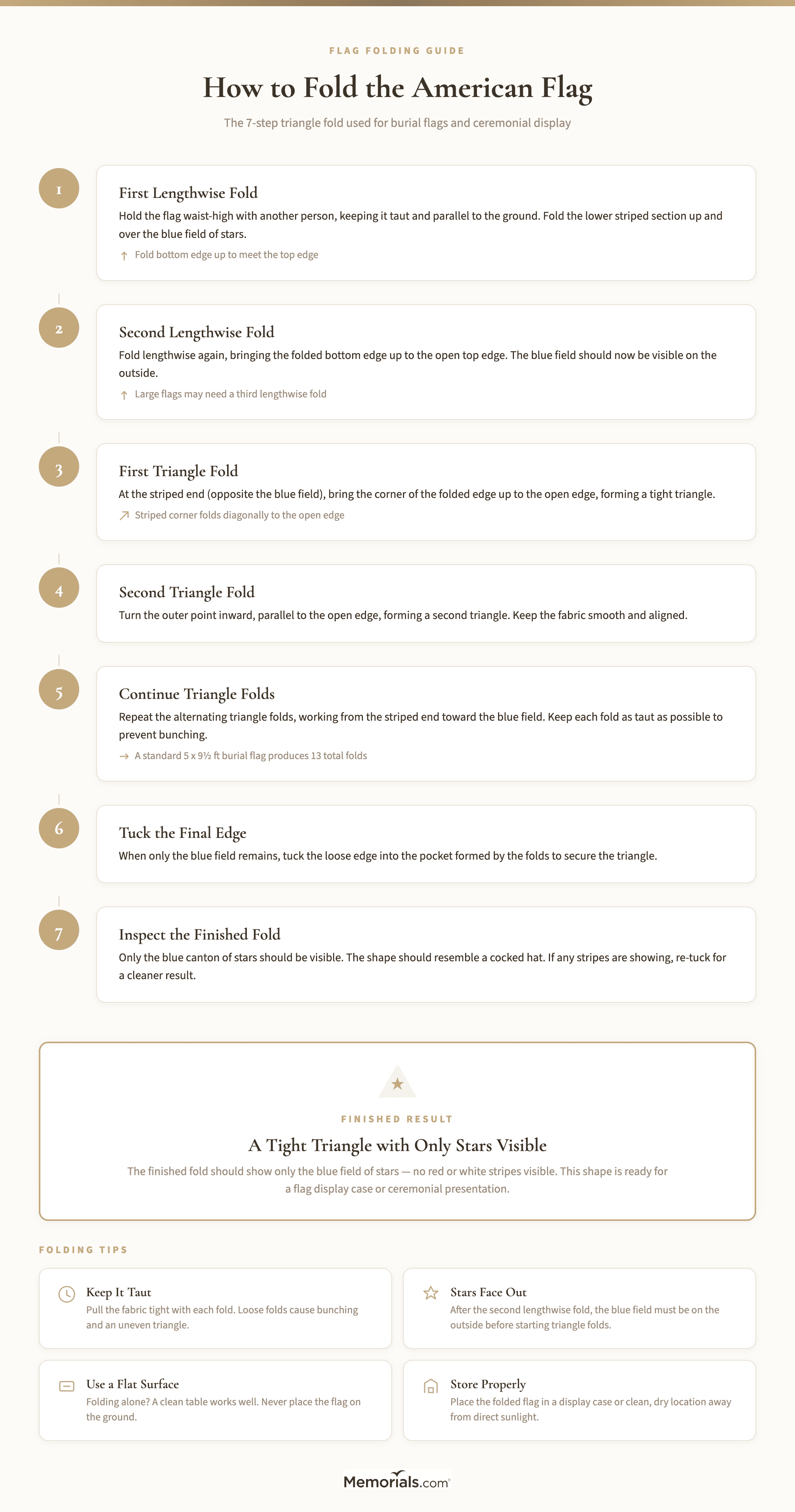
Step 1: First Lengthwise Fold
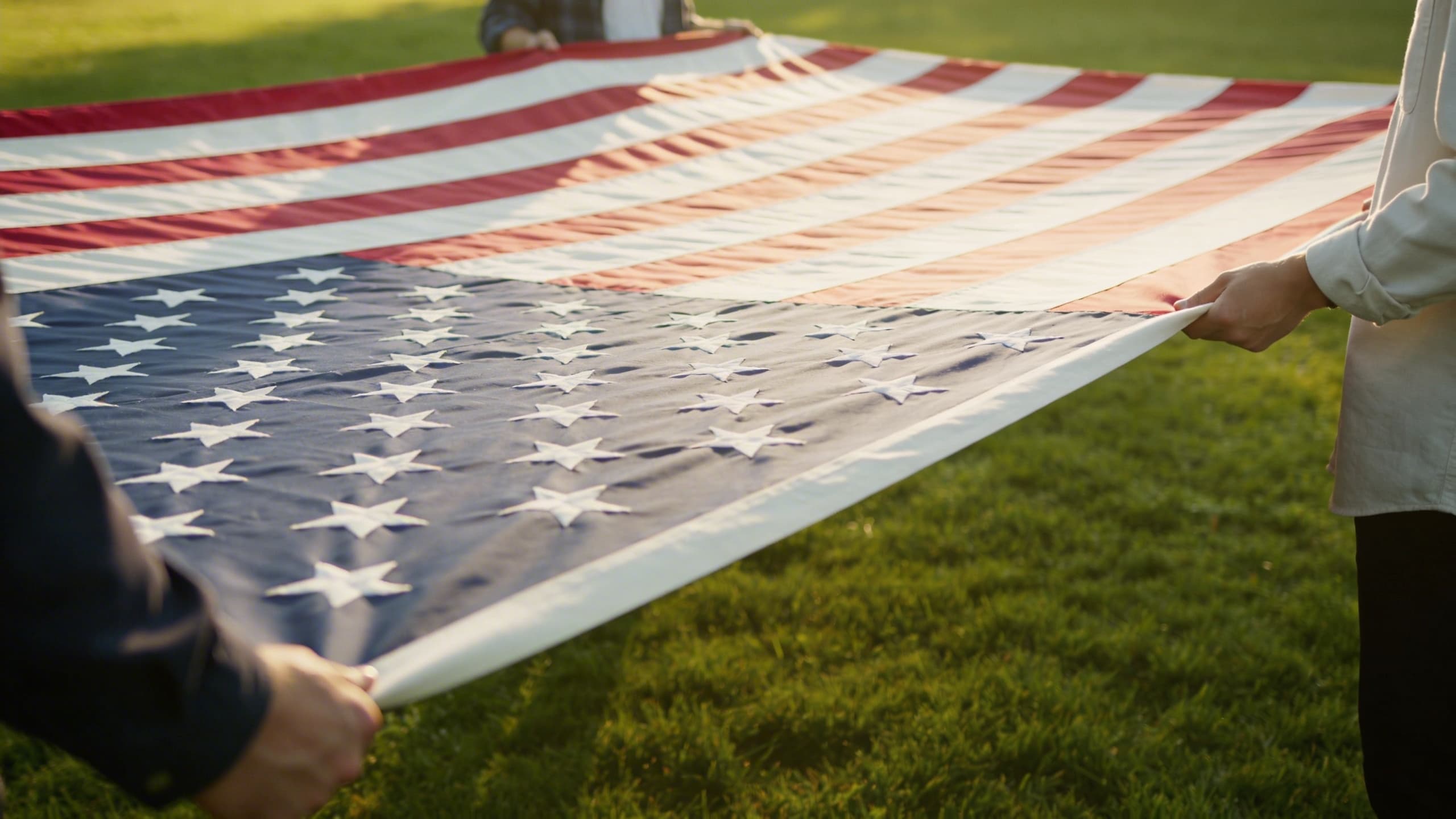
Hold the flag waist-high with another person, keeping it taut and parallel to the ground. Fold the lower half — the striped section — lengthwise up and over the blue field of stars, aligning the bottom edge evenly with the top edge.
Step 2: Second Lengthwise Fold
Fold the flag lengthwise a second time, bringing the folded bottom edge up to meet the open top edge. The blue field should now be visible on the outside. For very large flags, a third lengthwise fold may be necessary before starting the triangle folds.
Step 3: Start the Triangle Fold
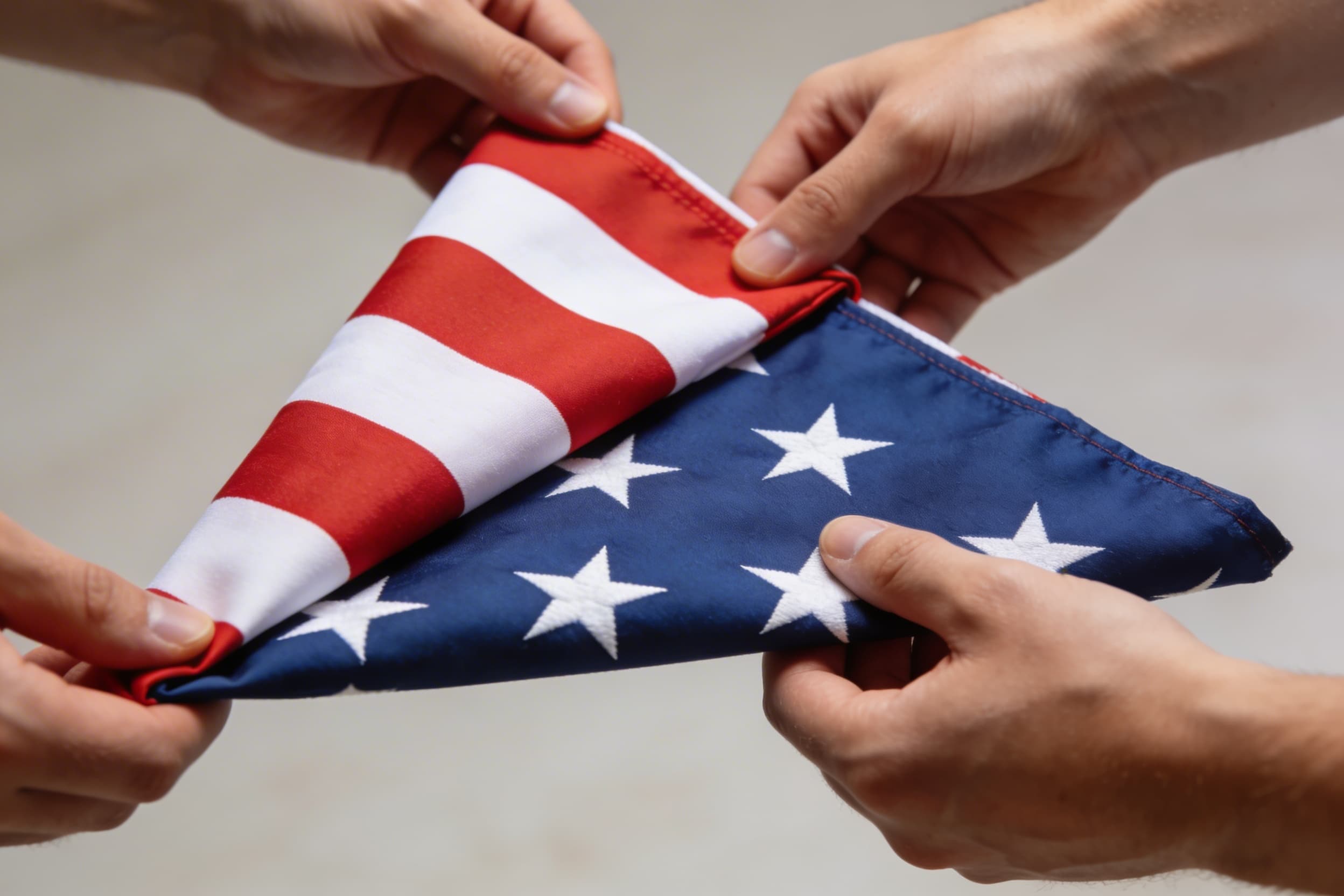
With the flag still held taut, bring the striped corner of the folded edge (the end opposite the blue field) up to meet the open edge, forming a tight triangular fold. Keep the fabric smooth and the edges aligned.
Step 4: Second Triangle Fold
Turn the outer point of the triangle inward, parallel to the open edge, forming a second triangle. The fold should be crisp and tight.
Step 5: Continue Triangle Folds
Repeat the triangular folding pattern — alternating the direction of each fold — working your way from the striped end toward the blue field. Keep each fold as taut as possible to prevent bunching. A loosely folded flag will not fit neatly into a flag display case and may lose its shape over time.
Step 6: Tuck the Final Edge
When you reach the blue field with only a small flap remaining, tuck the loose edge into the pocket formed by the folds. The result should be a tight, triangular "pillow" with only the blue canton of stars visible — no red or white stripes showing.
Step 7: Inspect the Finished Fold
A properly folded flag resembles a cocked hat, the three-cornered hat style that colonial soldiers wore. The union of stars should be centered and facing outward. If any striped fabric is visible, unfold the last section and re-tuck for a cleaner result.
How to Properly Fold a Flag by Yourself
If you do not have a partner, you can fold the flag on a clean table or countertop — never on the floor or ground. Lay the flag flat with the stars in the upper-left corner. Complete both lengthwise folds as described above, smoothing the fabric as you go. Then begin the triangle folds from the striped end, using one hand to hold the forming triangle in place while the other hand makes each new fold. The process takes a bit longer alone, but the result is the same neat triangle.
What Do the 13 Folds of the American Flag Mean?
At military funerals and formal flag ceremonies, honor guards fold the flag precisely 13 times. While the U.S. government has not officially codified meanings for each fold, a widely respected tradition — often attributed to the Gold Star Mothers of America — assigns symbolic significance to every one. These meanings have been embraced by veterans, military families, and organizations like the American Legion for decades.
The 13 folds and their traditional meanings:
Life — a symbol of how precious life is
Eternal life — representing belief in life beyond death
Honor and remembrance — in tribute to veterans who gave part of their lives defending the country
Our weaker nature — as citizens trusting in God for guidance in peace and war
Our country — a tribute to the nation, right or wrong
Where our hearts lie — the heart with which we pledge allegiance
Our armed forces — honoring those who protect the country against all enemies
The valley of the shadow of death — tribute to those who sacrificed, and to mothers, for whom the flag flies on Mother's Day
Womanhood — honoring the faith, love, and devotion that shaped the nation's character
Fatherhood — tribute to fathers who gave their children for the defense of the country
The seal of King David and King Solomon — glorifying the God of Abraham, Isaac, and Jacob
Eternity — glorifying God the Father, Son, and Holy Spirit
"In God We Trust" — the national motto, visible when only the stars remain
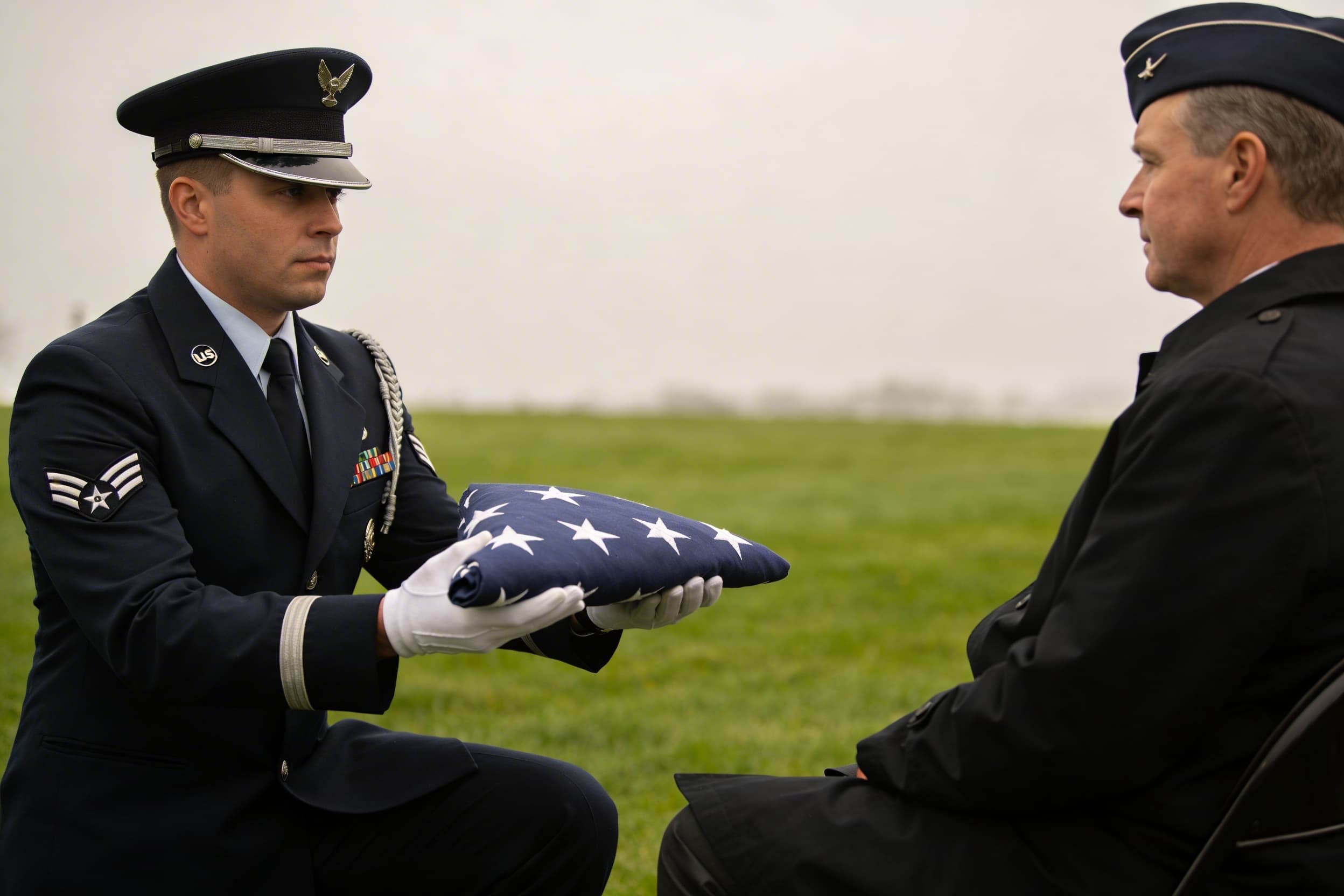
After the flag is completely folded and tucked, only the blue field of stars is visible. At the ceremony of retreat on military bases, the flag is lowered, folded in this triangle, and kept under watch throughout the night. The next morning at reveille, it is raised again — a cycle that symbolizes the belief in resurrection. When draping the flag on a casket at a military funeral, the canton of blue is positioned over the left shoulder of the deceased, and the flag is removed, folded with these 13 folds, and presented to the next of kin.
Flag Display Case Rules: How to Store and Display a Folded Flag
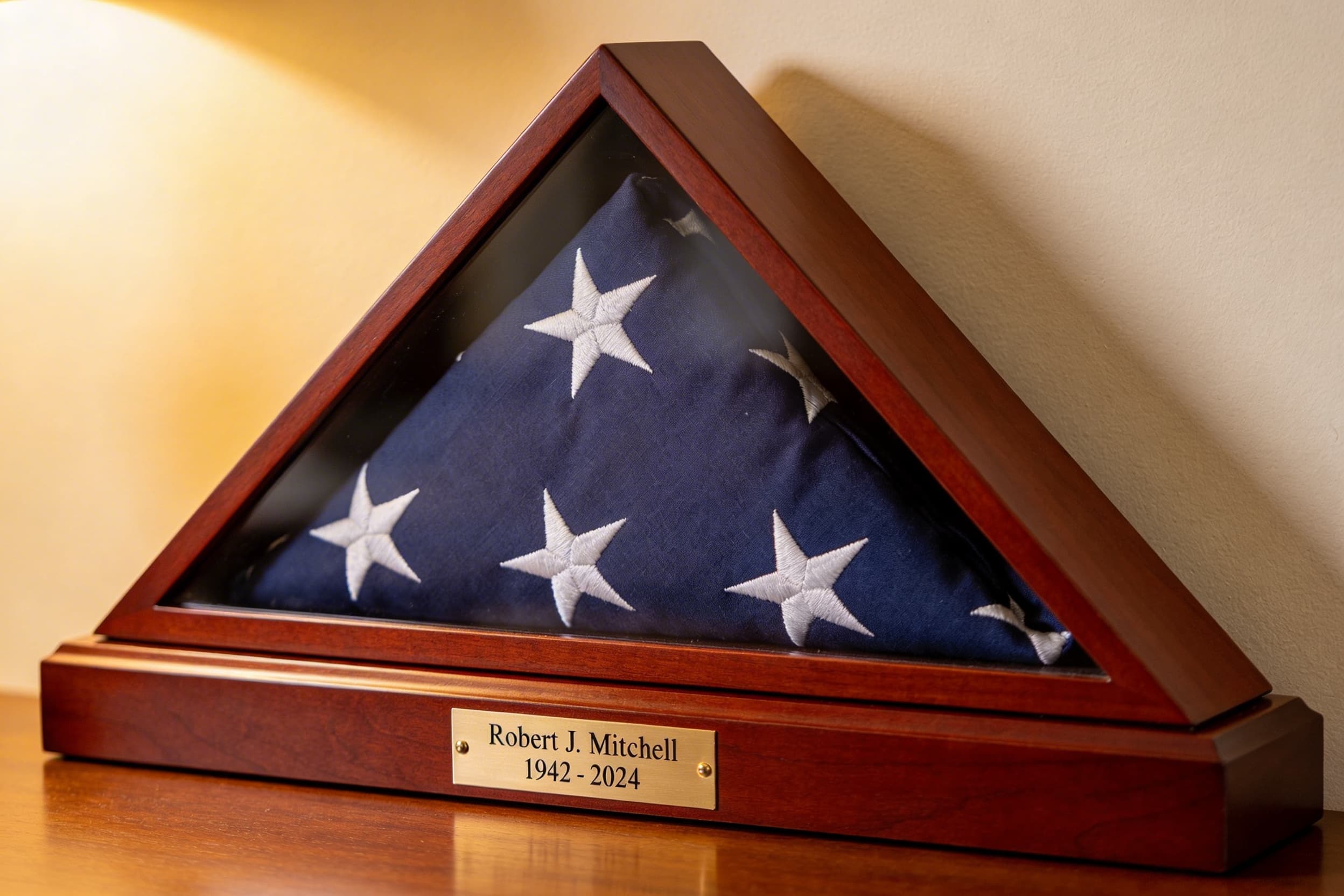
Once the flag is folded, many families choose to display it in a case rather than store it away. A well-made display case protects the fabric from dust, sunlight, and moisture while allowing the blue field of stars to remain visible.
Guidelines for choosing and using a flag display case:
A standard government-issued burial flag measures 5×9½ feet. Most flag display cases are built to accommodate this size when properly folded. Before purchasing a case, confirm the dimensions match — a flag folded from a smaller 3×5-foot flag will not fill a case designed for the burial size.
Display the case in a location that avoids direct sunlight, which can fade the fabric over time. Many families mount the case on a wall at eye level in a living room, study, or entryway. Others place it on a mantel or shelf alongside other memorabilia. For families considering choosing a display case for the folded flag, options range from simple triangle frames in cherry or walnut wood to combination cases that include space for medals, rank insignia, and challenge coins.
Some families pair the flag case with flag case accessories such as engraved nameplates, pedestals, or medallion holders to build a more complete tribute. A pedestal base can also serve as a discreet cremation urn, keeping the veteran's ashes together with their burial flag.
If you are unsure what to do with a burial flag after the funeral, displaying it in a quality case is the most common and respectful choice. Some families also choose to pass the flag to the veteran's children or donate it to a veterans' organization.
Flag Folding Etiquette: Rules to Follow
The U.S. Flag Code establishes guidelines for handling and displaying the flag. While it does not prescribe a specific folding method, several customs have become standard practice:
Never let the flag touch the ground. During folding, keep the fabric elevated at all times — held between two people or placed on a clean, elevated surface.
Fold the flag ceremonially after lowering it at sunset. According to the Flag Code, the flag should generally be displayed only between sunrise and sunset unless it is properly illuminated. When lowering the flag for the day, fold it promptly and store it in a clean, dry place.
Use the triangle fold for burial flags and ceremonial occasions. The triangle fold is reserved for flags of special significance — burial flags, flags flown on notable occasions, and flags used in formal presentations. For everyday storage of a household flag, a simple rectangular fold is acceptable, though many Americans prefer the triangle fold for all their flags.
Handle a worn or damaged flag with respect. A flag that is too worn to display should be retired properly, typically by burning in a dignified ceremony. Many American Legion posts, VFW halls, and Boy Scout troops accept worn flags for retirement.
Frequently Asked Questions
How many folds does it take to fold an American flag?
The traditional ceremonial fold produces 13 triangular folds, though the exact number can vary slightly depending on the size of the flag. The standard 5×9½-foot burial flag typically requires exactly 13 folds when the lengthwise folds and triangle folds are counted together.
Can you unfold a military funeral flag?
There is no law or regulation that prohibits unfolding a burial flag. Some families choose to fly the flag on patriotic holidays like Memorial Day, Veterans Day, and Independence Day, then refold it afterward. Others prefer to keep it permanently folded and displayed in a case. The choice is a personal one.
How do you fold a flag into a triangle by yourself?
Lay the flag flat on a clean table with the stars in the upper-left corner. Complete both lengthwise folds, smoothing the fabric after each one. Then begin the triangle folds from the striped end, holding each fold in place as you work toward the blue field. Tuck the final edge into the pocket to complete the triangle.
What size flag fits in a standard display case?
Most flag display cases are designed for the 5×9½-foot burial flag that the military presents to families. If you have a smaller flag — such as a 3×5-foot flag — look for a case specifically sized for that dimension, or the folded flag will not fill the case properly.
Is there a right and wrong way to fold the American flag?
The Flag Code does not mandate a single official folding method, but the triangle fold has become the universally recognized standard for ceremonial and storage purposes. The key principles are keeping the flag off the ground, folding it with the blue field visible on the outside, and tucking the final edge so only stars are showing.