🏬Supersize Online Funeral Retailer🪦1000's of Headstones⚱️Over 10,000 Cremation Urns⚰️Caskets Overnight Delivery🛒Funeral & Memorial Superstore🚚FREE Shipping on ALL Orders👨👩👧👦Helping Families for over 20 Years💰Lowest Price Guarantee🏬Supersize Online Funeral Retailer🪦1000's of Headstones⚱️Over 10,000 Cremation Urns⚰️Caskets Overnight Delivery🛒Funeral & Memorial Superstore🚚FREE Shipping on ALL Orders👨👩👧👦Helping Families for over 20 Years💰Lowest Price Guarantee
🏬Supersize Online Funeral Retailer🪦1000's of Headstones⚱️Over 10,000 Cremation Urns⚰️Caskets Overnight Delivery🛒Funeral & Memorial Superstore🚚FREE Shipping on ALL Orders👨👩👧👦Helping Families for over 20 Years💰Lowest Price Guarantee🏬Supersize Online Funeral Retailer🪦1000's of Headstones⚱️Over 10,000 Cremation Urns⚰️Caskets Overnight Delivery🛒Funeral & Memorial Superstore🚚FREE Shipping on ALL Orders👨👩👧👦Helping Families for over 20 Years💰Lowest Price Guarantee
Memorial Day carries a weight that separates it from every other patriotic holiday on the American calendar. It is a day of mourning — a national pause to honor the men and women who died while serving in the United States military. The flag you display on this day is not decoration. It is a statement of remembrance, and how you handle it matters. If you are planning to honor a veteran's memory this May, our guide to honoring a veteran's service covers the full scope of military memorial traditions, benefits, and product options available to families.
This guide walks through every aspect of Memorial Day flag etiquette — from the half-staff protocol that distinguishes this holiday from all others, to the graveside traditions, display rules, and meaningful gestures that help families and communities pay proper respect to the fallen.
The Half-Staff Rule: What Makes Memorial Day Different
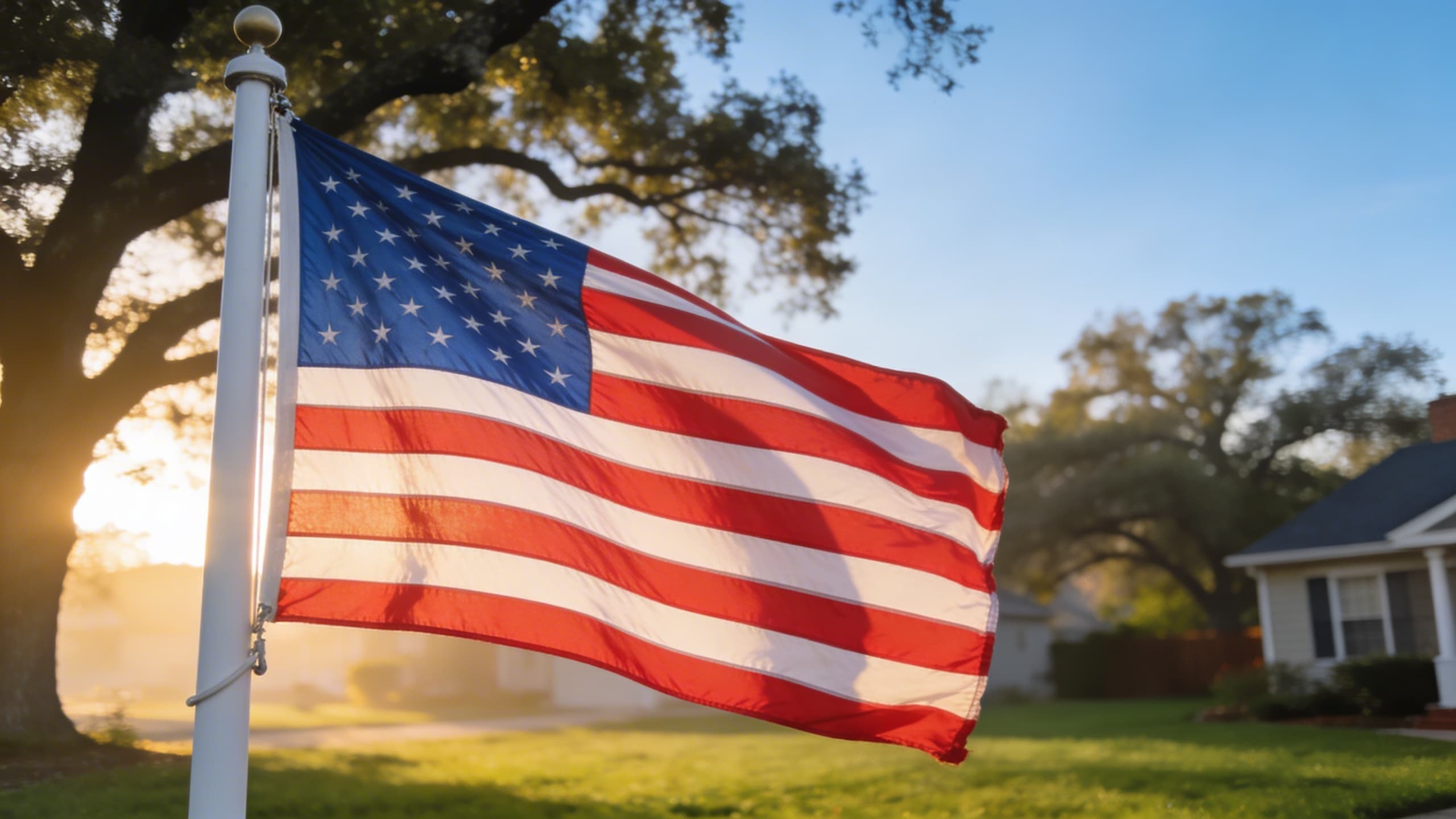
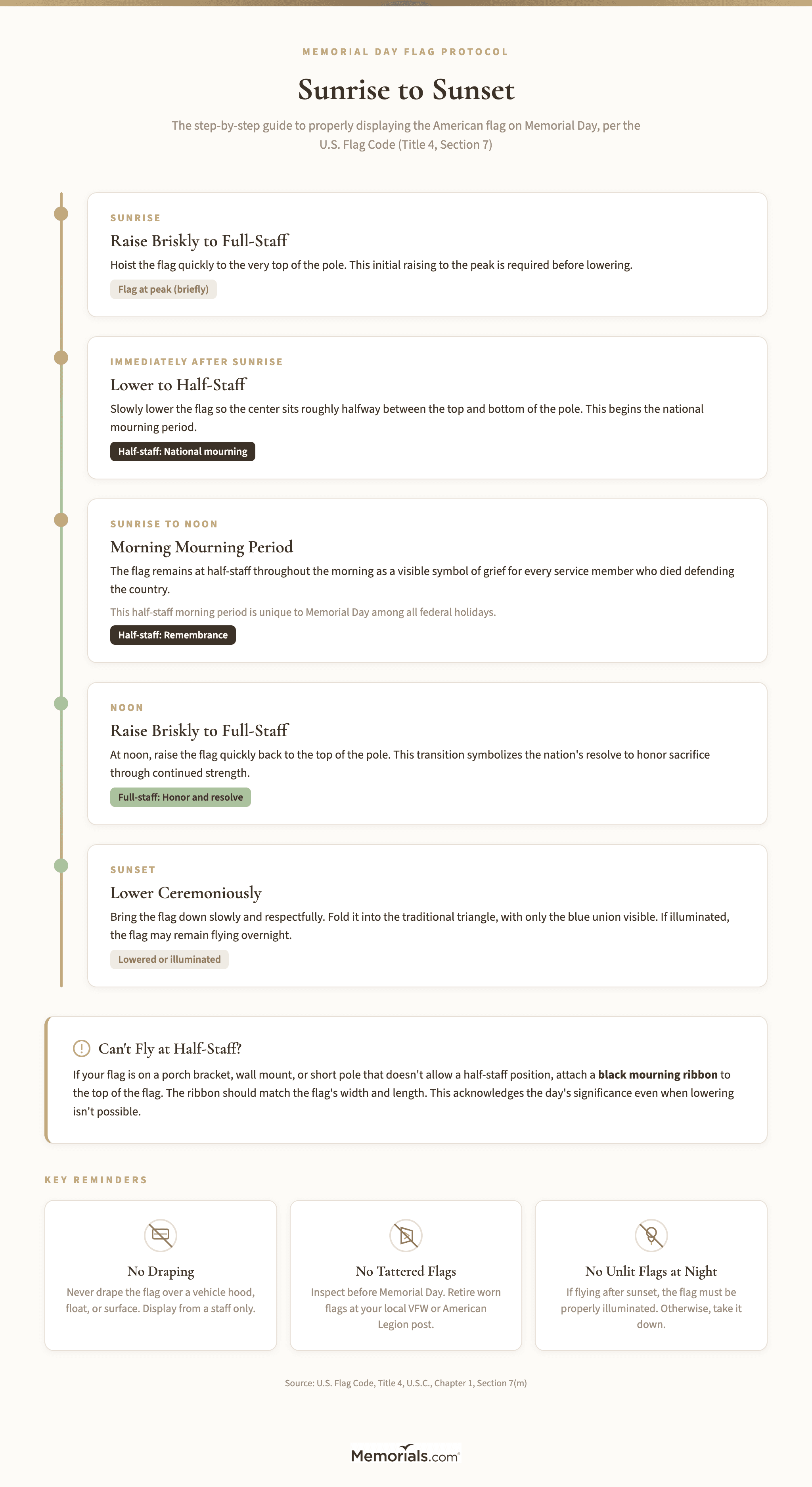
Memorial Day is the only federal holiday where the American flag follows a split protocol. The U.S. Flag Code, specifically Title 4, Chapter 1, Section 7(m), lays out the rule clearly: on Memorial Day, the flag is displayed at half-staff from sunrise until noon, then raised to full-staff for the remainder of the day until sunset.
That midday shift carries deep symbolic meaning. The morning hours at half-staff represent a period of national mourning — a collective recognition of every service member who gave their life for the country. At noon, raising the flag briskly to full-staff symbolizes the nation's resolve to carry on and honor their sacrifice through continued strength.
If you fly your flag from a traditional flagpole, the correct procedure is:
At sunrise, hoist the flag briskly to the top of the staff. Lower it immediately to the half-staff position, where the center of the flag sits roughly halfway between the top and bottom of the pole. At noon, raise the flag back to full-staff. Keep it flying until sunset, then lower it ceremoniously.
The key word is "briskly." The flag is raised quickly to full height before being lowered — both at sunrise and again before it comes down for the day. This ritual of raising before lowering is not optional. It reflects a tradition rooted in the dignity owed to the symbol itself.
What If You Cannot Fly at Half-Staff?
Not every home has a full flagpole. If you display the flag from a porch bracket, wall mount, or short pole that does not allow a half-staff position, proper etiquette calls for attaching a black mourning ribbon or streamer to the top of the flag. The ribbon should be the same width as the flag and the same length as the flag. This small detail acknowledges the day's significance even when lowering the flag is not physically possible.
If your flag is on a house-mounted pole, make sure the union — the blue field with the stars — sits at the peak of the staff. When hung vertically on a wall or window, the union should be at the top and to the observer's left.
Displaying the Flag After Dark
The U.S. Flag Code permits flying the flag at night as part of a patriotic display, but only if it is properly illuminated. A porch light, spotlight, or dedicated flag light satisfies this requirement. If you cannot illuminate the flag, it should be taken down at sunset.
On Memorial Day specifically, the flag should come down at sunset unless illumination is available. Leaving a darkened flag flying overnight — while not illegal — is considered a lapse in funeral flag etiquette for veterans and respectful observance.
The Meaning Behind the American Flag on Memorial Day
The red, white, and blue have carried specific associations since the Continental Congress chose the design. Understanding the meaning of the American flag colors deepens the significance of displaying it on a day reserved for remembrance. Red represents valor and the blood shed by those who served. White stands for purity and innocence. Blue symbolizes vigilance, perseverance, and justice — qualities embodied by the service members Memorial Day honors.
Flying the flag on this day connects your household to a national act of collective memory. It signals to every passerby, every neighbor, and every veteran in your community that the sacrifice is not forgotten.
Memorial Day Grave Traditions: Coins, Flags, and Graveside Tributes
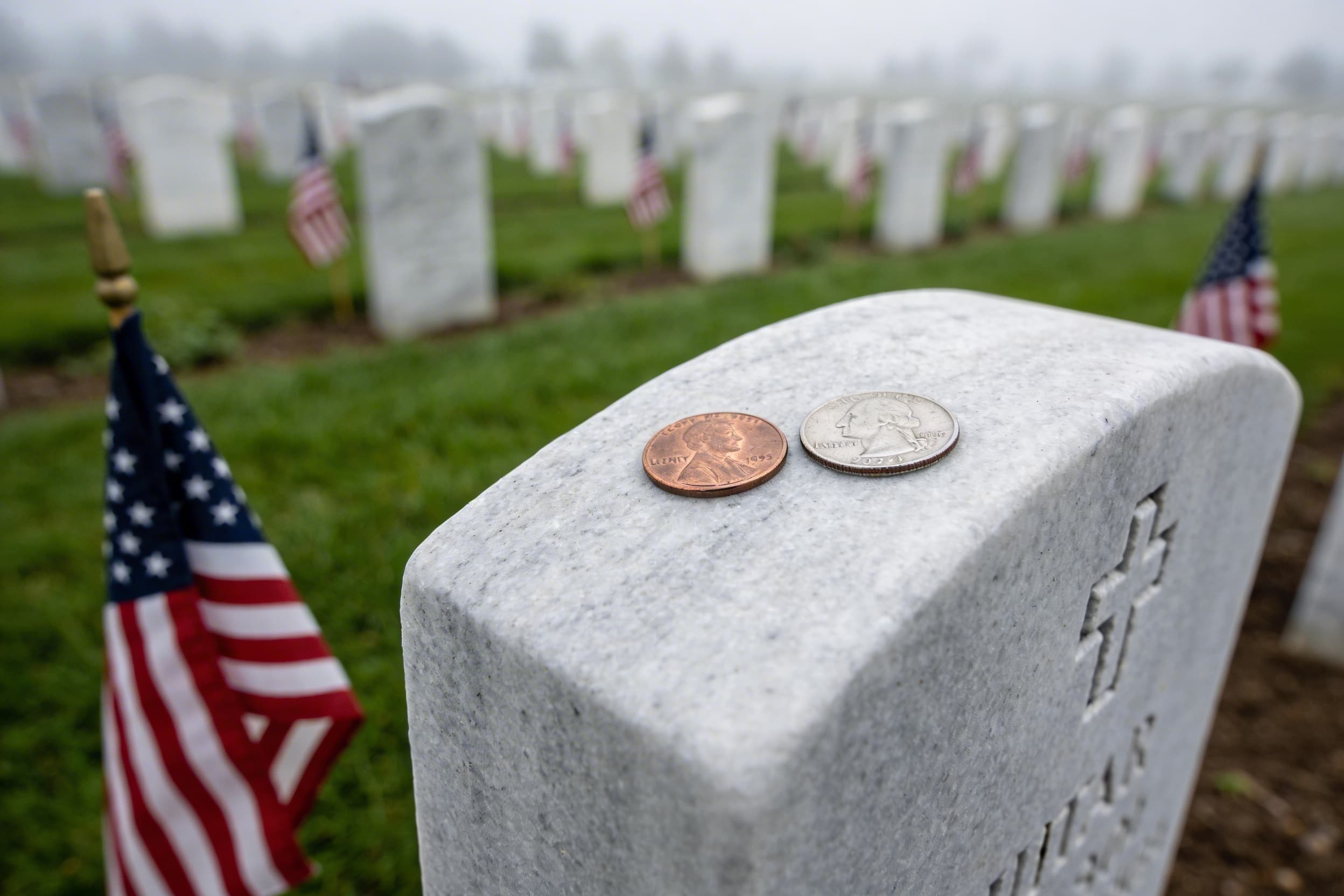
Visiting a veteran's grave on Memorial Day is one of the most personal ways to honor their service. If you have walked through a national cemetery or veterans section on this holiday, you have likely noticed small American flags planted beside headstones and coins placed carefully on top of military grave markers.
The tradition of coins left on military graves gained wide recognition during the Vietnam War. Leaving a coin became a way to show respect without initiating a potentially difficult conversation with the family during a politically divisive era. Each denomination carries a specific message to the soldier's loved ones:
A penny means someone visited the grave to pay their respects. A nickel signals that the visitor and the deceased trained together at boot camp. A dime indicates they served together in some capacity. A quarter — the most significant tribute — tells the family that the visitor was present when the service member died.
Coins collected from headstones at national and state cemeteries are typically used for cemetery maintenance or to help cover burial costs for veterans in need. If you visit a veteran's grave this Memorial Day, bringing a few coins is a simple, meaningful gesture rooted in decades of military grave traditions and tributes.
What to Say to a Veteran on Memorial Day
Memorial Day is not Veterans Day. Veterans Day (November 11) celebrates living veterans and their service. Memorial Day honors those who died. This distinction matters, and it shapes what you say.
Saying "Happy Memorial Day" to a veteran can feel jarring to someone who lost friends in combat. A more thoughtful approach acknowledges what the day represents:
"Thank you for your service, and I'm remembering those who didn't come home." This balances gratitude for the living veteran with recognition of the day's true purpose.
"I appreciate the sacrifices you and your fellow service members have made." This honors both the veteran and the fallen without the dissonance of "happy."
"Is there someone you'd like to tell me about today?" Many veterans carry the memories of friends they lost. Offering to listen can be one of the most meaningful things you do on Memorial Day.
If you are unsure what to say, a moment of silence at 3:00 PM — the National Moment of Remembrance established by Congress in 2000 — is a universally appropriate gesture. No words are needed.
Flag Etiquette for Memorial Day Parades and Community Events
If your community holds a Memorial Day parade, specific rules govern how the flag appears in the procession. The American flag should be carried on the marching right — meaning to the right of the person carrying it — or at the front center of a line of flags. It should never be carried flat or horizontally unless being folded or draped as part of a ceremony.
On a parade float, the flag must be displayed from a staff. It should not be draped over the float itself. The same rule applies to vehicles: the flag should be firmly affixed to the chassis or clamped to the right fender, not draped over the hood, roof, or trunk.
No other flag — state, organizational, or decorative — should fly higher than the American flag during Memorial Day observances. If multiple flags are displayed on separate poles of equal height, the American flag goes to the observer's left (its own right).
Caring for and Retiring the Flag
A tattered, faded, or soiled flag does not honor anyone. Before Memorial Day, inspect your flag. If it is worn beyond dignified display, the U.S. Flag Code directs that it should be retired respectfully — preferably by burning in a formal flag retirement ceremony.
Organizations like the American Legion, Veterans of Foreign Wars (VFW), Boy Scouts, and Girl Scouts regularly conduct flag retirement ceremonies. Many VFW posts and fire stations accept worn flags year-round. Replacing a damaged flag before Memorial Day ensures your display reflects the gravity of the day rather than neglect.
When not in use, the flag should be folded into the traditional triangular shape, with only the blue field and stars visible. Proper storage prevents damage and extends the flag's life.
Honoring Service Members at Home
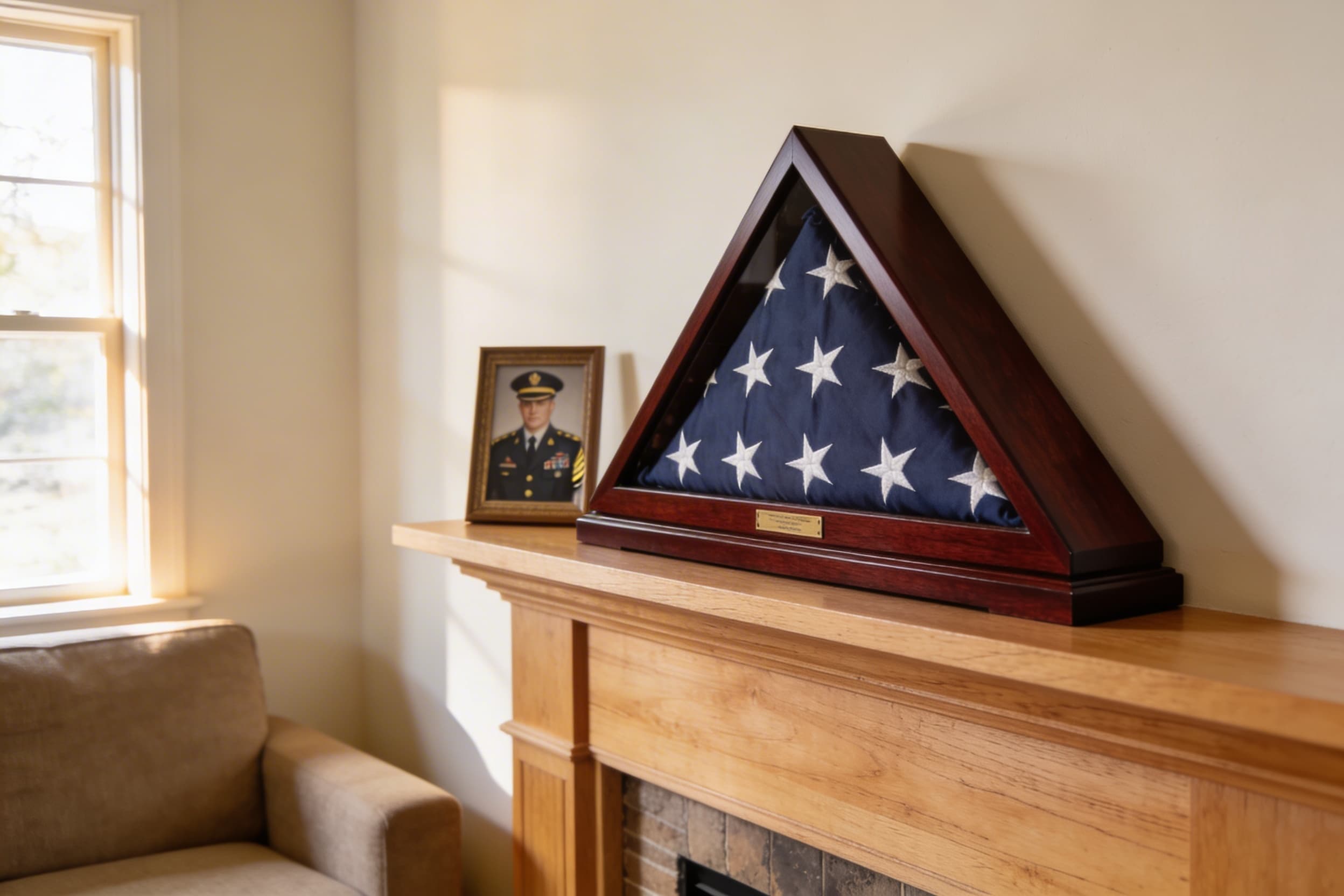
Beyond flying the flag, families can create lasting tributes to fallen service members within their homes. A flag display case offers a dignified way to preserve a veteran's burial flag, keeping it folded in the ceremonial triangle and protected behind glass. Many cases can be personalized with an engraved nameplate honoring the veteran's name, branch, and dates of service.
Frequently Asked Questions
When should I put my flag at half-staff on Memorial Day?
At sunrise, raise the flag briskly to full-staff, then lower it immediately to half-staff. Keep it there until noon. At noon, raise it back to full-staff and fly it until sunset. This protocol is unique to Memorial Day and is outlined in the U.S. Flag Code, Title 4, Section 7(m).
Is it illegal to fly the flag incorrectly on Memorial Day?
The U.S. Flag Code is advisory, not punitive. No federal enforcement mechanism exists for violations. However, following the code is considered a sign of patriotism and respect — and ignoring it, especially on a day of national mourning, may be viewed as disrespectful by veterans and their families.
Why are coins placed on veterans' headstones on Memorial Day?
Each coin denomination communicates a different relationship between the visitor and the deceased. A penny means you visited. A nickel means you trained together. A dime means you served together. A quarter means you were present when the service member was killed. The tradition gained widespread practice during the Vietnam War.
Should I say "Happy Memorial Day" to a veteran?
Many veterans find that phrase uncomfortable because Memorial Day honors those who died in service — it is a day of mourning, not celebration. A more appropriate approach is to acknowledge the sacrifice: "I'm thinking of those who gave everything" or simply "Thank you for your service and for those you served with."
Can I fly the flag at night on Memorial Day?
Yes, if it is properly illuminated. A porch light, spotlight, or dedicated flag light meets the requirement. Otherwise, the flag should be taken down at sunset and stored properly until the next morning.
Memorial Day asks something simple of every American: remember. Whether you raise a flag at dawn, place a coin on a headstone, or stand quietly at 3:00 PM, each act carries the weight of gratitude for those who gave everything. The etiquette is not about rigid rules — it is about honoring sacrifice with the respect it deserves.