🏬Supersize Online Funeral Retailer🪦1000's of Headstones⚱️Over 10,000 Cremation Urns⚰️Caskets Overnight Delivery🛒Funeral & Memorial Superstore🚚FREE Shipping on ALL Orders👨👩👧👦Helping Families for over 20 Years💰Lowest Price Guarantee🏬Supersize Online Funeral Retailer🪦1000's of Headstones⚱️Over 10,000 Cremation Urns⚰️Caskets Overnight Delivery🛒Funeral & Memorial Superstore🚚FREE Shipping on ALL Orders👨👩👧👦Helping Families for over 20 Years💰Lowest Price Guarantee
🏬Supersize Online Funeral Retailer🪦1000's of Headstones⚱️Over 10,000 Cremation Urns⚰️Caskets Overnight Delivery🛒Funeral & Memorial Superstore🚚FREE Shipping on ALL Orders👨👩👧👦Helping Families for over 20 Years💰Lowest Price Guarantee🏬Supersize Online Funeral Retailer🪦1000's of Headstones⚱️Over 10,000 Cremation Urns⚰️Caskets Overnight Delivery🛒Funeral & Memorial Superstore🚚FREE Shipping on ALL Orders👨👩👧👦Helping Families for over 20 Years💰Lowest Price Guarantee
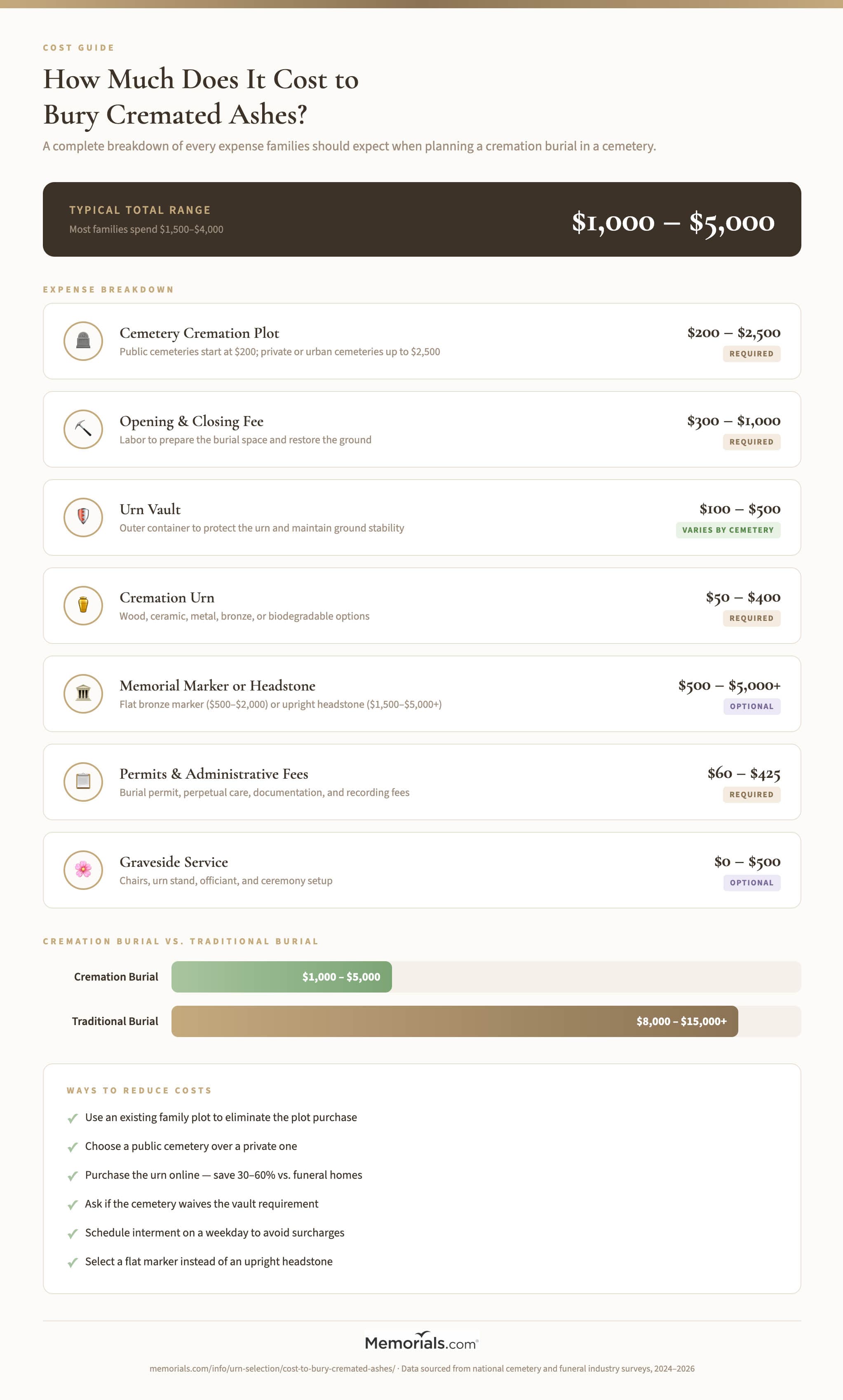
Burying cremated ashes in a cemetery typically costs between $1,000 and $5,000. The wide range depends on where you live, which cemetery you choose, and the products and services you select along the way.
That total may sound like a lot, but it's still significantly less than a traditional casket burial, which averages around $8,000 to $15,000 nationally. Urn burial operates on a smaller scale — the plot is smaller, the interment process is faster, and you don't need to purchase an expensive casket.
Even so, the costs add up quickly. Cemetery plot fees, , urn purchases, vault requirements, and optional memorial markers each contribute to the final price. Understanding each expense before you begin helps you plan a meaningful burial that fits your budget.
This guide breaks down every cost category, explains which fees are required versus optional, and offers practical strategies to reduce the total without sacrificing dignity or permanence. Burial cost is one of several factors families weigh when choosing a cremation urn, and understanding the full picture helps you make a confident decision.
Cemetery Plot Costs for Cremated Remains
The burial plot is usually the largest single expense. Cremation plots are smaller than standard casket plots and priced accordingly, but the cost varies dramatically by location and cemetery type.
Public cemeteries typically charge between $200 and $2,000 for a cremation plot. These municipally operated facilities serve local residents and generally offer the most affordable option.
Private cemeteries range from $1,000 to $2,500 or more. Religious cemeteries, memorial parks with landscaped grounds, and cemeteries in urban or metropolitan areas fall on the higher end of this range.
Some cemeteries designate dedicated cremation gardens — sections specifically designed for urn interment. These areas often feature smaller plots, shared memorial walls, or garden-style landscaping. Plots in cremation gardens are usually less expensive than purchasing a standard-size grave.
Using an Existing Family Grave
If your family already owns a cemetery plot, you may be able to add an urn to that existing grave. This eliminates the plot purchase entirely and can reduce total costs by several hundred to several thousand dollars.
Most cemeteries allow multiple urns to be placed in a single standard grave. Some permit up to four or more urns in one full-size plot, depending on the cemetery's policy and the depth of the original burial. Always check with the cemetery directly about their rules for adding cremated remains to an existing grave, as policies and fees vary.
Even with an existing plot, you will still pay opening and closing fees for each interment.
Opening and Closing Fees
Every cemetery charges an opening and closing fee — sometimes called an interment fee — to prepare the burial space, place the urn, and restore the ground afterward. This labor charge is separate from the plot purchase and is billed each time a grave is opened.
For cremation burials, opening and closing fees typically range from $300 to $800. In higher-end private cemeteries or urban areas, this fee can exceed $1,000.
A few things to ask when requesting a quote:
Does the fee differ for weekday versus weekend interment?
Is there an additional charge for holiday scheduling?
Does the fee include ground restoration and sod replacement?
Weekend and holiday interments often carry a surcharge of $100 to $300. Planning the burial during standard business hours on a weekday is one of the simplest ways to avoid extra charges.
Urn Vault and Burial Container Requirements
Many cemeteries require an urn vault or outer burial container for in-ground urn placement. An urn vault is a protective shell that surrounds the urn underground. It prevents the ground above from settling or sinking over time, which helps cemeteries maintain level terrain for landscaping equipment and foot traffic.
Urn vaults typically cost between $100 and $500, though some premium options run higher. The vault does not hold the ashes directly — it holds the urn.
Not every cemetery requires a vault. Church cemeteries, natural burial grounds, and some municipal cemeteries allow direct earth burial of the urn without an outer container. Always confirm vault requirements before making any purchases. Request the cemetery's policy in writing so there are no surprises at the time of interment. For a deeper look at what cemeteries expect, our guide to urn vault requirements for burial covers specifications, materials, and sizing.
If the cemetery does require a vault, ask whether you can purchase one independently rather than through the cemetery. Under the FTC's Funeral Rule, cemeteries cannot require you to buy the vault from them, though some may require that the vault meet specific size or material specifications.
Memorials.com carries a selection of urn vaults designed for in-ground burial, available in multiple sizes to accommodate standard and companion urns.
Urn Purchase Costs
The urn you select for burial doesn't need to be the same type you'd display at home. Burial urns prioritize secure closure and durability over decorative appearance, especially when placed inside a vault. Our guide to cremation urns for burial explains which materials and features hold up best underground.
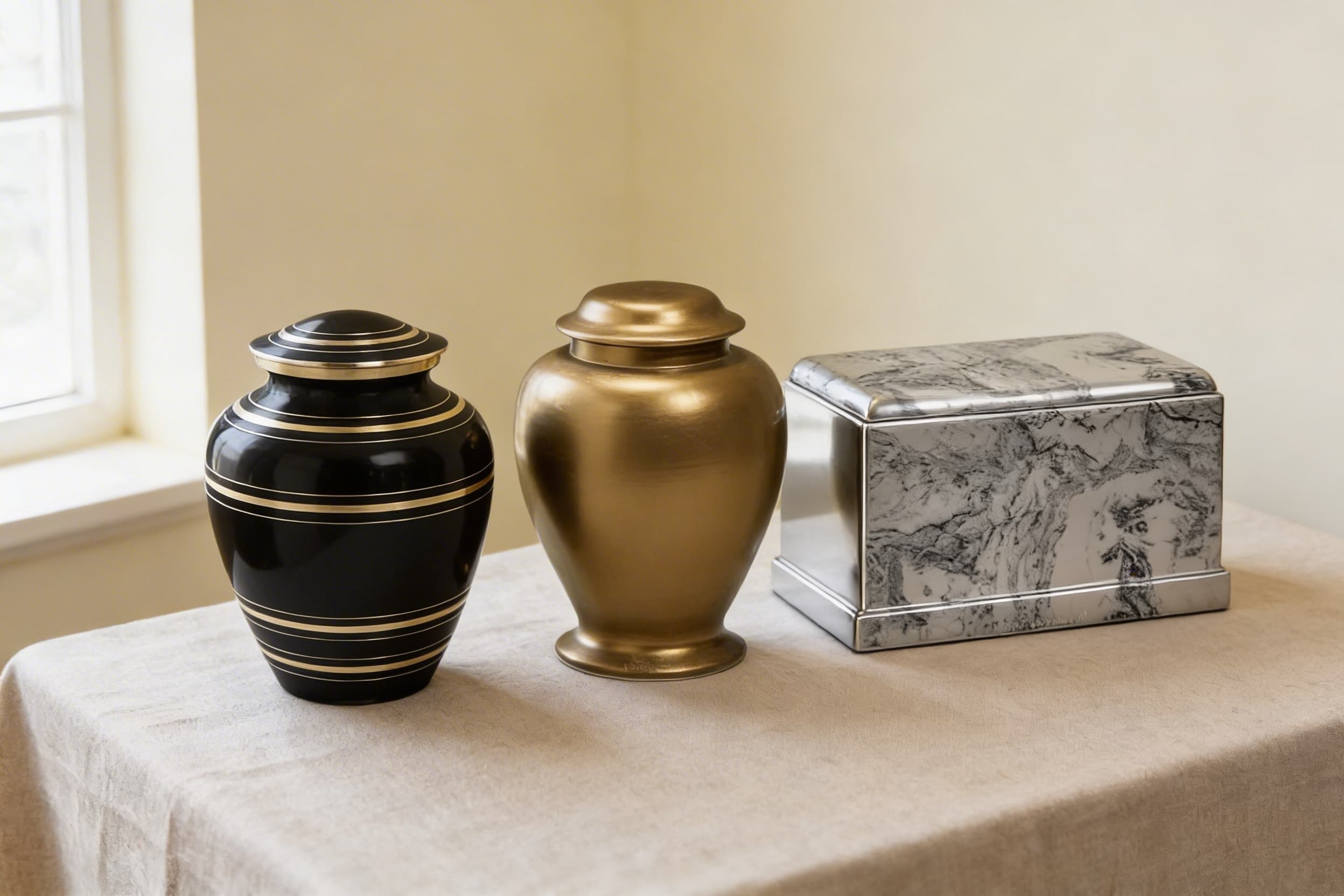
Standard cremation urns range from $50 to $400 for most materials. Here's a general breakdown by material:
Wood urns: $50–$250. Natural warmth and a wide range of styles, from simple to handcrafted.
Ceramic urns: $75–$300. Available in many colors and shapes, though more fragile than metal.
Metal urns: $75–$350. Durable and secure, making them well-suited for burial.
Bronze urns: $200–$600+. Premium material with exceptional longevity.
Marble urns: $150–$500. Elegant and extremely durable for in-ground placement.
If you plan to bury two sets of cremated remains together, a companion urn holds the remains of two people in a single vessel. Companion urns cost more — typically $200 to $600 — but eliminate the need for a second plot and a second interment fee.
Biodegradable urns are designed specifically for earth burial and break down naturally over time. They are a meaningful option for families who prefer an environmentally conscious approach. Prices range from $50 to $250.
Engraving or personalization adds approximately $30 to $75 depending on the complexity and the urn material. For a more detailed look at pricing across every material and style, see our guide on how much a cremation urn costs.
Burying Ashes in an Existing Family Grave
This is the cheapest way to bury cremated remains, and a great many families do not know it is available. If your family already holds a grave, ashes can usually be interred in it alongside whoever is already there — and the largest single cost on this page, the plot, disappears entirely.
What you still pay. An opening and closing fee, which is lower for an urn than for a casket because the excavation is far smaller. Often an administrative or recording fee. Possibly an urn vault, if the cemetery requires one. And lettering added to the existing marker, which is charged by the character and done on site rather than at the monument works.
Whose permission you need, and this is the part that stops people. Buying a grave does not buy the land; it buys the interment right, and that right has a named holder. Only that person can authorize a further burial. If the holder has died, the right passes under their estate, and the cemetery will want documentation showing it reached you. Families discover this at an awkward moment, so it is worth establishing before anything is arranged.
How many will the grave take? Cemeteries differ, and the only reliable answer comes from the one holding your plot. Many permit several urns in a single grave, sometimes alongside a casket already interred, because an urn occupies very little space. Some cap the number. Some distinguish between a grave sold as single depth and one sold as double depth, which was excavated deeper at the outset to take two caskets stacked. Ask what the plot was sold as and how many interments remain against it.
One practical note. Where a casket is already in place, the urn is normally interred above it rather than beside it, which is why this works at all in a standard grave.
Memorial Marker and Headstone Costs
A memorial marker gives the burial site a visible, lasting tribute. This expense is optional — some families choose to forgo a marker entirely, especially when burying in an existing family plot that already has a headstone — but most families include some form of permanent identification.
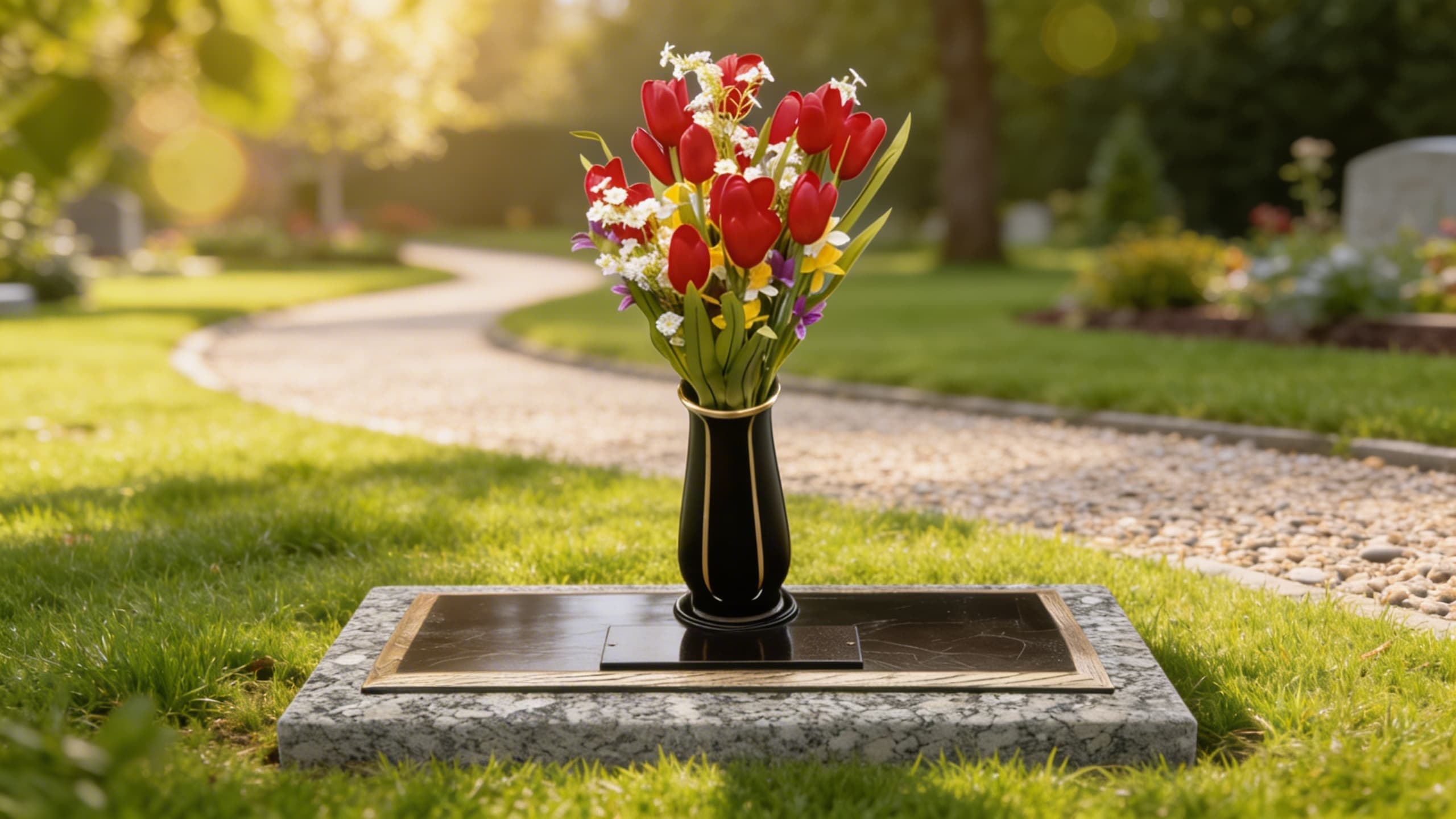
Flat bronze markers are the most common choice for cremation plots. They sit flush with the ground and cost between $500 and $2,000 depending on size and engraving detail. Grave markers are sized specifically for smaller cremation plots.
Upright headstones range from $1,500 to $5,000+ and are more common in traditional burial sections. The cemetery may have restrictions on marker size, style, or placement in cremation garden areas.
Installation fees are separate from the marker purchase and typically run $200 to $500, depending on the cemetery.
Additional memorialization options through cemetery products include vases, flower holders, and ceramic photo inserts that attach to the marker or headstone.
Burial Permit and Administrative Fees
Most jurisdictions require a burial permit or disposition permit before cremated remains can be interred. The permit itself is usually inexpensive — typically under $25 — but the process varies by state and county.
Your funeral director or cremation provider typically handles the permit paperwork as part of their services. If you're arranging the burial independently, contact your local registrar or vital records office for requirements.
Cemeteries also charge various administrative fees that are easy to overlook:
Perpetual care fee: A percentage of the plot cost (often 10–15%) that funds long-term grounds maintenance. Some cemeteries include this in the plot price; others charge it separately.
Transfer or recording fee: Charged when ownership of a plot changes hands, such as when a family member inherits the plot.
Documentation fee: Some cemeteries charge for processing interment authorization paperwork.
These fees are individually small — usually $25 to $200 each — but together they can add $100 to $400 or more to your total.
Graveside Service Costs (Optional)
A graveside service at the time of interment is entirely optional. Many families choose a brief, private gathering at no additional cost. Others arrange a more formal ceremony.
If you coordinate through a funeral home, expect to pay $150 to $500 for setup, which may include chairs, an urn stand, faux grass ground covering, and coordination with the cemetery. A religious officiant may charge an additional $100 to $300 for their time.
Some cemeteries have on-site chapels available for a separate rental fee, typically $200 to $500 depending on the facility.
You can keep this cost at zero by gathering family members for a private moment at the gravesite without any formal setup.
Total Cost Summary
Here's how the costs add up for a typical cremation burial:
Expense
Low Estimate
High Estimate
Cemetery cremation plot
$200
$2,500
Opening and closing fee
$300
$1,000
Urn vault
$100
$500
Cremation urn
$50
$400
Memorial marker
$500
$3,000
Burial permit
$10
$25
Administrative fees
$50
$400
Graveside service (optional)
$0
$500
Total
$1,210
$8,325
Most families spend between $1,500 and $4,000 for a cremation burial with a basic marker. Skipping the headstone and using an existing family plot brings the total well under $1,000.
How to Reduce Cremation Burial Costs
Several practical strategies can lower your total expense without compromising the dignity of the burial:
Use an existing family plot. If your family already owns cemetery space, adding an urn eliminates the plot purchase — often the single largest cost.
Choose a public cemetery. Municipal cemeteries consistently charge less than private facilities for plots, interment fees, and administrative charges.
Purchase the urn online. Buying a cremation urn directly from an online retailer like Memorials.com typically costs 30–60% less than purchasing through a funeral home or cemetery. You have the legal right to use any urn you choose.
Ask about vault requirements. If the cemetery doesn't require a vault, you save $100 to $500 immediately. If they do require one, ask whether you can purchase a vault independently rather than through the cemetery.
Select a flat marker instead of an upright headstone. Flat bronze markers cost a fraction of upright granite or marble headstones and are often the standard in cremation garden sections.
Schedule the interment on a weekday. Avoiding weekend or holiday surcharges can save $100 to $300.
Hold a private gathering rather than a formal service. A meaningful moment with family at the gravesite costs nothing. You don't need a funeral home to arrange a graveside gathering.
Cremation Burial vs. Other Options
Burying ashes in a cemetery is one of several options for final placement. Each path comes with different costs and considerations:
Columbarium niche: An above-ground compartment in a memorial wall or building. Niche costs range from $1,000 to $5,000 or more, depending on location and height. No vault is needed, but opening and closing fees may still apply. Our cremation niche and columbarium guide walks through what to expect from this alternative.
Scattering ashes: Scattering in a designated scattering garden, on private land, or at sea is often the least expensive option — typically $100 to $500 for a scattering garden fee or boat charter. Some families split the ashes, scattering a portion and burying the rest.
Keeping ashes at home: Storing the urn at home eliminates all cemetery-related costs. Many families use keepsake urns to divide a small portion of ashes among family members while burying or scattering the majority.
Cremation jewelry: Wearable pendants, rings, or bracelets that hold a tiny amount of cremated remains. These can complement any final placement decision, allowing family members to carry a physical connection while the urn is buried or displayed.
Backyard burial: Legal in most states with landowner permission and local zoning compliance. Costs are minimal — just the urn — but consider the long-term implications. If you sell the property, you lose access to the burial site, and disclosure to future buyers may be required.
Frequently Asked Questions
Can you bury cremated ashes in a cemetery?
Yes. Most cemeteries accept cremated remains for in-ground burial. Many have dedicated cremation sections or cremation gardens with smaller, more affordable plots. You can also add an urn to an existing family grave in most cases. Contact the cemetery directly to confirm their requirements and availability.
Do you need a vault to bury an urn?
It depends on the cemetery. Many cemeteries require an urn vault or outer burial container to maintain ground stability and support maintenance equipment. However, church cemeteries, natural burial grounds, and some public cemeteries allow direct earth burial without a vault. Always ask before purchasing.
Can you bury ashes in an existing grave?
In most cases, yes. Cemeteries typically allow urns to be added to occupied graves. A standard full-size plot can often accommodate multiple urns. You will still pay opening and closing fees for the new interment, but you avoid the cost of a new plot.
Is it cheaper to bury cremated ashes or a casket?
Burying cremated ashes is significantly cheaper. The plot is smaller and costs less, no casket is required, and the interment process is simpler. A typical urn burial costs $1,000 to $5,000, compared to $8,000 to $15,000 or more for a traditional casket burial. For a full side-by-side breakdown, see our cremation vs burial cost comparison.
How deep are cremated ashes buried?
Most cemeteries bury urns at a depth of about 18 to 36 inches, depending on whether a vault is used and the cemetery's specific regulations. This is shallower than a standard casket burial, which typically requires a depth of six feet.
Planning Ahead for a Meaningful Burial
Taking time to understand these costs before you need to make decisions removes financial stress during an already difficult period. Many families find that getting price lists from two or three cemeteries — which they are legally required to provide upon request — gives them the clarity they need to choose a path that honors their loved one within a realistic budget.
If you're exploring urns and burial supplies, Memorials.com offers a complete selection of cremation urns, urn vaults, and cemetery products to help families prepare for every step of the interment process.