🏬Supersize Online Funeral Retailer🪦1000's of Headstones⚱️Over 10,000 Cremation Urns⚰️Caskets Overnight Delivery🛒Funeral & Memorial Superstore🚚FREE Shipping on ALL Orders👨👩👧👦Helping Families for over 20 Years💰Lowest Price Guarantee🏬Supersize Online Funeral Retailer🪦1000's of Headstones⚱️Over 10,000 Cremation Urns⚰️Caskets Overnight Delivery🛒Funeral & Memorial Superstore🚚FREE Shipping on ALL Orders👨👩👧👦Helping Families for over 20 Years💰Lowest Price Guarantee
🏬Supersize Online Funeral Retailer🪦1000's of Headstones⚱️Over 10,000 Cremation Urns⚰️Caskets Overnight Delivery🛒Funeral & Memorial Superstore🚚FREE Shipping on ALL Orders👨👩👧👦Helping Families for over 20 Years💰Lowest Price Guarantee🏬Supersize Online Funeral Retailer🪦1000's of Headstones⚱️Over 10,000 Cremation Urns⚰️Caskets Overnight Delivery🛒Funeral & Memorial Superstore🚚FREE Shipping on ALL Orders👨👩👧👦Helping Families for over 20 Years💰Lowest Price Guarantee
More families are choosing cremation each year, and many of those families still want a permanent place to visit. Burying a cremation urn in a cemetery, on private property, or in a dedicated urn garden gives you that sense of permanence — a location where loved ones can gather and remember for generations to come.
But not every urn is designed for burial, and most cemeteries have specific rules about which urns they accept, whether a vault is required, and how deep the urn must be placed. Understanding these requirements before you purchase an urn saves time, money, and unnecessary stress during an already difficult period. If you are still weighing the many factors that go into this decision, our guide to choosing a cremation urn covers the full picture from material and size to budget and placement.
This guide walks through which urns are suitable for ground burial, what cemeteries typically require, the role of urn vaults, and how to choose the right option for your family's needs and budget.
Can You Bury a Cremation Urn?
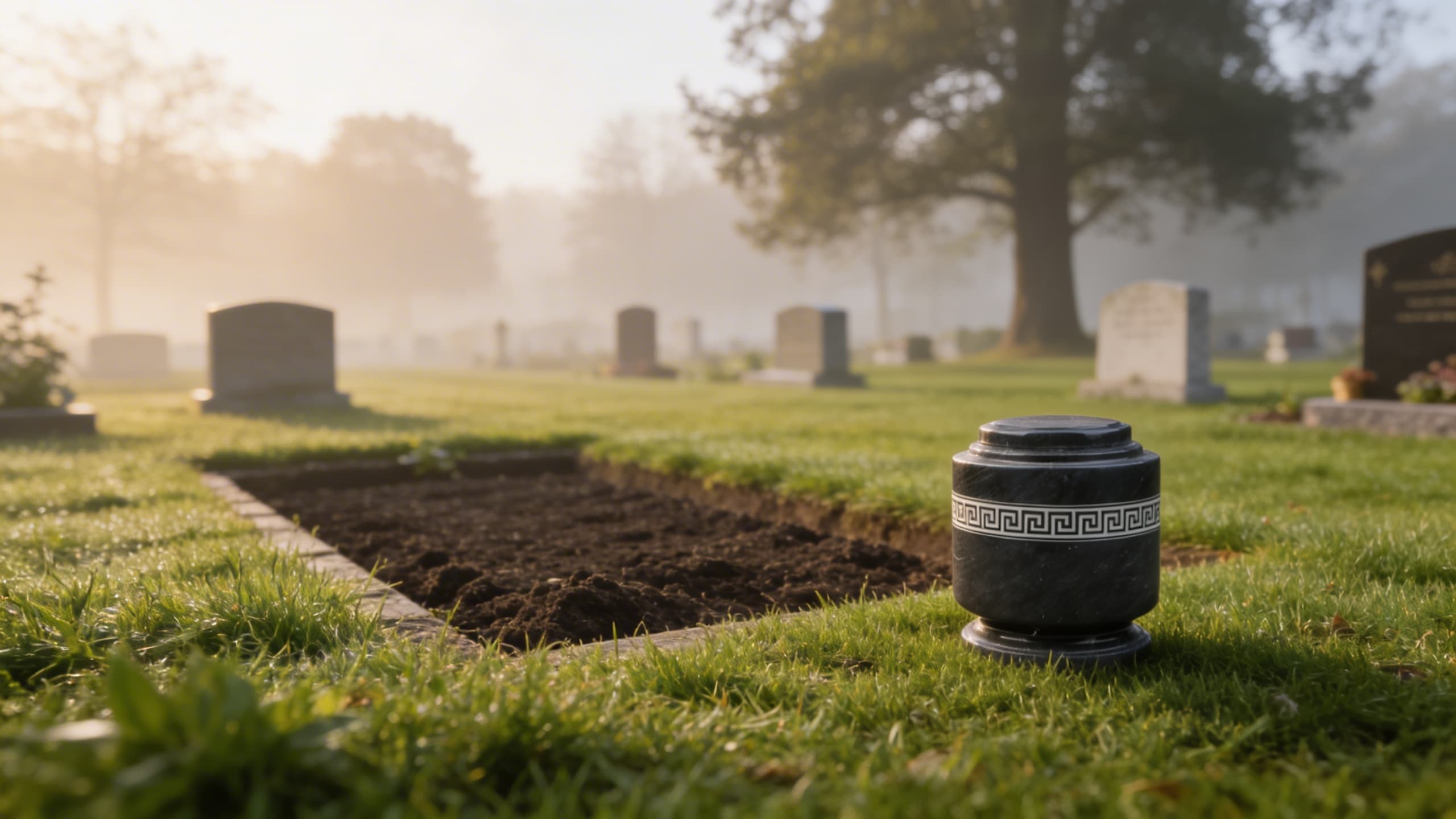
Yes. Burying a cremation urn is both legal and common across the United States. Families can bury an urn in a cemetery plot, a dedicated cremation garden, on private property, or even within an existing family grave in many cases.
The real question is not whether you can bury an urn but which urn is appropriate and what your cemetery requires. Cemeteries set their own policies on acceptable materials, dimensions, and whether an outer container — known as an urn vault — is needed. These rules vary widely, so confirming them with your specific cemetery is always the essential first step.
On private property, you generally have more flexibility. As long as you own the land (or have the owner's permission), you can typically bury an urn at a depth and in a container of your choosing. Some states and municipalities have zoning restrictions or permit requirements, so checking local regulations is still worthwhile.
Which Urn Materials Are Best for Burial?
Not all cremation urns perform equally underground. The ground exposes an urn to moisture, soil pressure, temperature shifts, and biological activity over time. Choosing the right material determines how long the urn will protect the cremated remains. For a broader look at every material category and style available, see our overview of types of cremation urns.
Materials That Hold Up Underground
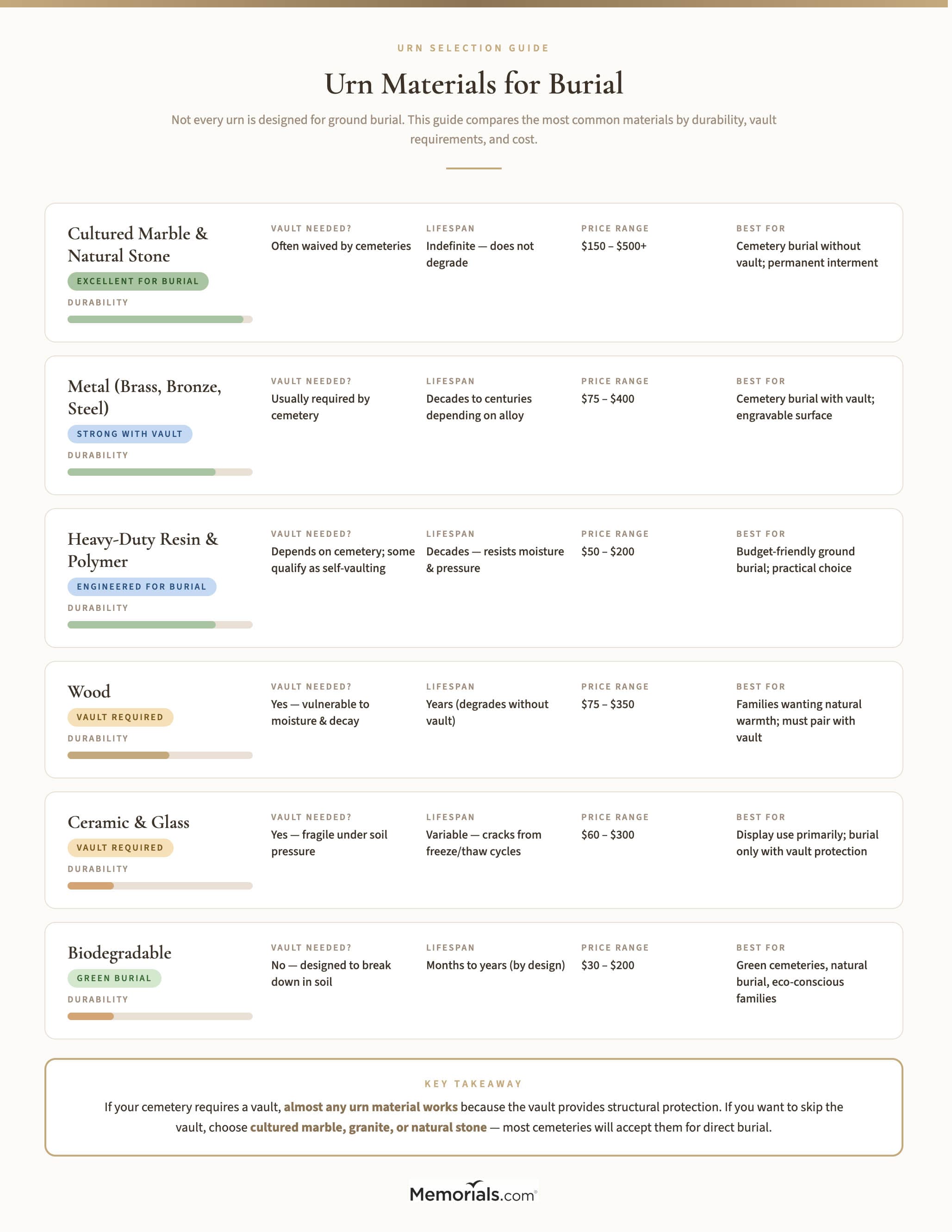
Cultured marble and natural stone. Cultured marble, granite, and onyx urns are among the most durable options for ground burial. They resist moisture, do not degrade, and can withstand the weight of soil above them. Many cemeteries accept stone urns without requiring an additional vault because of their inherent structural strength.
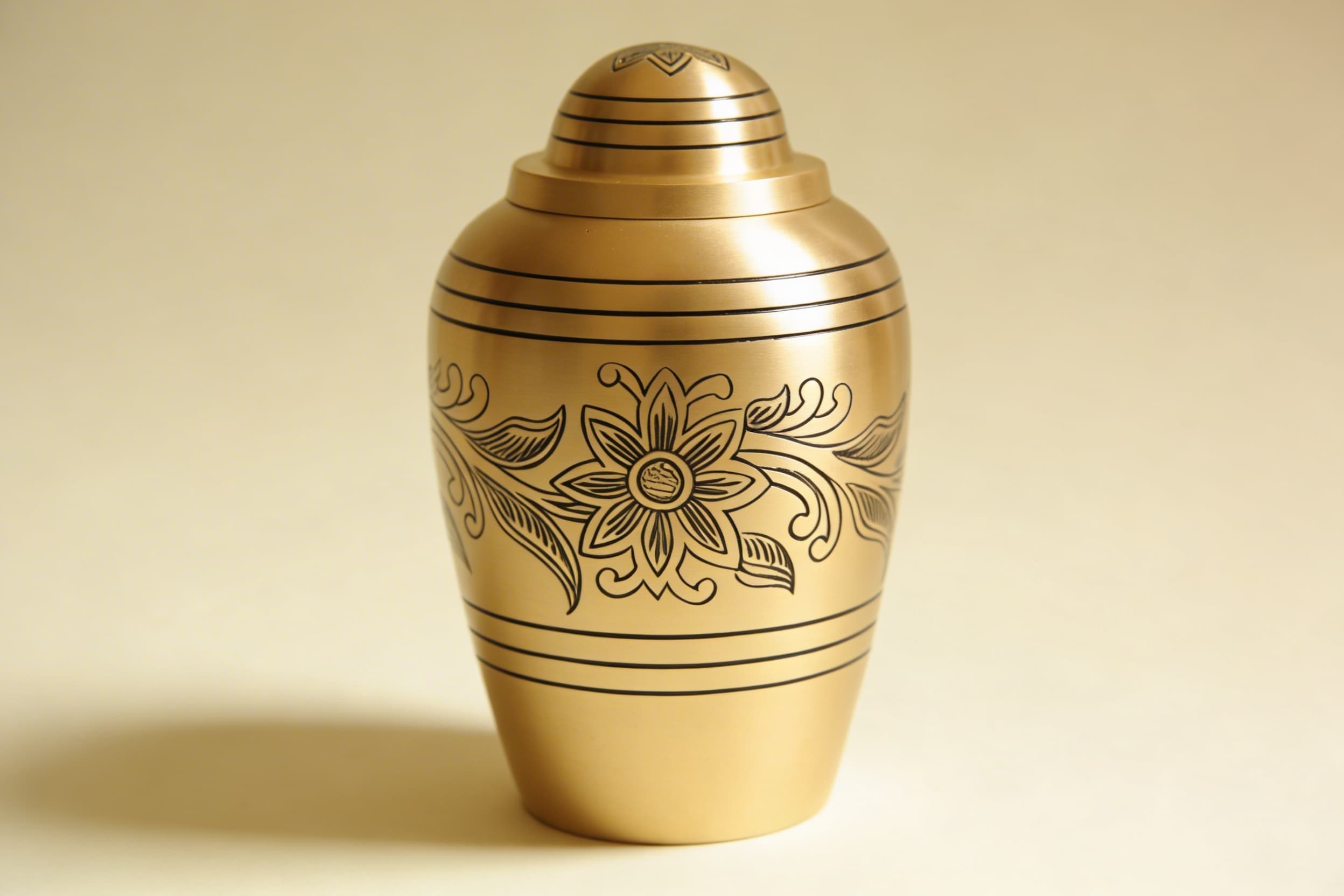
Metal. Brass, bronze, and stainless steel urns offer excellent durability and tight closure mechanisms. Metal urns pair well with an urn vault for long-term protection, though some thicker-gauge metals can perform adequately without one depending on cemetery policy.
Heavy-duty resin and polymer. Some manufacturers produce urns specifically engineered for ground burial using high-density resins. These are designed to support significant top-load pressure and resist moisture penetration.
Materials That Require Extra Protection
Wood urns. Beautiful for home display but vulnerable to moisture and biological decomposition underground. If you want to bury a wood urn, placing it inside a vault is strongly recommended (and usually required by the cemetery).
Ceramic urns. Ceramic can crack under soil pressure and is susceptible to freeze-thaw cycles. A vault provides the structural protection ceramic needs for burial.
Glass urns. Fragile and not suited for direct ground burial. Always use a vault if burying a glass urn.
Materials Designed to Return to the Earth
Biodegradable urns are made from materials like recycled paper, bamboo, sand, or natural fibers. They are designed to break down in soil over months or years, gradually releasing the cremated remains into the earth. These are the preferred choice for green burials and natural burial grounds.
Urn Vault Requirements: What Cemeteries Expect
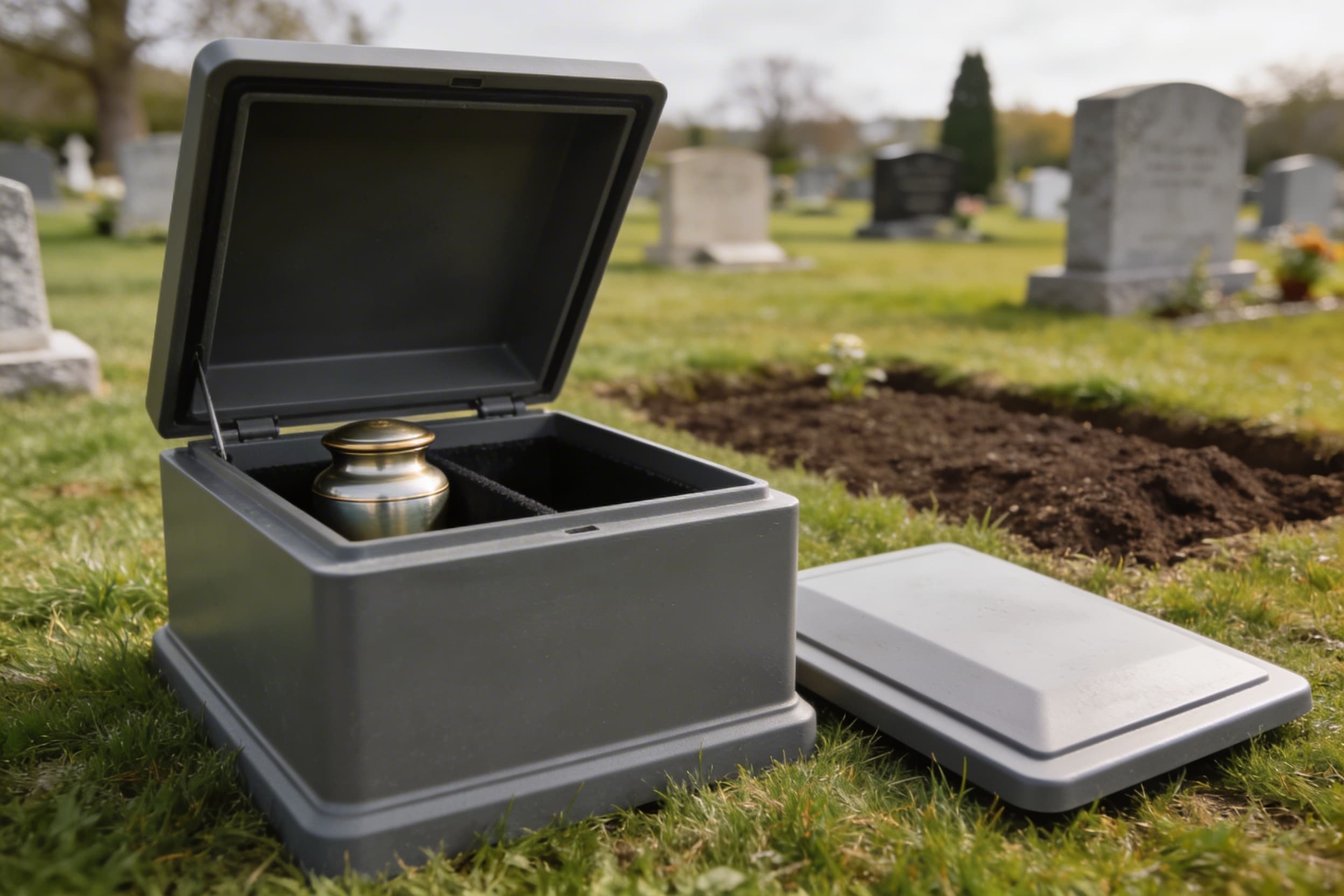
An urn vault is an outer container that surrounds the urn after it is placed in the ground. The vault is not decorative — its purpose is structural. It prevents the soil above and around the urn from settling or caving in over time, which keeps the cemetery grounds level and safe for maintenance equipment.
Why Most Cemeteries Require Vaults
Cemeteries maintain large expanses of landscaped property. When an urn degrades underground — whether it is wood breaking down, metal corroding, or ceramic cracking — the ground above it can sink. This creates uneven terrain, damages grave markers, and complicates mowing and upkeep. Urn vaults solve this problem by providing a rigid shell that supports the soil indefinitely.
The Federal Trade Commission notes that no state law in the U.S. requires a burial vault for urns or caskets. However, individual cemeteries are free to set their own policies, and the majority of traditional cemeteries do require one for in-ground urn interment.
When You May Not Need a Vault
There are situations where a vault may be optional or unnecessary:
Urns made of granite, marble, cultured marble, or onyx are structurally self-supporting. Many cemeteries will waive the vault requirement for stone urns because they do not degrade. Always confirm this with the cemetery before assuming.
Green cemeteries and natural burial grounds typically prohibit vaults altogether. These cemeteries prioritize minimal environmental impact and may require biodegradable containers exclusively.
Private property burials do not carry vault requirements unless your local jurisdiction has specific rules.
Vault Sizing and Compatibility
Urn vaults come in standard sizes, but it is important to verify that your urn fits inside the vault before purchasing. Measure the urn's height, width, and depth, then compare those dimensions against the vault's interior measurements. Most standard adult urns (200 cubic inches) fit comfortably in a standard urn vault, but oversized or uniquely shaped urns may need a larger vault or a custom solution.
For a detailed breakdown of vault types, materials, and how to match a vault to your urn, see our urn vault requirements guide.
Where Can You Bury a Cremation Urn?
Families have several options for urn burial, each with different costs, regulations, and levels of permanence.
Cemetery Burial Plots
Traditional cemeteries offer full-size plots or smaller cremation-specific plots for urn interment. Cremation plots are more affordable than full burial plots because they require less space. Many cemeteries also allow an urn to be buried in an existing family plot — either alongside a casket in a double-depth arrangement or above a previously buried casket.
If your family already owns a cemetery plot, ask the cemetery whether adding a cremation urn is permitted and what fees apply. The interment process is typically straightforward: the cemetery opens the plot, places the urn (and vault, if required), and restores the surface.
Urn Gardens
Some cemeteries maintain dedicated urn gardens — beautifully landscaped sections designed specifically for cremated remains. These areas may include gardens, pathways, benches, and water features. Urn gardens often have their own aesthetic guidelines and marker restrictions, so confirm the details before selecting this option.
Columbariums and Mausoleums
While not ground burial in the traditional sense, a columbarium is an above-ground structure with individual niches that hold cremation urns. The niche face can be engraved with the person's name, dates, and meaningful symbols. Mausoleums serve a similar function but may house both caskets and urns. For families weighing above-ground placement against in-ground burial, our cremation niche and columbarium guide explains niche types, pricing, and what to expect.
Private Property
Burying an urn on private property is legal in most areas, though some states require permits or have zoning restrictions. Before burying on your own land, consider the long-term implications: if you sell the property, you may need to disclose the burial, and future access could become complicated.
For guidance on selecting a cemetery and understanding plot pricing, read our guide on how to buy a cemetery plot.
How Deep Should a Cremation Urn Be Buried?
There is no single federal standard for how deep cremation urns must be buried. Laws and policies vary by state, municipality, and individual cemetery. That said, most cemeteries follow a general guideline of burying urns approximately three feet deep, or deep enough that at least 12 to 24 inches of soil covers the top of the urn.
For private property burials, aim for a minimum of 36 inches deep. This depth discourages disruption from animals, protects against erosion, and provides adequate coverage in the event of flooding or heavy rainfall.
Some key depth considerations:
A deeper burial provides better long-term security and stability. If using a vault, the vault's height adds to the overall depth requirement. Mark the burial location with a grave marker or note GPS coordinates to preserve the exact location for future reference.
Cemetery Regulations You Should Know
Every cemetery operates under its own set of rules, and these rules directly affect your urn selection, vault choice, and burial process. Understanding the most common regulations helps you avoid purchasing an urn or vault that the cemetery will not accept.
Common Cemetery Requirements
Most cemeteries specify which urn materials are acceptable for burial. Fragile materials like glass or thin ceramic may be restricted. Many cemeteries require an urn vault for any urn that is not made of stone. Some cemeteries dictate maximum urn dimensions to ensure compatibility with their plot sizes and vault standards. Cemeteries charge opening-and-closing fees for urn interment, which cover the labor of excavating and restoring the plot.
Questions to Ask Your Cemetery Before Purchasing
Before buying an urn or vault, contact the cemetery and confirm: whether a vault is required and whether they sell them or allow outside purchases, the maximum urn dimensions permitted, which urn materials are accepted for direct burial (without a vault), what the opening-and-closing fee is and what it includes, whether multiple urns can be placed in one plot, and whether the cemetery has specific rules about headstones or memorial markers for cremation plots.
The total cost of burying a cremation urn depends on several factors. Here is a breakdown of the typical expenses:
Cremation plot: $500 to $2,500 in most areas. Cremation-specific plots are smaller than traditional grave plots and significantly less expensive. Prices vary by region, cemetery prestige, and plot location within the cemetery.
Urn: $50 to $500+ depending on material, size, and personalization. Stone and metal urns suitable for burial tend to be on the higher end, while simple biodegradable options cost less.
Urn vault: $50 to $300. Basic polymer vaults are the most affordable, while cultured marble or metal vaults cost more.
Opening and closing fee: $200 to $800. This covers the cemetery staff's labor to prepare the plot, place the urn, and restore the grounds afterward.
Memorial marker: $200 to $2,000+. A flat grave marker, upright headstone, or bronze plaque adds a permanent visual marker to the burial site. Costs depend on material, size, and engraving.
All told, a complete urn burial with plot, vault, interment, and marker typically runs between $1,000 and $5,000 — significantly less than a traditional casket burial, which averages over $8,000 according to the National Funeral Directors Association. For a closer look at every line item and ways to reduce expenses, see our guide to the cost to bury cremated ashes.
Biodegradable Urns and Green Burial Options
Green burial is a growing movement that prioritizes minimal environmental impact. For families who value sustainability, burying a biodegradable urn is one of the most planet-friendly ways to lay cremated remains to rest.
Biodegradable urns are crafted from natural materials — recycled paper, bamboo, sand composites, Himalayan rock salt, or plant-based fibers. Once buried, they break down over a period of months to years, gradually returning the cremated remains to the soil.
Green cemeteries and natural burial grounds typically welcome biodegradable urns and may require them. These cemeteries generally prohibit vaults, synthetic materials, and metal components. If you choose this path, confirm the cemetery's specific requirements for acceptable materials and certifications.
For families interested in eco-friendly options beyond ground burial, water burial is another meaningful alternative, and our guide to green burials covers the full range of sustainable memorial practices.
Choosing the Right Urn for Your Burial Plan
Selecting a burial urn starts with understanding your burial location and its requirements. Here is a simple framework to guide the decision:
Step 1: Contact your cemetery. Confirm vault requirements, acceptable materials, dimension limits, and fees. This narrows your options immediately.
Step 2: Choose your material. If the cemetery requires a vault, almost any urn material works because the vault provides protection. If the cemetery waives the vault for stone urns, a marble urn or granite urn is an excellent standalone option. For green burial, choose a certified biodegradable urn.
Step 3: Verify the size. A standard adult cremation urn holds approximately 200 cubic inches — suitable for a person weighing up to 200 pounds in life. Confirm the urn fits inside the vault (if applicable) and meets the cemetery's dimension requirements.
Step 4: Personalize. Many urns suitable for burial can be engraved with names, dates, and meaningful symbols. If the urn will be underground permanently, consider adding a personalized headstone or grave marker as a visible tribute above ground.
Step 5: Coordinate the interment. Work with the cemetery or funeral director to schedule the burial. Confirm who will handle transportation of the urn and whether a brief graveside ceremony is possible.
Burying Multiple Urns Together
Many families wish to keep loved ones together in death, just as they were in life. Burying multiple cremation urns in a single plot is common and most cemeteries accommodate it.
Companion urns hold the cremated remains of two people in a single, larger vessel. These are popular among married couples or partners who want to share a final resting place. A companion urn typically holds 400 or more cubic inches.
If you prefer individual urns, most cemeteries allow two or three standard urns in a single cremation plot, and some permit adding urns to a plot that already contains a casket. The cemetery will let you know how many urns a particular plot can hold and whether each requires its own vault.
Families also sometimes keep a portion of the cremated remains in a keepsake urn for the home while burying the rest. This approach allows you to maintain a personal connection at home and still have a permanent memorial at the cemetery.
Frequently Asked Questions
Can you bury a cremation urn in an existing grave?
In most cases, yes. Many cemeteries allow a cremation urn to be placed in an existing family plot, either alongside or on top of a previously buried casket. The cemetery will need to open and close the plot, and there will be a fee for this service. Contact the cemetery directly to confirm their policy and any restrictions.
Do all cemeteries require an urn vault?
No. While the majority of traditional cemeteries do require a vault for in-ground urn burial, there are exceptions. Cemeteries often waive the vault for urns made of stone materials like marble, granite, or onyx. Green cemeteries typically prohibit vaults entirely. Always confirm the requirement with your specific cemetery.
How long does a buried urn last?
It depends entirely on the material. Stone and cultured marble urns can last indefinitely underground. Metal urns may last decades to centuries depending on the alloy and environmental conditions. Wood and ceramic urns will eventually degrade, which is why cemeteries typically require a vault to protect them. Biodegradable urns are designed to break down within months to a few years.
Can you bury an urn on your own property?
Generally, yes. Most states allow the burial of cremated remains on private property. Some jurisdictions require permits or have setback requirements from water sources or property boundaries. If you plan to sell the property eventually, be aware that you may need to disclose the burial to potential buyers. Check your local zoning laws for specifics.
What is the difference between a burial urn and a regular cremation urn?
Functionally, any cremation urn can be buried if it is placed inside a vault. The term "burial urn" or "ground burial urn" usually refers to urns specifically engineered for direct ground burial — meaning they are built from materials durable enough to withstand underground conditions without additional protection. Stone urns and heavy-duty polymer urns are the most common examples.
Choosing how to lay a loved one to rest is one of the most meaningful decisions a family makes. If ground burial feels right for your family, the combination of a quality urn, a protective vault (where required), and a well-chosen cemetery plot creates a permanent memorial that future generations can visit and find comfort in.
Browse our complete collection of cemetery products to find urns, vaults, markers, and accessories that fit your burial plan, or explore our cremation vs. burial comparison if you are still weighing your options.