🏬Supersize Online Funeral Retailer🪦1000's of Headstones⚱️Over 10,000 Cremation Urns⚰️Caskets Overnight Delivery🛒Funeral & Memorial Superstore🚚FREE Shipping on ALL Orders👨👩👧👦Helping Families for over 20 Years💰Lowest Price Guarantee🏬Supersize Online Funeral Retailer🪦1000's of Headstones⚱️Over 10,000 Cremation Urns⚰️Caskets Overnight Delivery🛒Funeral & Memorial Superstore🚚FREE Shipping on ALL Orders👨👩👧👦Helping Families for over 20 Years💰Lowest Price Guarantee
🏬Supersize Online Funeral Retailer🪦1000's of Headstones⚱️Over 10,000 Cremation Urns⚰️Caskets Overnight Delivery🛒Funeral & Memorial Superstore🚚FREE Shipping on ALL Orders👨👩👧👦Helping Families for over 20 Years💰Lowest Price Guarantee🏬Supersize Online Funeral Retailer🪦1000's of Headstones⚱️Over 10,000 Cremation Urns⚰️Caskets Overnight Delivery🛒Funeral & Memorial Superstore🚚FREE Shipping on ALL Orders👨👩👧👦Helping Families for over 20 Years💰Lowest Price Guarantee
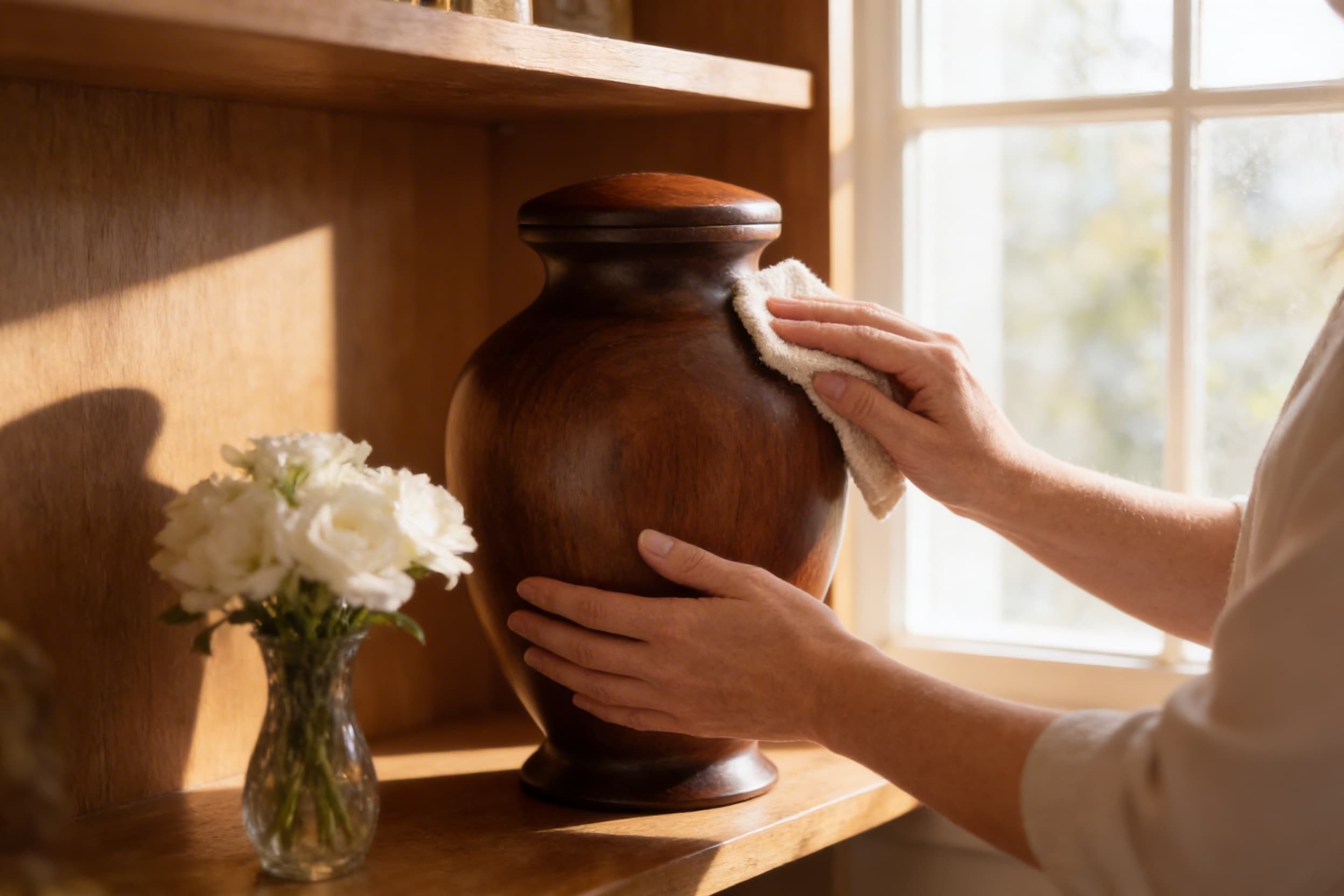
Keeping a loved one's cremated remains at home has become the choice of millions of American families. The National Funeral Directors Association projects the U.S. cremation rate at over 63% in 2025, and a growing number of those families are choosing to display the urn in their home rather than place it in a cemetery columbarium or niche.
If you have recently received your loved one's cremated remains—or you are planning ahead—this guide walks through practical urn display ideas, room-by-room placement advice, care and safety considerations, and the etiquette of keeping an urn where family and guests can see it. If you are still deciding on the right urn, our complete guide on how to choose a cremation urn covers every factor to consider before selecting a display piece.
Before thinking about placement, consider whether the urn itself suits the space where it will live. A display-worthy urn should complement your home's décor rather than feel out of place. For a broader overview of available materials and styles, see our guide to types of cremation urns.
Materials that work well for home display include:
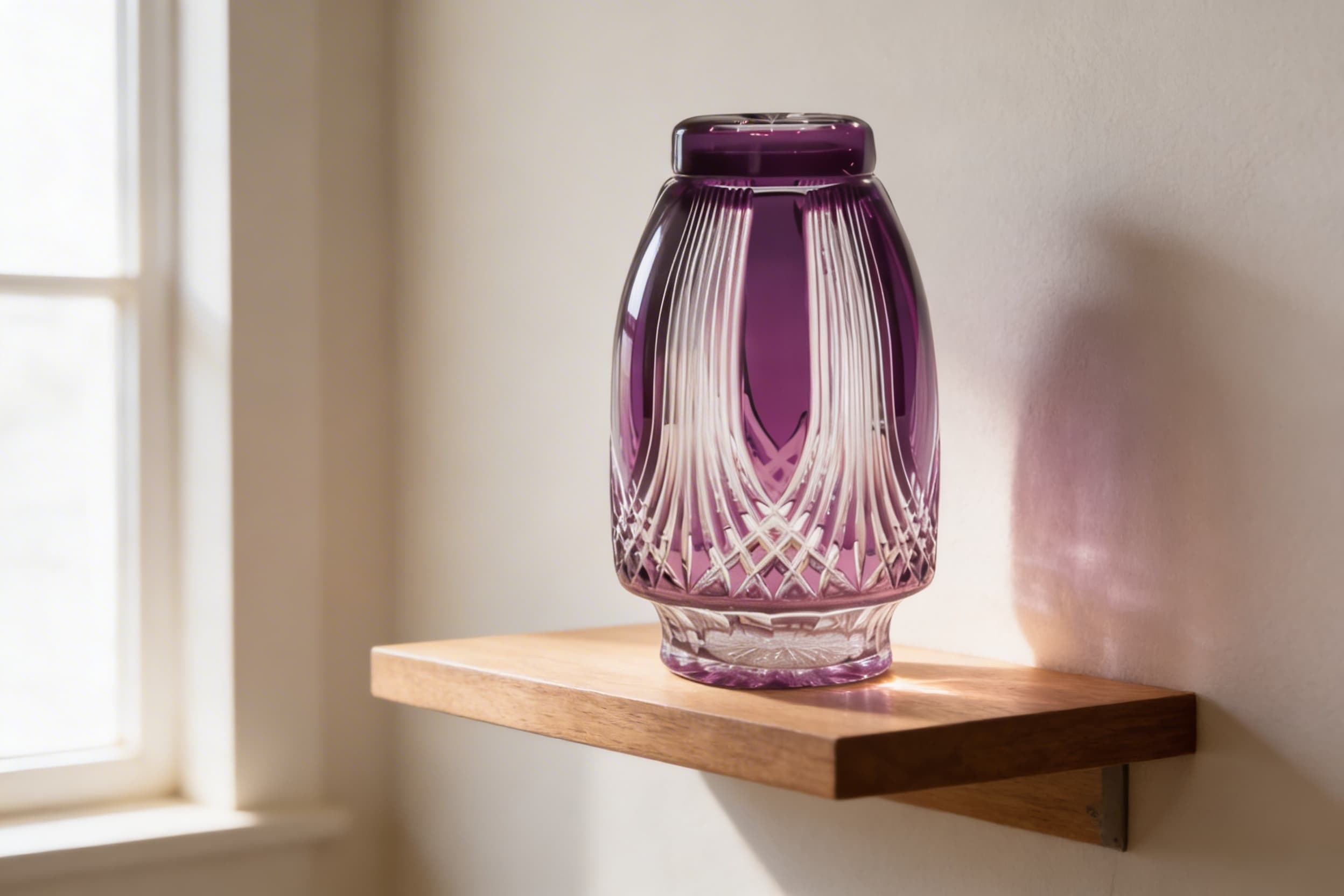
Glass — hand-blown and art glass pieces double as sculptural décor. Glass urns catch natural light beautifully on a shelf or mantelpiece.
Ceramic and marble — these materials carry a timeless, substantial feel. Ceramic urns suit both modern and traditional interiors, while marble urns offer a classic elegance.
Wood — warm and natural, wood urns blend easily into living rooms, dens, and home offices.
Art and sculptural styles — if you want the urn to serve as a meaningful centerpiece, art urns come in hand-painted, sculpted, and one-of-a-kind designs that feel more like fine art than a container.
If you prefer a subtle approach, unique urns are designed to blend into your home. Some take the form of candle holders, vases, picture frames, or decorative boxes—allowing you to honor your loved one without the urn drawing attention from visitors.
Urn Sizes and Display Considerations
The size of the urn directly affects where you can place it.
Full-size urns typically hold 200 cubic inches or more and require a sturdy shelf, table, or cabinet surface. Measure the height, width, and depth of the urn against your intended display spot before committing to a location.
Keepsake urns hold a small symbolic portion of the cremated remains. These are ideal when multiple family members each want to keep a portion, and their compact size means they fit on a nightstand, bookshelf, or windowsill with ease. If you are weighing whether a smaller urn or a standard urn is the better fit, our comparison of keepsake urns vs full-size urns breaks down the practical differences.
Companion urns hold the remains of two individuals. They are significantly larger than standard urns and need a wider, more stable surface—a deep mantel, sideboard, or dedicated memorial table works well.
Another option worth considering is cremation jewelry—pendants and bracelets designed to hold a tiny amount of ashes. This can complement a home urn display by giving you a wearable, private way to keep your loved one close throughout the day.
Room-by-Room Placement Ideas
There is no single "correct" room for an urn. The best placement depends on your relationship with the person, your family's daily routines, and how visible you want the urn to be.
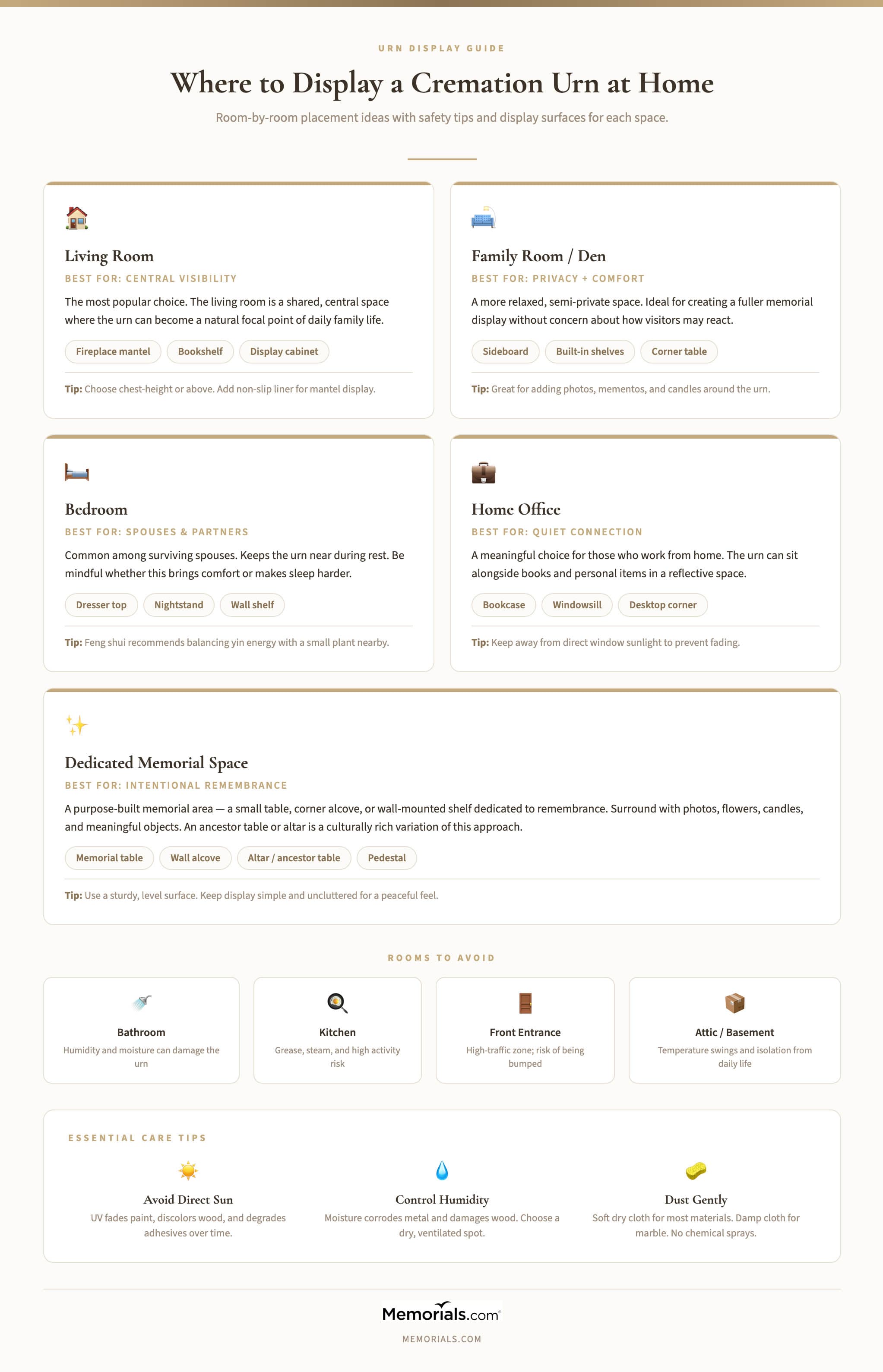
Living Room
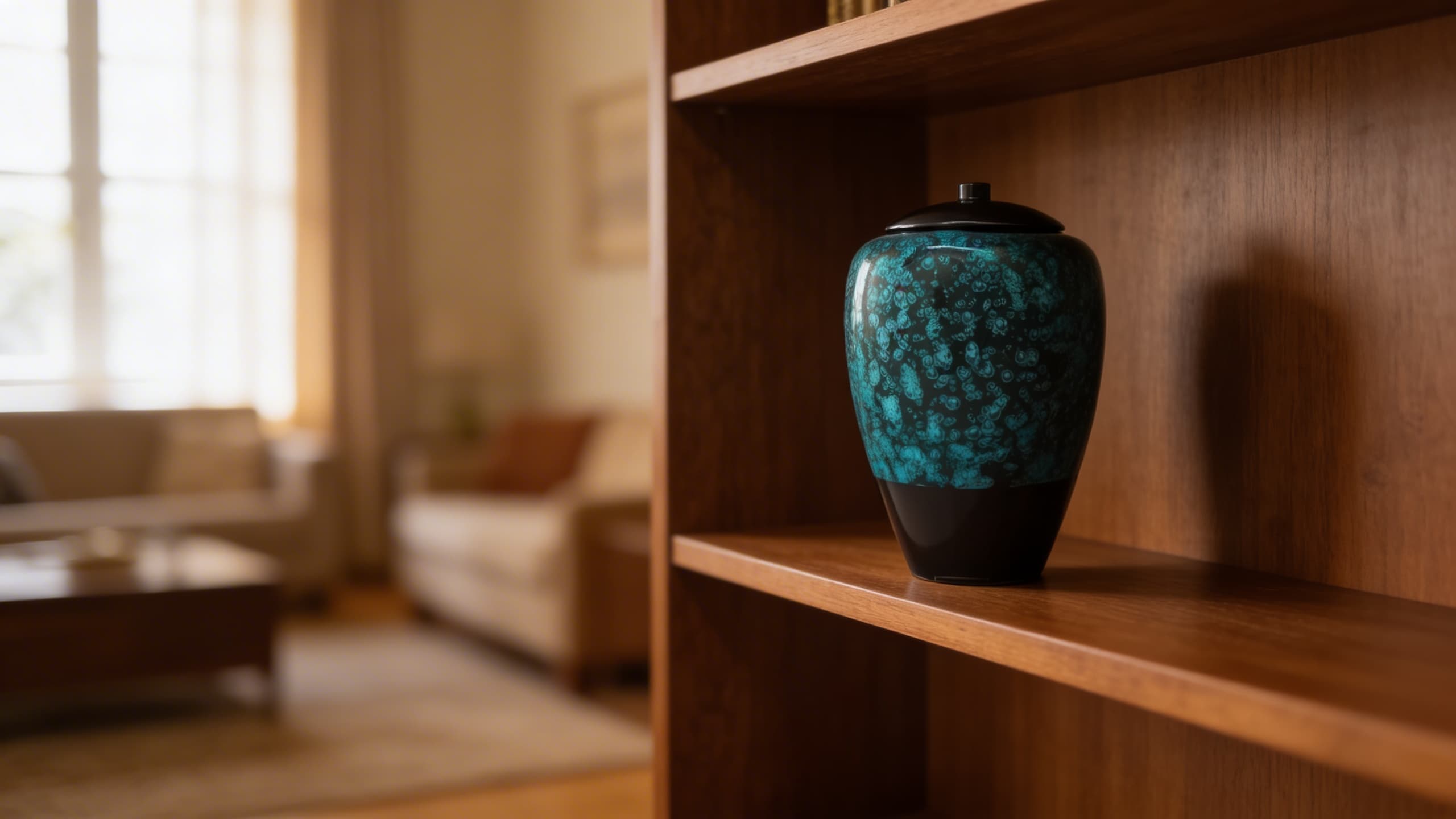
The living room is one of the most popular choices because it is a central, shared space. A fireplace mantle, built-in bookshelf, or dedicated memorial shelf provides a natural focal point. Placing the urn alongside a framed photo, a small plant, and a candle creates a warm vignette that integrates into the room's décor.
Family Room or Den
Many families prefer a den or family room because it tends to be more private than a formal living area. Guests may not spend much time here, which gives you the freedom to create a fuller memorial space with photos, mementos, and the urn without concern about visitors feeling uncomfortable.
Bedroom
Keeping the urn in the bedroom is common among surviving spouses and partners. A dresser top, nightstand, or dedicated shelf on the wall keeps your loved one near while you sleep. If your bedroom is a space you reserve for rest, be mindful of whether the urn's presence brings comfort or makes it harder to decompress—both reactions are normal, and you can always move the urn later.
Home Office
If you work from home, the office can be a meaningful spot. A bookcase, windowsill, or corner of a large desk allows you to feel connected throughout the workday.
Dedicated Memorial Space
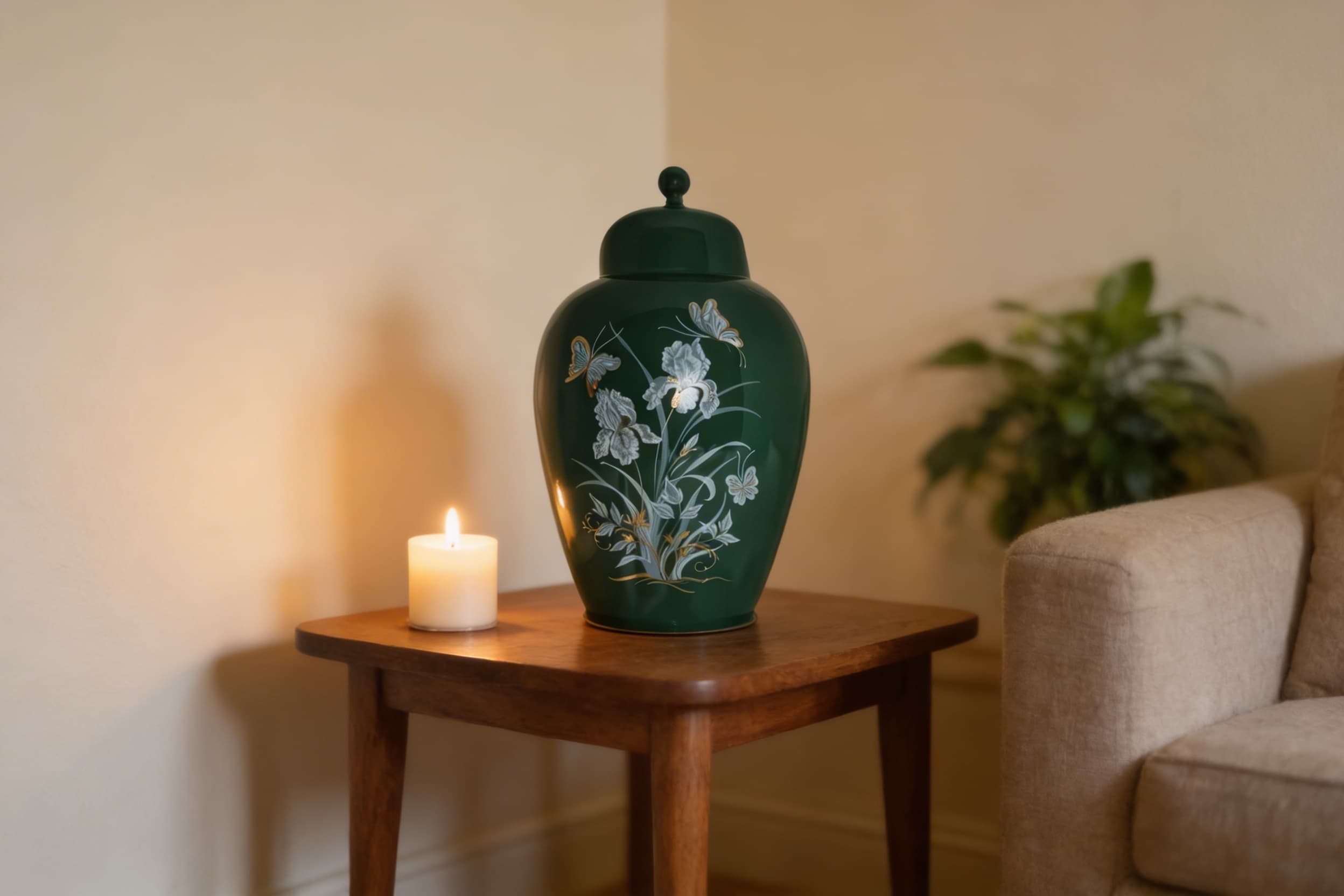
Some families create a dedicated memorial area—a small table, corner alcove, or wall-mounted shelf set apart specifically for remembrance. This approach works especially well when you want to surround the urn with meaningful objects: framed photographs, a guest book, a small arrangement of fresh or silk flowers, favorite books, or religious items.
An ancestor table—common in many Asian and Latin American cultures—is a purposeful variation of this idea. The table displays photos and mementos of deceased family members alongside the urn, creating a living tribute that evolves over time.
Feng Shui and Urn Placement
For families who follow feng shui principles, the placement of an urn carries energetic significance. An urn holds strong yin (stillness) energy, and feng shui practitioners recommend balancing that energy by choosing a location with natural light, fresh air, and living elements like a small plant.
General feng shui guidance for urn placement:
Homes facing north, south, west, or northwest — place the urn in a north or south room.
Homes facing northeast, southeast, southwest, or east — place the urn in a northeast or northwest room.
Regardless of compass direction, the urn should be displayed prominently and beautifully rather than hidden in a drawer, closet, or cupboard.
Rooms that feng shui practitioners generally recommend avoiding for urn placement include the bathroom, kitchen, and spaces near the main entrance—partly because of energy-flow concerns, and partly because these high-traffic areas increase the risk of the urn being bumped or knocked over.
Living rooms, dens, meditation spaces, libraries, and rooms with an altar or dedicated memorial area are considered favorable placements that honor both the deceased and the home's energy balance.
Creating a Memorial Display: Décor Ideas
The urn does not need to sit alone. Building a small display around it transforms a single object into a meaningful memorial space.
Photographs — A framed photo of your loved one placed next to the urn is the most common and effective addition. Some families use photo urns that hold a picture directly on the urn's surface, combining two elements into one.
Candles — A single candle (flameless if safety is a concern) adds warmth and a sense of ceremony. Candles have spiritual significance across many traditions and can make the space feel intentional rather than decorative.
Flowers and greenery — Fresh flowers, a small potted plant, or high-quality silk arrangements soften the display and bring life to the memorial area. A living plant also serves as a subtle symbol of continuation and growth.
Mementos — Objects that represent the person's interests and personality make the display feel personal. A favorite book, a military medal, a piece of jewelry, a recipe card, or a small artwork can all tell a story without words. If you want the urn itself to reflect your loved one's passions, hobby and themed urns are designed with specific interests in mind — from fishing and gardening to music and military service.
Shadow boxes — A wall-mounted shadow box near the urn can hold a collection of smaller items—ticket stubs, letters, pins, patches—organized in a way that captures a life in miniature.
Memorial plaques and engraved items — An engraved nameplate or small plaque with the person's name, dates, and a brief inscription adds a dignified, permanent element to the display. Many families also personalize the urn itself with urn engraving — names, dates, quotes, or symbols that make the piece truly one of a kind.
Keep the overall arrangement simple and uncluttered. The goal is a space that feels peaceful and intentional, not a shrine that overwhelms the room.
Safety: Children, Pets, and Urn Stability
Practical safety matters, especially in households with young children or active pets.
Height — Place the urn on a shelf or surface that is chest-height or higher for adults. This keeps it out of reach of toddlers and reduces the chance of it being knocked by a passing pet.
Stability — Choose a surface that does not wobble or shake when bumped. A non-slip liner or museum putty beneath the urn adds an extra layer of security, particularly on mantels and floating shelves.
Material considerations — Glass and ceramic urns are beautiful but breakable. If your household has young children or large dogs, a metal, stone, or wood urn may be more practical for open display. Alternatively, placing a glass urn inside a locked display cabinet provides both visibility and protection.
Conversations with children — If children ask about the urn, straightforward and age-appropriate language works best. Something as simple as "This holds the ashes of someone we love, and we keep it here to remember them" is honest without being overwhelming.
Urn Care and Maintenance
Wherever you display the urn, a few care practices will preserve its appearance over time.
Avoid direct sunlight — Prolonged UV exposure can fade painted finishes, discolor wood, and degrade certain adhesives. A spot with indirect or ambient light is ideal.
Control humidity — Moisture can damage wood, corrode metal, and encourage mold on certain materials. Avoid placing the urn in a bathroom, near a kitchen sink, or in an unfinished basement.
Dust regularly — A soft, dry cloth is sufficient for most urn materials. For marble or stone, a slightly damp cloth followed by a dry one prevents buildup. Avoid chemical cleaners unless the manufacturer specifically recommends them.
Secure the seal — Ensure the urn's lid or closure mechanism is properly sealed to prevent accidental spills. Some urns use threaded lids, others use screws, and some rely on friction fit. If the fit feels loose, a small amount of silicone adhesive can create a permanent seal.
Etiquette: Navigating Guests and Family Reactions
Displaying an urn at home is deeply personal, and reactions from family members and visitors may vary. A few etiquette considerations can help you navigate those moments with confidence.
You do not need to explain the urn to everyone. Many display-worthy urns blend naturally into a room's décor, and casual visitors may not realize what the object is. You are under no obligation to point it out or discuss it.
If someone asks, keep it simple. A brief response—"That holds my mother's ashes; we keep her here with us"—is perfectly sufficient. Most people will follow your emotional lead: if you are calm and matter-of-fact, they will be too.
Respect differing opinions within the family. Not every family member may feel comfortable with a prominently displayed urn. If this is the case, compromise is possible. Placing the urn in a semi-private room like a den or bedroom, or choosing a discreet urn style that does not immediately read as a memorial container, can balance differing preferences.
Visitors are not expected to interact with the urn. Guests should not touch, move, or open the urn unless specifically invited to do so. If you are hosting and want to set boundaries, a simple mention—"That's a personal memorial, and we appreciate you being respectful of it"—is enough.
Cultural and religious sensitivities exist. Some religious traditions discourage or prohibit keeping cremated remains in the home. If you are hosting family members from different faith backgrounds, being aware of their perspective—even if you do not share it—shows consideration.
When Display Is Not the Right Fit
Home display is not the only option, and it is perfectly acceptable to change your mind over time. Some families keep the urn at home for months or years and then choose a permanent placement in a cemetery columbarium, urn garden, or burial plot. Others scatter the ashes at a meaningful location and retain a small keepsake urn for the home.
The decision to display, store privately, or relocate the urn is yours to make on your own timeline. There is no deadline and no wrong answer.
Frequently Asked Questions
Is it OK to keep a cremation urn at home?
Yes. There are no laws in the United States prohibiting you from keeping cremated remains at home. The only consideration is religious: some faiths discourage or prohibit keeping ashes in the home. If your tradition supports it, keeping an urn at home is a meaningful and increasingly common choice.
Where is the best place to put an urn at home?
The best spot is one that feels both safe and meaningful to your family. Popular locations include a fireplace mantel, a bookshelf in the living room or den, a dedicated memorial table, or a bedroom dresser. Choose a stable, dry surface away from direct sunlight and high-traffic areas where the urn could be bumped.
Is it bad luck to keep ashes in your home?
No. There is no evidence that keeping cremated remains at home brings bad luck. Some families worry about this based on cultural superstitions, but most cultural and spiritual traditions view keeping ashes at home as a sign of love and respect. Our article on is it bad luck to keep ashes in the house explores these concerns in detail. Feng shui practitioners do recommend thoughtful placement to promote positive energy flow, but they do not advise against keeping ashes at home entirely.
How do I talk to children about an urn in the home?
Simple, honest language works best. You can say something like, "This is a special container that holds the ashes of someone we love. We keep it here because they are important to us and we want to remember them." Match the level of detail to the child's age, and let their questions guide how much you share.
Can I move the urn to a different spot later?
Absolutely. Many families experiment with placement before settling on a permanent spot. Some keep the urn in the bedroom immediately after a loss and later move it to a shared living area as their grief evolves. Others start with a home display and eventually choose a cemetery niche or scattering. There is no timeline or pressure to decide once and for all.
Choosing how and where to display a cremation urn at home is one of the most personal decisions a family makes after a loss. The right placement, the right urn, and a few thoughtful touches can create a memorial space that brings comfort every day. If you are looking for an urn designed to be displayed beautifully in your home, browse the full collection of cremation urns at Memorials.com—including styles in glass, ceramic, marble, wood, and hand-crafted art designs.