🏬Supersize Online Funeral Retailer🪦1000's of Headstones⚱️Over 10,000 Cremation Urns⚰️Caskets Overnight Delivery🛒Funeral & Memorial Superstore🚚FREE Shipping on ALL Orders👨👩👧👦Helping Families for over 20 Years💰Lowest Price Guarantee🏬Supersize Online Funeral Retailer🪦1000's of Headstones⚱️Over 10,000 Cremation Urns⚰️Caskets Overnight Delivery🛒Funeral & Memorial Superstore🚚FREE Shipping on ALL Orders👨👩👧👦Helping Families for over 20 Years💰Lowest Price Guarantee
🏬Supersize Online Funeral Retailer🪦1000's of Headstones⚱️Over 10,000 Cremation Urns⚰️Caskets Overnight Delivery🛒Funeral & Memorial Superstore🚚FREE Shipping on ALL Orders👨👩👧👦Helping Families for over 20 Years💰Lowest Price Guarantee🏬Supersize Online Funeral Retailer🪦1000's of Headstones⚱️Over 10,000 Cremation Urns⚰️Caskets Overnight Delivery🛒Funeral & Memorial Superstore🚚FREE Shipping on ALL Orders👨👩👧👦Helping Families for over 20 Years💰Lowest Price Guarantee
After a loved one's cremation, many families face a quiet but pressing question: is it bad luck to keep ashes in the house? The concern is more common than most people realize, and it often surfaces during an already overwhelming time of grief and decision-making.
The short answer is no — there is no universal rule, law, or spiritual verdict that says keeping cremated remains at home brings misfortune. The idea of "bad luck" around ashes tends to come from a blend of cultural traditions, religious teachings, and the natural unease people feel when confronting death. Understanding where these beliefs originate can help you make a decision rooted in clarity rather than fear.
This guide walks through the cultural and religious perspectives on keeping ashes at home, the practical and legal realities, and how to create a respectful home memorial that honors your loved one. If you’re also navigating how to select the right vessel, our guide on covers every factor to consider.
The association between cremation ashes and bad luck doesn't have a single origin. It draws from several overlapping sources that have shaped how people think about death, the afterlife, and the presence of human remains in a living space.
Superstition and fear of the unknown. Throughout human history, death has been surrounded by rituals designed to protect the living from perceived spiritual danger. Many superstitions — from covering mirrors after a death to avoiding the number thirteen — reflect a deep-seated desire to maintain boundaries between the living and the dead. Keeping ashes in the home can feel like it blurs that boundary, triggering unease even in people who don't consider themselves superstitious. Stopping the clock at the moment of death belongs to the same family of customs, and why households stopped their clocks explains what it was for. The wider collection of omens, symbols and mourning customs is in our guide to death symbols and traditions.
It is worth knowing that the opposite instinct is just as old. Victorian families wore the dead — hair woven into brooches, jet mourning rings, memento mori engraved with a date. The history of mourning jewelry is a century of people keeping remains closer than a shelf, which puts the modern unease in some perspective.
Feng Shui and energy beliefs. In traditional Chinese Feng Shui, cremation ashes are considered yin energy — energy associated with stillness, darkness, and death. Practitioners believe that placing yin-heavy objects in a yang-dominant living space can disrupt the home's energetic balance. This perspective has influenced many East Asian families to prefer placing ashes in a temple, columbarium, or dedicated ancestral shrine rather than keeping them in everyday living areas.
Early Christian doctrine. The early Christian church opposed cremation because it was associated with pagan practices and was seen as contradicting the belief in bodily resurrection. While modern Christianity broadly accepts cremation, the historical association between cremation and spiritual risk left a lasting cultural imprint that still influences some families today.
Filipino and South Asian traditions. In the Philippines, a blend of Catholic teaching and indigenous belief holds that keeping ashes at home can disturb the soul's peace. In many Hindu traditions, ashes must be immersed in a sacred river — typically the Ganges — to complete the soul's journey. Storing them at home is believed to tether the spirit to the earthly realm, preventing it from moving forward.
What Major Religions Say About Keeping Ashes at Home
Religious teachings are among the strongest influences on whether families feel comfortable keeping cremated remains in their home. Families seeking an urn that reflects their faith may also find our religious cremation urns guide helpful. Here is how the major faith traditions approach this question.
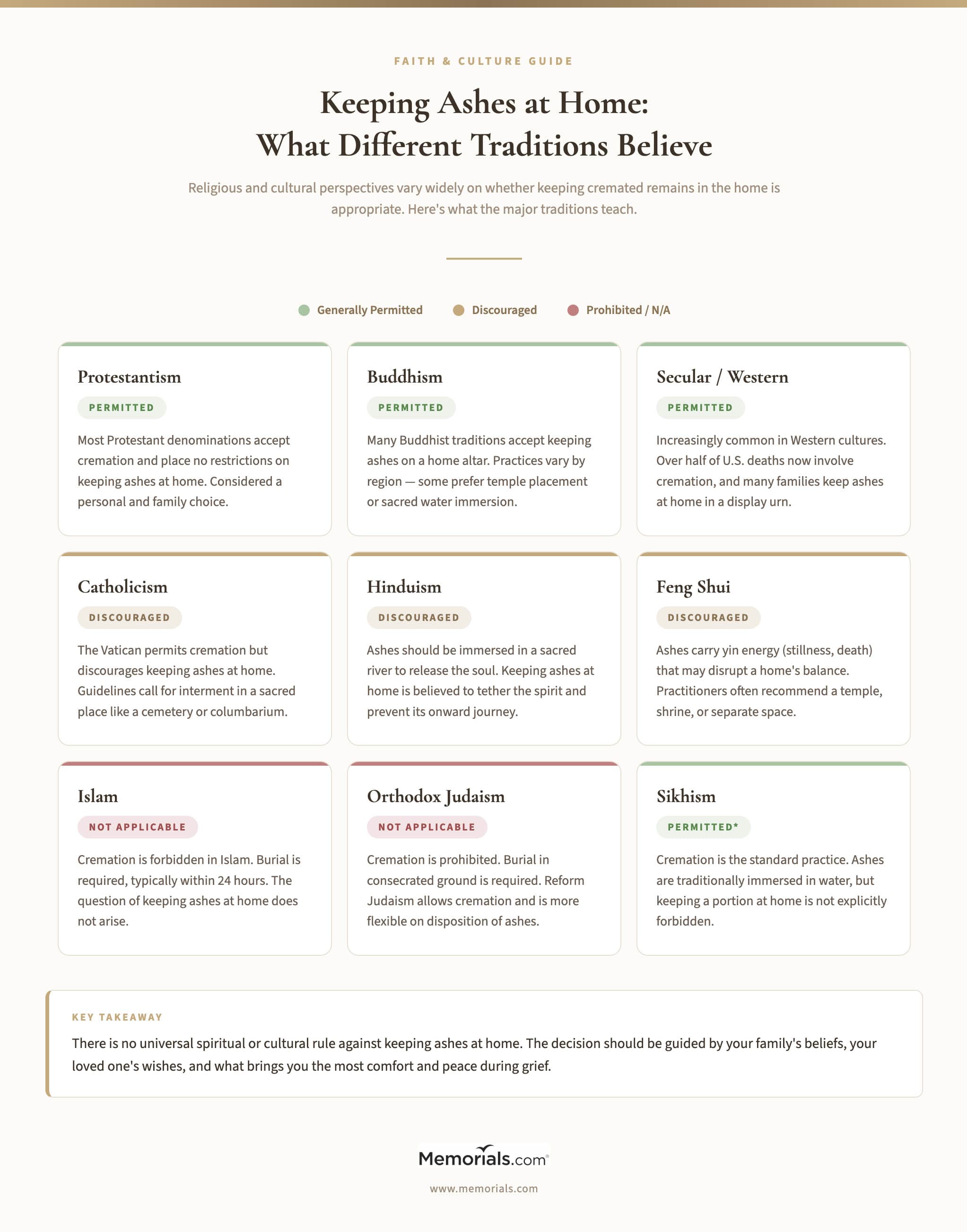
Catholicism. The Catholic Church permits cremation but maintains specific guidelines. The Vatican's 2016 instruction Ad Resurgendum cum Christo states that cremated remains should be interred in a sacred place such as a cemetery or columbarium. The Church discourages keeping ashes at home, scattering them, or dividing them among family members. For devout Catholic families, this guidance carries significant weight when deciding what to do with a loved one's remains.
Protestantism. Most Protestant denominations take a more flexible approach. Cremation is widely accepted, and there are no formal restrictions on keeping ashes at home. Many Protestant families choose to display an urn in their home as part of an ongoing memorial, and this is considered a matter of personal preference rather than doctrinal concern.
Hinduism. Hindu tradition strongly favors immersing cremation ashes in flowing water — ideally a sacred river — as part of the Asthi Visarjan ceremony. Keeping ashes at home is generally discouraged because it is believed to prevent the soul's onward journey. For Hindu families, fulfilling this ritual is an important part of honoring the deceased and supporting their spiritual transition.
Buddhism. Buddhist perspectives vary by tradition and region. In many Theravāda and Mahāyāna communities, keeping a portion of a loved one's ashes on a home altar is an accepted practice. Families may place the ashes alongside offerings, candles, and incense as a way to honor the deceased and maintain a spiritual connection. In Japanese Buddhist tradition, ashes are often kept in a family grave or temple niche.
Judaism. Orthodox Judaism prohibits cremation entirely, requiring burial. Conservative Judaism generally favors burial but some communities have become more accepting. Reform Judaism allows cremation and is open to varied practices regarding the disposition of ashes, including keeping them at home.
Islam. Islamic tradition forbids cremation. Burial is required, typically within 24 hours of death. Because cremation itself is not permitted, the question of keeping ashes at home does not arise in observant Muslim families.
Is It OK to Keep Ashes at Home? The Legal and Practical Reality
From a legal standpoint, keeping cremated remains at home is completely permitted throughout the United States. There are no federal or state laws that prohibit families from storing ashes in their residence. Licensed crematories ensure that remains are handled safely and in accordance with all applicable regulations before they are returned to the family.
Cremated remains are also sterile and stable. The cremation process uses temperatures exceeding 1,800°F, which eliminates all bacteria and organic material. What remains is calcium phosphate and mineral fragments — essentially powdered bone. These remains will not decompose, emit odors, or pose any health risk. You can keep them indefinitely without concern.
From a practical standpoint, millions of American families already keep ashes at home. According to the Cremation Association of North America, over half of all deaths in the United States now result in cremation, and a significant portion of those families choose to keep the remains in their home rather than interring them in a cemetery.
The real considerations are emotional and relational, not legal or safety-related. If multiple family members have different feelings about where the ashes should be kept, those conversations deserve attention and respect.
The Emotional Benefits of Keeping Ashes at Home
For many families, keeping a loved one's ashes at home provides genuine comfort during the grieving process and beyond.
Continued connection. Having an urn in a familiar space can help family members feel that their loved one remains part of daily life. This sense of proximity can be especially meaningful in the early months of grief, when the loss feels most acute. For families who want that closeness without an urn in the living room, there is a guide to choosing a pendant for ashes — it holds a small portion and is the least visible option there is — which is often the answer when one person in the house feels differently about it from the rest.
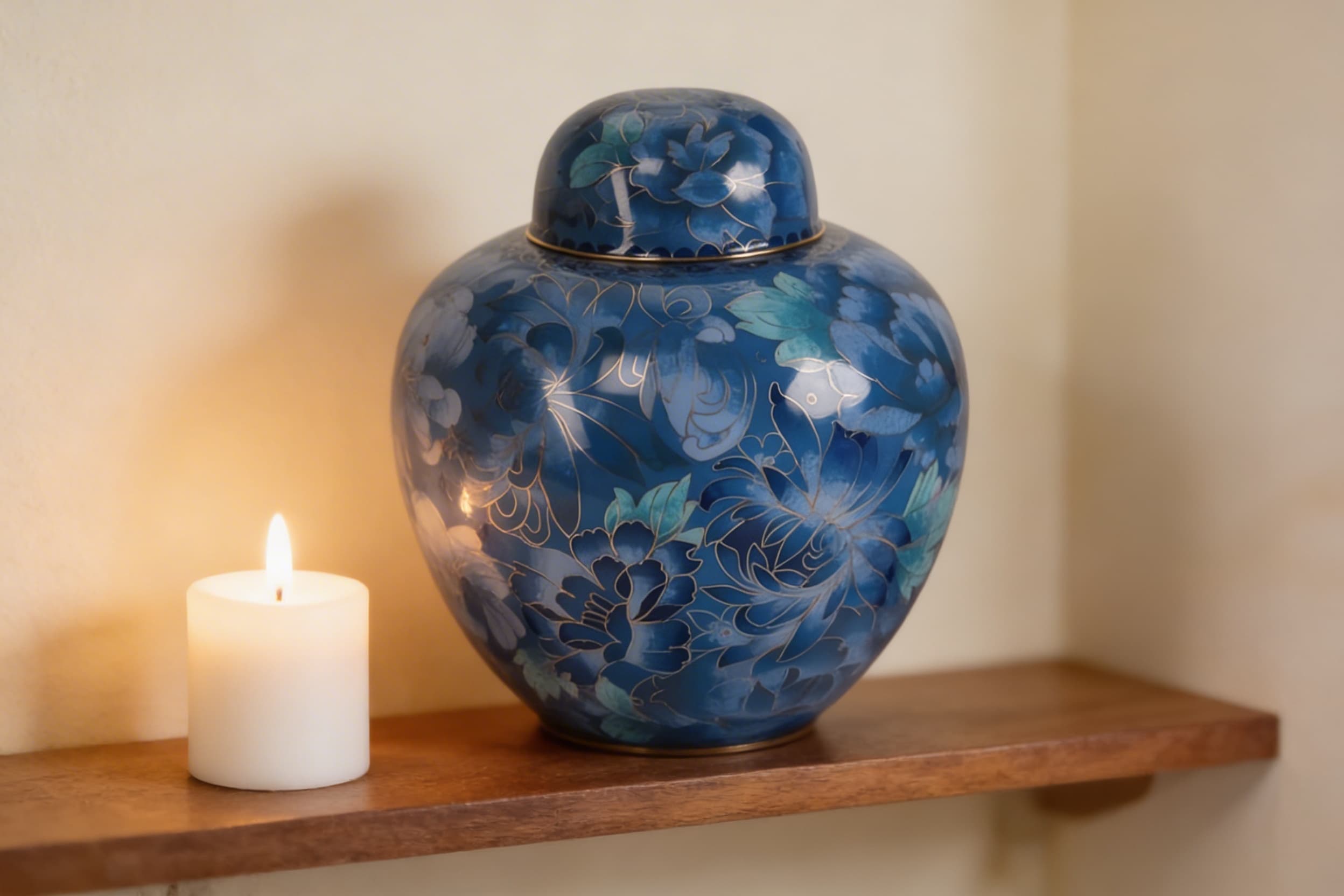
A focal point for remembrance. A well-chosen urn displayed alongside photographs, flowers, or meaningful objects creates a quiet space for reflection. Many families develop personal rituals around this space — lighting a candle on anniversaries, speaking to their loved one, or simply pausing during a busy day to remember.
Time to decide. Grief often makes major decisions feel impossible. Keeping ashes at home gives families the time and space to consider their options without pressure. Whether the eventual plan involves scattering, burial, or permanent home display, there is no deadline that requires immediate action. Our overview of what to do with ashes after cremation outlines every option available to families.
Honoring a loved one's wishes. Some people specifically request that their ashes remain with family rather than being interred in a cemetery. Keeping ashes at home can be a direct fulfillment of a loved one's final wishes, which itself provides a sense of peace and purpose.
How to Display an Urn at Home Respectfully
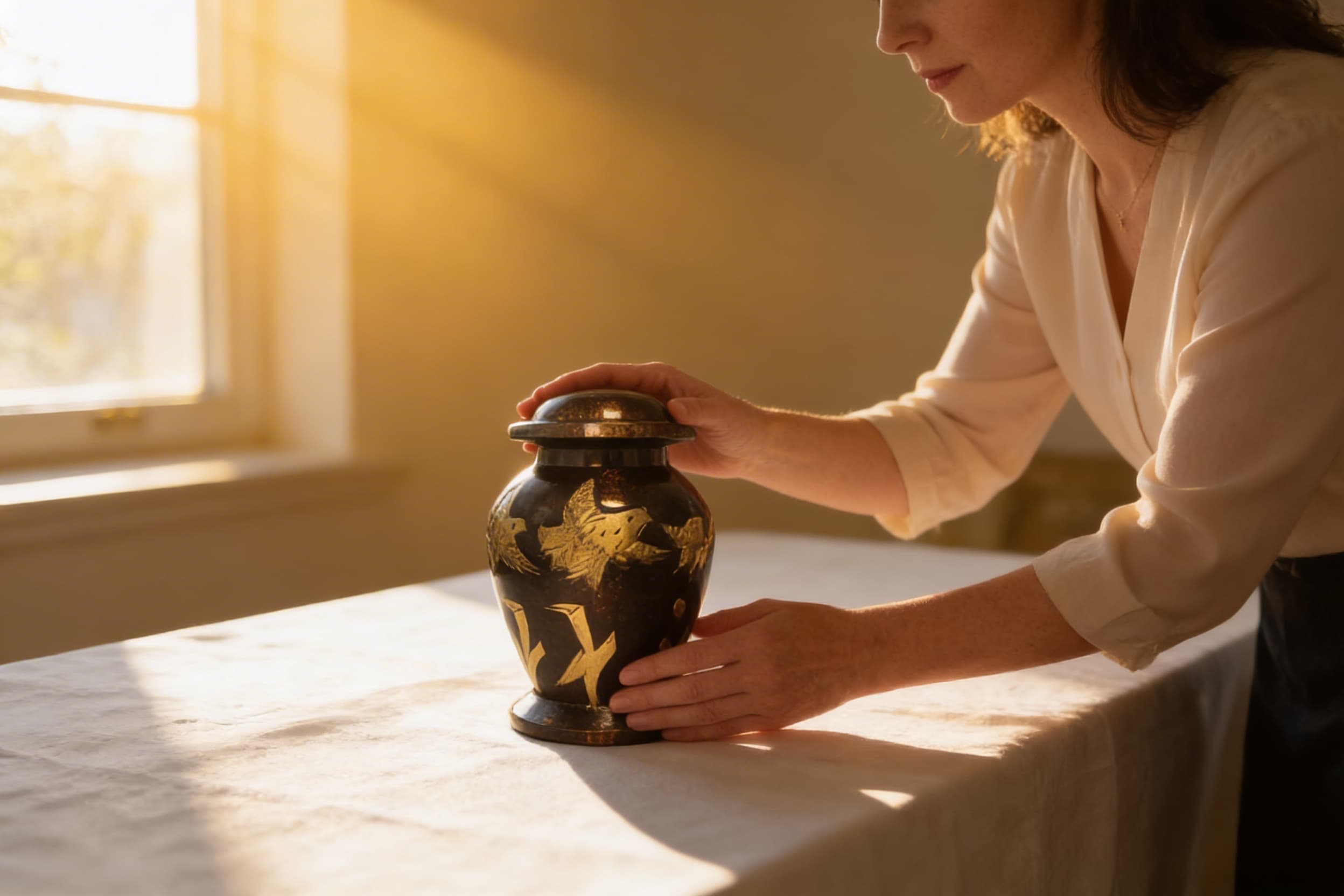
If you decide that keeping ashes at home is right for your family, thoughtful placement can make the experience feel meaningful and dignified. For a more in-depth look, our guide on how to display a cremation urn at home explores room-by-room ideas and etiquette. Here are practical guidelines for creating a home memorial.
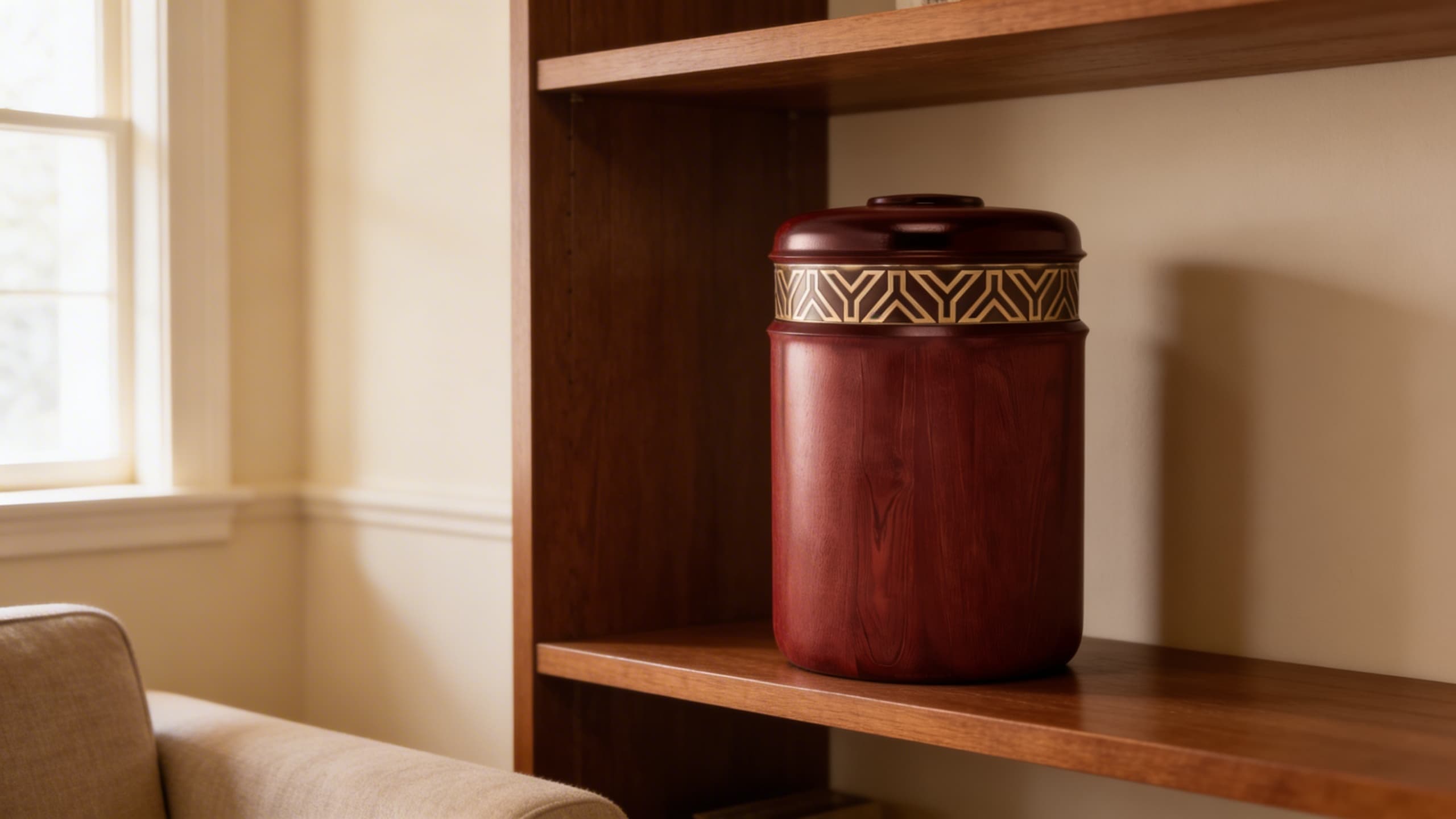
Choose a dedicated space. A mantelpiece, bookshelf, bedroom dresser, or dedicated memorial shelf all work well. The space should feel intentional — a place you naturally gravitate toward, not a forgotten corner. Some families create a small memorial area with the urn as a centerpiece, surrounded by photographs, candles, and personal keepsakes.
Prioritize stability and safety. Place the urn somewhere elevated and stable, out of reach of young children and pets. Avoid high-traffic areas where the urn could be accidentally knocked over. If you have an active household, consider a metal or wooden urn with a secure lid rather than a delicate ceramic or glass piece.
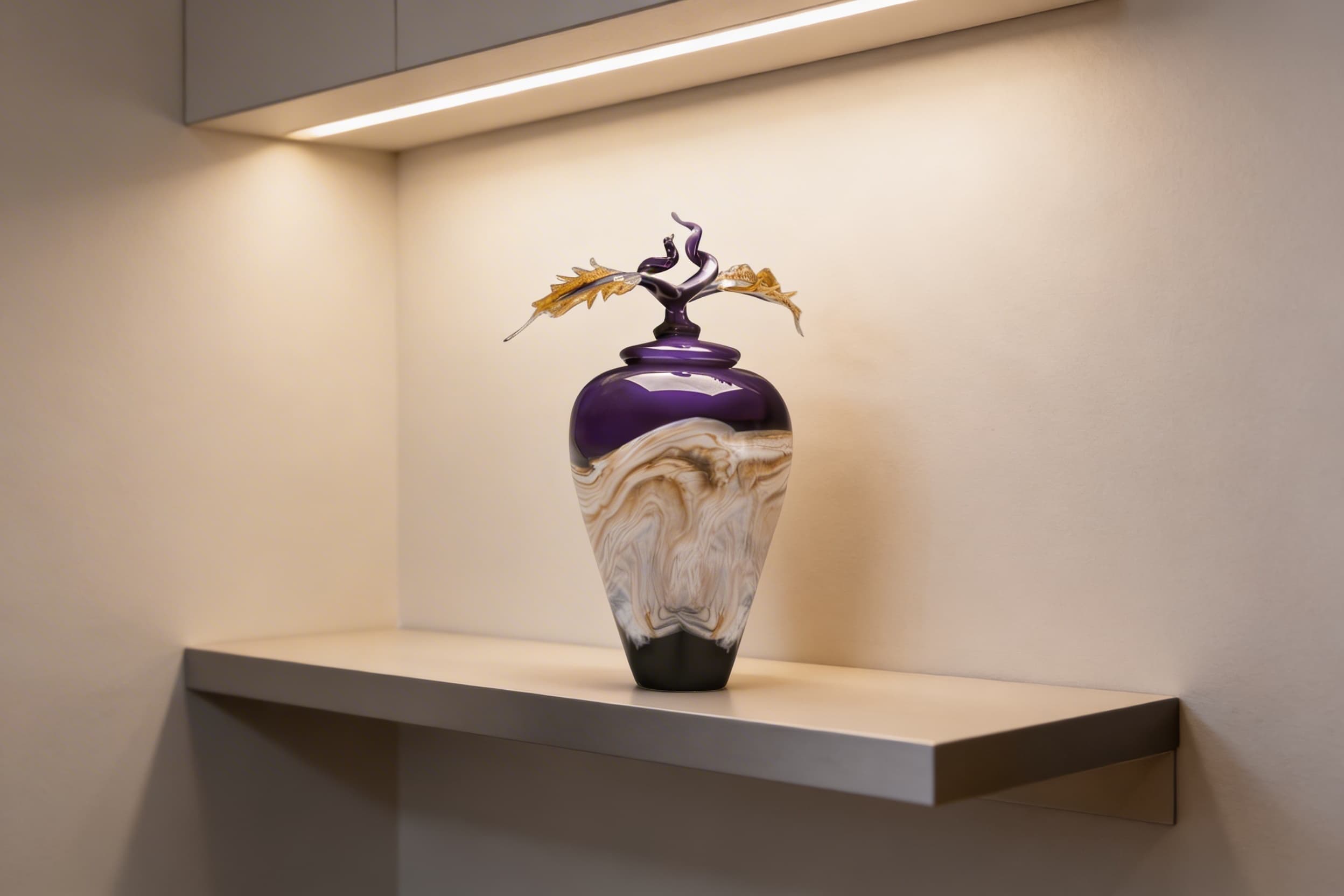
Match the urn to your home and your loved one. The urn itself is an important part of the memorial. A beautiful urn can serve as both a dignified vessel for remains and a meaningful piece of decor that reflects your loved one's personality or your family's aesthetic. Cremation urns come in a wide range of materials and styles — from hand-carved wood urns to polished marble urns, sculptural art urns, and one-of-a-kind unique urns that double as conversation pieces.
Consider keepsake options for multiple family members. If several family members want to keep a portion of the ashes — a practice covered in our guide on separating cremated ashes — keepsake urns offer a smaller vessel designed to hold a portion of cremated remains. Cremation jewelry — including necklaces for ashes — provides another way to carry a loved one's memory close without requiring a full-sized urn.
Maintain the space. Dust the urn and surrounding area regularly. Refresh flowers or candles as needed. A well-maintained memorial space communicates ongoing care and respect, both to yourself and to anyone who visits your home.
Choosing the Right Urn for Display at Home
Selecting an urn for home display is a personal decision that balances aesthetics, material durability, and emotional significance. The urn you choose becomes a lasting tribute — something you'll see and interact with every day.
Material matters.Ceramic urns offer warmth and artistry, with hand-painted designs that can reflect your loved one's personality. Bronze urns provide a timeless, substantial feel and excellent durability. Wood urns bring natural warmth to a space and pair well with traditional home decor. Marble urns convey quiet elegance and permanence.
Style and personality. An urn doesn't have to look like a traditional urn. Art urns and unique urns are designed specifically for display, blending seamlessly into living spaces as decorative objects that also carry deep personal meaning. Some families choose urns that reflect a loved one's interests — nature themes, artistic designs, or handcrafted pieces that feel as individual as the person they honor.
Size considerations. A standard adult cremation urn holds approximately 200 cubic inches, which accommodates the remains of most adults. If you plan to display the urn on a shelf or mantel, measure the space first to ensure a good fit. Companion urns are available for couples who wish to be memorialized together.
The right urn transforms the experience of keeping ashes at home from a source of uncertainty into a daily source of comfort and connection.
Frequently Asked Questions
Is there energy in cremated ashes?
This depends on your belief system. From a scientific standpoint, cremated remains are inert calcium phosphate and mineral fragments with no measurable energy. From a spiritual perspective, many traditions — including Feng Shui, Hinduism, and various psychic practices — hold that the energy or essence of the deceased can remain connected to their physical remains. Neither view is wrong; what matters is how you personally experience the presence of your loved one's ashes.
Can spirits follow their ashes?
Many spiritual traditions believe that a connection exists between the deceased and their physical remains. In Hindu belief, ashes must be immersed in water to release the soul. Some psychic and paranormal perspectives hold that spirits can remain attached to their ashes, especially if there is unresolved emotional energy. From a secular standpoint, there is no evidence of this. For families who feel uneasy, placing the urn in a respectful, dedicated space — rather than tucking it away in a closet — often resolves any discomfort.
Does the Catholic Church allow keeping ashes at home?
The Catholic Church officially discourages keeping ashes at home. The Vatican's guidelines call for cremated remains to be interred in a sacred place such as a cemetery or columbarium. Scattering ashes and dividing them among family members are also discouraged. That said, many Catholic families do keep ashes at home as a temporary or long-term choice, and individual parishes may offer varying levels of pastoral guidance on this matter.
How long can you keep cremation ashes at home?
Indefinitely. Cremated remains are sterile and chemically stable. They will not decompose, attract pests, or pose any health risk. There is no expiration date or legal time limit on keeping ashes in your home. Many families keep ashes for years or even decades before deciding on a final disposition, and that is perfectly acceptable.
Is it bad luck to open an urn?
No. Our dedicated guide on is it bad luck to open an urn covers this in detail, but the short answer is that opening an urn does not carry any inherent risk of bad luck. Families open urns for a variety of practical reasons — to transfer remains to a new vessel, to divide ashes among family members for keepsake urns or cremation jewelry, or to scatter a portion of the ashes. The remains themselves are safe to handle. If your belief system includes concerns about disturbing remains, you can approach the process with a brief prayer, moment of silence, or personal ritual that feels appropriate.