🏬Supersize Online Funeral Retailer🪦1000's of Headstones⚱️Over 10,000 Cremation Urns⚰️Caskets Overnight Delivery🛒Funeral & Memorial Superstore🚚FREE Shipping on ALL Orders👨👩👧👦Helping Families for over 20 Years💰Lowest Price Guarantee🏬Supersize Online Funeral Retailer🪦1000's of Headstones⚱️Over 10,000 Cremation Urns⚰️Caskets Overnight Delivery🛒Funeral & Memorial Superstore🚚FREE Shipping on ALL Orders👨👩👧👦Helping Families for over 20 Years💰Lowest Price Guarantee
🏬Supersize Online Funeral Retailer🪦1000's of Headstones⚱️Over 10,000 Cremation Urns⚰️Caskets Overnight Delivery🛒Funeral & Memorial Superstore🚚FREE Shipping on ALL Orders👨👩👧👦Helping Families for over 20 Years💰Lowest Price Guarantee🏬Supersize Online Funeral Retailer🪦1000's of Headstones⚱️Over 10,000 Cremation Urns⚰️Caskets Overnight Delivery🛒Funeral & Memorial Superstore🚚FREE Shipping on ALL Orders👨👩👧👦Helping Families for over 20 Years💰Lowest Price Guarantee
The Short Answer: No, Opening an Urn Does Not Bring Bad Luck
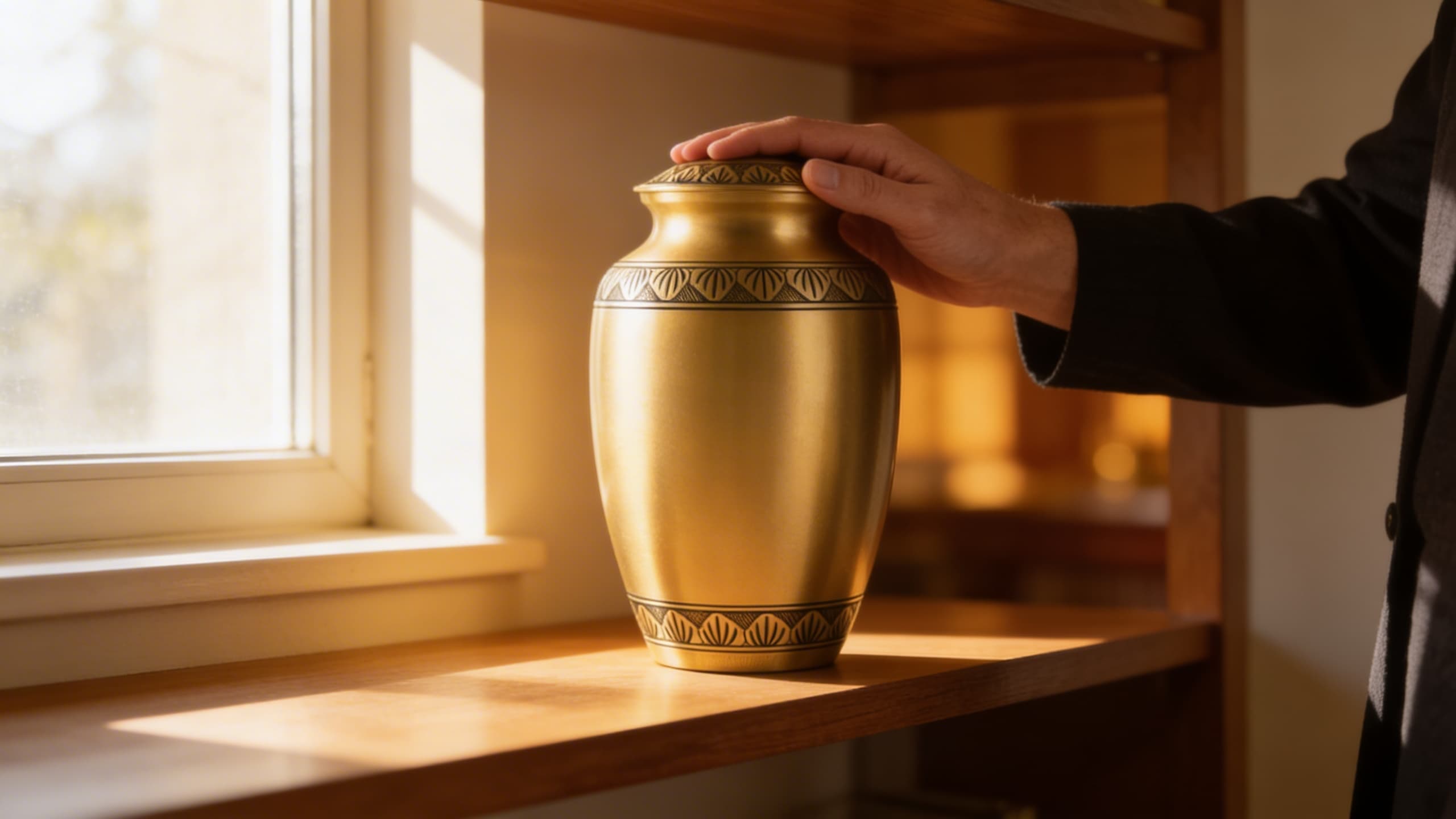
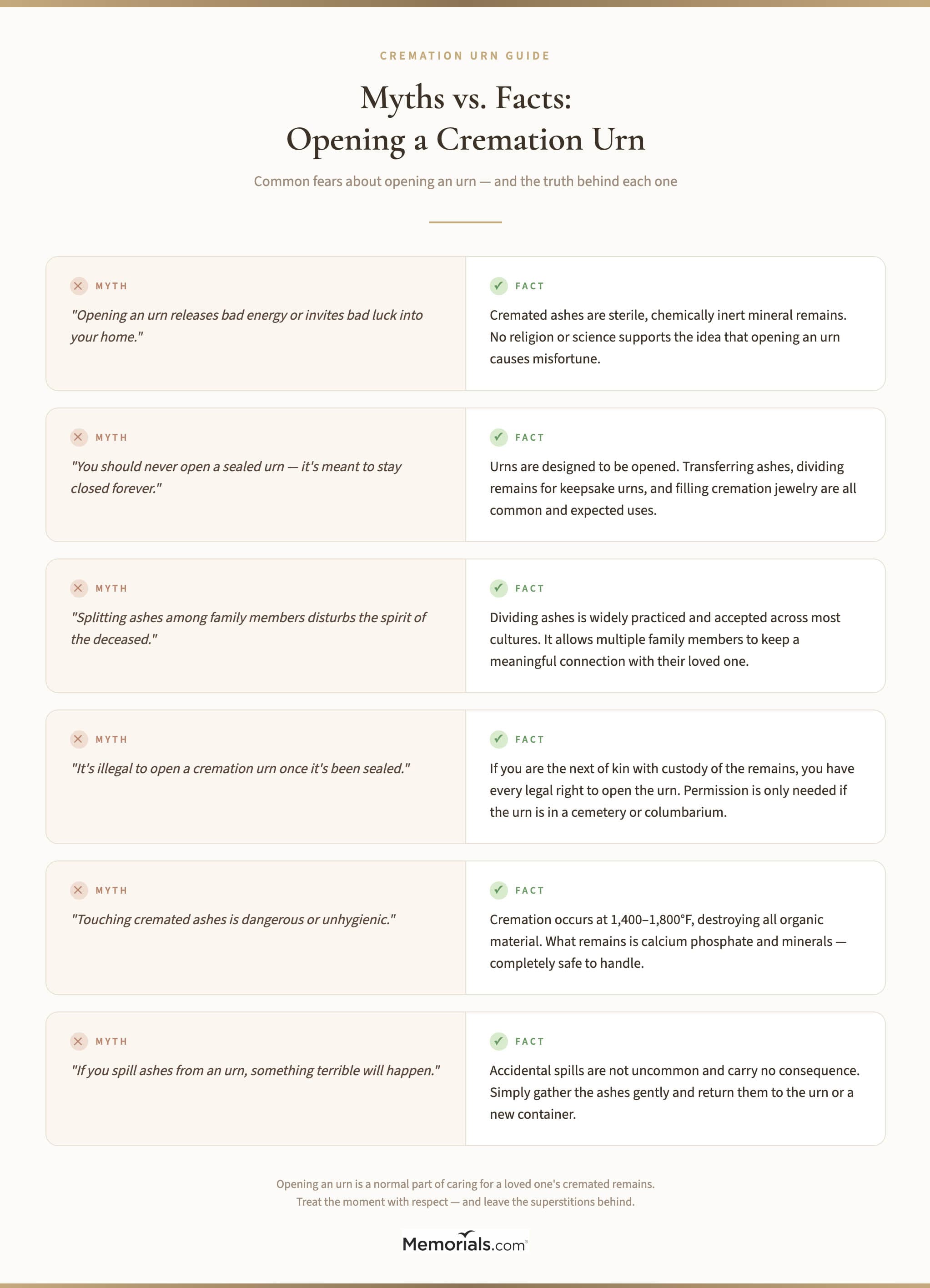
If you're wondering whether it's bad luck to open an urn, the straightforward answer is no. There is no factual basis — religious, cultural, or scientific — for the belief that opening a cremation urn causes misfortune. Cremated ashes are simply the mineral remains of a loved one's body after cremation. They carry no curse, no negative energy, and no supernatural consequence.
Families open cremation urns every day for practical and heartfelt reasons: transferring ashes into a permanent urn, dividing remains among siblings, filling keepsake urns or , and scattering ashes at a meaningful location. These are normal, respectful acts — not sources of bad luck.
The fear often comes from a much deeper place: grief, uncertainty, and the weight of handling someone's remains. Those feelings are valid, but they are not evidence that something harmful will happen. If you're navigating these decisions for the first time, our cremation urn buying guide walks through everything you need to consider.
Where Do Urn Superstitions Come From?
Understanding where these fears originate can help put them to rest. The "bad luck" myth around opening cremation urns draws from several sources, none of which support the idea that harm results from the act itself.
Cultural and Religious Traditions
Different cultures approach death and cremated remains in unique ways. In Hinduism, ashes are traditionally scattered in a sacred river to aid the soul's journey toward liberation. Keeping or handling ashes outside of prescribed rituals may feel spiritually uncomfortable within that tradition, but it is a matter of cultural practice — not universal law.
Some elements of Feng Shui describe ashes as "yin energy," which practitioners believe can affect the balance of a home if not placed thoughtfully. This guidance relates to placement and intentionality, not to opening or touching an urn.
In most Christian denominations, cremation is now widely accepted, and there are no prohibitions against opening an urn. The Catholic Church requests that cremated remains be kept in a sacred place rather than scattered, but opening the urn itself carries no spiritual penalty.
Pop Culture and Folklore
Movies and television have done their part in reinforcing fears about ashes. The infamous urn-spilling scene in Meet the Parents turned cremated remains into a punchline — and planted the idea that something terrible happens when ashes are disturbed. In Chocolat, an urn falling and breaking becomes a pivotal emotional moment. These fictional portrayals create associations between ashes and chaos or misfortune, but they are stories, not reality.
Broader funeral superstitions — covering mirrors after a death, not counting cars in a procession, stopping clocks — predate modern cremation entirely. Many of these beliefs evolved during eras when burial was the only accepted practice, and they do not translate directly to cremation urns.
The Fear of the Unknown
Grief amplifies anxiety. When you are mourning someone, every decision about their remains feels enormous. The question "is it bad luck to open an urn?" often masks a deeper worry: "Am I doing right by the person I lost?" That concern is a sign of love, not a sign that something bad will happen.
Cremated remains are bone fragments reduced to fine particles through intense heat. They are sterile, stable, and chemically inert. There is nothing hazardous about them and nothing within them that can cause harm to a living person.
Common Reasons People Open a Cremation Urn
Opening an urn is far more common than most people realize. Here are the most frequent reasons families do it.
Transferring Ashes to a Permanent Urn
The container you receive from the funeral home or crematorium is usually a temporary urn — a basic plastic or cardboard box. Most families transfer the remains into a permanent urn that better honors their loved one. This requires opening the temporary container, removing the sealed plastic bag inside, and placing it into the new urn. Some urns require pouring the ashes directly.
Dividing Ashes Among Family Members
Splitting cremated ashes so that multiple family members can each keep a portion is a widely practiced and perfectly acceptable choice. You might open the urn to fill several smaller keepsake urns for siblings, children, or close friends. If you have concerns about whether dividing ashes is appropriate, our guide on whether it's wrong to separate cremated ashes addresses this topic in depth.
Filling Keepsake Urns or Cremation Jewelry
Many families choose to place a small amount of ashes into a cremation necklace, bracelet, or miniature keepsake urn. This allows them to carry a physical connection with them while the primary urn remains at home or in a columbarium. Opening the urn is a necessary step in this meaningful process. If you're weighing your options, our guide to keepsake urns vs full-size urns can help you decide what works best.
Scattering Ashes
Whether at sea, in a garden, at a favorite hiking trail, or from a mountaintop, scattering ashes is one of the most common reasons to open an urn. Families may scatter all of the remains or just a portion, keeping the rest in the urn.
Replacing a Damaged or Outdated Urn
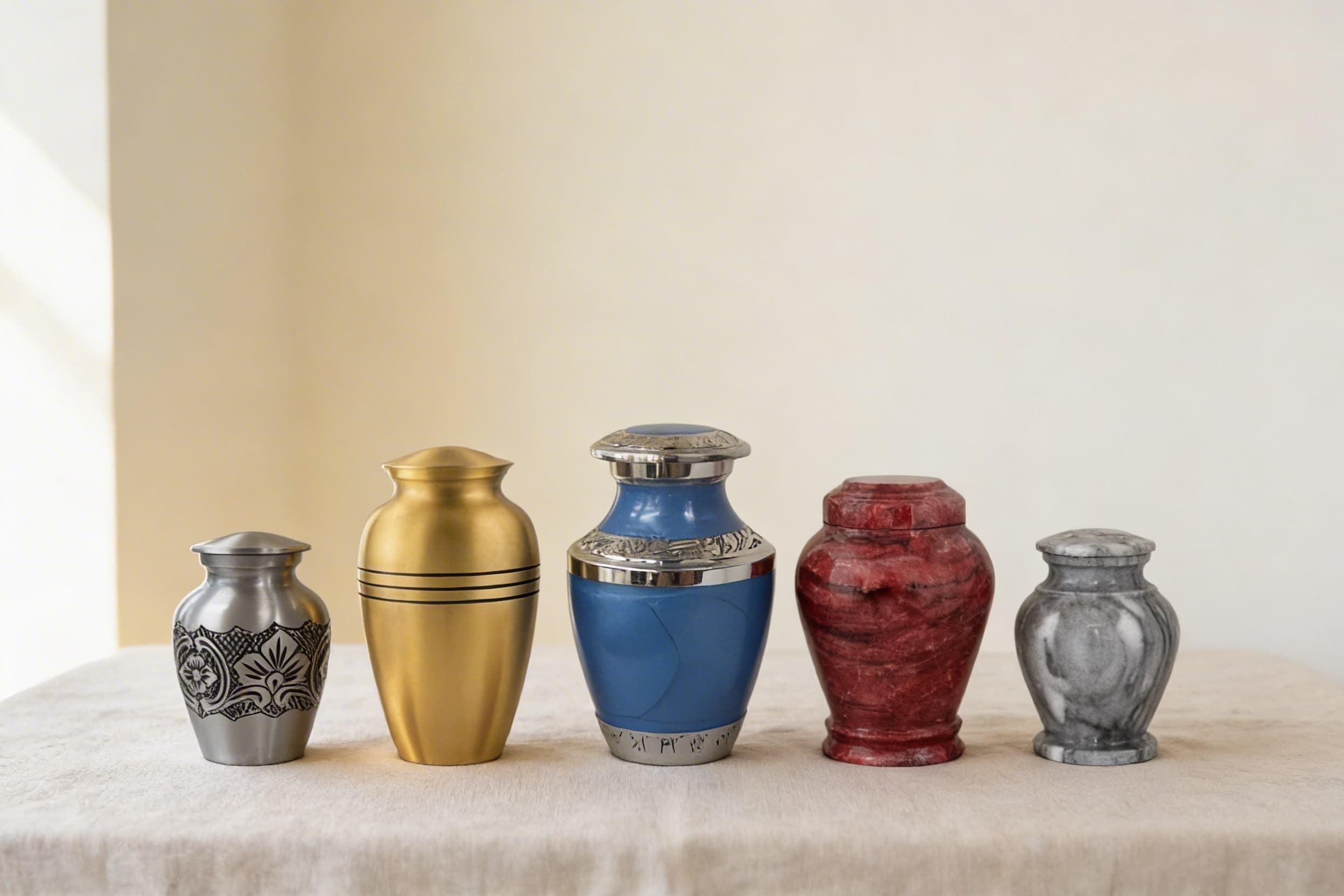
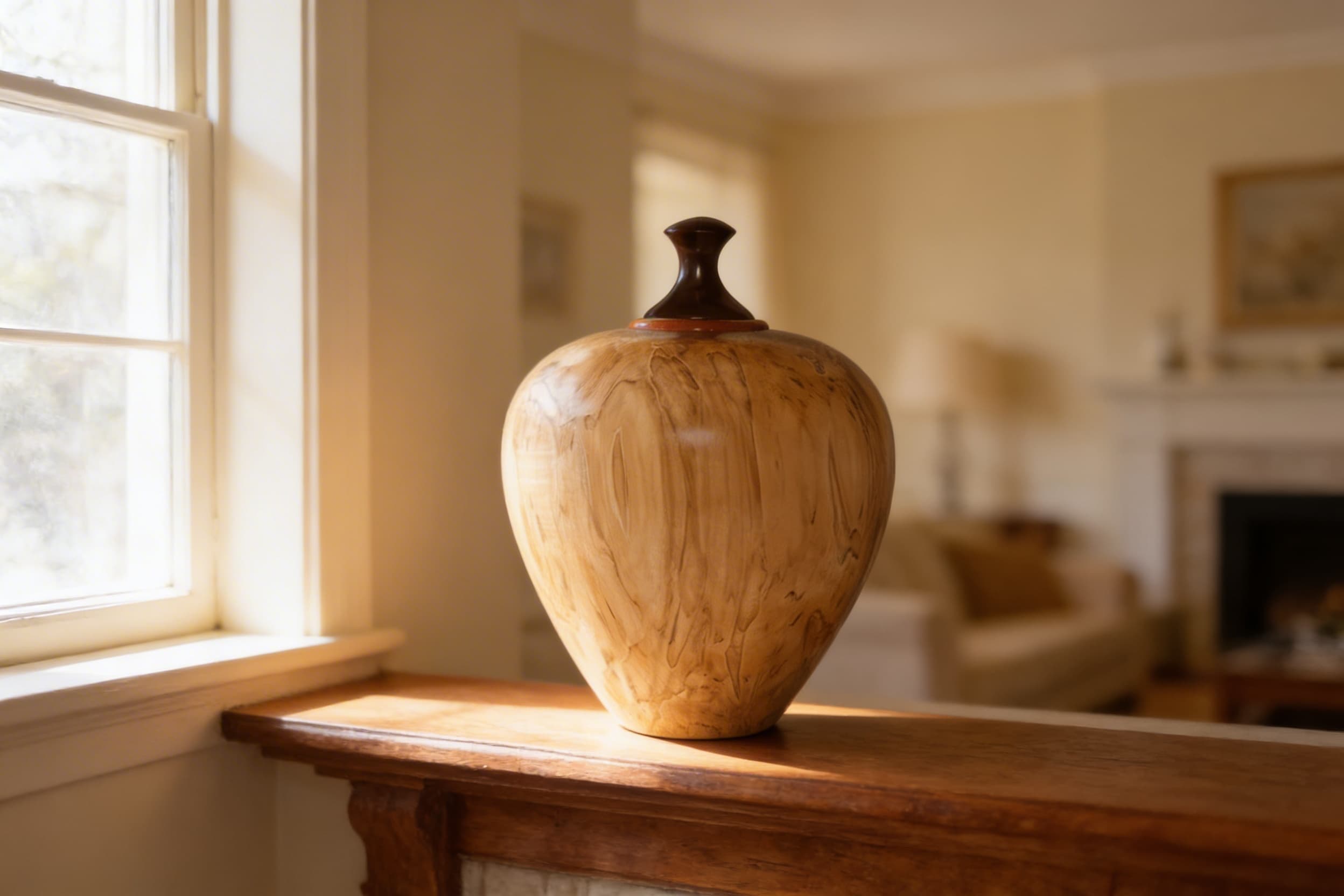
Urns can develop cracks, especially ceramic or glass pieces. A family's living situation may change — perhaps a breakable urn needs to be replaced with something more durable like a marble urn or a wood urn. Personalization errors, such as a misspelled name on an engraving, are another practical reason to transfer remains to a new urn.
Is It Disrespectful to Open an Urn?
Context determines whether opening an urn is respectful or not. The act of opening it is neutral — what matters is why you're doing it and how you handle the remains.
Respectful reasons include:
Transferring ashes to a permanent or replacement urn, dividing remains among family members, filling a keepsake or cremation jewelry piece, scattering ashes according to the person's wishes, and inspecting or cleaning the urn for maintenance.
Disrespectful reasons would include:
Opening the urn purely out of curiosity about what ashes look like, handling the remains against the known wishes of the deceased or their family, or treating the ashes carelessly.
The guiding principle is simple: if your reason honors the memory of the person who passed, opening the urn is appropriate. If you are fulfilling their wishes or preserving their legacy, you are acting with respect.
Is It Legal to Open a Cremation Urn?
Yes. If you are the next of kin or the person with legal custody of the cremated remains, you have every right to open the urn. Once the ashes have been transferred to you by the funeral home, they are in your care.
The one exception involves urns placed in a cemetery, columbarium, or memorial wall. In those settings, you may need written permission or documentation from the facility before removing or opening the urn. Individual cemeteries have their own policies, so it's worth checking before making plans.
This is general information, not legal advice. If you have specific concerns about custody of remains or any disputes, consulting a local attorney is recommended.
How to Open Different Types of Cremation Urns
The method for opening an urn depends on its material and closure mechanism. Here's a practical overview.
Metal Urns
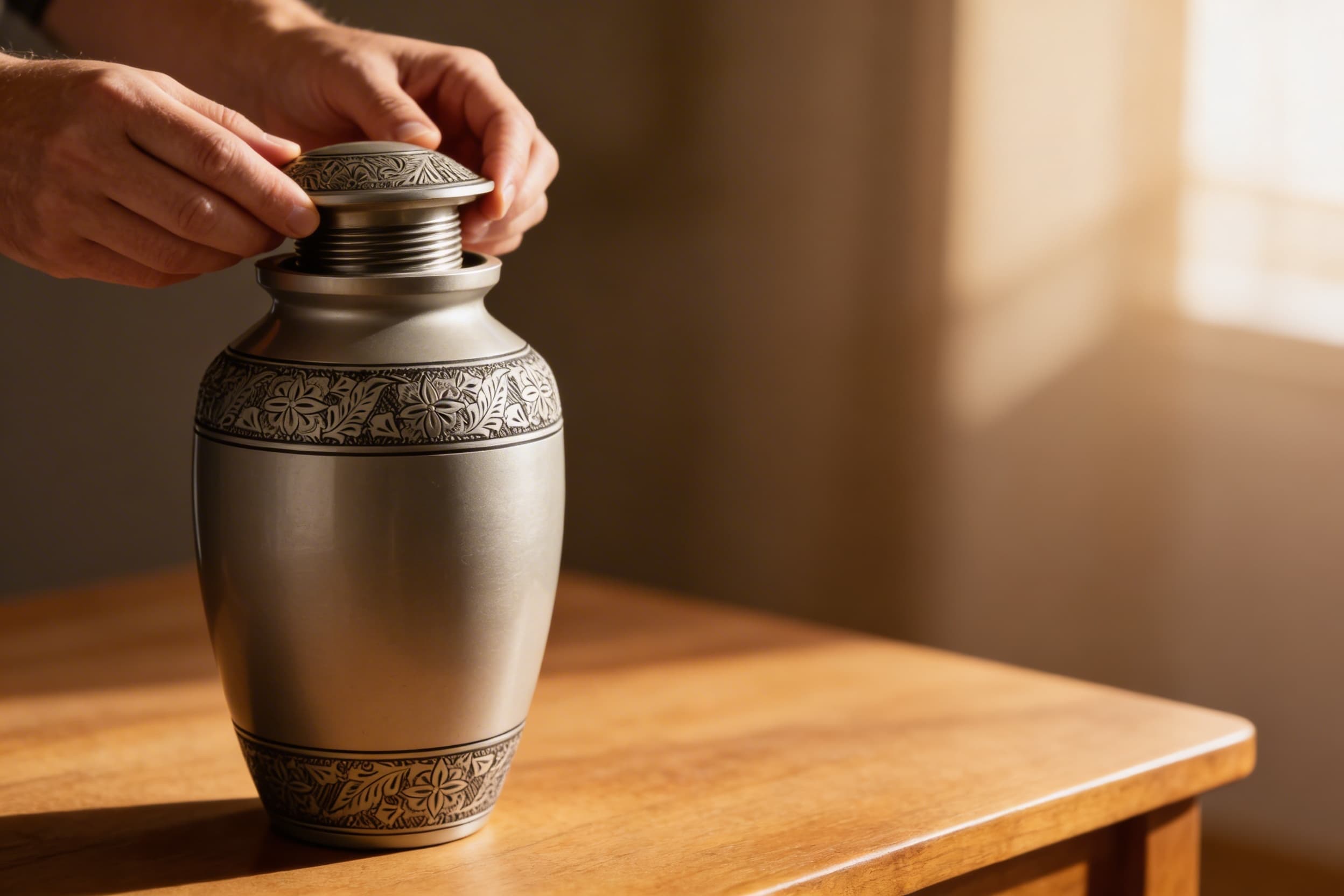
Most metal urns have a threaded lid on the top or a panel secured with screws on the bottom. For threaded lids, twist gently counterclockwise to remove. For bottom panels, use a standard Phillips-head screwdriver. Some metal urns are sealed with silicone epoxy or wax. Wiggle and twist the lid from side to side to loosen the adhesive. If it resists, running a thin knife blade carefully along the seal can help break it free.
Wood Urns
Wood urns typically have a bottom panel attached with screws. Turn the urn upside down on a soft surface, remove the screws, and the panel lifts away. The ashes inside are usually in a plastic bag.
Marble and Stone Urns
Marble urns and granite urns often have a bottom-opening stopper or gasket held in place by friction or adhesive. Turn the urn upside down on a padded surface and gently work the stopper free. Stone urns that have been glued shut may require professional help to avoid cracking the material.
Ceramic and Glass Urns
Ceramic urns and glass urns are the most fragile. Many have glued lids. Attempting to force them open risks shattering the urn. If the lid is glued, consider contacting the manufacturer or a crematorium for guidance. Heat from a hairdryer on a low setting can sometimes soften adhesive enough to allow gentle removal.
Tips for Opening an Urn Respectfully
Handling cremated remains is an emotional experience. A few simple steps can make it feel safer and more grounded.
Choose a quiet, private space. This is a personal moment. Give yourself permission to take your time. A clean table covered with a soft cloth provides a good working surface and catches any accidental spills.
Have someone with you. A trusted family member or friend can offer support — both emotional and practical. An extra pair of hands is helpful when transferring ashes.
Prepare your supplies in advance. If you're dividing ashes into keepsake urns, have them ready and open. If you're filling cremation jewelry, a small funnel and a spoon make the process easier. Disposable gloves are optional but some people feel more comfortable wearing them.
Know what to expect inside. Cremated ashes are not fine powder like fireplace ash. They are coarser, with a gritty texture and a gray-white color. The remains are typically sealed in a plastic bag inside the urn. You can learn more about what cremated remains look and feel like in our guide to human ashes.
Reseal the urn properly. After you've finished, secure the lid, stopper, or panel back in place. If the original adhesive was broken, a small bead of clear silicone sealant around the closure will hold it firmly. Once resealed, you may want to think about where and how to display a cremation urn at home in a way that feels meaningful.
Frequently Asked Questions
Can you open an urn after it has been sealed?
Yes. Most sealed urns can be reopened. Metal urns with silicone or wax seals can be loosened by twisting the lid or using a thin blade along the seal line. Stone urns with friction-fit stoppers can be gently worked free. Glued ceramic urns are the most challenging — a low-heat source or professional assistance may be needed.
Is it bad luck to keep ashes at home?
No. Millions of families keep cremated remains at home without any negative consequence. The belief that ashes bring bad luck is rooted in specific cultural traditions and pop culture references, not in any universal truth. For many people, having an urn at home provides comfort and a focal point for remembrance. Our companion article on whether is it bad luck to keep ashes in the house explores these superstitions in more detail.
What happens if you accidentally spill ashes from an urn?
Nothing harmful happens. Cremated remains are sterile and chemically inert. If ashes spill, gently sweep or scoop them back into the urn or a temporary container. There is no spiritual or physical risk associated with spilled ashes.
Do you need permission to open a cremation urn?
If the urn is in your possession as the next of kin, no permission is needed. If the urn has been placed in a cemetery, columbarium, or memorial niche, you will likely need authorization from the facility before accessing it.
Can you open an urn to put ashes into cremation jewelry?
Absolutely. This is one of the most common reasons people open urns. Cremation necklaces, rings, and bracelets hold a tiny amount of ashes, and the process simply involves opening the urn, taking a small pinch of remains, and filling the jewelry piece with a funnel or small scoop.
Honoring Your Loved One With Confidence
Opening a cremation urn is a normal, practical part of caring for someone's remains after cremation. There is no bad luck attached to it. There is no spiritual penalty. There is no law against it when you are the rightful custodian of the ashes.
What there is — often — is love. The desire to divide remains so every sibling can keep a portion. The wish to fill a keepsake urn that sits beside a favorite photograph. The plan to scatter ashes at a place that meant everything to the person who passed.
If you are looking for a permanent urn to transfer ashes into, or keepsake urns to share among family members, explore our full collection at Memorials.com. Every urn is designed to hold your loved one's memory with dignity and grace.