🏬Supersize Online Funeral Retailer🪦1000's of Headstones⚱️Over 10,000 Cremation Urns⚰️Caskets Overnight Delivery🛒Funeral & Memorial Superstore🚚FREE Shipping on ALL Orders👨👩👧👦Helping Families for over 20 Years💰Lowest Price Guarantee🏬Supersize Online Funeral Retailer🪦1000's of Headstones⚱️Over 10,000 Cremation Urns⚰️Caskets Overnight Delivery🛒Funeral & Memorial Superstore🚚FREE Shipping on ALL Orders👨👩👧👦Helping Families for over 20 Years💰Lowest Price Guarantee
🏬Supersize Online Funeral Retailer🪦1000's of Headstones⚱️Over 10,000 Cremation Urns⚰️Caskets Overnight Delivery🛒Funeral & Memorial Superstore🚚FREE Shipping on ALL Orders👨👩👧👦Helping Families for over 20 Years💰Lowest Price Guarantee🏬Supersize Online Funeral Retailer🪦1000's of Headstones⚱️Over 10,000 Cremation Urns⚰️Caskets Overnight Delivery🛒Funeral & Memorial Superstore🚚FREE Shipping on ALL Orders👨👩👧👦Helping Families for over 20 Years💰Lowest Price Guarantee
Scattering cremated remains is one of the most personal ways to honor someone who has died. It is one of several meaningful paths families consider when deciding what to do with ashes after cremation. Whether you release ashes over open water, beneath a favorite tree, or from a mountaintop, the act carries deep symbolism — a return to nature, a final visit to a meaningful place, and a moment of letting go.
Yet most families have never scattered ashes before and have practical questions: Which method works best? What kind of container do you need? How do you avoid an awkward or disrespectful moment? If you're still in the process of deciding, our guide on how to choose a cremation urn covers every factor — including which type works best for scattering.
This guide covers the main ash scattering methods, the products designed to help (including scattering tubes and biodegradable urns), and the etiquette that makes the experience feel dignified for everyone present.
Five Methods for Scattering Ashes
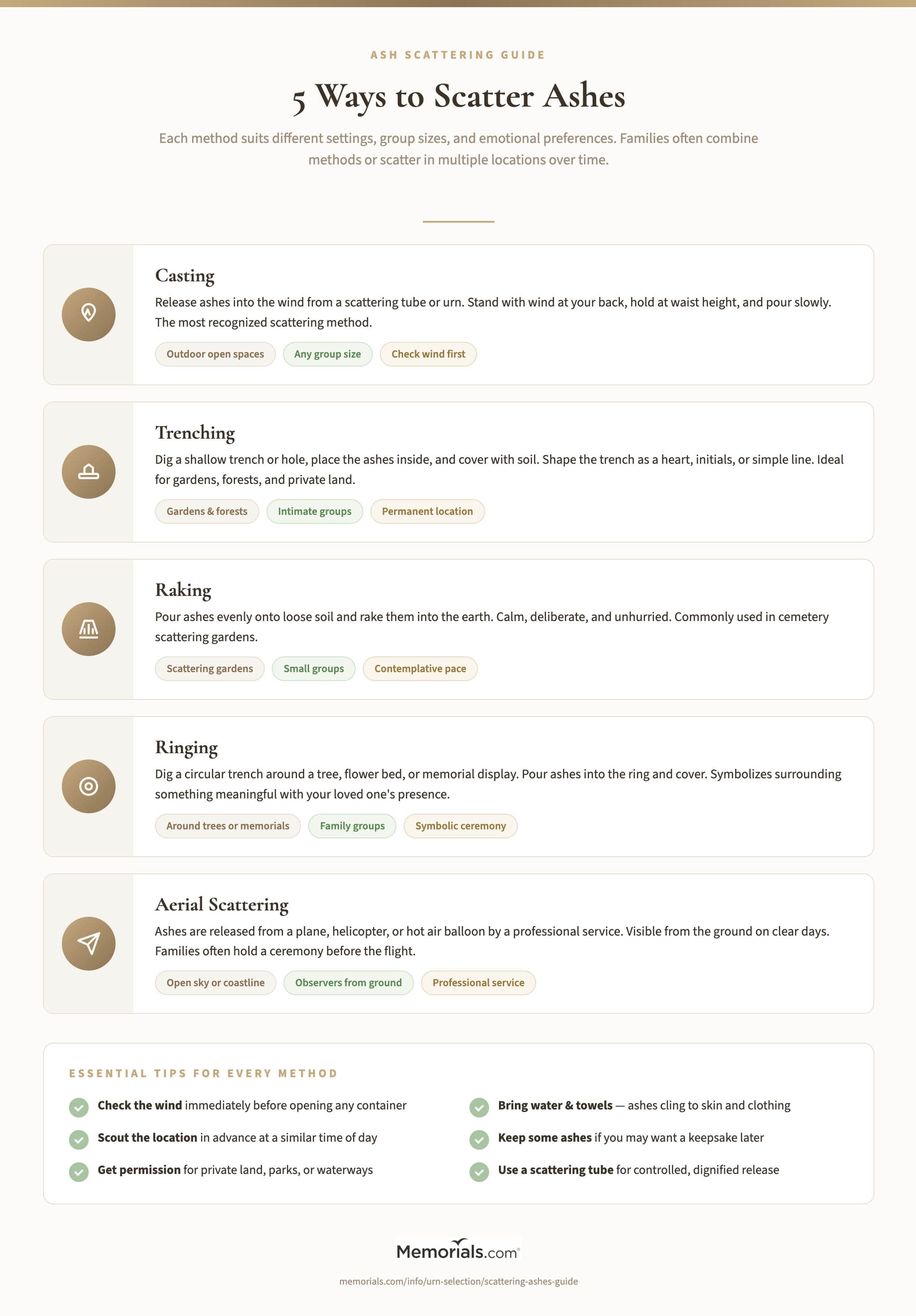
Each scattering method suits different settings, group sizes, and emotional preferences. Families sometimes combine two or more methods at the same ceremony, or scatter portions of the remains in multiple locations over time.
Casting
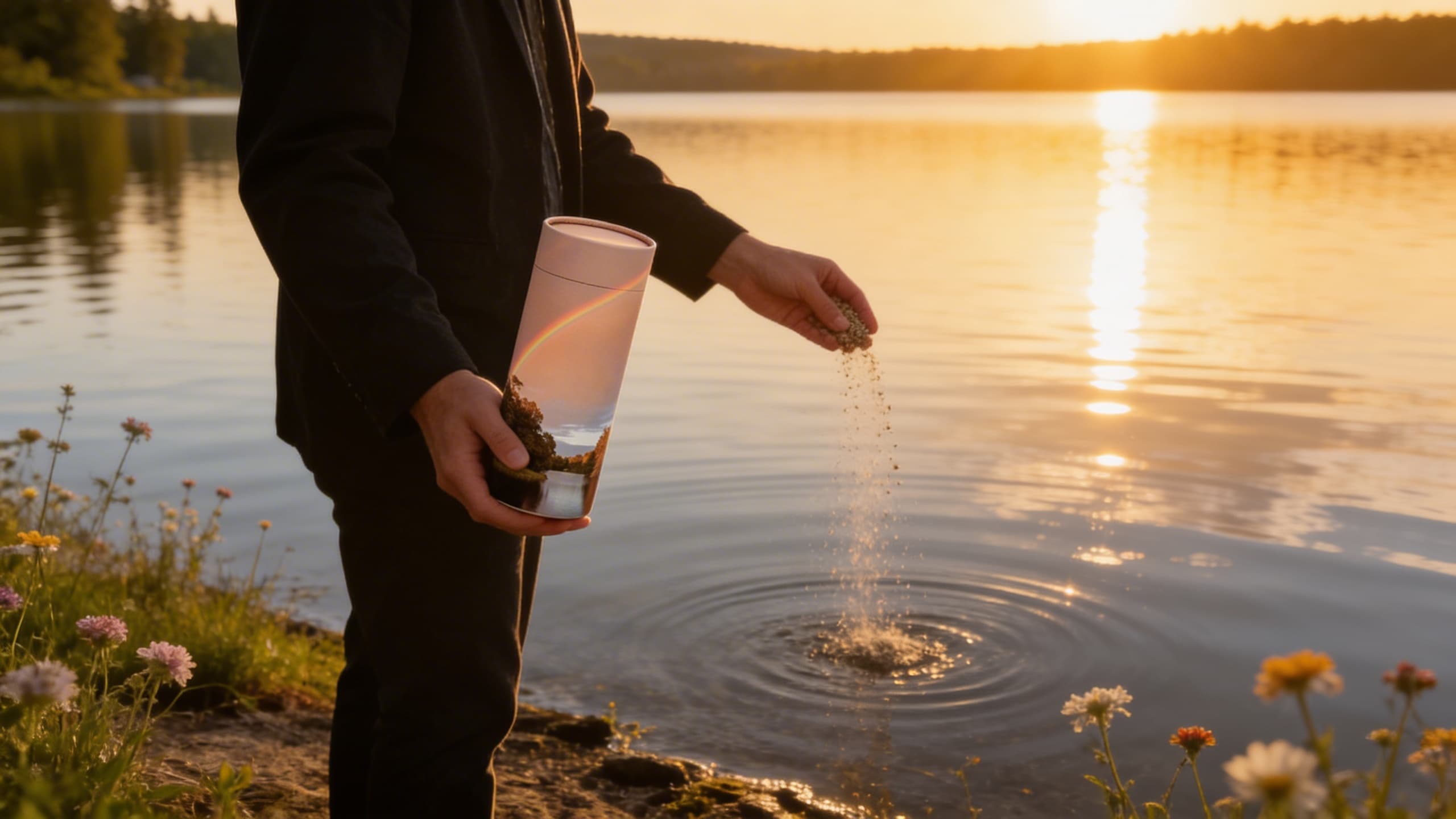
Casting is the most recognized form of ash scattering. One or more people release the cremated remains into the air, usually outdoors, allowing the ashes to disperse in the wind. The technique is straightforward: stand with the wind at your back, hold the container at waist height, and slowly pour.
A few things to know before casting:
Cremated remains are coarser than most people expect — closer to crushed stone than fireplace ash. A small portion is fine powder that becomes airborne easily.
Always check wind direction immediately before opening the container. Release downwind so ashes move away from attendees.
A scattering tube gives more control over the release rate than simply pouring from an urn or bag.
Some families create a communal version of this method — dividing the remains into small cups or individual scattering tubes so each person can release a portion while sharing a memory. This "toast" style casting is especially meaningful at larger gatherings.
Trenching
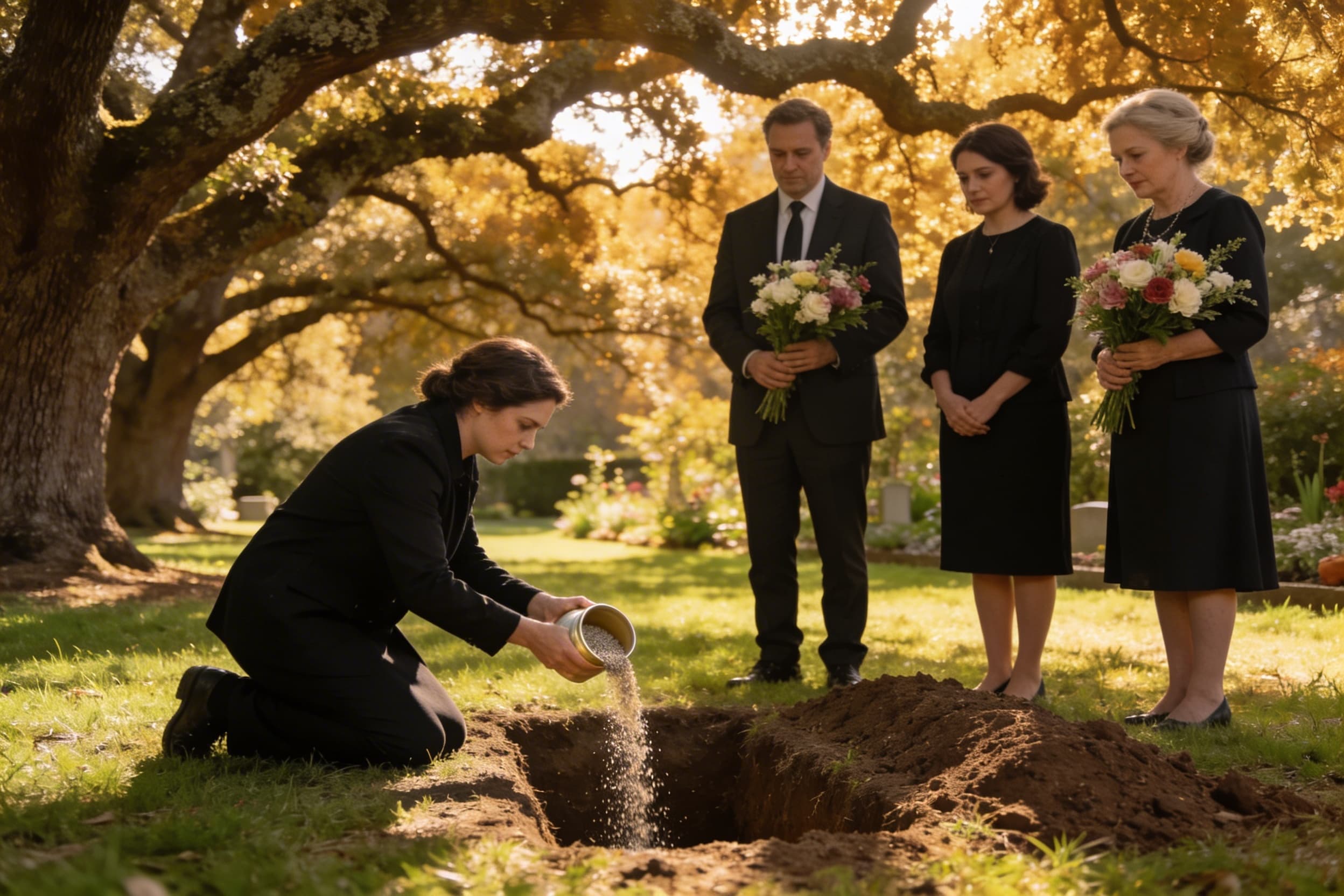
In a trenching ceremony, a shallow trench or hole is dug at the chosen location, and the ashes are placed inside. The trench is then covered with soil. This method works well in gardens, forests, or anywhere families want the remains to stay in a specific spot.
Trenching appeals to families who find comfort in knowing exactly where their loved one rests. Creative variations include digging the trench in the shape of a heart, spelling out initials, or placing the trench at the base of a tree the person loved.
Raking
Raking is simple and grounded. The ashes are poured evenly onto loose soil, and a garden rake is drawn through them to blend the remains into the earth. Scattering gardens at cemeteries commonly use this technique. It feels deliberate and unhurried, making it a good choice for families who want a calm, contemplative ceremony.
Ringing
A variation of trenching, a ringing ceremony involves digging a circular trench around a meaningful object — a newly planted tree, a favorite garden sculpture, or a collection of memorial candles and photographs. The ashes are poured into the ring, then covered. The visual symbolism of surrounding something living or beloved with the remains resonates with many families.
Aerial Scattering
For those drawn to a dramatic farewell, aerial scattering releases cremated remains from an aircraft — typically a small plane, helicopter, or even a hot air balloon. Private companies handle the logistics.
One trade-off: passengers are often not permitted on the scattering flight due to weight and safety regulations. Many families hold a ground-level ceremony — with readings, music, or shared memories — and then watch the plane release the ashes from below. On a clear day, the dispersal is visible from the ground.
Scattering Ashes Over Water
Water scattering is among the most requested methods, and it comes with its own logistics.
From a Boat
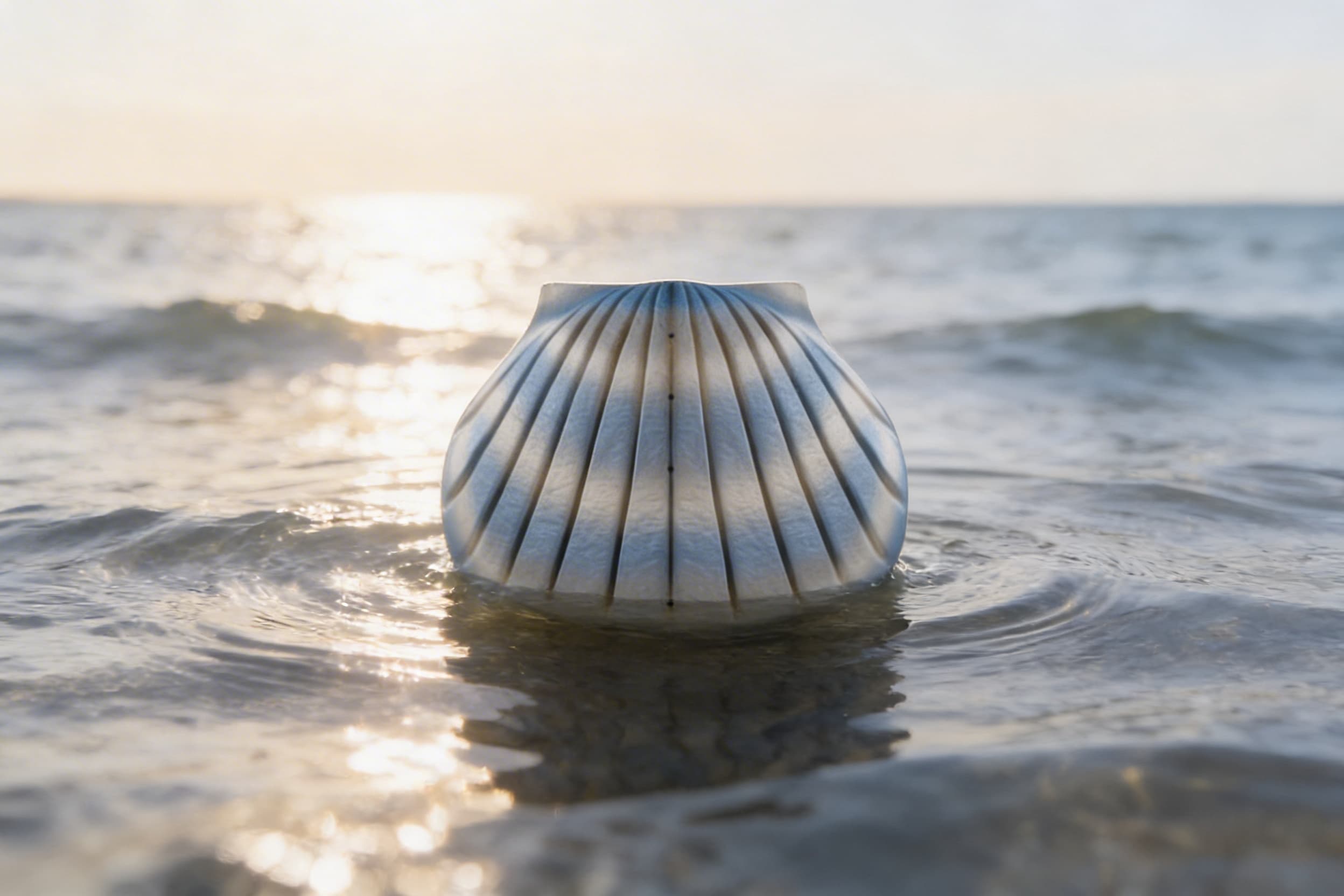
Charter companies in most coastal cities specialize in memorial ash scattering cruises. When scattering from a boat, ask the captain to point the bow into the wind and scatter off the stern. Keep one hand on the railing for stability, especially in waves. Using a biodegradable water urn — the kind that floats briefly before sinking — gives families a visible focal point and avoids wind-related difficulties.
From Shore
Standing on a dock, pier, or beach works when a boat is not practical. If scattering at the shoreline, time the release for an outgoing tide. Digging a shallow depression in the sand below the tide line and placing the ashes inside lets the incoming waves carry them out naturally — similar to watching the sea reclaim a sandcastle.
Tossing flowers or rose petals alongside the ashes adds a visual element that helps families follow the remains as they move with the current.
Legal Notes for Water Scattering
Federal law (the Clean Water Act, administered by the EPA) requires scattering in ocean waters to take place at least three nautical miles from shore. Families must notify the EPA within 30 days. Only biodegradable materials may be released — no plastic, metal, or non-degradable containers.
State rules vary for rivers, lakes, and inland waterways. Some states prohibit scattering in certain freshwater bodies entirely. Check local regulations before finalizing a location. A detailed treatment of these laws will appear in the companion article on scattering ashes laws.
Choosing a Scattering Container
The container you choose directly affects how smoothly the ceremony goes. Three main product types exist.
Scattering Tubes
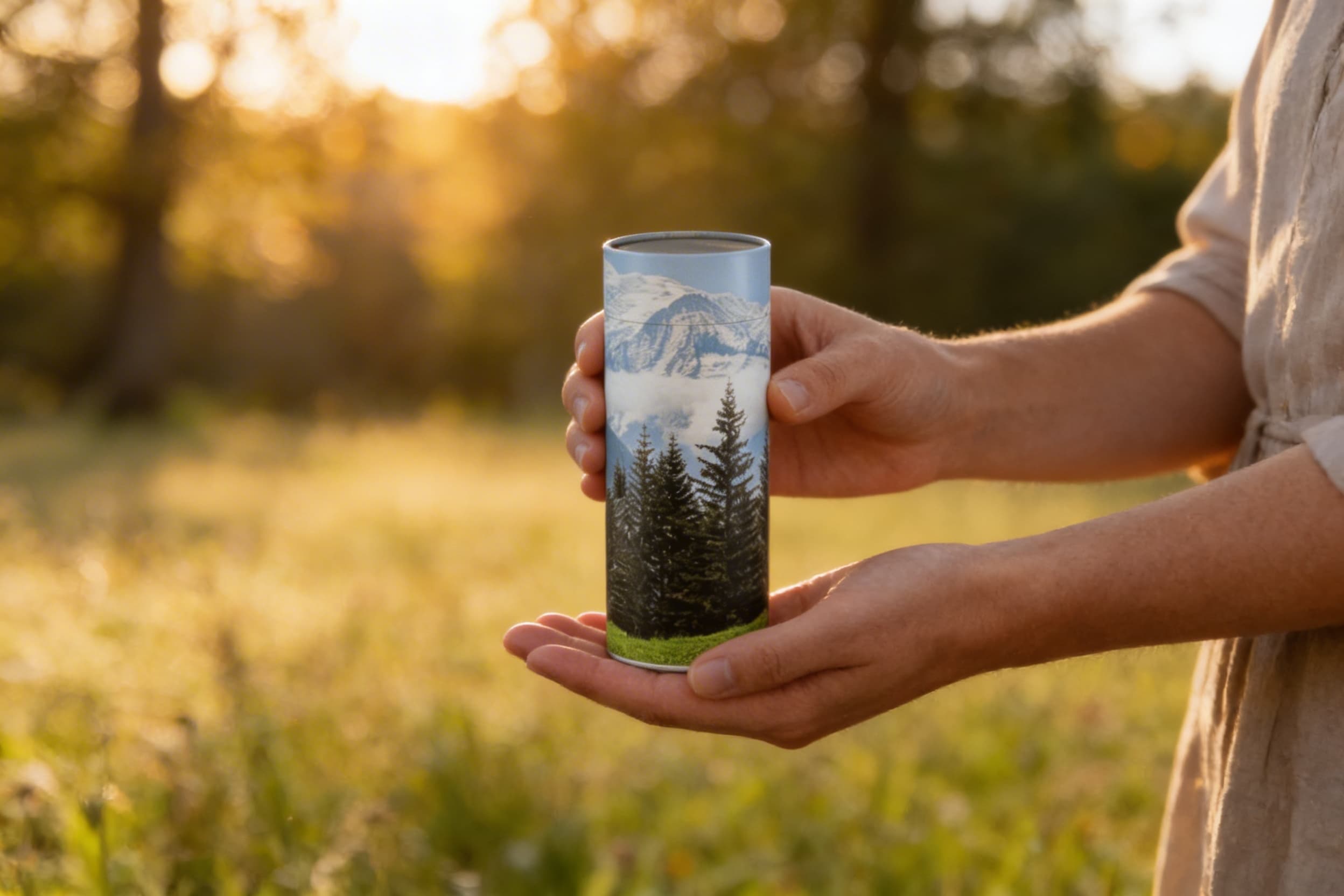
Scattering tubes are cylindrical containers — usually cardboard or recycled paper — with a removable lid and a perforated opening designed to control the flow of ashes during release. They are lightweight, affordable, and intended for single use.
Key advantages of scattering tubes:
The controlled opening prevents ashes from spilling too quickly or blowing back.
They are TSA compliant and can pass through airport security when flying with cremated remains.
Mini scattering tubes allow multiple family members to each hold a portion and scatter simultaneously.
Most are made from recycled or compostable materials.
Scattering tubes range from about $15 to $40 depending on size and design. They come in nature themes, patriotic prints, and simple solid colors.
Biodegradable Scattering Urns
Scattering urns made from bamboo, recycled paper, sand, or other natural materials serve a dual purpose: they hold the ashes securely for transport and then break down after the ceremony. Our guide to biodegradable cremation urns explains the full range of materials and what to look for. Some feature locking mechanisms that let you scatter a portion of the ashes, reseal the urn, and travel to a second location — useful for families dividing remains among meaningful places.
Biodegradable urns built specifically for water — often called water-soluble urns — are designed to float for a few minutes and then sink and dissolve. These are ideal for water ceremonies because they eliminate the challenge of pouring ashes into wind over open water.
Standard Urns with Removable Lids
Any cremation urn with a removable or screw-top lid can technically be used for scattering. However, urns with wide openings offer less control than scattering tubes. If you plan to use a standard urn, decant the ashes into a scattering tube beforehand for a smoother release.
Families who want to keep a portion of the ashes at home sometimes pair a permanent display urn with a scattering tube — scattering most of the remains and reserving a small amount in a keepsake urn or piece of cremation jewelry.
Scattering Ashes Etiquette
There are no rigid rules, but following a few courtesies helps the experience feel right for everyone involved.
Get Permission First
If scattering on private property, ask the landowner. National and state parks often have specific policies — some require permits, others restrict scattering to certain areas. Scattering gardens at cemeteries are designated specifically for this purpose and typically have the simplest process.
Never scatter ashes in a public space where the act would disturb others — beaches during peak hours, playgrounds, restaurant patios, or bodies of water where people are swimming.
Prepare Attendees
Most people have never seen cremated remains. The weight, texture, and appearance can be startling if unexpected. A brief, matter-of-fact explanation before the ceremony — that the ashes resemble coarse sand rather than fine powder — helps prevent an uncomfortable reaction.
Let attendees know the plan: who will scatter, in what order, and whether each person will say something or observe quietly. Clear expectations reduce awkwardness.
Mind the Wind
This point appears in every scattering guide because it matters every single time. Check the wind immediately before opening the container. Stand so ashes flow away from the group. Hold the container at waist level, not overhead. If wind conditions are unpredictable, a biodegradable urn placed on the ground or in water is more reliable than an open pour.
Bring Cleanup Supplies
Ashes cling to skin and clothing. Bring a bottle of water and paper towels or a small cloth. This is a practical kindness that lets attendees clean up discreetly and without embarrassment.
Decide Whether to Scatter All or Some
You are not required to scatter every last particle. Many families keep a small portion in a keepsake urn, locket, or piece of memorial jewelry. Understanding the difference between keepsake urns vs full-size urns can help you decide how much to set aside. Others scatter portions in multiple locations over weeks, months, or even years. There is no timeline and no obligation to finish in a single ceremony.
What to Say at a Scattering Ceremony
A scattering ceremony can be as formal or informal as the family wishes. Common elements include:
A few words about who the person was and what they loved.
A specific memory or story shared by one or more attendees.
A favorite song played from a phone or performed live.
A reading — a passage the person loved, a prayer, or something written for the occasion.
A moment of silence after the ashes are released.
There is no expectation of perfection. The sincerity of the moment matters far more than polished delivery. Some families find that humor — recalling a funny story or an inside joke — is the most honest way to honor someone.
What to Do After Scattering
Once the ashes are scattered, the ceremony is complete, but the memorialization can continue in other ways.
If you used a scattering tube or biodegradable urn, you may be wondering what to do with an urn after scattering ashes. Options include leaving it to decompose at the site (if the material is fully biodegradable and the location permits), taking it home as a keepsake, or recycling it.
Some families mark the scattering location with a small stone, a planted tree, or a GPS pin on their phone so they can return. Others create a memorial at home — a framed photograph, a memorial candle, or a dedicated shelf — that serves as a place to pause and remember, independent of where the ashes were released.
Frequently Asked Questions
Can you scatter ashes in multiple locations?
Yes. Many families divide cremated remains into smaller portions using scattering tubes or keepsake containers and scatter them in two or more meaningful places. If you are wondering whether it is appropriate, our article on separating cremated ashes addresses common concerns. There is no legal requirement to scatter all ashes at once or in the same spot.
Do you need permission to scatter ashes in a national park?
Most national parks allow ash scattering but require you to contact the park's administration office first. Rules vary by park — some require a permit, others restrict scattering to specific zones away from trails and water sources. Always check before visiting.
What happens if the wind blows ashes back toward you?
It happens more often than people expect. Stay calm — there is nothing harmful about cremated remains. Gently brush off clothing and skin, and use the water and towels you brought. If conditions are very windy, consider switching to a trenching method or using a biodegradable urn that can be placed directly on the ground or in water instead.
Are scattering tubes TSA approved?
Scattering tubes made of cardboard or paper can pass through airport X-ray machines. The TSA requires that cremated remains be in a container that can be screened — avoid metal urns when flying, as they block X-rays and may not be permitted through security.
How long can you keep ashes before scattering?
There is no expiration. Cremated remains are stable and will not degrade. Families scatter ashes days, months, or years after cremation. Take the time you need — there is no deadline.
Find the Right Scattering Urn
Choosing the right container makes a difficult day a little easier. Whether you need a scattering tube for a hillside ceremony, a water-soluble urn for an ocean farewell, or a keepsake to hold a small portion of the remains, the biodegradable urns collection at Memorials.com includes options designed for every type of scattering ceremony.