🏬Supersize Online Funeral Retailer🪦1000's of Headstones⚱️Over 10,000 Cremation Urns⚰️Caskets Overnight Delivery🛒Funeral & Memorial Superstore🚚FREE Shipping on ALL Orders👨👩👧👦Helping Families for over 20 Years💰Lowest Price Guarantee🏬Supersize Online Funeral Retailer🪦1000's of Headstones⚱️Over 10,000 Cremation Urns⚰️Caskets Overnight Delivery🛒Funeral & Memorial Superstore🚚FREE Shipping on ALL Orders👨👩👧👦Helping Families for over 20 Years💰Lowest Price Guarantee
🏬Supersize Online Funeral Retailer🪦1000's of Headstones⚱️Over 10,000 Cremation Urns⚰️Caskets Overnight Delivery🛒Funeral & Memorial Superstore🚚FREE Shipping on ALL Orders👨👩👧👦Helping Families for over 20 Years💰Lowest Price Guarantee🏬Supersize Online Funeral Retailer🪦1000's of Headstones⚱️Over 10,000 Cremation Urns⚰️Caskets Overnight Delivery🛒Funeral & Memorial Superstore🚚FREE Shipping on ALL Orders👨👩👧👦Helping Families for over 20 Years💰Lowest Price Guarantee
An urn holds something irreplaceable, and for many families, adding a personal touch transforms it from a simple vessel into a true tribute. Engraving a name, a meaningful date, a favorite poem excerpt, or even a small image can make all the difference — turning a cremation urn into a unique remembrance that feels deeply connected to the person you love.
But deciding what to engrave, which type of personalization to choose, and understanding how the process works can feel overwhelming, especially when you're already navigating grief and loss. Engraving is one of many factors to weigh when choosing a cremation urn, and this guide walks you through the most meaningful urn engraving ideas, explains your customization options, and covers what to expect so you can make a confident, informed decision.
The most common question families ask is simply: what should we put on the urn? There's no single right answer. What matters most is choosing an epitaph or inscription that feels meaningful to your family and true to the memory of the person being honored.
Most urn engravings fall into a few categories:
Names and Dates
The most traditional choice is the person's full name along with their birth and passing dates. This is simple, timeless, and universally appropriate. Common formats include:
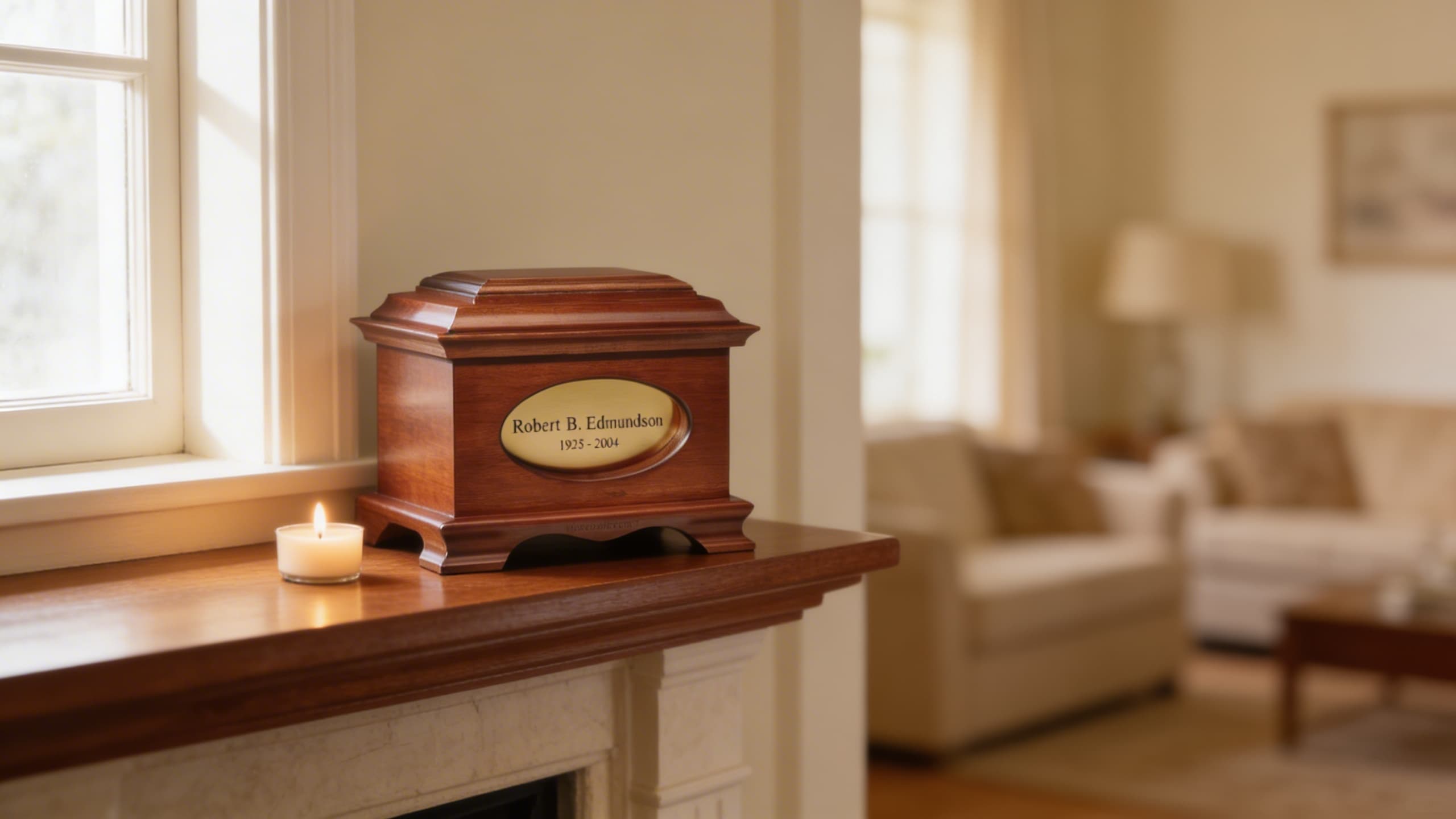
Full name with birth year and passing year (e.g., "Margaret Ellen Ross | 1942–2024")
First name only, for a more intimate feel
A nickname or term of endearment the family used lovingly
Name with a single meaningful date, such as a wedding anniversary
Short Epitaphs and Inscriptions
A brief epitaph adds emotional depth without overwhelming the design. Some of the most popular choices include:
"Forever in Our Hearts"
"In Loving Memory"
"Gone but Never Forgotten"
"Until We Meet Again"
"Always Loved, Never Forgotten"
"Rest in Peace"
"Beloved Mother / Father / Husband / Wife"
These work well on urns with limited engraving space, such as keepsake urns or nameplates. An epitaph like "In Loving Memory" is one of the most enduring choices — simple enough to fit any urn style, yet deeply personal in context.
Meaningful Quotes, Poems, and Verses
Many families choose a line from a poem, a scripture passage, or a quote that reflects the personality, faith, or beliefs of their loved one. A few examples that work well within typical engraving space:
"What we have once enjoyed we can never lose." — Helen Keller
"To live in hearts we leave behind is not to die." — Thomas Campbell
"The Lord is my shepherd; I shall not want." — Psalm 23:1
"Death leaves a heartache no one can heal; love leaves a memory no one can steal."
"Your wings were ready, but our hearts were not."
"Do not stand at my grave and weep; I am not there, I do not sleep." — Mary Elizabeth Frye
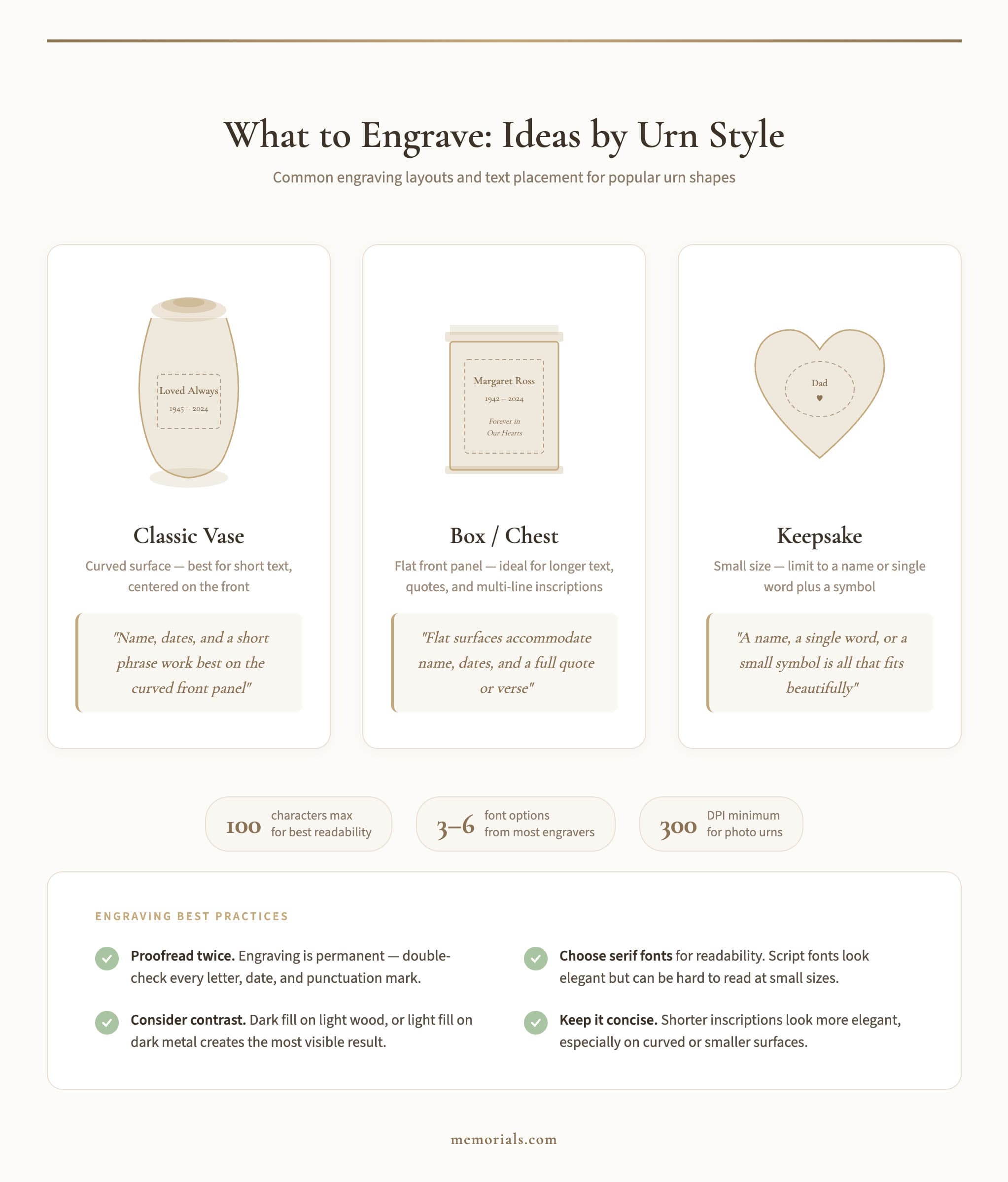
When selecting a poem excerpt or quote, keep character count in mind. Most engraving services work best with text under 100 characters. Longer passages may require smaller font sizes or additional lines, which can affect readability depending on the urn material and size. If a full poem is important to your family, consider having it engraved on a separate memorial plaque displayed alongside the urn, or select just the most meaningful line or two as the epitaph.
For families of faith, religious verses offer comfort and remembrance. Popular scripture selections include Psalm 23, John 14:2–3, and Romans 8:38–39 for Christian families; passages from the Torah for Jewish families; and Quranic verses for Muslim families. These inscriptions honor both the loved one's beliefs and the family's shared faith. Families seeking an urn that reflects their tradition may also want to explore religious cremation urns with built-in spiritual motifs.
Symbols and Images
Engraving isn't limited to text. Many urns can be customized with meaningful symbols or small images that capture the artistry of a life well lived:
Religious symbols reflecting faith and devotion (cross, Star of David, crescent, Om)
Nature motifs (trees of life, flowers, birds in flight, mountains, ocean waves)
Military insignia or service branch emblems — families honoring a veteran's service can also explore military veteran cremation urns designed with built-in patriotic elements
Hobbies and passions (music notes, fishing hooks, paw prints, paintbrushes)
Hearts, infinity symbols, or angel wings as symbols of eternal love
Cultural or heritage symbols honoring family roots
Symbols are especially effective when combined with a name and dates — they add personality and visual warmth to the urn decorations without needing additional text. The combination of a short epitaph with a meaningful symbol creates a tribute that is both beautiful and deeply personal.
Dates and Milestones Beyond the Traditional
Not every family wants standard birth-and-death dates on an epitaph. Some meaningful alternatives include:
A wedding date, honoring a lifelong love and partnership
The date of a retirement, graduation, or other significant achievement
A simple year range without specific months or days
The phrase "Est. [year]" to mark when a family began — a unique touch that celebrates love and togetherness
Urn Engraving Ideas by Relationship
What feels right to engrave often depends on your relationship with the person and the memories you shared. Here are ideas organized by connection:
For a Spouse or Partner
"My love, my life, my everything"
"Together forever" with your wedding date
"Side by side or miles apart, you are forever in my heart"
Both names engraved together with a heart or infinity symbol — a tribute to enduring love
For a Parent
"The roots you planted still grow strong"
"A life so beautifully lived deserves to be beautifully remembered"
"Mom/Dad — your love lives on in all of us"
"In loving memory of the one who gave us everything"
For a Child
"Too beautiful for earth"
"Our little angel"
A favorite lullaby lyric or children's poem
A small handprint or footprint image — a unique and deeply personal remembrance
For a Grandparent
"Your stories live on in us"
"Grandma/Grandpa — you made the world warmer"
A family crest or heritage symbol reflecting shared memory and tradition
For a Friend
"A true friend leaves footprints on the heart"
An inside joke or shared memory reference
A symbol connected to something you loved doing together
For a Pet
Many families choose to honor a beloved animal companion with the same care and love they'd give to any family member. Popular pet urn inscriptions include:
The pet's name with a paw print
"Forever my good boy/girl"
"You were my favorite hello and my hardest goodbye"
A small silhouette of the breed or animal
"Until we meet again at the rainbow bridge" — a comforting remembrance for grieving pet owners
Types of Urn Personalization Options
Engraving is the most common form of customization, but it's not the only one. Understanding the different methods helps you choose the right option for your urn's material, your budget, and the look you want.
Direct Engraving
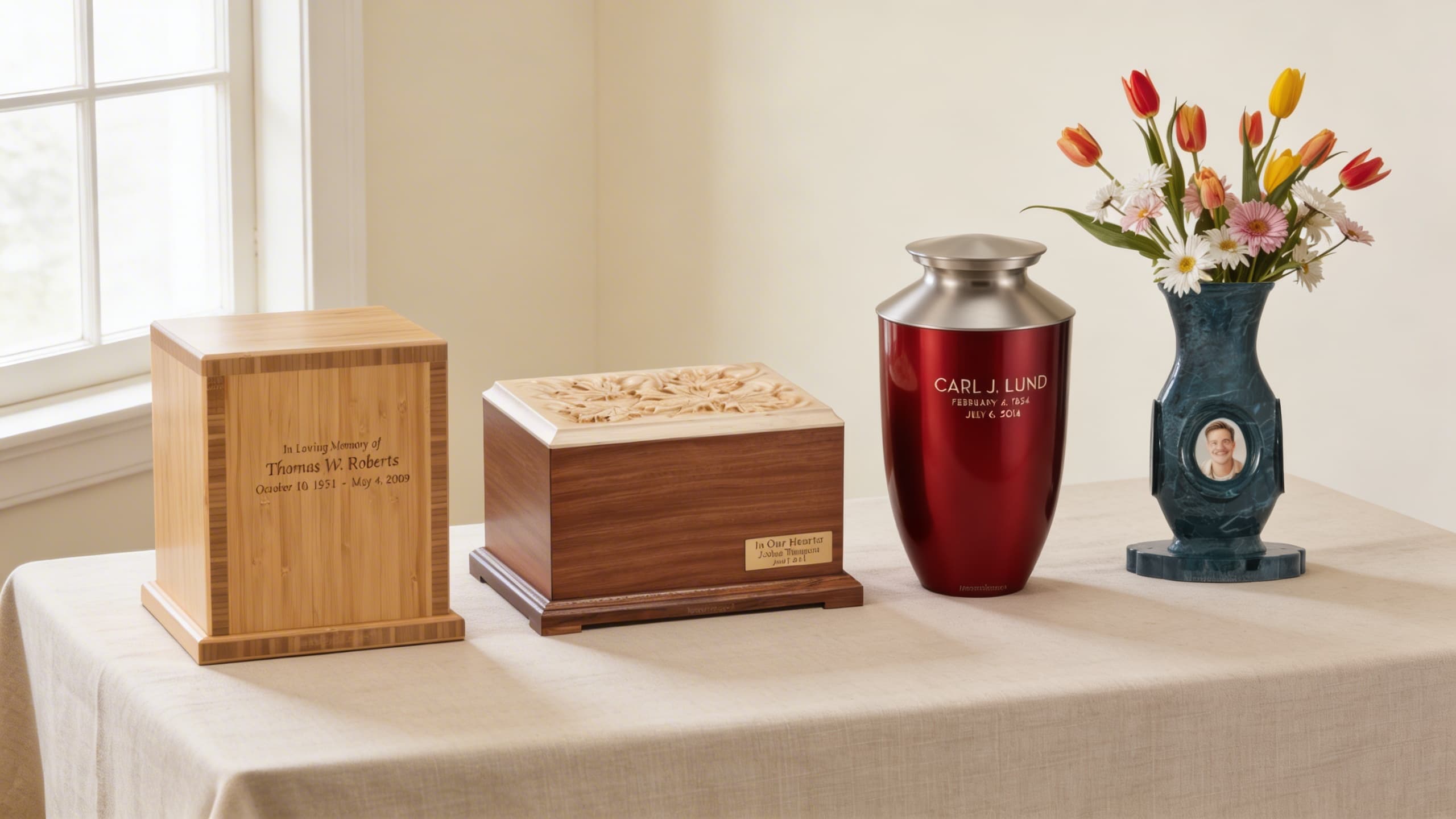
Direct engraving cuts or etches text and images into the surface of the urn itself. This is the most permanent and integrated form of personalization — the engraving becomes part of the urn rather than an addition to it. The artistry of a skilled engraver transforms the surface into something truly unique.
Direct engraving works best on:
Metal urns (brass, bronze, stainless steel, aluminum)
The result varies by material. Laser engraving on wood creates a warm, natural contrast. Engraving on polished metal can be filled with black or gold paint to improve visibility. Stone engraving has a classic, monumental feel similar to headstone inscriptions — fitting for families who want a sense of permanence and peace in their memorial. For a deeper look at how material affects your options, see our guide to types of cremation urns.
Engraved Nameplates
If your urn doesn't support direct engraving — or if you'd prefer not to alter the urn's surface — engraved urn nameplates offer a versatile alternative. Nameplates are small metal plates (typically brass or silver-toned) engraved with the inscription you choose, then attached to the urn with adhesive, screws, or a decorative chain.
Nameplates are popular because they:
Work with virtually any urn material, including glass and ceramic
Can be added after purchase without shipping the urn to an engraver
Allow for detailed epitaph text that might not engrave well directly on certain surfaces
Come in different shapes and finishes to complement the urn's design
Photo Urns
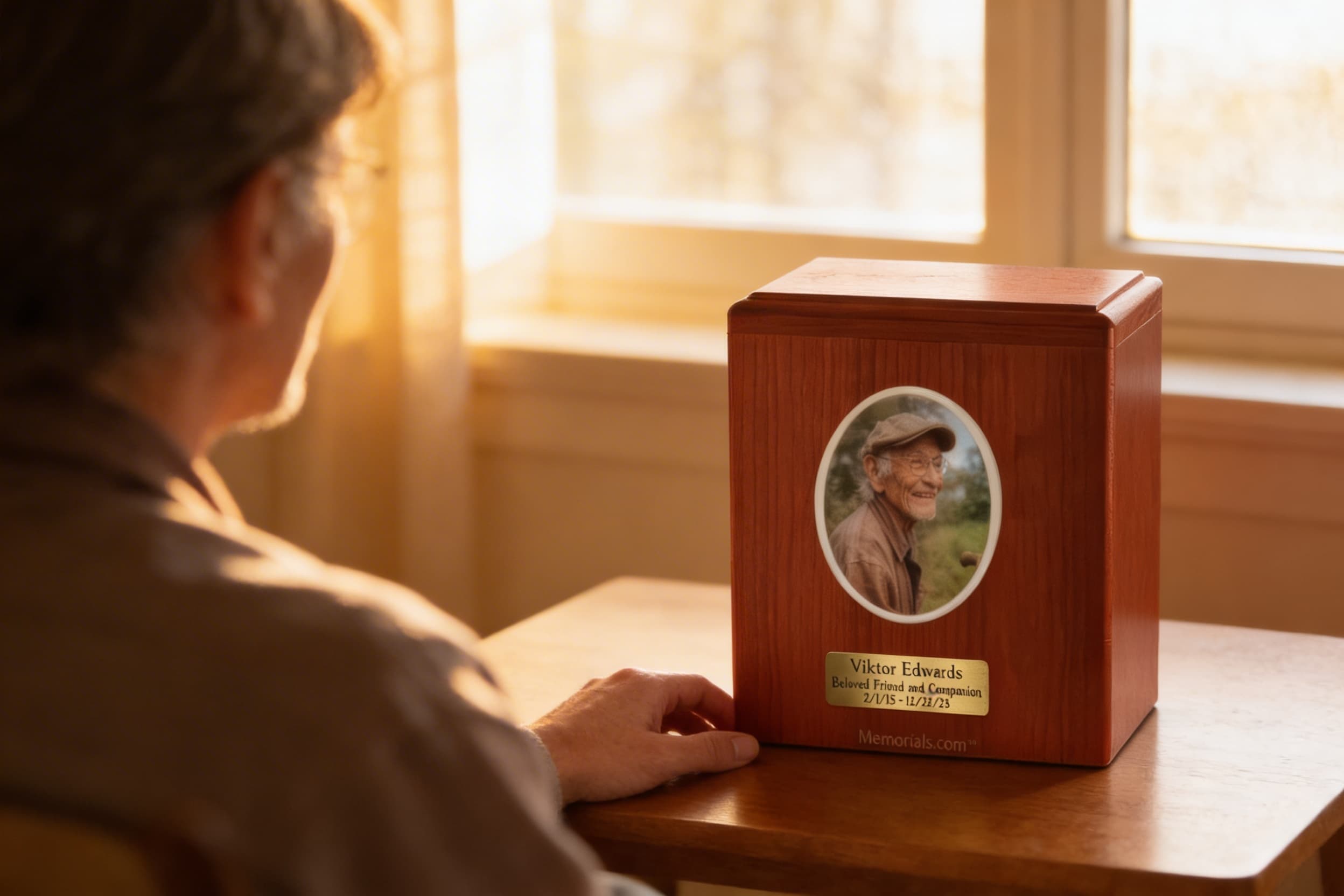
For families who want customization that goes beyond text, photo urns feature a built-in frame or printed image directly on the urn. Some photo urns use a small frame embedded in the lid or front panel, while others use ceramic photo printing or sublimation to permanently apply an image to the surface.
Photo urns are especially meaningful when:
The family wants to see their loved one's face as part of the memorial tribute
A favorite photograph captures the person's personality better than words could
The urn will be displayed in a home where a visual remembrance feels natural
Many families combine a photo urn with a small engraved nameplate, creating a personalized tribute that includes both image and text — a beautiful way to preserve memory and love together.
Custom Artwork and Hand-Painted Details
Some artisan urns offer hand-painted customization — custom portraits, landscapes, or decorative motifs created by a skilled artist. This option sits at the higher end of the budget but produces a one-of-a-kind memorial piece that reflects true artistry. Families who choose this route often select an image or scene connected to their loved one's life: a favorite fishing spot, a peaceful garden, a mountain landscape, or a beloved pet. These urn decorations transform the memorial into a unique work of art and a lasting tribute to a life of love. If you're drawn to personalization that reflects a passion or interest, our guide to hobby and themed urns covers designs built around specific lifestyles.
How to Choose the Right Personalization for Your Urn
With multiple customization options available, choosing the right personalization comes down to a few practical questions:
What is the urn made of? Material determines which engraving methods are possible. Metal and wood support direct engraving well. Glass, ceramic, and biodegradable urns are better suited to nameplates or photo options.
Where will the urn be displayed or stored? An urn displayed prominently at home benefits from visible, detailed personalization — a meaningful tribute the family can see every day. An urn placed in a columbarium niche might only show the front panel, so placement of the engraving matters. An urn intended for burial may not need visible engraving at all — or you might choose a nameplate for the period of remembrance before interment.
How much text do you want to include? Direct engraving on smaller urns and keepsake urns limits you to a name, dates, and perhaps a short epitaph. Nameplates can accommodate longer inscriptions in a readable format. If you want a full poem verse or paragraph, a nameplate or a larger urn with more surface area is the better choice.
What's your timeline? Direct engraving typically requires the urn to be sent to an engraver or ordered pre-engraved, which may add 3–7 business days. Nameplates can often be ordered separately and attached at home, which can be faster. Photo urns usually ship with the photo already applied, but require you to submit the image during ordering.
What's your budget? Engraving costs vary by method and complexity. See the cost breakdown below.
What to Expect: Process, Timeline, and Cost
Understanding the practical side of urn engraving helps you plan ahead and avoid surprises. Whether you're ordering a simple inscription or a full custom design, here's what the process looks like.
The Engraving Process
For direct engraving, most retailers either engrave in-house or partner with a specialist. You'll typically:
Select your urn and choose the engraving option at checkout
Provide the epitaph text, font preference, and any symbols or images
Receive a proof or confirmation of the engraving layout
The engraver completes the work and ships the finished urn
For nameplates, the process is similar but the nameplate is engraved and shipped separately (or pre-attached to the urn). For photo urns, you'll upload a high-resolution image during the order process.
Timeline
Direct engraving: Adds 3–7 business days to production, depending on complexity
Nameplates: Usually 2–5 business days for engraving, then standard shipping
Photo application: Typically built into the urn's production time, adding 2–4 days
If you need an urn quickly — for a memorial service or gathering of family and friends — ask about rush engraving options or consider purchasing a nameplate that can be added later. Many families choose to display the urn at the service first and add personalization afterward, which allows more time to choose the perfect epitaph or poem without the pressure of a deadline.
Cost
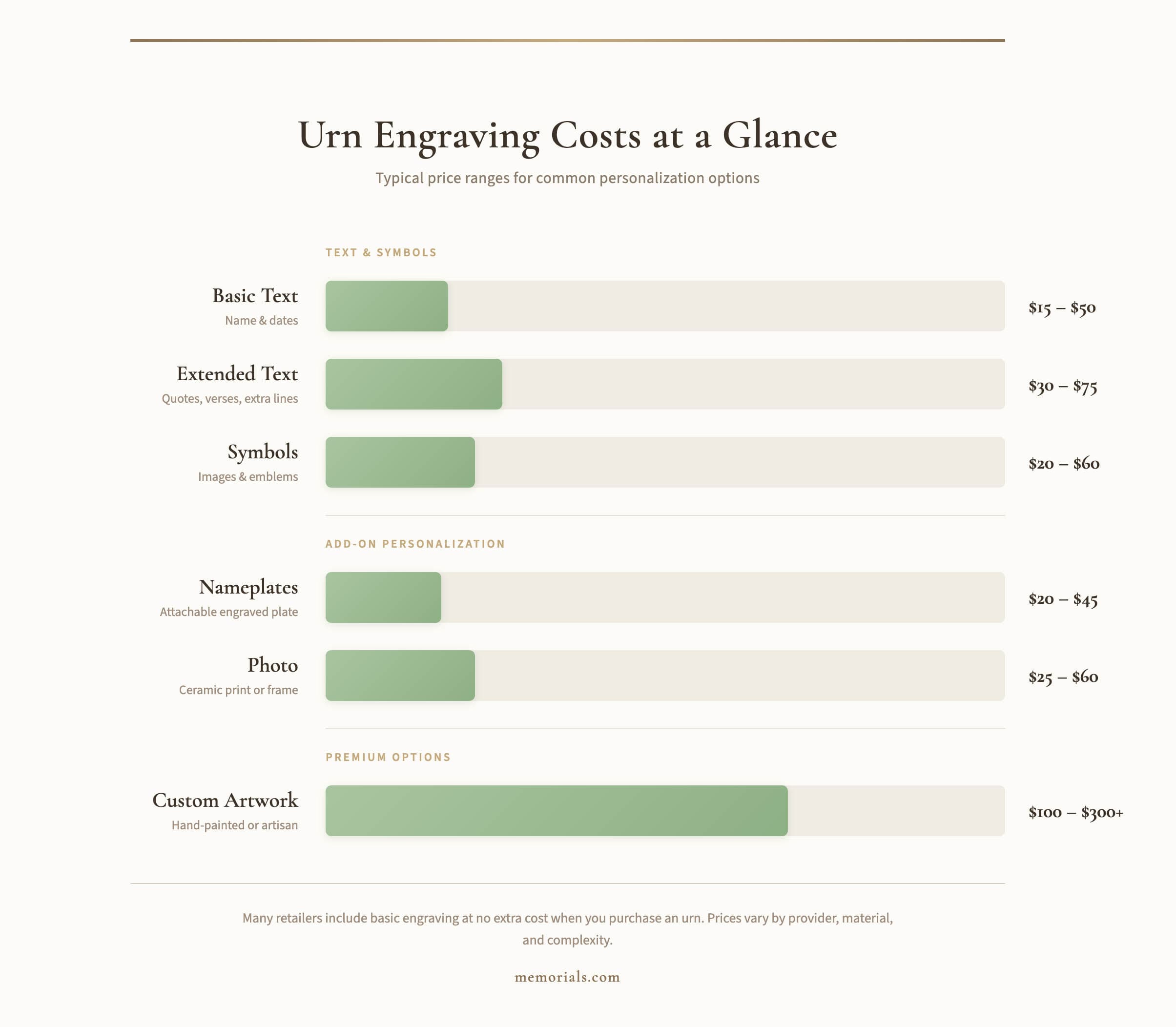
Engraving costs depend on the method, the amount of text, and whether images or symbols are included:
Basic text engraving (name and dates): $15–$50 on most urns
Extended text (quotes, poems, additional lines): $30–$75
Symbol or image engraving: $20–$60 depending on complexity and artistry
Engraved nameplates: $20–$45 for the plate itself
Photo application: Often included in the urn price for photo-specific models; standalone photo printing may run $25–$60
Custom hand-painted artwork: $100–$300+ depending on the artist and level of customization
Many retailers include basic engraving (name and dates) free or at a reduced cost when you purchase the urn. More complex personalization — additional text lines, custom images, or premium fonts — usually costs extra. The investment, however, is well worth it: a thoughtfully engraved urn becomes a lasting tribute filled with love and memory. For a broader look at pricing, our guide on how much does a cremation urn cost breaks down what to expect across different urn types.
Tips for Getting the Best Results
A few practical tips can make the engraving process smoother and ensure you're happy with the final design:
Proofread carefully. Once text is engraved, it can't be undone. Double-check spelling, dates, and punctuation before approving. Have another family member review the epitaph as well — a second set of eyes catches mistakes love and grief might miss.
Keep it concise. Shorter inscriptions tend to look more elegant and are easier to read, especially on smaller urns and keepsake urns. If you have a longer poem or passage in mind, ask the engraver about font size and readability before committing.
Choose fonts thoughtfully. Script and calligraphy fonts look beautiful but can be harder to read at small sizes. Block or serif fonts are more legible for detailed text. Most engravers offer 3–6 font options that balance artistry with readability.
Consider contrast. Engraving on a dark wood urn with light fill creates a striking, unique visual. On a lighter material, deeper cuts or darker fill help the inscription stand out. The right contrast makes the difference between an engraving that's merely present and one that truly commands attention.
Ask to see examples. Reputable engravers will have a portfolio or sample images showing their work on similar materials. This helps you set realistic expectations for the finished tribute.
Save a high-resolution photo. If you're ordering a photo urn, use the highest resolution image available. Low-resolution photos may appear pixelated or blurry when printed or applied to the urn surface. A minimum of 300 DPI at the printed size is ideal.
Frequently Asked Questions About Urn Engraving
Can any urn be engraved?
Most metal, wood, and stone urns can be directly engraved. Glass, ceramic, and biodegradable urns typically cannot be directly engraved but can be personalized with an attachable nameplate. When browsing cremation urns, check the product details for customization options — most listings indicate whether engraving is available.
What if I already have an urn and want to add engraving later?
Many local engraving shops and trophy stores can engrave an urn you already own, especially if it's metal or wood. You can also order an engraved nameplate separately and attach it yourself — this is the easiest way to personalize an urn after purchase without needing to ship it anywhere.
How long does urn engraving take?
Most standard engraving (name, dates, and a short epitaph) takes 3–7 business days. Rush services are often available for an additional fee. Nameplates tend to arrive faster since they're produced independently of the urn.
Is urn engraving permanent?
Yes. Direct engraving physically alters the surface of the urn and is permanent — a lasting remembrance that will endure for generations. Nameplates are durable and long-lasting but can technically be removed or replaced if needed. Photo applications are permanent once applied through sublimation or ceramic printing.
What is the difference between an epitaph and an inscription?
An epitaph is a short text written in memory of someone who has passed — it typically appears on a headstone, urn, or memorial marker. An inscription is a broader term that refers to any text engraved or printed on a surface. In practice, the terms are often used interchangeably when discussing urn personalization. Whether you call it an epitaph or an inscription, what matters is that the words feel meaningful and true to the memory of your loved one.
Creating a Tribute That Feels Right
Personalizing an urn is one of the most meaningful decisions you'll make during the memorial process. Whether you choose a simple name and date, a favorite poem, a cherished photograph, or a hand-crafted design, the goal is the same: to create something that honors the life lived and brings peace and comfort to the family who loved them.
The right inscription, epitaph, or image transforms an urn from an object into a memorial — a place where love and memory live on together.
If you're ready to explore your options, browse our collection of cremation urns to find an urn that suits your needs — many include personalization options you can customize during checkout.