🏬Supersize Online Funeral Retailer🪦1000's of Headstones⚱️Over 10,000 Cremation Urns⚰️Caskets Overnight Delivery🛒Funeral & Memorial Superstore🚚FREE Shipping on ALL Orders👨👩👧👦Helping Families for over 20 Years💰Lowest Price Guarantee🏬Supersize Online Funeral Retailer🪦1000's of Headstones⚱️Over 10,000 Cremation Urns⚰️Caskets Overnight Delivery🛒Funeral & Memorial Superstore🚚FREE Shipping on ALL Orders👨👩👧👦Helping Families for over 20 Years💰Lowest Price Guarantee
🏬Supersize Online Funeral Retailer🪦1000's of Headstones⚱️Over 10,000 Cremation Urns⚰️Caskets Overnight Delivery🛒Funeral & Memorial Superstore🚚FREE Shipping on ALL Orders👨👩👧👦Helping Families for over 20 Years💰Lowest Price Guarantee🏬Supersize Online Funeral Retailer🪦1000's of Headstones⚱️Over 10,000 Cremation Urns⚰️Caskets Overnight Delivery🛒Funeral & Memorial Superstore🚚FREE Shipping on ALL Orders👨👩👧👦Helping Families for over 20 Years💰Lowest Price Guarantee
The words "urn" and "vase" overlap in everyday language, and the confusion runs deep. Search for "urn vase" online and you will find decorative garden planters, antique ceramic vessels, and purpose-built cremation containers all sharing the same label. For a family choosing a final resting place for cremated remains, that ambiguity is more than a vocabulary problem — it affects whether the vessel you purchase will actually protect and contain ashes safely over time.
This guide breaks down the practical differences between a decorative urn vase and a cremation urn, explains the hybrid category of urn vases designed specifically for ashes, and walks through what to look for when selecting the right option for your family. It is one of several topics covered in our complete guide on .
The simplest distinction is purpose. A vase is designed to hold flowers and water. An urn is designed to contain and protect something — most commonly, cremated ashes.
In design history, the two terms share roots. The classical urn shape — rounded body, narrow neck, footed pedestal — evolved alongside vase forms in ancient Greek and Roman pottery. Both objects sat on shelves and in niches. Both could be ornate or plain. The difference was always about what went inside.
In a modern memorial context, that functional distinction matters more than shape. A cremation urn must hold a specific volume of cremated remains (measured in cubic inches), seal securely to prevent spillage, and withstand long-term display, burial, or placement in a columbarium niche. A flower vase has none of those requirements.
The Three Meanings of "Urn Vase"
The term "urn vase" gets used in three distinct ways, and recognizing which meaning applies eliminates most of the confusion.
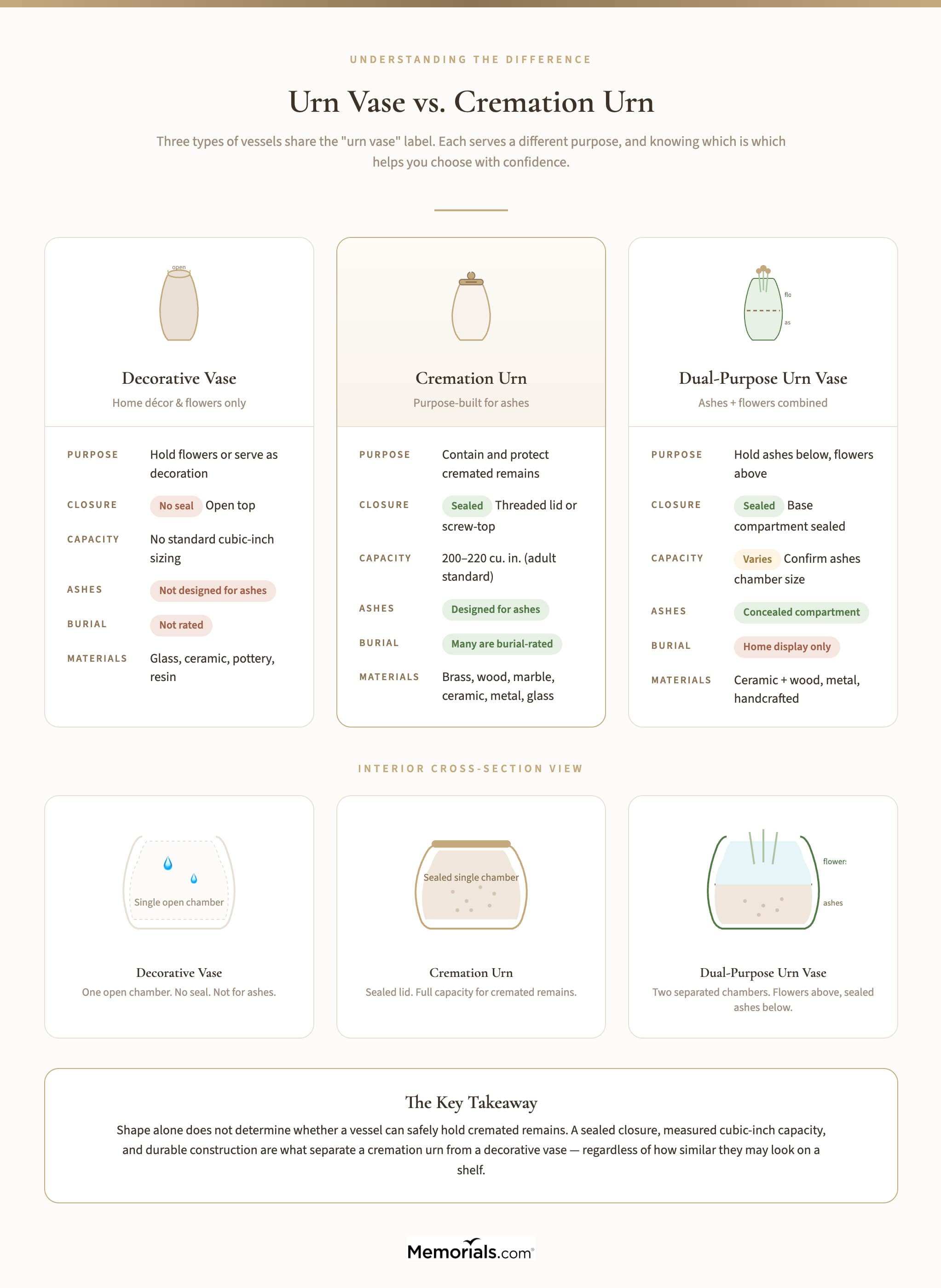
A decorative vase shaped like an urn. This is the most common result when you search "urn vase" outside of memorial contexts. Garden centers, home décor retailers, and antique dealers sell vase-shaped vessels with pedestal bases and classical proportions. These are meant for flowers, dry arrangements, or purely decorative display. They have no sealed compartment, no measured capacity for ashes, and no closure mechanism. They are not cremation containers.
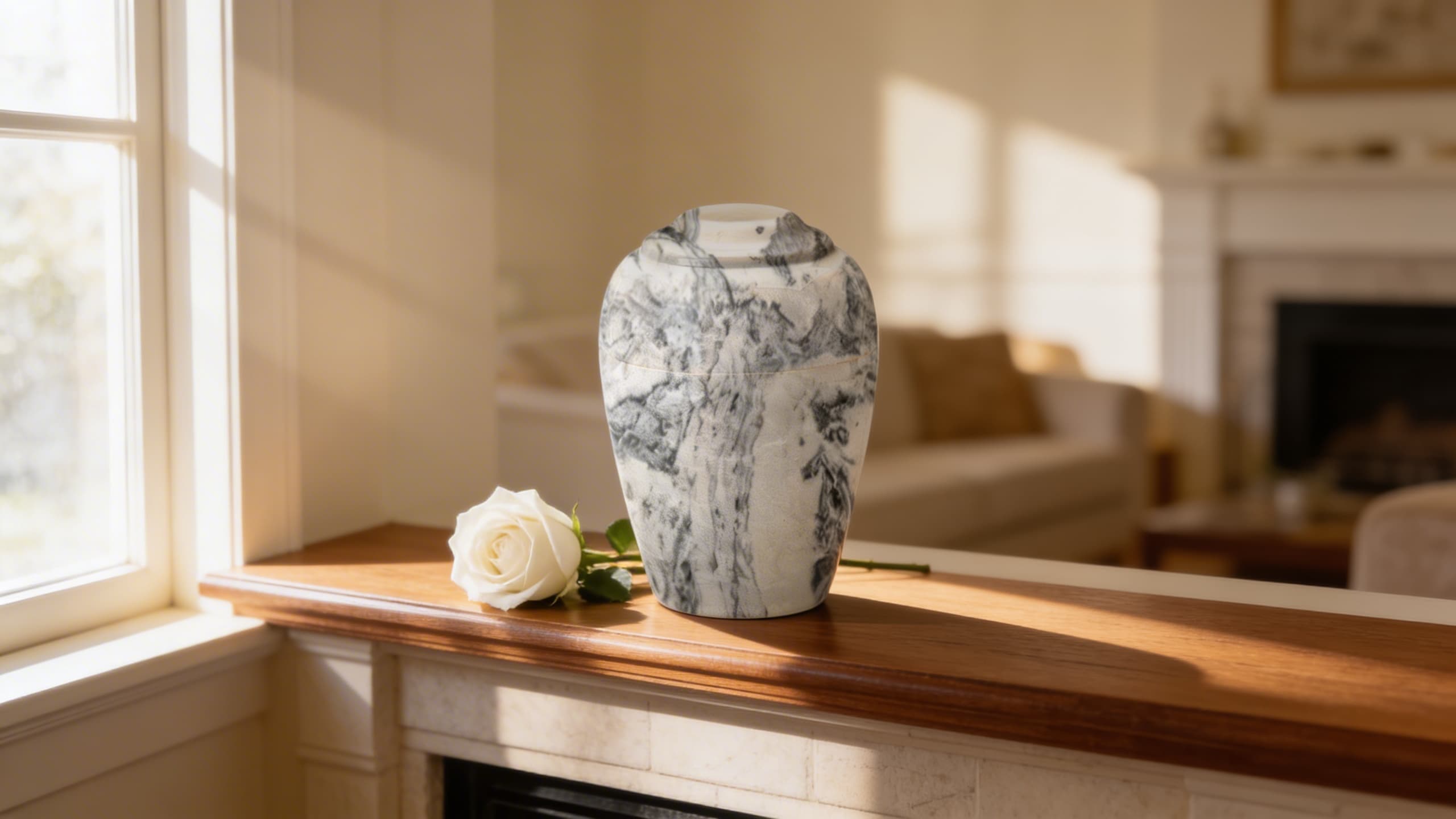
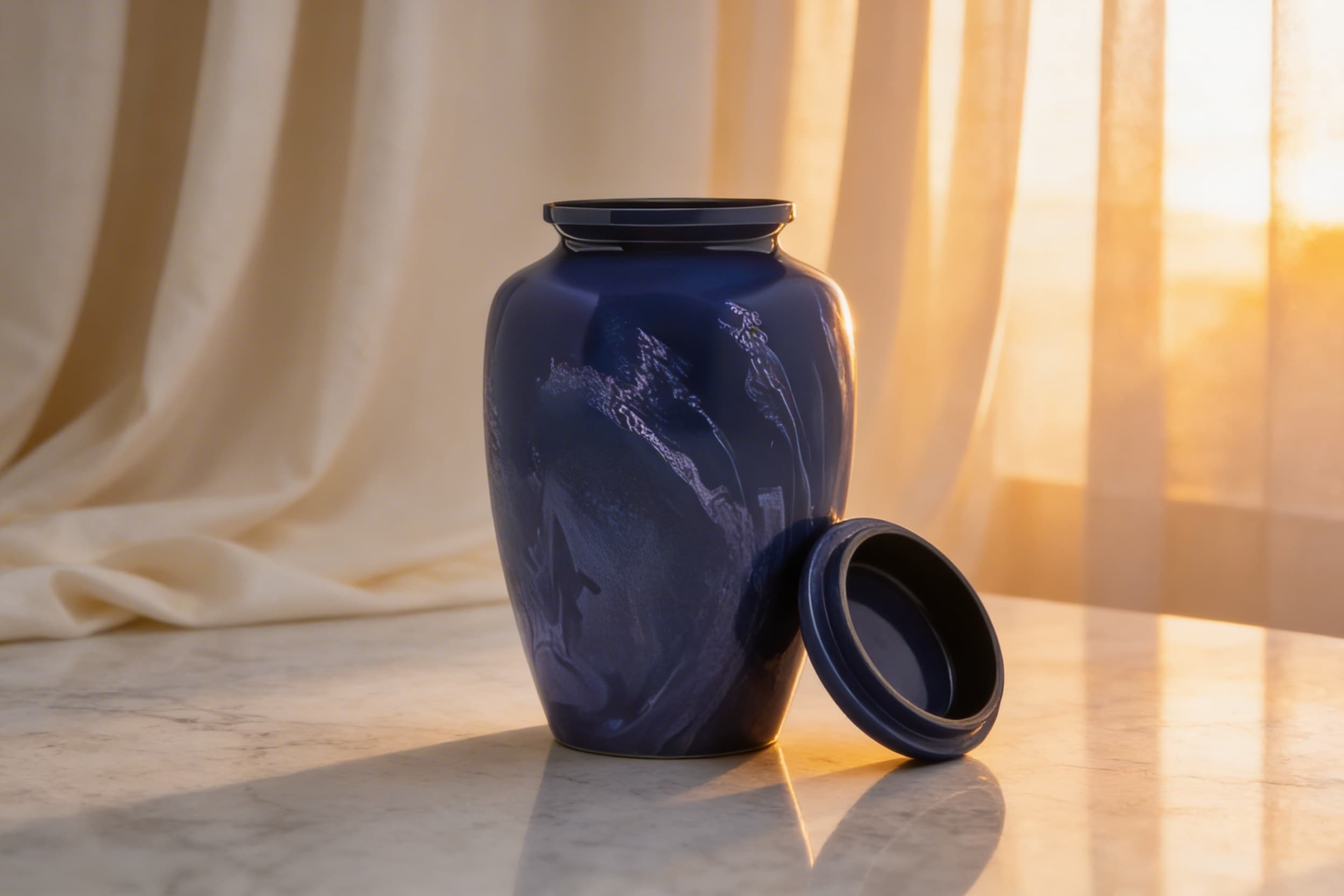
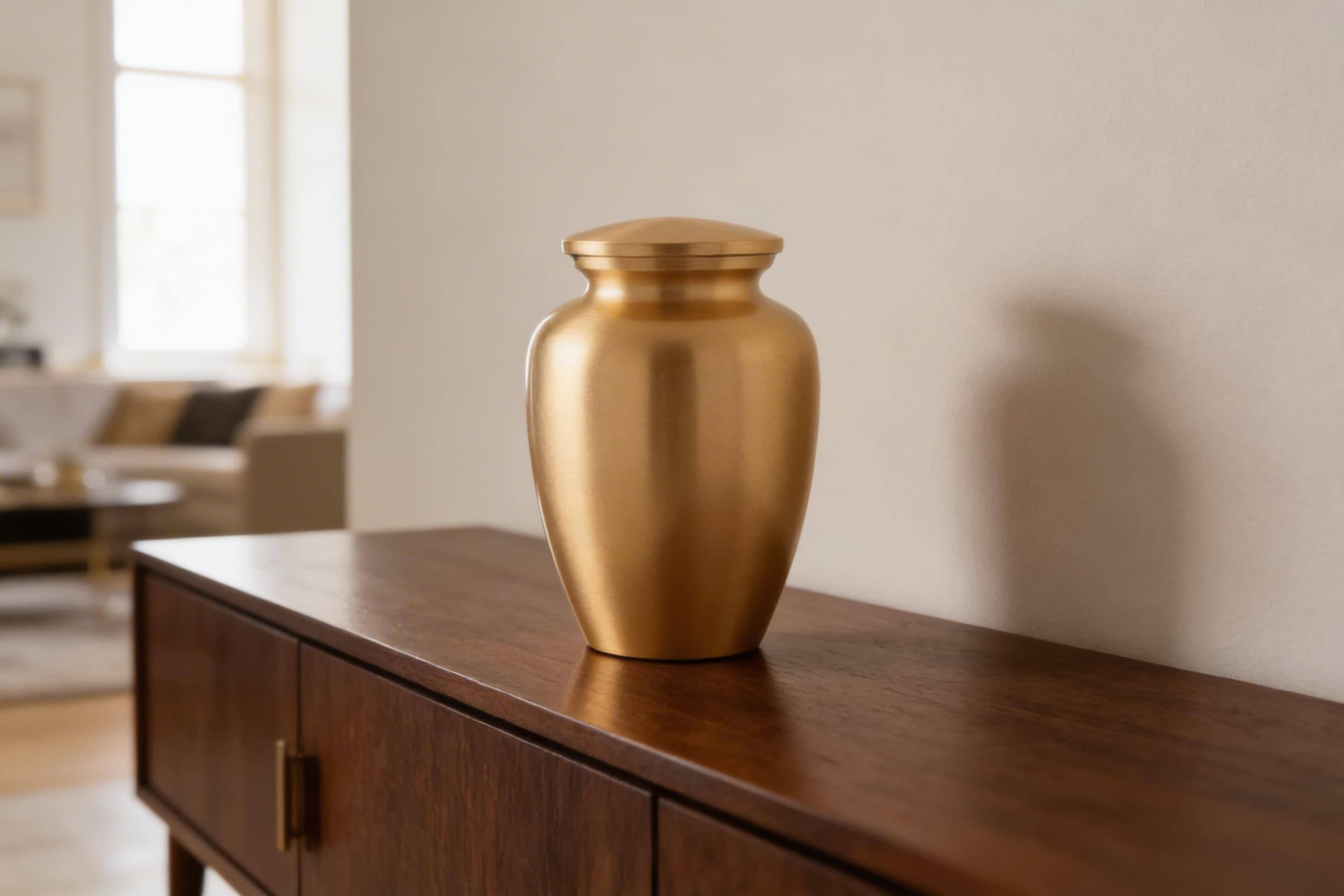
A cremation urn styled to look like a vase. Many families who plan to keep ashes at home prefer an urn that blends with living room décor rather than looking clinical or overtly funerary. Manufacturers respond by designing cremation urns with smooth curves, tapered silhouettes, and decorative finishes that resemble household vases. Despite the vase-like appearance, these are purpose-built to hold cremated remains. They include a threaded lid or screw-top closure, are sized to standard cubic-inch capacities, and are constructed from materials rated for long-term containment.
The resemblance can be closer still when the tradition behind the shape is not a Western one. A japanese urn is a wide, lidded jar rather than a narrow-necked vessel — a form chosen for how it is filled, not for how it looks — and the decorative versions sold here are read as vases on a shelf more often than as anything funerary.
A dual-purpose urn vase for ashes and flowers. This is the true hybrid. A dual-purpose urn vase features a concealed ashes compartment — usually in the base — with a separate upper section or removable insert for fresh or silk flowers. The two chambers are physically separated so water from the flower section never contacts the cremated remains. These designs allow families to maintain a living floral tribute directly above the ashes compartment, creating a memorial display that feels warm and integrated into daily life.
Key Differences That Matter for Families
Understanding a few practical factors helps you decide which type of vessel serves your needs.
Capacity and Sizing
Cremation urns are sized by cubic inches. The standard guideline is one cubic inch of capacity per one pound of the person's pre-cremation body weight. A full-size adult urn typically holds 200 to 220 cubic inches, while keepsake urns hold a smaller portion — usually 20 to 100 cubic inches — for sharing among family members. For a detailed walkthrough of sizing calculations, see our guide on what size urn do I need.
A decorative vase has no standardized internal volume for ashes. Even if a vase is physically large enough to contain cremated remains, the opening may be too narrow to transfer ashes safely, or the interior shape may waste space with curves and tapers that reduce usable capacity.
If you are considering a dual-purpose urn vase for ashes, confirm that the stated capacity refers to the ashes compartment alone. The flower insert should not reduce the ashes chamber below the volume you need.
Sealed Closure vs. Open Top
This is the most important functional difference. A cremation urn includes a closure mechanism — threaded lid, screw-top, friction-fit cap, or adhesive seal — that prevents cremated remains from spilling if the vessel is bumped, moved, or transported. Many families apply a thin line of adhesive around the lid for added security, especially when children or pets are in the home.
A decorative vase has an open top. There is no seal, no lid, and no protection against accidental spillage. Placing loose cremated ashes in an open vase — even one that looks like an urn — leaves the remains vulnerable to moisture, dust, curious hands, and gravity.
Materials and Durability
Both decorative vases and cremation urns come in overlapping materials: ceramic, glass, metal, wood, and stone. The difference is in construction standards. Our overview of types of cremation urns covers each material category in detail.
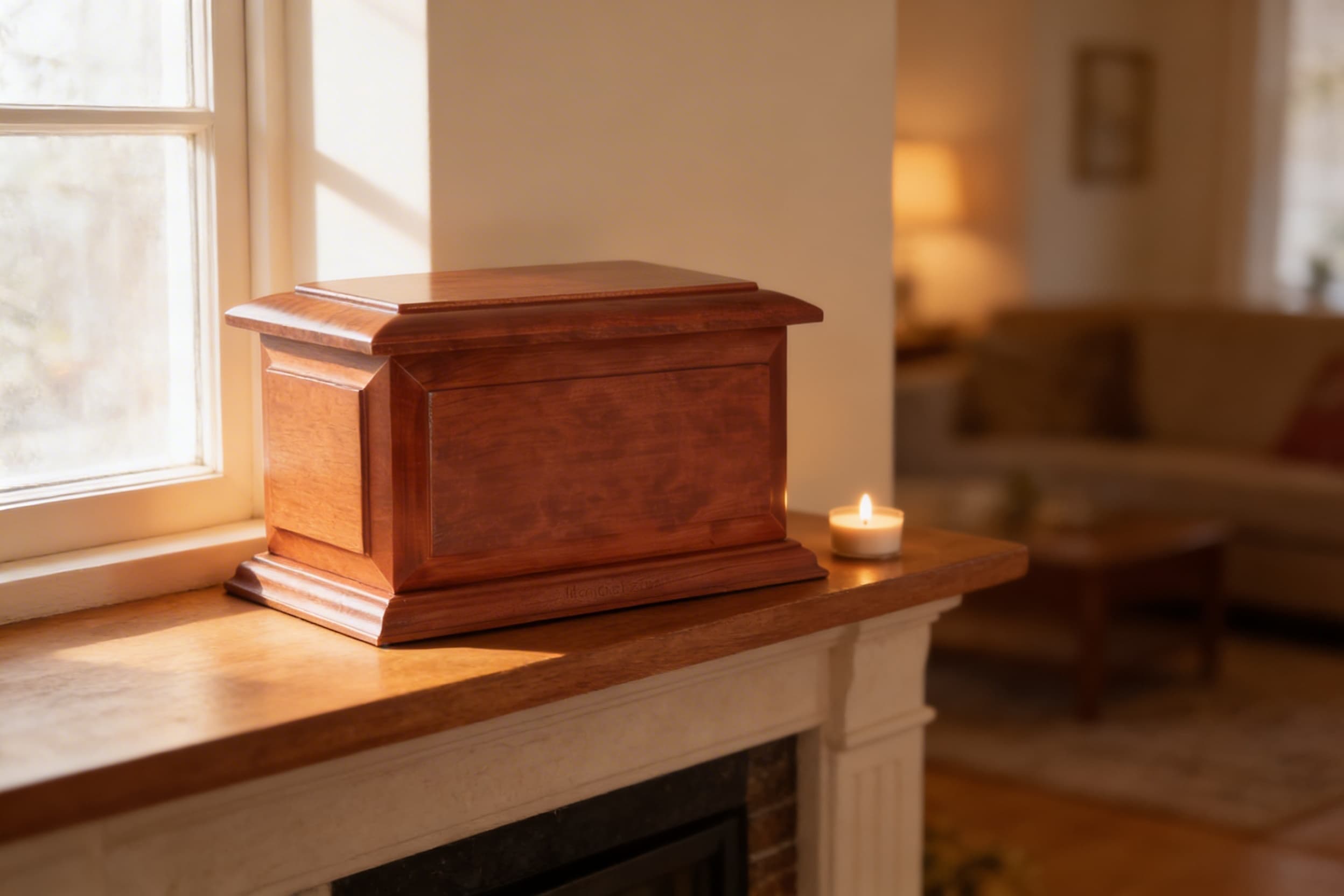
Cremation urns made from brass, bronze, or stainless steel are built to resist corrosion and maintain structural integrity over decades. Wood urns are typically hardwood with tight-fitting lids. Marble urns and cultured stone urns are sealed to prevent moisture penetration. Ceramic urns designed for cremation use are kiln-fired at temperatures that ensure durability and feature secure closures.
A decorative ceramic vase from a home goods store may chip, crack, or shatter under conditions that a cremation-rated ceramic urn would withstand. Material alone does not determine suitability — construction quality and closure design are equally critical.
Intended Placement
Where you plan to place the vessel affects your choice.
For home display, a vase-style cremation urn or dual-purpose urn vase works well because it blends with surrounding décor. Unique urns and art urns are specifically designed to function as memorial art pieces in living spaces. For ideas on creating a meaningful home memorial, see our guide on how to display a cremation urn at home.
For columbarium placement, exterior dimensions matter as much as capacity. Niches have fixed measurements, and many facilities require urns to meet specific size requirements. A decorative vase would rarely meet columbarium standards.
For burial, the urn must withstand soil pressure and moisture. Biodegradable urns are purpose-built for earth burial and eventual decomposition, while metal urns and glass urns offer long-term containment underground. No decorative vase is rated for burial.
Can You Use a Regular Vase as a Cremation Urn?
Technically, there are no federal regulations in the United States dictating what type of container must hold cremated remains. A family could place ashes in any vessel they choose, including a vase.
Practically, this creates several problems. An open-top vase offers no protection against spillage. Most vases lack the internal volume markings or capacity specifications needed to confirm the ashes will fit. The materials may not be sealed against moisture. And if the family ever needs to transport the remains — for a move, a ceremony, or placement in a cemetery — a vase without a secure closure presents real logistical challenges.
A better approach is to select a cremation urn that matches the aesthetic you want. The memorial industry offers a vast range of styles, from sleek contemporary designs to hand-painted artisan pieces that could sit comfortably on any shelf. If you are drawn to the look of a vase, a vase-style cremation urn gives you that appearance with the structural integrity ashes require.
How Dual-Purpose Urn Vases Work
The dual-purpose urn vase has gained popularity with families who want a living memorial — fresh flowers maintained above the ashes of someone they love. The design typically works in one of two ways.
Bottom-fill with removable flower insert. The ashes compartment occupies the lower portion of the vessel, sealed with a threaded base plate or screw-on bottom. The upper portion holds a removable insert — often a glass or plastic liner — for water and flowers. The two sections are physically separated. Flowers can be changed, water can be refreshed, and none of it contacts the cremated remains below.
Side-access with internal divider. Less common, this design features an access panel on the side or back for loading ashes, with an internal wall separating the ashes chamber from the flower-holding area above. This configuration keeps the exterior seamless and eliminates any visible hardware on the base.
In either design, stability is a key consideration. Fresh flowers add water weight, and tall arrangements can shift the center of gravity. Families using a dual-purpose urn vase should choose a model with a wide, weighted base and keep floral arrangements proportionate to the vessel size.
Choosing the Right Option for Your Family
The decision comes down to two questions: what is the vessel's primary job, and where will it be placed?
If the primary job is holding and protecting cremated remains, choose a purpose-built cremation urn. The vase-like styling many manufacturers offer means you do not have to sacrifice aesthetics for function. Browse cremation urns to see the full range of materials, sizes, and styles available — from traditional brass and marble to handcrafted ceramic and blown glass. Pricing varies widely by material and craftsmanship, so it helps to review how much does a cremation urn cost before narrowing your options.
If you want both a floral display and an ashes container in one piece, a dual-purpose urn vase for ashes is designed exactly for that. Confirm the ashes capacity meets your needs, verify that the flower section is fully separated from the ashes chamber, and check that the base is stable enough for the arrangement you plan to maintain.
If you are looking for a decorative vessel for flowers at a memorial service or gravesite with no ashes inside, a decorative vase or memorial flower vase is the right choice. These do not need sealed closures or specific cubic-inch capacities because they are not holding cremated remains.
Some families find the most satisfying approach is combining separate pieces: a cremation urn for the ashes, a vase of flowers beside it, a framed photograph, and perhaps a piece of cremation jewelry for a wearable connection to carry through daily life. This avoids asking one object to do everything and lets each element of the memorial serve its specific purpose well.
Frequently Asked Questions
What is the difference between an urn and a vase?
An urn is a vessel designed to contain and protect something — in memorial contexts, cremated ashes. It includes a sealed or secured closure, is sized to a specific cubic-inch capacity, and is constructed from materials rated for long-term containment. A vase is an open-top vessel designed to hold flowers or serve as decoration. The two terms overlap in shape and style, but their intended function is different.
Can I use a decorative vase for cremated ashes?
There are no federal regulations prohibiting it, but a decorative vase lacks the sealed closure, measured capacity, and structural durability that cremation urns provide. If you prefer a vase aesthetic, a vase-style cremation urn offers the same look with proper ashes protection built in.
What is an urn vase for ashes?
An urn vase for ashes is a dual-purpose vessel with a concealed ashes compartment (usually in the base) and a separate section for holding flowers. The two chambers are physically separated so water and moisture do not contact the cremated remains. These hybrid designs allow families to maintain a living floral tribute integrated with the urn.
How do I know what size cremation urn I need?
The standard guideline is one cubic inch of capacity per one pound of pre-cremation body weight. Most full-size adult urns hold 200 to 220 cubic inches. If you are choosing a dual-purpose urn vase, confirm the stated capacity refers specifically to the ashes chamber, not the total vessel volume including the flower section.
Do cremation urns need to be sealed?
While not legally required in most U.S. jurisdictions, sealing an urn is strongly recommended. A sealed closure prevents accidental spillage, protects ashes from moisture and dust, and provides peace of mind — especially in homes with children or pets. Many families apply a thin adhesive seal around the lid for added security.