🏬Supersize Online Funeral Retailer🪦1000's of Headstones⚱️Over 10,000 Cremation Urns⚰️Caskets Overnight Delivery🛒Funeral & Memorial Superstore🚚FREE Shipping on ALL Orders👨👩👧👦Helping Families for over 20 Years💰Lowest Price Guarantee🏬Supersize Online Funeral Retailer🪦1000's of Headstones⚱️Over 10,000 Cremation Urns⚰️Caskets Overnight Delivery🛒Funeral & Memorial Superstore🚚FREE Shipping on ALL Orders👨👩👧👦Helping Families for over 20 Years💰Lowest Price Guarantee
🏬Supersize Online Funeral Retailer🪦1000's of Headstones⚱️Over 10,000 Cremation Urns⚰️Caskets Overnight Delivery🛒Funeral & Memorial Superstore🚚FREE Shipping on ALL Orders👨👩👧👦Helping Families for over 20 Years💰Lowest Price Guarantee🏬Supersize Online Funeral Retailer🪦1000's of Headstones⚱️Over 10,000 Cremation Urns⚰️Caskets Overnight Delivery🛒Funeral & Memorial Superstore🚚FREE Shipping on ALL Orders👨👩👧👦Helping Families for over 20 Years💰Lowest Price Guarantee
The Department of Veterans Affairs provides a range of burial and memorial benefits to honor the men and women who served in the U.S. Armed Forces. These benefits — available to eligible veterans, their spouses, and certain dependents — cover everything from a free gravesite in a national cemetery to a government-furnished headstone, a burial flag, and financial help with funeral costs. For a broader look at all the ways to honor a veteran's service, see our complete guide to military and veteran memorials.
Many families are unaware of just how much the VA offers, and the application process can feel overwhelming during an already difficult time. This guide walks through every major benefit category, explains who qualifies, covers how to apply, and highlights common mistakes that delay or forfeit benefits.
Eligibility centers on the veteran's discharge status and service record. The basic rule: any veteran who was discharged under conditions other than dishonorable qualifies for most burial benefits. Active-duty service members who die during service also qualify, as do certain Reserve and National Guard members.
Specific groups eligible for VA burial benefits include:
Veterans who completed the minimum active-duty service requirement and received a discharge other than dishonorable. For service beginning after September 7, 1980 (enlisted) or October 16, 1981 (officers), a minimum of 24 continuous months of active duty — or the full period for which they were called — is typically required.
Spouses and surviving spouses of eligible veterans may be buried in a national cemetery alongside the veteran, even if the spouse dies first. Remarriage after the veteran's death does not disqualify a surviving spouse.
Minor children of eligible veterans, and in some cases, unmarried adult dependent children, also qualify for burial in a national cemetery.
Reserve and National Guard members who die while on active duty for training, or who were eligible for retired pay at the time of death, meet the service requirement.
For a detailed breakdown of who qualifies for military funeral honors, flag-draped services, and the different tiers of ceremony, see our guide on military funeral honors and eligibility.
Who Does Not Qualify?
Veterans with a dishonorable discharge are ineligible for all VA burial benefits — including headstones, markers, burial flags, and Presidential Memorial Certificates. Veterans convicted of certain federal crimes, including capital offenses, may also be barred. If a veteran received a less-than-honorable discharge, families can apply for a discharge upgrade through the relevant branch's Board for Correction of Military Records.
What the VA Provides: Benefit by Benefit
VA burial benefits fall into several categories. Some apply only to veterans buried in a national cemetery, while others are available regardless of where the veteran is laid to rest.
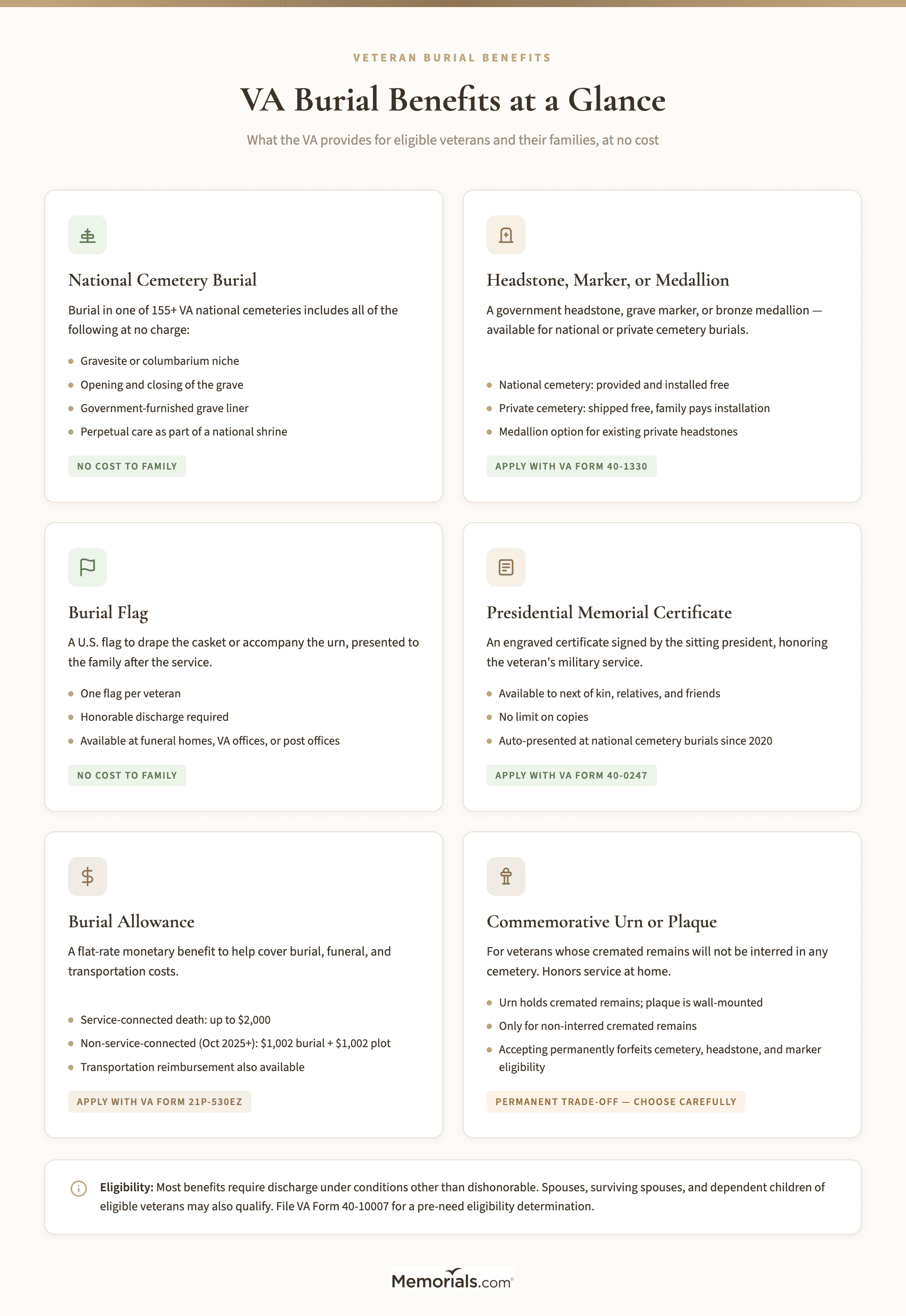
National Cemetery Burial (No Cost to the Family)
Burial in one of the VA's 155 national cemeteries includes the following at no charge:
A gravesite or columbarium niche in a national cemetery with available space
Opening and closing of the grave
A government-furnished grave liner
Perpetual care of the gravesite as part of a national shrine
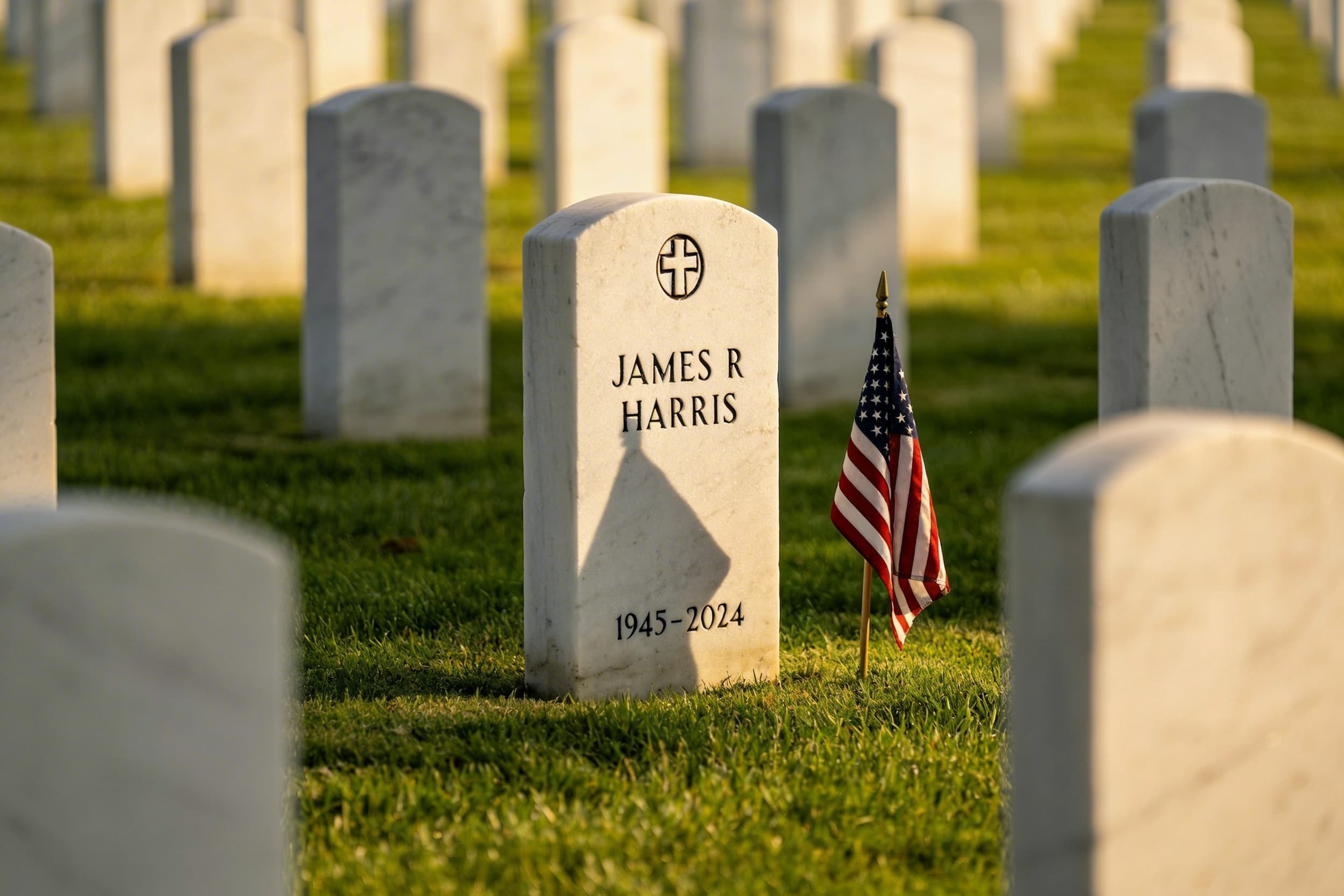
A government headstone, marker, or niche cover
Cremated remains receive the same honors as casketed remains. The VA treats all legal burial types equally, including cremation, burial at sea, and donation of remains to a medical school.
Government Headstone, Marker, or Medallion
The VA provides a headstone, grave marker, or bronze medallion at no cost for any eligible veteran, whether they are buried in a national cemetery or a private one.
For national cemetery burials, the headstone or marker is automatically provided and installed. For private cemetery burials, families can apply using VA Form 40-1330. The government will furnish and ship the headstone or marker, but the family is responsible for setting and installation costs.
Families who have already purchased a private headstone can request a bronze medallion to affix to it. The medallion features the word "VETERAN" across the top and is available in three sizes. To explore your options for purchased markers alongside VA-provided ones, our guide on VA-provided vs purchased grave markers breaks down the differences.
Burial Flag
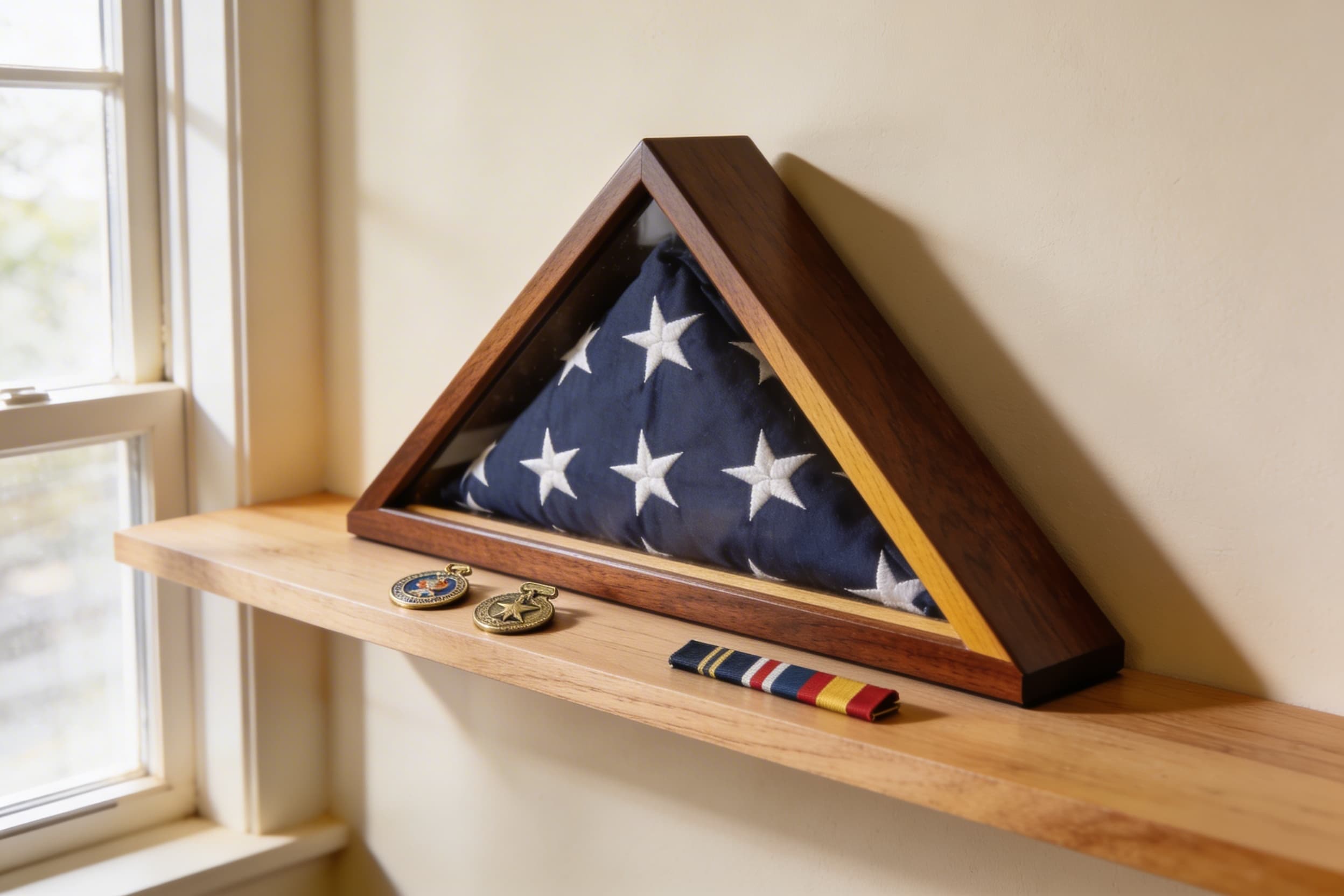
A United States flag is provided at no cost to drape the casket or accompany the urn of any honorably discharged veteran. After the service, the flag is folded and presented to the next of kin. Many families choose to preserve the flag in a flag display case as a lasting tribute.
The burial flag is available through most funeral homes, local VA offices, and U.S. Post Offices. Families need to present a copy of the veteran's DD214 or other proof of honorable service. Only one flag is issued per veteran.
Presidential Memorial Certificate
A Presidential Memorial Certificate (PMC) is an engraved certificate, signed by the sitting president, recognizing a veteran's honorable military service. PMCs are available to next of kin, other relatives, and close friends — and there is no limit on how many copies a family can request.
Since 2020, the VA has automatically presented a PMC to the next of kin when a veteran is buried in a national cemetery. Additional copies can be requested using VA Form 40-0247. The certificate is a meaningful keepsake that many families frame alongside photos, medals, and other service memorabilia.
Burial Allowance
The VA offers a burial allowance — a flat-rate monetary benefit — to help offset funeral, burial, and transportation costs. The amount depends on whether the veteran's death was service-connected and when the death occurred.
Service-connected death: The VA will pay up to $2,000 toward burial expenses for deaths on or after September 11, 2001. There is no time limit to file for a service-connected burial allowance.
Non-service-connected death (died on or after October 1, 2025): The VA pays a $1,002 burial allowance and a $1,002 plot or interment allowance for veterans not buried in a national cemetery. For veterans who died while hospitalized by the VA, the combined total is higher.
Transportation reimbursement: The VA may reimburse the cost of transporting a veteran's remains to a national cemetery or, as of 2025, to a state or tribal veterans cemetery as well.
Surviving spouses listed on the veteran's VA profile often receive the burial allowance automatically after the VA is notified of the death, with no separate claim required. Other eligible claimants file using VA Form 21P-530EZ.
Non-service-connected burial allowance claims must be filed within two years of the veteran's burial or cremation. Service-connected claims have no deadline.
Commemorative Urn or Plaque
For veterans whose cremated remains will not be interred in any cemetery, the VA offers a commemorative urn or plaque at no cost. These items are designed to honor the veteran's service and hold or memorialize the remains at home.
There is an important trade-off families should understand: accepting a VA commemorative urn or plaque permanently forfeits the veteran's eligibility for a national cemetery gravesite, headstone, marker, or medallion. This decision cannot be reversed. To learn more about what the VA provides for cremated remains and how it compares to purchased options, see what the VA provides for veteran urns.
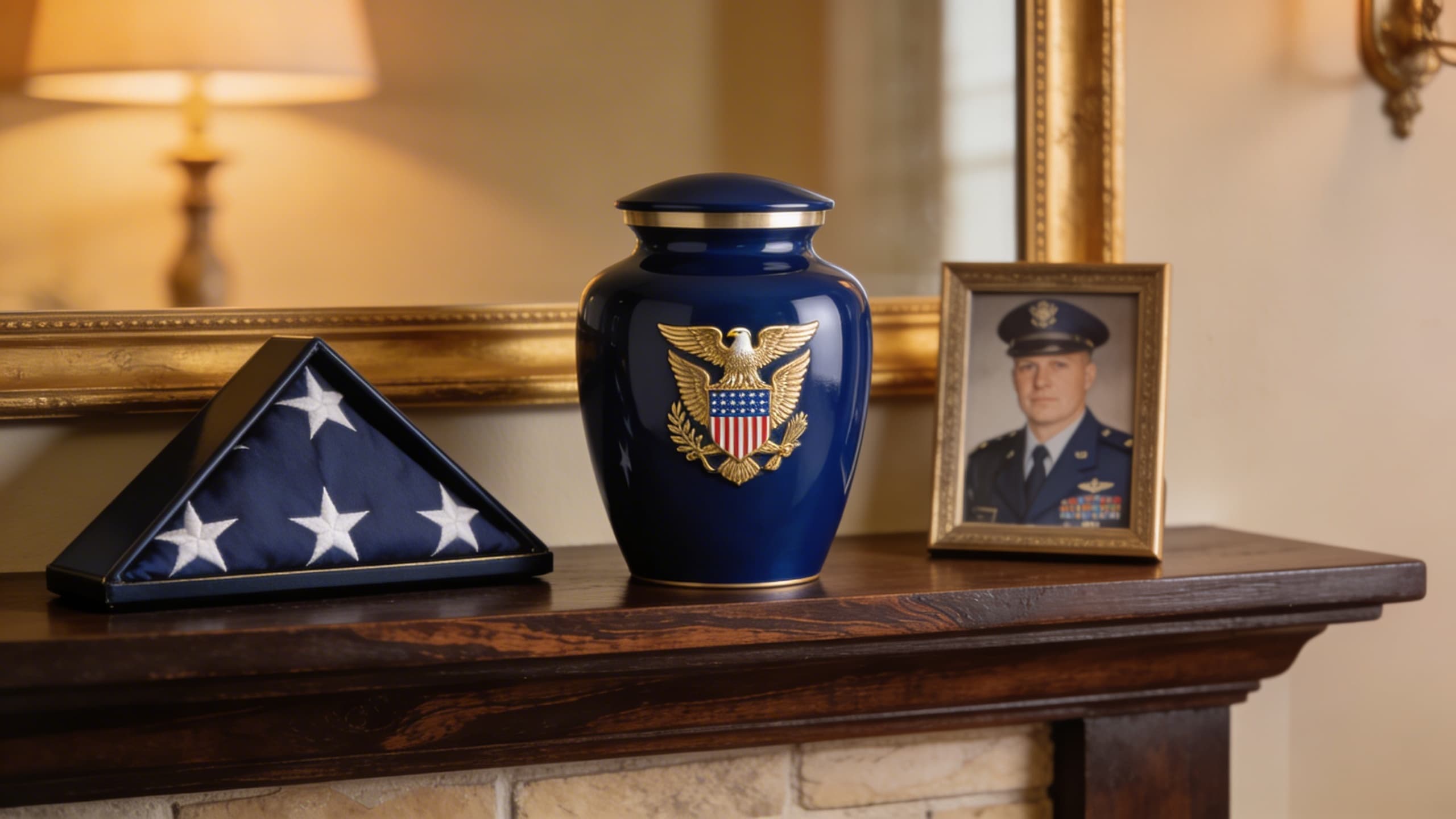
Many families prefer to use a privately purchased urn that reflects the veteran's branch of service, personality, or family traditions. Memorials.com offers a wide selection of military urns with branch emblems and patriotic designs that families can keep at home, display, or bury — without giving up any VA benefits.
National Cemetery vs. Private Cemetery: How Benefits Differ
Understanding which benefits apply to each burial location helps families make informed decisions.
In a national cemetery, the veteran receives a free gravesite, grave liner, headstone or marker, perpetual care, a burial flag, military funeral honors, and a Presidential Memorial Certificate — all at no cost. Spouses and eligible dependents can be buried in the same plot, and their names and dates are inscribed on the veteran's headstone.
In a private cemetery, the veteran is still eligible for a government-furnished headstone, marker, or medallion (shipped free, but the family pays installation), a burial flag, a Presidential Memorial Certificate, and the burial allowance. There is no free gravesite, no grave liner, and no perpetual care from the VA.
Families who choose burial in a private cemetery may also consider purchasing bronze veteran grave markers for a personalized memorial that reflects both military service and family values.
State veterans cemeteries offer a middle ground. The 79 state-run veterans cemeteries often have similar benefits to national cemeteries, though eligibility requirements vary by state and some charge modest fees for dependent family members.
How to Apply for VA Burial Benefits
The application process depends on which benefits you need and when you file.
At Time of Need (Scheduling a Burial)
When a veteran dies, the family or funeral director should contact the National Cemetery Scheduling Office at 1-800-535-1117. The office is available seven days a week to schedule interments on weekdays. You will need:
The veteran's DD214 or other discharge documentation
The veteran's full legal name and Social Security number
Date and place of birth and death
Branch of service and dates of service
The family's preference for a national cemetery (subject to availability)
Fax discharge documents to 1-866-900-6417 and follow up by phone.
Pre-Need Eligibility Determination
Families do not have to wait until a death occurs to confirm eligibility. The VA's pre-need eligibility program allows veterans, spouses, and unmarried dependent adult children to apply in advance using VA Form 40-10007. This process:
Confirms eligibility while the veteran is still alive
Stores the application and supporting documents on file
Speeds up the burial scheduling process at time of need
Reduces stress and rushed decisions during a difficult period
A pre-need approval does not reserve a specific gravesite or obligate anyone to choose burial in a national cemetery. It simply confirms eligibility so the family is prepared.
Applying for the Burial Allowance
File VA Form 21P-530EZ online at VA.gov or by mail. Include a copy of the veteran's death certificate, an itemized funeral expense receipt, and the DD214. For non-service-connected deaths, the claim must be filed within two years of the burial or cremation.
For details on typical processing times and what to expect at each stage, our VA benefits timeline and process guide walks through the full sequence from application to payment.
Requesting a Headstone, Marker, or Medallion
For private cemetery burials, submit VA Form 40-1330 (headstone/marker) or VA Form 40-1330M (medallion). Include a copy of the DD214 and the cemetery's written agreement to accept and maintain the marker. Processing typically takes 8 to 12 weeks.
Common Mistakes Families Make
Navigating VA burial benefits during grief is difficult, and several common errors can delay or reduce what a family receives.
Not filing the burial allowance on time. For non-service-connected deaths, the two-year filing deadline is firm. Families who wait too long lose the benefit entirely. Service-connected claims have no deadline, but families should file as soon as practical.
Accepting a VA commemorative urn without understanding the trade-off. This permanently disqualifies the veteran from a national cemetery gravesite, headstone, or marker. Families should be certain they do not want any of those benefits before accepting the urn or plaque.
Assuming a less-than-honorable discharge means no benefits. Some discharges that are not fully honorable still qualify for certain benefits. A "general under honorable conditions" discharge, for example, usually still qualifies. Only a dishonorable discharge is an automatic bar. Families can also apply for a discharge upgrade.
Not having the DD214 accessible. The DD214 is the single most important document for VA burial benefits. If the family cannot locate it, the National Personnel Records Center (NPRC) can retrieve a copy — but the process can take days or weeks. Store the DD214 with other important end-of-life documents.
Waiting until the day of need to start. The pre-need eligibility program exists precisely to avoid last-minute scrambling. Filing VA Form 40-10007 while the veteran is alive costs nothing and saves the family significant stress.
Timeline: How Long Does the Process Take?
The timing of VA burial benefits depends on which benefit and how the application is filed.
National cemetery burial scheduling: Same-day or next-day scheduling is usually possible when discharge documents are in hand. If documents must be retrieved from the NPRC, expect a few additional days.
Burial allowance processing: Claims filed online through VA.gov are typically processed faster than paper submissions mailed to a Pension Management Center. Processing times vary, but many claims are resolved within a few months.
Headstone or marker delivery: Government-furnished headstones and markers for private cemetery burials typically arrive within 8 to 12 weeks after the application is approved.
Presidential Memorial Certificate: PMCs presented at a national cemetery burial are given the same day. Additional copies requested by mail generally arrive within several weeks.
Pre-need eligibility determination: Processing takes a few weeks. The VA will mail a written decision letter that the family should keep with the veteran's important papers.
Choosing Memorial Products for a Veteran
Beyond what the VA provides, many families choose to purchase additional memorial items that honor the veteran's service in a more personalized way.
Military caskets featuring branch-specific emblems and patriotic finishes allow families to reflect the veteran's identity during the funeral service. For cremation, military urns with hand-painted branch insignia, flag motifs, and service emblems offer a dignified way to keep or display a veteran's remains.
Families who receive a burial flag often choose a flag display case to protect and showcase the flag at home. Cases range from simple walnut frames to elaborate shadow boxes that hold medals, patches, and other service memorabilia alongside the folded flag.
Frequently Asked Questions
Can a veteran's spouse be buried in a national cemetery even if they die first?
Yes. Eligible spouses and dependent children can be buried in a national cemetery even if they predecease the veteran. The VA will hold the gravesite for the veteran's eventual burial.
Does cremation disqualify a veteran from VA burial benefits?
No. Cremated remains are buried or inurned in national cemeteries with the same honors as casketed remains. The VA provides benefits for all legal burial types, including cremation, burial at sea, and donation of remains to a medical school.
How much does the VA pay for a veteran's funeral?
For service-connected deaths, the VA pays up to $2,000 toward burial expenses. For non-service-connected deaths of veterans who died on or after October 1, 2025, the VA pays a $1,002 burial allowance and a $1,002 plot or interment allowance. Transportation reimbursement may also be available.
What is a DD214 and where do I get one?
A DD214 is the official military discharge document that proves a veteran's service and discharge status. It is the primary document needed for nearly every VA benefit. If the family does not have a copy, request one from the National Personnel Records Center (NPRC) by submitting SF-180 online at eVetRecs.
Can I pre-plan a burial in a national cemetery?
Yes. The VA's pre-need eligibility determination program lets veterans and eligible family members confirm eligibility in advance by filing VA Form 40-10007. This does not reserve a specific gravesite but speeds up the process at time of need.
Whether your family is planning ahead or navigating immediate arrangements, understanding these benefits ensures your veteran receives the full honors they earned through service. Explore Memorials.com's complete selection of military and veteran memorial products to find the right tribute for your hero.