🏬Supersize Online Funeral Retailer🪦1000's of Headstones⚱️Over 10,000 Cremation Urns⚰️Caskets Overnight Delivery🛒Funeral & Memorial Superstore🚚FREE Shipping on ALL Orders👨👩👧👦Helping Families for over 20 Years💰Lowest Price Guarantee🏬Supersize Online Funeral Retailer🪦1000's of Headstones⚱️Over 10,000 Cremation Urns⚰️Caskets Overnight Delivery🛒Funeral & Memorial Superstore🚚FREE Shipping on ALL Orders👨👩👧👦Helping Families for over 20 Years💰Lowest Price Guarantee
🏬Supersize Online Funeral Retailer🪦1000's of Headstones⚱️Over 10,000 Cremation Urns⚰️Caskets Overnight Delivery🛒Funeral & Memorial Superstore🚚FREE Shipping on ALL Orders👨👩👧👦Helping Families for over 20 Years💰Lowest Price Guarantee🏬Supersize Online Funeral Retailer🪦1000's of Headstones⚱️Over 10,000 Cremation Urns⚰️Caskets Overnight Delivery🛒Funeral & Memorial Superstore🚚FREE Shipping on ALL Orders👨👩👧👦Helping Families for over 20 Years💰Lowest Price Guarantee
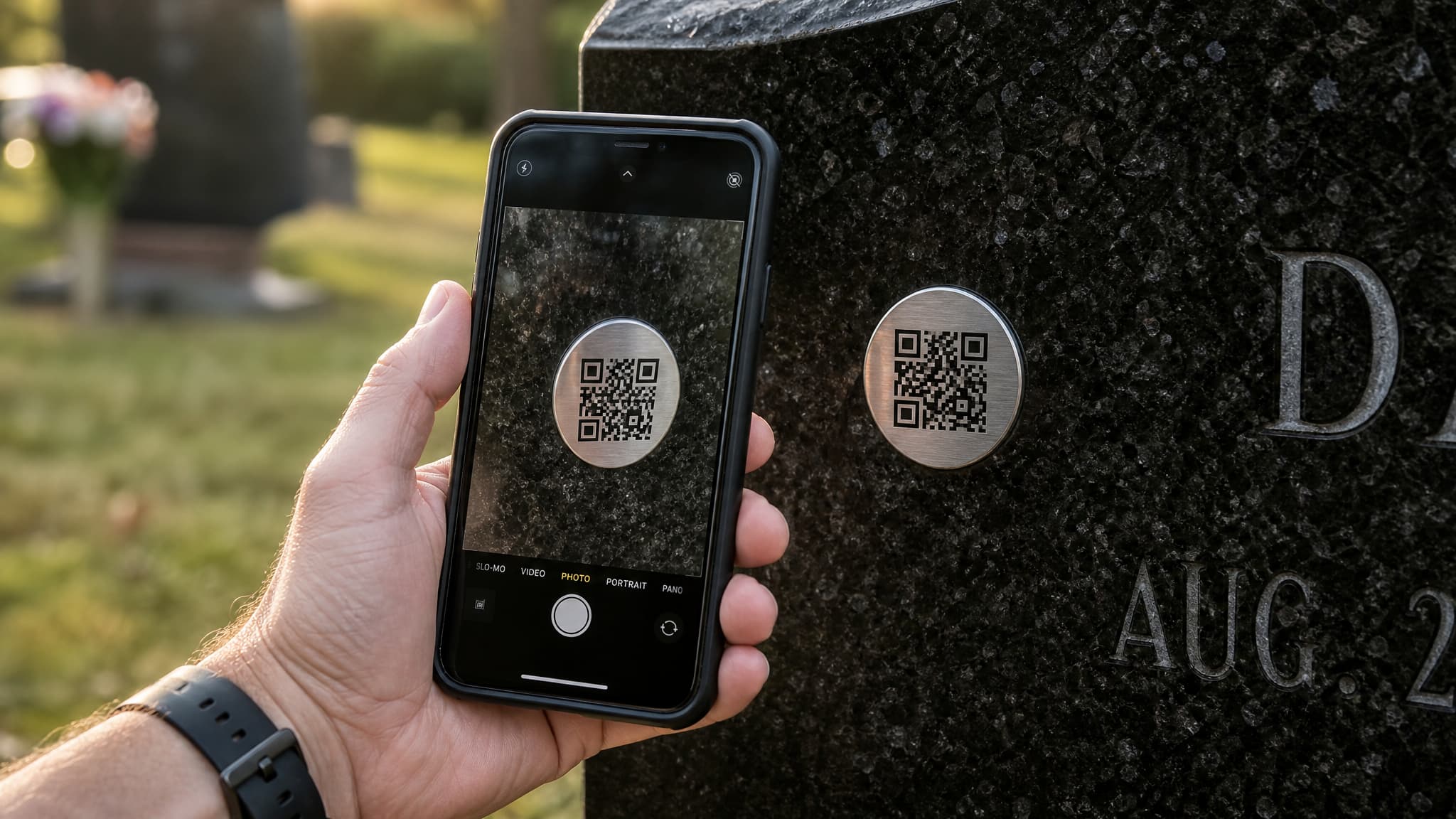
A headstone holds a name, two dates and perhaps a line of verse. That is roughly forty words to stand for a whole life, and it is the constraint every memorial has worked within for centuries. A grave QR code is an attempt to get around it: a small scannable square or medallion fixed to the marker, which opens a page carrying photographs, an obituary, recorded voices, and as much else as the family wants to put there.
The idea is genuinely good. The execution has one serious problem that almost nobody selling these will raise with you, and it is the reason this guide spends as much time on longevity as on features.
What a Grave QR Code Actually Is
Two separate things, and it helps to keep them apart.
The marker. A physical object on the grave carrying the code — a metal medallion bonded to the stone, a plaque bolted to it, a code sandblasted or laser-etched into the granite, or a code integrated into the monument when it is made.
The page. A web address the code resolves to, hosted by somebody, containing whatever the family uploaded.
The code itself is only a printed link. It holds no photographs and no information about the person; it holds a URL. Everything that makes a digital grave memorial worth having lives on a server owned by a company, and that is where the risk sits.
Shop Grave Markers and Plaques
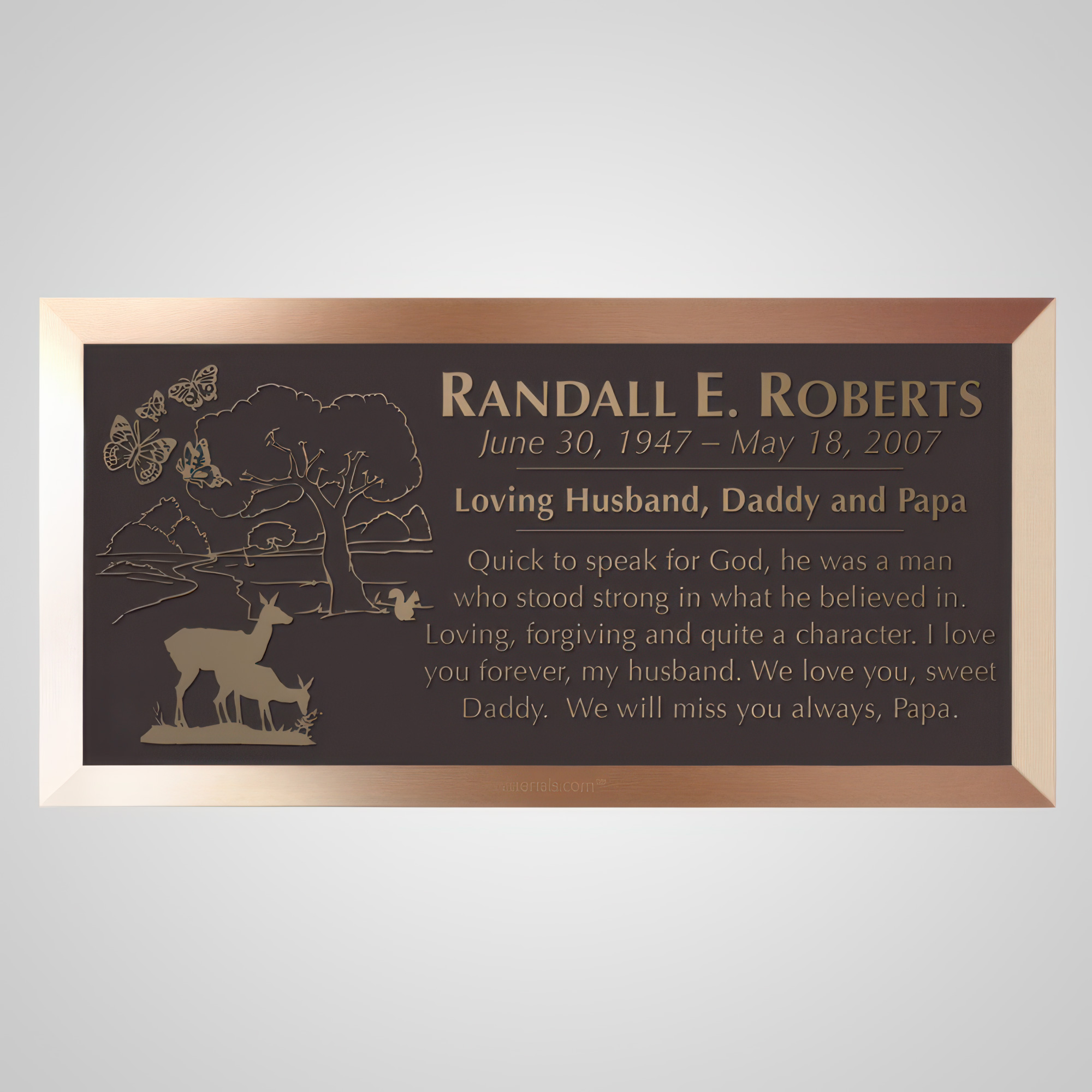
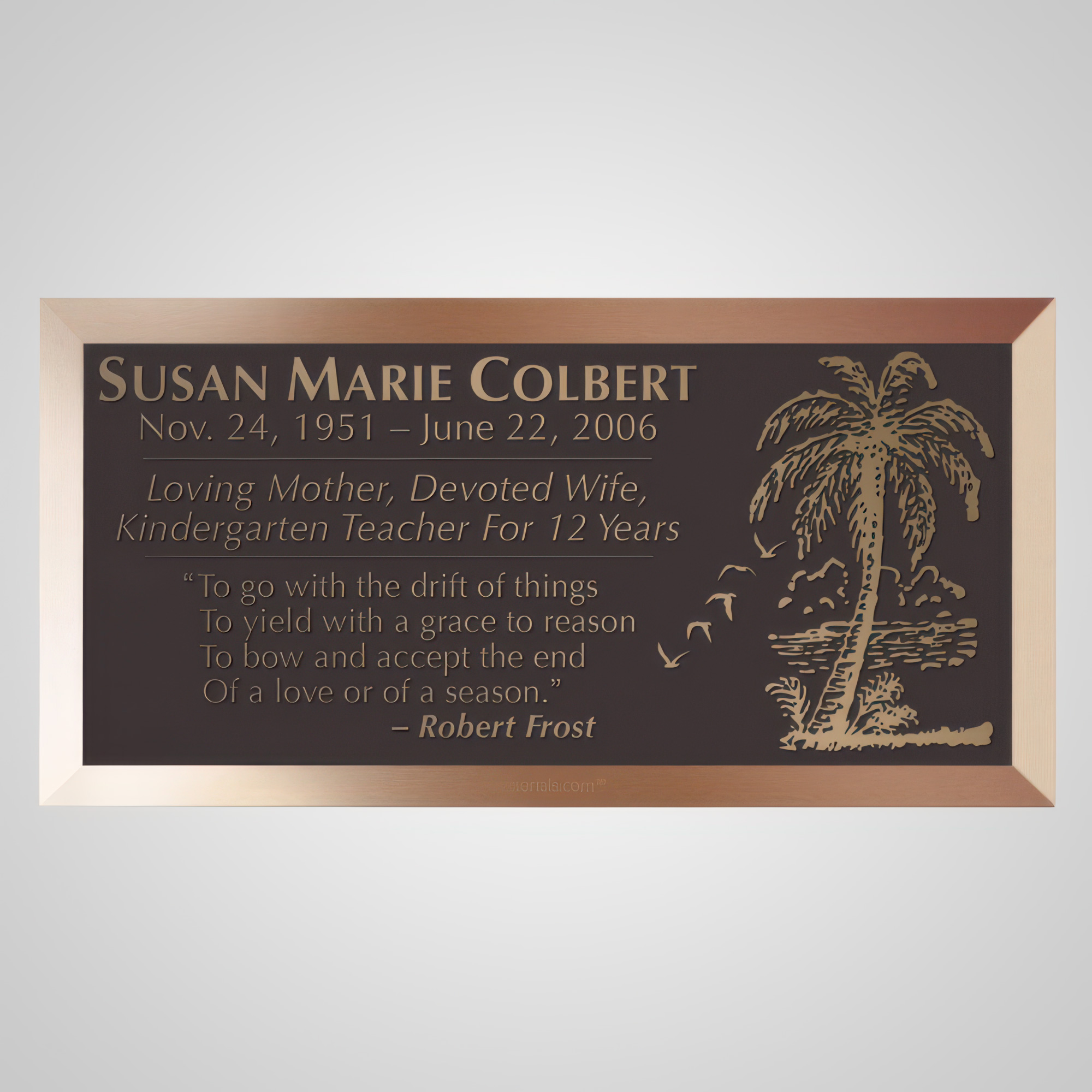
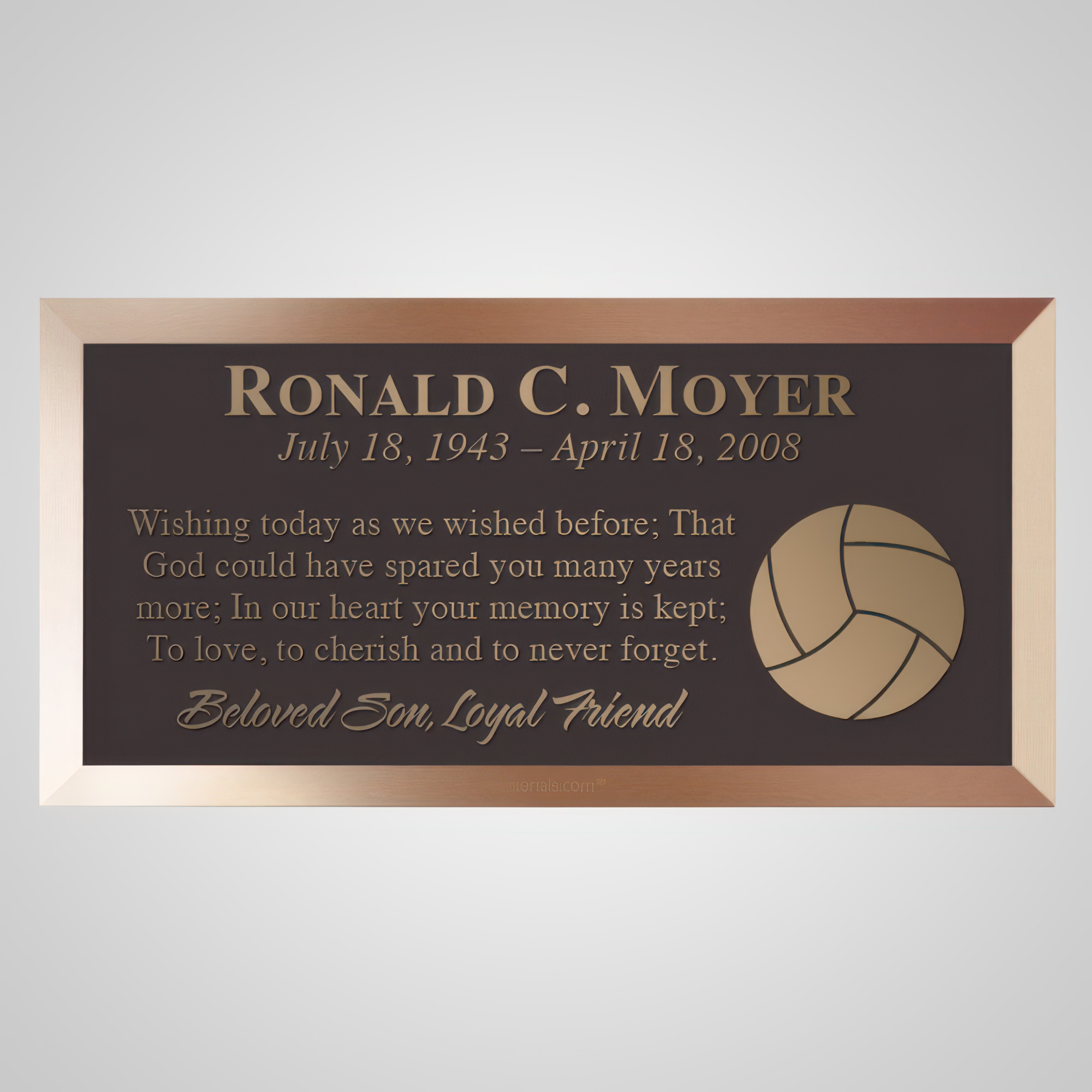
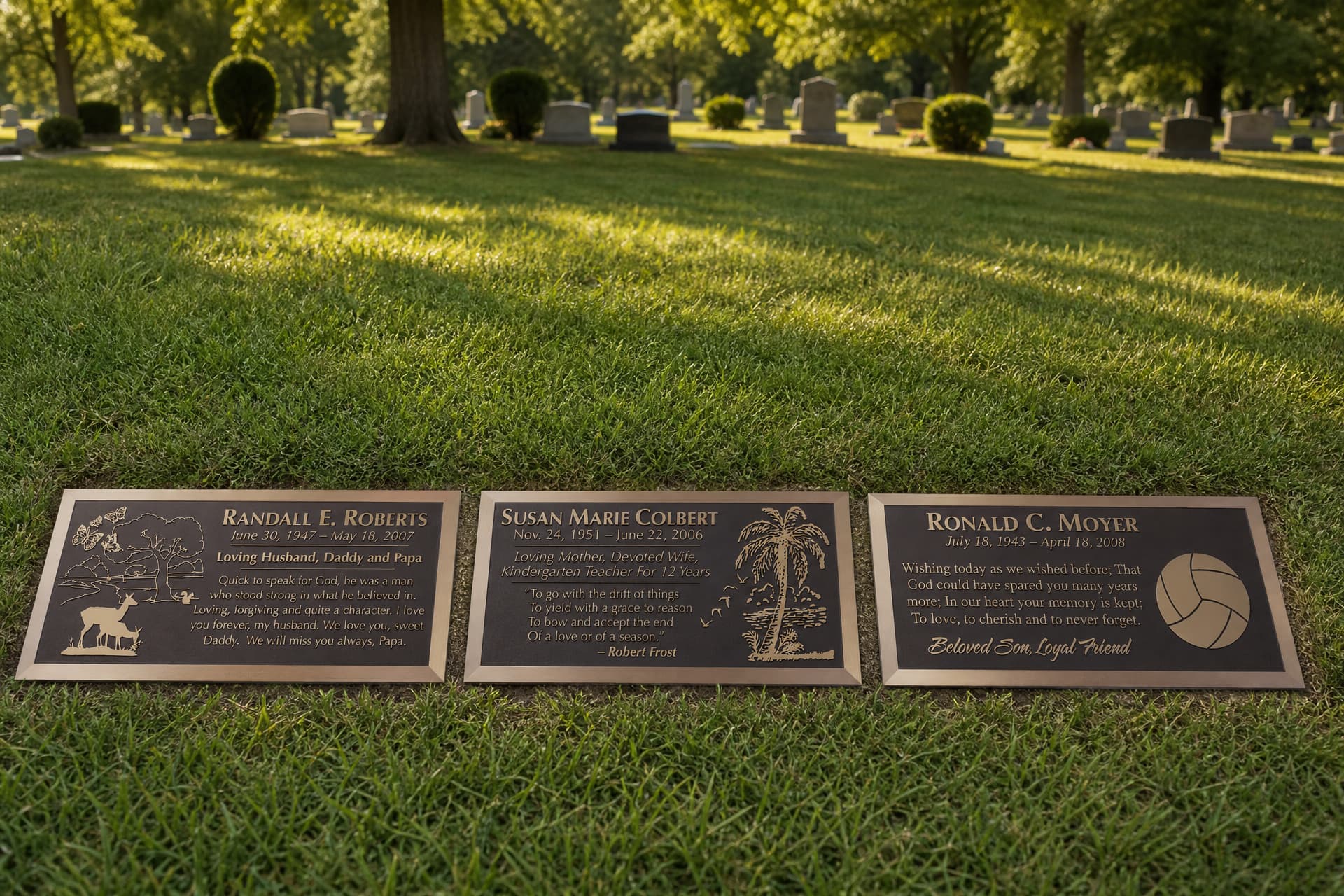
Bronze and granite memorials that carry a name permanently, scan code or not
The typical memorial page carries some mixture of:
A photograph gallery, which is the feature families use most
The full obituary, rather than the abbreviated version on the stone
Dates, places, and family relationships for anyone researching later
Recorded audio or video — a voice, a favorite song, a message recorded before death
A guest book where visitors can leave a note after scanning
Military service records, which is a common use in veterans' sections
A map pin to the grave itself, which is more useful than it sounds in a large cemetery
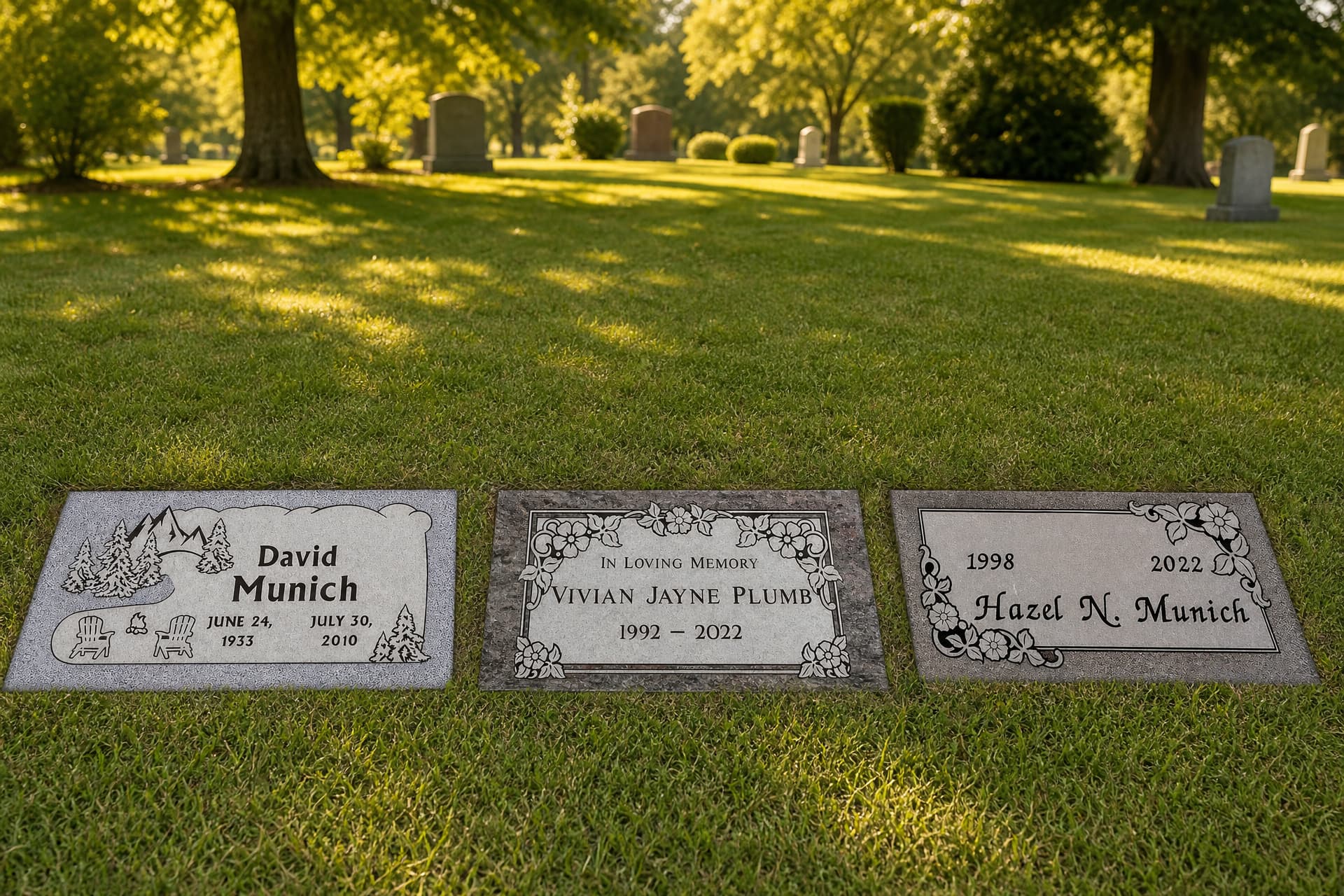
Our guide to how to put a picture on a headstone covers the permanent alternatives — ceramic portraits and laser etching — that a scannable gallery is often chosen instead of, or alongside.
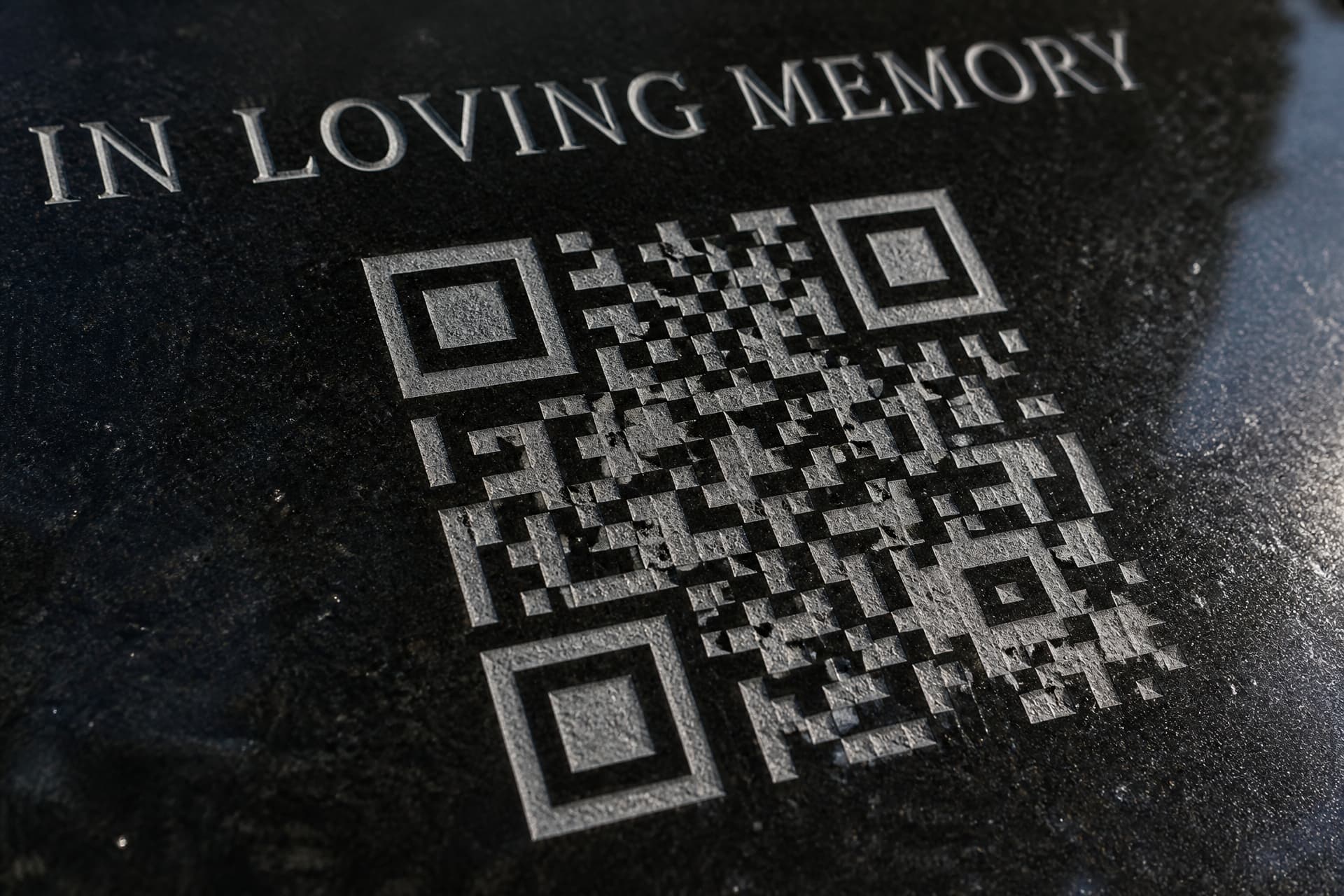
Cut into the stone, this code has the same life expectancy as the monument. It also cannot be changed if the address behind it ever moves.
The Formats, and How Long Each Lasts
This is the part that decides whether the thing still works in twenty years.
Adhesive medallion. A metal or ceramic disc bonded to the stone face. Cheapest and simplest, fitted to an existing monument in minutes. It is also the format most likely to fail: adhesives release under freeze-thaw cycling, and a medallion that comes off is usually gone.
Mechanically fixed plaque. Bolted or pinned into drilled holes. Considerably more secure and the standard for anything intended to last. It requires drilling a monument, which many cemeteries treat as a modification needing permission. The fixing method is the same one used for conventional bronze plaques, so a monument dealer who has never fitted a code has almost certainly fitted the hardware.
Etched or sandblasted directly into the stone. The code is cut into the granite like any other engraving. This is the only format with the same life expectancy as the monument, because it is the monument. The tradeoff is that it cannot be changed: if the web address ever moves, the code is wrong forever. Our memorial engraving guide covers how the cutting itself is done.
Integrated at manufacture. Built into a new marker by the monument company, usually as a recessed plaque. Cleanest result, only available if you are ordering a new memorial.
A practical note on all four: codes need contrast and a flat surface to scan reliably. A code etched into polished black granite with no infill can be very hard for a phone to read, especially in bright sun. Ask to see one working outdoors before committing.
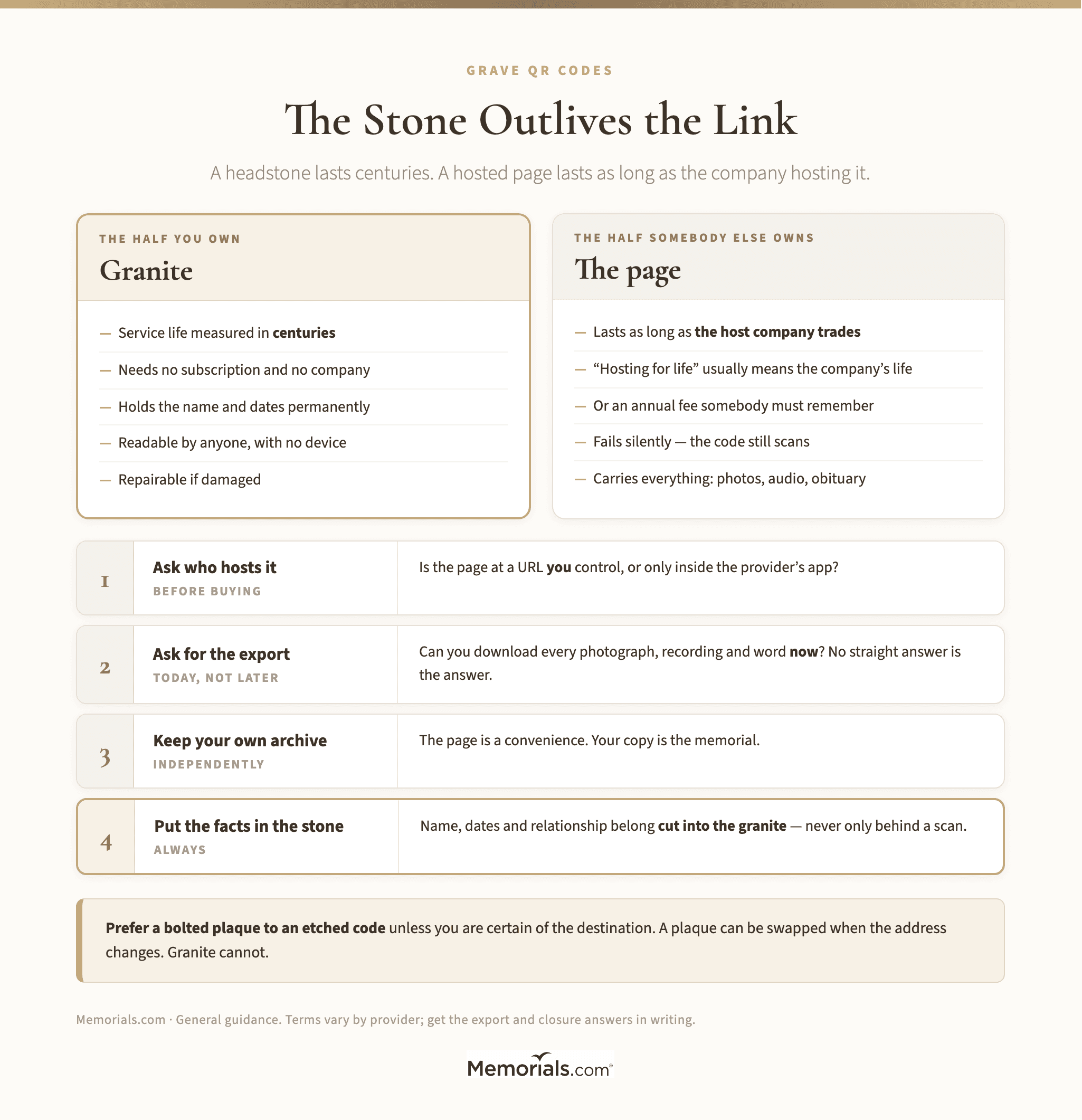
Granite is measured in centuries and a hosted page in the commercial life of its host. Four questions that separate a serious provider from a hopeful one.
The Question to Ask Before You Buy
Who is hosting the page, and what happens to it if that company stops trading?
A granite headstone has a service life measured in centuries. A hosted web page has a service life measured by the commercial survival of whoever hosts it. Those are not remotely the same number, and the mismatch is the central weakness of every digital headstone product on the market.
Most are sold with a one-time fee covering hosting "for life," which is a phrase worth reading carefully — it usually means the life of the company, not the life of the family. Some charge an annual subscription instead, which is more honest about the ongoing cost but creates a different failure: the page disappears when somebody forgets to renew it, quite possibly after the person who set it up has died.
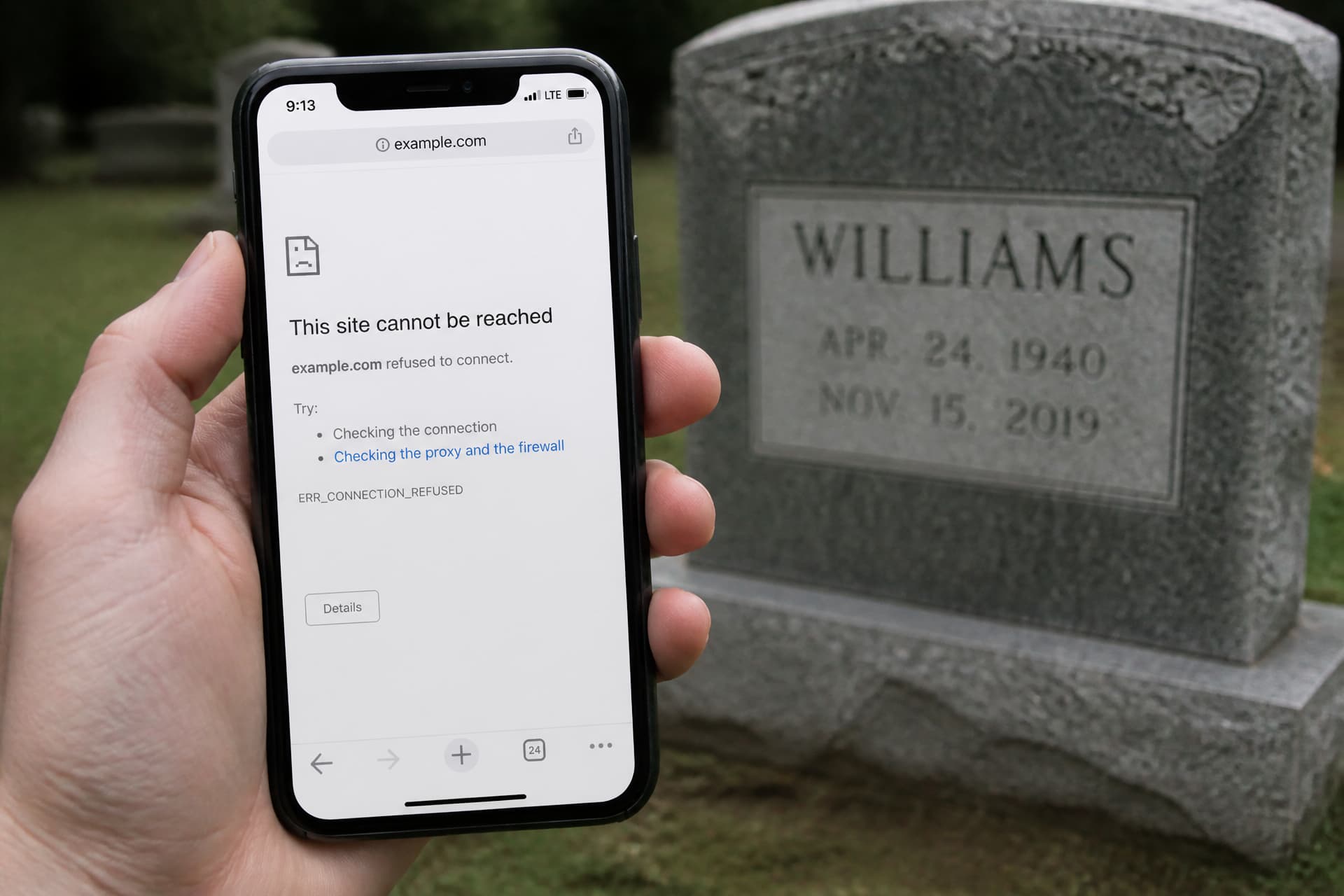
Neither model is wrong. But both mean the scannable part of the memorial can stop working while the stone stands there looking permanent, and a code that resolves to nothing is worse than no code at all, because it reads as neglect.
Five questions that separate a serious provider from a hopeful one:
Is the page reachable at a URL you control, or only through the provider's app?
Can you export everything — photographs, audio, text — in a usable form, today?
What is written down about what happens if the company closes or is sold?
Is there a transfer or escrow arrangement, and is it contractual or merely intended?
How long has the company been operating, and on what funding?
If you cannot get a straight answer to the export question, treat that as the answer.
How to Make It Survive Anyway
You can hedge the risk substantially without giving up the feature.
Keep your own copy. Every photograph, every recording, every word of text, stored by the family independently of the service. The page is a convenience; your archive is the memorial.
Point the code at something durable. A code pointing at a permanent, well-established address is far safer than one pointing at a start-up's platform.
Prefer a replaceable marker over an etched one unless you are confident about the destination. A bolted plaque can be swapped when the address changes. Granite cannot.
Put the essential facts on the stone itself. Name, dates, and relationship belong in the inscription, not only behind a scan. The code should add to the monument, never carry its only content.
What Cemeteries Allow
Rules vary and you must ask, but the pattern is consistent.
Cemeteries rarely object to a code in principle. What they regulate is the physical attachment to the monument: drilling, bonding, and anything that projects above a flush marker's surface. Sections with flush-marker-only rules are the most restrictive, because a raised medallion breaks the mowing line that rule exists to protect.
A second layer applies in a churchyard or a consecrated section, where the question is one of fitting appearance rather than maintenance. Some will decline a modern medallion on a traditional stone.
Ask three things: whether a code is permitted at all in that section, whether drilling the monument is allowed, and who must do the fitting. Our cemetery planning guide covers how to get a straight answer from a cemetery office, and our notes on headstone installation cover why cemeteries care so much about who touches a monument.
Cost, and What Drives It
Budget for three separate things, because providers bundle them differently and the bundling is where the confusion lives.
The physical marker — the medallion, plaque, or engraving on the stone
The fitting — which may involve drilling and may have to be done by an approved installer
The hosting — one-time or annual, for the page itself
An adhesive medallion with a basic page is the cheap end. An integrated plaque on a new monument, professionally fitted, with a long-term hosting commitment, is a different order of expense. The variable worth paying for is the hosting arrangement rather than the metal, because the metal is the part that will be fine.
Privacy, Which Is Worth Thinking About Once
A grave QR code is public by construction. Anyone who walks past can scan it, including people the family does not know.
That is usually fine and often lovely — it is how a stranger learns who they are standing over. But it is worth deciding deliberately rather than by default what goes on the page: full dates of birth for living relatives, home addresses, and photographs of children are the items most often regretted. Many services offer a private or password-protected tier for exactly this reason.
If the Code on a Grave Has Already Stopped Working
This is increasingly common, because the first wave of these products is now more than a decade old and several of the companies behind them are gone.
What link rot looks like at the graveside. The code still scans perfectly; there is simply nothing at the other end of it any more.
Scan it anyway and read the error. A page that loads but is empty means the service is alive and the content was removed or the account lapsed — often recoverable by contacting the provider. A domain that does not resolve at all means the company is gone.
Try the Internet Archive. Paste the address the code resolves to into the Wayback Machine. Memorial pages were frequently crawled, and a snapshot may still hold the photographs and the text. This works more often than people expect, and it is the single most useful thing to try first.
Look for the provider's successor. Several of these services were acquired rather than closed, and the content moved to a new platform under a new address. The original company name plus the word acquired is usually enough to find out.
Then decide what to do with the marker itself. A bolted plaque can be unbolted and replaced with a working one, or removed entirely. An etched code cannot be removed, but it can be left as what it now is: a small piece of the monument's own history, recording that a family in that decade tried something new. That is not a bad thing for a headstone to carry.
Test It Before You Accept the Work
Two minutes at the graveside, before the installer leaves.
Scan the code with a phone that has never seen it before, so nothing is cached. Do it in direct sunlight and again in shade, because contrast problems only show in one of the two. Check the page loads fully on mobile data rather than on any cemetery wifi. Then have somebody else scan it with a different make of phone.
If it only works from one angle, or only on one handset, it will only get worse as the surface weathers.
Frequently Asked Questions
Do QR codes on headstones actually get scanned? Yes, though usually by family and by visitors who already knew the person rather than by passers-by. The map-pin and obituary functions get more use than the guest book.
Will a QR code still scan in twenty years? The code will, if it is physically intact — the format is a published standard and phones read it fine. Whether the page still exists is the open question, and it is a question about the company, not the technology.
Can I add one to an existing headstone? Usually yes, with the cemetery's permission. An adhesive medallion needs no drilling; a bolted plaque does. Confirm before ordering.
What is a QR medallion headstone? It is a headstone fitted with a small round scannable disc, typically in bronze or stainless steel. The medallion is the marker, not the memorial — the content lives online.
Does a code replace the inscription? It should not. Names and dates belong cut into the stone. Our range of headstones and of commemorative plaque options covers the permanent formats, and our guide to how to clean a headstone covers keeping both stone and fitting legible.
Is NFC a better option than a QR code? A tap-to-open NFC chip avoids the scanning-contrast problem and looks tidier, but it adds electronics to an outdoor object and it fails silently. The link-rot question is identical for both.
A Good Idea That Needs One Answer
A scannable code genuinely solves a real limitation: a headstone cannot hold a life, and a page can. The feature is worth having.
Just do not buy it as though the digital half is as permanent as the granite half. Ask who is hosting the page, get the export answer in writing, keep your own archive, and put the facts that must survive into the stone. Then the code is a bonus rather than a dependency — which is the only way it should ever have been sold.
For the memorial underneath it — the plot, the monument, and the rules that govern both — start with our guide to how to buy a cemetery plot.