🏬Supersize Online Funeral Retailer🪦1000's of Headstones⚱️Over 10,000 Cremation Urns⚰️Caskets Overnight Delivery🛒Funeral & Memorial Superstore🚚FREE Shipping on ALL Orders👨👩👧👦Helping Families for over 20 Years💰Lowest Price Guarantee🏬Supersize Online Funeral Retailer🪦1000's of Headstones⚱️Over 10,000 Cremation Urns⚰️Caskets Overnight Delivery🛒Funeral & Memorial Superstore🚚FREE Shipping on ALL Orders👨👩👧👦Helping Families for over 20 Years💰Lowest Price Guarantee
🏬Supersize Online Funeral Retailer🪦1000's of Headstones⚱️Over 10,000 Cremation Urns⚰️Caskets Overnight Delivery🛒Funeral & Memorial Superstore🚚FREE Shipping on ALL Orders👨👩👧👦Helping Families for over 20 Years💰Lowest Price Guarantee🏬Supersize Online Funeral Retailer🪦1000's of Headstones⚱️Over 10,000 Cremation Urns⚰️Caskets Overnight Delivery🛒Funeral & Memorial Superstore🚚FREE Shipping on ALL Orders👨👩👧👦Helping Families for over 20 Years💰Lowest Price Guarantee
Memorial Engraving Guide: Inscriptions for Urns, Headstones & Markers
memorialization
Memorial engraving transforms stone, metal, and wood into lasting tributes. Whether you are personalizing a granite headstone, adding a nameplate to a cremation urn, or selecting an inscription for a bronze plaque, the process involves a series of decisions that shape how your loved one is remembered for generations.
This guide walks through every step — from choosing an engraving method and material to selecting meaningful words and placing your order. If you are looking for specific inscription ideas by relationship, cost breakdowns, or design inspiration, you will find dedicated articles for each topic in the Hub Library at the end of this page.
What Is Memorial Engraving?
Memorial engraving is the process of cutting, etching, or casting text, images, and symbols onto a memorial surface. The term covers a wide range of products — from headstones and flat grave markers to urns for ashes, memorial plaques, and placed in gardens or at gravesites.
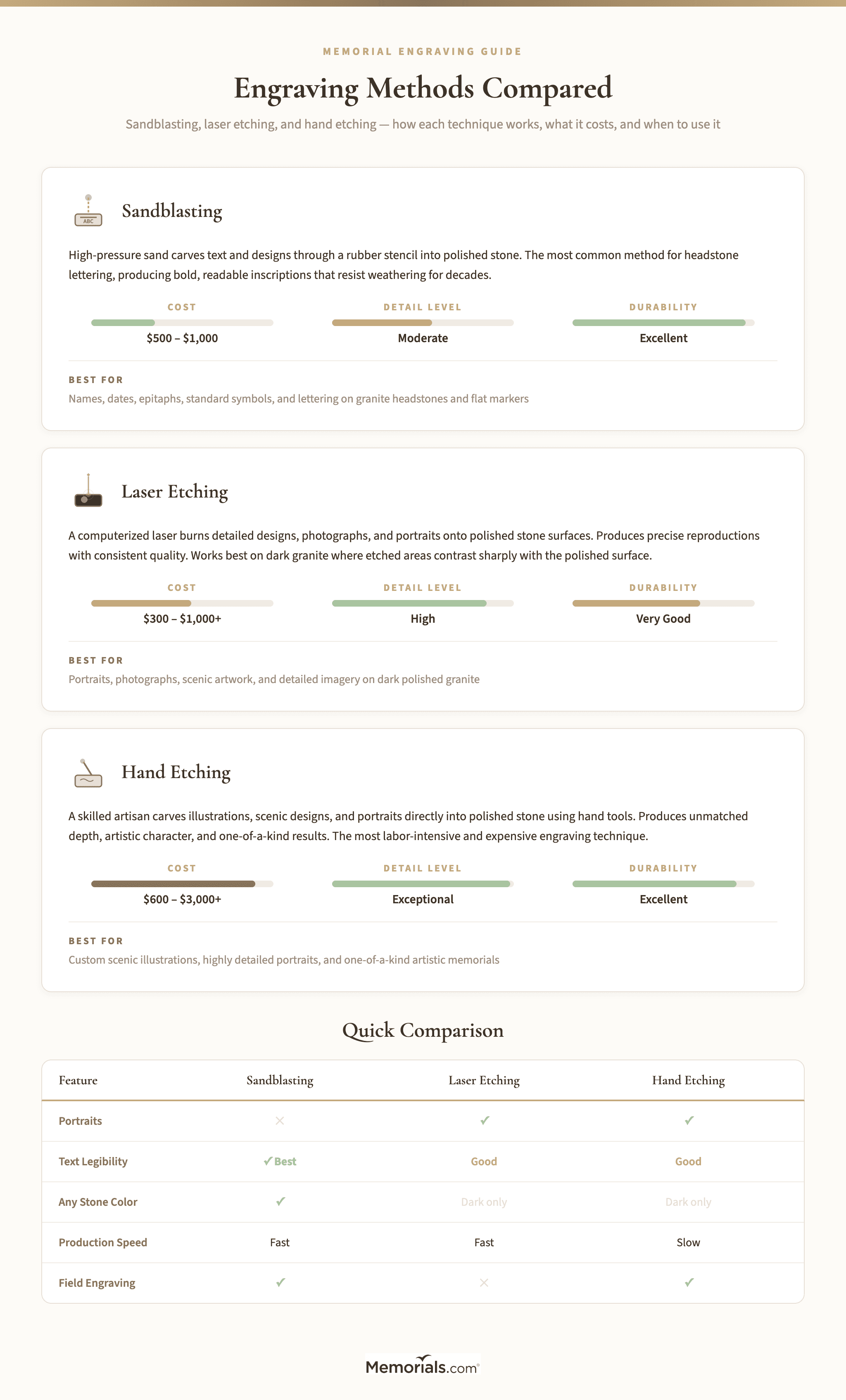
Three primary engraving methods are used across the memorial industry:
Sandblasting is the most common technique for granite headstones and markers. A rubber stencil is cut with the desired lettering or design and applied to the polished stone surface. High-pressure sand then carves the exposed areas, creating permanent recessed lettering. Sandblasting produces three levels of detail: flat carving (standard lettering), shape carving (dimensional ornament), and relief carving (raised designs with sculptural depth). Each level adds cost and production time.
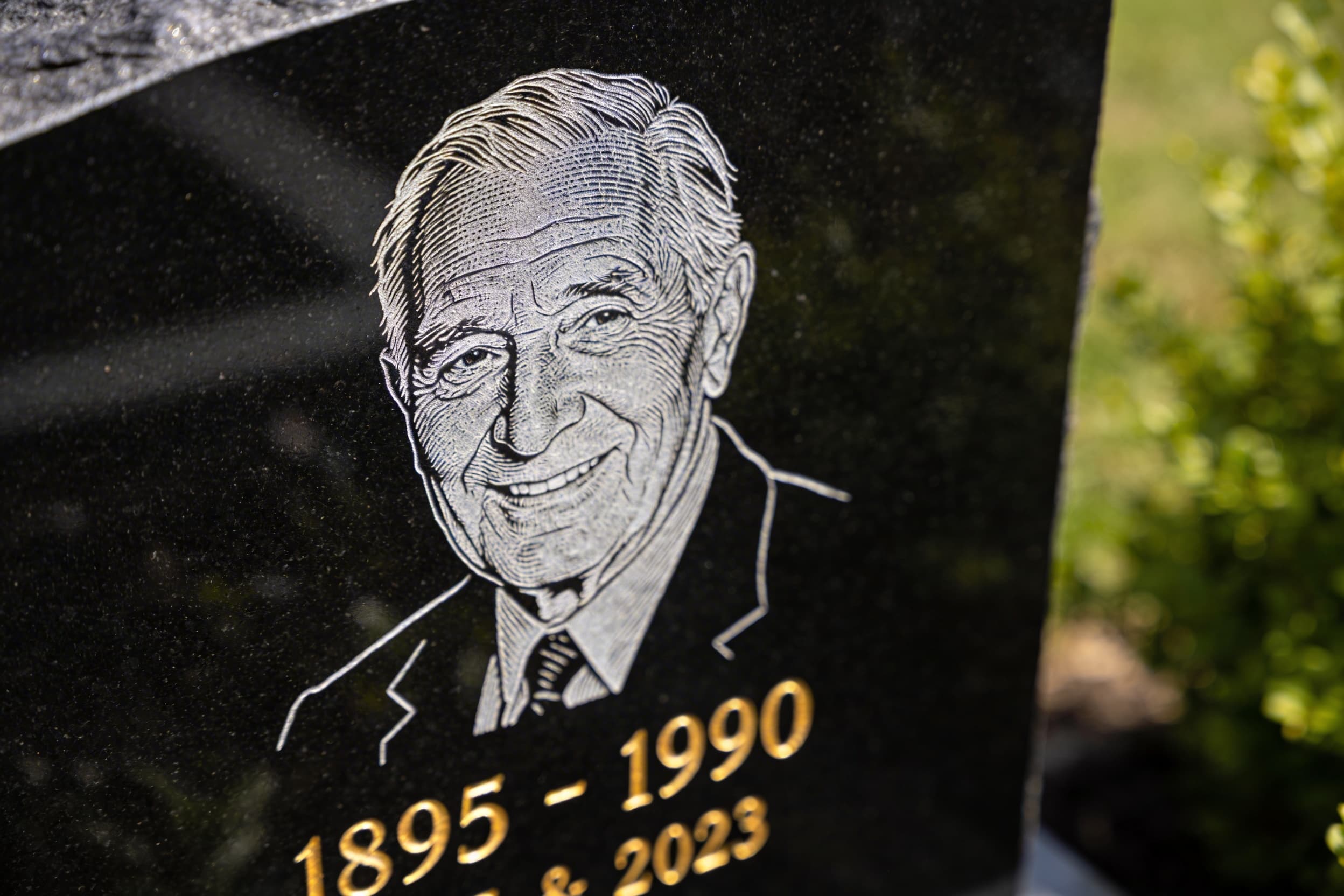
Laser etching uses a computerized laser beam to burn designs directly into polished stone. It reproduces photographs, portraits, and detailed artwork with precision that sandblasting cannot match. Laser etching works best on dark granite — particularly jet black — where the contrast between the etched surface and the polished stone is most visible. It is generally less expensive than hand etching and produces highly consistent results.
Hand etching is the most artistic and labor-intensive method. A skilled artisan uses hand tools to carve illustrations, scenic imagery, or portraits directly into polished stone. The technique produces unmatched depth and character, but it costs significantly more than sandblasting or laser etching and requires an engraver with specialized training.
Materials That Accept Engraving
The memorial surface determines which engraving methods are possible and how the finished inscription will look and hold up over time.
Granite is the most widely used headstone material. Its hardness makes it ideal for sandblasting and laser etching, and engraved granite resists weathering for decades. Darker granites show laser-etched images with sharper contrast, while lighter colors highlight the depth of sandblasted lettering filled with black litho paint.
Marble accepts engraving well and offers a classic, elegant appearance. It is softer than granite, which allows for finer hand-carved detail but also makes it more susceptible to erosion over time. Many older cemeteries feature marble headstones with inscriptions that have softened after a century of exposure.
Bronze is used for flat grave marker plaques, niche plates, dedication plaques, and headstone accent panels. Bronze inscriptions are typically cast rather than carved — the text and imagery are molded into the metal during fabrication. Cast bronze lettering is extremely durable and does not erode the way stone engravings can. Over time, bronze develops a natural patina that many families find appealing.
Wood is most commonly engraved on cremation urns. Wooden urns accept laser engraving, hand routing, and inlaid nameplates. The natural grain of woods like walnut, cherry, and oak creates a warm backdrop for engraved text and simple designs.
Metal urns and nameplates — including brass, stainless steel, and pewter — are typically engraved using rotary engraving (a spinning bit that cuts into the surface) or laser marking. An urn nameplate is a small engraved plate that attaches to any urn, making personalization possible even on urns that are not directly engravable.
Headstone Engraving Basics
Headstone engraving is often the most permanent inscription a family will choose. The text, layout, and design elements will be visible for generations, so careful planning is essential.
What to Include on a Headstone
Most headstone inscriptions follow a standard structure:
Name — the full legal name or the name the person was commonly known by. Some families include maiden names, nicknames, or titles.
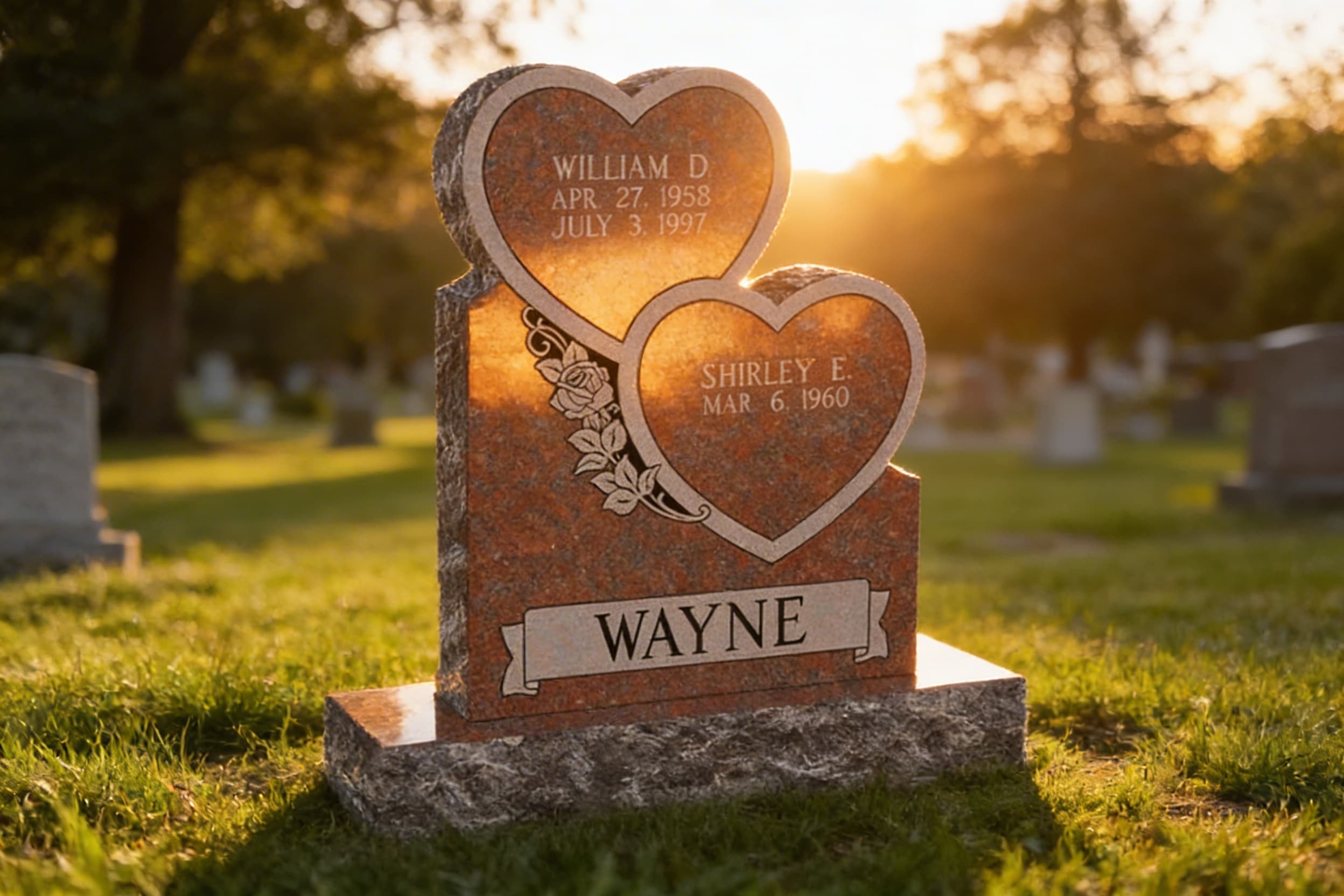
Dates — birth and death dates, typically formatted as Month Day, Year. Companion headstones often include one set of complete dates and a second set with only the birth date, leaving space for the final date to be added later via a bronze death date scroll or field engraving.
Relationship line — a short descriptor like "Beloved Mother," "Devoted Husband," or "Loving Father and Grandfather." This line anchors the inscription with a personal connection.
Epitaph or memorial verse — a short phrase, quote, or scripture passage that captures the spirit of the person. This is the most personalized element of the headstone and the one families spend the most time choosing. For comprehensive inscription ideas, see our collection of beautiful words to put on a headstone.
Military service information — for veterans, rank, branch of service, and service dates are commonly included. The U.S. Department of Veterans Affairs also provides government-issued headstones and markers at no charge.
Character Limits and Layout
Headstone engraving space is finite. An upright monument offers more room than a flat marker, and a companion headstone designed for two people must accommodate twice the information in a single layout.
Font size matters for legibility — text that looks good on a proof sheet may be difficult to read from a standing position several feet away. Most memorial providers recommend keeping epitaphs to one or two short lines and using a font size large enough to read comfortably outdoors. Clean spacing between lines and a balanced layout create a more dignified appearance than cramming additional text into available space.
For a detailed look at the headstone engraving process, including how sandblasting stencils are made and what to expect during production, see our dedicated article.
Companion and Double Headstones
Families who plan for two people to share a single headstone need to think about layout symmetry, consistent formatting, and future engraving. Many couples choose to have both names and birth dates engraved at the time of purchase, with the second death date added later. This approach is more cost-effective than returning to engrave the full second inscription years later, because field engraving (engraving at the cemetery rather than in a shop) typically costs $300 or more for the setup and travel alone.
Cremation urns are personalized through several methods depending on the urn material. Unlike headstones, urn engravings are typically viewed up close — on a mantel, in a niche, or displayed in a home — so fine detail and craftsmanship are more visible.
Urn Nameplates
The most common form of urn personalization is a nameplate — a small engraved metal plate that is attached to the exterior of the urn. Nameplates can be added to virtually any urn material (wood, ceramic, metal, marble, or stone) and are offered in brass, pewter, and silver-tone finishes.
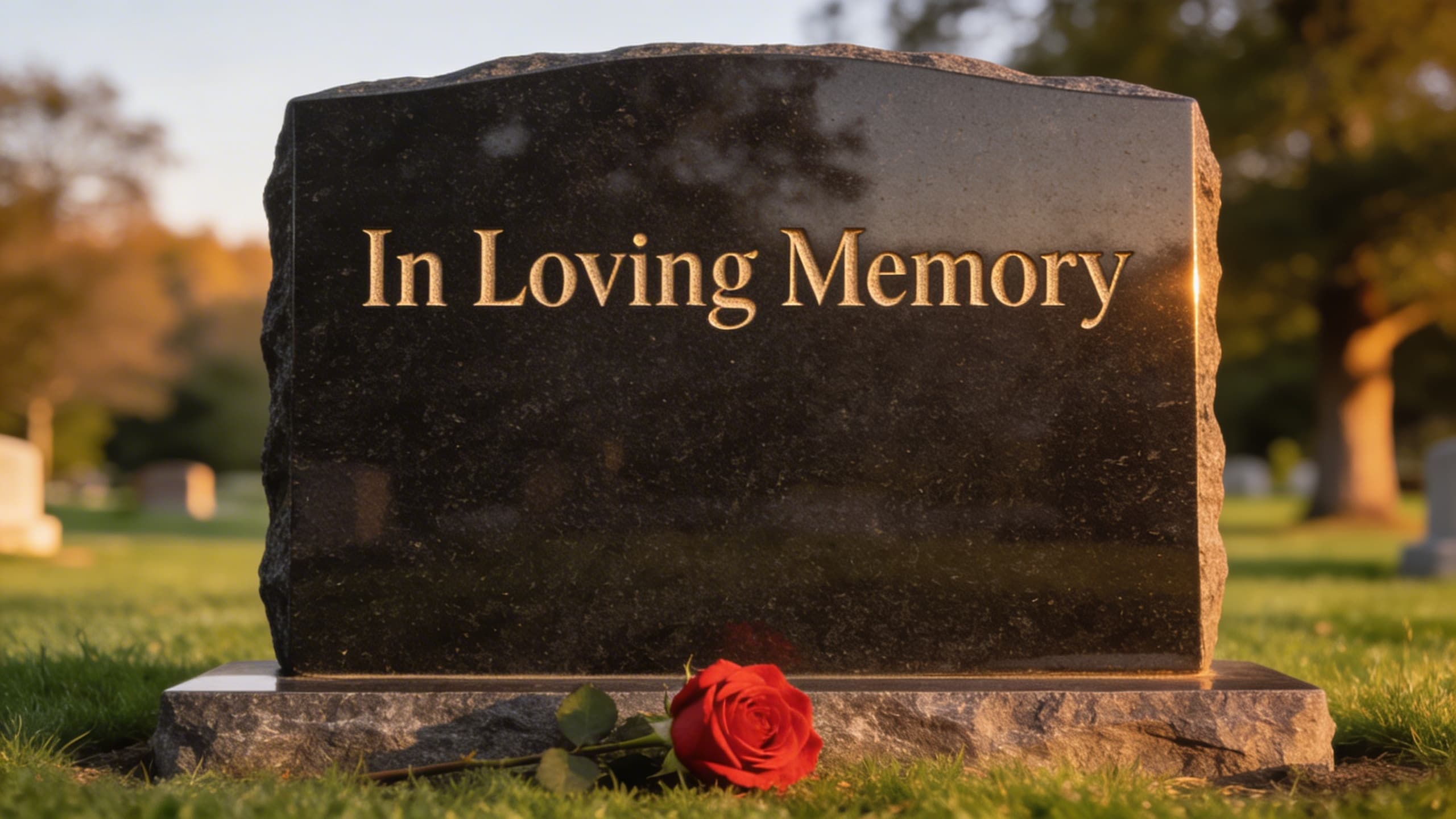
A standard nameplate inscription includes the name, dates, and optionally a short phrase — typically three to four lines of text. Because the engraving area is small, keeping inscriptions concise is essential. Families often choose a simple "In Loving Memory" or "Forever in Our Hearts" alongside the name and dates.
Some urns are designed for direct engraving — the text is cut, lasered, or routed directly into the urn surface rather than added via a plate.
Wood urns accept laser engraving beautifully. Names, dates, and simple line art can be burned into the wood surface with clean precision. Darker woods like walnut show laser engraving with better contrast than lighter woods like maple.
Marble and stone urns can be sandblasted or laser-etched using the same techniques applied to headstones, though on a smaller scale.
Metal urns — brass, pewter, and bronze — are personalized through rotary engraving or laser marking. The engraved lines are then filled with paint or enamel to create contrast against the polished surface.
Pet Urn Engraving
Pet cremation urns follow the same personalization principles as human urns, though inscriptions tend to be shorter and more informal. A pet urn might read simply "Buddy — Best Friend Always" alongside paw-print artwork. For detailed guidance on personalizing a pet memorial, see what to engrave on a pet urn.
Plaque and Marker Inscriptions
Memorial plaques are among the most versatile engraved products. They appear on cemetery niches, garden benches, memorial trees, building dedications, and display stands for urns.
Bronze Cemetery Plaques
Bronze plaques are cast rather than engraved. The text and design elements are formed during the casting process, which produces raised lettering against a textured background. Cast bronze plaques are extremely durable and resist weathering. Color options for the background — including brown, green, blue, and black — allow families to match the plaque to its setting.
Bronze grave marker plaques are a popular alternative to traditional stone markers, particularly in cemeteries that require flat memorials. They combine the permanence of cast metal with a wide range of personalization options including ceramic portraits, emblems, and custom imagery.
Garden and Dedication Plaques
Garden plaques and dedication plaques are used in non-cemetery settings — on memorial benches, at the base of trees, on garden rocks, and on building walls. Because plaque sizes vary widely, inscriptions can range from a single line to a full paragraph. For wording ideas suited to plaques and short-form dedications, see our guide to short memorial plaque quotes.
Memorial Rocks and Stones
Engraved memorial stones serve as garden memorials, pet grave markers, and informal tributes placed in meaningful outdoor spaces. They accept sandblasting and laser etching and are available in natural river rock, polished granite, and slate. Inscriptions on memorial rocks are typically short — a name, a date range, and a brief sentiment.
How Much Does Memorial Engraving Cost?
Engraving costs vary widely depending on the method, material, and complexity of the design. Here is a general overview:
Basic headstone lettering (sandblasted names, dates, and a short inscription) is often included in the headstone purchase price from reputable memorial providers. When priced separately, standard lettering runs approximately $500 to $1,000.
Laser-etched portraits and detailed artwork add $300 to $1,000 or more depending on size and complexity. Small etchings on dark granite start around $300, while large scenic illustrations or multi-portrait etchings can cost several thousand dollars.
Hand-etched artwork is the premium option, often costing more than double the price of a laser-etched piece of comparable size.
Urn nameplate engraving is typically the most affordable form of personalization, ranging from $25 to $75 for standard text on a brass or pewter plate.
Field engraving — adding or updating an inscription on a headstone that is already installed at the cemetery — usually costs $300 or more to cover travel, setup, and on-site sandblasting.
For a comprehensive cost breakdown including per-character pricing, regional variations, and money-saving strategies, see how much it costs to engrave a headstone.
Choosing the Right Words
Selecting an inscription is often the most emotionally challenging part of the memorial process. The words must be meaningful, fit the available space, and stand the test of time.
Tips for Choosing Memorial Inscriptions
Start with structure, not poetry. The most readable inscriptions follow a clean format: name, dates, relationship line, and one short sentiment. This framework works on headstones, urns, and plaques alike.
Match the tone to the person. A formal quote may feel right for one family and wrong for another. A nickname or personal detail — "Always Gardening" or "Coffee First" — can capture a personality more effectively than a traditional verse.
Keep it short. Shorter inscriptions age better visually and are easier to read, especially on headstones viewed from a standing distance. If a longer quote is important, consider placing it on a memorial card, program, or keepsake rather than on the engraved surface.
Consider the audience. A headstone inscription is public and permanent. An urn nameplate viewed in a private home can be more informal or personal. Match the level of intimacy to the setting.
Relationship-Specific Inscriptions
Families searching for inscription ideas often look for wording tailored to their specific relationship with the person being remembered. We have created dedicated guides for the most common relationships:
An epitaph is a brief text honoring the deceased, often inscribed on a headstone or tomb. The tradition stretches back thousands of years, and epitaphs range from solemn religious verses to witty one-liners that celebrate a life lived with humor.
Beyond words, memorial engravings often include visual design elements that add beauty, meaning, and personalization to the finished piece.
Fonts and Lettering Styles
Font selection affects both readability and tone. Serif fonts like Times and Roman convey tradition and formality. Script fonts add elegance but may sacrifice legibility, particularly at smaller sizes or when viewed from a distance. Sans-serif fonts offer a clean, modern look suitable for contemporary memorials.
Most memorial providers offer a catalog of approved fonts, and the best ones will provide a proof showing exactly how the chosen font renders at the correct size on the selected stone or plate. For a visual overview of font choices and how they pair with different design elements, see headstone engraving design ideas.
Symbols and Imagery
Common engraved symbols include crosses, hearts, doves, flowers (particularly roses and lilies), military emblems, Masonic symbols, and religious icons. Many families also choose hobby-related imagery — a fishing rod, musical notes, a golf club — to reflect the person's passions.
On headstones, symbols are typically sandblasted or laser-etched alongside the text. On bronze plaques, symbols are cast as part of the design. On urns, symbols may be laser-engraved, hand-carved, or incorporated through an inlaid design.
Ceramic memorial portraits — high-quality photographic images fused onto ceramic — are another popular option for headstones. These oval or rectangular portraits are permanently mounted to the stone and provide a lifelike image of the person alongside their inscription.
Design Ideas and Creative Inspiration
For families seeking broader design inspiration beyond inscriptions, our guides to tombstone design ideas and pet epitaph ideas cover creative approaches to memorial design across a wide range of styles and traditions.
How to Order Memorial Engraving
Understanding the ordering process helps families feel confident and avoid surprises. Whether you are ordering a new headstone with engraving, adding an inscription to an existing stone, or personalizing a cremation urn, the general workflow follows a similar pattern.
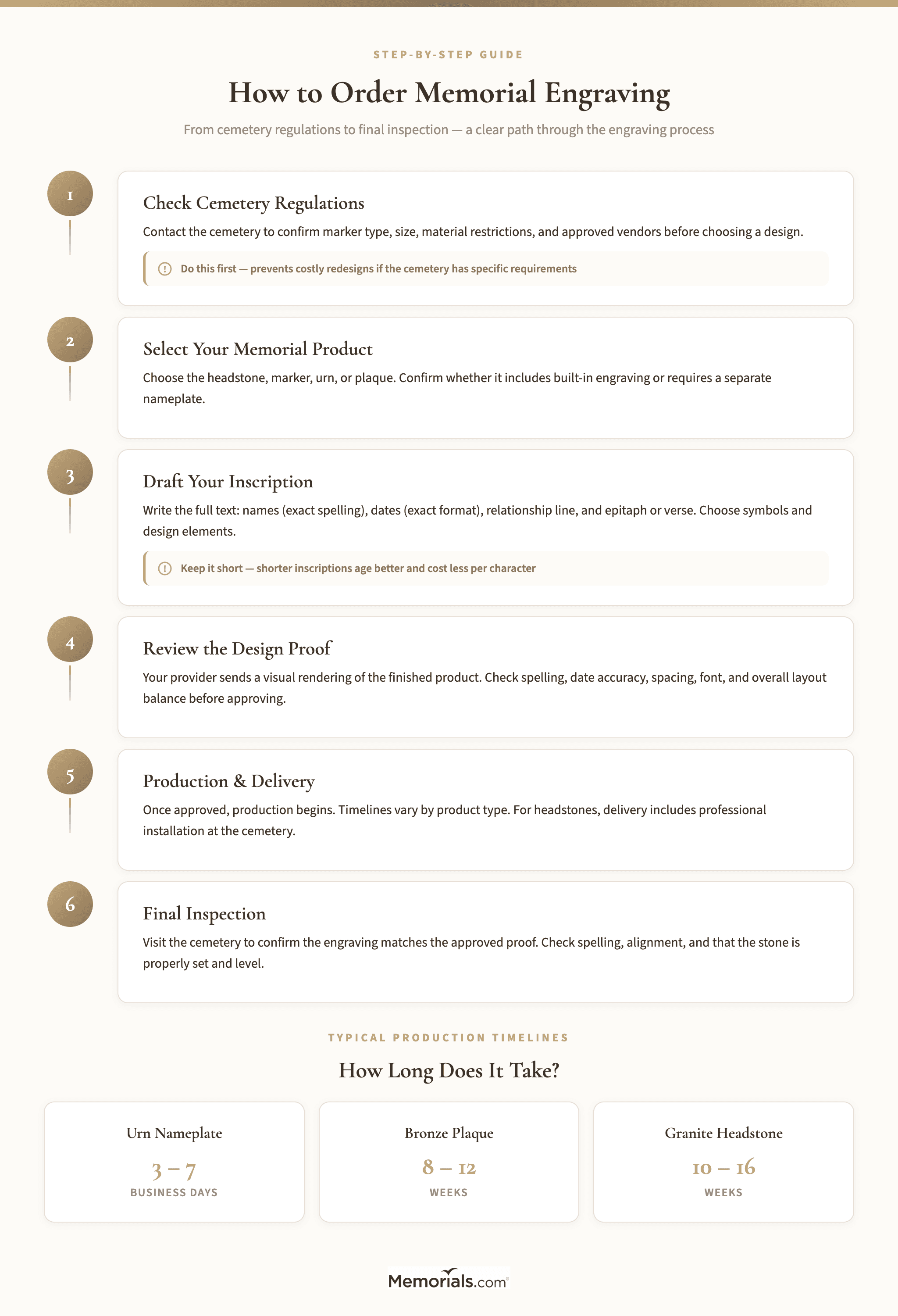
Step 1: Check Cemetery Regulations
Before finalizing any headstone design, contact the cemetery to confirm their requirements. Many cemeteries restrict marker types (flat only, upright only, or specific dimensions), approved materials, and even font styles. Some require that all headstones be purchased through an approved vendor, while others accept stones from outside providers as long as they meet size and material specifications. Understanding these rules first prevents costly redesigns.
Step 2: Select Your Memorial Product
Choose the headstone, marker, urn, or plaque that fits your needs. Consider whether the product is designed for engraving — some urns and plaques come with built-in engraving areas, while others require the addition of a separate nameplate. Browse our complete selection of bronze headstones, granite headstones, cremation urns, and memorial plaques to find the right fit.
Step 3: Draft Your Inscription
Write out the full text you want engraved. Include names (confirm exact spelling), dates (confirm exact format), relationship lines, and any epitaph or verse. If you are unsure what to write, our inscription guides linked throughout this page and in the Hub Library section below will help you find the right words.
Step 4: Review the Design Proof
A reputable memorial provider will send you a proof — a visual rendering showing exactly how the inscription, fonts, symbols, and layout will appear on the finished product. Review the proof carefully. Check spelling, date accuracy, spacing, and overall balance. Ask the provider to make adjustments before approving.
Step 5: Production and Delivery
Once the proof is approved, production begins. Timelines vary: urn nameplates may be completed in days, while custom headstones can take 10 to 16 weeks or longer depending on stone sourcing, design complexity, and shipping distance. Bronze plaques that are cast to order typically require 8 to 12 weeks.
For headstones, delivery includes installation at the cemetery. Installation fees cover foundation preparation, transport, and setting the stone. These fees are separate from the engraving cost and vary by cemetery and region.
Step 6: Final Inspection
After installation, visit the cemetery to inspect the finished memorial. Confirm that the engraving matches the approved proof and that the stone is properly set and level. Address any concerns with the provider promptly — reputable companies stand behind their work and will correct errors.
Frequently Asked Questions
How long does headstone engraving take?
Standard headstone engraving — sandblasted names, dates, and a short inscription — is typically completed within the overall headstone production timeline of 10 to 16 weeks. Adding a laser-etched portrait or hand-etched artwork extends the timeline by one to four additional weeks. Field engraving on an existing headstone at the cemetery can usually be scheduled within two to four weeks.
Can I add engraving to an existing headstone?
Yes. Field engraving allows a monument company to add or update inscriptions on a headstone that is already installed. This is most common for adding a death date to a companion headstone. The engraver brings portable sandblasting equipment to the cemetery and works on-site. Costs for field engraving start around $300 and increase based on the amount of text and the location's accessibility.
What is the difference between engraving and etching?
Engraving (specifically sandblast carving) cuts into the stone to create recessed lettering and designs. The carved areas are often filled with paint for contrast. Etching — whether by laser or by hand — marks the polished surface of the stone without carving deeply into it. Etching produces detailed imagery and portraits, while engraving produces the bold, readable lettering used for names and dates. Many headstones combine both techniques.
How many characters can I fit on a headstone?
Character limits depend on the headstone size, font selection, and how many design elements share the space. A standard upright headstone can accommodate a full name, dates, a relationship line, and a two-line epitaph comfortably. Flat markers have less space and may require shorter inscriptions. Your memorial provider will show you exactly what fits during the proofing process.
Is urn engraving included in the urn price?
Some urns include basic nameplate engraving in the purchase price, while others sell the urn and the nameplate or engraving service separately. Always confirm with the seller whether personalization is included, and if so, how many lines of text and what design options are covered.
Hub Library: Memorial Engraving Guide
Explore every article in the Memorial Engraving Guide for detailed information on specific engraving topics, inscription ideas by relationship, and creative design inspiration.
Every family's tribute is unique. Whether you are selecting a headstone, personalizing a cremation urn, or choosing a dedication plaque for a garden memorial, the right engraving transforms a product into a lasting expression of love.
If you have questions about engraving options for any product, our team is here to help you create a memorial that honors your loved one with dignity and care.