🏬Supersize Online Funeral Retailer🪦1000's of Headstones⚱️Over 10,000 Cremation Urns⚰️Caskets Overnight Delivery🛒Funeral & Memorial Superstore🚚FREE Shipping on ALL Orders👨👩👧👦Helping Families for over 20 Years💰Lowest Price Guarantee🏬Supersize Online Funeral Retailer🪦1000's of Headstones⚱️Over 10,000 Cremation Urns⚰️Caskets Overnight Delivery🛒Funeral & Memorial Superstore🚚FREE Shipping on ALL Orders👨👩👧👦Helping Families for over 20 Years💰Lowest Price Guarantee
🏬Supersize Online Funeral Retailer🪦1000's of Headstones⚱️Over 10,000 Cremation Urns⚰️Caskets Overnight Delivery🛒Funeral & Memorial Superstore🚚FREE Shipping on ALL Orders👨👩👧👦Helping Families for over 20 Years💰Lowest Price Guarantee🏬Supersize Online Funeral Retailer🪦1000's of Headstones⚱️Over 10,000 Cremation Urns⚰️Caskets Overnight Delivery🛒Funeral & Memorial Superstore🚚FREE Shipping on ALL Orders👨👩👧👦Helping Families for over 20 Years💰Lowest Price Guarantee
An urn necklace holds something irreplaceable: a small, symbolic portion of a loved one's cremated remains, kept close to the heart. For families who want a daily, wearable connection to someone they have lost, it offers a kind of intimacy that a mantelpiece urn cannot.
But finding the right one takes more than a quick search. The styles available – from sleek cylinders to hand-blown glass – vary widely in material, closure mechanism, and how comfortably they wear from day to day. If you're still exploring the full range of wearable memorials, the cremation jewelry guide covers every type from pendants to bracelets to rings. This guide focuses specifically on necklace styles, walking through every meaningful choice so you can arrive at a decision with confidence rather than guesswork.
An urn necklace is a pendant with a small, sealed interior chamber designed to hold a tiny portion of cremated remains. Sometimes called a cremation pendant or an ash pendant, it is not meant to contain all of someone's ashes – only a symbolic amount, typically less than a quarter teaspoon. The rest of the remains can be kept in a full-size urn at home, divided among family members, or scattered according to the family's wishes. For a broader introduction to this product category, what is cremation jewelry explains how all types of ash-holding pieces work before you narrow your focus to a specific style.
The appeal is straightforward: it allows one person – or several people – to carry a tangible, private connection with them every day. Many people wear theirs under a shirt, close to the skin. Others wear theirs openly as jewelry. Either choice is equally valid.
The Main Styles
Not every urn necklace looks the same, and the differences go beyond aesthetics. Shape affects how the piece wears, how easy it is to fill, and how well it holds up over time.
Cylinder Pendants
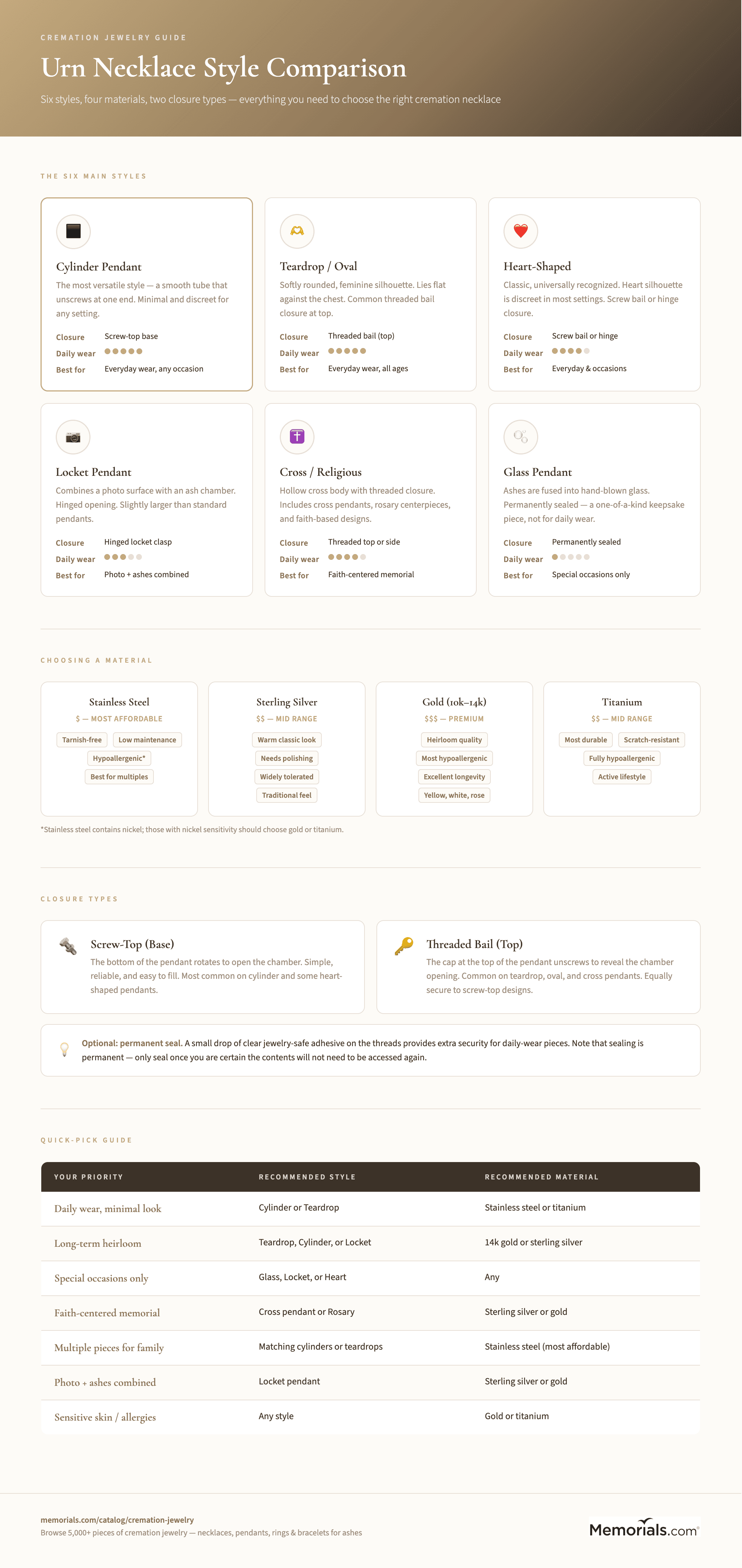
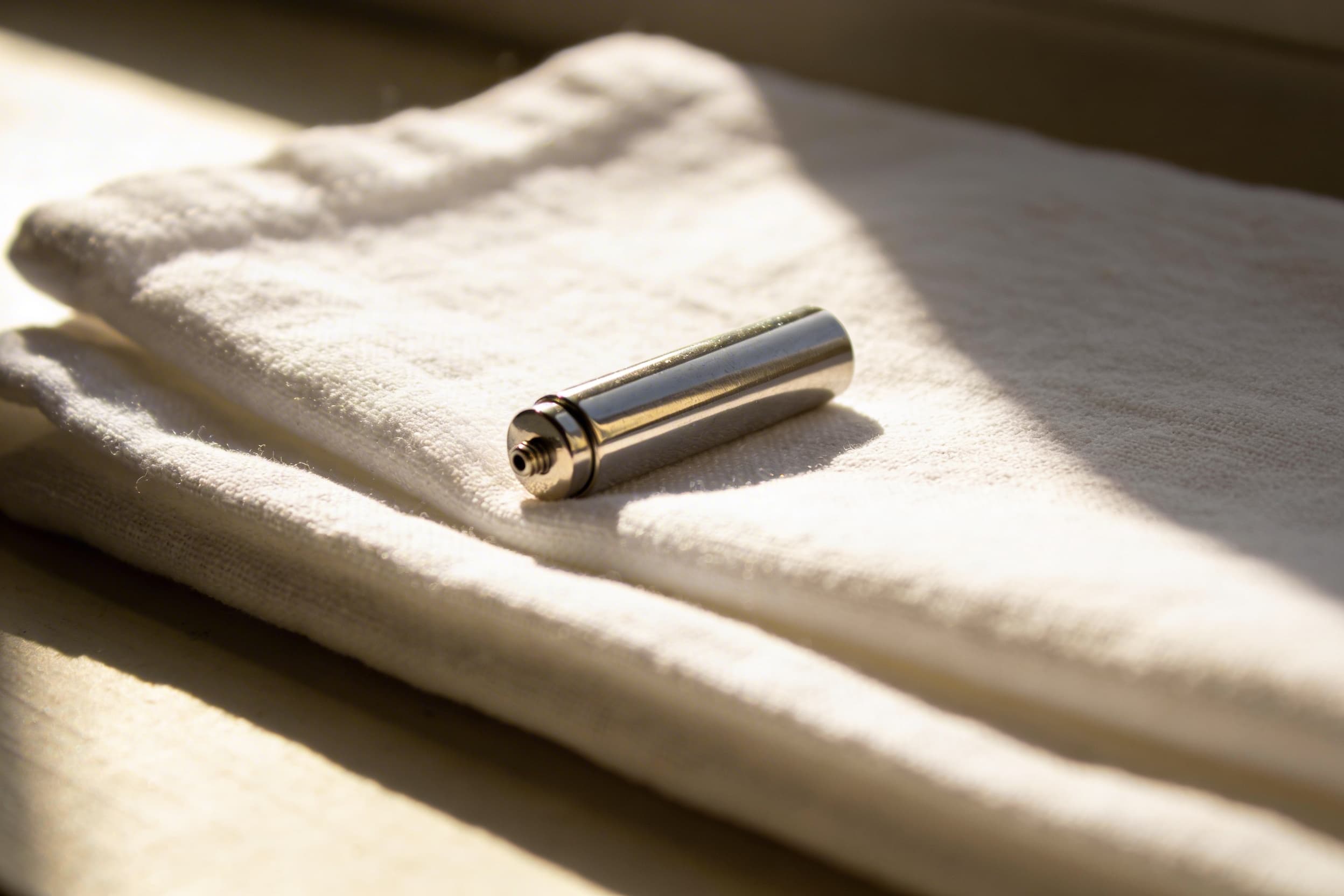
The cylinder is the most common form. It is a smooth, tube-shaped chamber – usually one to one-and-a-half inches long – that unscrews at one end to reveal the interior. Cylinder pendants are versatile: they suit casual wear, professional settings, and formal occasions equally well. Their clean, minimal look means few people will recognize them as cremation jewelry unless told.
Teardrop and Oval Pendants
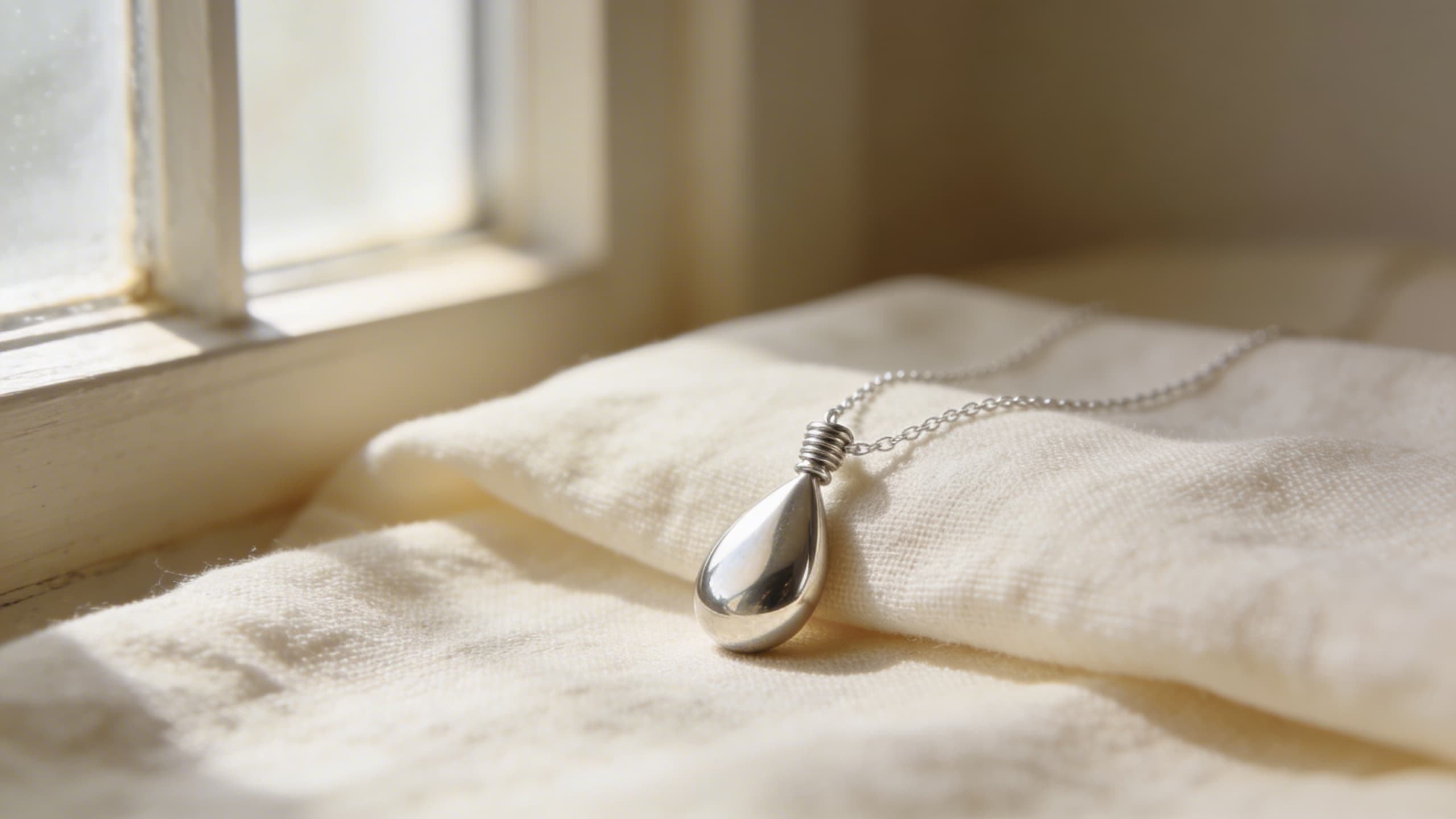
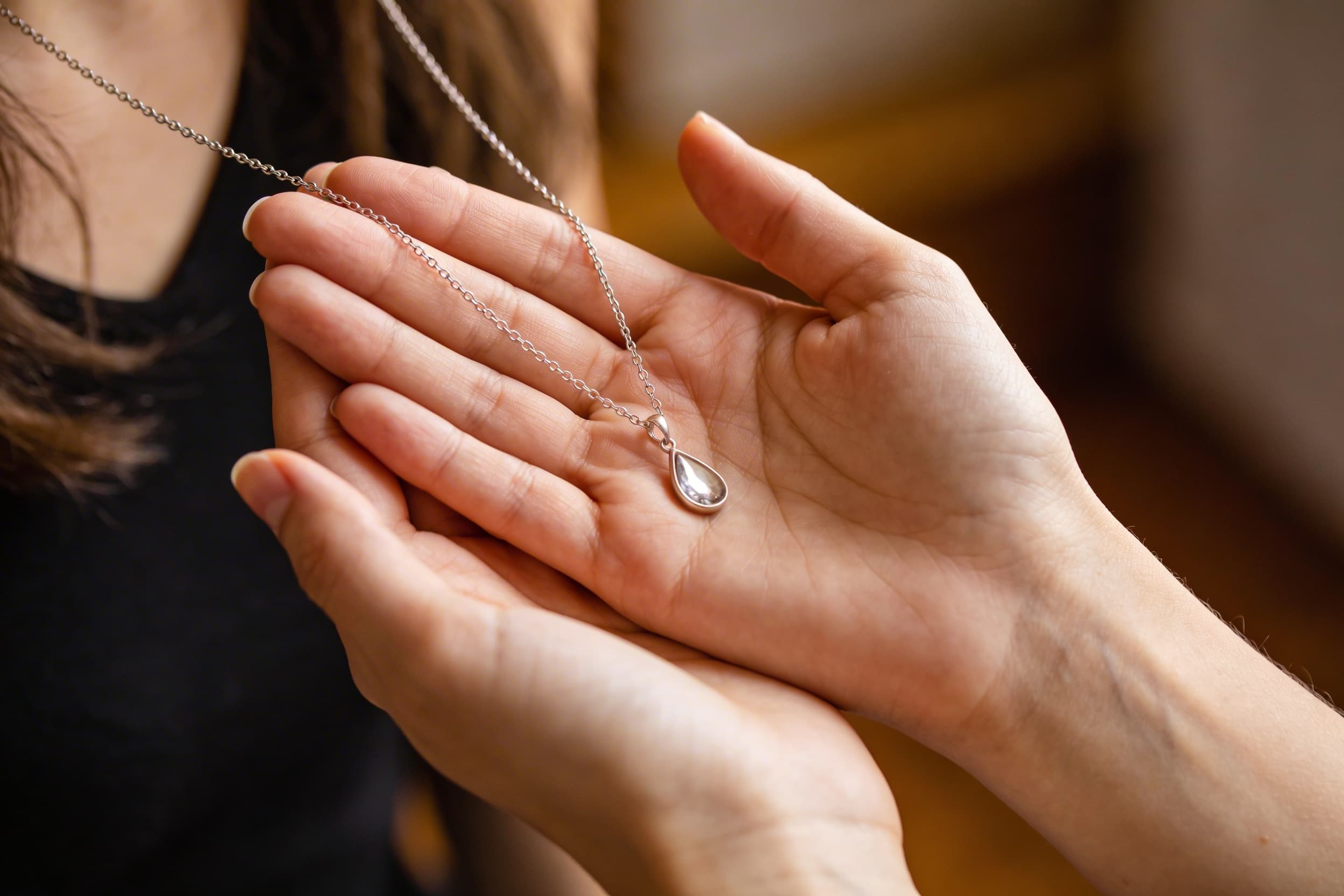
Softer and slightly more decorative than cylinders, teardrop and oval pendants are among the most popular choices for cremation necklaces. They tend to have a threaded bail at the top – a small cap that unscrews to expose the chamber – rather than a side-opening screw. The rounded shape lies comfortably against the chest and works well for everyday wear. These styles are particularly well represented in our guide to cremation jewelry for women, which explores the designs women most frequently choose.
Heart-Shaped Pendants
Heart necklaces for ashes are among the most widely recognized cremation jewelry designs. The shape carries obvious symbolic weight, and the heart silhouette is discreet enough to be worn without comment in most social settings. Some heart pendants open with a screw bail; others hinge at one side. If you plan to open the piece regularly, confirm the closure mechanism before purchasing.
Locket-Style Pendants
A locket urn functions much like a traditional photo locket: it opens to reveal two interior surfaces, one of which may display a small photo while the other holds engraving or a tiny portion of ashes. For families who want the option of combining a photograph with a physical keepsake, locket-style pendants offer both in a single piece. They tend to run slightly larger than standard pendants.
Religious and Cross Designs
For families whose faith is central to how they grieve and remember, cross necklaces for ashes pair the familiar symbol of Christian faith with the practical function of a cremation chamber. Most feature a hollow cross body with a threaded closure. A separate category worth noting for Catholic families is the cremation rosary – a rosary with an interior chamber in the centerpiece, allowing ashes to be held within a devotional object.
Glass Pendants
Glass cremation jewelry is a distinct category from metal pendants. In these pieces, cremated remains – or colored glass in a contrasting hue – are fused into the glass itself during the glassblowing process, creating a one-of-a-kind pendant where the ashes become part of the material. No threading, no screws: the ashes are permanently enclosed. Glass pendants are best suited as keepsake pieces rather than daily-wear jewelry, given their fragility, but for families who want something truly unique and visually striking, they are unmatched.
Materials: What to Look For
Material is the single biggest factor in how a cremation necklace wears, lasts, and feels against the skin.
Stainless Steel
Stainless steel is the most practical choice for everyday wear. It resists tarnishing, does not require polishing, and is generally hypoallergenic for people without a nickel sensitivity. It is also the most affordable option, which makes it a sensible choice for families purchasing multiple pieces to share among siblings or relatives.
Sterling Silver
Sterling silver has the warmest, most classic look of the common metals and gives urn necklaces a more traditional, fine-jewelry feel. The tradeoff is maintenance: sterling silver tarnishes with exposure to moisture, skin oils, and air. With regular light polishing and proper storage – in a dry cloth pouch or jewelry box – a sterling silver cremation necklace will keep its appearance for years. People with sensitive skin generally tolerate sterling silver well.
Gold (10k, 14k, Solid Gold)
Gold pendants – whether yellow gold, white gold, or rose gold – are the premium choice. They wear well, tarnish only slightly, and carry a weight and warmth that other metals do not replicate. A 14k gold cremation necklace is a meaningful investment for someone who intends to wear the piece daily for many years or pass it down as a family heirloom. Gold is also the most hypoallergenic of the common metals, making it an excellent option for people with skin sensitivities.
Titanium
Titanium is valued for its durability. It is among the hardest and most scratch-resistant metals available for jewelry, making it well suited for people with active lifestyles who want a pendant that will genuinely hold up to daily wear. It is also fully hypoallergenic.
Glass
As noted above, glass urn necklaces occupy a different category entirely. They are visually stunning but should be treated as occasional-wear pieces rather than daily accessories.
Closure Types and Security
The closure mechanism is the most practical consideration in any urn necklace purchase, and it is easy to overlook when browsing by style. There are two main types: screw-top closures and threaded bail closures.
Screw-top closures open from the bottom of the pendant. Rotating the base reveals the chamber opening. These are simple and secure, and the threading keeps the chamber sealed during wear.
Threaded bail closures open from the top, where the chain connects to the pendant. The decorative cap at the top of the pendant unscrews to expose the chamber. This design is common on teardrop, oval, and heart-shaped pendants.
Both closure types are reliable, but there is an additional step many families take for long-term peace of mind: once the pendant is filled, a tiny drop of clear jewelry-safe adhesive is applied to the threads before closing. This permanently seals the chamber. This is worth considering for a piece that will be worn daily – but keep in mind that a permanent seal means the pendant cannot be reopened later. If there is any possibility you would want to access the contents again (for example, to divide ashes among additional family members at a later date), seal it only after that decision has been made.
Everyday Wear vs. Special Occasions
One of the more useful questions to ask yourself when choosing a style is whether you want to wear the necklace every day or primarily for meaningful occasions – anniversaries, memorial services, holidays.
For everyday wear, prioritize: stainless steel or titanium for durability; a compact pendant that lies flat against the chest; and a secure closure mechanism. Avoid glass for daily wear.
For occasional wear, you have more freedom. A more decorative glass pendant, a heart locket, or a larger statement design can be beautiful for special moments without the wear concerns that apply to a piece worn in the shower or at the gym.
Many families purchase two pieces: a practical stainless steel pendant for daily wear and a more elaborate piece – perhaps a glass pendant or a gold locket – for meaningful occasions.
Sharing Ashes Among Family
One of the quieter practical realities of cremation is that several people may want to keep something close. A full-size urn stays with one household. Cremation pendants are one of the most natural solutions for sharing a loved one's memory across siblings, adult children, or close friends.
If you are purchasing multiple pendants to share among family, a few considerations simplify the process: matching metal finishes in different sizes create a sense of cohesion; stainless steel is the most cost-effective choice for multiples; and coordinating the filling together – ideally in a calm, unhurried setting – makes the process more meaningful than doing it individually.
Browse the full range of necklaces for ashes to compare styles side by side when choosing for a group.
Personalization Options
Most urn necklaces can be engraved. Common personalizations include a name or initials, a date, a short phrase such as "Always in My Heart" or "Forever with Me," or a meaningful symbol. Engraving is typically done on the back face of the pendant.
Some families take personalization further. Fingerprint necklaces capture an actual fingerprint – from a print on file, a casting, or an ink impression – and have it etched into the metal surface of the pendant. The result is a piece that carries not just the ashes but the physical impression of the person's touch.
Birthstone cremation jewelry incorporates the loved one's birthstone into the pendant design, adding a layer of personal meaning through color and gem symbolism.
For families who want both a photo and a memorial keepsake, locket-style pendants and memorial jewelry collections often offer the option to add a printed photo on the inside face.
How to Choose: A Simple Framework
If you are uncertain where to start, these three questions narrow the field quickly:
1. Daily wear or occasional? Daily wear → stainless steel or titanium, compact pendant, threaded closure Occasional or special events → gold, glass, or more decorative designs
2. What matters most – simplicity or symbolism? Simplicity → cylinder or teardrop in silver or steel Strong symbolism → cross pendant, heart shape, or birthstone design
3. Is this one piece or several? One piece → invest in quality; gold or sterling silver with engraving Multiple for family → stainless steel for practicality; matching styles, different sizes
Every style of urn necklace serves the same purpose: keeping someone close. The choice of material, shape, and closure is about matching that purpose to the person who will wear it. The best cremation necklace is simply the one that feels right for how and when it will be worn.
FAQ
How much do urn necklaces cost? Urn necklaces range from around $30 for basic stainless steel pendants to $200 or more for 14k gold or glass cremation pendants. Most sterling silver options fall in the $50--$120 range. Price reflects material and craftsmanship, not emotional value – an affordable stainless steel pendant worn every day often means more than an expensive piece kept in a drawer.
Can an urn necklace be worn in the shower or while swimming? This depends on the material. Stainless steel and titanium tolerate moisture well and can generally be worn in the shower, though submerging in water – pools, hot tubs, the ocean – is not recommended for any cremation pendant due to long-term effects on closures and finishes. Sterling silver and gold should be removed before bathing. Glass pendants should always be removed before contact with water.
How do I fill an urn necklace? Most pendants include a small funnel in the filling kit. Work over a clean surface, unscrew the closure, use the funnel to guide a small pinch of ashes into the chamber, tap gently to settle, clear the threads with a pin, and reseal. Full step-by-step guidance is available in our article on how to fill cremation jewelry.
Can multiple people wear matching urn necklaces? Yes. Many families purchase several pendants in the same style so siblings, partners, or close friends can each carry a portion of the same loved one's ashes. This is one of the most meaningful uses of cremation jewelry, and it requires only a small symbolic amount from each pendant – the supply is rarely a limiting factor.
Is an urn necklace the same as a keepsake urn? They serve the same purpose – holding a small portion of cremated remains – but in different forms. A keepsake urn is a small vessel, typically displayed on a shelf or mantelpiece. An urn necklace is a wearable pendant. Some families use both: a keepsake urn at home and a necklace for everyday wear.
Where to Shop
Memorials.com carries a wide selection across every style and material covered in this guide. Browse cremation jewelry to explore the full collection.