🏬Supersize Online Funeral Retailer🪦1000's of Headstones⚱️Over 10,000 Cremation Urns⚰️Caskets Overnight Delivery🛒Funeral & Memorial Superstore🚚FREE Shipping on ALL Orders👨👩👧👦Helping Families for over 20 Years💰Lowest Price Guarantee🏬Supersize Online Funeral Retailer🪦1000's of Headstones⚱️Over 10,000 Cremation Urns⚰️Caskets Overnight Delivery🛒Funeral & Memorial Superstore🚚FREE Shipping on ALL Orders👨👩👧👦Helping Families for over 20 Years💰Lowest Price Guarantee
🏬Supersize Online Funeral Retailer🪦1000's of Headstones⚱️Over 10,000 Cremation Urns⚰️Caskets Overnight Delivery🛒Funeral & Memorial Superstore🚚FREE Shipping on ALL Orders👨👩👧👦Helping Families for over 20 Years💰Lowest Price Guarantee🏬Supersize Online Funeral Retailer🪦1000's of Headstones⚱️Over 10,000 Cremation Urns⚰️Caskets Overnight Delivery🛒Funeral & Memorial Superstore🚚FREE Shipping on ALL Orders👨👩👧👦Helping Families for over 20 Years💰Lowest Price Guarantee
The question families ask most often isn't "how does this work?" It's "is it actually worth it?"
That's understandable. Cremation diamonds can cost anywhere from $1,000 to more than $20,000, the process takes months, and you're making the decision in the middle of grief. The pressure to choose something meaningful — and not make a costly mistake — is real.
This guide covers the full picture: how cremation diamonds are made, what they cost and why, the honest pros and cons, what to watch out for when choosing a company, and the alternatives that may serve your family better depending on what you need. If you're also weighing other wearable memorial options, The Complete Guide to Cremation Jewelry offers a full overview of every type — from simple ash pendants to fingerprint keepsakes.
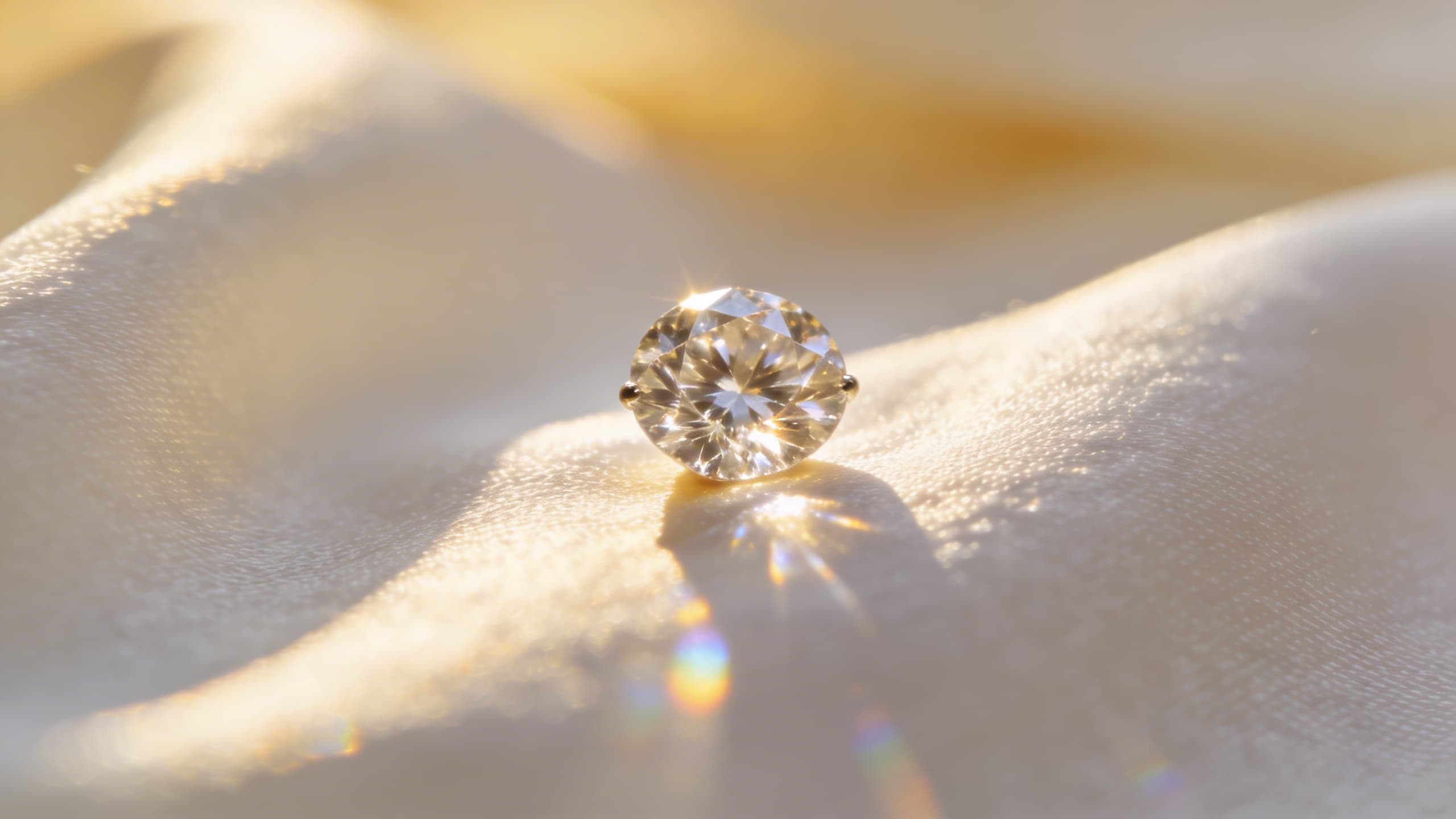
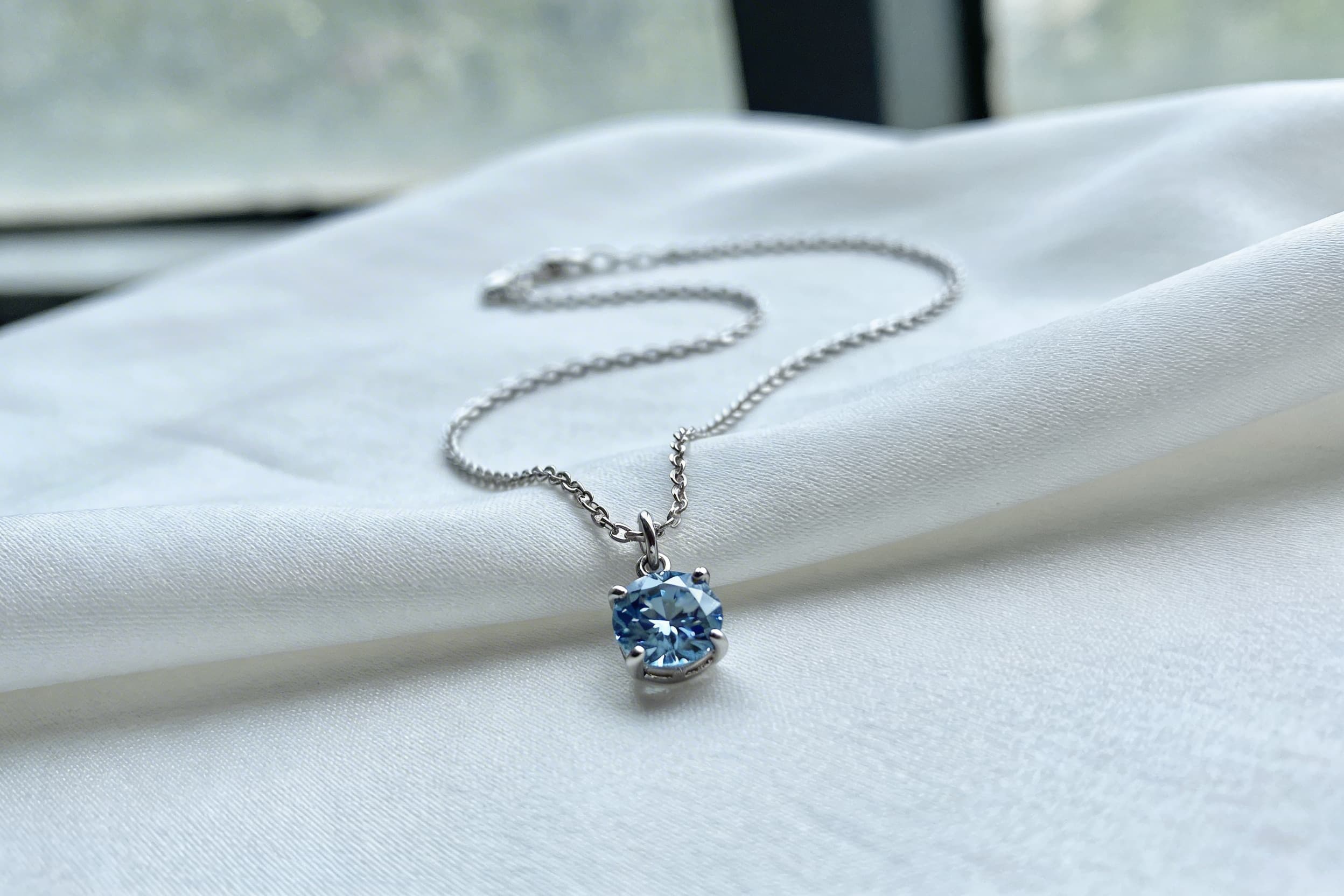
A cremation diamond is a lab-grown diamond created using carbon extracted from a person's (or pet's) cremated remains or hair. The finished stone is chemically and physically identical to a mined diamond — the same hardness, the same crystal structure, the same optical properties. The only difference is its origin and the process used to create it.
The concept emerged in the early 2000s. LifeGem, founded in 2001, was the first company to offer the service commercially. Since then, dozens of companies have entered the market, primarily based in the United States, Switzerland, and the United Kingdom.
The appeal is straightforward: a diamond is permanent, wearable, and something that can be passed down across generations. For many families, transforming a loved one's remains into a gemstone feels like the most lasting and personal memorial possible.
How the Process Works
Understanding how cremation diamonds are made helps set realistic expectations — about timeline, what the company needs from you, and what you're actually receiving.
Step 1: Carbon Extraction
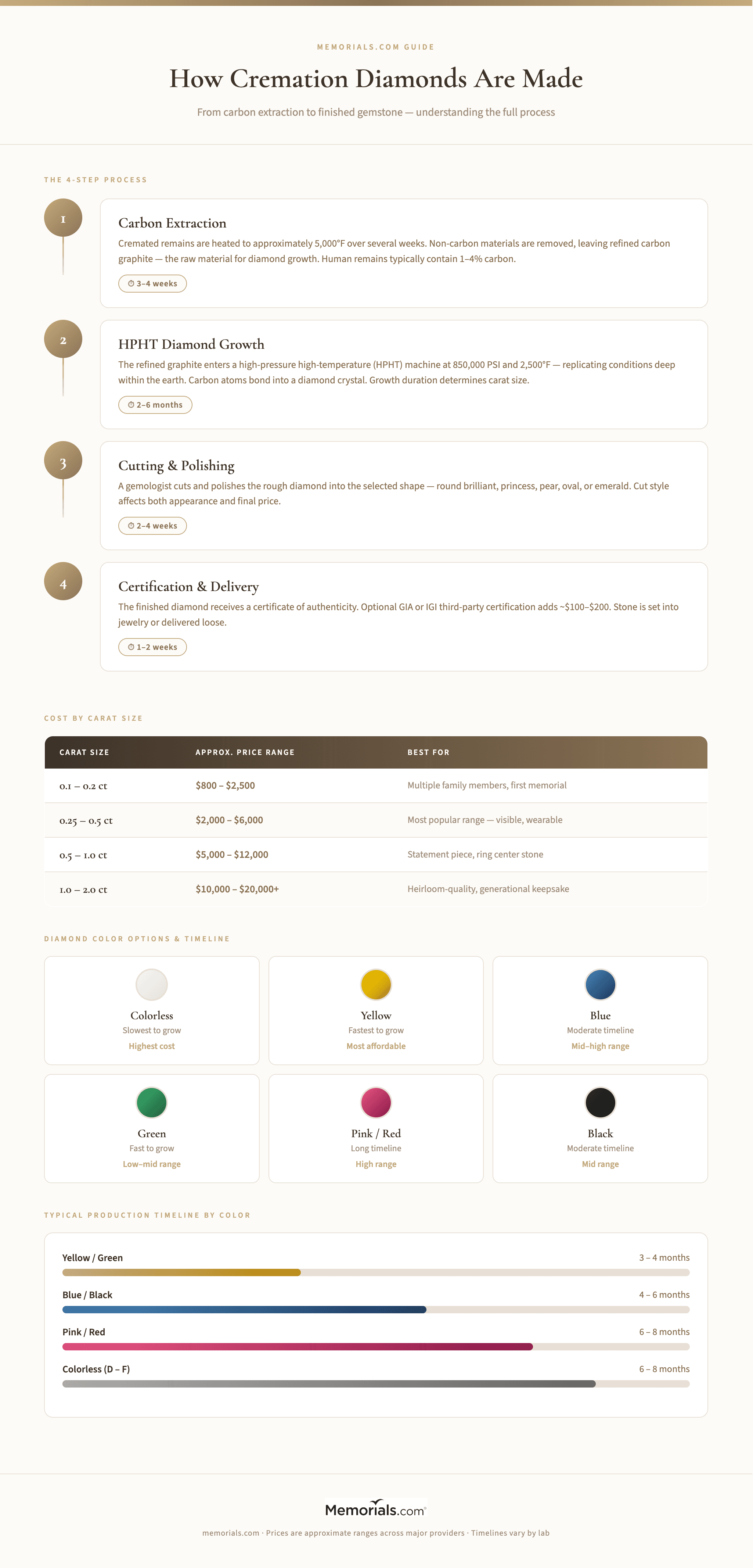
Human cremated remains contain a small percentage of carbon — typically between 1% and 4%. The lab receives your cremains (usually requiring a few ounces, though requirements vary by company) and subjects them to extreme heat — around 5,000°F — over several weeks. This process burns away non-carbon material and converts the remaining carbon into a graphite powder.
That graphite is then refined into a stable graphite structure. At this stage, the lab may supplement the carbon with additional general carbon depending on the purity achieved.
Step 2: Diamond Growth — HPHT
The graphite structure goes into a high-pressure high-temperature (HPHT) machine — the same technology used to grow conventional lab diamonds. Inside the chamber, pressure reaches approximately 850,000 pounds per square inch, and temperature climbs to around 2,500°F. These are the conditions found deep within the earth where natural diamonds form. Under these conditions, the carbon atoms bond into a diamond crystal.
The length of time the crystal spends in the growth chamber determines its size. This is why carat weight is controlled by the lab, not by the quantity of ashes provided.
Step 3: Cutting and Polishing
Once the rough diamond is removed from the growth chamber, it is cut and polished by a gemologist — the same process used for any diamond. You can typically choose from cut styles including round brilliant, princess, pear, oval, and emerald. Each cut affects both appearance and price.
Step 4: Certification and Delivery
Reputable companies provide a certificate of authenticity with each diamond. Some labs offer independent grading through GIA or IGI certification (often at an additional cost). The certified stone is then set into jewelry of your choice — ring, pendant, bracelet — or delivered loose for your own setting.
The typical timeline from submission to delivery is 3 to 8 months, depending on color and carat size. Colorless diamonds require the most extensive purification and take the longest. Colored diamonds — yellow, blue, green, black — are generally faster and less expensive.
How Much Do Cremation Diamonds Cost?
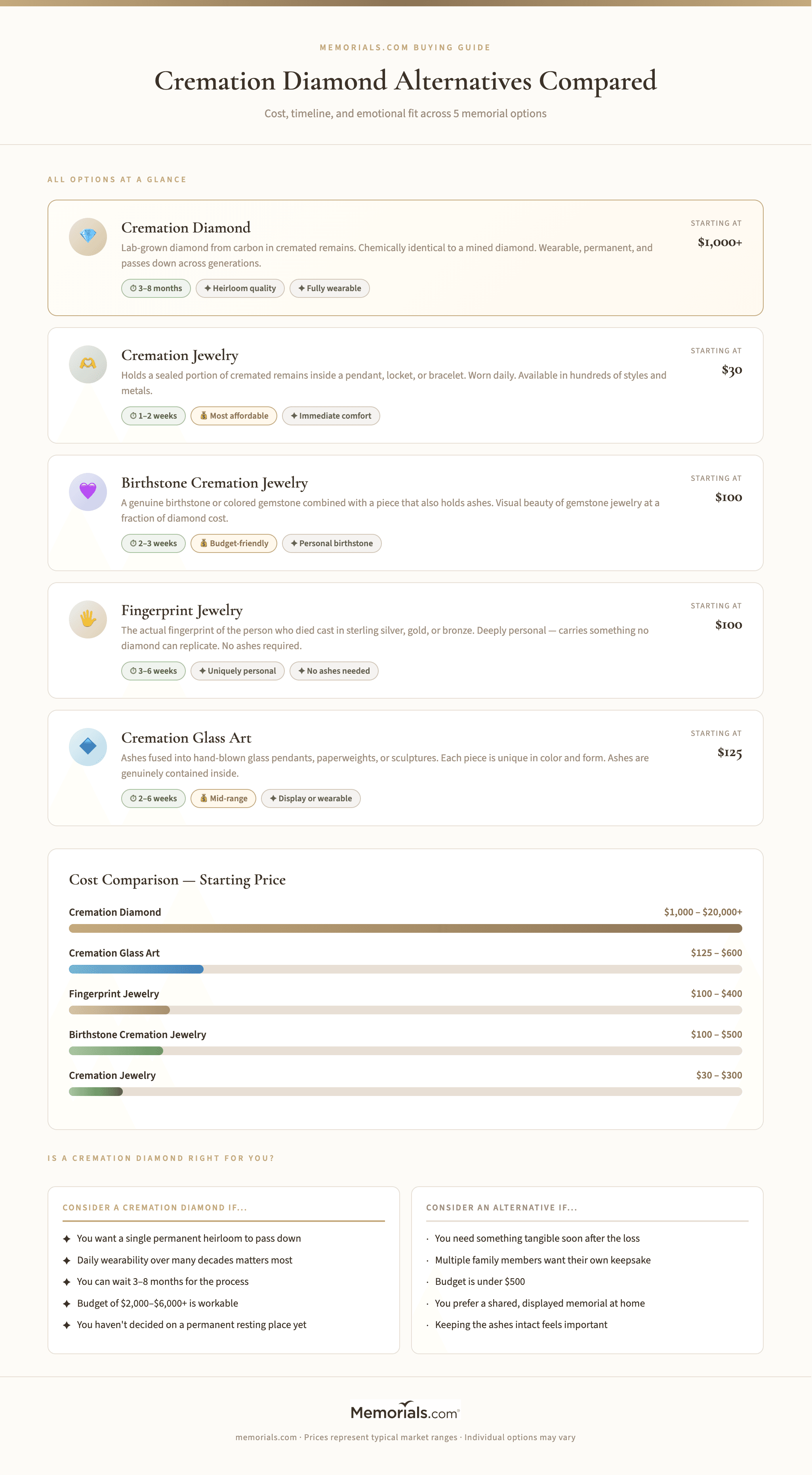
The honest answer: more than most people expect, and the range is wide. For context on how diamonds compare to the full spectrum of wearable memorial options, our cremation jewelry cost guide breaks down pricing across every category — from ash pendants to fingerprint pieces to glass art.
Price Range by Carat Size
These figures are representative across major companies. Prices fluctuate based on company, color, cut, and whether certification or a setting is included.
Factors That Drive Cost
Carat weight is the single largest price driver. The longer the stone grows, the larger it becomes — and the more expensive the process. Most families choose diamonds in the 0.25–0.5 carat range as a balance between size and affordability.
Color affects cost significantly. Colorless diamonds (rated D–F on the color scale) require the most processing and purification, making them the most expensive option. Yellow and green diamonds tend to be among the most affordable colored options. Blue, pink, and red diamonds fall in the upper price range.
Cut style also influences price. More complex cuts — pear, marquise, oval — typically add 10–30% to the base cost over a round brilliant cut of the same carat weight.
Settings and certification are usually not included in the base price. A quality pendant or ring setting adds $200–$800+. GIA or IGI certification typically adds $100–$200. Always confirm what is included before purchasing.
Cremation Diamonds: Pros and Cons
No memorial option is right for every family. Here's a clear-eyed look at both sides.
Pros
Permanence. A diamond is one of the hardest substances on earth. Unlike an urn that may eventually be disrupted or a scattering site that can't be revisited, a diamond endures indefinitely. It can be passed from one generation to the next without any loss of form or meaning.
Wearability. A cremation diamond can be worn daily — in a ring, pendant, or bracelet — providing a private, constant connection to the person who died. Many families find this particularly meaningful during the first years of grief, when physical closeness to a memorial matters most.
Uniqueness. No two diamonds grown from different sources are alike. Color variations, trace inclusions, and the specific carbon origin make each stone one-of-a-kind in a way that a purchased piece of jewelry cannot be.
No fixed resting place required. Families who haven't decided where ashes will ultimately rest can still create a lasting memorial without committing to burial or scattering. A portion of the cremains can be used for the diamond while the rest is held.
Meaningful for multiple family members. A single set of cremains can typically yield enough carbon for multiple small diamonds, allowing several family members to each have a personal keepsake.
Cons
Cost. This is the primary barrier. Even a small cremation diamond — 0.25 carats — costs $2,000–$6,000 before setting and certification. Most traditional cremation jewelry options cost $30–$300 for an equally wearable, meaningful result.
Long timeline. The 3–8 month production window can be emotionally difficult. Families who need immediate closure or a tangible keepsake soon after a loss may find the wait hard to manage.
Carbon authenticity questions. Cremated remains contain very little carbon — often 1–4%. Some companies supplement the extracted carbon with additional lab-grade carbon to complete the growth process. Transparency about this practice varies. It's a legitimate scientific necessity in many cases, but it means the finished diamond may not be composed entirely of material from your loved one. Ask about this directly before purchasing.
Chain of custody concerns. You are sending a loved one's remains to a third-party lab — often overseas — for months. Reputable companies use tracking systems and documentation at every step. Not all companies are equally transparent. Verifying a company's chain-of-custody practices before committing is essential.
Resale value is low. Unlike natural diamonds, cremation diamonds and other lab-grown stones do not appreciate in value. If financial investment is a consideration, this is not an asset — it's a memorial expenditure.
What to Look for Before You Buy
The cremation diamond industry is not uniformly regulated. Due diligence protects both your investment and your loved one's remains.
Verify chain of custody documentation. A trustworthy company provides written documentation at each stage of the process — receipt of remains, carbon extraction, growth, cutting, and delivery. Ask how they track your specific material throughout production. If the answer is vague, look elsewhere.
Ask about carbon supplementation. Directly ask whether the finished diamond will be composed entirely of carbon from the provided cremains, or whether additional carbon is added. A reputable company will answer this honestly. Some companies have clearer policies than others.
Confirm certification. A certificate of authenticity is the minimum standard. For larger diamonds, third-party certification from GIA or IGI provides additional assurance about carat weight, color, clarity, and cut quality.
Read reviews carefully. Given the emotional stakes and long timelines, look for reviews that specifically mention the full experience — communication during the wait, arrival condition, and whether the finished stone matched what was promised.
Clarify what's included in the price. Base prices typically cover the diamond only. Ask explicitly about the setting, certification, shipping, return of any unused cremains, and what happens if the diamond doesn't meet specifications.
Alternatives to Cremation Diamonds
A cremation diamond is one way to create a wearable, lasting memorial. It isn't the only one — and for many families, another option fits better emotionally or financially. For a broader look at ash-based art forms and keepsake options, our memorial keepsake art guide covers the full range of cremation art options — from glass pieces to handcrafted sculptures.
Cremation Jewelry (Ash Pendants and Keepsakes)
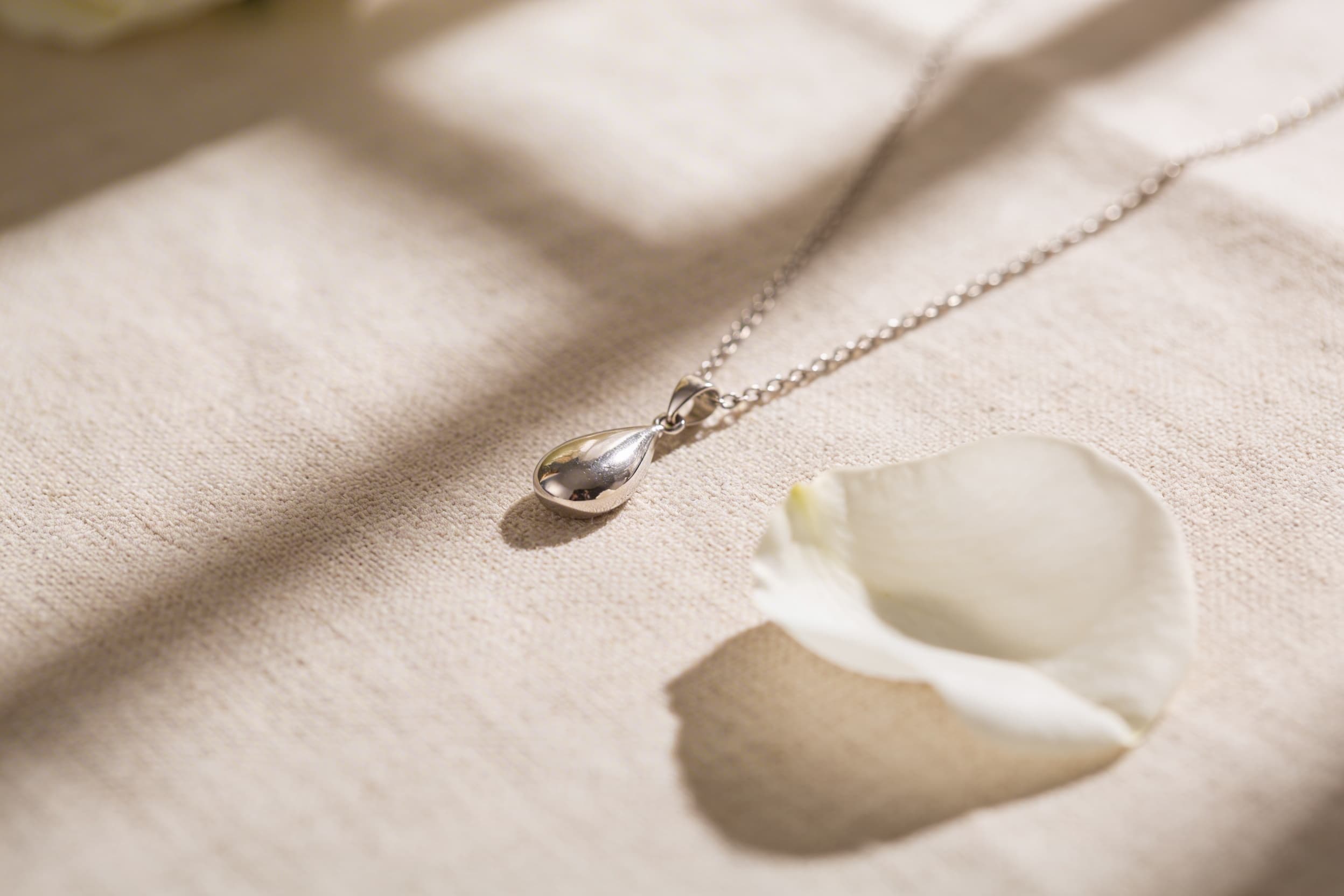
Traditional cremation jewelry for ashes holds a small sealed portion of cremated remains inside a pendant, locket, or bracelet. The piece can be worn daily, customized with engravings, and purchased for as little as $30–$300. The connection is immediate — no months-long process — and the ashes are genuinely inside the piece you hold.
For families who want something wearable and personal but cannot spend thousands of dollars, cremation jewelry is the most accessible option.
Memorial Jewelry with Birthstones
Birthstone cremation jewelry incorporates a genuine birthstone or colored gemstone into a piece of jewelry that also holds ashes. The result offers the visual beauty of a gemstone piece at a fraction of the cost of a cremation diamond — typically $100–$500.
Fingerprint Jewelry
Fingerprint jewelry captures the actual fingerprint of the person who died and renders it in sterling silver, gold, or bronze as a pendant or charm. The result is deeply personal — it carries something no diamond can replicate — and costs $100–$400 in most cases.
Glass Memorial Art
Glass cremation jewelry and art fuses a small amount of cremated remains into hand-blown glass pieces — pendants, paperweights, ornaments, and sculptures. The technique traps the ashes inside vibrant colored glass, creating a one-of-a-kind object that holds genuine remains. Pricing typically ranges from $125 to $600 depending on size and complexity.
Keepsake and Full-Size Urns
Some families find that a quality keepsake urn — displayed in the home, kept on a mantel, or placed with other memorial items — provides the most accessible form of daily closeness. Memorial urns range from simple and affordable to handcrafted heirlooms in wood, bronze, marble, or ceramic. An urn doesn't require splitting the remains and allows the full family to gather around a shared memorial in a way a small diamond cannot.
FAQ
How much does a cremation diamond cost on average?
The average cremation diamond costs between $1,000 and $20,000 depending on carat size, color, and the company you choose. Most families selecting a 0.25–0.5 carat diamond pay between $2,000 and $6,000 before the setting. Colorless diamonds in larger sizes represent the high end of the range. Budget for the setting, certification, and shipping separately — these are usually not included in the base price.
How long does it take to turn ashes into a diamond?
The process typically takes 3 to 8 months from the time the lab receives the cremated remains. Timeline depends primarily on the color and carat size ordered. Colored diamonds — particularly yellow and green — grow faster than colorless ones. Blue, pink, and red options take the longest. Most companies provide milestone updates during the process.
Are cremation diamonds real diamonds?
Yes. Cremation diamonds are genuine diamonds — not simulants, not glass, not cubic zirconia. They are grown using the same HPHT process used to create lab-grown diamonds for the jewelry industry, and they share identical chemical, physical, and optical properties with mined diamonds. Reputable providers certify each stone through independent gemological laboratories.
Can multiple diamonds be made from one person's ashes?
Yes. A standard set of cremated remains contains enough material to produce multiple diamonds, typically up to 3 carats' worth. If you want several family members to each have a stone, you can commission multiple small diamonds from a single set of remains. Confirm with the company how many stones they can produce from your quantity of cremains.
What are the best alternatives if I can't afford a cremation diamond?
The closest experience to a cremation diamond — wearable, personal, connected to the remains — is traditional cremation jewelry, which holds ashes inside a sealed pendant or bracelet starting around $30. Cremation glass art ($125–$600) and fingerprint jewelry ($100–$400) are two other meaningful options. For families who prefer a shared, displayed memorial rather than something worn, a handcrafted urn is often the most emotionally resonant choice.
Making the Decision
The "worth it" question doesn't have a universal answer. It depends on what you need the memorial to do.
A cremation diamond works best for families who want a single, permanent, wearable heirloom — something that can be worn privately every day, holds up physically over decades, and can move with the person who owns it through life changes. If those qualities match what you're looking for, the cost reflects genuine craftsmanship, a lengthy scientific process, and a one-of-a-kind result.
If what you need is something tangible soon after a loss, something multiple family members can each hold, or something within a more accessible budget, the alternatives — cremation jewelry, memorial keepsakes, urns — often serve those needs better with less emotional friction and financial risk.
Explore the full range of memorial jewelry and cremation keepsake options at Memorials.com to find the option that fits your family, your timeline, and your budget.