🏬Supersize Online Funeral Retailer🪦1000's of Headstones⚱️Over 10,000 Cremation Urns⚰️Caskets Overnight Delivery🛒Funeral & Memorial Superstore🚚FREE Shipping on ALL Orders👨👩👧👦Helping Families for over 20 Years💰Lowest Price Guarantee🏬Supersize Online Funeral Retailer🪦1000's of Headstones⚱️Over 10,000 Cremation Urns⚰️Caskets Overnight Delivery🛒Funeral & Memorial Superstore🚚FREE Shipping on ALL Orders👨👩👧👦Helping Families for over 20 Years💰Lowest Price Guarantee
🏬Supersize Online Funeral Retailer🪦1000's of Headstones⚱️Over 10,000 Cremation Urns⚰️Caskets Overnight Delivery🛒Funeral & Memorial Superstore🚚FREE Shipping on ALL Orders👨👩👧👦Helping Families for over 20 Years💰Lowest Price Guarantee🏬Supersize Online Funeral Retailer🪦1000's of Headstones⚱️Over 10,000 Cremation Urns⚰️Caskets Overnight Delivery🛒Funeral & Memorial Superstore🚚FREE Shipping on ALL Orders👨👩👧👦Helping Families for over 20 Years💰Lowest Price Guarantee
When a loved one is cremated, what comes home is far more than ashes. It is a small, physical presence — a handful of calcium and mineral that once walked through the world. Many families choose to divide those remains between traditional storage and something altogether different: a handcrafted memorial that transforms cremated remains into enduring works of art.
Cremation art spans a remarkable range — from hand-blown glass paperweights and oil paintings to ceramic pottery and cast resin sculptures. Each form carries the same intention: to give the people left behind something beautiful to hold, display, and return to.
This guide covers every major category of cremation art, how each is made, what to expect from the ordering process, and how to choose the right form for your family. If you're exploring other ash-based memorial options alongside art, our covers wearable and keepsake formats in depth.
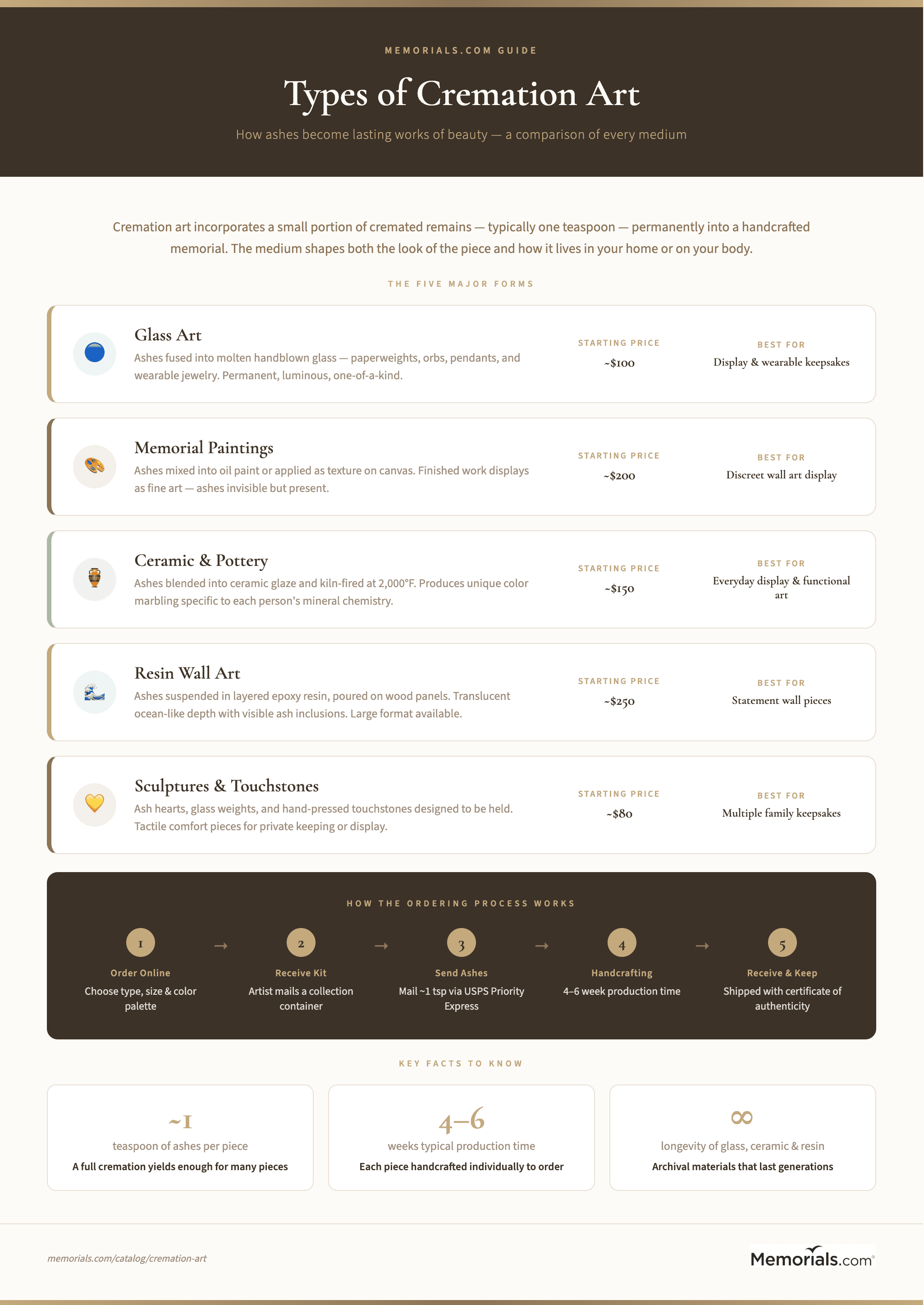
Cremation art is any handcrafted memorial in which a small portion of cremated remains — typically a teaspoon or less — is permanently incorporated into an artistic work. The ashes do not disappear. They become part of the piece itself: fused into glass, mixed into paint, blended into glaze, or sealed in resin.
The result is something that holds both aesthetic and deeply personal meaning. Unlike an urn kept behind a closed cabinet door, a piece of cremation art is designed to live openly in a home — on a mantelpiece, a windowsill, a desk, or worn close to the body.
Cremation art has grown alongside rising cremation rates in the United States. As more families choose cremation, demand has grown for memorial options that feel personal, beautiful, and integrated into daily life rather than set apart from it.
How Cremation Ashes Are Used in Art
The incorporation process varies by medium, but the underlying approach is consistent across all forms: only a small amount of ashes is needed, and unused ashes are returned to the family.
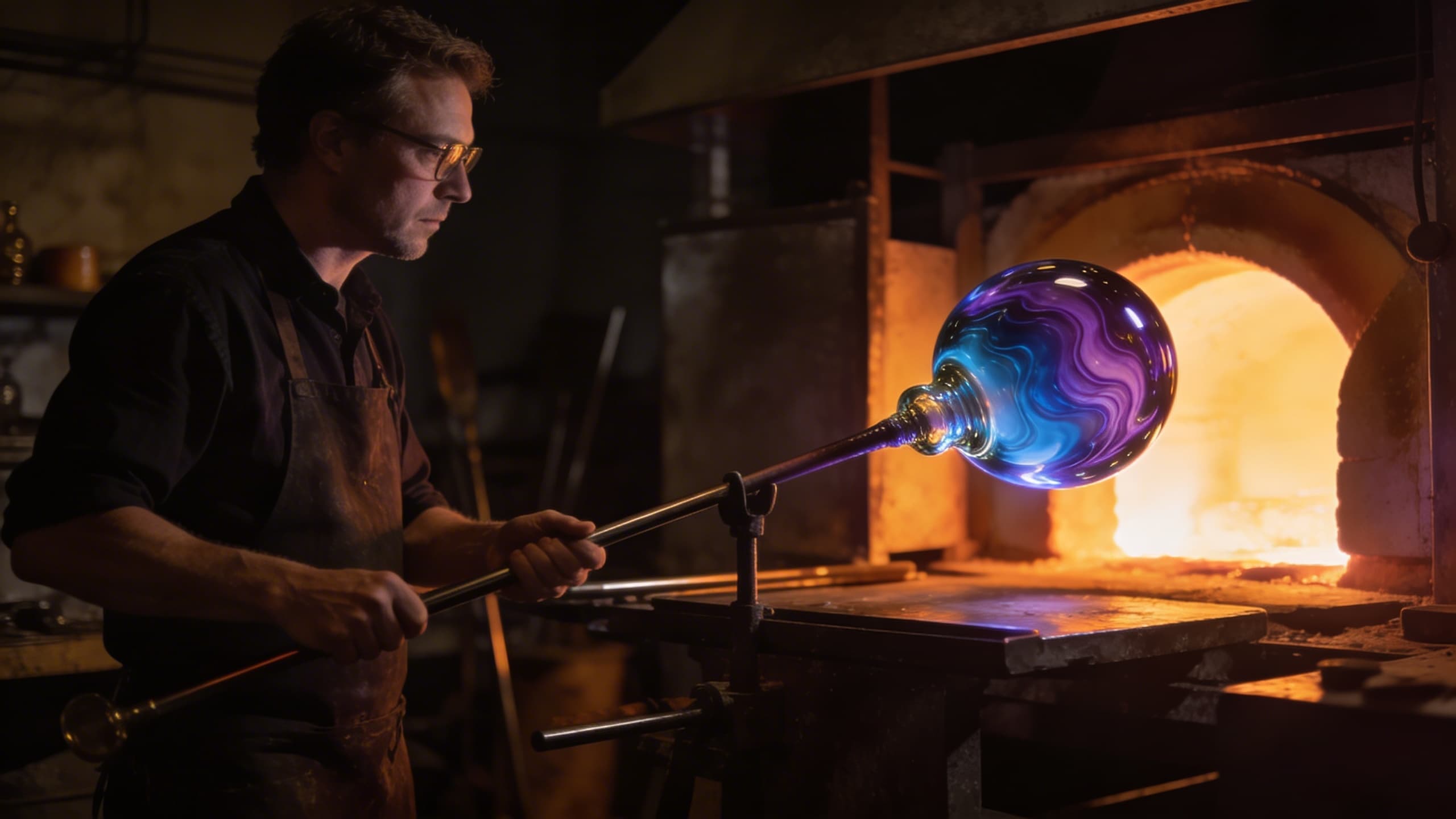
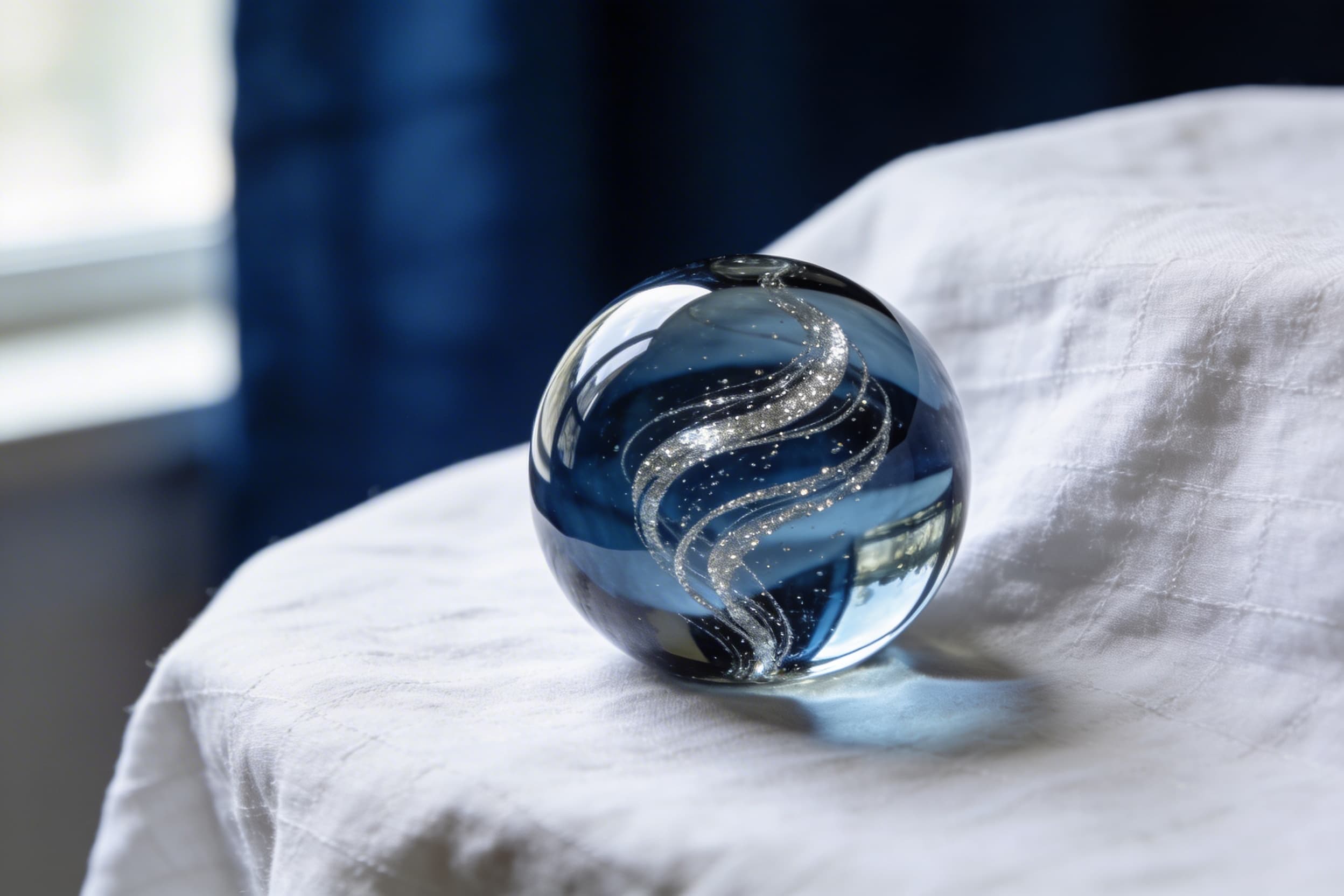
Glass art: Ashes are introduced into molten glass during the blowing or casting process. The calcium in cremains reacts with the glass, creating natural color variation and swirling patterns unique to that person's chemistry. Each piece is literally one of a kind.
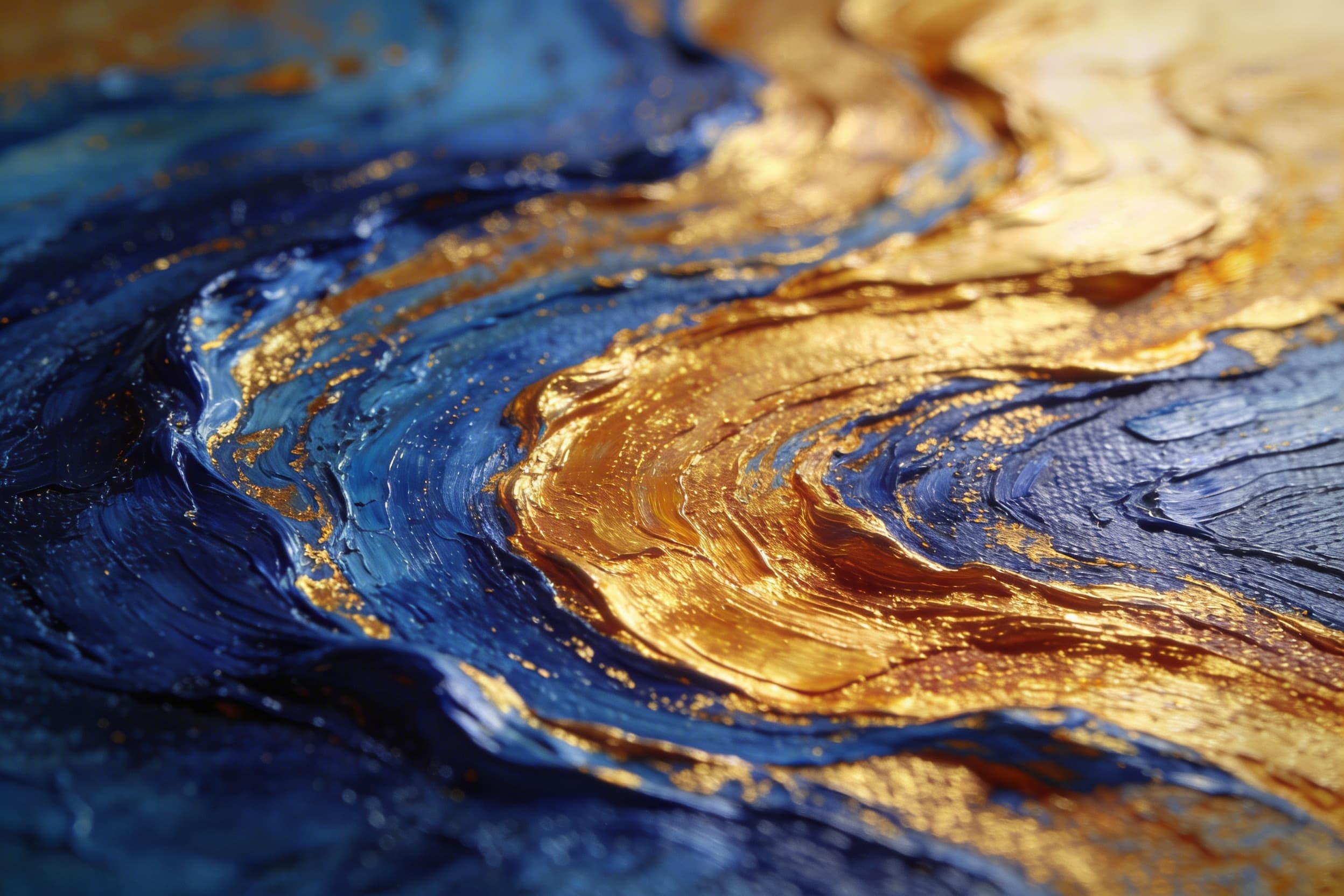
Paintings: Artists mix a trace amount of ashes directly into oil paint, or apply them as texture beneath or within the painted surface. The ashes become invisible to the eye but physically present in the work.
Ceramics: Ashes are blended into the glaze used to coat the fired piece. When the ceramic goes into the kiln at temperatures exceeding 2,000°F, the ashes melt into the glaze, producing a marbled effect of shifting colors unique to the individual.
Resin art: Ashes are suspended in clear or tinted epoxy resin, which is then poured into molds or built up in layers. The result is translucent, ocean-like pieces where ashes appear to float within the material.
Sculptures: Ashes are cast into freestanding memorial forms — ash hearts, touchstones, small figurines — using sand-casting, polymer, or hand-pressed clay techniques.
Across all methods, the amount of ashes used is small enough that families can commission multiple pieces from a single cremation while still retaining ashes for other purposes such as scattering or burial.
Types of Cremation Art
Glass Art Keepsakes
Glass remains the most popular form of cremation art. Skilled glassblowers fuse cremated remains into handblown pieces — paperweights, pendants, hearts, orbs, and sculptures — that refract light in distinctive ways.
The appeal of glass is its permanence and beauty. Once fused, the ashes cannot be separated from the glass. The piece is archival — it will not fade, degrade, or change over generations.
The same irreversibility applies at the far end of the category. Turning cremains into diamonds is the most elaborate option here and the slowest — months rather than weeks, from a laboratory rather than a studio — and our guide covers what it costs, how much of the ashes it uses, and the chain-of-custody question worth asking first.
Glass art keepsakes come in sizes ranging from small wearable pendants to substantial desk sculptures. Many families commission multiple small pieces so that children, siblings, and close friends can each carry something.
Pendants and rings set in sterling silver or gold allow families to cross from art into wearable memorial territory. Glass cremation jewelry pieces are made using the same fusing process as larger glass art, scaled down to gem-sized focal points for necklaces, bracelets, and rings. To understand exactly how the glass fusion process works from start to finish, our guide to how ashes are infused into glass covers the full technique in detail.
The Memory Glass Pendant is one of the most requested forms — a teardrop or round focal of solid glass fused with ashes, set into a delicate metal bail for wearing every day.
Art in Ashes: Memorial Paintings
For families who love traditional fine art, memorial paintings offer a striking and deeply personal alternative.
Specialist artists incorporate cremated remains directly into oil paint, mixing the ashes into pigment or layering them beneath the painted surface as a physical substrate. The finished canvas may show no visible trace of the ashes — but they are present in every brushstroke.
Art in Ashes commissions typically begin with a color palette selection. The artist then creates an original abstract or semi-representational painting that can be framed and displayed like any fine art print. Sizes range from small, framed tabletop pieces to large gallery-scale canvases. Our dedicated guide to memorial paintings made from ashes explores the commissioning process, what to expect from artists, and how these works compare to other memorial formats.
This option appeals to families who want an intimate presence in their living space without an obvious memorial marker. Guests may simply see a beautiful painting; the family knows it holds something more.
Ceramic and Pottery Memorials
Ceramic cremation art brings ashes permanently into functional or display objects — vases, bowls, ornaments, and memorial tiles.
The process blends ashes into the ceramic glaze before the piece is fired in a kiln. At high temperatures, the mineral content of the cremains interacts with the glaze chemistry, producing subtle color shifts and patterns that differ from piece to piece. No two ceramics are alike, even from the same artist.
Families who appreciate earthy, handmade aesthetics are often drawn to ceramic memorial art. A ceramic vase containing a loved one's ashes in its glaze can sit on a windowsill holding fresh flowers — a quiet, living tribute.
Resin and Ocean Art
Epoxy resin opens possibilities that glass and ceramics cannot. Artists suspend ashes in layers of tinted resin, building up translucent depth that resembles ocean water, mineral formations, or swirling color fields.
Resin memorial art is often created on wood panels and displayed as wall art. The process allows for large formats — pieces can span two to four feet across — making resin art one of the most visually dramatic cremation memorial options available.
The translucency of resin means ashes appear to float within the piece, visible as small luminous particles suspended in color.
Cremation Sculptures and Touchstones
Not every cremation art piece is meant for display. Cremation sculptures and touchstones are small, three-dimensional memorial objects designed to be held.
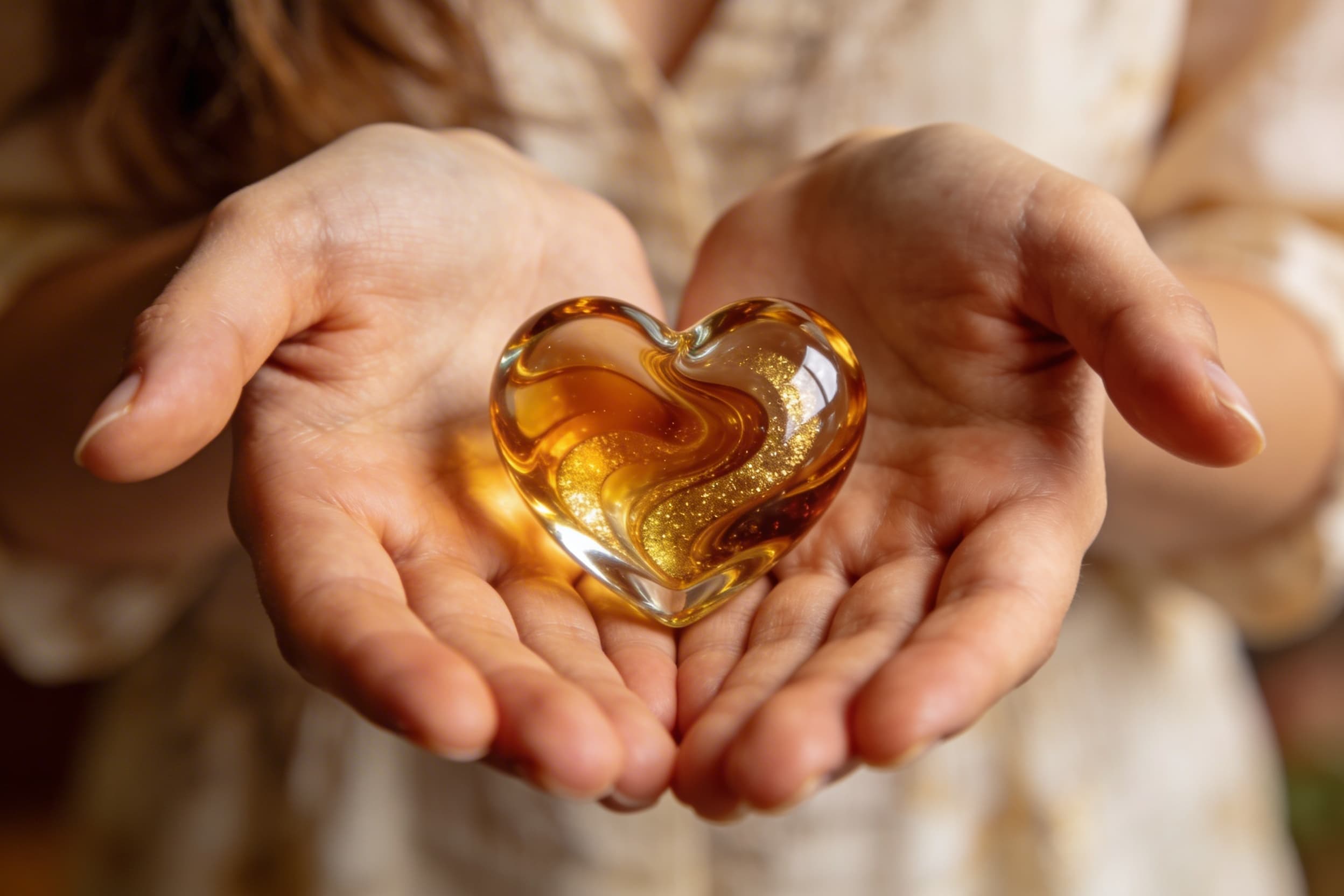
A touchstone is typically a smooth, palm-sized piece of compressed ash and mineral material — dense, weighty, and comforting to hold. Cremation ash hearts follow a similar principle: the ashes themselves are pressed and set into a heart-shaped form, sometimes combined with crystals or minerals.
Cremation glass weights combine the tactile quality of a touchstone with the visual depth of glass — a heavy, solid glass form that can be held, warmed in the hands, or placed on a desk as a paperweight and private memorial in one. For a comprehensive look at the full range of three-dimensional memorial forms, our guide to touchstones and ash hearts covers materials, sizing, and what each type is best suited for.
These pieces are particularly meaningful for families where multiple members want something individual. Because each piece requires only a small portion of ashes, a family can commission several without depleting the whole.
How to Choose the Right Cremation Art Form
The best cremation art form depends on three factors: the loved one's personality and aesthetic, how the family wants to use the piece, and budget.
Consider their aesthetic. A loved one who filled their home with natural textures and earthy tones may be best honored by ceramic or resin art. A lover of fine art and classical interiors might be honored with a framed memorial painting. Someone whose personality was vivid and expressive might be memorialized best in richly colored glass.
Consider use. Display pieces — paintings, sculptures, glass weights — live in a fixed location in the home. Wearable pieces — cremation jewelry pendants, rings, and glass keepsakes — travel with the person who wears them. Touchstones and ash hearts are held privately and kept close. There is no requirement to choose just one.
Consider the number of family members. Cremation art is one of the few memorial categories where the same set of ashes can be used to create multiple distinct pieces. A family of five can each have their own glass keepsake, each different but each made from the same source. This makes cremation art particularly suited to families who were spread across different cities and want each household to have a physical piece of the person they loved.
Consider budget. Small glass pendants and memorial hearts often begin around $100–$200. Mid-size glass sculptures and original memorial paintings typically range from $200–$600. Large custom paintings or gallery-scale resin works can reach $800–$2,000 or more. For those exploring premium alternatives at the higher end of the memorial spectrum, our guide to cremation diamonds covers how ashes can be transformed into certified lab-grown diamonds. Committing to a budget before selecting a format helps narrow options without feeling forced.
What to Expect When You Order
The ordering process for cremation art follows a consistent pattern across most studios and artists:
Step 1 — Place your order. Most studios begin with an online order where you select the type of piece, size, color palette, and any personalization options.
Step 2 — Receive a collection kit. After purchase, the studio mails a collection kit: a small labeled container, detailed instructions for measuring and packaging the ashes, and a return envelope with prepaid shipping.
Step 3 — Send a small portion of ashes. Most artists require approximately a teaspoon to a tablespoon of cremated remains — far less than a typical set of cremains. Unused ashes are returned to you with the completed piece.
Step 4 — Wait for handcrafting. Because every piece is made individually, production takes time. Most studios quote a 4–6 week turnaround, though complex commissions or high-demand periods can extend this.
Step 5 — Receive your piece. Finished cremation art arrives packaged carefully, often with a certificate of authenticity documenting the piece and confirming that your loved one's ashes are incorporated.
Shipping cremated remains by mail is legal in the United States when sent via USPS Priority Mail Express with proper labeling. Most studios provide detailed instructions for compliance.
FAQ
How much of the ashes are used in cremation art? Most cremation artists use approximately one teaspoon to one tablespoon of cremated remains per piece. This is a small fraction of a full cremation — a typical adult cremation produces three to nine pounds of ashes — so families can commission multiple pieces while retaining ashes for scattering, burial, or other memorial purposes.
Can I commission cremation art for a pet? Yes. Most cremation art studios work with both human and pet cremated remains. The process is identical. Pet ashes tend to be smaller in volume than human ashes, but a teaspoon is sufficient for most glass, ceramic, or resin pieces.
Will I be able to see the ashes in the finished piece? It depends on the medium. In glass and resin art, the ashes are often visible as subtle swirling inclusions or particles suspended within the material. In ceramics and oil paintings, the ashes are incorporated into the glaze or paint and are not visible to the naked eye. Artists will typically show you examples of what to expect.
Is cremation art permanent? Yes. Once ashes are fused into glass, fired into ceramic glaze, suspended in cured resin, or incorporated into oil paint, they cannot be separated from the medium. The piece is archival and will last indefinitely under normal conditions.
Can multiple family members each get their own piece? Yes, and this is one of the most common reasons families choose cremation art. Because each piece requires only a small amount of ashes, a single cremation can yield material for five, ten, or more individual keepsakes — each one distinct.
Bringing It All Together
Cremation art offers something no standard urn can: a piece that lives openly in a home or on a body, visible every day, beautiful in its own right, and quietly carrying the presence of someone who mattered.
The category spans every aesthetic and every budget. Whether a family is drawn to the luminous, color-filled world of glass, the quiet permanence of fine art, the earthy texture of ceramic, or the intimate weight of a touchstone, there is a form of cremation art that fits.
Browse the full range of cremation art available at Memorials.com — including glass keepsakes, Art in Ashes paintings, glass weights, and handcrafted sculptures — to find the right memorial for your family.