🏬Supersize Online Funeral Retailer🪦1000's of Headstones⚱️Over 10,000 Cremation Urns⚰️Caskets Overnight Delivery🛒Funeral & Memorial Superstore🚚FREE Shipping on ALL Orders👨👩👧👦Helping Families for over 20 Years💰Lowest Price Guarantee🏬Supersize Online Funeral Retailer🪦1000's of Headstones⚱️Over 10,000 Cremation Urns⚰️Caskets Overnight Delivery🛒Funeral & Memorial Superstore🚚FREE Shipping on ALL Orders👨👩👧👦Helping Families for over 20 Years💰Lowest Price Guarantee
🏬Supersize Online Funeral Retailer🪦1000's of Headstones⚱️Over 10,000 Cremation Urns⚰️Caskets Overnight Delivery🛒Funeral & Memorial Superstore🚚FREE Shipping on ALL Orders👨👩👧👦Helping Families for over 20 Years💰Lowest Price Guarantee🏬Supersize Online Funeral Retailer🪦1000's of Headstones⚱️Over 10,000 Cremation Urns⚰️Caskets Overnight Delivery🛒Funeral & Memorial Superstore🚚FREE Shipping on ALL Orders👨👩👧👦Helping Families for over 20 Years💰Lowest Price Guarantee
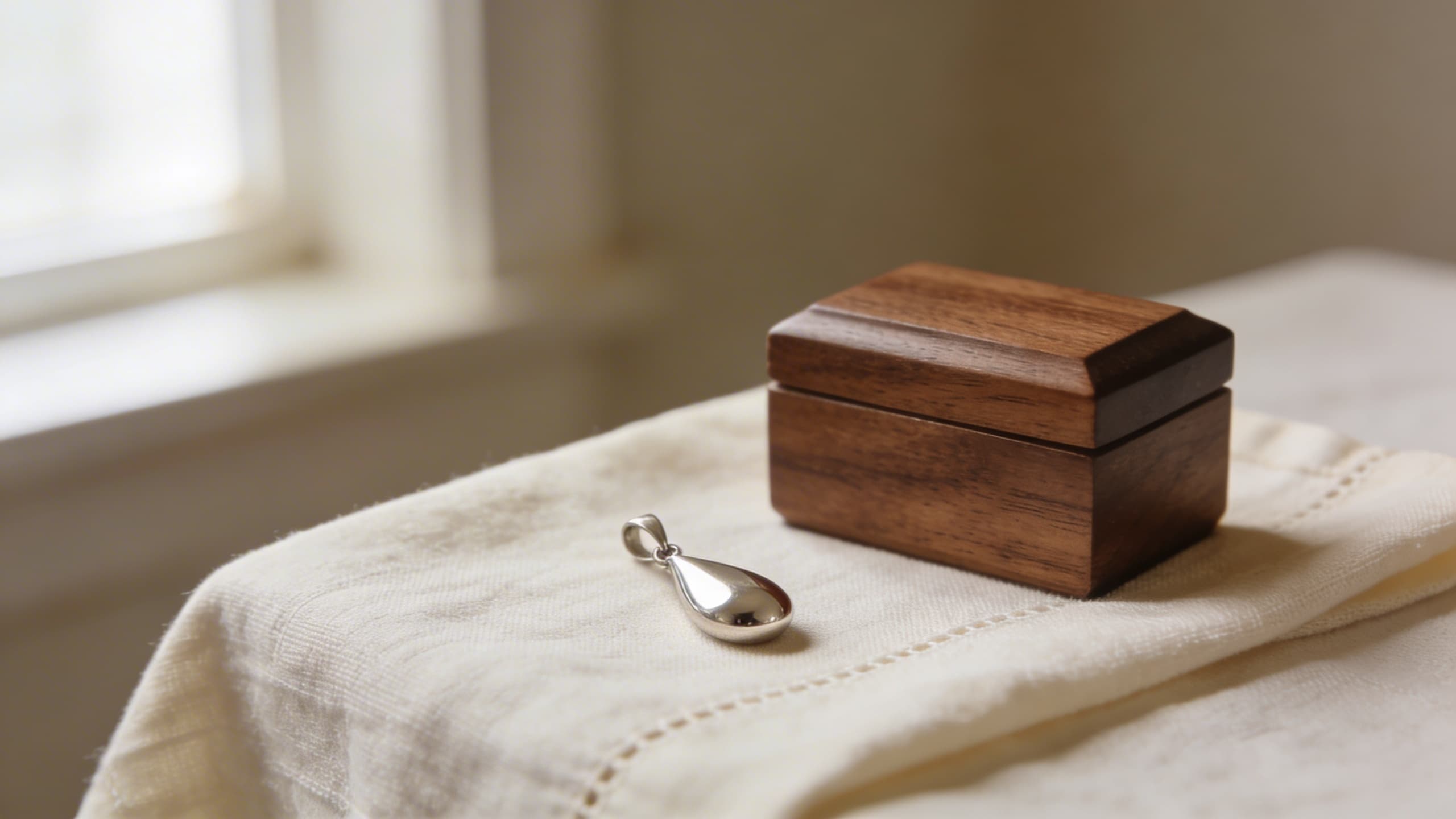
Losing someone changes everything about how a family organizes itself around a memory. One of the most personal decisions that follows is this: how will each person in your family keep their loved one close? For many families, the answer leads to one of two options — cremation jewelry or a keepsake urn.
Both are small. Both hold a symbolic portion of cremated remains. Both serve a deeply personal purpose. But they work differently, feel different to live with, and suit different kinds of people and different kinds of grief. This guide walks through each option honestly, drawing on the principles in our guide to cremation jewelry, so you can decide — or decide to use both.
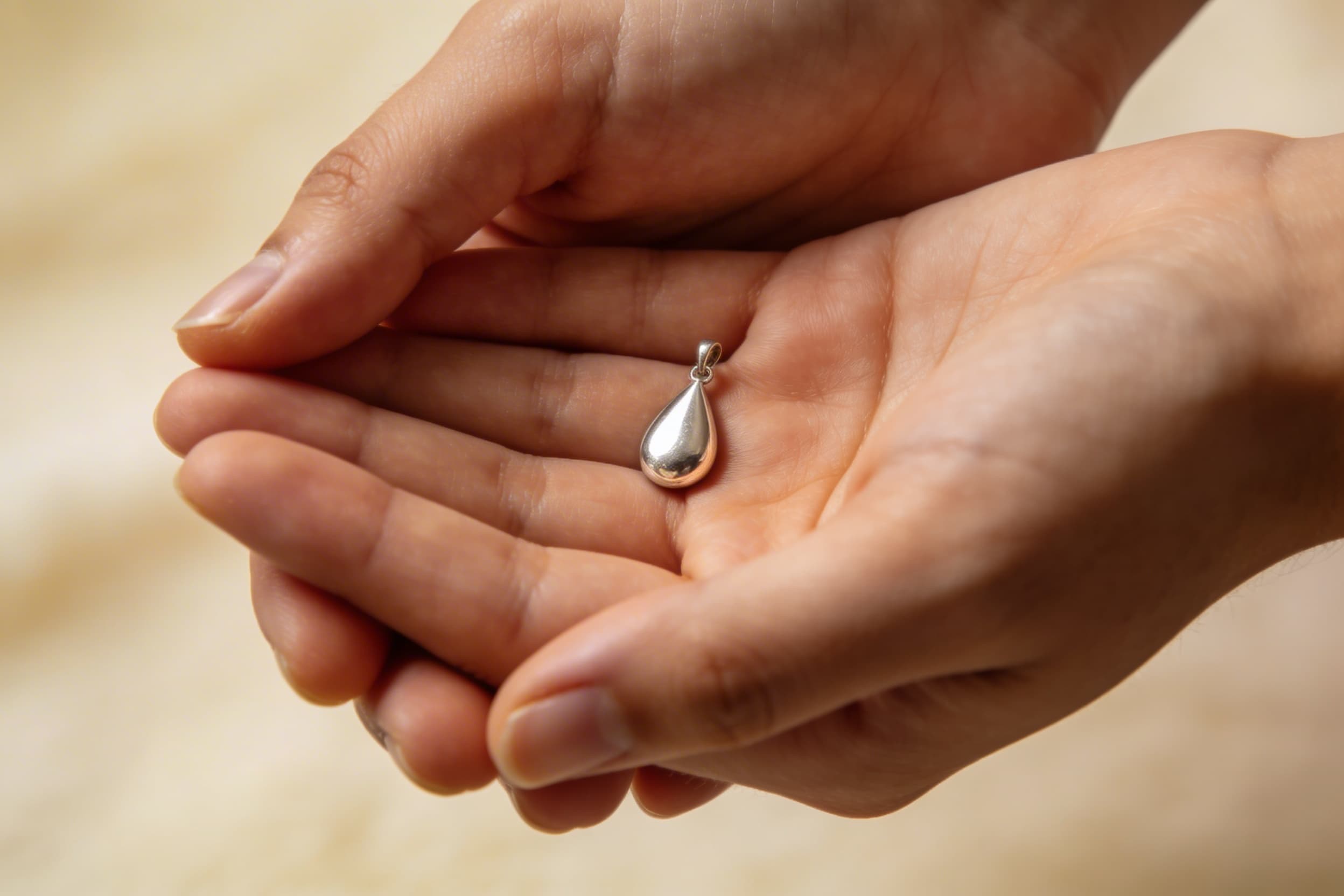
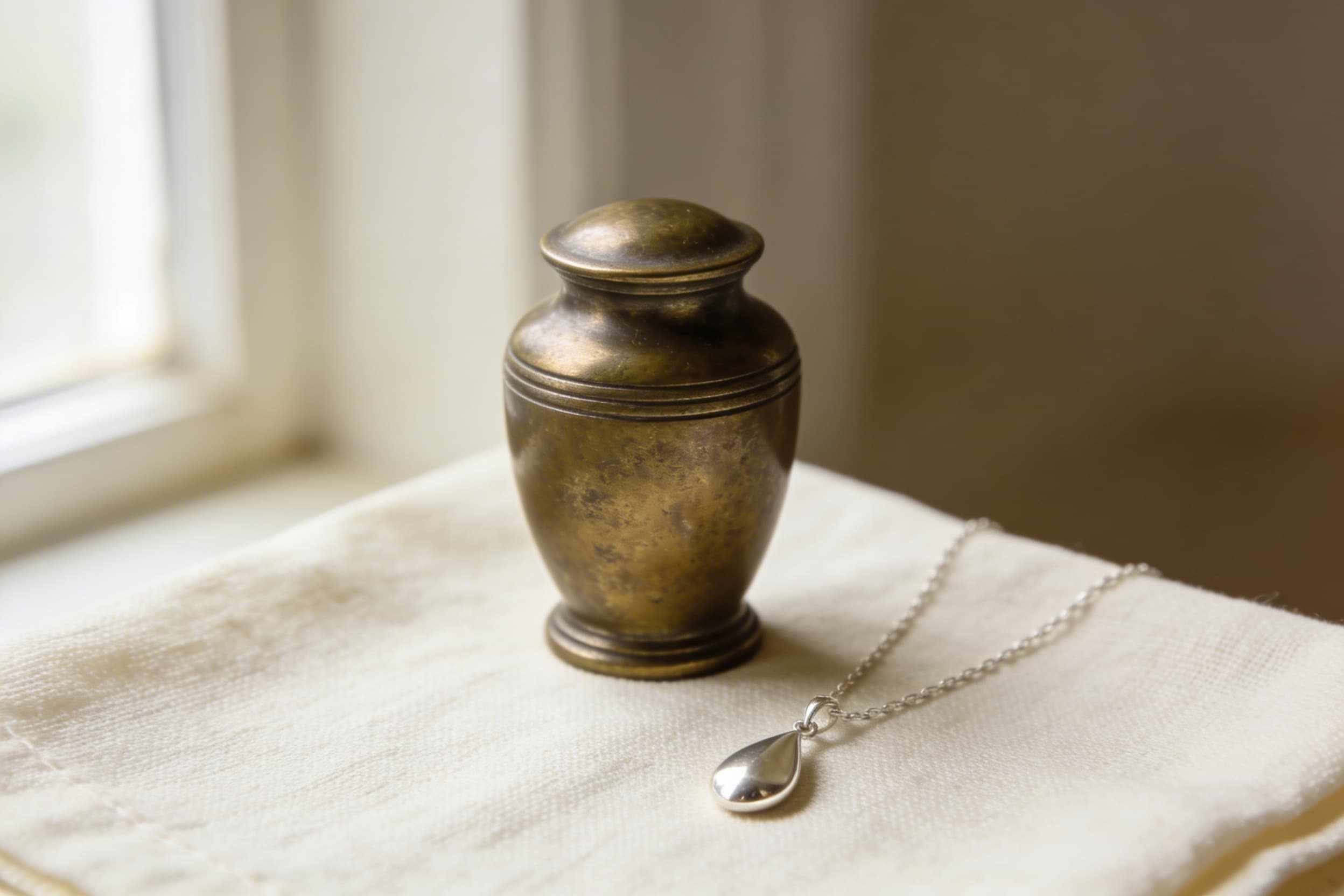
Cremation jewelry is wearable memorial — typically a pendant, necklace, bracelet, or ring that contains a small, sealed chamber holding a tiny amount of cremated remains. The ashes are loaded into the chamber (usually through a threaded screw closure or a secured port), and then the piece is worn just like any other jewelry. For a deeper overview of every style and how each type is made, our article on what is cremation jewelry covers the full range of options.
The chamber is intentionally small — typically holding about one-eighth of a teaspoon or less. This isn't a limitation; it's the point. Cremation jewelry is designed to hold a symbolic portion, not a significant volume of remains. The memorial it creates is intimate and personal: something you carry against your skin, present throughout your day.
Common forms include:
Cremation pendants — the most popular style, worn on a chain around the neck, available in a wide range of metals and shapes
Cremation necklaces — similar to pendants but often referring to the complete necklace as a unit
Fingerprint jewelry — incorporates an impression of your loved one's actual fingerprint into the design, often alongside a small ashes chamber
Birthstone cremation jewelry — combines a gemstone in the loved one's birth month with an ashes chamber for layered personalization
Most cremation jewelry is made from stainless steel, sterling silver, or gold. Stainless steel is the most durable and budget-friendly. Sterling silver offers a traditional look. Gold is reserved for heirloom-quality pieces.
One important note on care: most cremation jewelry is water-resistant, not waterproof. A threaded closure with an O-ring gasket will resist casual contact with moisture, but repeated exposure to water — swimming, showering, heavy sweat — can allow moisture to enter the chamber over time. It's worth treating cremation jewelry the way you'd treat a cherished photograph: keep it dry, wipe it clean, and check the closure periodically.
What Is a Keepsake Urn?
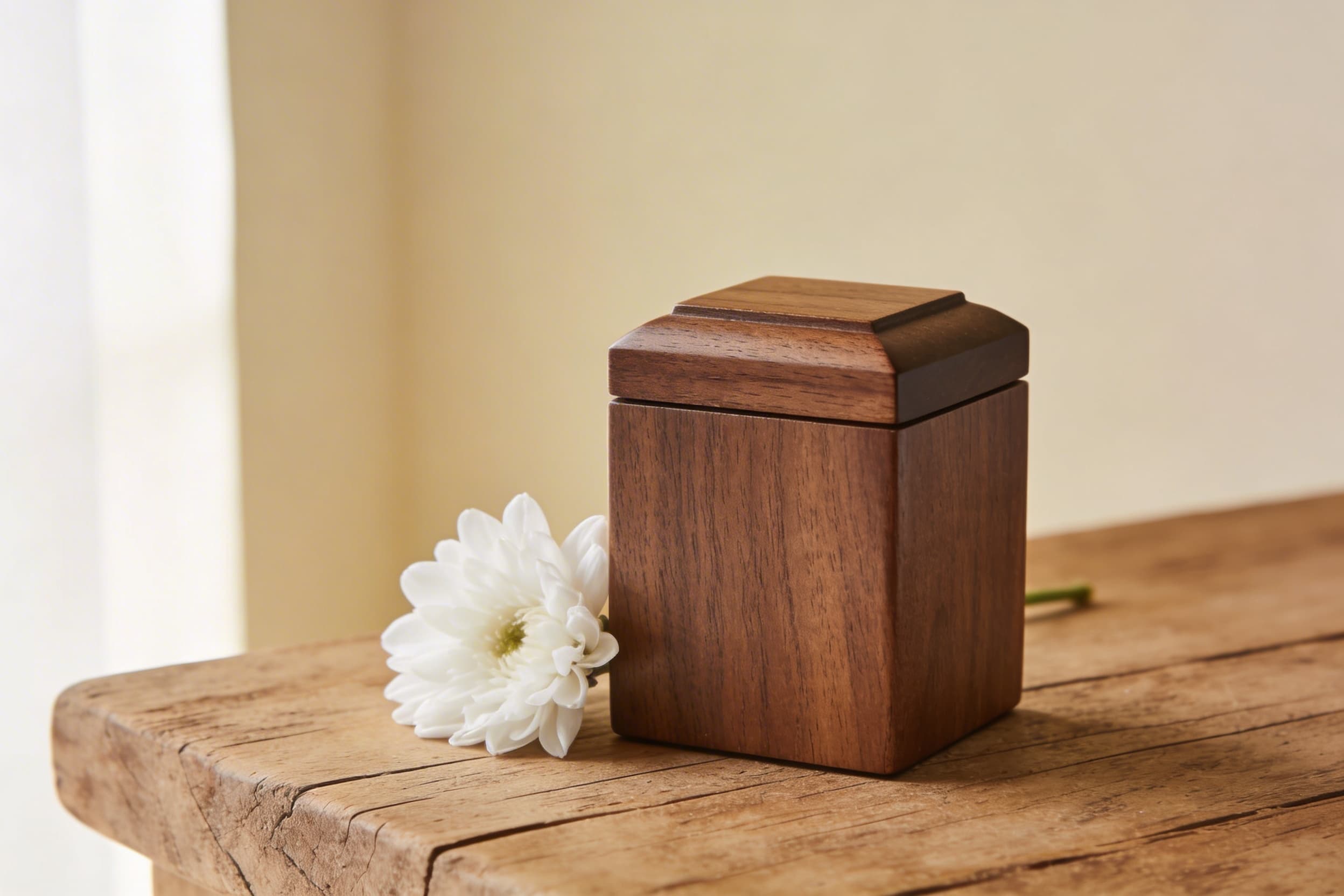
A keepsake urn is a small memorial container designed to hold a portion of cremated remains — typically between one and three cubic inches, enough for a meaningful amount without requiring a full set of remains. They're sometimes called sharing urns because they're most often used when a family wants to distribute a portion of ashes to multiple loved ones.
Unlike cremation jewelry, a keepsake urn is not worn. It sits somewhere meaningful — on a bedside table, a mantelpiece, a shelf in a home office. It's a display object as much as a memorial container, and many are designed with that in mind: carefully crafted from wood, bronze, marble, ceramic, or glass with decorative details and engraving options.
A keepsake urn is the bridge between personal connection and meaningful display. For someone who doesn't wear jewelry or prefers a more traditional form of memorialization, a small urn in a trusted spot in the home can provide the same daily comfort that a necklace offers someone else — the quiet reassurance of nearness.
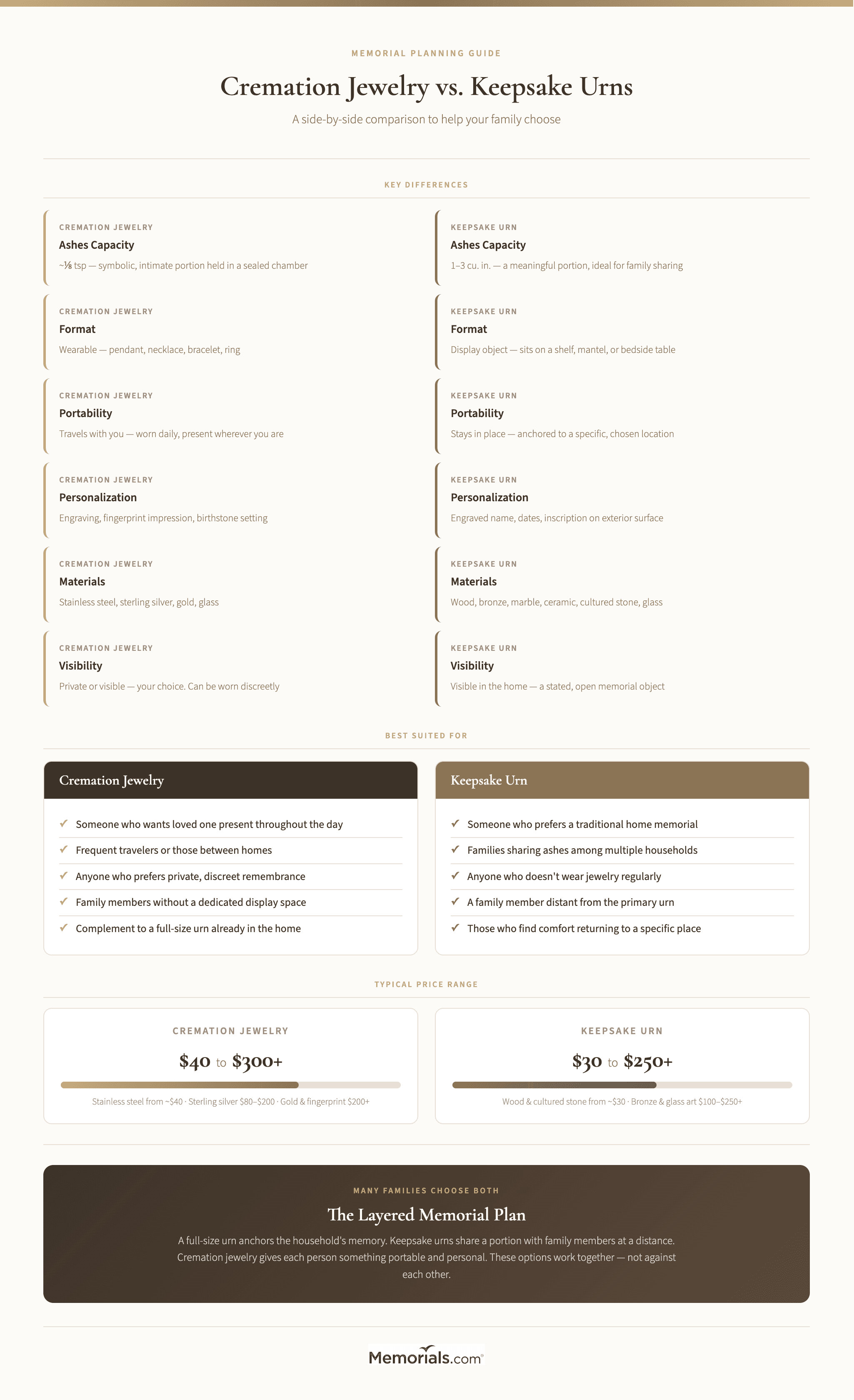
Key Differences at a Glance
Ashes Capacity
This is the most practical distinction. Cremation jewelry holds a symbolic trace — a small pinch of ashes, often less than one-eighth of a teaspoon. A keepsake urn typically holds one to three cubic inches, which is a more substantial portion while still being far less than a full-size urn.
For families planning to share ashes among several people, keepsake urns offer more flexibility. For families where one person simply wants something portable and personal, jewelry may be the right fit.
Portability
Cremation jewelry goes with you. It's worn on the body, tucked under clothing, carried through daily life without any deliberate thought. For people who travel frequently, move between homes, or simply want their loved one present throughout their day without any setup or placement, jewelry is uniquely suited.
A keepsake urn stays put. It requires a designated place. For many families, the act of choosing that place — and returning to it — is meaningful in itself. But it doesn't travel with you the way a pendant does.
Visibility and Discretion
Cremation jewelry can be completely private or openly shared — the choice is entirely yours. A simple pendant under a shirt is invisible to anyone who doesn't know what it is. A distinctive piece worn openly can be a conversation starter and an invitation to share a memory.
A keepsake urn is a visible memorial object. Guests who visit your home will see it. For some families, this visibility feels right — a statement of love and remembrance that needs no explanation. For others, they prefer something more private, particularly in shared living situations.
Personalization
Both options support meaningful personalization. Cremation jewelry can be engraved with initials, dates, short messages, or even made with a loved one's actual fingerprint pressed into the metal. Birthstone settings add another layer of personal meaning.
Keepsake urns typically offer engraving on the exterior surface — names, dates, and short inscriptions. Many are also designed with specific aesthetic themes: patriotic motifs for veterans, nature-inspired designs for those who loved the outdoors, religious imagery for families of faith.
Price Range
Cremation jewelry typically ranges from $40 to $300+, depending on material and design complexity. Stainless steel and base metal pieces fall at the lower end; sterling silver and gold pieces with fingerprint work or birthstone settings fall at the higher end.
Keepsake urns range from roughly $30 to $250+, depending on material and craftsmanship. Wood and cultured stone options tend to be affordable; hand-cast bronze and fine glass art pieces are at the premium end.
Neither option requires significant investment, and both can be meaningful at any price point. For a full breakdown by material and style, see our cremation jewelry cost guide.
Who Is Each Option Best For?
Cremation Jewelry Tends to Suit:
Someone who wants their loved one physically present throughout the day
A person who travels or moves between homes often
A family member who doesn't have a dedicated display space
Anyone who finds comfort in tactile, wearable closeness
People who prefer a private form of remembrance — not visible to others
Someone who wants a complement to a full-size urn already at home
A Keepsake Urn Tends to Suit:
Someone who prefers a traditional display memorial at home
A family that wants to share ashes so multiple households each have a portion
A person who doesn't wear jewelry or finds wearing it uncomfortable
Someone who wants a visible, meaningful focal point in a room
A family member who lives at a distance from the primary urn and wants their own
Anyone who finds comfort in returning to a specific, chosen place each day
Can You Use Both?
Yes — and many families do. This is often called a layered memorial plan, and it's one of the most thoughtful approaches to distributing remembrance after a loss.
A common pattern: the family keeps a full-size urn (or a set of keepsake urns) as the primary memorial in the home, and individual family members — particularly those who live apart — each receive a piece of cremation jewelry. This way, no one has to choose between closeness and practicality. The urn anchors the household's memory. The jewelry makes closeness personal and portable for each person who needs it.
This approach also eases one of the harder conversations families face: who keeps the remains? When there's a layered plan, each family member has something that belongs specifically to them. The decision isn't about possession — it's about care and connection.
What to Think About Before Deciding
Do You Want to Wear It or Display It?
This single question often settles the decision. People who want to carry their loved one through daily life tend toward jewelry. People who want a specific, honored place in the home tend toward a keepsake urn.
How Many Family Members Want a Portion?
If three or four people each want something meaningful, a combination often works best — keepsake urns for those who prefer display, jewelry for those who prefer wearable closeness. Our guide on sharing ashes among family walks through how families coordinate this decision practically. Plan the distribution before dividing the remains to avoid difficult conversations later.
What Feels Like That Person?
Some people had a style — they loved jewelry, wore pieces every day, and the idea of a pendant in their honor feels right. Others never wore much jewelry; a handcrafted urn on the shelf feels more like them. Let your knowledge of the person guide the choice.
Do You Travel or Move Often?
If you move regularly, travel for work, or split time between households, jewelry's portability is a real advantage. A display urn requires a stable home. Jewelry goes where you go.
What's Your Budget?
Both options are available at a wide range of price points. The most meaningful choice isn't the most expensive one — it's the one that genuinely fits your daily life and your relationship with the person you're honoring.
Filling and Caring for Cremation Jewelry
For families new to cremation jewelry, the filling process feels uncertain. It's actually straightforward:
Open the closure (usually a threaded screw at the base or back of the piece, sometimes with a small tool included)
Use a small funnel or the included transfer tool to place a small amount of ashes into the chamber
Close and secure the closure firmly
Consider a small drop of adhesive sealant around the closure edge for extra security, especially for active wearers
Most jewelry pieces come with transfer tools and basic instructions. If you feel uncertain, many funeral homes and cremation services will assist with filling.
For ongoing care: wipe the piece with a soft cloth, avoid submerging in water, and check the closure every few months. Store in a soft pouch or jewelry box when not wearing.
Filling and Caring for a Keepsake Urn
Keepsake urns typically use a bottom plug, threaded lid, or top-access panel. Transfer the desired portion of remains carefully — a small funnel helps — then close and seal the opening. Many families apply a small amount of floral adhesive inside the closure thread to prevent accidental opening.
Place the urn on a stable, level surface away from direct sunlight (which can fade certain finishes) and high humidity. Wood urns benefit from occasional light oiling to maintain their finish. Bronze and metal urns can be gently polished with an appropriate metal cloth.
FAQ
Is cremation jewelry safe to wear every day? Yes, for most materials. Stainless steel is the most durable option for everyday wear and is highly resistant to scratching and tarnish. Sterling silver may show wear over time and benefits from occasional polishing. All cremation jewelry should be kept dry as much as possible — it's water-resistant but not fully waterproof.
Can I transfer ashes between cremation jewelry and an urn? Technically yes, but it's a delicate process. The small amount held in cremation jewelry makes transfer messy and difficult. Most families fill jewelry once and treat it as a permanent arrangement.
What if I want to share ashes with multiple family members? This is one of the most common reasons families choose keepsake urns — they allow for a more substantial portion per person. Cremation jewelry can also be part of a sharing plan for family members who prefer something wearable. Both can be used together.
Are keepsake urns appropriate for burial? Standard keepsake urns are not designed for burial and may not meet cemetery requirements. If you plan to bury any portion of remains, check with the specific cemetery for requirements around urn vault protection. For in-ground burial, a burial urn and vault are typically required.
Do I need to do anything special when choosing between the two? The most helpful step is thinking through your daily life — where you spend time, who else in your family wants to share in the remembrance, whether you prefer something portable or something anchored to a specific place. There's no wrong answer. The right choice is the one you'll be glad you made a year from now.
Choosing What's Right for Your Family
The choice between cremation jewelry and a keepsake urn isn't really about which option is better — it's about which one fits how you grieve, how your household is organized, and what kind of closeness feels right to you.
Memorial jewelry is for people who want to move through the world with their loved one present in a quiet, personal way. Keepsake urns are for people who want a specific place in the home where love lives — a place to return to, a place to tend.
Many families choose both. Many individuals within a family make different choices. All of it is right when it honors the person you lost in a way that helps you carry forward.
Explore cremation jewelry and keepsake urns at Memorials.com to find the form of remembrance that fits your family.