🏬Supersize Online Funeral Retailer🪦1000's of Headstones⚱️Over 10,000 Cremation Urns⚰️Caskets Overnight Delivery🛒Funeral & Memorial Superstore🚚FREE Shipping on ALL Orders👨👩👧👦Helping Families for over 20 Years💰Lowest Price Guarantee🏬Supersize Online Funeral Retailer🪦1000's of Headstones⚱️Over 10,000 Cremation Urns⚰️Caskets Overnight Delivery🛒Funeral & Memorial Superstore🚚FREE Shipping on ALL Orders👨👩👧👦Helping Families for over 20 Years💰Lowest Price Guarantee
🏬Supersize Online Funeral Retailer🪦1000's of Headstones⚱️Over 10,000 Cremation Urns⚰️Caskets Overnight Delivery🛒Funeral & Memorial Superstore🚚FREE Shipping on ALL Orders👨👩👧👦Helping Families for over 20 Years💰Lowest Price Guarantee🏬Supersize Online Funeral Retailer🪦1000's of Headstones⚱️Over 10,000 Cremation Urns⚰️Caskets Overnight Delivery🛒Funeral & Memorial Superstore🚚FREE Shipping on ALL Orders👨👩👧👦Helping Families for over 20 Years💰Lowest Price Guarantee
Cremation Touchstones, Ash Hearts & Sculptures: Memorial Art You Can Hold
Most families think of cremation keepsakes as something you place on a shelf. But a quiet revolution in memorial art has produced something different – objects designed not just for display, but for touch. Cremation touchstones, ash hearts, and hand-cast memorial sculptures are tactile keepsakes that keep a loved one's cremated remains close in a form you can carry in a pocket, hold in your palm, or pass among family members at a memorial gathering.
This guide explains what each type is, how it's made, what to expect when ordering, and how to decide which form of cremation art is right for your family. It's part of our broader cremation jewelry guide and serves as a companion to our cremation art overview for families exploring the full range of ash-infused memorial options.
What Are Cremation Touchstones?
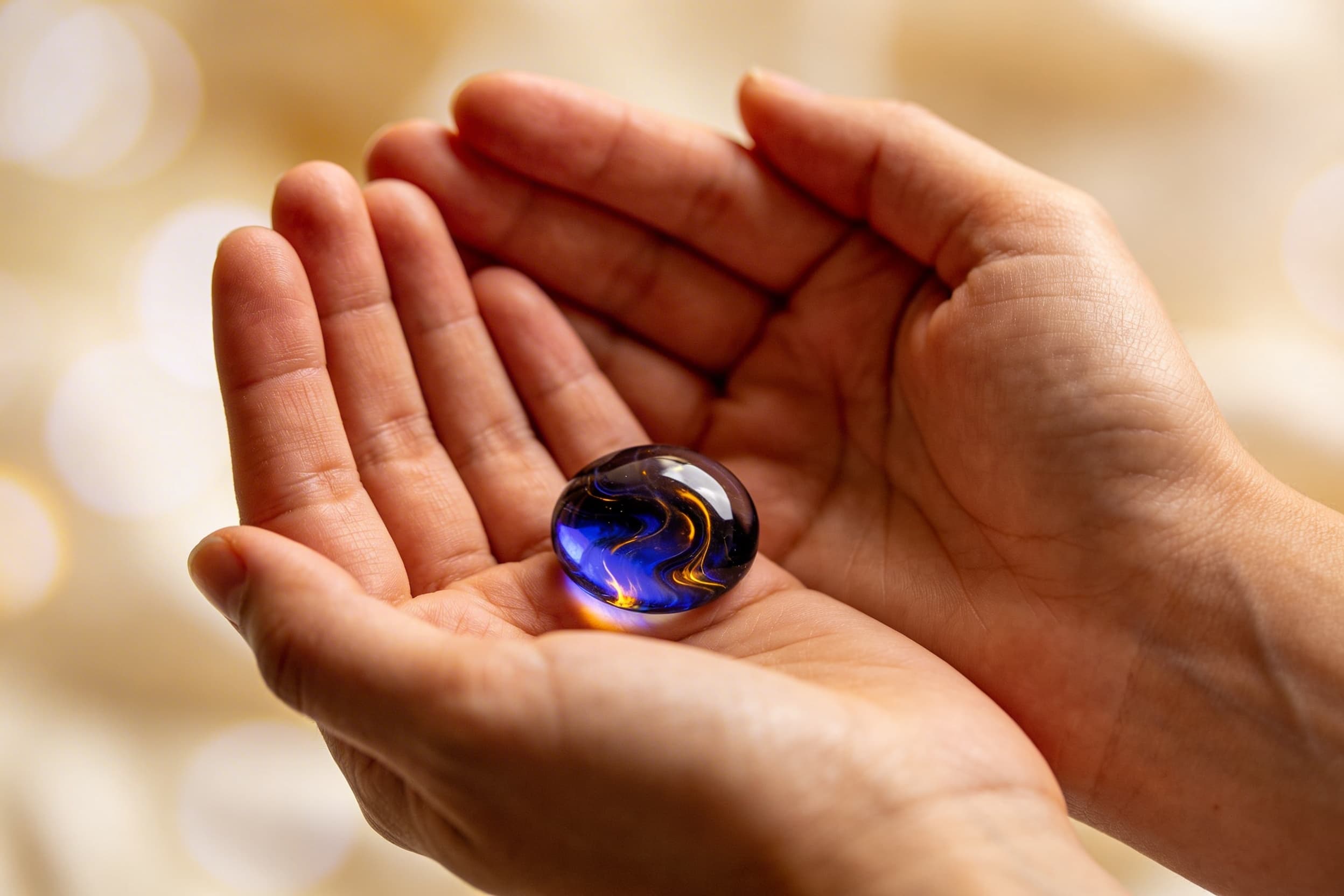
A cremation touchstone is a small, smooth, palm-sized memorial made by infusing a loved one's cremated remains into glass, resin, stone, or solidified ash. The word "touchstone" dates back centuries – a smooth stone carried for comfort or reference – and that tactile philosophy carries into modern memorial design. These pieces are made to be held.
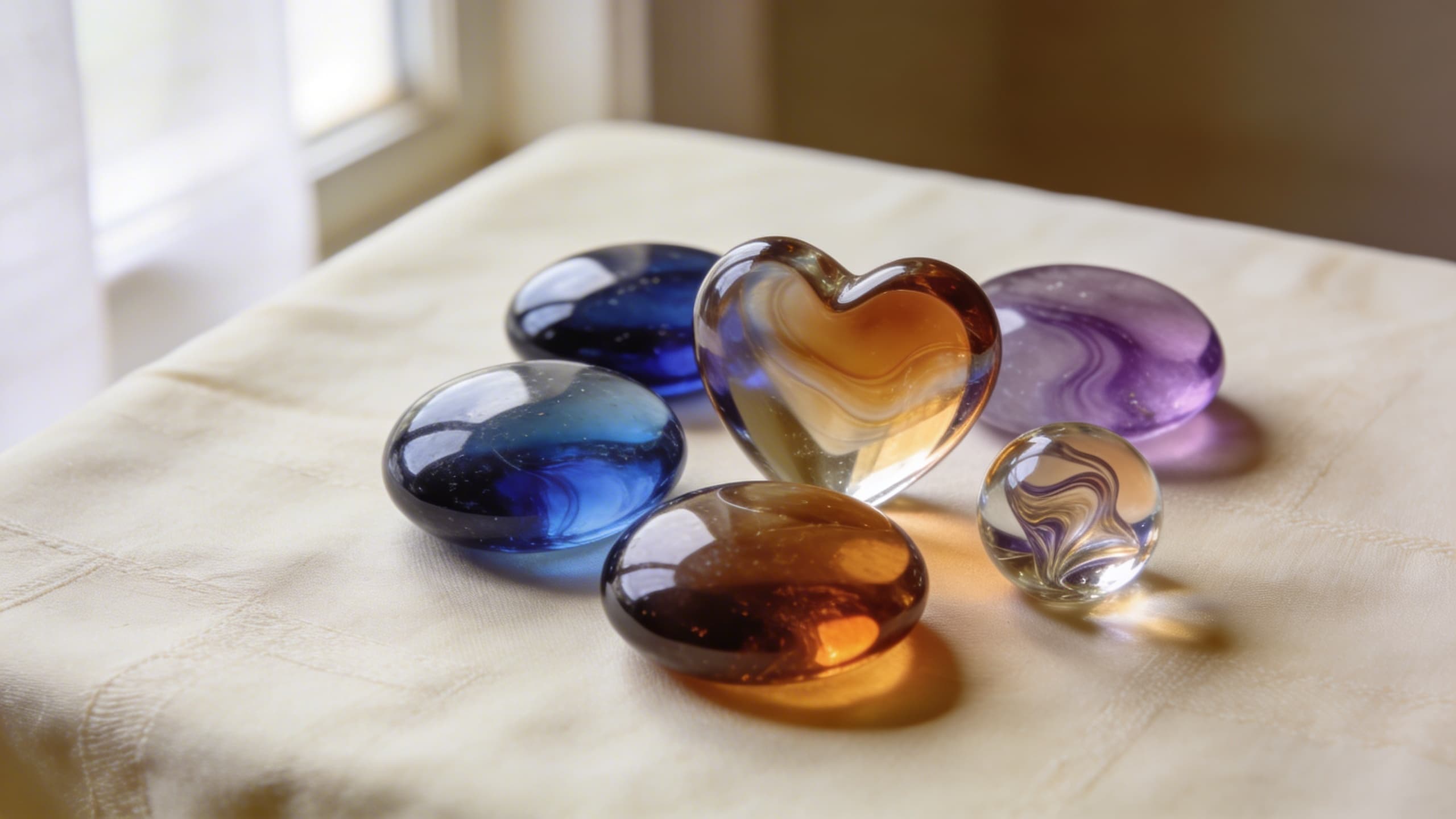
Most glass cremation touchstones range from about 1 to 2.5 inches in diameter and fit comfortably in a closed fist. Artisans typically work with borosilicate glass heated to molten temperatures, fold in a small amount of cremains (usually less than a teaspoon), and then shape the piece by hand before annealing it in a kiln for strength and durability. The resulting object is waterproof, solid, and unique – no two are ever identical because no two sets of cremains are chemically the same.
Common materials for cremation touchstones:
Hand-blown borosilicate glass – The most common format. Colors swirl through the glass alongside the ash. Rich, translucent appearance.
Solidified cremains stones – A different process where the ashes themselves are compressed and kiln-fired into a smooth stone-like object. The resulting piece is composed almost entirely of the cremated remains.
Resin touchstones – A more affordable option where a small portion of ashes is suspended in clear or tinted resin and cast into a smooth oval or rounded shape.
What Are Cremation Ash Hearts?
Cremation ash hearts are heart-shaped keepsakes that hold or are made from a loved one's ashes. The form varies considerably depending on the maker and material:
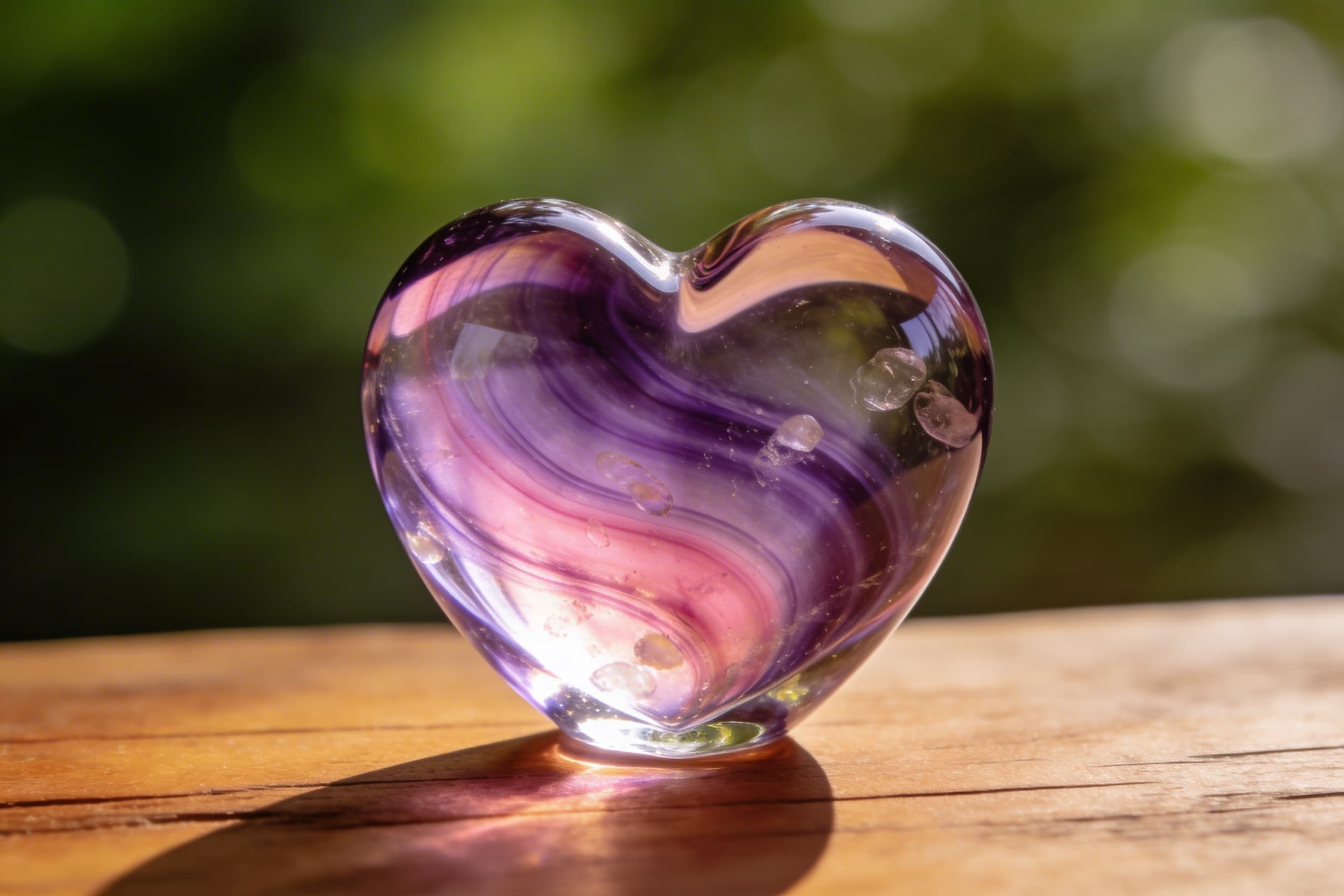
Glass ash hearts follow the same blown-glass process as touchstones but are shaped into a rounded heart form. They sit on a flat base for display or can be carried in a pocket or bag. A thin band of colored glass typically wraps around the equator, and the ashes create subtle, swirling inclusions inside. For a deeper look at how glass is used across memorial keepsakes, our guide to glass cremation jewelry covers the full process and compares styles before you decide.
Solidified ash hearts take the solidification-and-kiln-firing approach mentioned above, producing a heart-shaped stone made almost entirely from cremated remains. These tend to be heavier and more opaque than glass versions.
Heart-shaped keepsake urns are small metal, marble, or ceramic miniature urns cast in a heart shape with a discreet fill opening. These hold a small portion of ashes rather than infusing them into the material itself – they function as miniature cremation ash hearts rather than art-infused pieces.
The appeal of heart-shaped memorial art is obvious: the form itself communicates love and connection without requiring any words. Families who feel drawn to a visual symbol of their bond naturally gravitate toward this category.
What Are Cremation Memorial Sculptures?
Cremation sculptures take the concept a step further, incorporating a small portion of ashes into a three-dimensional sculptural form – a resting bird, an angel figure, a hand-cast abstract shape, or a custom piece modeled after a meaningful object. The ashes are typically mixed into the casting medium (glass, resin, or ceramic slip) rather than sealed inside a chamber.
Cremation sculptures span a wide range of styles and scales:
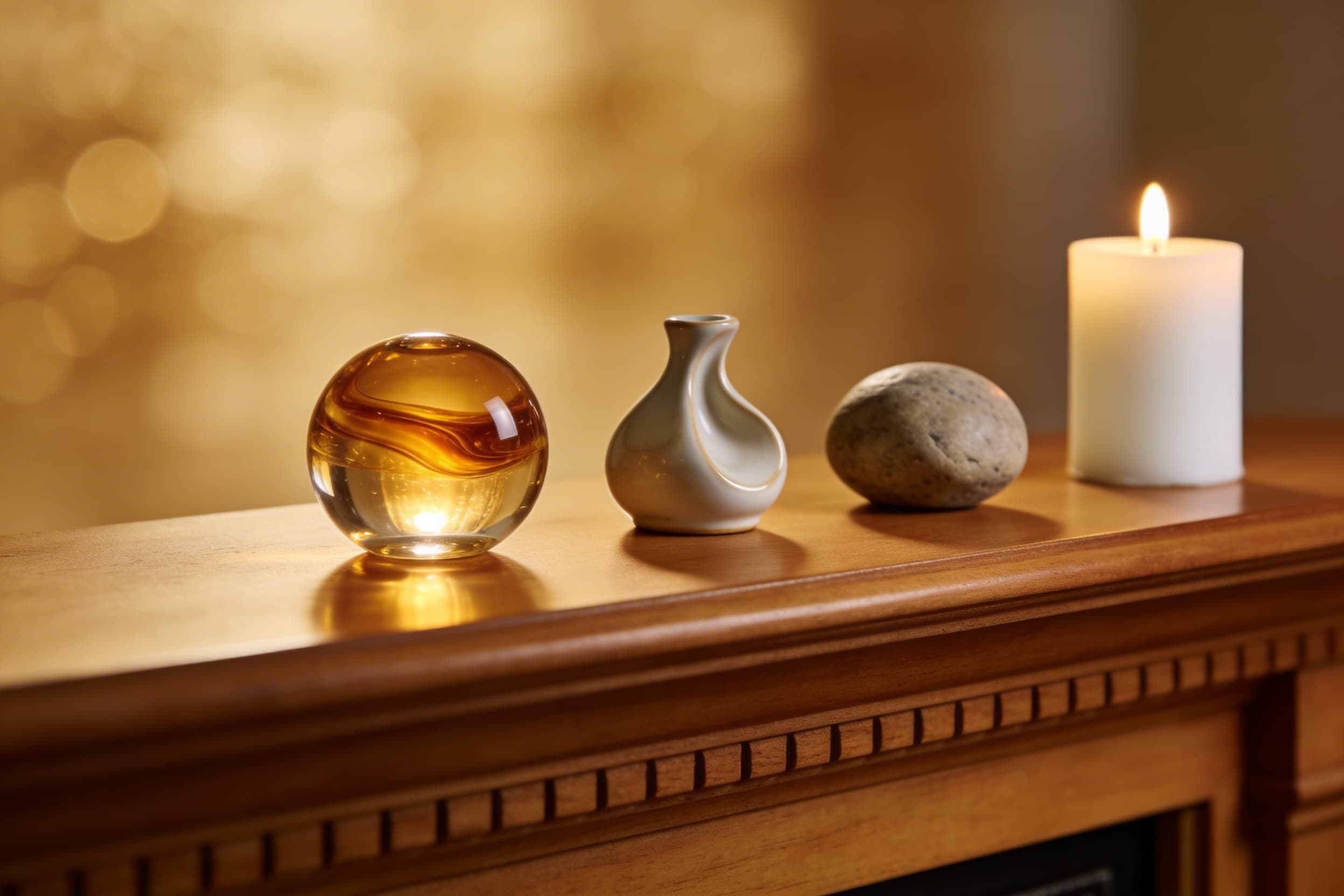
Abstract glass orbs and spheres – Ranging from golf-ball-sized to larger display pieces, these catch light beautifully and come in a huge range of colors.
Figurative sculptures – Angels, birds, fish, butterflies, and animals cast in resin or ceramic with a small amount of cremains incorporated.
Hand-cast abstract forms – Unique organic shapes pressed or sculpted by an artist, often in ceramic, glass, or mixed media.
Custom portrait sculptures – Some studios create custom 3D-printed or hand-sculpted forms that reference the personality or appearance of the person or pet being memorialized.
Unlike a touchstone or ash heart, which are designed to be carried and handled, larger cremation sculptures are typically display pieces – placed on a mantelpiece, bookshelf, or memorial table. Smaller sculptures in the 2-3 inch range bridge both uses.
How Are They Made? The Process Explained
Understanding the creation process helps set realistic expectations before you order.
Glass pieces (touchstones, hearts, orbs)
An artisan heats borosilicate glass rods or cullet in a furnace or with a torch until molten. At the right moment, a small measured amount of the loved one's cremains is folded into the molten glass. The artist shapes the piece – blowing, pressing, or flame-working it – then places it in an annealing kiln to cool slowly over many hours. This controlled cooling prevents stress fractures and produces a piece that's remarkably durable. Most reputable studios send a collection kit with a small vial and instructions, requiring only about 1/3 to 1 teaspoon of cremated remains per piece.
Solidified stone pieces
A different chemical process converts cremated remains into a compact, smooth stone. The cremains are mixed with a binding agent and subjected to heat and pressure, transforming them into a dense, natural-feeling stone. These pieces use significantly more ash than glass work – often a quarter cup or more – and the resulting stone is uniquely colored by the mineral composition of the individual's cremains.
Resin pieces
Cremated remains are mixed into a two-part resin before it cures. The artist can control the density and placement of the ash within the piece, creating anything from translucent with subtle inclusions to a densely distributed ash-throughout appearance. Resin pieces typically cure at room temperature and are less heat-resistant than glass, but they offer more design flexibility and tend to be more affordable.
How Much Ash Is Needed?
One of the most common concerns families have is whether creating these keepsakes means depleting the main urn. The answer, almost universally, is no.
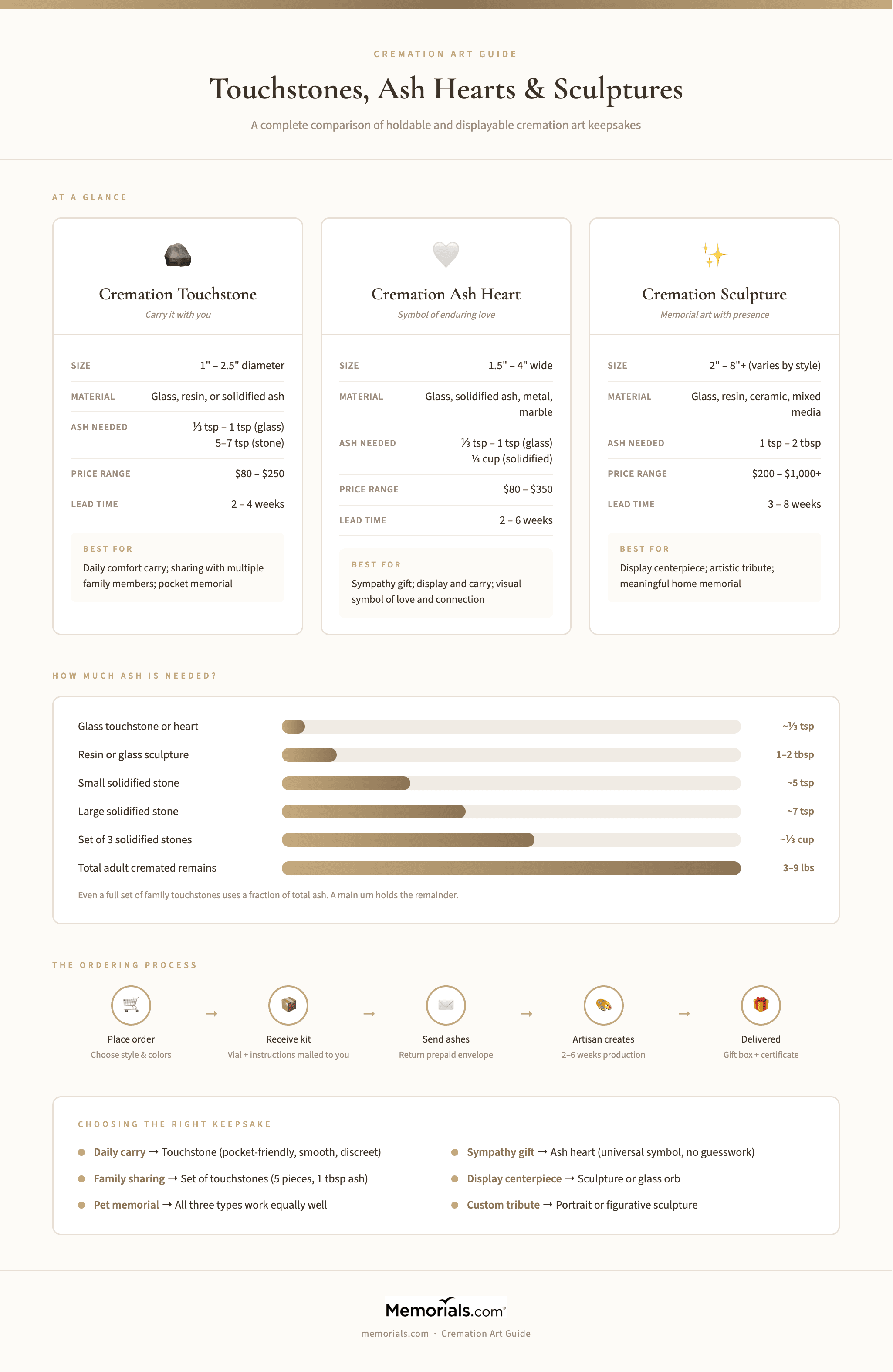
Keepsake TypeTypical Ash Required
Glass touchstone 1/3 to 1 tsp
Glass ash heart 1/3 to 1 tsp
Solidified stone (small) ~5 tsp
Solidified stone (large) ~7 tsp
Set of 3 solidified stones ~1/3 cup
Resin sculpture
A full adult cremation yields approximately 3 to 9 pounds of cremated remains – roughly 100 to 200 cubic inches of volume. Even a set of multiple touchstones or sculptures rarely accounts for more than a fraction of that total. Families frequently order several pieces to share among siblings, close friends, or children while still maintaining a primary cremation art collection or full urn.
Sharing Among Family Members
One underappreciated quality of these small keepsakes is their shareability. A single cremation creates more ash than any one urn or object needs to hold, and it's entirely appropriate – and increasingly common – for families to divide a portion of cremated remains to create multiple memorial objects for different family members.
A set of five hand-blown glass touchstones, for example, requires only a tablespoon or two of ash total, and each person in the immediate family can carry one. This transforms the keepsake from a singular object kept by whoever has the main urn into a shared, distributed memorial that allows everyone to have something tangible.
Larger families sometimes set aside a portion of ashes specifically for keepsake creation before the remainder is interred or scattered. This is a thoughtful and practical approach that avoids difficult conversations later.
Comparing Your Options
Choose a cremation touchstone if:
You want something pocket-sized to carry daily
You're drawn to the feel of a smooth object in your hand
You want to share identical pieces among multiple family members
You prefer a discreet memorial that doesn't announce itself
Choose a cremation ash heart if:
The heart shape resonates emotionally with you or the person being
memorialized
You want a visual symbol that communicates love without words
You're purchasing as a sympathy gift and want an unmistakable form
You want something equally suited to display and pocket carrying
Collection kit Nearly all studios mail a collection kit once you place an order. This typically includes a small sealed vial (usually 2-4 inches tall), a measuring scoop, a return shipping envelope or mailer with tracking, and detailed instructions. The kit is designed so that anyone – including someone unfamiliar with handling cremated remains – can complete the process without difficulty.
Turnaround time Production times vary widely: glass work typically takes 2-4 weeks after the studio receives the ashes; solidified stone processes can take 4-6 weeks. Custom and portrait sculptures often have longer lead times. If you're planning around a memorial service or anniversary date, order early and communicate your timeline.
Uniqueness and variation Every piece is genuinely one-of-a-kind. The swirling patterns in glass are determined by how the cremains interact with the molten glass, and no two sets of cremains are chemically identical. The color palette, translucency, and patterning will resemble the example photos but will be uniquely yours. Reputable studios include a certificate of authenticity confirming that the piece was made with the cremated remains you sent.
Cost range Glass touchstones and ash hearts from reputable studios typically range from $80 to $250 per piece. Solidified stone processes often run $150 to $400 depending on size. Custom or portrait sculptures vary widely, from $200 to well over $1,000 for fully custom work. Sets of touchstones for family sharing are often priced at a per-piece discount. For a full breakdown of pricing across all cremation keepsake categories, see our cremation art pricing guide.
Cremation Art as a Sympathy Gift
Cremation touchstones and ash hearts are among the most meaningful sympathy gifts available precisely because they require no guesswork about someone's aesthetic taste. The form – small, smooth, holdable, beautiful – is universally comforting, and the act of having a meaningful object made from a loved one's remains carries weight that no generic sympathy item can match.
If you're purchasing as a gift, check whether the recipient has already had a portion of ash set aside for keepsake creation, or confirm with the family that a collection kit can be sent to their address. Most studios accommodate this easily.
For families who've already chosen cremation jewelry for wearable memorials, touchstones and ash hearts offer a complementary option – something to keep at home or share with those who prefer a non-wearable alternative.
FAQ
What is a cremation touchstone used for? A cremation touchstone is a smooth, palm-sized memorial made from or incorporating a loved one's cremated remains. It's designed to be held – carried in a pocket, kept on a nightstand, or passed among family members at gatherings. The act of holding something made from a loved one's ashes provides a tangible sense of connection and comfort that visual-only memorials can't replicate.
How much of the ashes are used in a touchstone or ash heart? Very little – typically between 1/3 teaspoon and 1 teaspoon for glass pieces. A full adult cremation produces between 3 and 9 pounds of ash, so creating multiple touchstones or hearts does not meaningfully deplete the remaining cremated remains. Solidified stone processes use more ash, sometimes a quarter cup or more per stone.
Can I have multiple touchstones made from the same ashes? Yes. Many families order sets of 3-5 identical or similar touchstones to share among immediate family members. Because each piece requires only a tiny amount of ash, several can be made from a modest portion of the total cremated remains.
Are cremation touchstones the same as cremation jewelry? They're closely related but distinct. Cremation jewelry – pendants, rings, and bracelets – is designed to be worn on the body. Touchstones are holdable keepsakes designed for comfort, carrying, or display, but not for wearing. Some studios offer touchstone-style glass pieces that can also be converted to pendants, bridging both categories.
How long does it take to receive a cremation touchstone or ash heart? Most glass studios take 2-4 weeks from receipt of ashes to delivery. Solidified stone processes often require 4-6 weeks. Custom sculptural work can take longer. Studios typically mail a collection kit within a few days of your order, and the clock starts when they receive the ashes you send back.
Finding the Right Piece
The most important question when choosing between a touchstone, an ash heart, or a cremation sculpture is simple: what do you want to do with it? If the answer is "carry it," a touchstone or small heart is the right fit. If the answer is "display it," a sculpture or larger glass piece makes more sense. And if the answer is "share it with my whole family," a set of matching touchstones might be exactly what you need.
Explore the full range of cremation touchstones, cremation ash hearts, and cremation sculptures at Memorials.com to find a piece that honors your loved one's memory in a form you'll want to hold close.