🏬Supersize Online Funeral Retailer🪦1000's of Headstones⚱️Over 10,000 Cremation Urns⚰️Caskets Overnight Delivery🛒Funeral & Memorial Superstore🚚FREE Shipping on ALL Orders👨👩👧👦Helping Families for over 20 Years💰Lowest Price Guarantee🏬Supersize Online Funeral Retailer🪦1000's of Headstones⚱️Over 10,000 Cremation Urns⚰️Caskets Overnight Delivery🛒Funeral & Memorial Superstore🚚FREE Shipping on ALL Orders👨👩👧👦Helping Families for over 20 Years💰Lowest Price Guarantee
🏬Supersize Online Funeral Retailer🪦1000's of Headstones⚱️Over 10,000 Cremation Urns⚰️Caskets Overnight Delivery🛒Funeral & Memorial Superstore🚚FREE Shipping on ALL Orders👨👩👧👦Helping Families for over 20 Years💰Lowest Price Guarantee🏬Supersize Online Funeral Retailer🪦1000's of Headstones⚱️Over 10,000 Cremation Urns⚰️Caskets Overnight Delivery🛒Funeral & Memorial Superstore🚚FREE Shipping on ALL Orders👨👩👧👦Helping Families for over 20 Years💰Lowest Price Guarantee
Cross and rosary cremation jewelry serves a dual purpose that resonates deeply with religious families: it is both a wearable symbol of faith and an intimate way to keep a loved one close. For Catholic families in particular, the crucifix carries the weight of the Resurrection, making it a theologically meaningful choice for a memorial keepsake. Protestant families often choose simpler Christian cross styles, while those drawn to Celtic heritage may select an intricately knotted Celtic cross.
This guide covers the main types of cross and rosary cremation jewelry available, what to look for in materials and construction, how these pieces are filled, and how Catholic families can navigate Vatican guidance when choosing wearable memorial options. It also explains when a cremation rosary may be the right choice and when a standard cross pendant better fits the wearer's needs. For those exploring this category for the first time, our guide on explains how ashes are incorporated into wearable keepsakes and what to expect from construction and filling.
Cross cremation pendants come in more variety than most families expect. The differences go beyond aesthetics – style, size, and construction all affect how the piece is worn, how it's filled, and how long it lasts.
Christian Cross Pendants
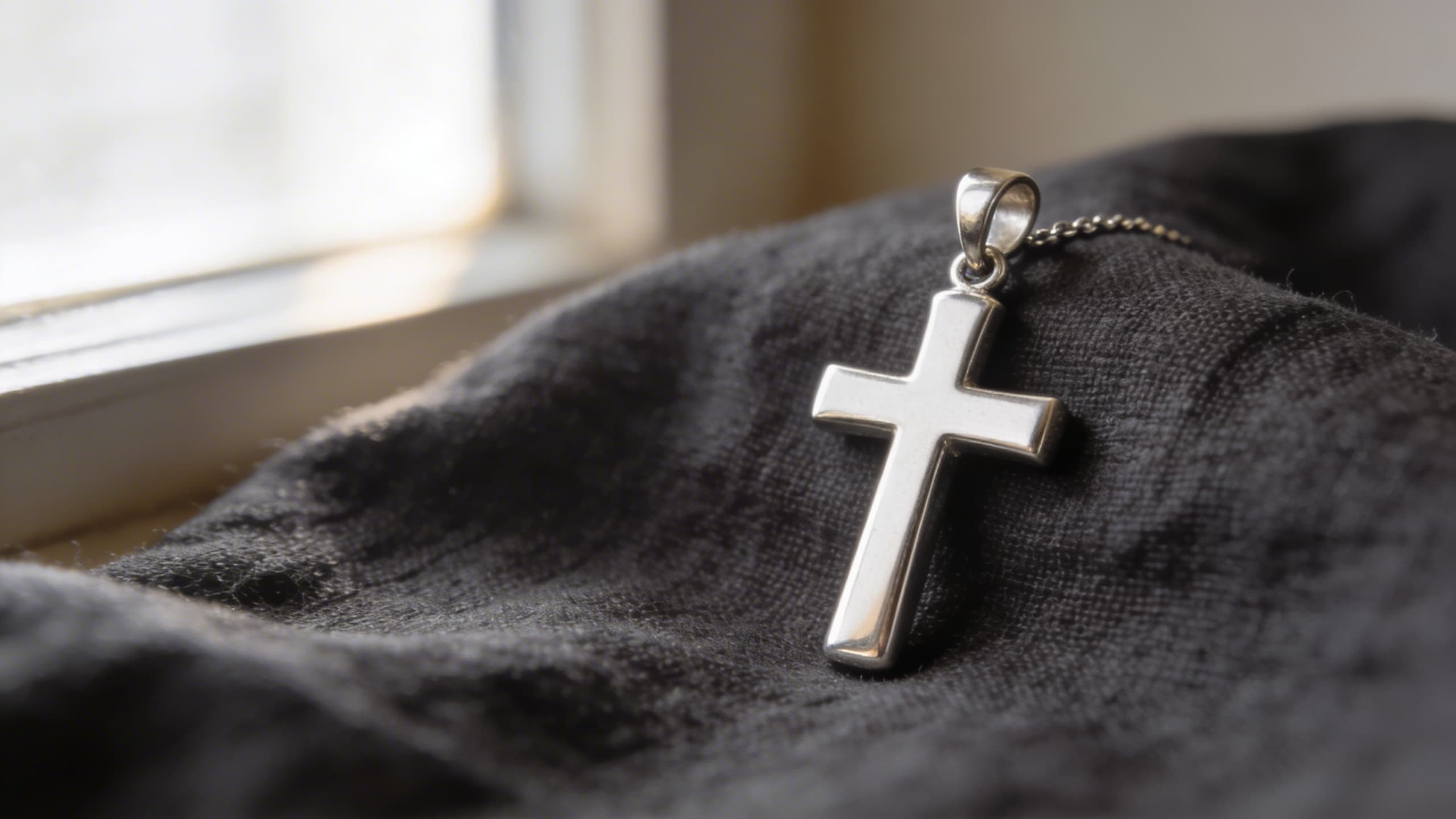
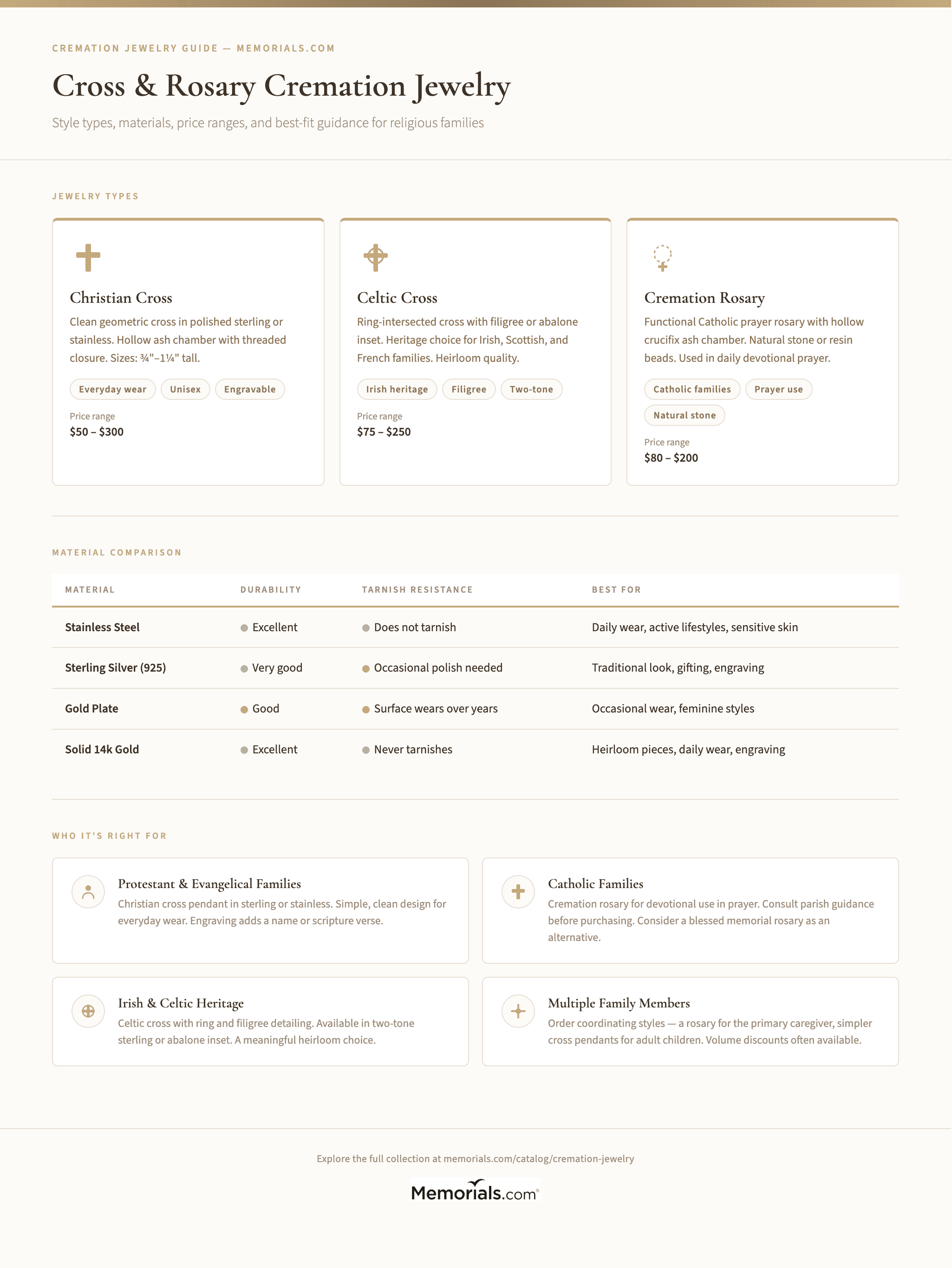
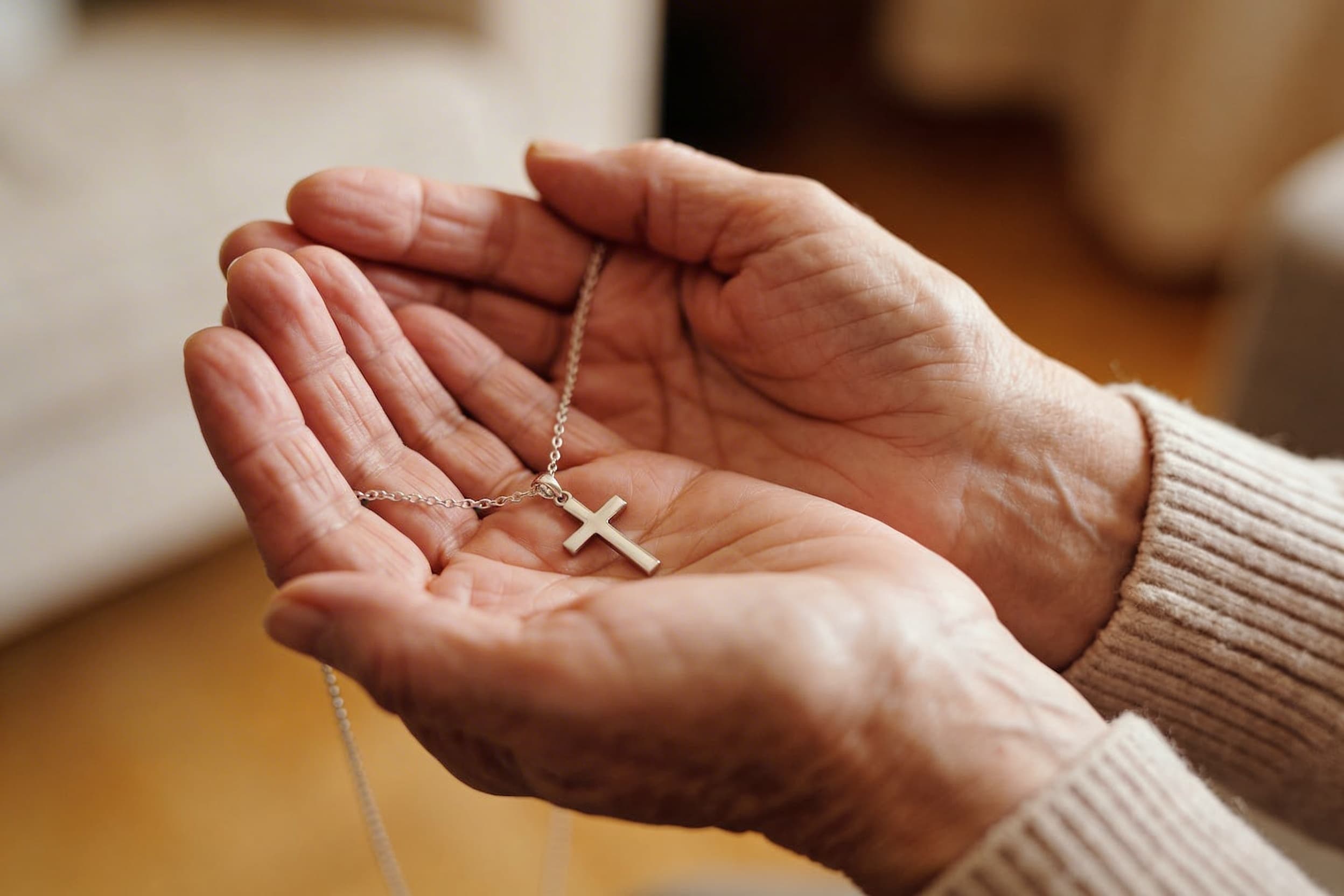
The Christian cross is the most widely recognized style. These pendants range from spare and modern – a clean geometric shape in polished stainless steel – to ornate versions with engraved motifs, cutwork detailing, or a small inset crystal. Most measure between 3/4 inch and 1-1/4 inches tall, making them substantial enough to be seen but comfortable for everyday wear.
Sterling silver and 14k gold are the most popular metals. Sterling silver offers a bright, classic look at a lower price point, typically ranging from $50 to $150. Gold styles, including 14k gold plate and solid 14k, run from $120 to $300 or more. Stainless steel is an increasingly common option for its durability and hypoallergenic properties – it holds up well to daily wear and resists tarnishing.
All carry a hollow ash compartment accessible through a threaded screw-top opening, usually at the top or base of the pendant. A small filling kit – typically a tiny funnel and a sealing tool – comes with every piece.
Winged Cross Pendants
A winged cross adds angel wings to either side of a standard Christian cross, making it one of the most emotionally resonant styles in this category. The imagery connects faith in resurrection with the idea of a soul in flight. These pieces are available in gold plate and sterling silver and tend to run slightly larger than standard crosses – around 3/4 inch wide by 1-1/4 inches tall – which gives them a more prominent presence on a chain.
Celtic Cross Pendants
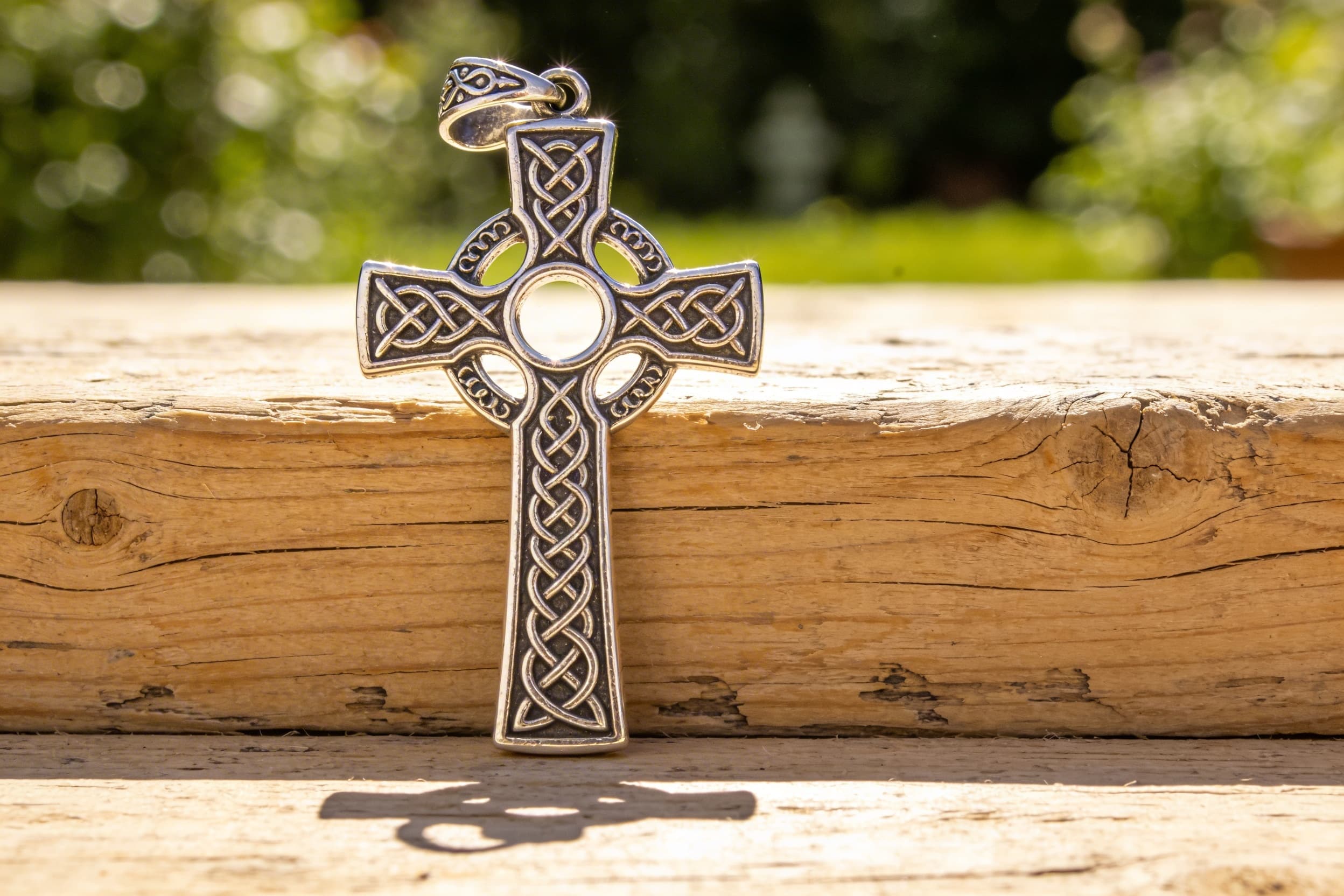
The Celtic cross distinguishes itself with a ring connecting the four arms of the cross, a design that originated in early medieval Ireland and Scotland. The ring has been interpreted as the circle of life, the halo of the sun, or an early Christian fusion symbol. In cremation jewelry, Celtic cross pendants often feature filigree lacework within the ring and along the arms, giving them a delicate, heirloom quality.
These pieces are popular with families of Irish, Scottish, or French heritage. Materials range from sterling silver to two-tone designs combining gold plate with sterling. Some versions incorporate an iridescent abalone shell inset, which adds a subtle shimmer that many families find beautiful for a woman's piece.
Celtic Cross vs. Christian Cross: Which to Choose
The choice between a Celtic cross and a Christian cross often comes down to heritage and personal meaning rather than price. Celtic crosses are better suited to those who want an ornate, heirloom-feeling piece, while plain Christian crosses tend to appeal to those who prefer an understated, everyday symbol. Both styles hold the same small ash compartment – the difference is entirely in the visual presentation.
Cremation Rosary: A Catholic Memorial Keepsake
For Catholic families, the cremation rosary occupies a unique space in the memorial landscape. It is not simply a piece of jewelry – it is a functional prayer tool that can actively support the grieving process. Praying the rosary is a meditative devotional practice that many Catholics return to in times of loss, and having a rosary that also holds a small remembrance of the deceased adds a layer of meaning that a standard pendant cannot replicate.
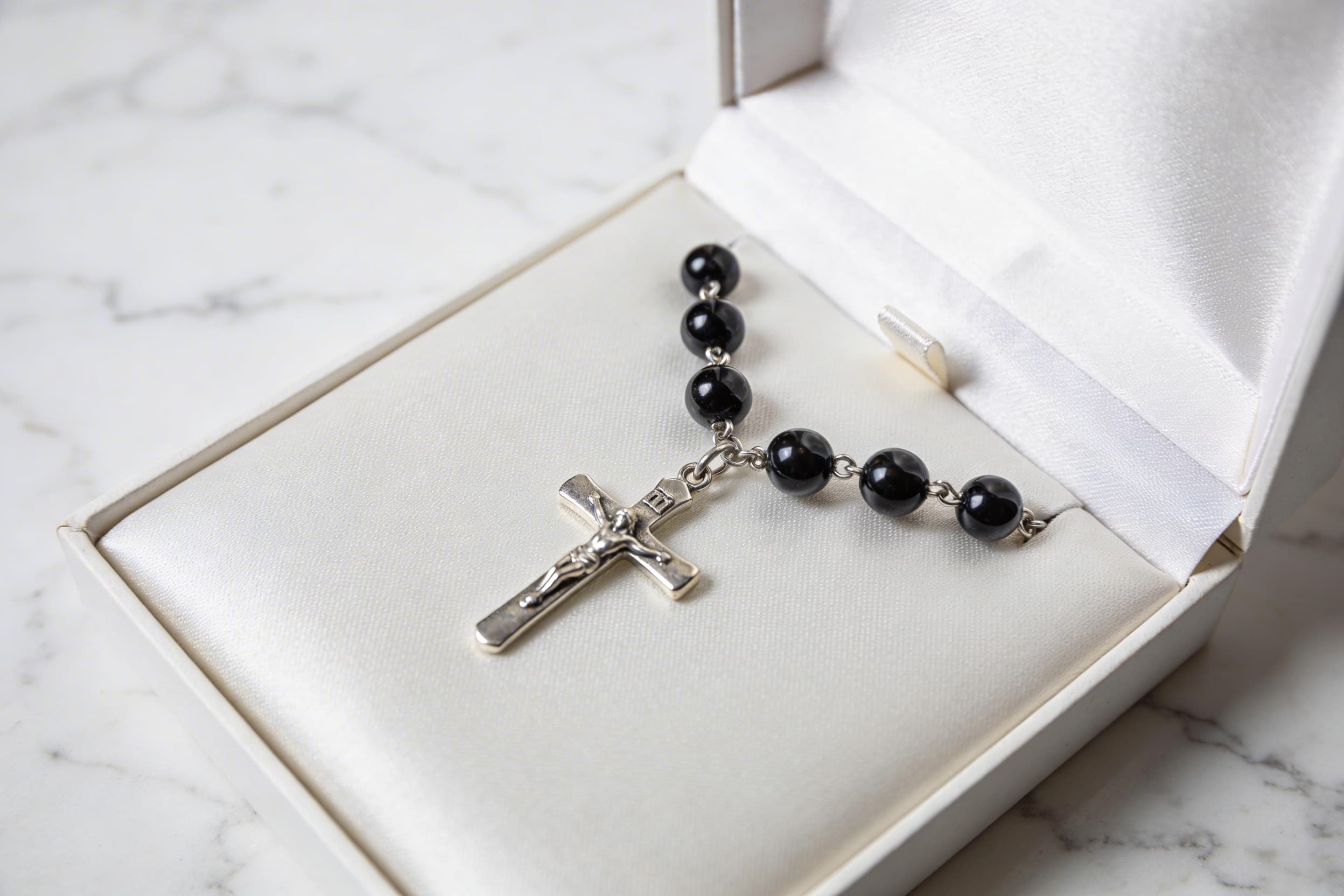
A cremation rosary features a standard rosary structure – decade beads, Our Father beads, and a centerpiece – but the crucifix is specially constructed with a hollow ash compartment accessible through a threaded opening. The small amount of cremated ashes, a lock of hair, or even a few petals from the funeral flowers can be placed inside. This crucifix can then be worn as a pendant, kept in a rosary box, or draped over a framed photograph as a permanent visual tribute.
Materials for Cremation Rosaries
Cremation rosaries are made in a wider variety of materials than most cross pendants, because the rosary beads themselves allow for significant customization. Common options include:
Rosary beads: Natural stone (onyx, amethyst, quartz, jade), resin, glass, and crystal. Natural stone beads have a weight and presence that feels appropriate for prayer, and they develop a subtle patina with use.
Crucifixes: Stainless steel, sterling silver, and 14k gold. Stainless steel is the most durable option for a piece that will be handled regularly in prayer. Sterling silver is the traditional choice for a presentation-quality keepsake.
Prices for cremation rosaries generally start around $80 and can reach $200 or more for full sterling silver or gold options.
Cremation Rosaries and the Catholic Tradition of Prayer
The rosary itself has centuries of significance in Catholic devotion, and a cremation rosary can serve as a daily touchstone for grief that is grounded in faith rather than simply sentiment. Many families find that praying with the cremation rosary helps them feel a continued spiritual connection to the person they've lost – the physical act of moving through the beads while holding the crucifix that carries the ashes is a form of embodied prayer that no other memorial keepsake replicates.
How Cross Cremation Jewelry Is Filled
Every cross cremation pendant and cremation rosary crucifix is filled the same way, and the process is straightforward. Most pieces come with a small filling kit that includes a mini funnel and a sealing tool. Here is what to expect:
Step 1: Prepare a clean, dry surface. A sheet of white paper works well – it makes it easy to return any spilled ash to the container.
Step 2: Unscrew the threaded opening. The closure is almost always at the top of the pendant (beneath the bail) or at the base. It requires a small flat tool or fingernail – nothing specialized.
Step 3: Use the included funnel to transfer a small pinch of ashes. The compartment holds a truly small amount – a pinch, not a teaspoon. The point is symbolic: this is a keepsake of presence, not a primary container for the remains.
Step 4: Seal the closure. Many families add a tiny drop of jeweler's glue or clear nail polish to the threading for a permanent seal. This is optional but recommended for pieces that will be worn daily.
Step 5: Wipe the exterior clean. A soft, dry cloth removes any residue from the outside of the pendant.
Families who feel uncomfortable filling the jewelry themselves can ask their funeral home director to assist – many are happy to help with this step.
Catholic Families: Navigating Vatican Guidance
One of the most common questions Catholic families bring to this topic is whether cross cremation jewelry is permissible within Catholic teaching. The answer requires some nuance.
The Vatican's 2016 instruction Ad resurgendum cum Christo ("To Rise with Christ") addresses the proper disposition of cremated remains. It specifies that ashes should be kept in a "sacred place" such as a Catholic cemetery or columbarium, and it discourages dividing ashes among family members or preserving them in mementos.
This creates a real tension for Catholic families who are drawn to wearable memorial keepsakes. A few considerations are worth discussing with a parish priest or spiritual director:
What the guidance says: Ashes should not be scattered, divided, or preserved in personal objects or keepsakes. The intent is to keep the remains unified and in a sacred setting.
What many families do in practice: Some families choose to place the primary remains in a cemetery or columbarium, then keep a very small symbolic amount in a piece of jewelry – treating it as a token of remembrance rather than a primary repository for the deceased. This is a pastoral question, and individual dioceses interpret the guidance with varying degrees of strictness.
An alternative that stays within Catholic norms: For families who wish to remain within strict adherence to Vatican guidance, wearing a cross or medal that belonged to the deceased – rather than one containing ashes – is a deeply meaningful alternative. A loved one's own rosary carried in a pocket, or a saint's medal that was theirs, can fulfill the same impulse toward closeness without the question of ash disposition.
The goal of this guidance is not to diminish comfort but to preserve the dignity and unity of the body in anticipation of resurrection. Consulting a trusted parish priest before purchasing cremation jewelry is always a good step for Catholic families who want clarity.
Choosing the Right Metal and Finish
Metal choice affects both the appearance and the long-term durability of cross cremation jewelry. Here is how the most common options compare. For a broader comparison across all jewelry types, our cremation jewelry materials guide covers how each metal and finish performs across necklaces, bracelets, and rings.
Stainless steel is the most durable and the most affordable. It does not tarnish, is hypoallergenic, and holds up to daily wear without special care. It tends to have a cooler, modern appearance. Best for: everyday wear, active lifestyles, those with metal sensitivities.
Sterling silver (925) is the traditional choice for high-quality memorial jewelry. It has a warm, bright finish and takes engraving beautifully. Sterling silver can tarnish over time, but a simple polishing cloth restores its appearance. Best for: presentation keepsakes, gifting, those who value traditional craftsmanship.
Gold plate over brass or sterling gives the warmth of gold at a lower price. The gold layer will eventually wear over years of daily contact, particularly at edges and clasps. Best for: occasional wear, presentation, feminine styles.
Solid 14k gold is the most valuable option and the most resistant to wear. It makes sense for a piece intended as an heirloom – a grandchild who inherits the pendant decades from now will receive it in the same condition as the day it was made. Best for: heirloom pieces, those who wear jewelry daily without removal.
For engraving, sterling silver and solid gold are the best substrates – they accept fine detail well. Stainless steel can be laser-engraved effectively. Gold plate over brass tends to lose engraving detail over time as the surface layer wears.
Matching Styles for Multiple Family Members
One of the most meaningful ways families use cross cremation jewelry is by ordering matching or coordinating pieces so that several family members can each hold a remembrance. This approach distributes the act of memorial across the whole family without dividing the primary remains – each piece holds only a small symbolic amount.
Matching sets can be as simple as two identical sterling silver cross pendants on the same chain style, or as considered as a set where the mother receives a more ornate pendant and adult children receive simpler complementary styles. Some families order a mix of a cross pendant and a rosary, so that those who pray the rosary have a piece suited to devotional use, while others have something for everyday wear.
When ordering multiple pieces, check whether the retailer offers a volume discount – many memorial jewelry providers reduce the per-piece price at three or more pendants. Our cremation jewelry gift guide also offers suggestions on presenting memorial jewelry as a thoughtful bereavement gift for multiple family members.
FAQ
Can cremation jewelry be worn every day? Yes. Cross cremation pendants made from stainless steel or sterling silver are designed for daily wear. The threaded ash compartment is airtight and watertight on quality pieces, so the ashes are secure even through showering or exercise. For sterling silver, a quick polish every few weeks keeps the finish looking its best.
How much ash actually goes into a cross pendant? Very little – typically a small pinch, measured in a fraction of a teaspoon. The compartment is intentionally small. The ashes inside are a symbolic remembrance, not a primary container for the remains. Most families keep the bulk of the remains in a full-size cremation urn.
Is it okay to have a cremation rosary blessed by a priest? Many Catholic families do request a blessing for their cremation rosary, and most priests will accommodate this request. The blessing focuses on the rosary as a devotional object and prayer tool, which is entirely within Catholic tradition.
What is the difference between a cremation rosary and a standard memorial rosary? A standard memorial rosary is a regular rosary given as a bereavement gift – it contains no ashes. A cremation rosary has a hollow crucifix designed to hold a small amount of ash or another memorial element. Both can be used for prayer; only the cremation rosary holds a physical remembrance.
Do cross pendants come with chains? Most cross cremation pendants are sold with a chain – typically a 20-inch snake chain or rope chain in silver or black satin cord. Some pendants are sold without a chain so that families can choose their own. Always confirm what is included before purchasing.
Find the Right Piece for Your Family
For families guided by faith, cross and rosary cremation jewelry offers a way to carry both a loved one and a spiritual conviction in the same small pendant. The right piece depends on how it will be used – whether as an everyday reminder worn around the neck, a rosary carried in a pocket for prayer, or a presentation keepsake displayed in a shadow box or on a mantel.
Explore Cremation Jewelry Crosses for the full selection of Christian, Celtic, and winged cross pendants. For Catholic families drawn to devotional keepsakes, the cremation rosary collection offers several styles with natural stone beads, sterling silver, and 14k gold crucifixes. If you are looking for a broader overview of all jewelry types available, the Complete Guide to Cremation Jewelry provides a full decision framework across every category.
For families who are also choosing a primary urn for a loved one's remains, the Religious Urns collection offers a full range of styles featuring crosses, scripture, and devotional imagery that complement faith-based memorial jewelry.