🏬Supersize Online Funeral Retailer🪦1000's of Headstones⚱️Over 10,000 Cremation Urns⚰️Caskets Overnight Delivery🛒Funeral & Memorial Superstore🚚FREE Shipping on ALL Orders👨👩👧👦Helping Families for over 20 Years💰Lowest Price Guarantee🏬Supersize Online Funeral Retailer🪦1000's of Headstones⚱️Over 10,000 Cremation Urns⚰️Caskets Overnight Delivery🛒Funeral & Memorial Superstore🚚FREE Shipping on ALL Orders👨👩👧👦Helping Families for over 20 Years💰Lowest Price Guarantee
🏬Supersize Online Funeral Retailer🪦1000's of Headstones⚱️Over 10,000 Cremation Urns⚰️Caskets Overnight Delivery🛒Funeral & Memorial Superstore🚚FREE Shipping on ALL Orders👨👩👧👦Helping Families for over 20 Years💰Lowest Price Guarantee🏬Supersize Online Funeral Retailer🪦1000's of Headstones⚱️Over 10,000 Cremation Urns⚰️Caskets Overnight Delivery🛒Funeral & Memorial Superstore🚚FREE Shipping on ALL Orders👨👩👧👦Helping Families for over 20 Years💰Lowest Price Guarantee
Choosing cremation jewelry involves more than picking a design you love. The material your piece is made from determines how it holds up over years of daily wear, whether it's comfortable against your skin, how much maintenance it requires, and ultimately whether it becomes a piece you reach for every day or one that ends up in a drawer. This guide is part of our , which walks through every decision in the process from material selection to style and care.
This guide covers the most common materials – sterling silver, gold, stainless steel, titanium, and glass – and helps you match each one to your life and the way you plan to wear it. If you're also deciding between types of cremation jewelry – whether a necklace, bracelet, or ring fits your lifestyle best – that comparison is covered separately.
What Sterling Silver Cremation Jewelry Is Made Of
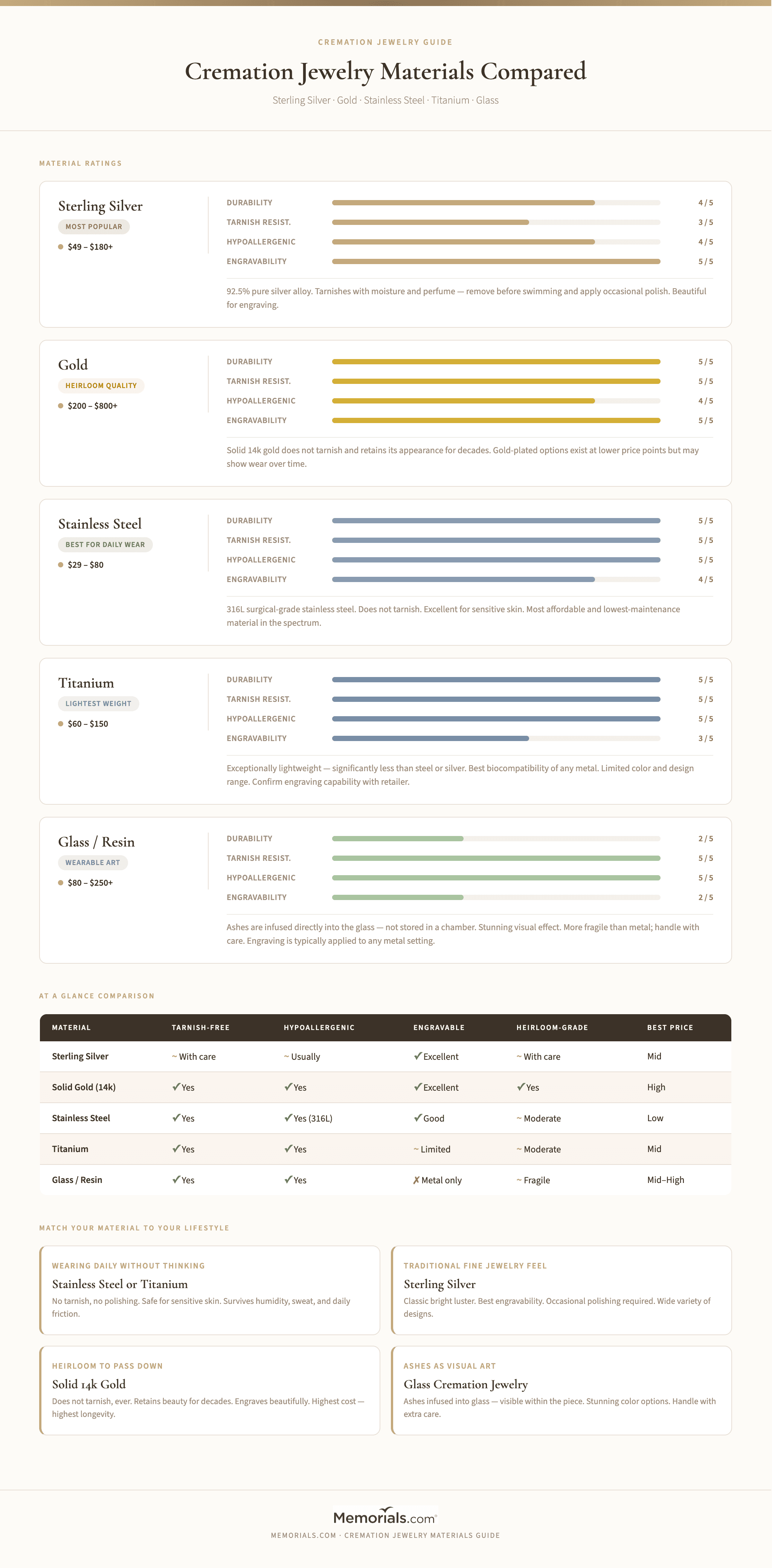
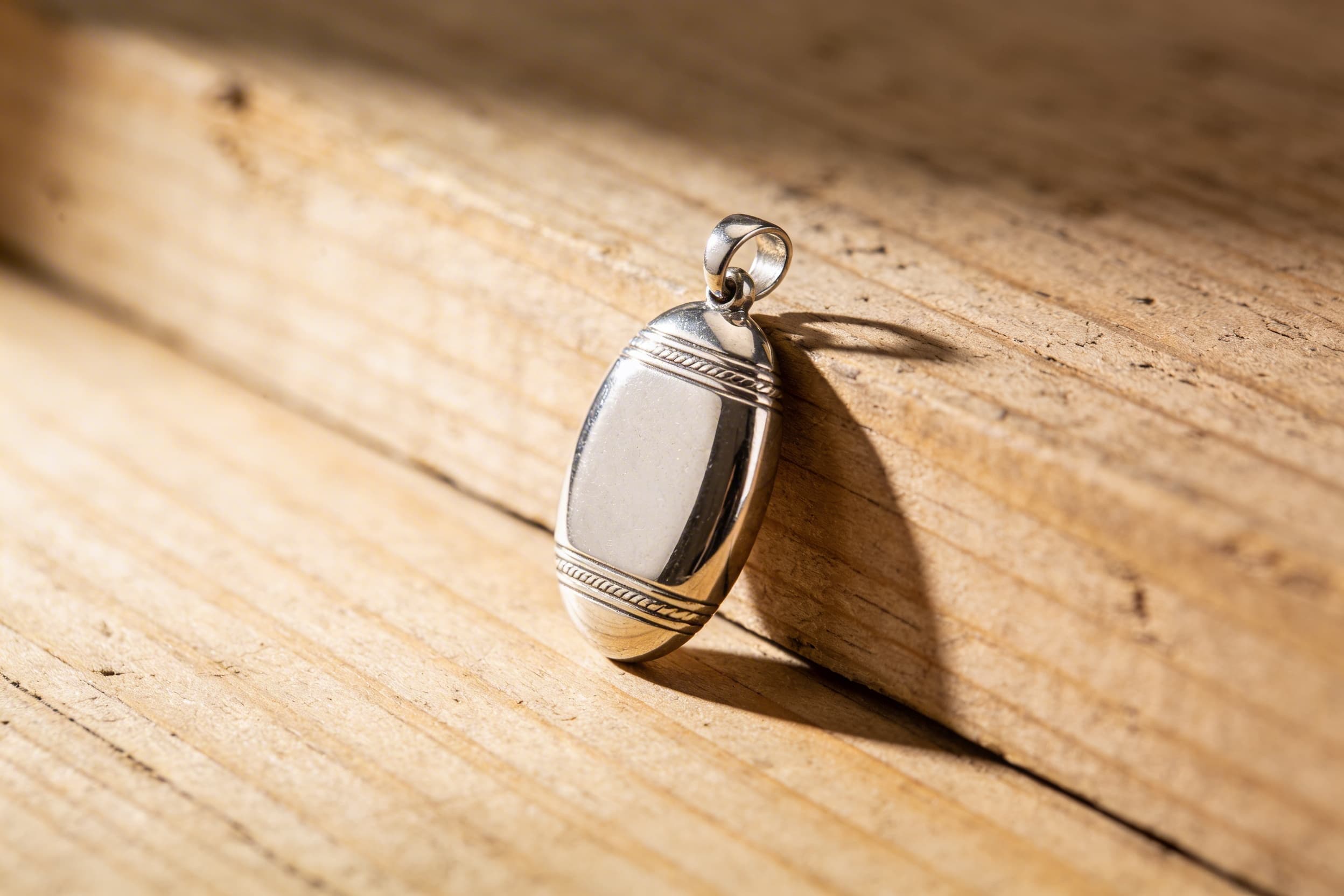
Sterling silver is the most widely available material for cremation jewelry, and for good reason. Pure silver on its own is too soft to hold up as jewelry, so sterling silver is an alloy – 92.5% pure silver combined with 7.5% other metals, typically copper. You'll often see it stamped "925" to indicate that composition.
That alloy structure is what gives sterling silver its balance of beauty and durability. It has a bright, near-white luster that photographs beautifully and complements almost any style, from classic scrollwork pendants to minimalist geometric pieces.
Durability: Sterling silver is durable enough for daily wear, but it does require some care. It will tarnish when exposed to air, moisture, and certain chemicals – including perfumes, lotions, and chlorine. Tarnish is a surface reaction, not structural damage, and it cleans off with a soft polishing cloth. Many families find this maintenance meaningful rather than burdensome.
Skin sensitivity: Sterling silver is generally well-tolerated, but some pieces contain trace nickel in the alloy. If you have a known nickel allergy, confirm the metal composition before purchasing.
Best for: Families who want a traditional fine-jewelry feel and are comfortable with occasional polishing. Sterling silver is also an excellent choice when engraving is important – the metal engraves cleanly and holds detail well.
Price range: Sterling silver typically falls in the mid-range of cremation jewelry pricing. Pieces range from around $49 to $180 for standard designs, with engraved or custom work priced higher. For a full breakdown of what to budget across all material types, see our cremation jewelry pricing guide.
Gold Cremation Jewelry: Solid vs. Gold-Plated vs. Vermeil
Gold cremation jewelry comes in several forms, and understanding the difference matters for both longevity and budget.
Solid gold (10k, 14k gold cremation necklace options): Solid gold contains actual gold throughout the piece, not just on the surface. A 14k gold cremation necklace, for example, is 58.3% gold mixed with other metals for strength. Solid gold does not tarnish, does not wear through, and can genuinely be passed down as an heirloom. It is also the highest-cost option – solid gold cremation pieces typically start around $200 and can range significantly higher.
Gold-plated: Gold-plated pieces have a base metal (often brass or stainless steel) coated with a thin layer of gold. They look beautiful at purchase, but the plating can wear through with friction, especially on areas that contact skin frequently. Plated pieces are appropriate if you plan to wear the jewelry for special occasions rather than daily use.
Gold vermeil: Gold vermeil is gold plating applied over a sterling silver base, usually at a greater thickness than standard plating. It offers more durability than typical gold-plated pieces and maintains the appearance longer.
Skin sensitivity: Higher-karat yellow gold (14k and above) is generally one of the safest options for sensitive skin. Gold itself is a non-reactive metal. Lower-karat alloys may contain nickel, so verify composition if sensitivity is a concern.
Best for: Families who prioritize heirloom quality and plan to pass the piece down. Also ideal when the jewelry will be worn for significant occasions where appearance matters most.
Stainless Steel Cremation Jewelry
Stainless steel is the most practical choice for daily wear. It is highly resistant to tarnish and corrosion, does not require polishing, and holds up well in conditions that would damage silver – humidity, sweat, contact with lotions and soaps.
Durability: Stainless steel is among the most durable materials used in jewelry. It will not develop tarnish, and standard surgical-grade stainless steel maintains its finish through years of continuous wear.
Skin sensitivity: Surgical-grade stainless steel (316L) is widely considered hypoallergenic and is commonly used in medical applications and body jewelry for exactly that reason. It is one of the safest options for people with nickel sensitivity, though those with severe nickel allergy should confirm the alloy grade.
Design range: Stainless steel allows for a wide variety of finishes – brushed, polished, matte, two-tone – and works well for both masculine and feminine designs. It also engraves well, though the engraving aesthetic is somewhat different from gold or silver.
Price range: Stainless steel pieces are typically the most affordable option in the material spectrum, often starting under $50.
Best for: Daily-wear pieces for people with active lifestyles. Also the best option for families who want lower-maintenance jewelry and are comfortable with a contemporary aesthetic over a traditional fine-jewelry look.
Titanium Cremation Jewelry
Titanium is less commonly discussed but worth understanding. It is exceptionally lightweight – significantly lighter than steel or silver – which makes it comfortable for continuous wear. It is also extremely strong, does not tarnish, and is one of the most biocompatible metals available, meaning it is very unlikely to cause skin reactions.
Trade-offs: Titanium is harder to engrave than silver or gold, and its color options are more limited. It tends toward a darker, gunmetal appearance. For families prioritizing engraving or a more traditional jewelry look, titanium may be less suited.
Best for: People with significant metal sensitivities who want a lightweight piece they can wear continuously without concern.
Glass and Resin Cremation Jewelry
Glass cremation jewelry takes a different approach from metal-based pieces. Rather than storing ashes in a sealed chamber, glass pieces are made by infusing cremation ashes directly into the glass during the creation process. The result is a pendant or bead where the ashes are visibly incorporated into the glass itself, often swirled with color.
Resin works similarly – ashes are mixed into the resin material, often paired with a metal setting.
Key considerations: Glass is beautiful but more fragile than metal. It can break if dropped, and epoxy-based resin can scratch or dull with exposure to chemicals. The ashes become permanently incorporated into the piece rather than stored in a compartment, which some families find more meaningful and others find more final.
Best for: Families who want a wearable piece of art rather than a traditional jewelry aesthetic, or where the visual incorporation of ashes is important.
Rhodium Plating: A Note on Protective Finishes
Rhodium is a precious metal that can be applied as a thin plating over sterling silver or other metals. It prevents tarnishing and adds a bright, reflective finish. Rhodium-plated silver pieces require less polishing and maintain their appearance longer than unplated silver.
If low maintenance is a priority but you prefer the look of silver over steel, rhodium-plated sterling silver is a practical middle ground.
How Material Affects Closure Quality
One consideration that doesn't get enough attention: the closure mechanism. The most important function of cremation jewelry is securely holding ashes. Most pieces use a threaded screw closure – a small screw or plug that seals the chamber. Some include an O-ring or gasket for additional security.
The material of the piece matters here because closure mechanisms on denser metals (stainless steel, solid gold) tend to be more precise and longer-lasting than those on softer alloys. If you plan to wear the piece daily, pay attention to the closure type and whether the threading feels firm and well-machined.
Rather than looking for a single "best" material, match the metal to how you actually plan to wear the piece.
If you'll wear it daily without thinking about it: Stainless steel or titanium. Both resist tarnish and require minimal maintenance.
If you want a traditional fine-jewelry feel and don't mind occasional polishing: Sterling silver. Beautiful, engravable, and widely available.
If heirloom quality matters and budget is secondary: Solid 14k gold. The only material that truly ages without degrading.
If ashes as art is the priority: glass cremation jewelry or resin-infused pieces.
If skin sensitivity is a primary concern: Surgical-grade stainless steel (316L) or titanium.
Many families also choose complementary pieces – a stainless steel pendant for everyday wear alongside a sterling silver or gold piece reserved for significant occasions. Explore the full range of cremation bracelets, cremation rings, and urn necklaces to see how material options vary across jewelry types.
Some families also incorporate birthstone cremation jewelry – combining a precious gemstone with the base metal of their choice for additional personalization.
What is the best material for cremation jewelry? There is no single best material – the right choice depends on your lifestyle. Stainless steel is the most durable and lowest-maintenance option for daily wear. Sterling silver offers traditional jewelry beauty with moderate care requirements. Solid gold provides the longest-lasting heirloom quality. Titanium is best for those with sensitive skin.
Does sterling silver cremation jewelry tarnish? Yes, sterling silver tarnishes when exposed to air, moisture, perfumes, and lotions. Tarnish is a surface reaction and can be removed with a soft polishing cloth. Many families keep a polishing cloth with their jewelry and clean the piece periodically. Rhodium-plated sterling silver tarnishes more slowly.
Is stainless steel cremation jewelry hypoallergenic? Surgical-grade stainless steel (316L) is widely considered hypoallergenic and safe for most skin types, including many people with nickel sensitivity. It is one of the safest options for daily-wear cremation jewelry.
What is the difference between gold-plated and solid gold cremation jewelry? Solid gold contains gold throughout the metal and does not wear through. Gold-plated pieces have a base metal coated with a thin gold layer that can wear away with friction over time. For a piece intended to last decades or be passed down, solid gold is the more durable choice. Gold-plated pieces are appropriate for occasional wear at a lower price point.
Can cremation jewelry be worn every day? Most cremation jewelry is designed for daily wear, but the material affects how much maintenance you'll need. For a deeper look at what to expect from daily use, see Is Cremation Jewelry Safe to Wear Every Day?
Find the Right Material for Your Family
The right piece of cremation jewelry is one you'll actually wear – one that fits your life, your skin, and your sense of what honoring someone well looks like. Browse the complete cremation jewelry collection at Memorials.com to compare materials, styles, and personalization options across thousands of designs.