🏬Supersize Online Funeral Retailer🪦1000's of Headstones⚱️Over 10,000 Cremation Urns⚰️Caskets Overnight Delivery🛒Funeral & Memorial Superstore🚚FREE Shipping on ALL Orders👨👩👧👦Helping Families for over 20 Years💰Lowest Price Guarantee🏬Supersize Online Funeral Retailer🪦1000's of Headstones⚱️Over 10,000 Cremation Urns⚰️Caskets Overnight Delivery🛒Funeral & Memorial Superstore🚚FREE Shipping on ALL Orders👨👩👧👦Helping Families for over 20 Years💰Lowest Price Guarantee
🏬Supersize Online Funeral Retailer🪦1000's of Headstones⚱️Over 10,000 Cremation Urns⚰️Caskets Overnight Delivery🛒Funeral & Memorial Superstore🚚FREE Shipping on ALL Orders👨👩👧👦Helping Families for over 20 Years💰Lowest Price Guarantee🏬Supersize Online Funeral Retailer🪦1000's of Headstones⚱️Over 10,000 Cremation Urns⚰️Caskets Overnight Delivery🛒Funeral & Memorial Superstore🚚FREE Shipping on ALL Orders👨👩👧👦Helping Families for over 20 Years💰Lowest Price Guarantee
A celebration of life gathers the people who loved someone most and focuses on gratitude for the time they shared rather than grief over the loss. Unlike a traditional funeral service, which tends to follow a structured format in a church or funeral home, a celebration of life can happen anywhere — a backyard, a park pavilion, a favorite restaurant — weeks or even months after someone has passed. If you are exploring what to know when planning a funeral, understanding how a celebration of life fits into the broader spectrum of memorial options is an important first step.
This guide walks you through every major decision, from choosing a venue and setting a budget to selecting music, coordinating food, and creating keepsakes. Whether you are organizing a celebration for a loved one who has recently passed or preplanning your own, you will find a practical celebration of life checklist and ideas you can adapt to any style, size, or budget.
A celebration of life and a traditional funeral both honor someone who has died, but the similarities often end there. Funerals typically follow religious or cultural customs, feature the body or casket, and take place within days of the death. A celebration of life is more flexible in every dimension — timing, location, tone, and format.
The defining feature is focus. A funeral centers on mourning and farewell. A celebration of life centers on the personality, accomplishments, and joy the person brought into the world. Laughter is welcome. Stories are the centerpiece. Some families build themed events around a loved one's favorite hobby, career, or travel destination.
A celebration of life also differs from planning a memorial service, which is typically more structured and formal. Memorial services often include an officiant, a set program with readings and prayers, and a reverent atmosphere. Celebrations of life can include those same elements, but they are not required. Some feel more like a gathering of friends at a dinner party than a service at a church.
Many families today view celebrations of life as one of several alternatives to traditional funerals, alongside direct cremation, green burial, and home memorial gatherings. The growing popularity reflects a broader cultural shift toward personalization — honoring the individual, not just following convention.
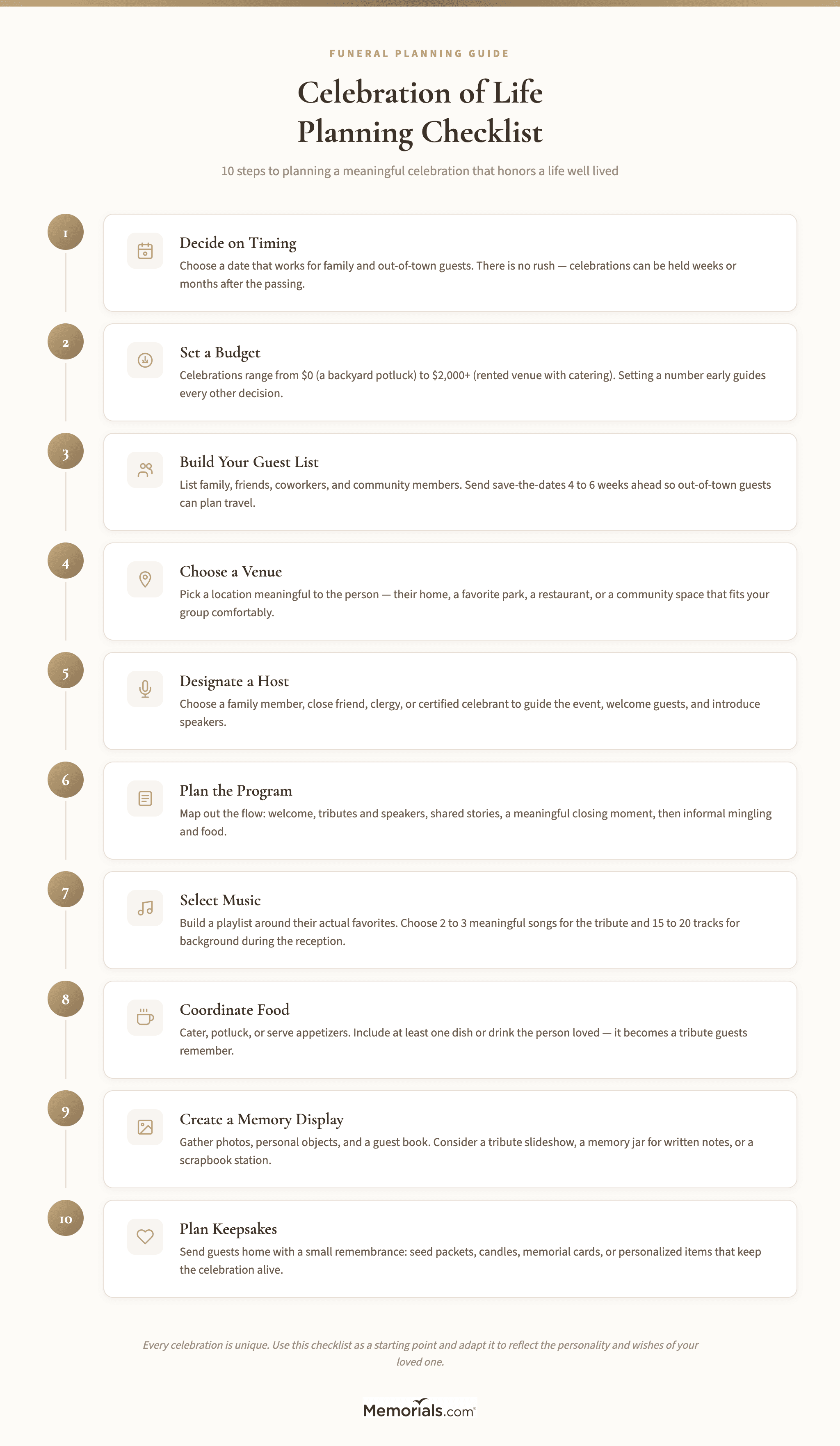
Step 1: Decide on Timing
One of the biggest advantages of a celebration of life is scheduling flexibility. Because the body does not need to be present, families can hold the event at whatever point feels right — three days, three weeks, or three months after the death.
Some families choose to hold a small, private gathering immediately after the passing for close family, and then plan a larger celebration of life weeks later once out-of-town friends and extended family can make travel arrangements. Others time the celebration to coincide with a meaningful date, such as a birthday, anniversary, or holiday the person loved.
If cremation has already taken place, there is no urgency driving the timeline. This breathing room is one of the reasons many families who choose direct cremation pair it with a celebration of life rather than a formal funeral. You can focus on one logistical challenge at a time — handle the cremation arrangements first, then devote your full attention to planning something meaningful.
Step 2: Set a Budget
Talking about money during grief feels uncomfortable, but establishing a budget early prevents stress later. A celebration of life can cost virtually nothing — a potluck in the backyard with a Bluetooth speaker — or several thousand dollars if you rent a venue, hire a caterer, and bring in a professional celebrant.
Common expense categories include venue rental, food and beverages, invitations or printed programs, decorations, audio/visual equipment, flowers, and keepsakes for guests. Not everything requires a line-item cost. Many of the most memorable celebration of life ideas are free: a photo display on a folding table, a handwritten playlist of favorite songs, or an open-mic session where guests share their best stories.
If budget is tight, consider a potluck format. Guests bring a dish inspired by the person's favorite meals, which doubles as both a cost-saver and a built-in conversation starter. Community spaces like church halls, lodge rooms, and public park pavilions are often available at little or no cost.
Step 3: Build Your Guest List
Your guest list drives most of the other planning decisions. A gathering of 15 close family members calls for a very different setup than an event for 100 friends, neighbors, and coworkers.
Start by writing down everyone you think should be there: immediate family, extended family, lifelong friends, work colleagues, neighbors, community group members, and anyone else the person cared about. Check old holiday card lists, social media connections, and the contacts in your phone if you need prompts.
Once you have a rough count, decide whether the celebration will be open-invitation or a more curated gathering. Some families publish the details in an obituary and welcome anyone who wants to attend. Others send personal invitations and keep the group intimate.
For out-of-town guests, send a save-the-date message as early as possible — ideally four to six weeks in advance. A simple email or group text is perfectly appropriate; formal printed invitations are optional.
Step 4: Choose a Venue
The venue sets the tone for the entire celebration. Choose a location that would have felt meaningful to the person being honored — or one that simply accommodates your group comfortably.
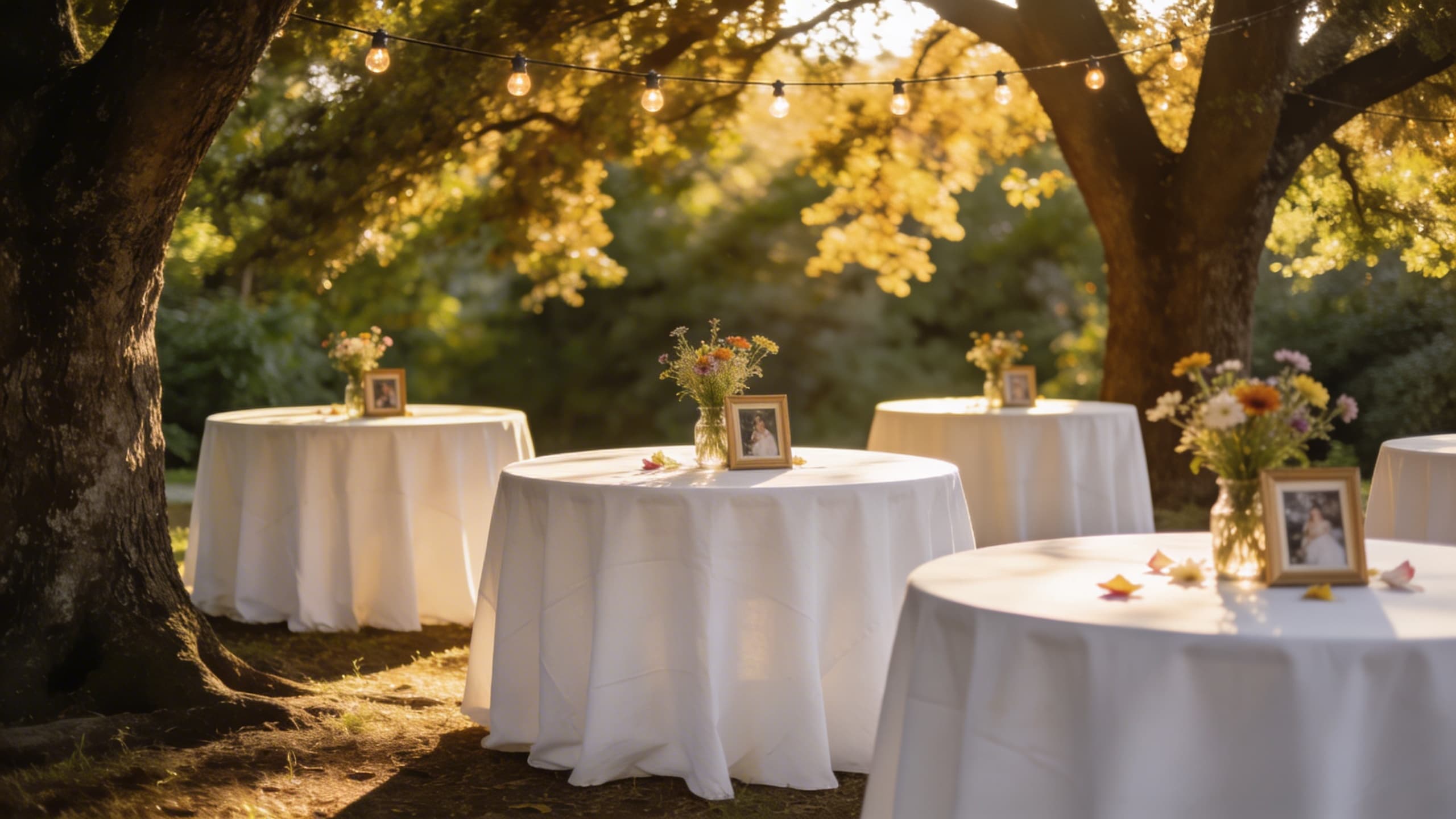
Meaningful locations might include the person's home or yard, a favorite park or beach, a restaurant they loved, a sports facility, a community garden, a fishing dock, or a scenic overlook they visited often. Some families hold celebrations at wineries, breweries, art galleries, or community centers.
Practical considerations include capacity, parking, restroom access, weather contingency for outdoor events, wheelchair accessibility, and whether the venue allows outside food and beverages. Ask about audio equipment availability if you plan to have speakers, music, or a slideshow.
Indoor-outdoor hybrid venues work especially well — guests can move freely between a covered space and an outdoor area, which reduces crowding and gives introverts room to breathe during an emotional event.
Step 5: Designate a Host or Officiant
Every celebration of life benefits from having one person responsible for guiding the event. This does not need to be a clergy member or professional — it can be a trusted friend or family member who is comfortable speaking in front of a group and keeping things on track.
The host or officiant typically welcomes guests, provides an overview of the program, introduces speakers, manages transitions between segments, and offers closing remarks. If the family has religious preferences, a pastor, priest, rabbi, or other faith leader can fill this role. For secular celebrations, many families hire a certified life celebrant — a professional trained to craft personalized ceremonies without religious framework.
Whoever takes on this role, give them enough time to prepare. Share stories, biographical details, and any specific wishes the family wants included. A confident, warm host keeps the atmosphere flowing naturally.
Whoever opens sets the tone for the whole afternoon. Our scripts for opening words for celebration of life cover the first two minutes, including what to do if your voice goes.
Step 6: Plan the Program
A celebration of life does not need a rigid schedule, but a loose program keeps the event from drifting aimlessly. Most celebrations follow a general arc: welcome and opening words, remembrance or tribute segment, shared stories and memories, a closing moment, then informal mingling and food.
Opening words set the tone. The host might share a brief reflection on the person's character, explain the format, and invite guests to participate however they feel comfortable — sharing a story, raising a glass, or simply being present.
Tribute segment is the emotional heart of the celebration. Options include a eulogy from a close friend or family member, a slideshow or tribute video with photos set to music, readings of poems or letters, or a combination. Many families ask two or three people to speak for five to ten minutes each. Keep it voluntary — pressuring reluctant speakers creates anxiety rather than warmth.
Shared stories and open mic give guests a chance to contribute. A simple prompt works well: "If you have a favorite memory or story, step up to the microphone and share it." Some families place cards and pens at each table so guests can write a memory if they prefer not to speak publicly.
Closing moment provides a sense of completion. A final toast, a moment of silence, the release of biodegradable lanterns, or the planting of a tree in the person's honor all serve as meaningful endpoints. After the closing, the gathering typically shifts to informal socializing over food and drinks.
Step 7: Select Music
Music creates atmosphere and triggers memory like nothing else at a memorial event. The right playlist can shift a room from tears to laughter within a single song.
Build a playlist around the person's actual music tastes, not what feels generically appropriate. If they loved classic rock, play classic rock. If they were a jazz fan, a country music listener, or an opera devotee, let those preferences fill the space. Guests will smile when they hear a song they associate with the person.
For the tribute segment, consider two or three songs with special meaning — a wedding song, a favorite road-trip anthem, or a song they always sang along to. For background music during the reception portion, a longer playlist of 15 to 20 songs keeps things natural without repeated tracks. Families looking for inspiration can explore uplifting funeral songs that focus on hope and celebration rather than sorrow.
Live music is another option if budget allows. Hiring a local acoustic guitarist, a small jazz ensemble, or even a barbershop quartet can create an atmosphere that feels personal and memorable. If the person was a musician themselves, asking their bandmates or music friends to perform is a powerful tribute.
Step 8: Coordinate Food and Beverages
Food brings people together, slows them down, and opens the door for the kinds of relaxed conversations that make celebrations of life meaningful. The format you choose depends on your budget, venue, and the tone you want to set.
Catered meals suit formal celebrations at rented venues. A buffet is typically more practical than plated service for memorial events, since guests arrive and mingle at different paces.
Potluck style is warm, communal, and budget-friendly. Ask each guest to bring a dish inspired by something the person loved. Label each dish with a small card explaining the connection — "John's famous chili recipe" or "The pasta Sarah always ordered at Carmine's." This turns the food table into a memory table.
Appetizers and dessert offer a middle ground. Heavy hors d'oeuvres with a signature cocktail or mocktail keep things light and social without requiring a full meal.
Whatever you serve, try to include at least one dish or drink the person loved. It is a small detail that guests notice and appreciate. If the person had a signature drink — a particular bourbon, a gin and tonic, a lavender lemonade — make it available as a tribute.
Step 9: Create a Memory Display
A visual tribute anchors the celebration and gives guests a focal point, especially during the informal portions of the event.
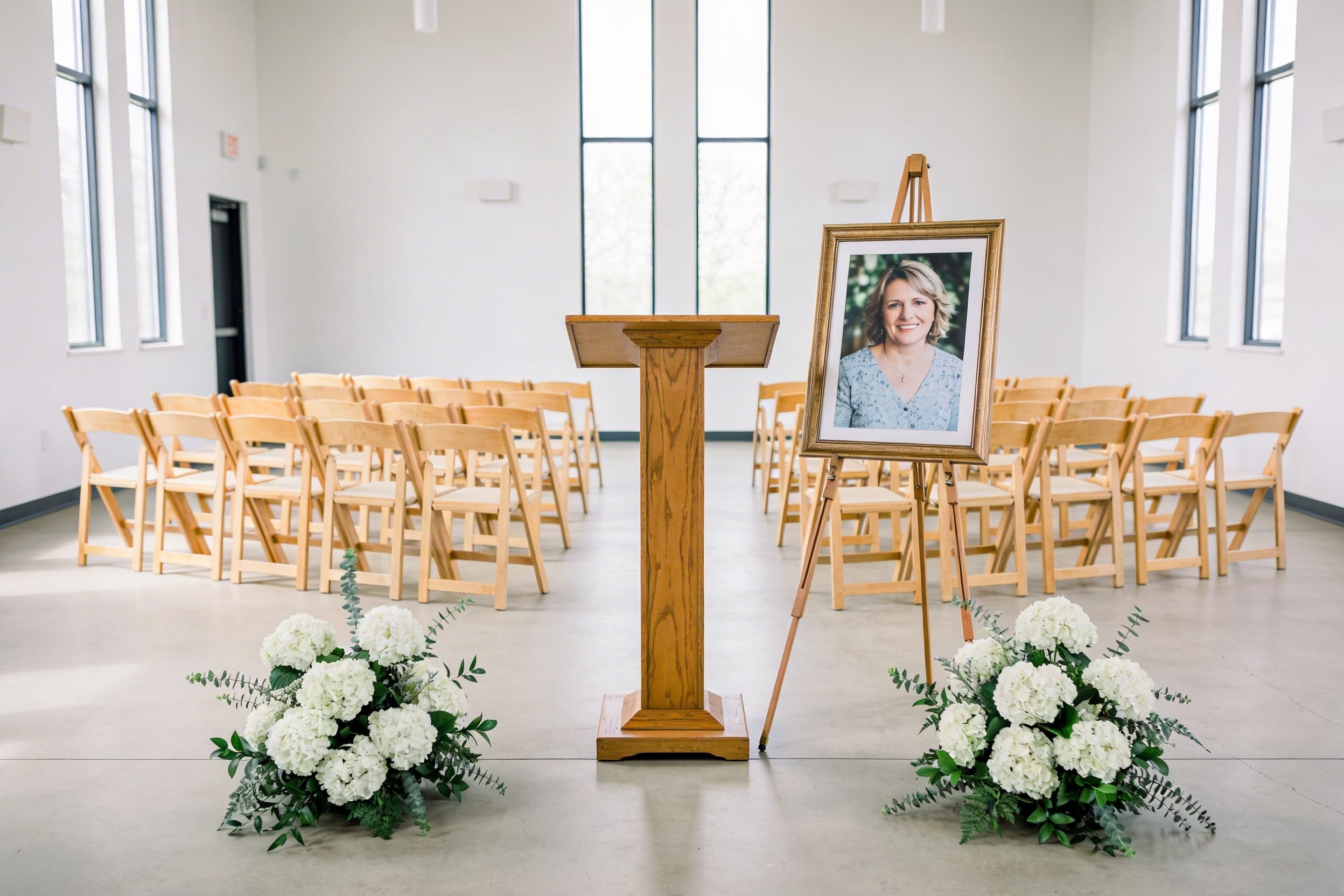
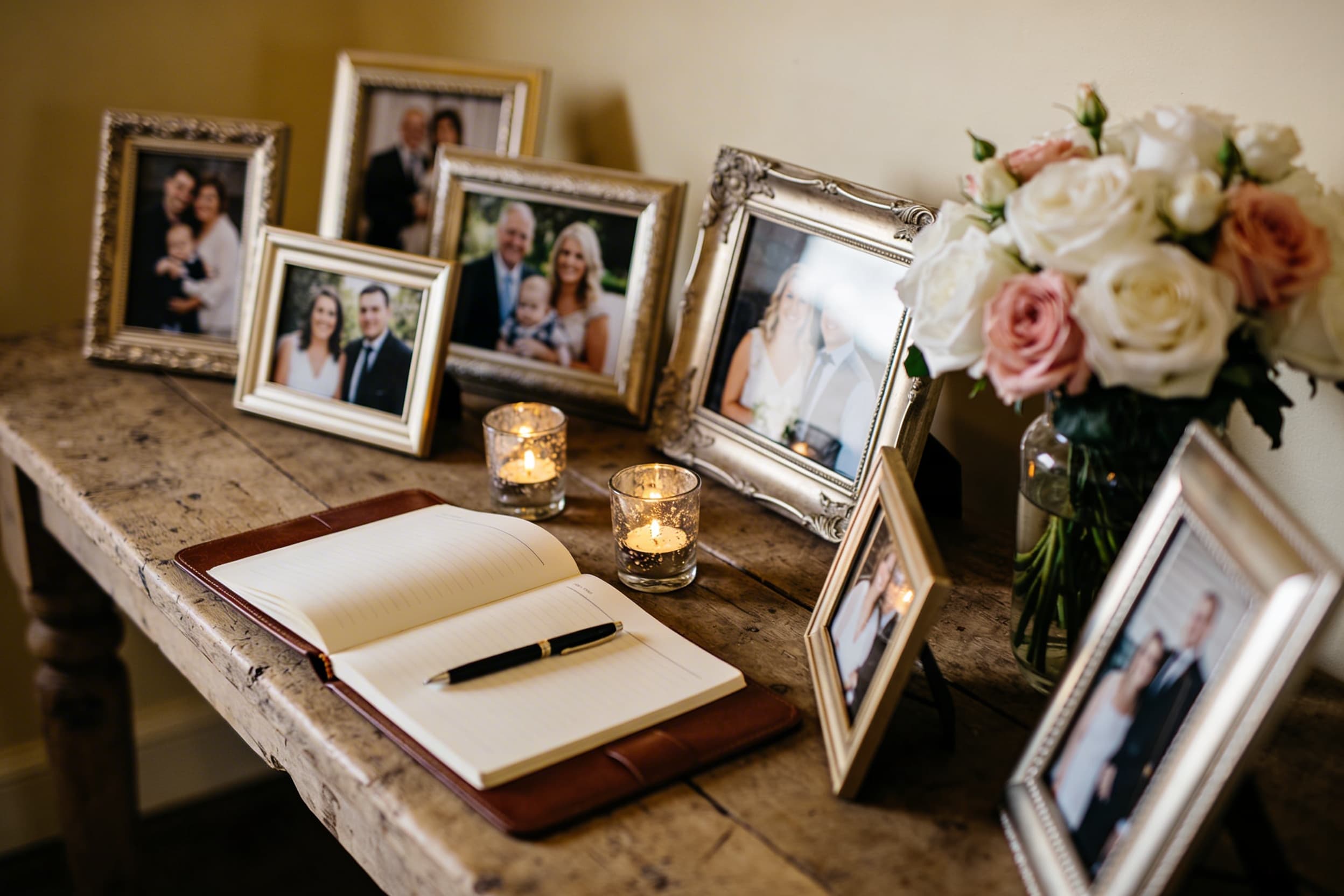
Photo displays are the most common approach. Gather printed photos from different stages of the person's life — childhood, school years, career milestones, family vacations, holidays — and arrange them on a table, a bulletin board, or easels around the venue. Chronological layouts tell the story of a life; themed clusters highlight different aspects of their personality.
Tribute videos and slideshows combine photos with music and sometimes video clips. Free tools like Google Photos, Canva, and iMovie make it straightforward to create a polished slideshow. Keep it under 10 minutes for the viewing segment — longer compilations work better as a loop playing in the background during the reception.
Memory tables display personal objects: a favorite book, a well-worn fishing rod, a collection of travel souvenirs, a championship bowling trophy, a pair of gardening gloves. These tangible items spark specific memories and give guests conversation starters.
Guest participation stations invite attendees to contribute. A memory jar where guests drop written notes, a blank canvas where people sign their names and write short messages, or a scrapbook with blank pages for photos and stories all create collaborative keepsakes the family can treasure long after the celebration ends.
Small take-home keepsakes let guests carry a piece of the celebration with them. Options range from simple and inexpensive to deeply personal.
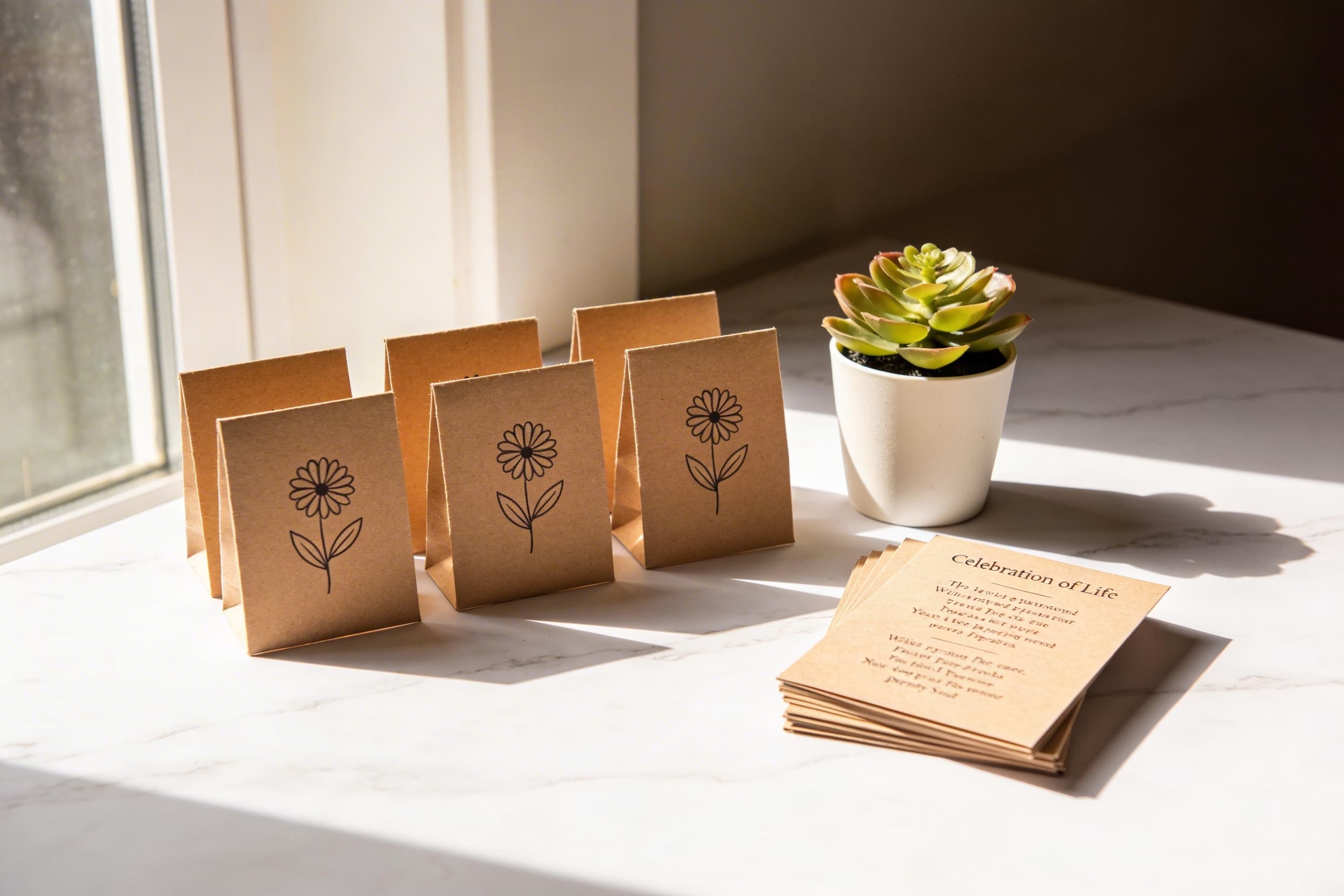
Popular celebration of life keepsake ideas include seed packets with a card that reads "Plant these in their memory," small candles with a printed label, bookmarks with a favorite quote, and personalized memorial cards featuring a photo and a meaningful poem or verse. Families can also create celebration of life cards as printed programs that double as lasting mementos.
For families who have chosen cremation, cremation jewelry offers a way to share a small portion of ashes among loved ones in a wearable keepsake — a necklace, bracelet, or ring that holds a tiny amount of cremated remains. This can be a meaningful option to introduce at the celebration, especially for family members who want a personal, everyday connection to the person they have lost.
Sympathy gifts like memorial garden stones, remembrance ornaments, and sympathy wind chimes also make thoughtful keepsakes that guests can display at home.
Creative Celebration of Life Ideas
Beyond the planning basics, these ideas can help you shape a celebration that truly reflects the person being honored.
Themed celebrations build the entire event around the person's defining passion. A gardener's celebration might take place in a community garden with potted plants as keepsakes. A sports fan's celebration could include their team's colors, jersey displays, and a game playing on a screen in the background. A chef's celebration might center on a cooking station where guests learn one of their signature recipes.
Memory sharing circles arrange chairs in a circle and pass a small object — a candle, a stone, or a photo — from person to person. Each guest shares a memory, a lesson, or a simple thank-you when the object reaches them.
Time capsules invite guests to bring small mementos — photos, written notes, a meaningful trinket — and seal them in a box. The family opens it on the first anniversary of the passing or at another agreed-upon date.
Charitable acts honor the person through service. Some families organize a group volunteer activity — a beach cleanup, a food bank shift, a toy drive — that reflects the person's values and gives guests a sense of purpose.
Outdoor adventure gatherings take the celebration to a place the person loved. A group hike, a day of fishing, a sunset paddle, or a round of golf replaces the traditional reception with shared experience in nature.
Digital memorials extend the celebration beyond the physical event. A memorial website or private social media group gives distant friends and family a place to share photos, videos, and stories before and after the gathering.
Ash Scattering at a Celebration of Life
If your loved one was cremated, you may want to incorporate an ash scattering ceremony into the celebration. Scattering ashes at a meaningful location — a garden, a body of water, a mountain overlook — provides a powerful moment of closure and can serve as the emotional climax of the event.
Before planning a scattering, research local regulations. Laws vary by state and municipality, and some locations require permits. National parks, for example, generally allow scattering with prior written permission, while private property requires the landowner's consent. Your funeral director or cremation provider can help you understand the rules in your area.
Families who prefer to keep ashes at home can display a cremation urn at the celebration as a centerpiece, surrounded by photos and flowers. After the event, the urn becomes part of the family's home memorial. Many families also divide ashes among several loved ones using keepsake urns, each person taking a small portion home.
What to Wear to a Celebration of Life
Dress code is one of the most common questions guests have — and one of the easiest details for the host to address upfront.
Traditional funerals typically call for dark, conservative clothing. Celebrations of life are more flexible. Many families request specific colors: the person's favorite color, bright or cheerful tones, or even casual attire like Hawaiian shirts if the person loved the beach. Include dress code guidance on the invitation or event announcement so guests feel comfortable. Guests reading that invitation and wondering what it actually means want what to wear to a celebration of life, which is a harder question than a traditional funeral rather than an easier one.
If no dress code is specified, smart casual is a safe default — dressy enough to show respect, relaxed enough to match the celebratory tone. Where the gathering is outdoors in July, what to wear to a funeral in the summer applies to it as much as to a funeral: linen and breathable fabric rather than bare shoulders, and shoes that survive grass.
How Long Should a Celebration of Life Last?
Most celebrations run between 90 minutes and three hours. A structured program with speakers, a slideshow, and a group activity usually fills about 60 to 90 minutes. The remaining time is informal — eating, talking, sharing stories, and saying personal goodbyes.
Open-house-style celebrations, where guests come and go at their convenience within a set window (say, 2:00 PM to 6:00 PM), work well for larger groups and reduce the pressure of having everyone arrive at the same time.
Frequently Asked Questions
Can you have a celebration of life instead of a funeral? Yes. There is no legal requirement to hold a traditional funeral. Many families, especially those who choose cremation, opt for a celebration of life as their sole memorial event. You can hold a celebration of life at any time — immediately after the passing or weeks and months later.
How much does a celebration of life cost? Costs range from virtually nothing (a home gathering with potluck food) to several thousand dollars (a rented venue with professional catering and a hired celebrant). Most family-organized celebrations cost between $500 and $2,000. The biggest variables are venue, food, and whether you hire professional help.
What is the difference between a celebration of life and a memorial service? A memorial service tends to be more formal and structured, often led by a clergy member or officiant with a set program of readings, prayers, and eulogies. A celebration of life is typically more informal and personalized, focused on storytelling, shared memories, and the personality of the person being honored. Both can include similar elements, but the tone and flexibility differ significantly.
Do you send flowers to a celebration of life? It depends on the family's preference. Some celebrations welcome flowers; others suggest donations to a cause or charity instead. Check the invitation or obituary for guidance. If in doubt, a small arrangement or a potted plant is a thoughtful gesture.
Can children attend a celebration of life? Children are welcome at most celebrations of life. The relaxed atmosphere is often more comfortable for young ones than a traditional funeral. Consider having a quiet area where children can take a break if they feel overwhelmed, and let parents decide based on the child's age and emotional readiness.
Making It Meaningful
The most memorable celebrations of life are not the most expensive or the most elaborate. They are the ones that feel true to the person being honored. A playlist of songs they actually loved matters more than a live orchestra they never would have listened to. A potluck of their favorite recipes says more than a five-course catered dinner. A friend telling the story of their first fishing trip together resonates more deeply than a professional eulogy.
Give yourself permission to keep it simple, personal, and authentic. The people in the room are there because they cared about the same person you cared about — and that shared connection is the only ingredient a celebration of life truly needs.