🏬Supersize Online Funeral Retailer🪦1000's of Headstones⚱️Over 10,000 Cremation Urns⚰️Caskets Overnight Delivery🛒Funeral & Memorial Superstore🚚FREE Shipping on ALL Orders👨👩👧👦Helping Families for over 20 Years💰Lowest Price Guarantee🏬Supersize Online Funeral Retailer🪦1000's of Headstones⚱️Over 10,000 Cremation Urns⚰️Caskets Overnight Delivery🛒Funeral & Memorial Superstore🚚FREE Shipping on ALL Orders👨👩👧👦Helping Families for over 20 Years💰Lowest Price Guarantee
🏬Supersize Online Funeral Retailer🪦1000's of Headstones⚱️Over 10,000 Cremation Urns⚰️Caskets Overnight Delivery🛒Funeral & Memorial Superstore🚚FREE Shipping on ALL Orders👨👩👧👦Helping Families for over 20 Years💰Lowest Price Guarantee🏬Supersize Online Funeral Retailer🪦1000's of Headstones⚱️Over 10,000 Cremation Urns⚰️Caskets Overnight Delivery🛒Funeral & Memorial Superstore🚚FREE Shipping on ALL Orders👨👩👧👦Helping Families for over 20 Years💰Lowest Price Guarantee
How to Plan a Funeral: The Complete Guide for Families
funeral
Losing someone you love is one of the hardest experiences any family faces. In the days that follow, you're asked to make dozens of decisions — about the service, the burial, the flowers, the music, the costs — all while processing grief. This guide walks you through how to plan a funeral from the first phone call to the final farewell, so you can honor your loved one with confidence and clarity.
Every funeral is different. Some families choose a traditional service with a formal viewing, clergy, and burial. Others prefer a celebration of life with stories, laughter, and a playlist their loved one would have sung along to. There is no single right way to say goodbye — only the way that feels right for your family.
This guide covers the full scope of funeral planning: the immediate steps after a death, how to choose a funeral home, the different types of services available, selecting a casket or urn, planning music and readings, understanding costs, and exploring alternatives to the traditional approach. Whether you're planning in advance or arranging a funeral now, you'll find practical, honest guidance here.
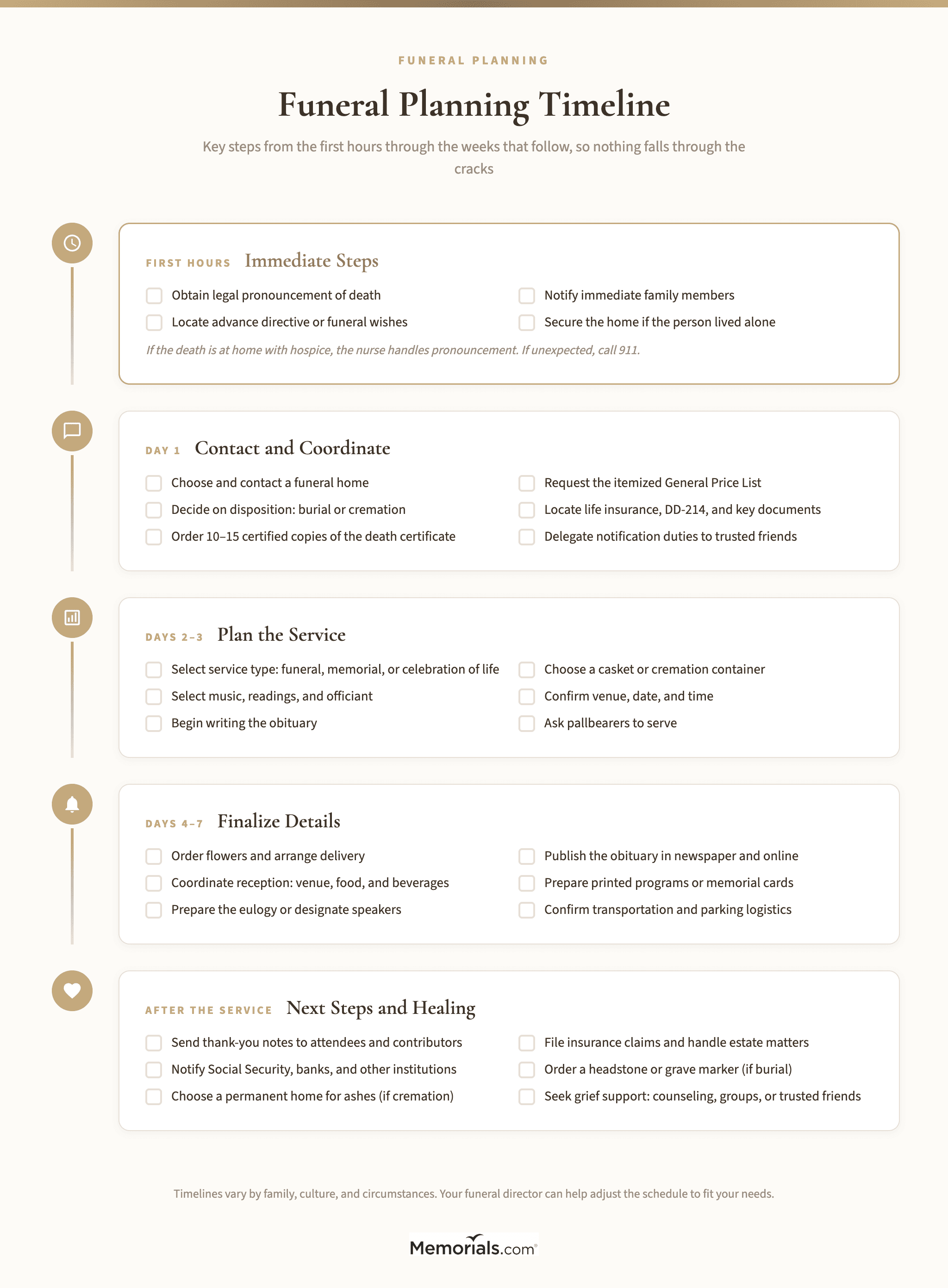
The hours after a loved one's death feel chaotic, but a handful of immediate steps will anchor the process and give you a clear path forward.
If the death occurs at home under hospice care, the hospice nurse will pronounce the death, help with paperwork, and contact the funeral home when you're ready. There's no rush — take the time you need before the body is moved. If the death is unexpected, call 911. Paramedics and a coroner or medical examiner may need to respond before a funeral home can take custody.
If the death occurs in a hospital or care facility, staff will guide you through the initial steps and can provide referrals to local funeral directors.
Once the immediate medical and legal requirements are handled, these tasks should be addressed within the first 24 to 48 hours:
Locate important documents, including any written funeral wishes, advance directives, life insurance policies, and veteran discharge papers (DD-214) if applicable. Check whether your loved one had a pre-paid funeral plan or had expressed preferences for burial versus cremation. Obtain multiple certified copies of the death certificate — most families need 10 to 15 copies for insurance claims, bank accounts, property transfers, and other legal matters.
Notify close family members first, then extend outward to friends, neighbors, employers, and community connections. Many families designate one or two people to handle phone calls and social media notifications, which keeps the immediate family from being overwhelmed.
Choosing a Funeral Home
The funeral director is the single most important partner in the planning process. A good funeral director handles logistics — transportation of the body, permits, embalming or preparation, coordination with the cemetery or crematory — while guiding you through decisions at your own pace.
When selecting a funeral home, consider these factors: proximity to the family, reputation in the community, the range of services offered, and willingness to accommodate your preferences. Every funeral home is required by the FTC Funeral Rule to provide an itemized General Price List (GPL) upon request, either in person or by phone. This federal regulation ensures you can compare costs and choose only the services you need.
Ask whether the funeral home has its own chapel, whether it handles cremation on-site or contracts with a crematory, and whether it can accommodate cultural or religious customs. If your loved one was a veteran, confirm that the funeral home is experienced with military honors, flag folding ceremonies, and VA burial benefits.
There is no obligation to use the funeral home closest to where the death occurred. You have the right to choose any licensed funeral home, and the funeral home you select can arrange transportation from the hospital or facility.
Types of Funeral Services
Funeral services fall along a spectrum from the most traditional and formal to the most contemporary and personalized. Understanding the main formats helps you decide what fits your family's values, your loved one's personality, and your budget.
Traditional funeral service. This is the format most people picture: a formal gathering at a funeral home or house of worship, often with an open or closed casket present, followed by a procession to the cemetery and a graveside committal. The service typically includes prayers or readings led by clergy or a celebrant, a eulogy delivered by a family member or friend, and music. A viewing or visitation usually takes place the evening before or earlier the same day, giving friends and extended family a chance to pay respects and offer condolences. If you're unfamiliar with service customs, our guide to funeral etiquette covers what to expect and how to navigate these gatherings gracefully.
Memorial service. A memorial service follows the same general structure as a funeral, but the body is not present. This gives families more flexibility on timing — memorial services can be held days, weeks, or even months after the death. They can take place at a church, a funeral home, a park, a family home, or virtually anywhere meaningful. For a deeper look at planning one, see our memorial service planning guide.
Celebration of life. This format emphasizes the person's life rather than their death. Celebrations of life tend to be less formal, with shared meals, photo montages, favorite music, storytelling, and personal touches that reflect the individual's hobbies, humor, or passions. Some families hold these alongside a traditional service; others replace the traditional format entirely. Our celebration of life planning guide walks through every detail, from themes to printed celebration of life cards for guests.
Direct burial. The body is buried shortly after death with no formal public service. This is the simplest and least expensive burial option. Families may choose to hold a memorial service later.
Graveside service. The entire service takes place at the cemetery. A brief ceremony — sometimes with prayers, readings, and a eulogy — is conducted at the burial site. This format is common for military funerals and is often chosen by families who prefer intimacy and simplicity.
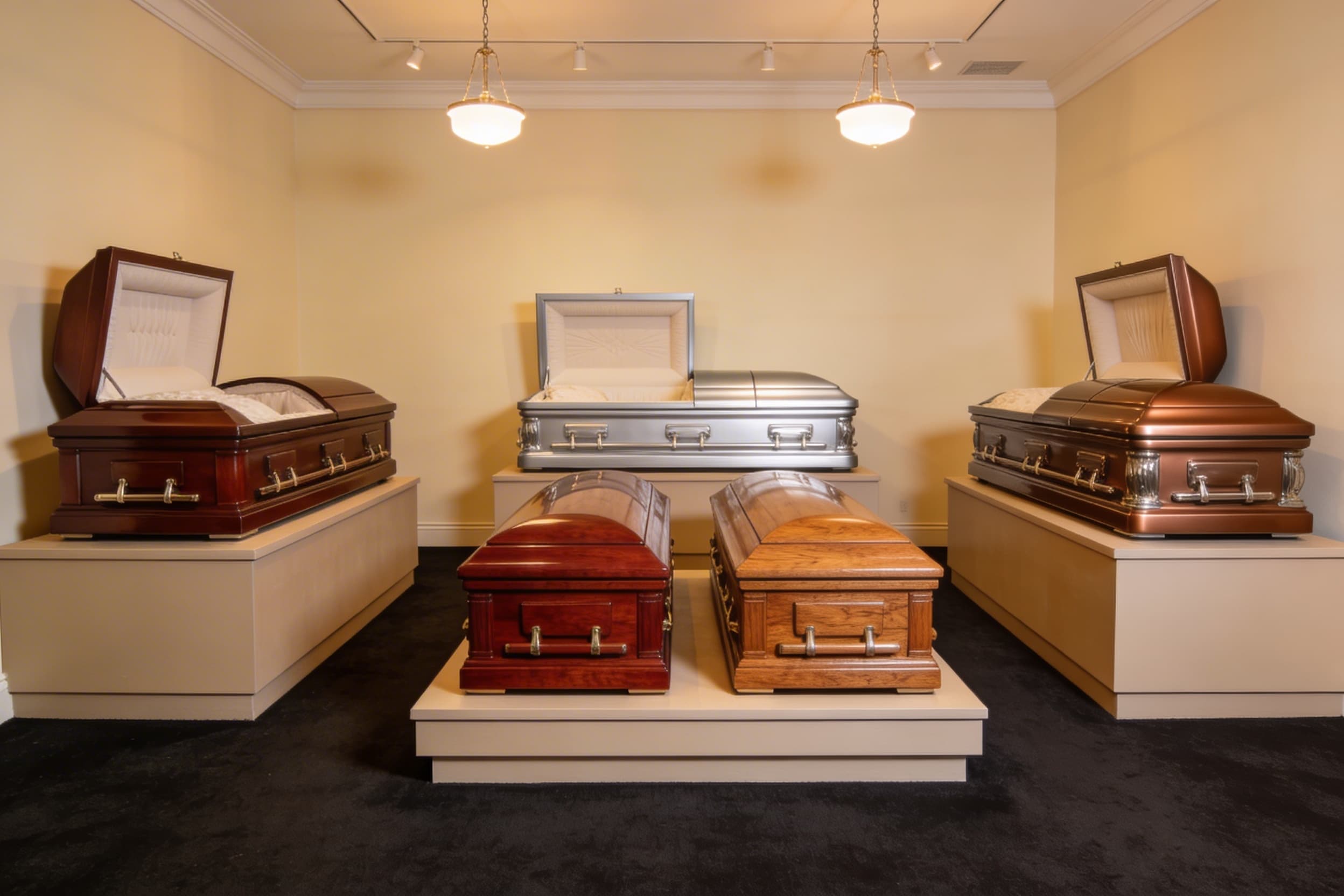
Selecting a casket is one of the most visible decisions families make during funeral planning, and it can also be one of the most expensive. Caskets range from a few hundred dollars for a basic cremation container to $10,000 or more for premium hardwood or bronze models.
The two primary casket categories are wood caskets and metal caskets. Wood caskets are crafted from species like oak, cherry, mahogany, maple, and poplar, and they tend to feel warm and natural. Metal caskets — made from steel, stainless steel, copper, or bronze — offer a polished, durable appearance and typically include a rubber gasket seal.
Beyond material, consider whether the casket will be displayed at an open-casket viewing, whether your loved one expressed any preferences, and whether the cemetery requires an outer burial vault or liner. Many cemeteries mandate a vault to prevent ground settling, which adds $1,000 to $3,500 to the total cost.
For families choosing cremation, a cremation casket or simple combustible container is available at a lower cost. Under the FTC Funeral Rule, funeral homes must allow you to purchase a casket from a third-party retailer — they cannot refuse to handle a casket you bought elsewhere or charge a handling fee for doing so.
Families exploring eco-friendly options will find a growing selection of green caskets made from bamboo, wicker, seagrass, and other biodegradable materials. Our green and biodegradable casket guide explains what's available and which cemeteries accept them.
For a thorough walkthrough of material options, sealing mechanisms, sizing, and what actually matters versus what's marketing, see our guide on how to choose a casket. And if the terminology is confusing, our article on casket vs coffin clears up what's actually different and what's just semantics. For a broader look at the full range of styles, see our guide to different types of caskets.
Planning the Service
Once the format is set and the disposition decided, the details of the ceremony itself come together. These personal touches transform a standard service into something that genuinely reflects who your loved one was.
Music
Music carries emotional weight like nothing else at a funeral. Some families choose hymns or sacred music; others prefer secular songs that held personal significance — a father's favorite country ballad, a grandmother's opera aria, a friend's go-to road-trip playlist. Our best funeral songs guide lists over 40 meaningful selections across genres. We also have focused guides for choosing funeral songs for mom, funeral songs for dad, and funeral songs for men. If your family prefers a hopeful, forward-looking tone, our collection of uplifting funeral songs focuses on celebration and gratitude rather than sorrow.
Readings, Prayers, and Eulogies
Readings can come from scripture, poetry, literature, or personal letters. The person leading the service — whether clergy, a humanist celebrant, or a family friend — can help you select passages that resonate. Many families also invite one or two people to deliver a eulogy, sharing memories, stories, and reflections on the person's life. If you're unsure about what to say, our guide on what to say at a funeral service offers practical frameworks for both formal eulogies and brief spoken tributes.
Obituary and Death Notice
An obituary serves as both a public announcement and a lasting written tribute. It typically includes biographical details, surviving family members, service information, and in-lieu-of-flowers requests. Publishing an obituary in the local newspaper and online ensures that community members, distant relatives, and former colleagues learn of the death and can attend or send condolences. Our guide on how to write an obituary covers structure, tone, and common mistakes to avoid.
Religious and Cultural Considerations
Funeral traditions around the world vary widely by faith and culture. Catholic funerals, for example, typically include a vigil service the evening before, a funeral mass, and a committal rite at the cemetery — each with specific liturgical elements. Our guide to planning a Catholic funeral walks through the requirements and options. Families with Jewish, Hindu, Muslim, Buddhist, or other traditions should work with their religious leaders to ensure the service respects their customs regarding timing, preparation of the body, disposition, and mourning periods.
Cultural practices like the Irish wake — a gathering often held in the home with music, stories, food, and drink — remain deeply meaningful for many families. These traditions connect mourners to their heritage and offer a more personal framework for saying goodbye.
Funeral Etiquette and Logistics
The days surrounding a funeral involve coordination among family, the funeral home, clergy or officiant, musicians, florists, caterers, and pallbearers. Knowing what's expected helps everything run smoothly.
Pallbearers. Most traditional funerals use six pallbearers to carry the casket. Choose people who were close to the deceased — family members, close friends, colleagues. Honorary pallbearers can be named for those unable to carry the casket physically.
Guest notifications. Beyond the obituary, many families send direct invitations for the funeral and reception, especially if the gathering is private or limited. For celebrations of life, printed or digital invitations set the tone for the event.
Floral arrangements. Standing sprays, casket sprays, wreaths, and table arrangements are traditional. Some families request donations to a charity in lieu of flowers.
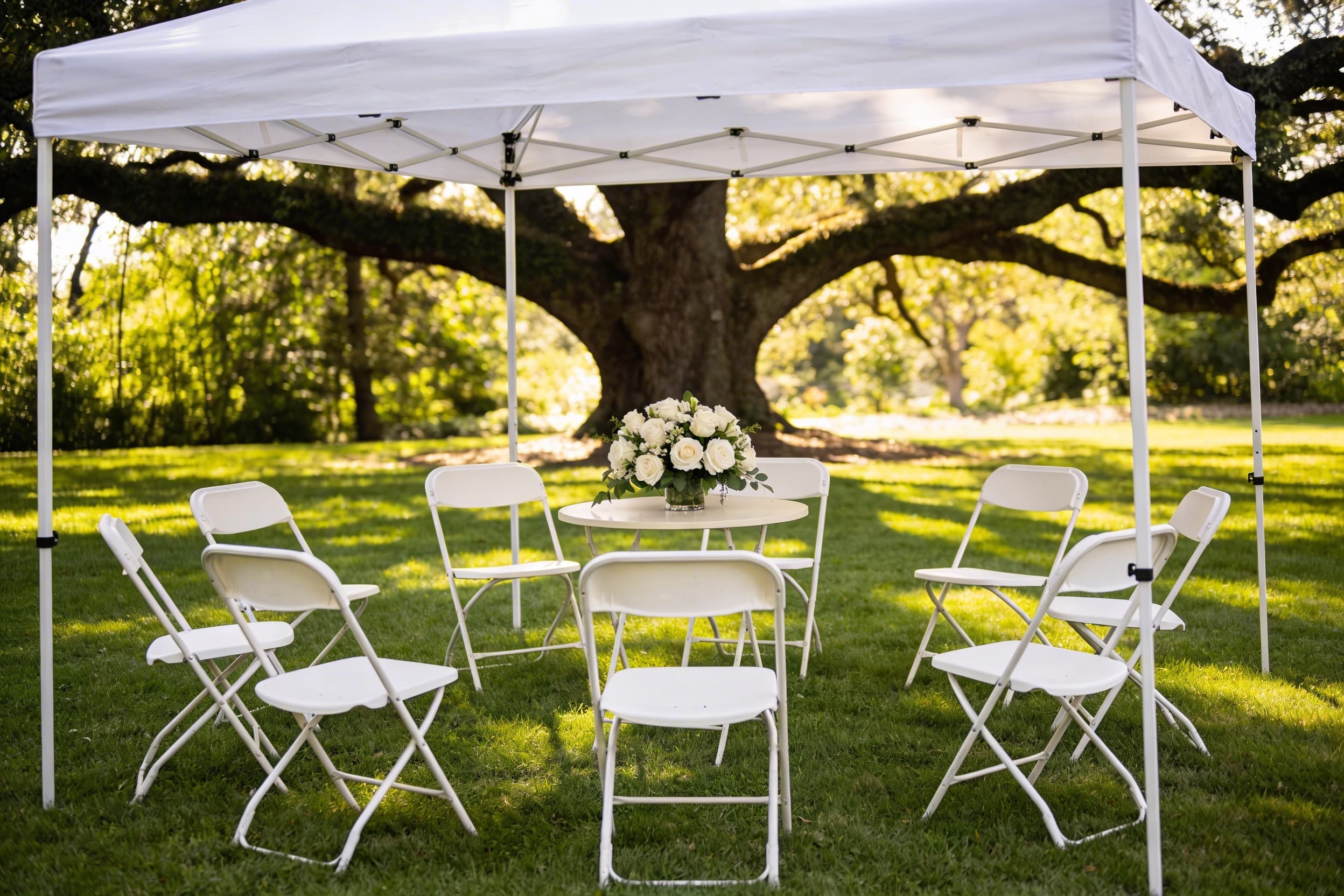
Food and reception. Post-funeral receptions range from simple coffee-and-sandwiches gatherings at the funeral home to full meals at a family member's home, a restaurant, or a community hall. Funeral food traditions vary by culture and region, and understanding local customs helps when you're accepting offers of help or planning the menu yourself.
Attire. Dark, conservative clothing remains the norm for traditional funerals, though many celebrations of life specify more casual or even colorful dress codes that reflect the person's personality. Funeral attire works the question through by service, season, culture and role, which is the level of detail guests actually ask for.
For a comprehensive step-by-step workflow, our funeral planning checklist ensures nothing falls through the cracks — from securing the death certificate to sending thank-you notes afterward.
Understanding Funeral Costs
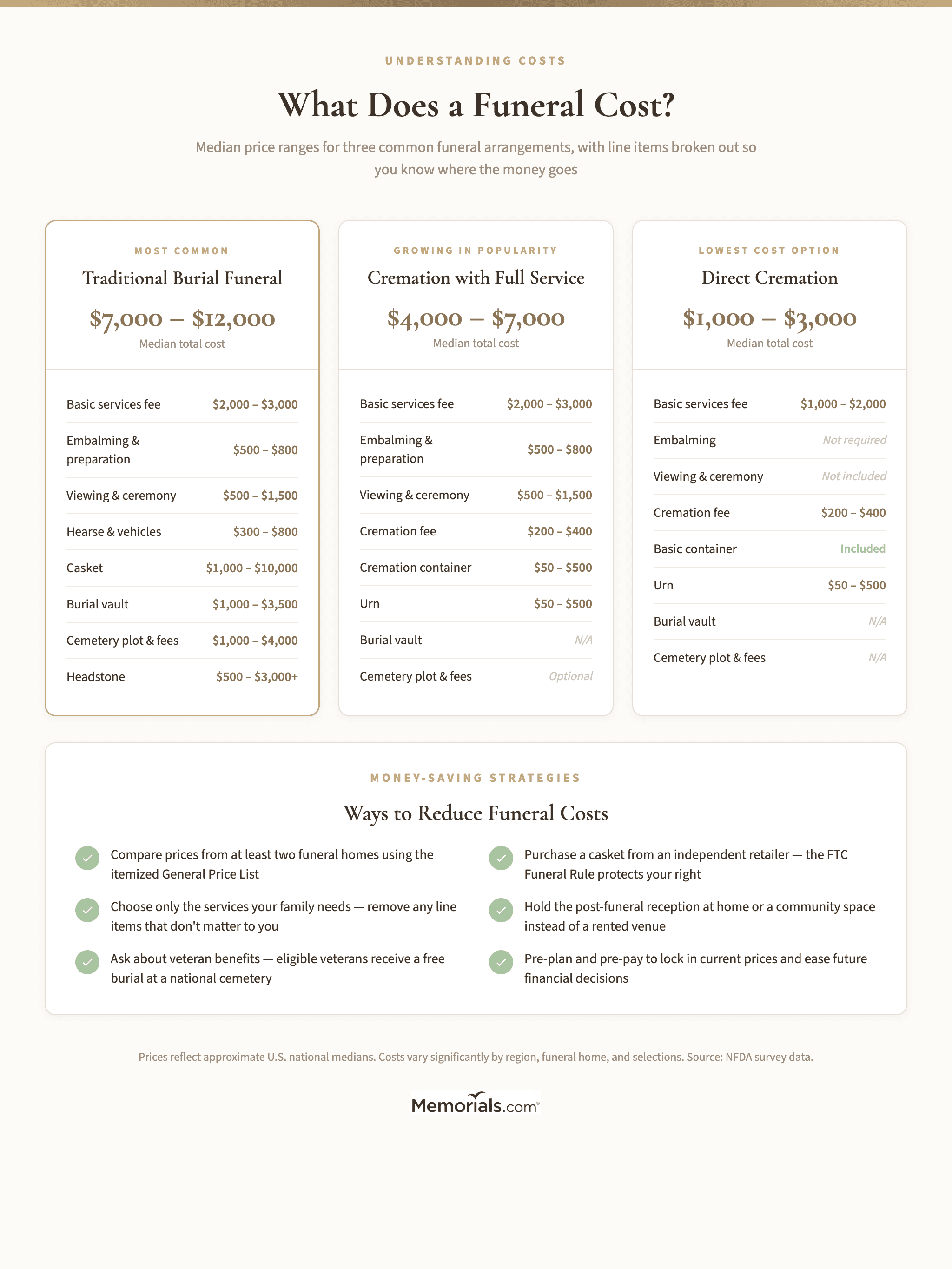
Funeral costs catch many families off guard. According to the National Funeral Directors Association, the median cost of a funeral with a viewing and burial in the United States ranges from $7,000 to $12,000, depending on the region and services selected. Cremation-based services typically cost less — direct cremation can start as low as $1,000 to $3,000, while a full-service cremation funeral ranges from $4,000 to $7,000.
The main cost categories include basic services fee (funeral home overhead and coordination, typically $2,000 to $3,000), embalming and body preparation ($500 to $800), use of facilities for viewing and ceremony ($500 to $1,500), hearse and service vehicle ($300 to $800), the casket itself ($1,000 to $10,000+), the burial vault ($1,000 to $3,500), cemetery plot and opening/closing fees ($1,000 to $4,000), and the headstone or grave marker ($500 to $3,000+).
Optional costs include floral arrangements, printed programs, death certificates, clergy or officiant fees, musician fees, and the reception. For a complete breakdown of these costs, see our detailed guide on how much a funeral costs.
There are practical ways to reduce costs without sacrificing dignity. Buy the casket from an independent retailer — the FTC Funeral Rule guarantees your right to do this. Choose a cremation container over an ornamental casket if you're planning cremation. Hold the reception at home rather than a rented venue. Consider a direct burial or direct cremation if a formal viewing isn't important to your family. Ask the funeral home for an itemized price list and remove services you don't need.
Pre-planning and pre-paying for a funeral can also lock in current prices and relieve your family of financial decisions during an already difficult time. If pre-paying, make sure the funds are placed in a regulated trust or that the agreement includes protections for transfers or cancellations.
Cremation vs. Burial
The choice between cremation and burial is one of the earliest and most consequential decisions in funeral planning. In the United States, cremation surpassed burial as the most common disposition in 2015, and the cremation rate has continued to climb — reaching approximately 60% in recent years.
Burial involves placing the body in a casket, which is then interred in a cemetery plot. It provides a permanent, physical place for families to visit and is required or preferred by some religious traditions. Burial typically costs more than cremation because of the casket, vault, cemetery plot, and perpetual care fees.
Cremation reduces the body to cremated remains (often called cremains or ashes) through intense heat. Families then have multiple options: keeping the ashes in an urn displayed at home, burial in a cemetery, placement in a columbarium niche, scattering at a meaningful location, or dividing the ashes among family members using keepsake urns. Some families also choose to wear a small portion of ashes in cremation jewelry — a pendant, ring, or bracelet designed to hold a tiny amount of cremated remains close to the heart.
Cremation does not prevent you from holding a traditional funeral service. Many families hold a full viewing and funeral with the body present, followed by cremation rather than burial. Others opt for direct cremation and hold a memorial service later, with or without the urn present.
Not every family wants a conventional funeral. A growing number of people are choosing approaches that reflect environmental values, personal philosophy, or simply a desire for something different.
Green burial skips embalming, uses a biodegradable casket or shroud, and places the body directly in the earth at a certified natural burial ground. There are no concrete vaults, metal caskets, or chemical preservatives. The goal is to return the body to the earth as naturally as possible. Our guide to green burial practices explains the requirements and how to find certified green cemeteries.
Aquamation (alkaline hydrolysis or water cremation) uses water and potassium hydroxide to break down the body, producing a smaller carbon footprint than flame-based cremation. It's legal in a growing number of states and produces white bone fragments similar to traditional cremated remains.
Mushroom burial uses a burial suit or coffin lined with mushroom mycelium to accelerate natural decomposition. Our article on mushroom coffins and burial suits covers how the process works and where it's available.
Home funerals are legal in most states and involve the family caring for the body at home, holding a private viewing, and coordinating directly with the cemetery or crematory. This approach requires research into state-specific regulations but can be deeply personal and less expensive.
Body donation allows the deceased's body to contribute to medical research or education. Most medical schools accept whole-body donations and cover transportation and cremation costs. The family typically receives the cremated remains after the research period ends.
Pre-Planning a Funeral
You don't have to wait until a death occurs to make funeral arrangements. Pre-planning — whether for yourself or an aging loved one — gives you time to research options, compare prices, and make decisions free from the emotional pressure of active grief.
Pre-planning can be as simple as writing down your preferences and telling your family, or as detailed as meeting with a funeral director, selecting specific services, and pre-paying through a funeral trust or insurance policy. Either way, the information reduces guesswork and family disagreements later.
Key decisions to document in advance: preferred disposition (burial or cremation), desired service type (traditional funeral, memorial, celebration of life, or none), musical selections, readings, officiant preference, preferred funeral home, cemetery choice, casket or urn preference, and any cultural or religious requirements. Put your preferences in writing — not just in your will, since wills are often read after the funeral has already taken place. Keep copies with a trusted family member, your attorney, and your important papers.
What Comes After the Service
The days and weeks following a funeral bring a different set of tasks. Thank-you notes should go out to those who sent flowers, food, donations, or attended the service. The family may need to handle estate matters — probate, insurance claims, canceling accounts and subscriptions, and notifying Social Security and the IRS.
If burial was chosen, families often plan for a permanent headstone or marker once the ground has settled, typically several months after interment. Our headstones guide and headstone engraving guide can help with that next step.
For families who chose cremation, deciding on a permanent home for the ashes is the next chapter. Some families display the urn at home, others choose burial or placement in a columbarium, and some scatter ashes at a meaningful location. Sympathy gifts — memorial wind chimes, remembrance ornaments, personalized keepsakes — can also provide ongoing comfort to grieving family members.
Grief doesn't follow a timeline. Give yourself and your family permission to mourn at your own pace. Many people find that support groups, counseling, or simply talking with friends who understand can help them process their loss over the months ahead.
Frequently Asked Questions
How long does it take to plan a funeral?
Most funerals are planned and held within 3 to 7 days after the death. Cremation gives families more flexibility — memorial services can be scheduled weeks or even months later. Pre-planning eliminates much of the time pressure, since major decisions are already made.
Can I plan a funeral without a funeral home?
In most states, yes. Home funerals allow the family to handle preparation, viewing, and transportation directly. However, some states require a licensed funeral director for specific tasks like filing the death certificate or obtaining a burial permit. Check your state's regulations before proceeding.
What is the FTC Funeral Rule?
The Federal Trade Commission's Funeral Rule requires funeral homes to provide itemized pricing, allows you to purchase only the services you want, and prohibits funeral homes from requiring you to purchase a casket from them. It also prevents tying charges — for example, charging a casket-handling fee if you buy one elsewhere.
How can I keep funeral costs down?
Compare prices from multiple funeral homes, choose only the services your family needs, consider cremation over burial, purchase a casket from an independent retailer, hold the reception at home, and ask about package pricing. Pre-paying can also protect against future price increases.
What if the deceased didn't leave any funeral wishes?
When no preferences are documented, the legal next of kin makes the decisions. Focus on what you knew about the person — their faith, their values, the things that mattered to them. There is no wrong way to honor someone you loved. Ask extended family and close friends for input if you're unsure.