🏬Supersize Online Funeral Retailer🪦1000's of Headstones⚱️Over 10,000 Cremation Urns⚰️Caskets Overnight Delivery🛒Funeral & Memorial Superstore🚚FREE Shipping on ALL Orders👨👩👧👦Helping Families for over 20 Years💰Lowest Price Guarantee🏬Supersize Online Funeral Retailer🪦1000's of Headstones⚱️Over 10,000 Cremation Urns⚰️Caskets Overnight Delivery🛒Funeral & Memorial Superstore🚚FREE Shipping on ALL Orders👨👩👧👦Helping Families for over 20 Years💰Lowest Price Guarantee
🏬Supersize Online Funeral Retailer🪦1000's of Headstones⚱️Over 10,000 Cremation Urns⚰️Caskets Overnight Delivery🛒Funeral & Memorial Superstore🚚FREE Shipping on ALL Orders👨👩👧👦Helping Families for over 20 Years💰Lowest Price Guarantee🏬Supersize Online Funeral Retailer🪦1000's of Headstones⚱️Over 10,000 Cremation Urns⚰️Caskets Overnight Delivery🛒Funeral & Memorial Superstore🚚FREE Shipping on ALL Orders👨👩👧👦Helping Families for over 20 Years💰Lowest Price Guarantee
Celebration of life cards give family and friends a physical keepsake they can carry home after a memorial gathering. These small printed pieces — sometimes called remembrance cards or memory cards — distill a person's name, dates, photograph, and a few meaningful words into a format that fits inside a wallet, tucked into a Bible, or placed on a nightstand where it can be seen every day.
Whether you are planning a celebration of life for a parent, spouse, or close friend, the cards you hand out at the event often become one of the most treasured mementos your guests take with them. This guide walks through what to include on a card, how to choose wording, the different formats available, and where to order or print them — so you can focus on honoring the person you love rather than stressing over design decisions. For a broader look at every step involved in planning a service, our guide to funeral planning covers the full checklist.
What Are Celebration of Life Cards?
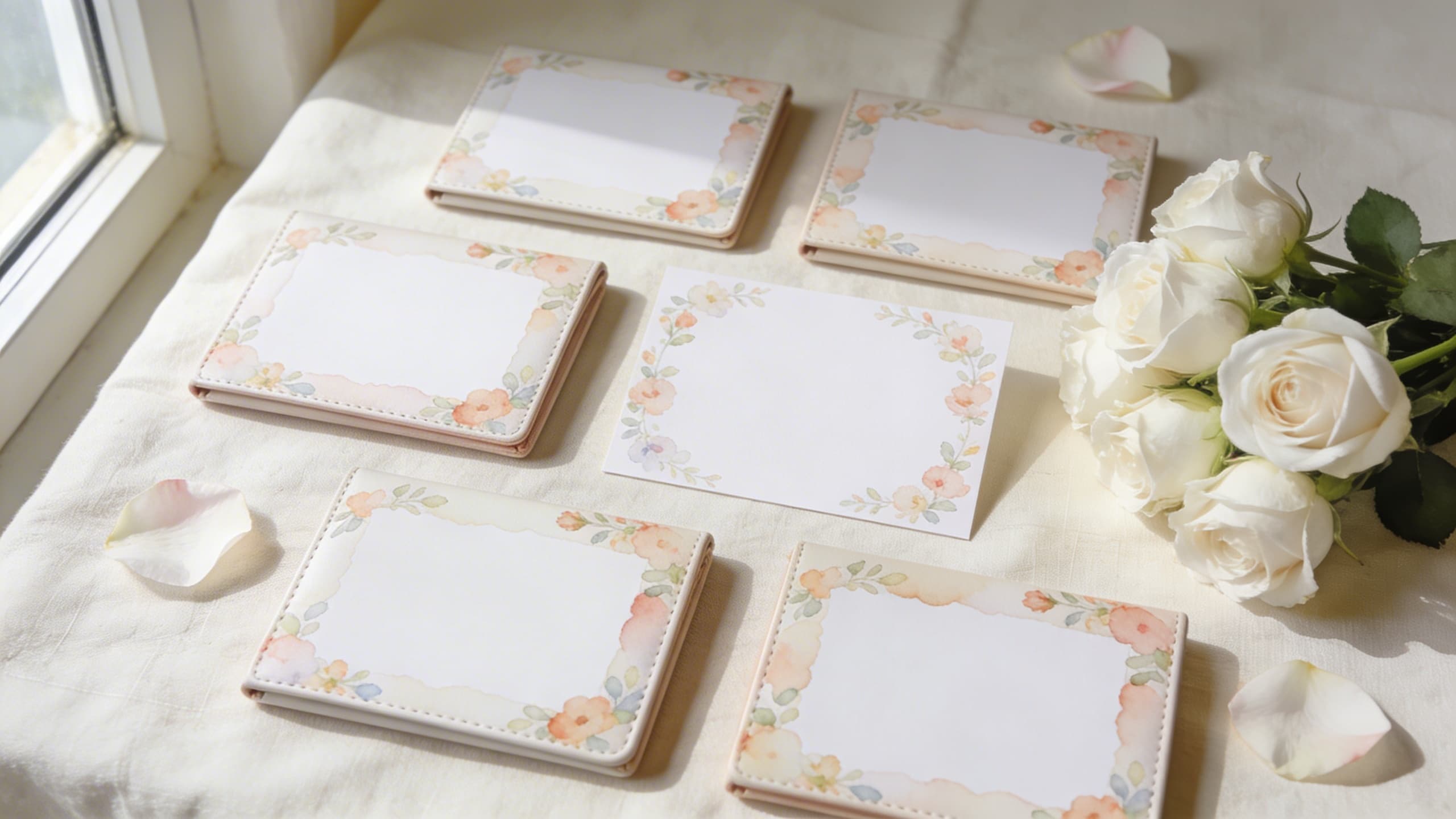
Celebration of life cards are printed keepsakes distributed to guests at a memorial gathering, funeral, or celebration of life ceremony. They serve a purpose that is part tribute, part practical reference: the front typically features the person's name, photograph, and dates, while the back carries a verse, quote, prayer, or brief personal message from the family.
These cards go by many names depending on tradition and format. Memorial cards is the broadest term and covers everything from wallet-sized flat cards to folded remembrance cards. Prayer cards lean religious, often printed with a saint's image on the front and a short prayer on the back. Funeral bookmarks serve double duty — keepsake and practical marker — and are especially popular with families who want to include a longer passage of poetry or scripture.
The common thread is portability. Unlike a funeral program, which may be several pages long, a celebration of life card is small enough to slip into a pocket or purse and keep indefinitely. Many families order extras to mail to relatives who could not attend or to include with thank-you notes sent after the service.
What to Include on a Celebration of Life Card
The best celebration of life cards balance personal details with clean design. Crowding too much text onto a small card makes it feel cluttered, while leaving too much blank can make it seem generic. Here is what most families include, organized by priority.
Essential Elements
Every celebration of life card should contain the person's full name (and nickname, if they were known by one), their dates of birth and passing, and at least one photograph. The photograph is usually a portrait that shows the person at their happiest — not necessarily their most recent photo, but one that captures who they were.
Beyond those basics, families typically add a short verse, quote, or prayer. This could be a favorite line from a poem, a Bible passage, a lyric from a song that meant something to them, or a simple phrase like "Forever in Our Hearts." Choosing this element is often the hardest part of the process, but there is no wrong answer. The goal is to pick words that sound like the person, not words that sound polished. If you are weighing that particular line, we have looked at where "forever in our hearts" comes from and who tends to choose it.
Optional Elements
Depending on the card format, you may also want to include the location and date of the service, a family message (a sentence or two expressing gratitude to attendees), the funeral home or venue name, and a second photograph — some families use a candid shot on the back alongside the verse.
For families incorporating religious traditions, a saint image, cross, or religious symbol on the front is common. Cards for a celebration of life — which tends to be less formal than a traditional funeral — may lean toward nature imagery, watercolor backgrounds, or bold photography instead.
Wording and Message Ideas
Finding the right words for a celebration of life card is a deeply personal decision. Some families already have a poem or scripture passage in mind; others start from scratch and struggle to narrow down their choices. The guidance below breaks options into categories so you can match wording to the tone of your service.
Short and Universal
These work when you want the photograph and name to be the focus, with only a brief line underneath:
"Always loved, always remembered"
"Gone from our sight, never from our hearts"
"A life beautifully lived, a heart deeply loved"
"Until we meet again"
"Forever in our hearts"
Spiritual and Faith-Based
If the service includes a religious component, scripture or prayer excerpts anchor the card in tradition:
Psalm 23:4 — "Even though I walk through the valley of the shadow of death, I will fear no evil, for you are with me"
John 14:2 — "In my Father's house are many rooms"
A favorite prayer the person recited
Celebratory and Uplifting
For a true celebration of life tone — one that emphasizes gratitude and joy — consider language that reflects how the person lived rather than how they died:
"She filled every room with laughter. May we carry that laughter forward."
"He taught us that every sunrise was worth waking up for."
"Thank you for a life filled with love, adventure, and kindness."
Personalized Quotes and Lyrics
If the person had a favorite book, song, or saying, using their own words transforms a card from a generic keepsake into something unmistakably theirs. Check with close family members before printing to make sure the quote is attributed correctly and that everyone feels comfortable with the selection.
The wording on these cards connects to the same emotional territory covered in guides on what to say at a funeral service — the difference is that card messages are permanent and portable, so choosing language that ages well matters more than capturing the moment.
If you are still choosing the line for the front, our collection of celebration of life quotes is grouped by where each one belongs.
Types of Memorial Card Formats
Celebration of life cards come in several standard formats. The format you choose depends on how much content you want to include, your budget, and the tone of the service.
Wallet-Sized Flat Cards (Prayer Card Size)
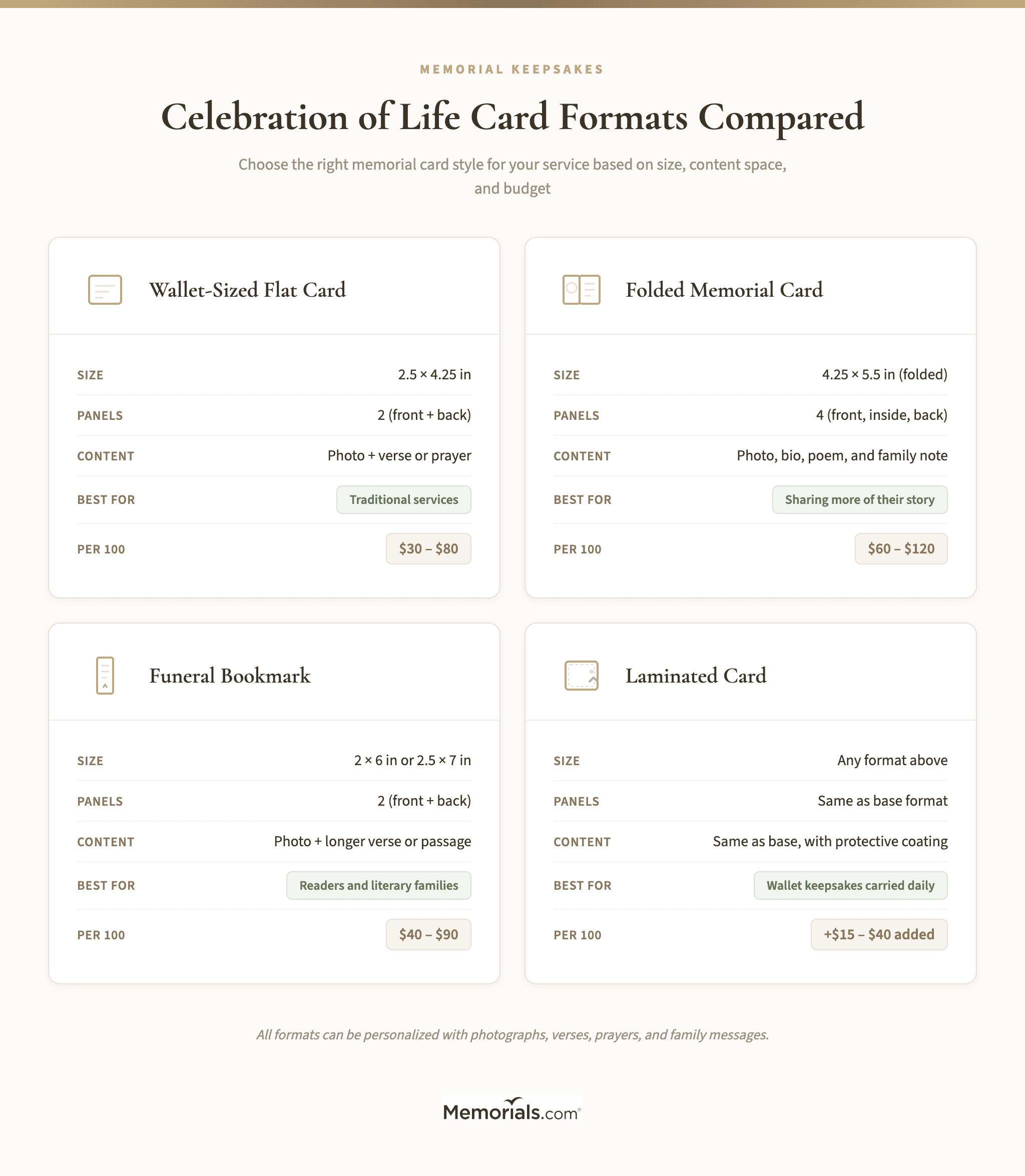
The most traditional format. These cards are roughly 2.5 × 4.25 inches — the same size as a standard prayer card — with a photo or image on the front and text on the back. They print on heavy card stock and are the most affordable option when ordering in quantity. Most families order between 50 and 200 depending on the expected guest count.
Folded Memorial Cards
These are slightly larger than wallet cards when unfolded (usually 4.25 × 5.5 inches folded) and offer four printable panels. The extra space allows you to include both a photo and a verse on the front, an extended biography or poem inside, and family acknowledgments on the back. Folded cards work well for families who want to share more of the person's story without producing a full funeral program.
Funeral Bookmarks
Bookmarks are tall and narrow — typically 2 × 6 or 2.5 × 7 inches — and are especially popular for readers and literary families. One side features the photo and name, while the other carries a verse or passage. Recipients use them as actual bookmarks, which means the keepsake stays visible and functional rather than tucked away in a drawer.
Laminated Cards
Any of the above formats can be laminated for extra durability. Lamination adds a small cost per card but makes them water-resistant and significantly more durable over years of handling. If you expect the card to be carried in a wallet daily, lamination is worth the investment.
DIY vs. Professional Printing
Families today have more options than ever for producing celebration of life cards. The right approach depends on your timeline, budget, and comfort with design software.
Designing and Printing at Home
Free and low-cost design platforms like Canva, Adobe Express, and Microsoft Word offer memorial card templates that can be customized with photos, text, and fonts in minutes. You can print at home on pre-cut card stock available at office supply stores, or send your design to a local print shop for professional-quality output.
Advantages: Full creative control, fast turnaround (you can print the same day), and low cost if you already own a printer and card stock.
Challenges: Home printers may struggle with photo-quality output on thick card stock. Color consistency can vary between screen and print. Cutting cards evenly by hand takes patience.
Ordering Through a Funeral Home
Many funeral homes offer memorial card printing as part of their service package, often at a bundled price. The funeral director handles design, proofing, and delivery. This is the most hands-off option, but it tends to be the most expensive per card — and design choices may be limited to the funeral home's template library.
Ordering Online
Online print shops specializing in memorial stationery — such as DisciplePress, Elegant Memorials, and In the Light Urns — offer hundreds of templates, fast turnaround, and per-card pricing that drops as quantity increases. Many offer customization tools where you upload a photo, select a verse, and approve a digital proof before printing begins.
The process of choosing wording and compiling biographical details for a card overlaps with what families do when learning how to write an obituary. Having the obituary drafted first can simplify card creation, since the name, dates, and key life details are already organized.
Design Elements That Make a Card Meaningful
Beyond the words on the card, thoughtful design choices elevate a celebration of life card from a simple printout to a lasting keepsake.
Photography
A single, high-quality photo has more impact than a collage of small images on a wallet-sized card. Choose a picture with good lighting and a natural expression. If you do not have a recent professional portrait, a well-lit smartphone photo from a happy moment works just as well. Some families use a black-and-white conversion to give the card a timeless feel.
Color Palette
Traditional memorial cards lean on muted tones — soft blues, grays, and cream — but celebration of life cards often embrace warmer and more vibrant palettes. If the person loved the ocean, a coastal palette of blues and sand tones feels authentic. If they were known for their garden, earth greens and floral accents carry that personality onto the card.
Typography
Readability matters more than style on a small card. Pair a clean serif font for the name and dates with a simple sans-serif for the verse or message. Avoid script fonts for body text — they are difficult to read at small sizes.
Paper and Finish
Matte card stock at 14pt or heavier feels substantial in the hand. Glossy finishes work well for photo-heavy designs. Linen or textured card stock adds a subtle tactile quality that sets the card apart from standard printing. Rounded corners are a small upgrade that gives the card a polished, finished appearance.
A card handed out at the service is a different piece of writing from the small card that travels with flowers to the funeral home. Our guide to funeral card message wording covers that one.
When and How to Give Out Celebration of Life Cards
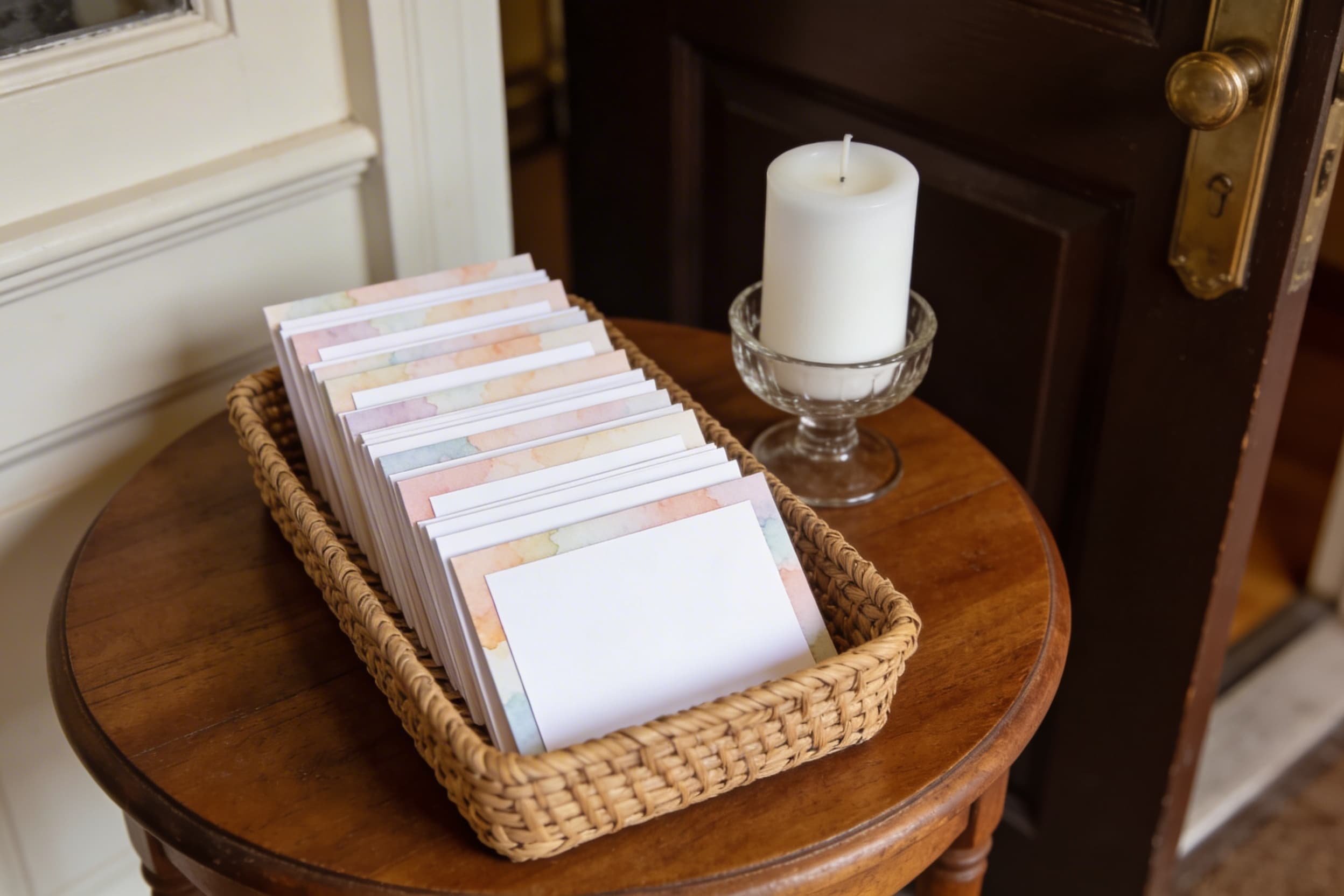
The most common approach is to place cards in a basket or tray near the entrance so guests can take one as they arrive. Some families prefer to set a card at each seat or to include one inside the funeral program. If the service is outdoors, a weighted tray keeps cards from blowing away.
Mailed After the Service
Families often tuck a card into thank-you notes sent to attendees or mail them separately to relatives and friends who could not be present. Including a card with a handwritten note adds a personal touch that recipients appreciate.
Included with Sympathy Gifts
If you are sending sympathy gifts to family members or close friends of the deceased, enclosing a memorial card adds an extra layer of thoughtfulness.
Kept as Personal Mementos
Order a few extra cards for immediate family members who may want to keep one in their wallet, place one in a scrapbook, or frame a card alongside other mementos of the person.
Cost Expectations
Celebration of life card pricing varies widely depending on format, quantity, and where you order.
Format
Approximate Cost (100 cards)
Wallet-sized flat cards
$30–$80
Folded memorial cards
$60–$120
Funeral bookmarks
$40–$90
Laminated cards
Add $15–$40 to base price
DIY (home printing)
$10–$25 for card stock
Online memorial print shops generally offer the best balance of quality and price. Ordering through a funeral home may cost 20–40% more, though it eliminates the need to manage design and proofing yourself. Rushing production for next-day delivery adds a premium regardless of where you order.
Frequently Asked Questions
What is the difference between a memorial card and a prayer card?
A memorial card is the broad category — any small printed keepsake given out at a funeral, celebration of life, or memorial service. A prayer card is a specific type of memorial card that includes a prayer or religious verse, typically with a saint's image or religious artwork on the front. All prayer cards are memorial cards, but not all memorial cards are prayer cards.
How many celebration of life cards should I order?
A good rule of thumb is to order 10–20% more than your expected guest count. Extra cards can be mailed to people who could not attend or kept as personal keepsakes. Most print shops offer quantity discounts, so the per-card cost drops as you order more.
Can I use the same wording from the obituary on the card?
Yes, but you will need to condense it. Memorial cards have limited space, so families often pull one or two key sentences or a favorite phrase from the obituary rather than reprinting it in full. The most impactful card wording tends to be a single quote, verse, or personal line rather than a biographical summary.
Should I include the cause of death on the card?
No. Celebration of life cards focus on honoring the person's life, not the circumstances of their passing. The name, dates, photo, and a meaningful message are all that is needed.
Is it appropriate to hand out cards at a non-religious celebration of life?
Cards are welcome at any type of memorial event, not just religious services. For a secular celebration of life, choose wording and imagery that reflect the person's interests and personality rather than a specific faith tradition. Nature photography, literary quotes, and personal sayings all work well in a non-religious context.
Creating a Card That Lasts
A celebration of life card may be small, but it carries weight. Years from now, someone will find it in a drawer or tucked between pages of a book, and for a moment, they will remember the person it honors — their name, their face, and the words that were chosen to represent their life. That is worth taking the time to get right.
Start with the essentials — name, dates, photograph — and build outward with wording that sounds like the person, design that reflects their spirit, and quality materials that will hold up over time. Whether you design the card yourself at the kitchen table or order from a professional printer, the most meaningful cards are the ones that feel personal rather than polished.
If you are still in the early stages of planning and want to explore keepsakes beyond printed cards, the memorial cards collection at Memorials.com offers professionally designed options that can be personalized with your own photos and words.