🏬Supersize Online Funeral Retailer🪦1000's of Headstones⚱️Over 10,000 Cremation Urns⚰️Caskets Overnight Delivery🛒Funeral & Memorial Superstore🚚FREE Shipping on ALL Orders👨👩👧👦Helping Families for over 20 Years💰Lowest Price Guarantee🏬Supersize Online Funeral Retailer🪦1000's of Headstones⚱️Over 10,000 Cremation Urns⚰️Caskets Overnight Delivery🛒Funeral & Memorial Superstore🚚FREE Shipping on ALL Orders👨👩👧👦Helping Families for over 20 Years💰Lowest Price Guarantee
🏬Supersize Online Funeral Retailer🪦1000's of Headstones⚱️Over 10,000 Cremation Urns⚰️Caskets Overnight Delivery🛒Funeral & Memorial Superstore🚚FREE Shipping on ALL Orders👨👩👧👦Helping Families for over 20 Years💰Lowest Price Guarantee🏬Supersize Online Funeral Retailer🪦1000's of Headstones⚱️Over 10,000 Cremation Urns⚰️Caskets Overnight Delivery🛒Funeral & Memorial Superstore🚚FREE Shipping on ALL Orders👨👩👧👦Helping Families for over 20 Years💰Lowest Price Guarantee
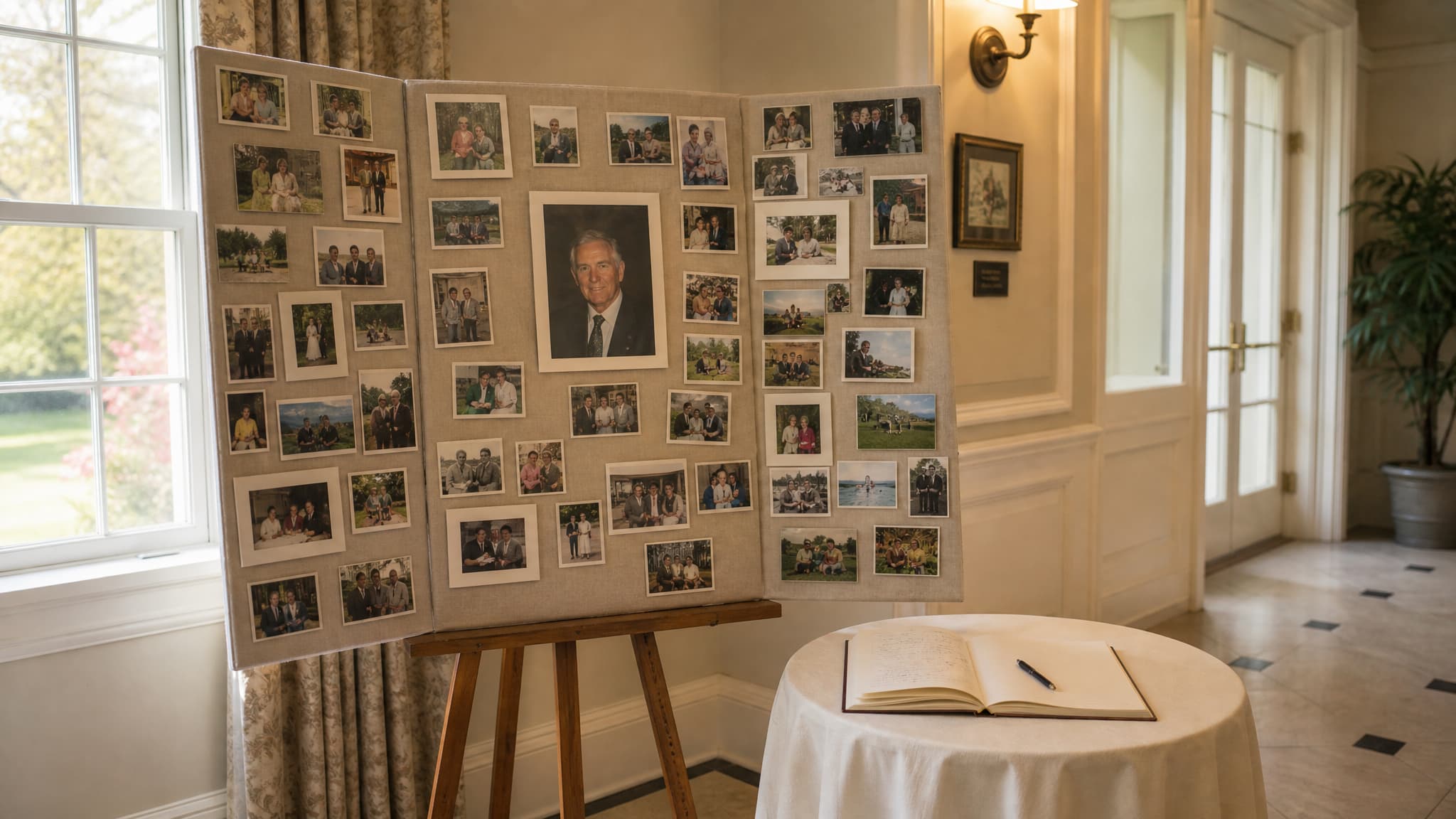
A funeral picture board is the trifold covered in photographs that stands on an easel near the entrance, and almost everybody makes one the night before while exhausted. It goes better with four decisions made in advance: how many photos, what size board, how they are mounted, and what happens to them afterward.
Search diy funeral picture board and you get a hundred variations on the same craft project; the decisions above are what actually separate the ones that work. The short version: thirty to fifty photos on a 36 × 48 inch trifold, mounted with photo corners or removable squares so nothing is destroyed, arranged in loose clusters rather than a grid, and printed rather than original — because originals get bent, and the family will want them back.
This page covers the count, the layout that actually reads from six feet, the mounting that does not ruin anything, and what to do with the board when the service is over.
It is not a photo album and it is not an exhibit. Its job is to give people somewhere to stand and something to say.
That sounds soft and it is the most practical thing on this page, because it decides the layout. Guests arrive early, they do not know each other, and standing in front of a board pointing at a photograph is the easiest conversation available at a funeral. Design it to be stood in front of by three people at once, and everything else follows: bigger photos, fewer of them, and no captions anyone has to lean in to read.
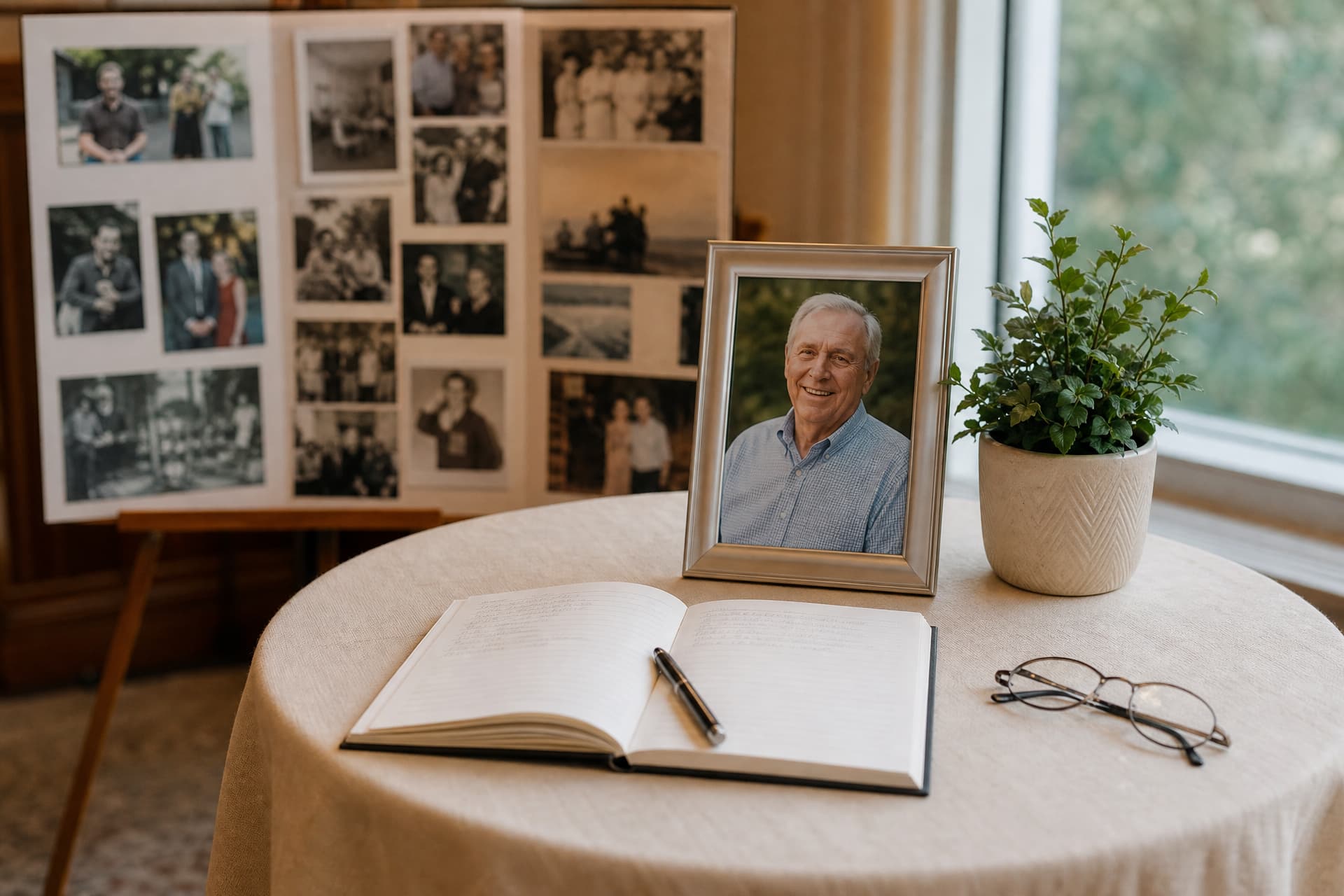
The board works better as part of a table than alone on an easel. A guest book, one framed portrait and two or three objects give people a reason to stop for longer than the twenty seconds a board on its own gets.
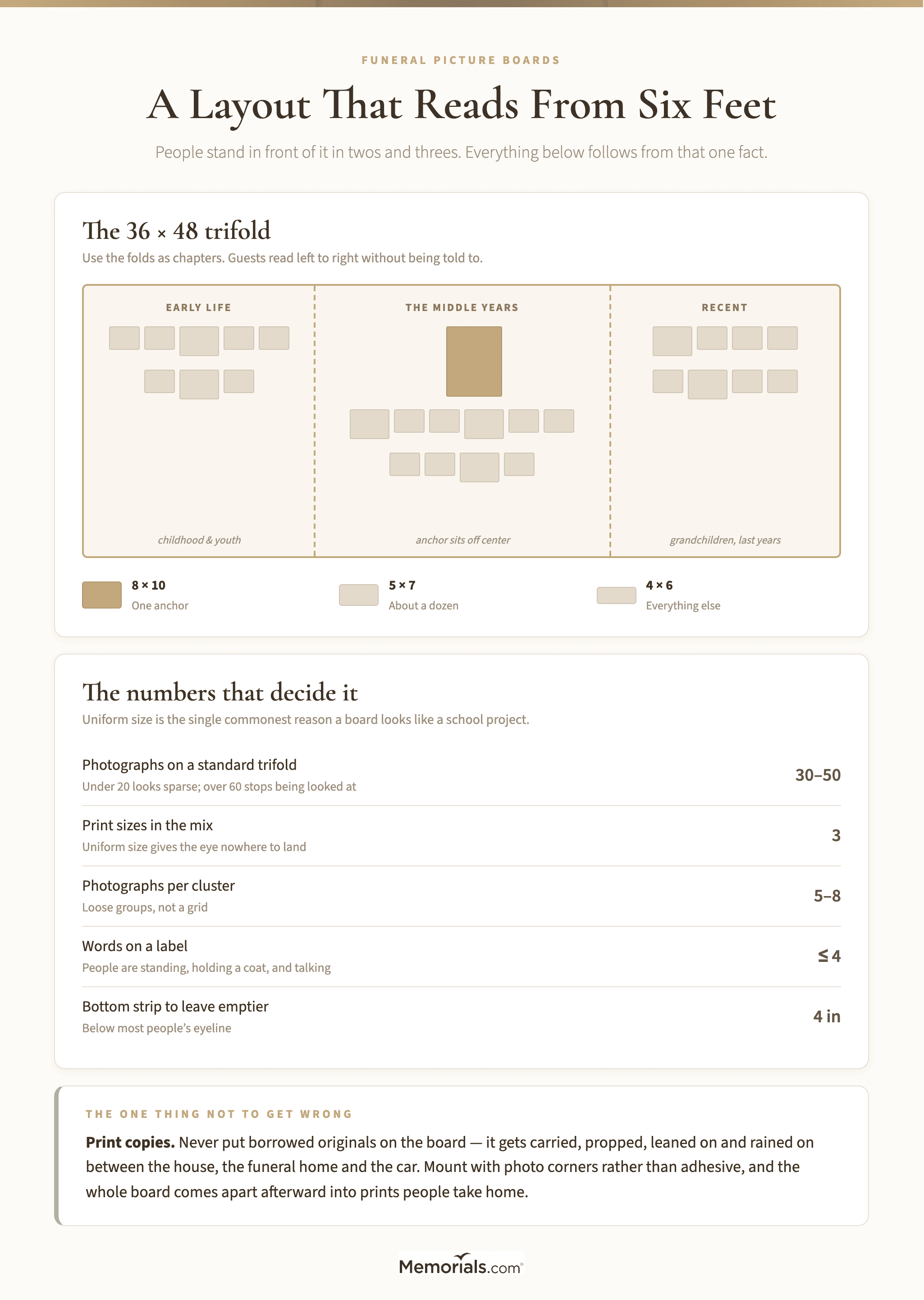
Thirty to fifty is the number. Under twenty looks sparse and people notice; over sixty and nobody looks at any of them, because a wall of images reads as texture rather than as pictures.
Print at three sizes, not one. A dozen at 5 × 7, most at 4 × 6, and a handful of 8 × 10 anchors. A board of identical 4 × 6 prints is the single most common reason a picture board looks like a school project — uniform size gives the eye nowhere to land.
Choosing the Photos
This is the part that takes the time, and the part worth doing with other people in the room.
Cover the whole life, not the last decade. Childhood photos are the ones people crowd around, and they are the ones the immediate family has usually stopped noticing. Aim roughly for a quarter childhood and young adulthood, a half the middle years, a quarter recent.
Include other people. A board of solo portraits is a strange thing to look at. Photos with friends, colleagues, in-laws and grandchildren give more guests something to find themselves in — and finding themselves in one is what makes somebody tell you a story.
Choose the unposed ones. The photograph everybody remembers is almost never the good portrait. It is the one where they are laughing at something off-camera, or wearing that coat, or asleep in a chair.
Two or three that are just objects. Their hands. The workbench. The dog. The car they kept too long. These do more than another face and people always stop at them.
Ask around before you print. A short message to a few friends will produce photographs the family has never seen, and those are consistently the best ones on the board.
What to leave off: anyone estranged, anything from a hospital or hospice, and any photograph a living person in the room would be embarrassed by. Someone will notice, and it will be the only thing they remember.
The layout that reads from a distance: one large anchor slightly off-center, then loose clusters by era rather than a grid, and a mix of three print sizes so the eye has somewhere to land. The panels of a trifold are natural chapter breaks — use them as early life, middle, recent, and let the clusters run right up to the folds.
Layout That Reads From Six Feet
One anchor photograph, 8 × 10 or larger, slightly off-center rather than dead middle. Dead middle reads as a memorial portrait, which is a different and more formal object.
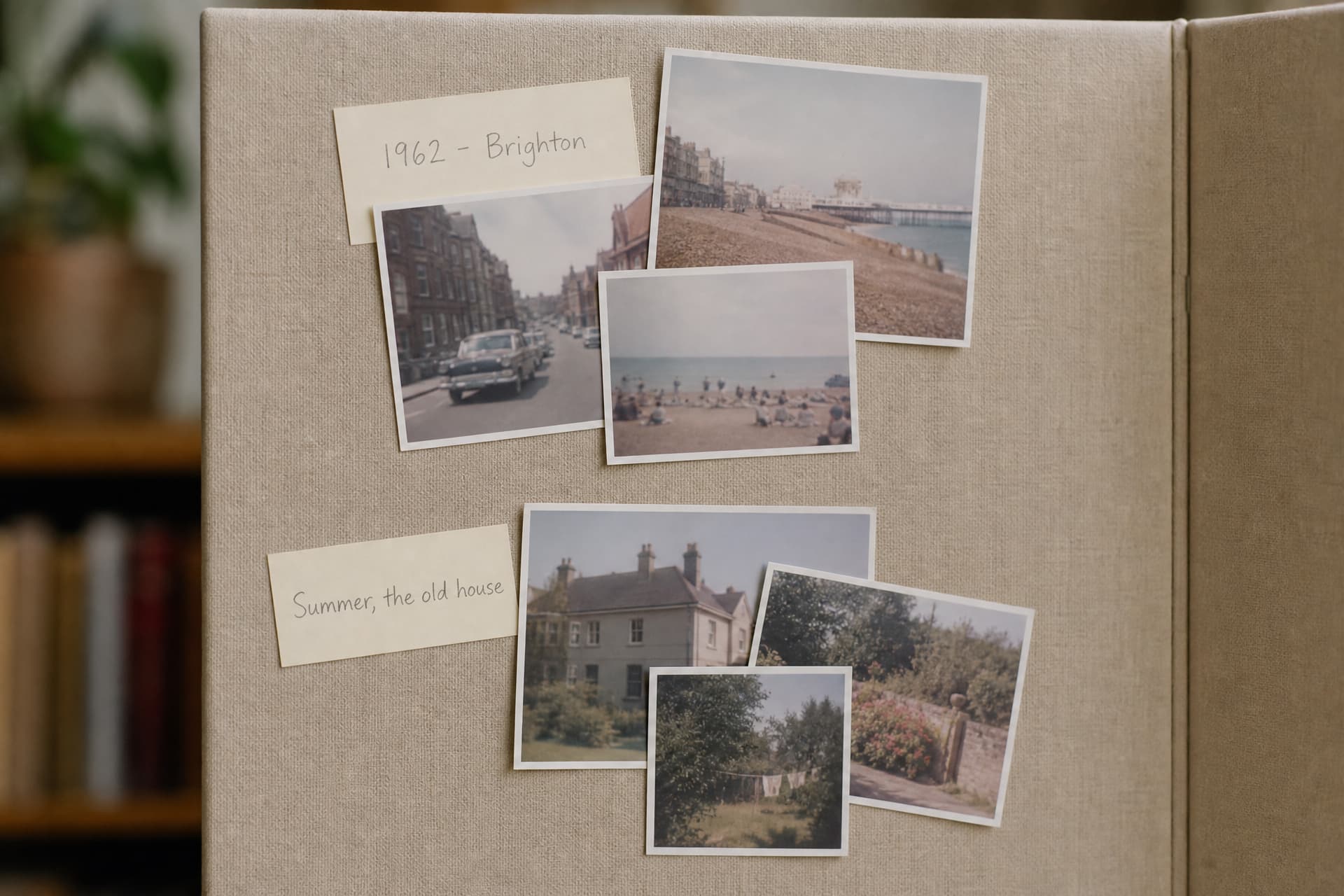
Cluster, do not grid. Loose groups of five to eight with breathing room between clusters. A grid is faster to make and looks like a contact sheet.
Use the folds as chapters. Left panel early life, center the middle years and the anchor, right panel recent. Guests read left to right without being told to.
Overlap corners slightly. A little overlap reads as a pile of photographs; none reads as an exhibit.
Leave the bottom four inches emptier. That strip sits below most people's eyeline and gets missed.
Captions only where the photo needs one. A date, a place, a first name. Handwritten in pencil on a small card beats printed labels, which look like a museum.
Materials, and What Actually Works
Buy:
A trifold presentation board — foam-core, not corrugated cardboard, which bows under weight.
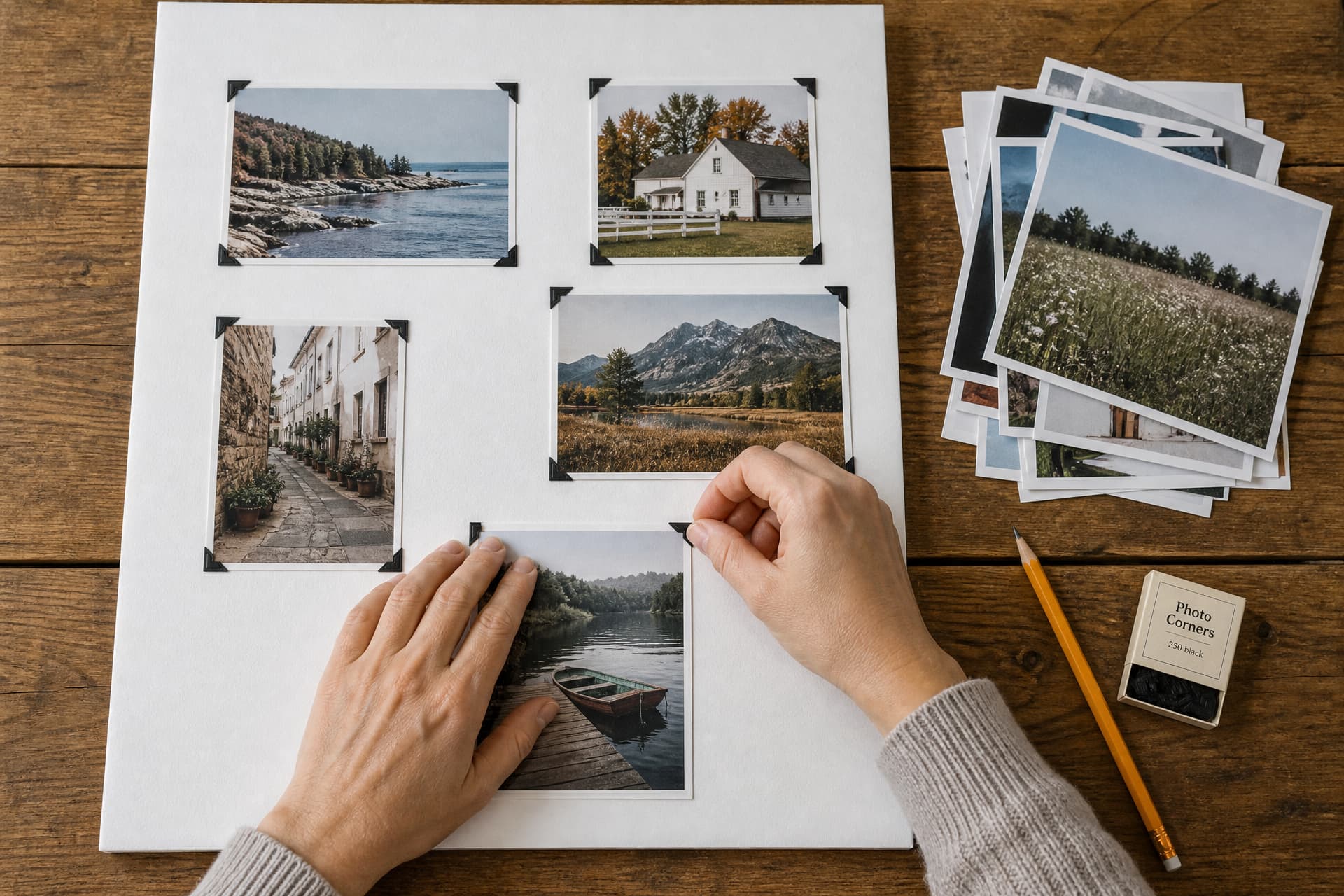
Photo corners or removable adhesive squares. This is the one item worth being fussy about.
A tabletop easel rated for the board's weight. The floor easels sold for art are usually too flimsy for a loaded trifold.
Cardstock in one or two colors to mat a few key photographs. Matting three or four is enough to lift the whole board.
Do not use: rubber cement (yellows and bleeds through), hot glue (permanent and lumpy), tape on the photo face, or spray adhesive indoors.
Mounting Without Ruining the Photographs
Print copies. Do not put originals on the board. Prints cost very little, and the board gets carried, propped, leaned on and rained on between the house, the funeral home and the car. Originals are irreplaceable and somebody's mother lent them to you.
If an original must go on — a photograph that exists once and cannot be scanned in time — use photo corners, never adhesive, and take it off the same night.
Photo corners rather than adhesive, even on prints. It costs about ten minutes more and it means the whole board can be dismantled afterward into something people take home, instead of into a bag nobody can open.
Funeral Picture Board Ideas by Theme
Most funeral picture board ideas amount to chronology, and chronology is a fine default. If it feels wrong for the person, these are the arrangements that work instead:
By decade, one cluster per ten years, labeled with just the years. The most common alternative and the easiest to build.
By place — the towns they lived in, the house, the boat, the allotment. Strong for someone who moved a lot or who stayed put emphatically.
By the thing they did. A workbench, a kitchen, a stage, a field. Best when one activity ran through the whole life.
One photo per year, if the photographs exist. Visually striking and a great deal of work; do this only if someone volunteers for it.
The people board — every photograph has someone else in it, arranged by who. Suits a long marriage or a large family.
Two boards, two eras, if there are simply too many photographs for one.
If you want funeral memory board examples to work from before committing, funeral homes usually have photographs of previous ones and will show you; it is a more useful reference than anything online, because you see them at the size they are actually viewed.
A note on formal portraits. Commissioned memorial portraits — a painted or drawn likeness — are a different object from a picture board and they work badly on one. They belong on their own easel beside it, where they get looked at properly.
Clusters with a little air between them, and small handwritten cards giving only a year or a place. Anything longer than about four words does not get read at a funeral, where people are standing, holding a coat, and talking to someone.
When There Are Almost No Photographs
This is more common than the guides admit, and it is quietly distressing — someone who hated being photographed, a life where the albums were lost in a move, or a generation that simply took fewer pictures. A board with nine photographs on it looks like a failure, and it should not.
Make the board smaller, not emptier. A 24 × 36 half-fold with fifteen photographs reads as complete. The same fifteen on a full trifold reads as missing.
Go bigger. Print six at 8 × 10 rather than fifteen at 4 × 6. Scarcity handled as scale looks deliberate.
Use documents. A letter in their handwriting, a work badge, a recipe card, a ticket stub, a signature. These photograph and print well, and people stop at them longer than at portraits.
Use the objects instead. Photograph their tools, their bookshelf, their garden, the chair. Taken this week, printed this week.
Ask sideways. People who would say "I don't have any photos of him" do have one, in a group shot from a wedding twenty years ago. Ask for photographs with them in it, not of them.
A board of twelve good large photographs beats forty small ones in every case, so this constraint often produces the better object.
Setting It Up on the Day
Arrive early enough to move it. The first spot is usually wrong — either in the doorway or somewhere nobody passes.
Put it where there is room to stand back, and where it is not blocking the flow to the seats.
Watch the light. A board opposite a window is a mirror of glare for half the service.
Weight the easel. A loaded trifold catches a draft from a door and goes over, and it will do it during the quiet part.
Bring spare corners and a pencil. Something falls off. Something always falls off.
What to Do With It Afterward
The board goes in a garage and the photographs curl. Decide this beforehand — it takes ten minutes and it is the difference between the photographs surviving and not.
Dismantle it the same week and give the prints away. Guests who appear in one will keep it for decades.
Rebuild the best ten into a framed collage for the house.
Scan anything that was borrowed before returning it.
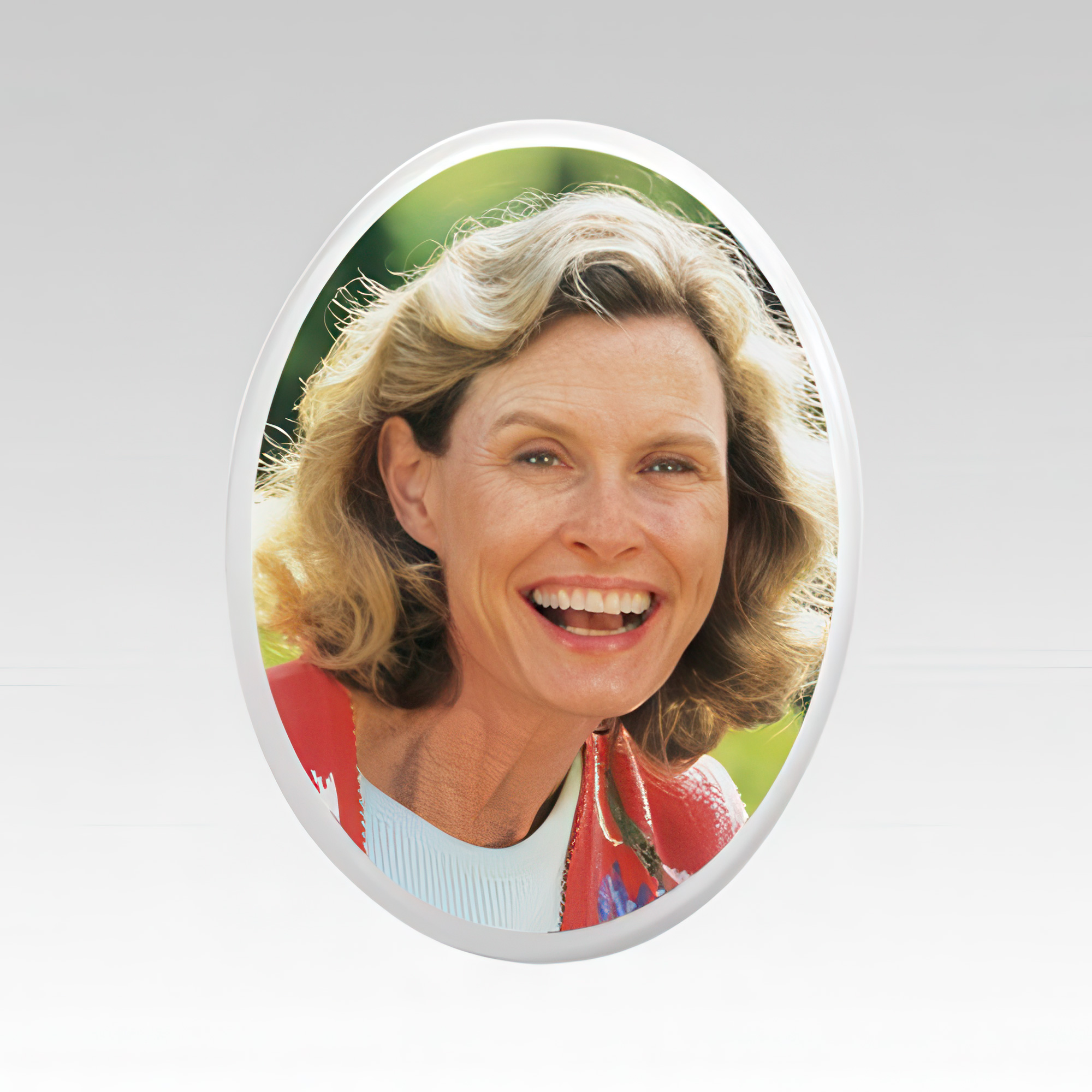
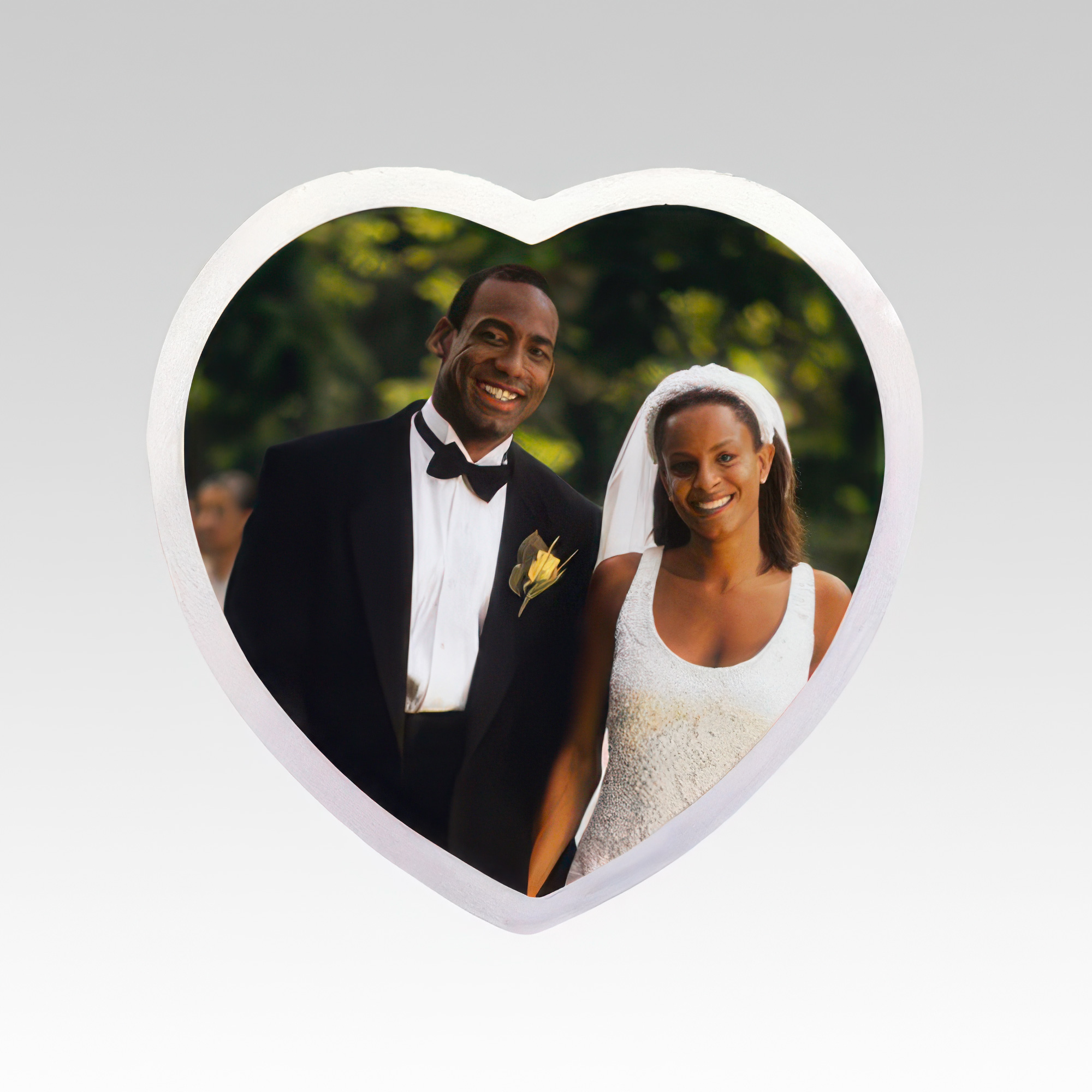
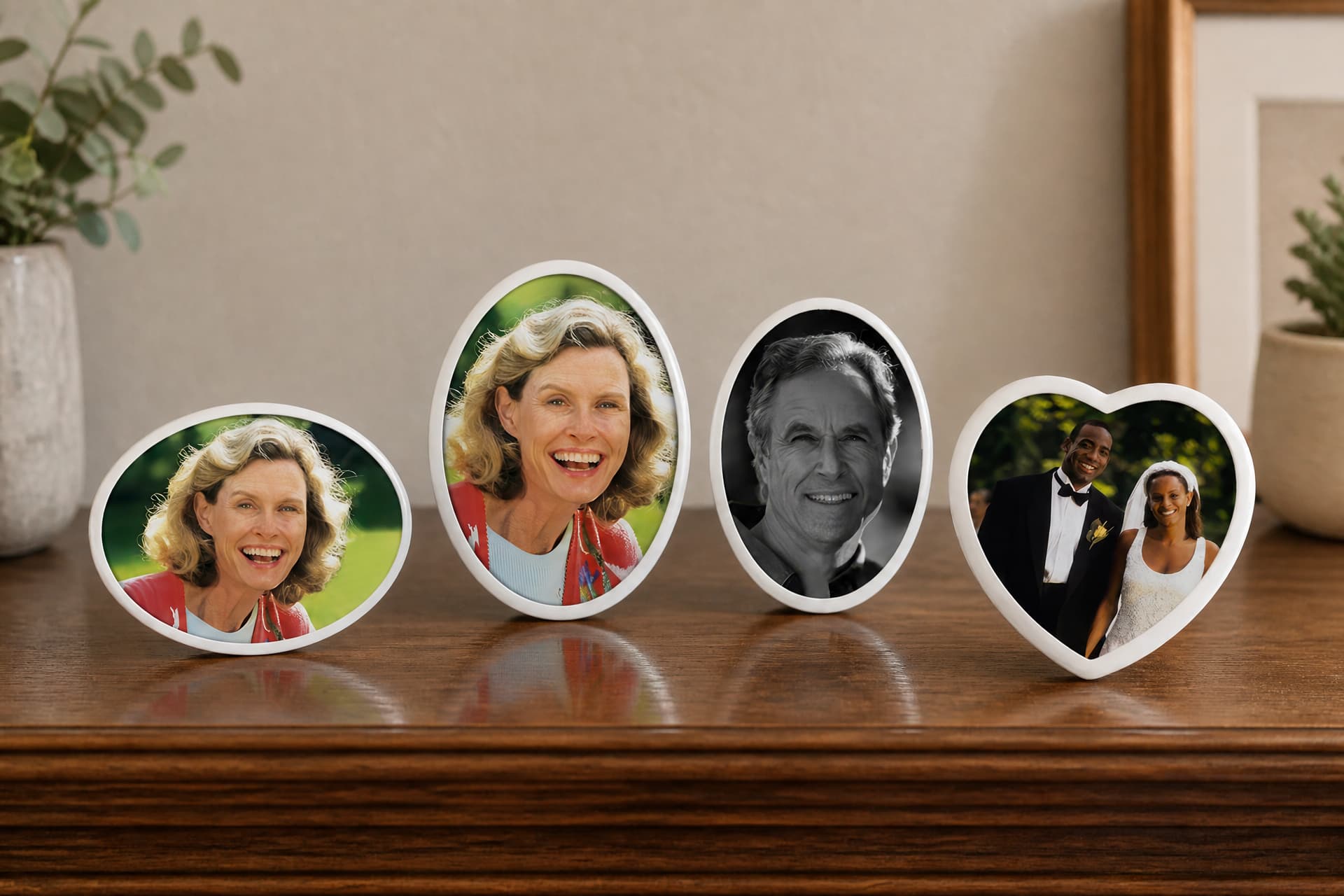
Move one photograph onto something permanent. A photo urn carries the anchor image indoors, and a ceramic picture is the outdoor version — a fired porcelain photograph made to sit on a headstone and survive weather for decades. Our guide to putting a picture on a headstone covers how that is fitted.
Turn a few into keepsakes.Picture memorial gifts covers the photo-based options for family members who want something small, and keepsake gifts is where most of them live.
The permanent version of the anchor photograph, before it is fitted. A fired porcelain picture is made to bolt to a headstone and survive weather for decades — which is why the image you pick for the board is worth choosing properly. It is usually the one that ends up here, and it is enlarged rather than reduced, so a small or soft original will not do. Products from left to right: Cemetery Pictures Horizontal VI, Cemetery Pictures Vertical III, Headstone Pictures Vertical IV and Ceramic Picture.
If the service is still being planned, the photograph you choose for the board is usually the one that should also go on the memorial cards and the program — choosing it once saves choosing it three times in a bad week.
A board is deliberately temporary, and families tend to notice that the week after, when the trifold is in the garage and nothing has taken its place. That is usually when memorial garden ideas come up — a bench, a stone, a planted corner — and it is a better conversation for happening then than in the days before the service.
Frequently Asked Questions
How many photos go on a funeral picture board? Thirty to fifty on a standard 36 × 48 inch trifold. Fewer than twenty looks sparse; more than sixty stops being looked at.
What size board should I use? A standard trifold at 36 × 48 inches suits most services. Use foam-core rather than corrugated card, which bows.
How do I attach photos without ruining them? Photo corners or removable adhesive squares. Never rubber cement, hot glue, or tape across the face. Print copies and keep the originals at home.
Should I use original photographs? No. Print copies. The board is handled a great deal, and borrowed originals are irreplaceable.
What do I write on the labels? A year, a place, or a first name. Four words is the ceiling — people are standing, and long captions go unread.
Is a memory board for a funeral the same thing? Yes — a memory board for a funeral, a photo board and a picture board all describe the same object. Some families use "memory board" for a version guests write on rather than one covered in photographs.
What is a memory table? The table the board stands beside, usually holding a guest book, a framed portrait and a few personal objects. The board works considerably better as part of one than alone.
What do I do with the board afterward? Dismantle it within the week and give the prints to the people in them. Rebuild the best few into a framed collage, and move one image onto something permanent.
The Board Is a Conversation, Not an Exhibit
Every practical decision here comes back to the same thing: people are going to stand in front of it in twos and threes, and the board's real job is to give them something to point at.
Print copies. Make them big enough. Leave space between the clusters. For the rest of the service, the memorial tribute ideas guide covers the other pieces families put together, and a memory jar beside the board gives guests somewhere to put the story the photographs just reminded them of.