🏬Supersize Online Funeral Retailer🪦1000's of Headstones⚱️Over 10,000 Cremation Urns⚰️Caskets Overnight Delivery🛒Funeral & Memorial Superstore🚚FREE Shipping on ALL Orders👨👩👧👦Helping Families for over 20 Years💰Lowest Price Guarantee🏬Supersize Online Funeral Retailer🪦1000's of Headstones⚱️Over 10,000 Cremation Urns⚰️Caskets Overnight Delivery🛒Funeral & Memorial Superstore🚚FREE Shipping on ALL Orders👨👩👧👦Helping Families for over 20 Years💰Lowest Price Guarantee
🏬Supersize Online Funeral Retailer🪦1000's of Headstones⚱️Over 10,000 Cremation Urns⚰️Caskets Overnight Delivery🛒Funeral & Memorial Superstore🚚FREE Shipping on ALL Orders👨👩👧👦Helping Families for over 20 Years💰Lowest Price Guarantee🏬Supersize Online Funeral Retailer🪦1000's of Headstones⚱️Over 10,000 Cremation Urns⚰️Caskets Overnight Delivery🛒Funeral & Memorial Superstore🚚FREE Shipping on ALL Orders👨👩👧👦Helping Families for over 20 Years💰Lowest Price Guarantee
After a military funeral, the folded burial flag is presented to the next of kin with words that few families ever forget. That triangle of stars is one of the most meaningful keepsakes a veteran's family will receive — a tangible symbol of the nation's gratitude for a lifetime of service. But once the ceremony ends and the flag is in your hands, the question almost every family asks is simple: what do I do with it now? Our covers every aspect of honoring a veteran's service, and caring for the burial flag is one of the most personal decisions you will make.
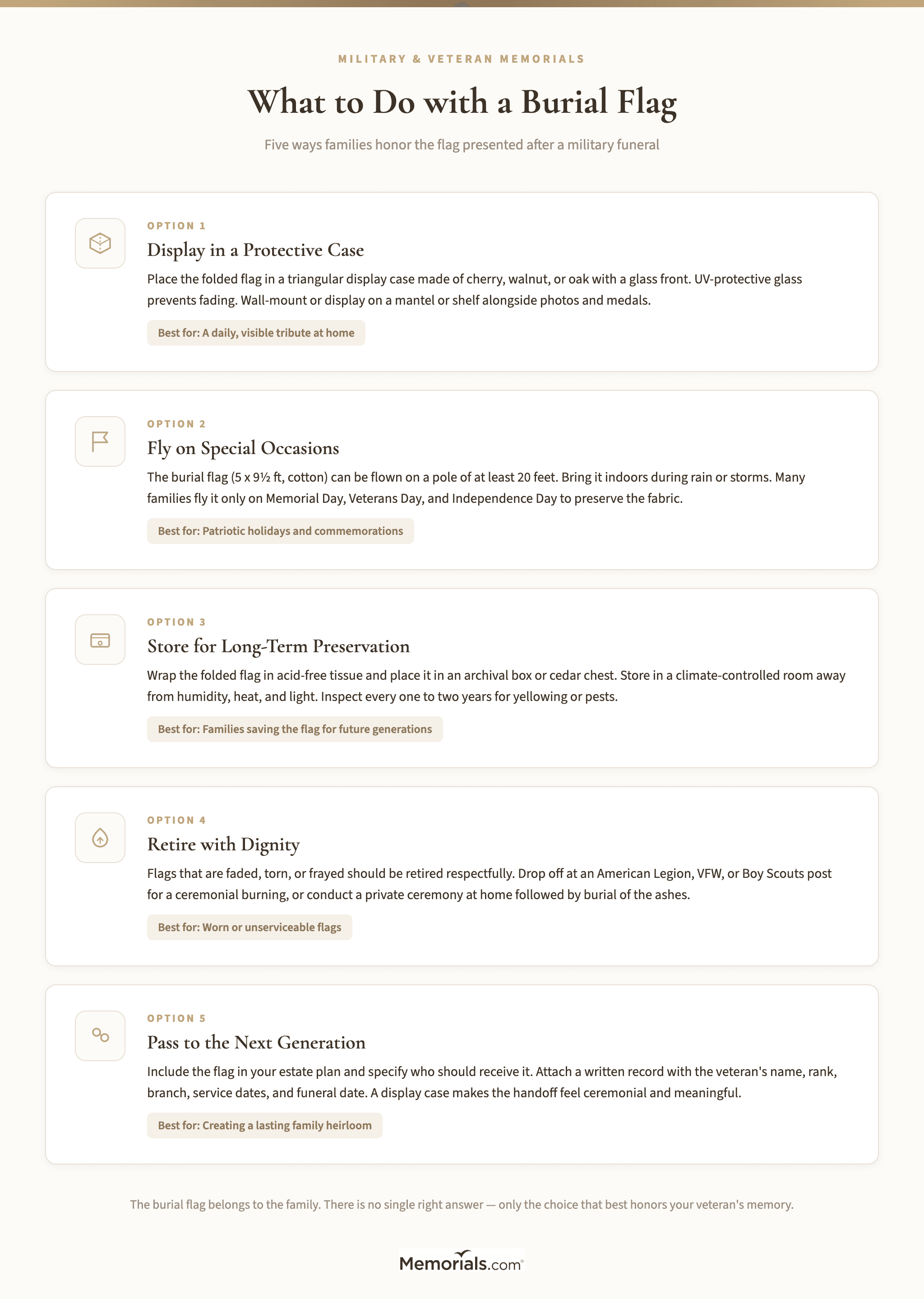
This article walks through your options — displaying the flag in a protective case, flying it outdoors on special occasions, storing it safely for the long term, retiring a worn flag with dignity, and passing it down to the next generation. Understanding military funeral flag etiquette gives you a foundation; what follows here is the practical guide to living with the flag day after day, year after year.
One thing that surprises families: the flag is the same wherever the burial happened. A service at Arlington National Cemetery, a county cemetery, or a private plot with a government marker all end with the same folded triangle, furnished by the government and handed to the same person.
Display the Flag in a Protective Case
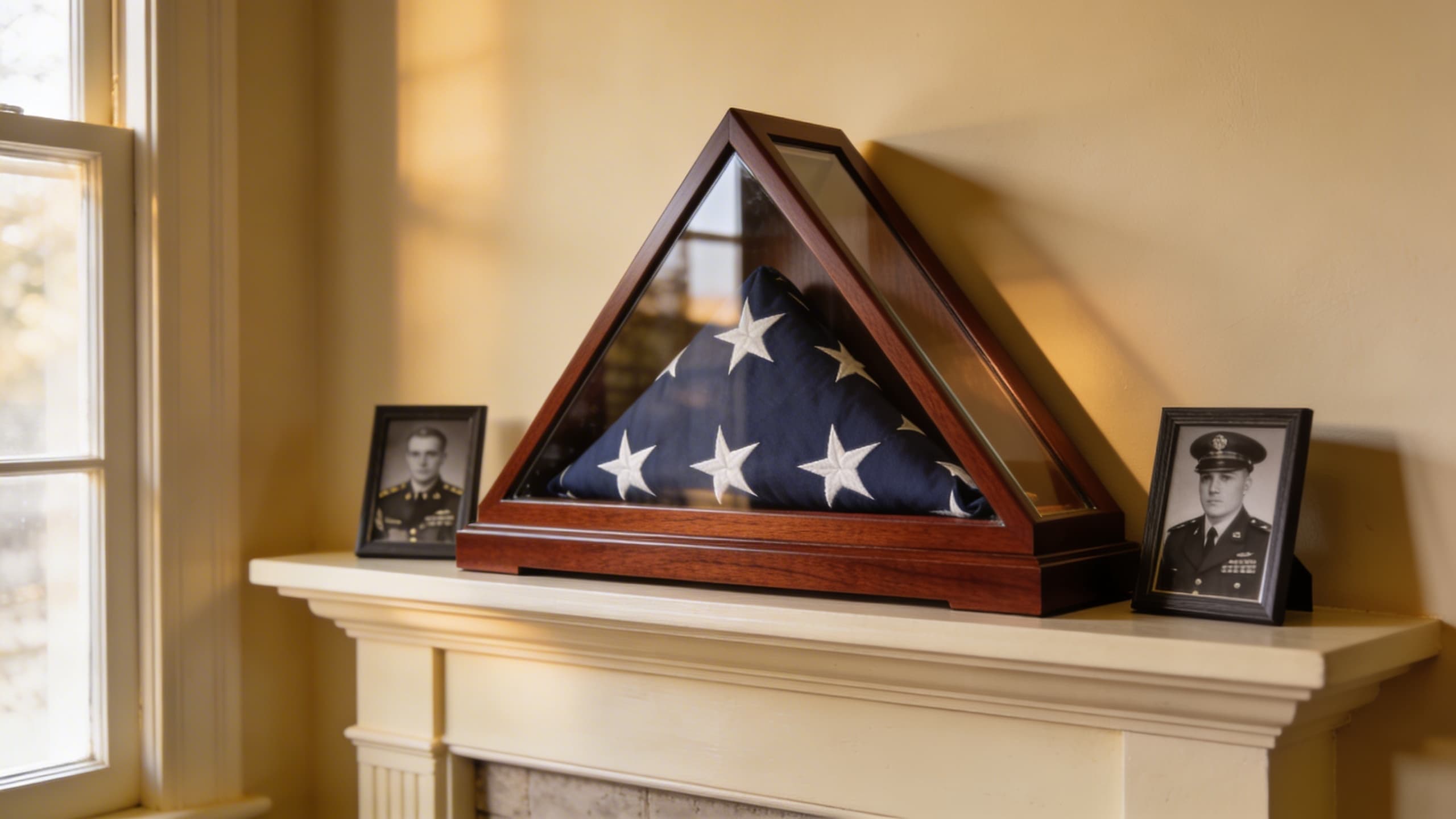
The most common and widely recommended way to honor a burial flag is to display it in a flag display case designed specifically for this purpose. These cases hold the flag in its ceremonial triangle — stars visible through the glass front — while shielding the cotton fabric from dust, light, and humidity.
Choosing the Right Case
Flag cases are typically built from hardwoods such as cherry, walnut, or oak, with a hinged or back-access panel for inserting the folded flag. When you are ready to explore options, our guide to selecting the right case for your veteran's flag breaks down materials, sizing, and features in detail.
A few things to consider when choosing a case:
Size compatibility. The standard VA-issued burial flag measures 5 × 9½ feet. When folded into its traditional triangle, it fits cases built to that specification. Confirm that any case you purchase is designed for a 5 × 9½-foot interment flag — some smaller cases are made for 3 × 5-foot household flags and will not accommodate a burial flag.
Glass type. UV-protective glass slows fading caused by sunlight. If the case will sit near a window or in a brightly lit room, UV glass is worth the investment.
Mounting hardware. Most flag cases include wall-mounting brackets. A wall-mounted display keeps the case at eye level and out of reach of children or pets. Cases can also rest on a shelf, mantel, or dedicated pedestal.
Where to Display the Case
Place the case in a location that feels meaningful to the family. Common choices include a living room mantel, a study or home office, or a dedicated memorial shelf alongside the veteran's medals, photographs, and flag case accessories like coin racks or engraved plaques. Avoid locations with direct sunlight for extended periods, high humidity (bathrooms, unfinished basements), or extreme temperature swings (attics, garages).
Combining the Flag with Other Memorabilia
Many families create a broader memorial display by pairing the flag case with a shadow box or memento box that holds medals, ribbons, rank insignia, challenge coins, and personal items from the veteran's service. For families who want everything together in a single display, military shadow box ideas offers layout inspiration and product options that incorporate both the flag and memorabilia.
Can You Fly a Burial Flag?
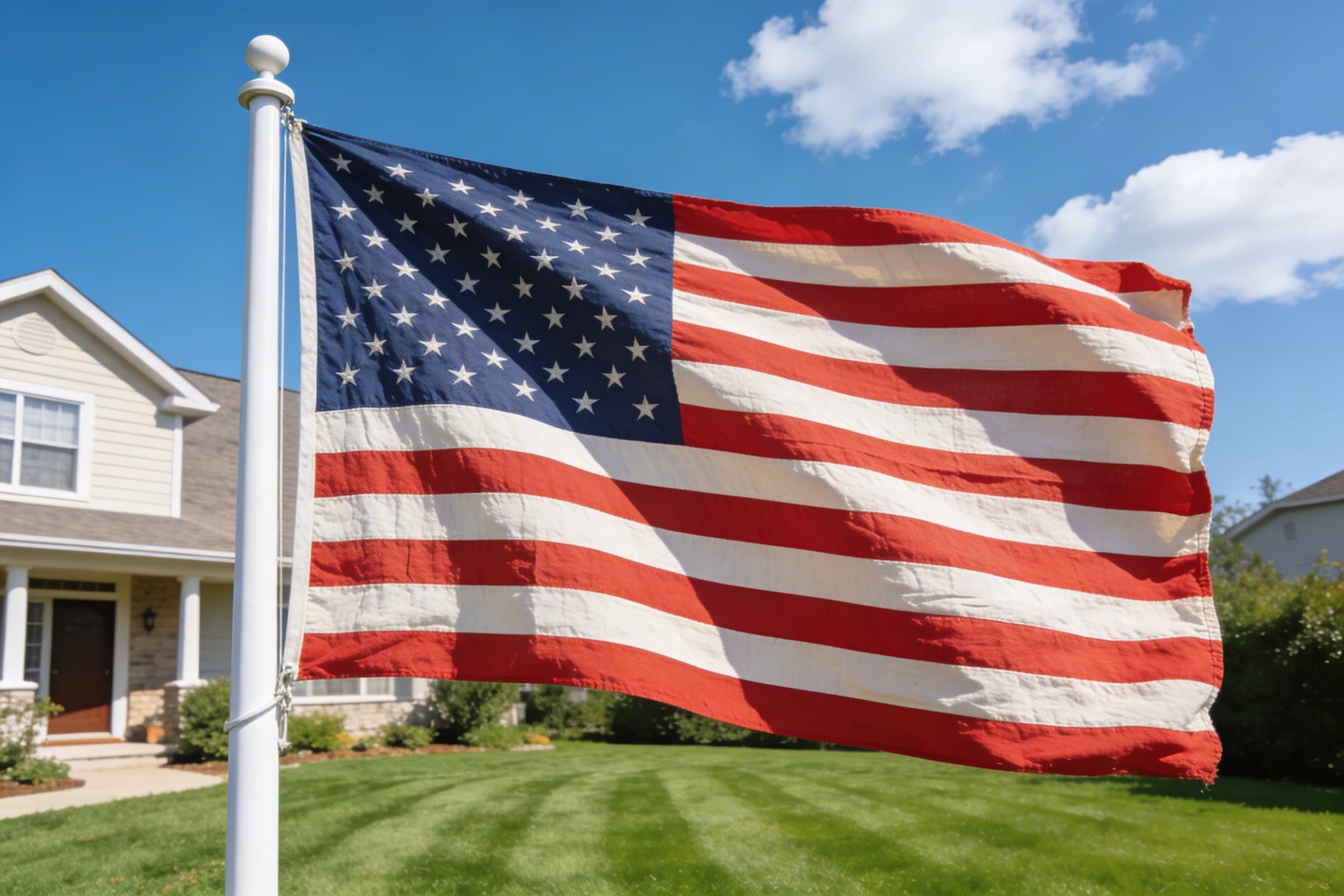
Yes. There is no law or regulation that prohibits a family from unfolding and flying a burial flag. The flag belongs to the next of kin, and the decision is entirely personal. That said, the VA and most veterans' service organizations note that the burial flag is made of cotton bunting and is not an all-weather flag, so flying it regularly outdoors will cause it to fade, fray, and deteriorate much faster than a nylon or polyester flag would.
Guidelines for Flying the Flag
If you choose to fly the burial flag, keep these points in mind:
Flagpole height. The burial flag is significantly larger than a standard 3 × 5-foot home flag. A pole of at least 20 feet is recommended to fly a 5 × 9½-foot flag properly.
Weather. Bring the flag indoors during rain, high winds, or storms. Cotton absorbs moisture and dries slowly, which can lead to mildew and fabric breakdown.
Lighting. U.S. Flag Code states that if a flag is displayed 24 hours a day, it should be properly illuminated during darkness. If you cannot light it, lower and store the flag at sunset.
Occasions. Many families compromise by flying the burial flag only on patriotic holidays — Memorial Day, Veterans Day, Independence Day, Flag Day — and keeping it safely cased the rest of the year. This honors the veteran's memory on days that carry special significance while preserving the flag's condition.
The Refolding Challenge
Once unfolded, a burial flag is not easy to fold back into its precise ceremonial triangle without practice. Military honor guards and veterans' organizations rehearse this process extensively. If you plan to fly the flag and then return it to its case, consider asking a local American Legion or VFW post for folding assistance, or review our step-by-step guide on how to fold a flag properly.
Proper Storage for Long-Term Preservation
If the flag will not be displayed or flown, proper storage protects it for decades. Cotton bunting is susceptible to moisture, insects, and light damage, so a few precautions go a long way.
Storage Best Practices
Keep the flag folded. Leave it in the ceremonial triangle fold, which minimizes exposure to air and reduces the surface area that can attract dust or pests.
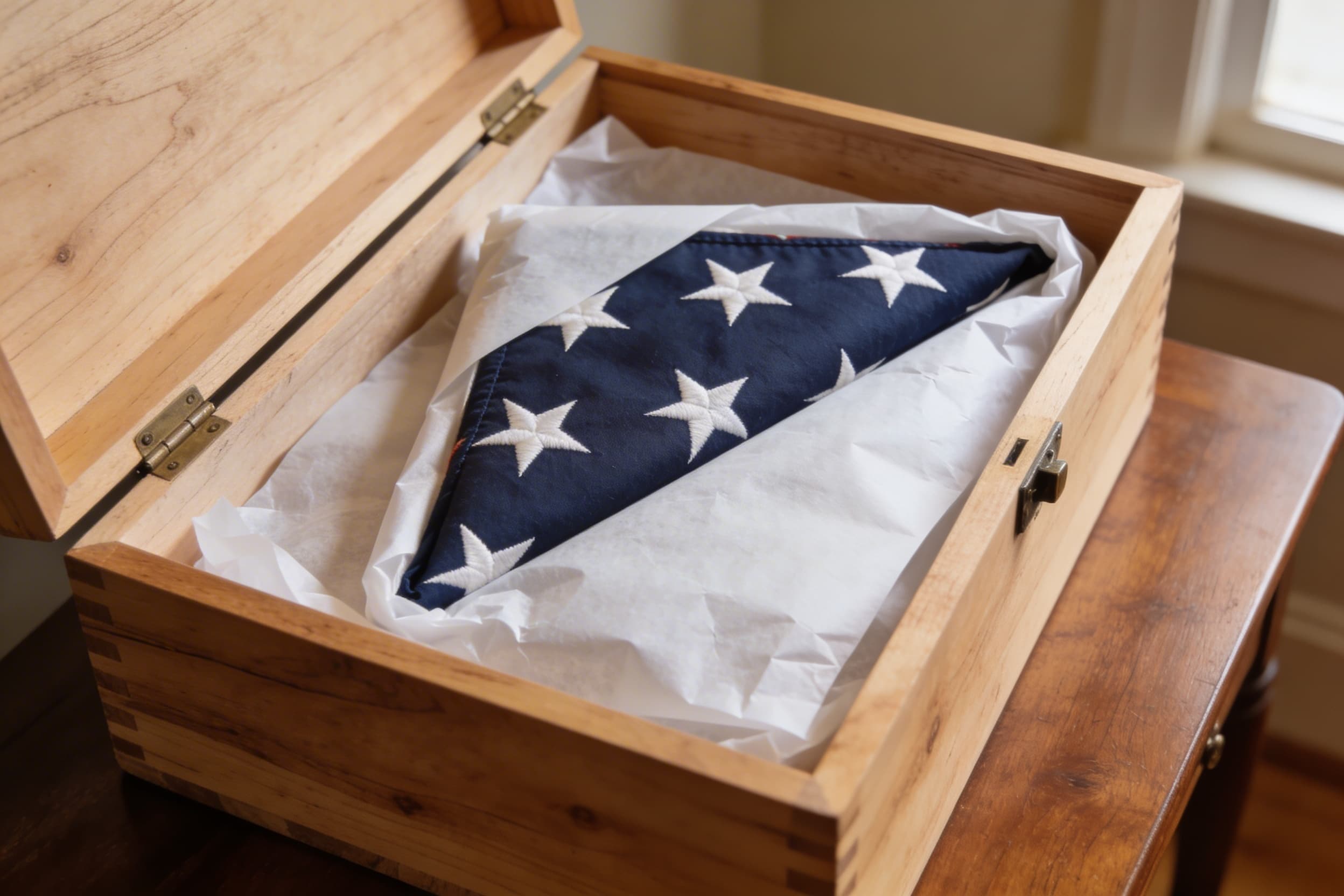
Use acid-free tissue. Wrap the folded flag in acid-free tissue paper before placing it in a storage container. Acid in standard paper or cardboard can yellow and weaken fabric over time.
Choose the right container. An archival-quality storage box or a sealed wooden chest is ideal. Avoid plastic bags — they trap moisture and can promote mildew. A cedar chest offers natural pest resistance.
Control the environment. Store the flag in a climate-controlled room with low humidity and stable temperature. Attics and basements are the worst choices. A bedroom closet or interior hall closet works well.
Check periodically. Unfold and inspect the flag every year or two. Look for signs of yellowing, mildew, moth damage, or fabric weakening. Refold and return to storage.
Documenting the Flag
Whether you display or store the flag, consider attaching a brief written record to the case or storage container: the veteran's name, rank, branch, dates of service, and the date of the funeral. This documentation becomes invaluable when the flag is passed to future generations who may not have attended the service.
Retiring or Disposing of a Worn Flag
A burial flag that has become faded, torn, frayed, or otherwise unserviceable should be retired with dignity. The U.S. Flag Code specifies that worn American flags should be destroyed in a respectful manner, preferably by burning.
How to Retire a Flag Properly
Veterans' organizations. The American Legion, VFW, Boy Scouts of America, and Girl Scouts of the USA all conduct formal flag retirement ceremonies. Many posts collect worn flags year-round and hold ceremonial burnings on Flag Day (June 14) or other designated dates. Contact your nearest post to arrange a drop-off.
Fire departments. Some local fire departments accept unserviceable flags for proper disposal.
Ceremonial burning at home. If you prefer to retire the flag privately, build a fire large enough to consume the flag completely. Place the folded flag on the fire, observe a moment of silence or recite the Pledge of Allegiance, and remain until the flag is fully consumed. Bury the ashes afterward.
Burial. The flag can also be placed in a dignified wooden box and buried. While burning is the most widely recognized retirement method, burial is an accepted alternative when burning is impractical.
The Avenue of Flags Option
For veterans buried in a VA national cemetery, the family can donate the burial flag to the cemetery's Avenue of Flags program. Donated flags are flown on patriotic holidays along the cemetery's main approach road, creating a powerful visual tribute to all veterans interred there. The VA provides a Certificate of Appreciation to the donating family. Not all national cemeteries maintain an Avenue of Flags, so call the cemetery directly to confirm participation before donating.
Passing the Flag to the Next Generation
Many families treat the burial flag as an heirloom, passing it from one generation to the next. There is no regulation governing this — the flag belongs to the family, and the decision about succession is entirely personal.
Tips for Heirloom Transition
Include the flag in estate planning. Specify in a will or family document who should receive the flag. This avoids confusion or disputes during an already difficult time.
Attach the documentation. The written record described earlier — name, rank, branch, service dates, funeral date — becomes the flag's provenance. Without it, future generations may not know whose service the flag represents.
Consider a display case as a gift. If the flag has been stored folded in a box, presenting it in a quality display case when it passes to the next custodian gives the heirloom a fresh sense of ceremony and encourages the new owner to display it proudly.
Frequently Asked Questions
What size is a military burial flag?
The standard VA-issued burial flag measures 5 × 9½ feet. It is larger than a typical 3 × 5-foot residential flag and is made of cotton bunting. This size is consistent regardless of the veteran's branch, rank, or era of service.
Can you get a replacement burial flag if the original is lost or damaged?
No. The VA issues one burial flag per eligible veteran and cannot replace it if it is lost, destroyed, or stolen. Some veterans' organizations or community groups may be able to help you obtain another American flag, but it will not carry the same official status as the original interment flag.
Is it disrespectful to unfold a burial flag?
No. While some families prefer to keep the flag in its ceremonial triangle as a mark of respect, there is no law or military regulation that prohibits unfolding it. The flag belongs to the next of kin, and unfolding it to fly or display flat is considered an appropriate way to honor the veteran's memory.
Who is entitled to receive the burial flag?
The flag is generally presented to the next of kin. If no next of kin is available, it goes to a close friend or associate who requests it. The order of precedence for receiving the flag is typically: surviving spouse, children, parents, siblings, and then extended family members or friends.
Can you donate a burial flag?
Yes. Families can donate the flag to a VA national cemetery's Avenue of Flags program, where it will be flown on patriotic holidays. You can also donate it to a veterans' organization, a school, a library, or another public institution that will display it with respect.
Honoring the Flag, Honoring the Service
The burial flag is more than fabric and stitching — it is the nation's final salute to someone who served. Whether you display it in a handcrafted case on the mantel, fly it on Memorial Day, store it carefully for the next generation, or donate it to an Avenue of Flags, the choice you make reflects your family's relationship with the veteran's memory. There is no single right answer, only the one that feels most meaningful to your family.
If you are looking for ways to create a complete memorial that brings together the flag, medals, and personal keepsakes, explore the flag cases and display accessories available at Memorials.com to find options that honor your veteran's legacy with the dignity it deserves.