🏬Supersize Online Funeral Retailer🪦1000's of Headstones⚱️Over 10,000 Cremation Urns⚰️Caskets Overnight Delivery🛒Funeral & Memorial Superstore🚚FREE Shipping on ALL Orders👨👩👧👦Helping Families for over 20 Years💰Lowest Price Guarantee🏬Supersize Online Funeral Retailer🪦1000's of Headstones⚱️Over 10,000 Cremation Urns⚰️Caskets Overnight Delivery🛒Funeral & Memorial Superstore🚚FREE Shipping on ALL Orders👨👩👧👦Helping Families for over 20 Years💰Lowest Price Guarantee
🏬Supersize Online Funeral Retailer🪦1000's of Headstones⚱️Over 10,000 Cremation Urns⚰️Caskets Overnight Delivery🛒Funeral & Memorial Superstore🚚FREE Shipping on ALL Orders👨👩👧👦Helping Families for over 20 Years💰Lowest Price Guarantee🏬Supersize Online Funeral Retailer🪦1000's of Headstones⚱️Over 10,000 Cremation Urns⚰️Caskets Overnight Delivery🛒Funeral & Memorial Superstore🚚FREE Shipping on ALL Orders👨👩👧👦Helping Families for over 20 Years💰Lowest Price Guarantee
The burial flag presented at a veteran's funeral represents an entire lifetime of service, sacrifice, and devotion to country. Choosing the right flag display case is one of the most meaningful decisions a military family makes after receiving this final tribute. A well-chosen case protects the flag from dust, light, and handling while transforming it into a lasting memorial that future generations can appreciate. For families working through the many ways to honor a veteran's legacy, our covers every step from benefits to memorial products.
This guide walks through the key decisions: triangle case versus shadow box, which wood species and glass type will best protect the flag, how to match case size to flag dimensions, and which accessories personalize the display. Whether you plan to mount the case on a wall, set it on a mantel, or pair it with a cremation pedestal, the right choice comes down to understanding a few practical details.
What Makes a Flag Display Case Different from a Regular Frame
A flag display case is purpose-built to cradle a folded American flag in its traditional triangular shape. Unlike a picture frame or generic shadow box, these cases feature angled interior walls that hold the folded flag snug against the glass front, keeping the blue field and white stars visible. The triangular design itself carries meaning — it echoes the shape of the tri-cornered hats worn during the American Revolution.
Quality flag cases are constructed from solid hardwood, not particleboard or MDF, and use real glass rather than thin plastic sheeting. The difference matters over decades of display. Solid wood resists warping and cracking in changing humidity, while glass provides a scratch-resistant, optically clear view of the flag's embroidered stars. Many families pass these cases down through multiple generations, making material quality a practical concern rather than just a cosmetic one.
Standard Triangle Case vs. Shadow Box: Choosing the Right Style
The two most popular styles serve different purposes, and understanding the distinction helps families select the display that fits their situation.
Triangle Flag Case
The classic triangle case holds only the folded flag. It is the most common style, offering a clean, dignified presentation that puts full focus on the flag itself. Triangle cases typically measure about 25–26 inches across the base and 12–13 inches at the peak for a standard 5×9.5-foot burial flag. They are lighter than shadow boxes, easier to wall-mount, and generally less expensive. Families who want a simple, traditional display often prefer this option.
Triangle cases work especially well when the veteran's medals, coins, and other memorabilia will be displayed separately — perhaps in a dedicated medallion and memento cases display alongside the flag.
Flag Shadow Box
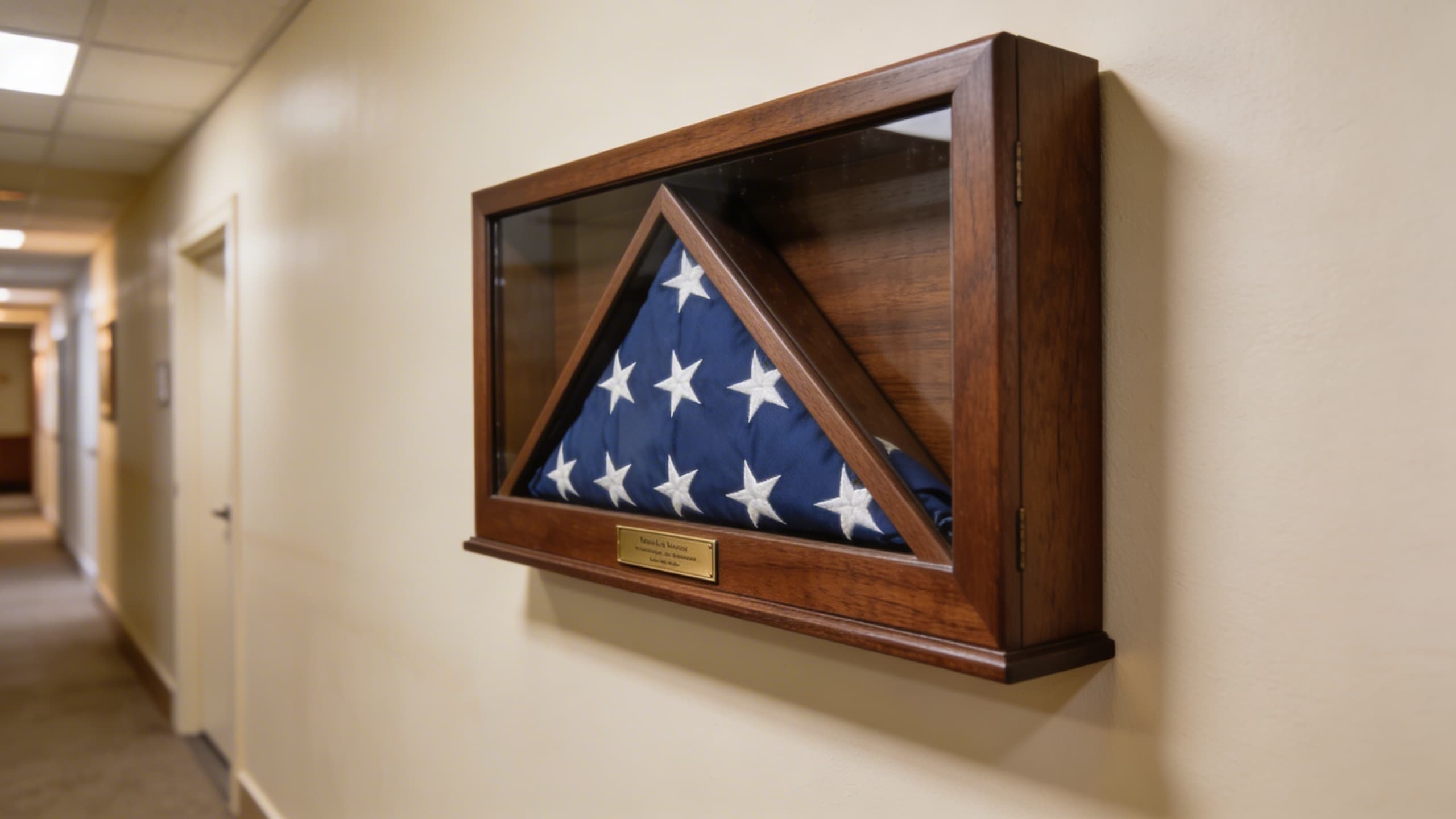
A shadow box combines the triangular flag compartment with an adjacent display area for medals, ribbons, rank insignia, dog tags, challenge coins, unit patches, and other service memorabilia. This all-in-one approach creates a comprehensive service memorial in a single frame.
Shadow boxes are larger and heavier, often measuring 28–36 inches wide depending on how much display space is included beside the flag compartment. They require sturdier wall anchors and more planning around placement. Families exploring this option may also appreciate military shadow box display ideas for layouts that balance visual impact with respectful presentation.
For families who prefer to keep memorabilia in a separate, enclosed storage piece rather than an open display, memento boxes offer a chest-style alternative that protects items like letters, jewelry, and photographs.
Quick Comparison
Feature
Triangle Case
Shadow Box
Displays flag only
Yes
Yes (plus memorabilia)
Typical width
25–26 inches
28–36 inches
Weight
4–8 lbs
8–15 lbs
Wall mounting
Easy (standard hardware)
Requires heavy-duty anchors
Price range
$40–$150
$80–$250+
Best for
Focused flag tribute
Complete service memorial
Wood Species: How Material Affects Appearance and Durability
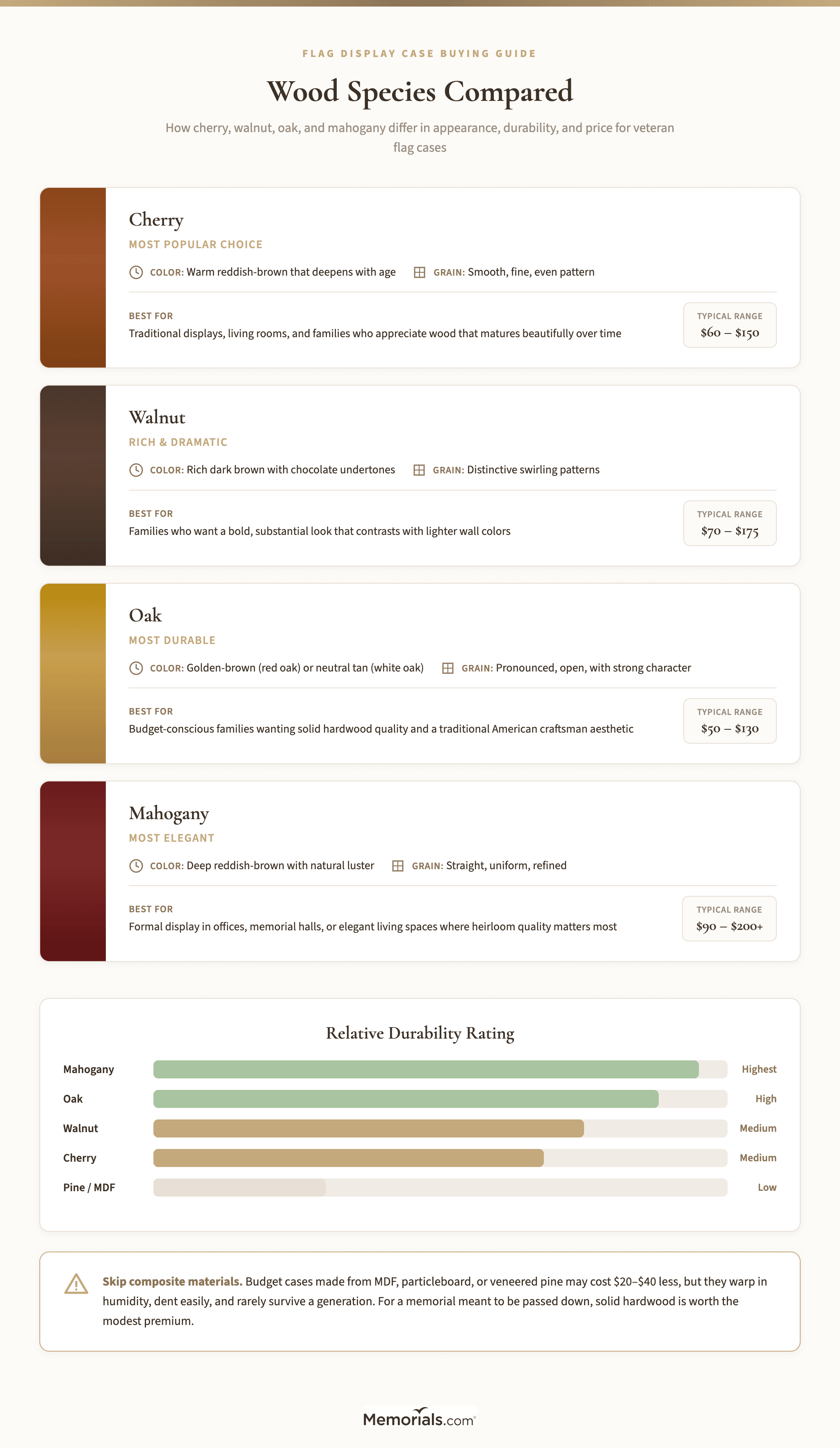
Flag display cases are most commonly offered in four hardwood species, each with a distinct grain pattern, color tone, and price point. All four are solid choices — the decision is primarily aesthetic.
Cherry
Cherry is the most popular choice for flag cases. It has a warm, reddish-brown tone that deepens naturally over time as the wood is exposed to light. The grain is smooth and fine, giving the case a refined, formal appearance. Cherry is a medium-density hardwood that resists dents reasonably well and takes a polished finish beautifully. Most veteran-owned flag case manufacturers use cherry as their flagship wood.
Walnut
Walnut offers a rich, dark brown color with distinctive swirling grain patterns. It is slightly harder than cherry and produces a case with a more dramatic, substantial look. Walnut is an excellent choice for families who want a darker case that contrasts with lighter wall colors. It is typically priced at a slight premium over cherry.
Oak
Oak is the most durable of the four common options. Red oak has a pronounced, open grain with a warm golden-brown tone, while white oak runs slightly lighter and more neutral. Oak cases have a traditional, American-craftsman feel. They are often the most affordable solid-hardwood option and hold up well in environments with fluctuating humidity.
Mahogany
Mahogany produces the most formal, elegant presentation. Its deep reddish-brown color, straight grain, and natural luster give the case a polished, heirloom quality without heavy staining. Mahogany is the hardest and most moisture-resistant of the four, but it is also the most expensive. Families displaying the case in a formal living room, office, or memorial hall often gravitate toward mahogany.
A Note on Pine and Composite Materials
Budget flag cases are sometimes constructed from pine, MDF, or particleboard with a wood-look veneer. Pine is soft and dents easily; MDF and particleboard can swell or delaminate if exposed to any moisture. For a memorial intended to last decades, solid hardwood is the better investment. The price difference between a composite case and an entry-level cherry or oak case is often only $20–$40.
Size Guide: Matching the Case to Your Flag
Flag cases come in two standard sizes, and choosing the wrong one is the most common purchasing mistake families make.
5×9.5-Foot Burial Flag (Large Case)
The standard U.S. burial flag — also called a casket flag or interment flag — measures 5 feet by 9.5 feet when unfolded. This is the flag presented to the next of kin at a military funeral. When folded into its ceremonial triangle, the flag measures approximately 21–25 inches across the base, 11–13 inches at the peak, and about 3 inches thick.
A large flag case designed for this size typically has interior dimensions of about 22–23 inches across the base and 11 inches at the peak, with 3 to 3.5 inches of depth. The folded flag should fit snugly without being compressed — tight enough that it does not shift, but not so tight that the fabric is crushed against the glass.
Folding technique affects final dimensions. A tightly folded flag from a military honor guard may measure as compact as 21 inches across, while a loosely folded flag can reach 25 inches. If the flag does not fit easily into the case, refolding it more tightly usually solves the problem. Our guide to properly folding the flag for display covers the 13-fold ceremony method that produces a uniform triangle.
3×5-Foot Presentation Flag (Small Case)
Smaller flags — often called presentation flags, Capitol flags, or commemorative flags — measure 3 feet by 5 feet. These are frequently presented at retirement ceremonies, by members of Congress, or as awards. A small flag case has a base of about 14–16 inches and a peak of 7–8 inches. Never place a 3×5 flag in a case built for a burial flag; the excess space creates an unbalanced, loose display.
How to Measure Your Folded Flag
If you are unsure which size case you need, lay the folded flag on a flat surface and measure the longest edge (the base of the triangle) and the distance from the center of the base to the peak. Compare those measurements to the interior dimensions listed in the product description. Add a quarter inch of clearance on each side for a comfortable fit.
Display Options: Wall Mount, Tabletop, and Pedestal
How and where you display the flag case shapes the memorial's presence in your home.
Wall Mount
Most flag cases ship with wall-mounting hardware — typically a sawtooth hanger or D-ring brackets attached to the back panel. Wall mounting places the flag at eye level where it can be seen and appreciated daily. Standard triangle cases (under 8 lbs) hang securely with a single wall anchor into a stud. Heavier shadow boxes may need two mounting points or toggle bolts if studs are not available.
Place the case away from direct sunlight and heat sources like fireplaces or heating vents. UV exposure gradually fades the flag's red and blue dyes, and heat can dry out the fabric.
Tabletop and Mantel Display
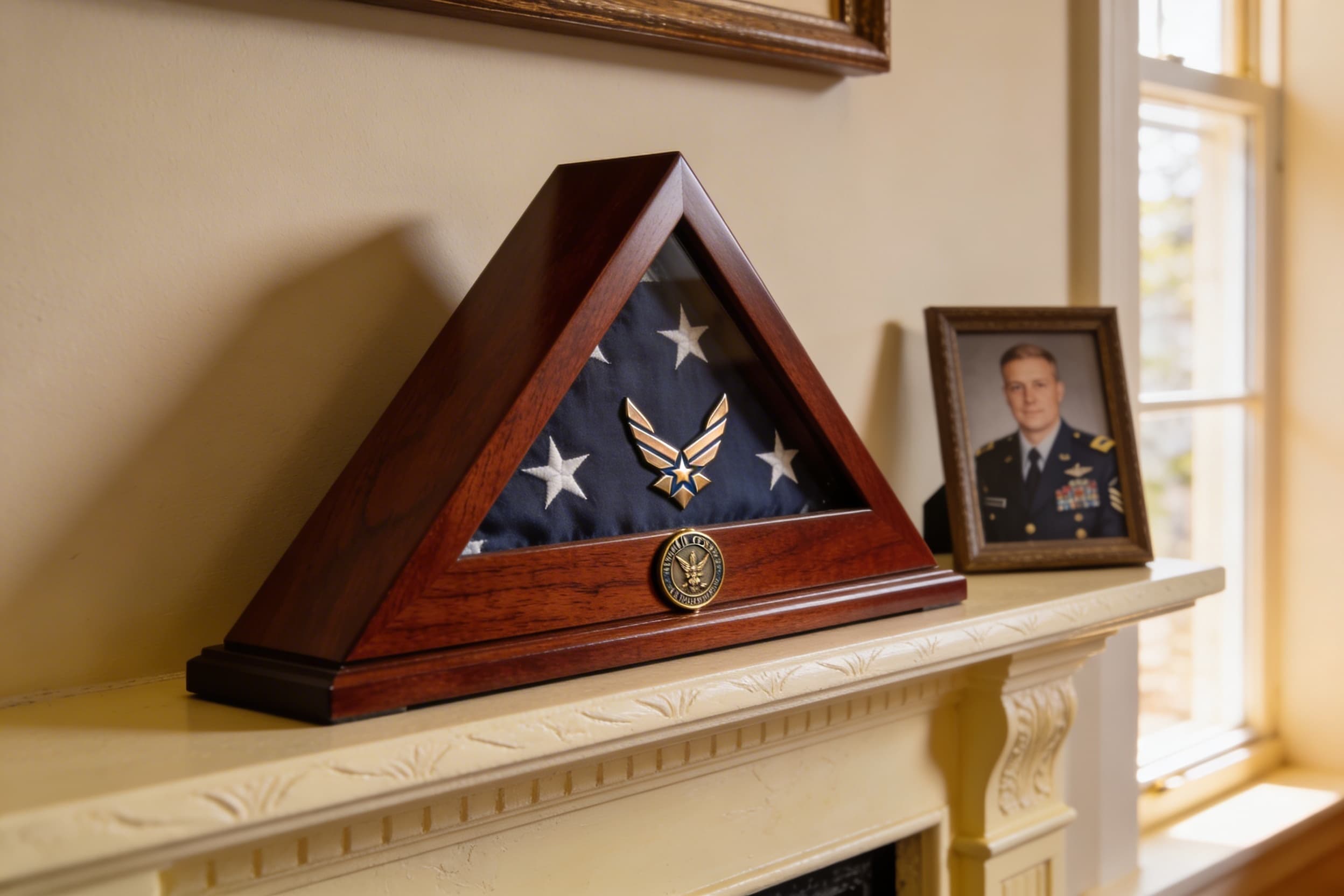
Tabletop cases sit flat on a shelf, mantel, or desk. Many cases include non-slip rubber pads on the base to prevent sliding. This option works well for families who want the flexibility to move the case between rooms or bring it out for family gatherings and holidays. Some families who have recently received the burial flag prefer tabletop display initially, with the option to wall-mount the case later. If you are still deciding what to do with your burial flag, a tabletop case gives you time to choose a permanent location.
Pedestal Display
A flag case pedestal is a vertical stand, usually made from the same wood species as the case, that elevates the triangle case to a prominent height. Some pedestals serve a dual purpose: the interior holds a standard cremation urn insert, keeping the veteran's ashes together with the burial flag in a single, dignified display. Pedestal-and-case sets are popular among families who want a self-contained memorial without wall mounting.
Accessories That Personalize the Display
Several accessories transform a basic flag case into a deeply personal memorial.
Engraved Nameplates
A brass or silver nameplate can include the veteran's name, rank, branch of service, dates of service, and a brief personal inscription. Nameplates attach to the front of the case below the glass with adhesive backing. Most retailers offer free or low-cost engraving with a flag case purchase.
Branch of Service Medallions
Die-cast or brass medallions featuring the emblem of the Army, Navy, Air Force, Marine Corps, Coast Guard, or Space Force can be mounted inside the glass front or on the case exterior. Medallions add a strong visual identifier of the veteran's service branch without cluttering the display. Families looking for a dedicated medallion display may also consider flag case accessories like coin racks and medal stands that complement the case.
Display Lighting
Battery-operated LED light strips or puck lights placed above or inside the case illuminate the flag after dark, creating a striking memorial effect in hallways, living rooms, and offices. Choose warm white LEDs (2700K–3000K) that echo natural light. Avoid cool white or blue-toned LEDs, which wash out the flag's colors.
Certificate and Document Holders
Some shadow box and combination cases include a flat panel behind or beside the flag compartment for mounting a DD-214 discharge document, presidential letter, or certificate of service. These are especially popular for families creating a single-frame career memorial.
How to Prepare the Flag for Display
Proper preparation before placing the flag in its case helps ensure a clean presentation and long-term preservation.
Inspect the Flag
Examine the flag for loose threads, stains, or insect damage. If the flag needs cleaning, consult a professional textile conservator — never machine-wash or dry-clean a burial flag, as the chemicals and agitation can damage the cotton fabric and stitching.
Refold If Needed
If the flag was folded loosely at the funeral or has been stored unfolded, refold it using the standard 13-fold method. A properly folded flag shows only the blue field with white stars on the outer surface. The fold should be tight and uniform so it sits flush against the glass front of the case.
Place the Flag in the Case
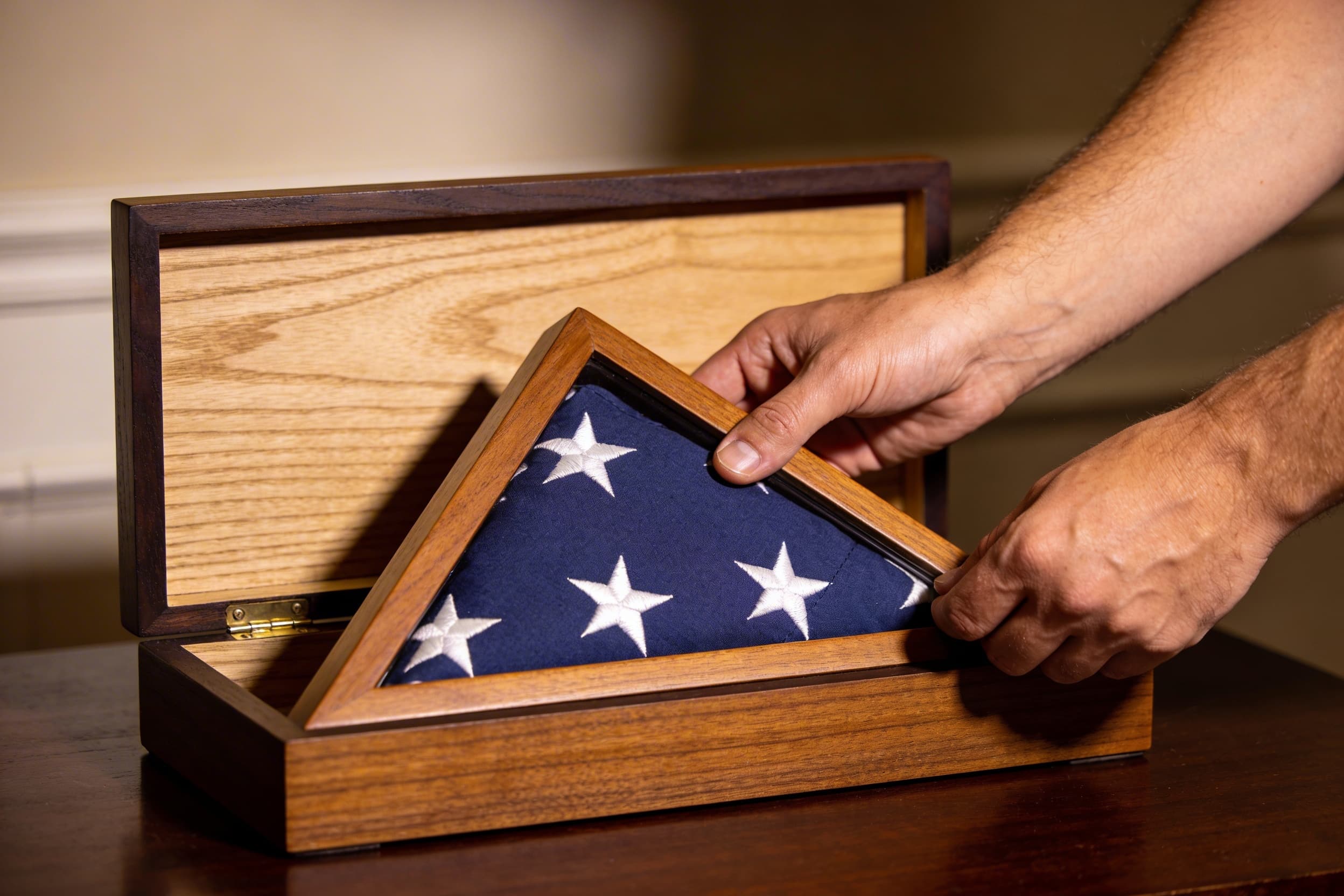
Most flag cases are rear-loading — the back panel removes with screws or rotating clips, allowing you to set the folded flag inside from behind and then reseal the back. Some models are front-loading with a hinged glass panel. Position the flag so the point of the triangle faces upward (for wall-mounted cases) or toward the viewer (for tabletop cases), with the stars visible and centered behind the glass.
Protecting the Flag Inside the Case
A flag case does more than display — it preserves.
UV Protection
Prolonged sunlight exposure fades the flag's dyes. Cases with UV-filtering glass or acrylic provide the best protection for flags displayed in sunlit rooms. If UV glass is not included with your case, placing the case on an interior wall away from windows significantly reduces fading.
Humidity and Temperature
Cotton burial flags absorb moisture. Avoid displaying the case in basements, garages, bathrooms, or other high-humidity areas where mold and mildew can develop on the fabric. Ideal conditions are the same as comfortable living spaces — between 65°F and 75°F with moderate humidity.
Dust and Insects
A properly sealed case keeps dust and fabric-eating insects like moths and carpet beetles away from the flag. Check that the back panel fits snugly and that the glass sits flush against the frame without gaps. If you notice the seal loosening over years of display, a thin strip of felt weather-stripping around the interior edge of the back panel restores the barrier.
Cleaning the Case
Clean the glass front with a standard glass cleaner and a soft lint-free cloth. For the wood frame, use a furniture polish appropriate for the wood species — an oil-based polish for walnut and mahogany, a spray polish for cherry and oak. Avoid spraying polish directly on the glass or near the flag.
Frequently Asked Questions
What size flag case do I need for a standard burial flag?
A standard U.S. military burial flag measures 5 feet by 9.5 feet (often written as 5×9.5). When folded, the triangle measures approximately 21–25 inches across the base and 11–13 inches at the peak. You need a large flag case — not the smaller size designed for 3×5 presentation flags. Check the product listing for interior dimensions and compare them to your folded flag's measurements.
Can I display medals and coins alongside the flag?
Yes. A shadow box style case includes a display compartment next to the flag area where you can arrange medals, ribbons, rank insignia, challenge coins, and other memorabilia. If you already own a triangle-only case, you can add a separate medal display rack or coin holder nearby.
Are flag display cases made in the USA?
Many flag case manufacturers are veteran-owned businesses that handcraft cases from American-sourced hardwoods. Product descriptions typically state the country of origin. American-made cases tend to use solid wood and real glass, while imported budget cases more often use MDF, veneers, and plastic glazing.
How do I keep the flag from fading over time?
Place the case away from direct sunlight, or choose a case with UV-filtering glass. Interior walls, hallways, and rooms with curtained windows are ideal display locations. Avoid displaying the case near heat sources like fireplaces and heating vents, which can dry out and yellow the fabric.
What is a flag case pedestal urn?
A pedestal urn is a wooden stand designed to sit beneath a triangle flag case. The exterior looks like a simple display pedestal, but the interior holds a standard cremation urn insert. This allows families to keep a veteran's cremated remains together with the burial flag in a single, unified memorial.
Honoring Service with the Right Display
The burial flag is the nation's final tribute to a veteran's service. Choosing a case that matches the flag's significance — solid hardwood, real glass, proper sizing, and thoughtful accessories — ensures the tribute endures for generations. Whether a simple cherry triangle case on a mantel or a walnut shadow box filled with a career's worth of honors, the right display turns a folded flag into a living piece of family history.
Browse the full collection of flag cases at Memorials.com to find the style, wood species, and size that best honors your veteran's legacy.