🏬Supersize Online Funeral Retailer🪦1000's of Headstones⚱️Over 10,000 Cremation Urns⚰️Caskets Overnight Delivery🛒Funeral & Memorial Superstore🚚FREE Shipping on ALL Orders👨👩👧👦Helping Families for over 20 Years💰Lowest Price Guarantee🏬Supersize Online Funeral Retailer🪦1000's of Headstones⚱️Over 10,000 Cremation Urns⚰️Caskets Overnight Delivery🛒Funeral & Memorial Superstore🚚FREE Shipping on ALL Orders👨👩👧👦Helping Families for over 20 Years💰Lowest Price Guarantee
🏬Supersize Online Funeral Retailer🪦1000's of Headstones⚱️Over 10,000 Cremation Urns⚰️Caskets Overnight Delivery🛒Funeral & Memorial Superstore🚚FREE Shipping on ALL Orders👨👩👧👦Helping Families for over 20 Years💰Lowest Price Guarantee🏬Supersize Online Funeral Retailer🪦1000's of Headstones⚱️Over 10,000 Cremation Urns⚰️Caskets Overnight Delivery🛒Funeral & Memorial Superstore🚚FREE Shipping on ALL Orders👨👩👧👦Helping Families for over 20 Years💰Lowest Price Guarantee
Cats hold a quiet, steady place in our lives. They greet us at the door, curl up beside us at the end of a long day, and offer a calm, constant companionship that shapes our daily routines in ways we sometimes only fully realize after they are gone. When a cat dies, planning a funeral or memorial ceremony gives your family a way to acknowledge that loss, say goodbye, and begin healing together. Our complete guide to pet memorials covers all the ways families honor a pet's memory — this article focuses specifically on planning a cat funeral ceremony from start to finish.
Deciding Between Burial and Cremation
Before planning the ceremony itself, you will need to decide how your cat's remains will be handled. The two main options are burial and cremation, and your choice will influence the timing, location, and structure of your memorial service.
Home burial is a common choice for cats because of their smaller size. Many families bury their cat in a favorite spot in the yard — beneath a window the cat loved, near a garden, or under a tree. Check your local ordinances before proceeding, as regulations on burial depth and location vary by city and county. Our guide on how to bury a dog covers the process in detail and applies equally to cats — the legal requirements, depth guidelines, and site preparation steps are the same regardless of species.
A pet casket provides a dignified resting place and protects the burial site from settling. For cats, a small cultured or biodegradable casket is typically the right size. If you plan to mark the site, a pet grave marker or memorial stone allows you to create a permanent tribute you can visit.
Cremation
Cremation is the most popular option for cats in the United States. Private cremation returns your cat's ashes to you, typically within one to two weeks. Communal cremation is less expensive but ashes are not returned. Most veterinary offices can coordinate cremation through a local pet cremation service, or you can arrange it directly. For a detailed pricing breakdown, see our guide on how much pet cremation costs.
After receiving your cat's ashes, many families keep them in a pet urn — cat urns include ceramic figurines, wooden boxes, and hand-painted designs created specifically for feline companions. Others choose to wear a small portion of ashes in pet cremation jewelry or scatter ashes in a meaningful location. For all the options, see our guide on what to do with pet ashes.
Choosing a Location for the Ceremony
A cat memorial service can be held almost anywhere that feels meaningful to your family. There is no requirement for a formal setting — many cat funerals take place in the backyard, a living room, or even a quiet corner of a park.
At home is the most common choice. You can hold the ceremony indoors or outdoors. An indoor service works well in cold or rainy weather and allows you to set up a memorial table with photos, candles, and your cat's favorite items. An outdoor ceremony in the garden or yard is especially fitting if your cat spent time outdoors or if you are combining the ceremony with a backyard burial.
At a pet cemetery is appropriate if you have chosen cemetery burial. Many pet cemeteries offer ceremony spaces and can assist with the service. Some also allow you to hold a graveside ceremony similar to a traditional human funeral.
A meaningful outdoor location such as a park, trail, or waterfront can work for an ash scattering ceremony. If you plan to scatter ashes, check local regulations first — rules vary by location.
Planning the Ceremony
There is no single right way to hold a cat funeral. Some families prefer a brief, quiet moment alone. Others invite friends and family for a more structured service. Either approach is valid — the ceremony should reflect your relationship with your cat and what feels right for your family.
Setting the Tone
Decide whether you want a solemn, reflective service or a celebration of your cat's life. A celebration of life focuses on happy memories, funny stories, and the joy your cat brought to your household. A more traditional service may include readings, prayers, and quiet reflection. Many families blend both approaches — starting with shared memories and laughter, then shifting to a quieter farewell.
Ceremony Elements to Consider
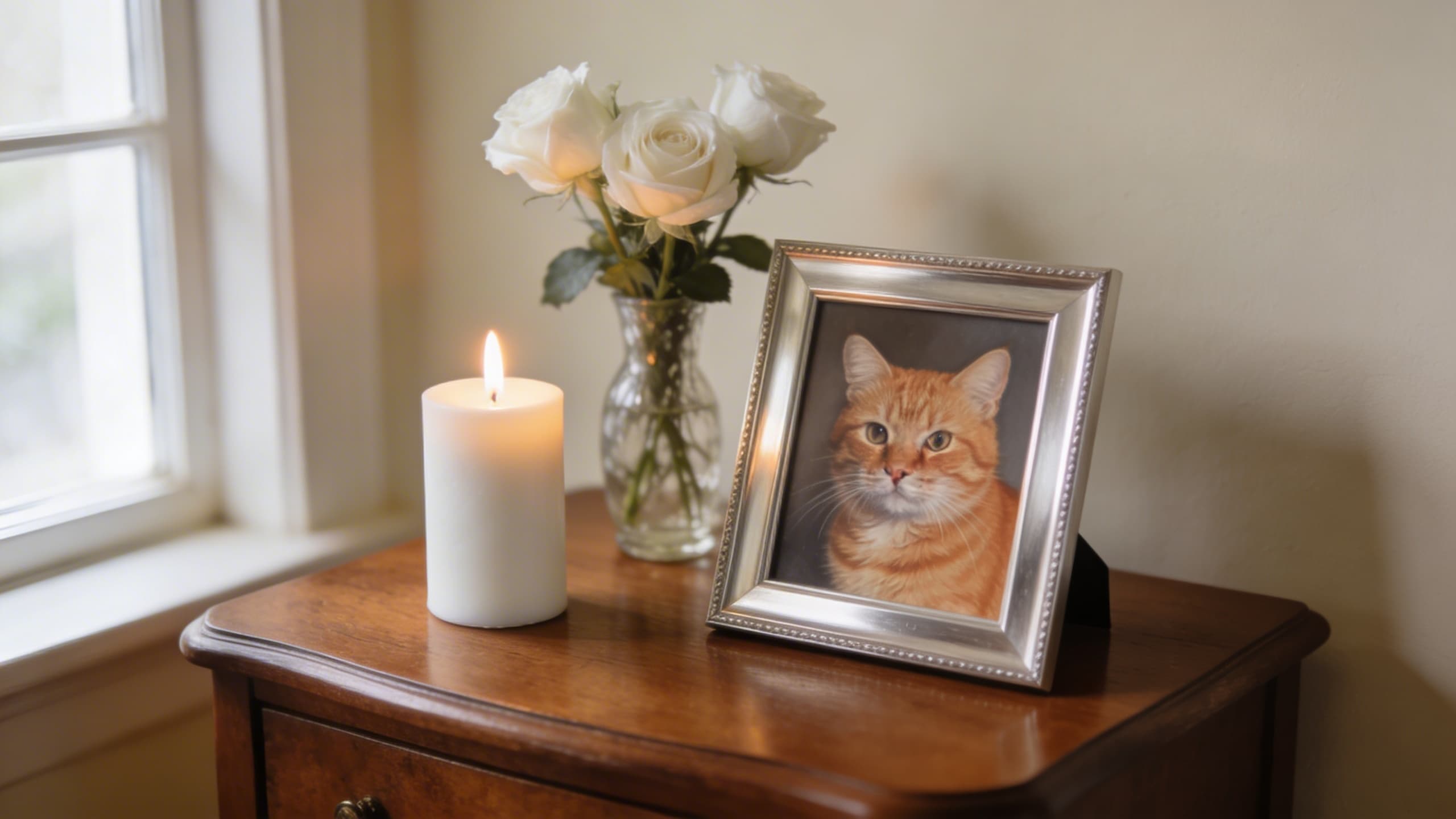
Candle lighting. Lighting a candle at the beginning of the ceremony creates a focal point and sets a reflective atmosphere. Some families light one candle together as a group; others invite each person to light their own candle while sharing a memory.
Photographs and slideshow. Gathering favorite photos of your cat and displaying them on a memorial table — or assembling a slideshow — gives everyone a chance to see the moments that made your cat special. If you have video clips, those can be even more powerful.
Readings and poems. A short reading or poem can give structure to the ceremony and offer comfort. Popular choices include "The Rainbow Bridge," "If It Should Be" by Ben Jonson, or any passage that resonates with your family. Children can participate by reading a short poem or a letter they wrote to the cat.
Sharing memories. Invite each person present to share a favorite memory or story about the cat. This is often the most meaningful part of the ceremony — hearing how your cat touched other people's lives can bring comfort and even laughter during a difficult time.
Music. Playing a favorite song quietly in the background can add warmth to the service. Choose something calm and meaningful rather than somber — the goal is to create an atmosphere of remembrance, not heaviness.
A final goodbye. If you are holding the ceremony before burial, you may choose to have a brief viewing where family members can see the cat one last time. If cremation has already occurred, placing the urn at the center of the ceremony space serves as a focal point for the goodbye.
What to Say at a Cat Funeral
If you are leading the ceremony and are unsure what to say, start with something simple and honest. You might begin by acknowledging why you are gathered — to honor your cat's life and say goodbye. Share what your cat meant to you: their personality, their habits, the way they made your home feel. Talk about the small things — the way they curled up in the same spot every evening, the sound of their purr, the morning routine you shared. These specific details often resonate more deeply than grand statements.
You do not need to write a formal eulogy or be eloquent. Speaking from the heart is enough. If words are difficult in the moment, a pre-written note or a reading chosen in advance can take the pressure off. You can also simply invite others to speak and let their stories carry the ceremony.
If you had to make the decision to euthanize your cat, it is common to feel guilt alongside grief. Acknowledging this during the ceremony — that the decision was an act of love made to prevent suffering — can be a powerful step toward healing for everyone present.
Including Children and Other Pets
Children
For many children, a cat's death is one of their first experiences with loss. Including them in the memorial process helps them understand what has happened and gives them a way to participate rather than feeling excluded. Let children contribute in a way that is age-appropriate — younger children might draw a picture of the cat or place a flower on the burial site, while older children might write a letter or share a memory aloud. Be honest about what has happened. Avoid phrases like "went to sleep" that can create confusion or anxiety. For more guidance, see our article on how to help a child deal with a pet's death.
Other Pets
If you have other cats or dogs in the household, they may notice the absence and show signs of confusion or distress. Some families allow surviving pets to be present during the ceremony or to briefly investigate the deceased cat's body before burial or cremation, which can help them understand the loss. Maintaining their normal routine — feeding times, play, and attention — will help them adjust over the following weeks.
Creating a Lasting Memorial
The ceremony is one part of honoring your cat's memory. Many families also create a lasting tribute that keeps the connection alive in daily life.
A pet keepsake — such as a paw print impression, a memorial ornament, or a photo frame — can serve as a daily reminder of the bond you shared. For outdoor tributes, our pet memorials collection includes garden stones, memorial benches, and planted tributes. For more ideas, see our article on cat memorial ideas which covers everything from garden memorials to commissioned portraits.
If you chose cremation and are keeping the urn at home, our guide on how to display a pet urn at home offers placement ideas and etiquette — including creating a small memorial shelf with your cat's photo, collar, and a candle.
Coping After the Ceremony
A cat memorial service offers a sense of closure, but grief does not end when the ceremony does. It is normal to feel waves of sadness in the days and weeks that follow — especially during moments that were part of your routine with your cat, like feeding time, bedtime, or coming home to an empty house.
Give yourself permission to grieve without a timeline. Talk to friends or family who understand the bond you had with your cat. If someone you know has lost a cat, a pet sympathy card is a simple, thoughtful way to acknowledge their loss. If grief becomes overwhelming or does not ease over time, consider reaching out to a pet loss support group or a counselor who specializes in grief. The Association for Pet Loss and Bereavement offers free support resources.
Getting another cat is a personal decision with no right timeline. Some families find comfort in adopting again relatively soon. Others need months or longer before they are ready. A new cat does not replace the one you lost — they bring their own personality and their own relationship into your life.
Frequently Asked Questions
Is it normal to have a funeral for a cat?
It is increasingly common and entirely appropriate. Cats are members of the family, and a funeral or memorial ceremony provides the same closure and emotional support that a human funeral does. There is no minimum level of formality required — even a quiet moment of reflection counts.
How much does a cat funeral cost?
Costs vary widely depending on your choices. A simple backyard ceremony with a biodegradable casket can cost under $100. Pet cemetery burial typically ranges from $200 to $1,000 or more depending on the plot, marker, and services. Cremation typically costs $30 to $150 for a cat, depending on whether you choose private or communal cremation.
Can I hold a cat memorial service after cremation?
Absolutely. Many families hold the ceremony after receiving the ashes, using the urn as a focal point for the service. This also gives you more time to plan the ceremony and invite people who want to attend. There is no rule that a memorial must happen immediately.
What can children do at a cat funeral?
Children can draw a picture, write a letter, choose a flower to place at the burial site, share a favorite memory, light a candle, or help select the urn or memorial stone. Including children gives them a sense of participation and helps them process the loss.
Should I let my other cats see the deceased cat?
Many veterinarians and animal behaviorists recommend allowing surviving cats to briefly investigate the body. This can help them understand the absence rather than spending days searching for the missing companion. Keep the interaction brief and supervised.