🏬Supersize Online Funeral Retailer🪦1000's of Headstones⚱️Over 10,000 Cremation Urns⚰️Caskets Overnight Delivery🛒Funeral & Memorial Superstore🚚FREE Shipping on ALL Orders👨👩👧👦Helping Families for over 20 Years💰Lowest Price Guarantee🏬Supersize Online Funeral Retailer🪦1000's of Headstones⚱️Over 10,000 Cremation Urns⚰️Caskets Overnight Delivery🛒Funeral & Memorial Superstore🚚FREE Shipping on ALL Orders👨👩👧👦Helping Families for over 20 Years💰Lowest Price Guarantee
🏬Supersize Online Funeral Retailer🪦1000's of Headstones⚱️Over 10,000 Cremation Urns⚰️Caskets Overnight Delivery🛒Funeral & Memorial Superstore🚚FREE Shipping on ALL Orders👨👩👧👦Helping Families for over 20 Years💰Lowest Price Guarantee🏬Supersize Online Funeral Retailer🪦1000's of Headstones⚱️Over 10,000 Cremation Urns⚰️Caskets Overnight Delivery🛒Funeral & Memorial Superstore🚚FREE Shipping on ALL Orders👨👩👧👦Helping Families for over 20 Years💰Lowest Price Guarantee
Losing a pet leaves a quiet space in every routine — the empty spot by the door, the leash you no longer reach for, the silence where a greeting used to be. Pet cremation jewelry offers a way to carry your companion's presence with you after they're gone, holding a tiny amount of cremated remains or fur in a wearable piece that stays close throughout your day.
This guide covers everything you need to know before purchasing: how pet cremation jewelry works, the different types available, how to choose between materials and styles, how to fill and seal a piece at home, and what to expect on pricing. Whether you're exploring options alongside other pet memorials or looking specifically for a meaningful keepsake, this page walks you through the practical details so you can make a confident decision during a difficult time.
What Is Pet Cremation Jewelry and How Does It Work?
Pet cremation jewelry is a category of memorial jewelry designed to hold a small portion of your pet's cremated remains, a lock of fur, or another meaningful token. Each piece contains either a concealed compartment or incorporates ashes directly into the material itself, creating a discreet and personal way to keep your companion near.
There are two main approaches to how ashes become part of jewelry. The first — and most common — uses a small internal chamber sealed by a threaded screw or snap closure. You place a symbolic amount of cremated remains (roughly an eighth of a teaspoon) inside the compartment, secure it, and the piece looks like any other pendant, bracelet, or ring from the outside. Nobody sees what's inside unless you choose to share that.
The second approach involves pet ashes infused into jewelry materials like blown glass, resin, or lab-created stone. In this process, ashes are mixed into molten glass or resin during crafting, creating a visible swirl or color pattern that becomes a permanent part of the piece. These items don't have a compartment to open — the remains are sealed within the material itself.
Both methods are safe and durable for everyday wear when crafted from quality materials. The choice between them comes down to personal preference: compartment jewelry keeps the ashes private and contained, while infused pieces turn them into something visually artistic.
Types of Pet Cremation Jewelry
Pet cremation jewelry comes in a wide range of styles, each suited to different preferences and lifestyles. Here's what's available and how each type works in practice.
Necklaces and Pendants
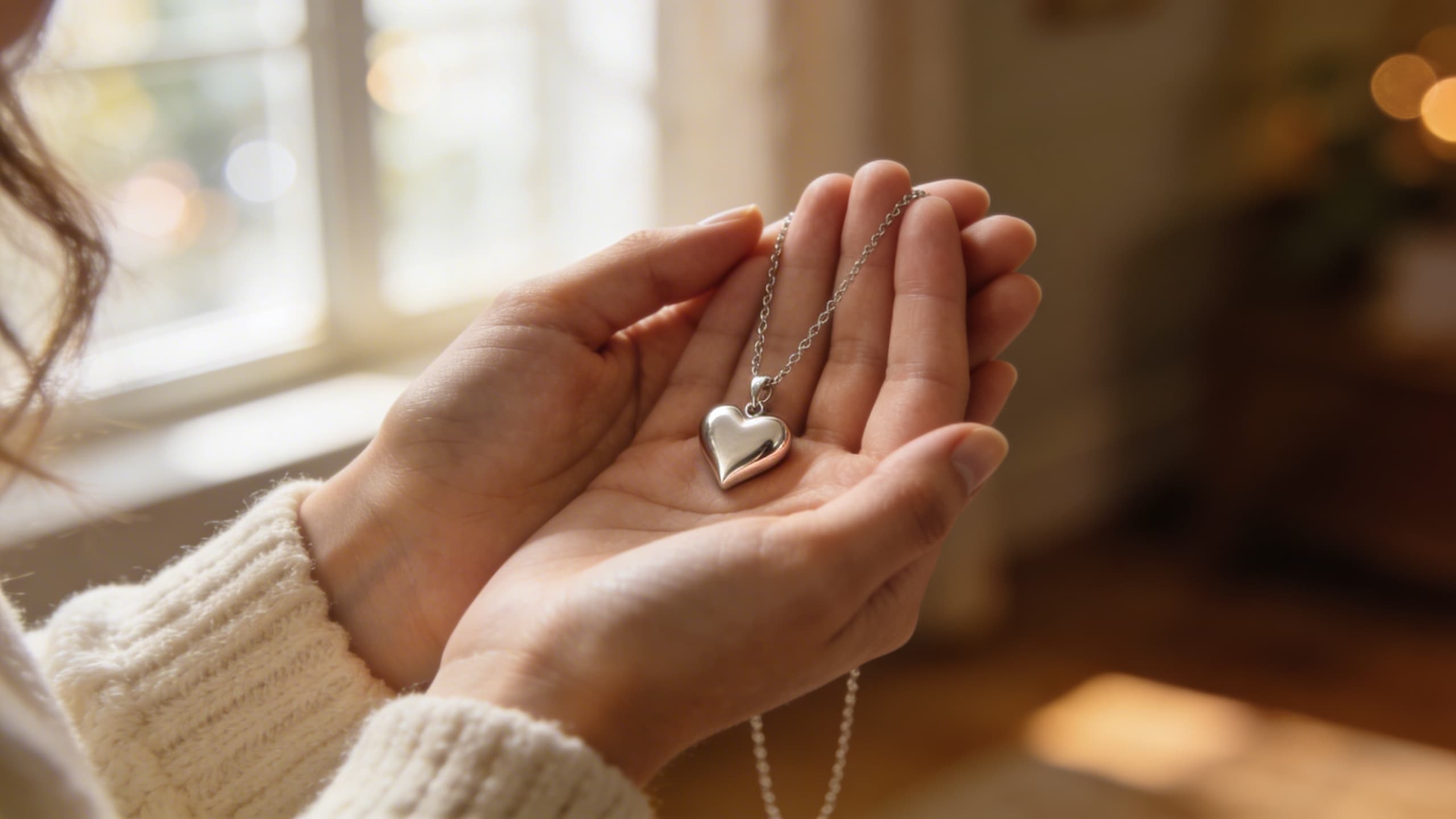
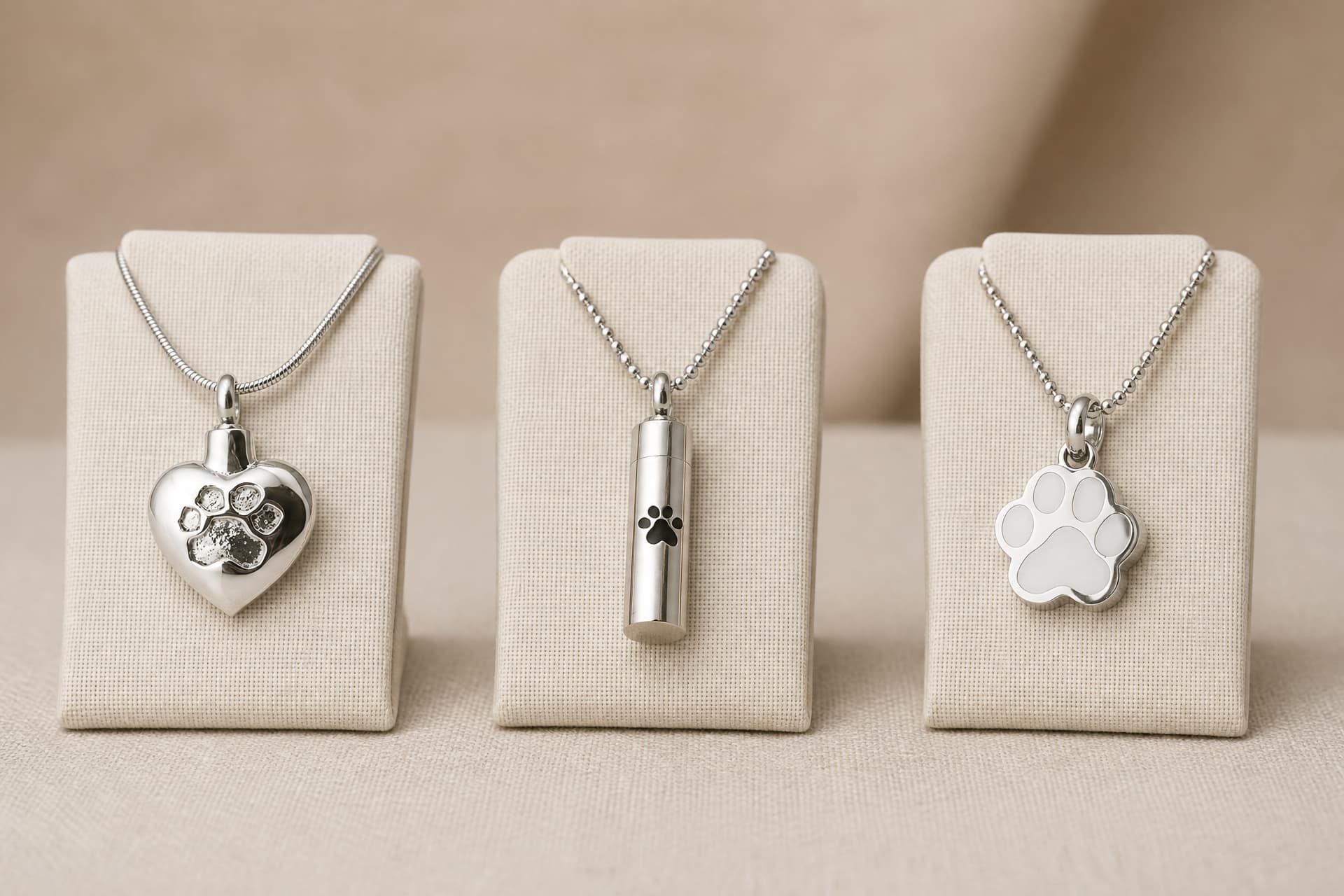
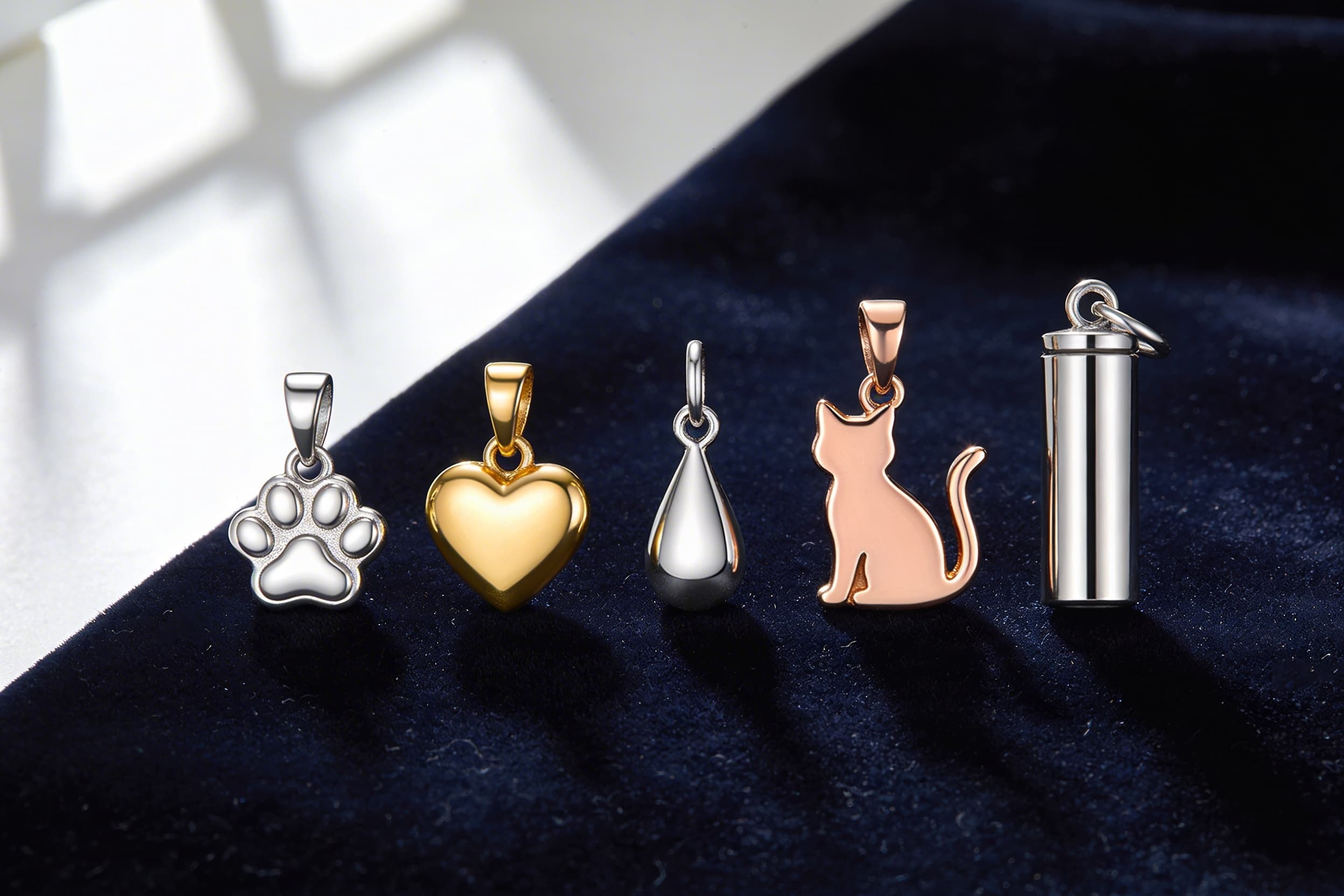
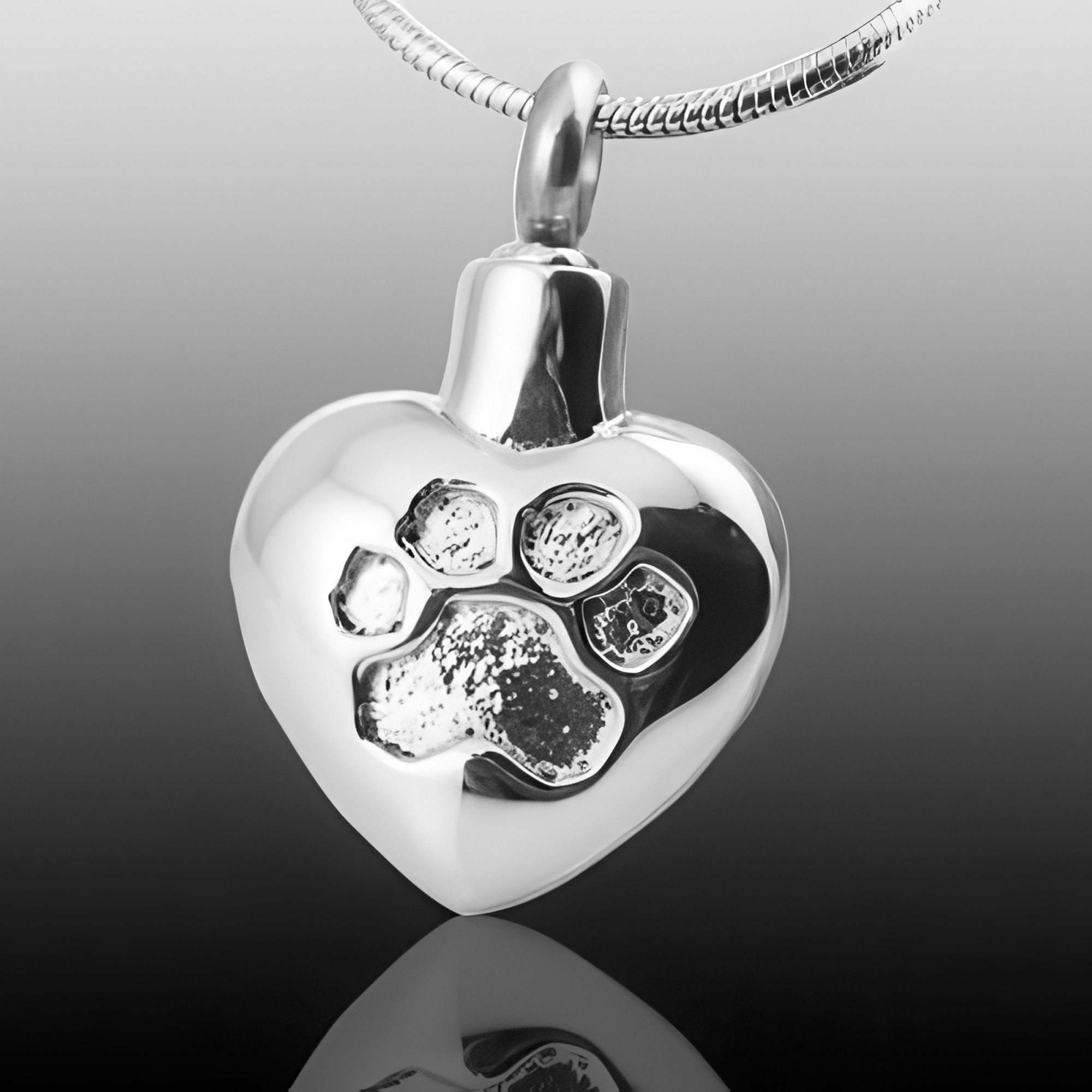
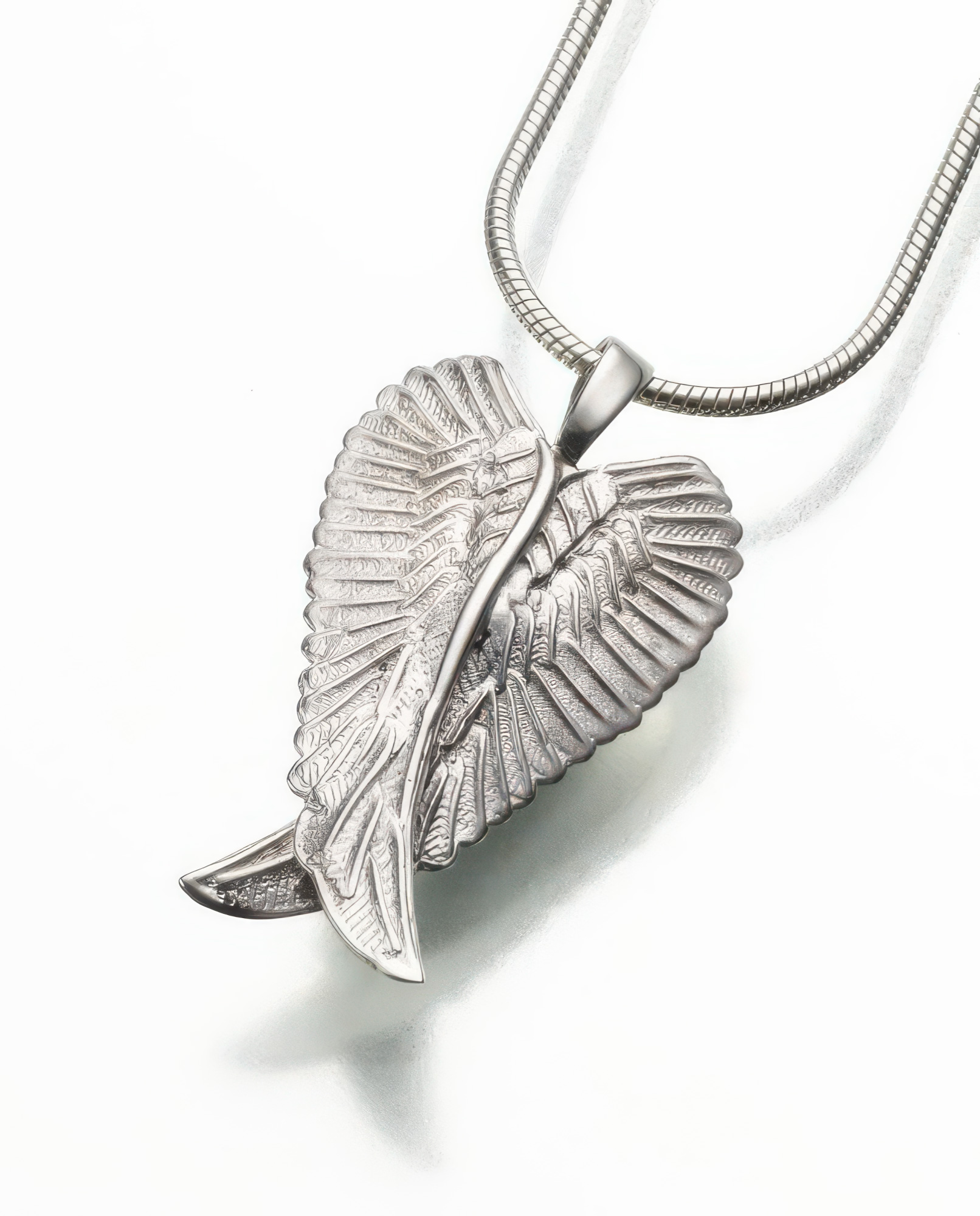
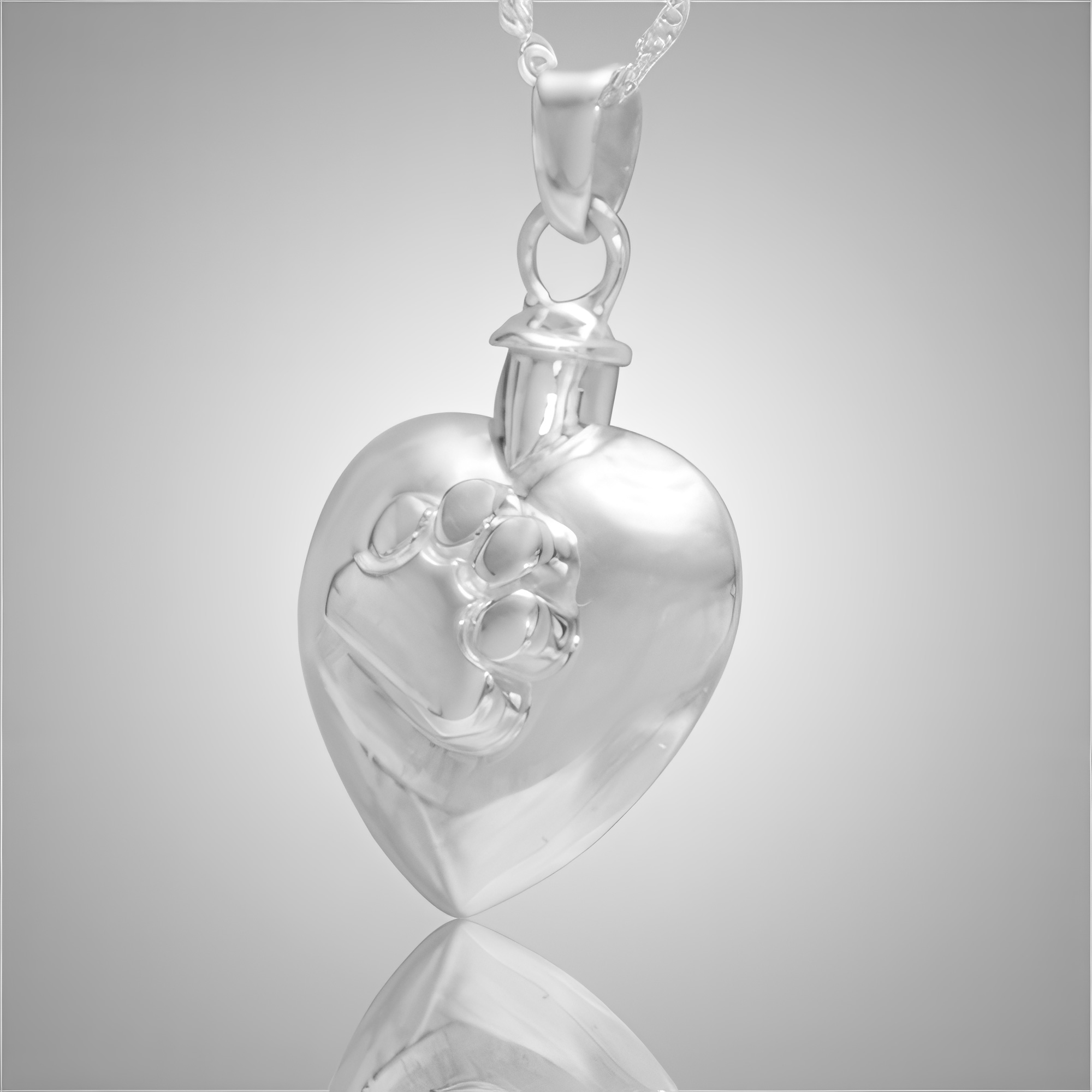
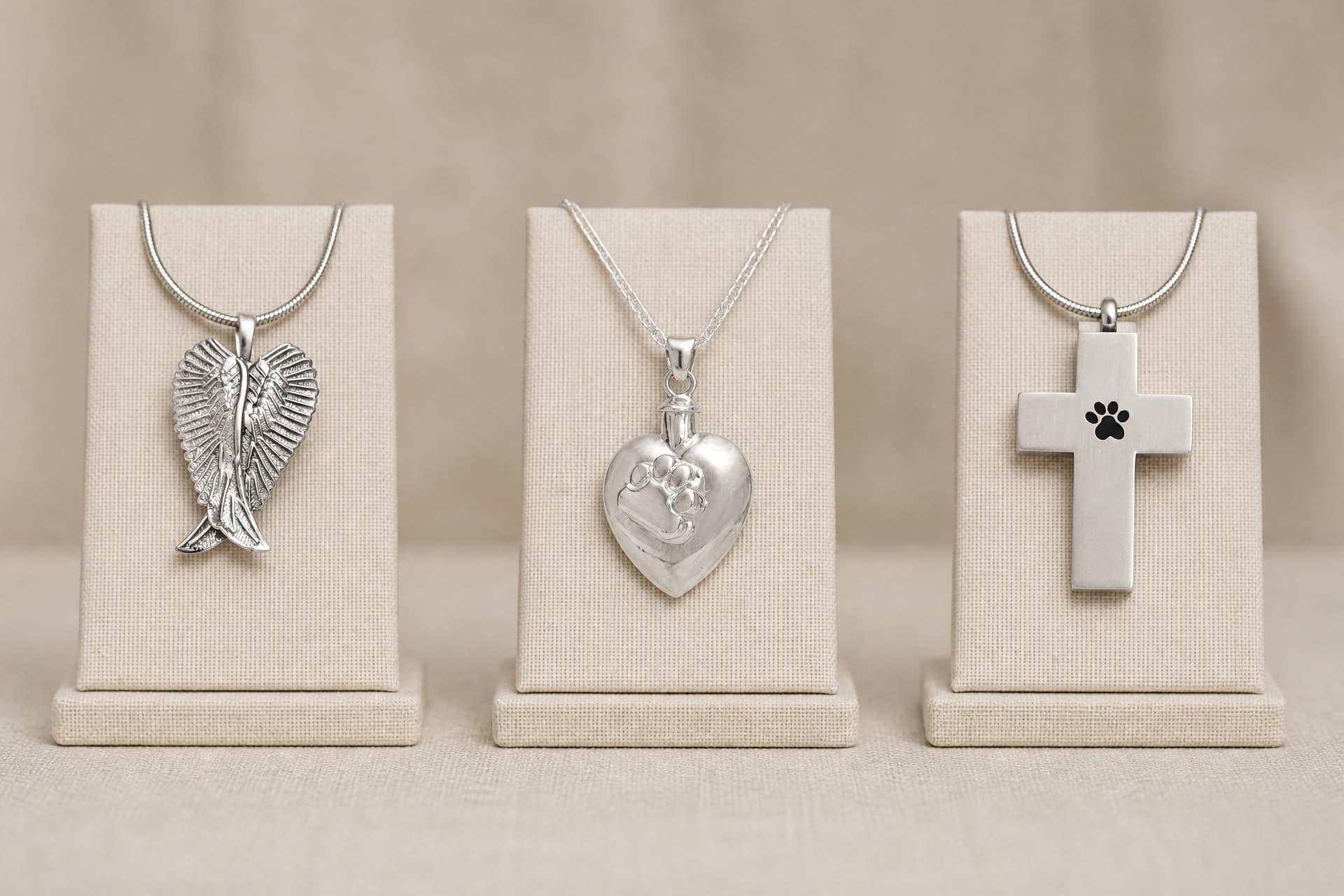
Necklaces are the most popular form of pet cremation jewelry, and for good reason — a pendant rests close to your heart, stays protected under clothing, and is the easiest style to fill at home. You can set a pendant upright on a tray, work in good light, and tighten the closure without fighting gravity. Pet ashes necklaces come in shapes ranging from hearts and teardrops to paw prints and pet silhouettes, in materials including stainless steel, sterling silver, and gold. If you have a dog, dog cremation jewelry includes breed-specific silhouettes and bone-shaped pendants. For cat owners, cat cremation jewelry features feline silhouettes, whisker motifs, and delicate designs sized for lighter chains.
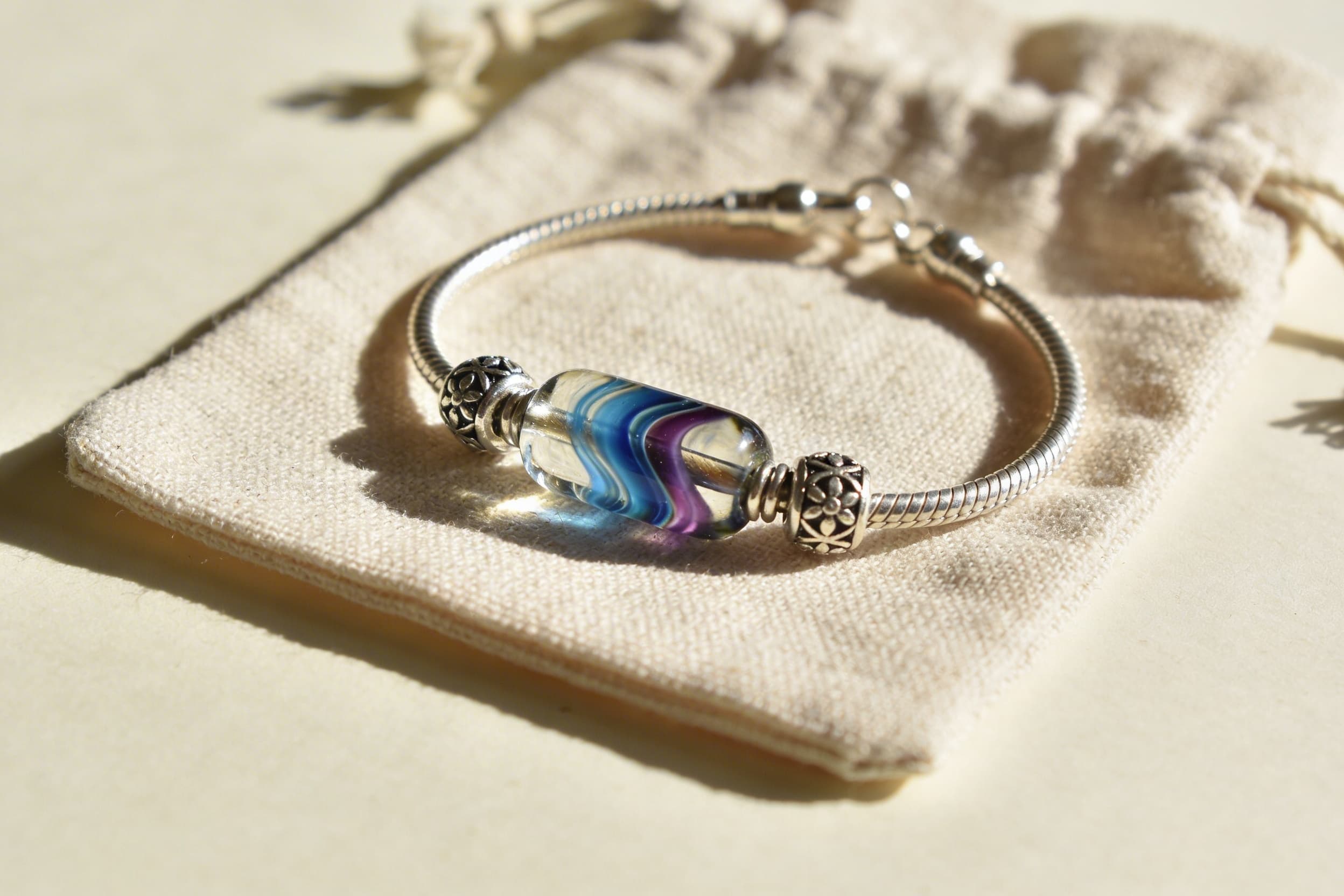
Glass beads suspend a small amount of ashes in coloured glass, so the memorial is visible rather than sealed out of sight.
Bracelets and Beads
A pet cremation bracelet places the memorial on your wrist, where you can see and touch it throughout the day. Some bracelets use a single charm or bead that holds the ashes, while others feature a concealed chamber built into the clasp or a decorative centerpiece. Bead-style bracelets allow you to add a cremation bead alongside decorative charms, making the memorial piece part of a larger, personalized bracelet. Bracelets do see more wear than necklaces — they bump against desks, sinks, and doorframes — so choosing a durable material like stainless steel or titanium matters more here.
Keychains and Keepsakes
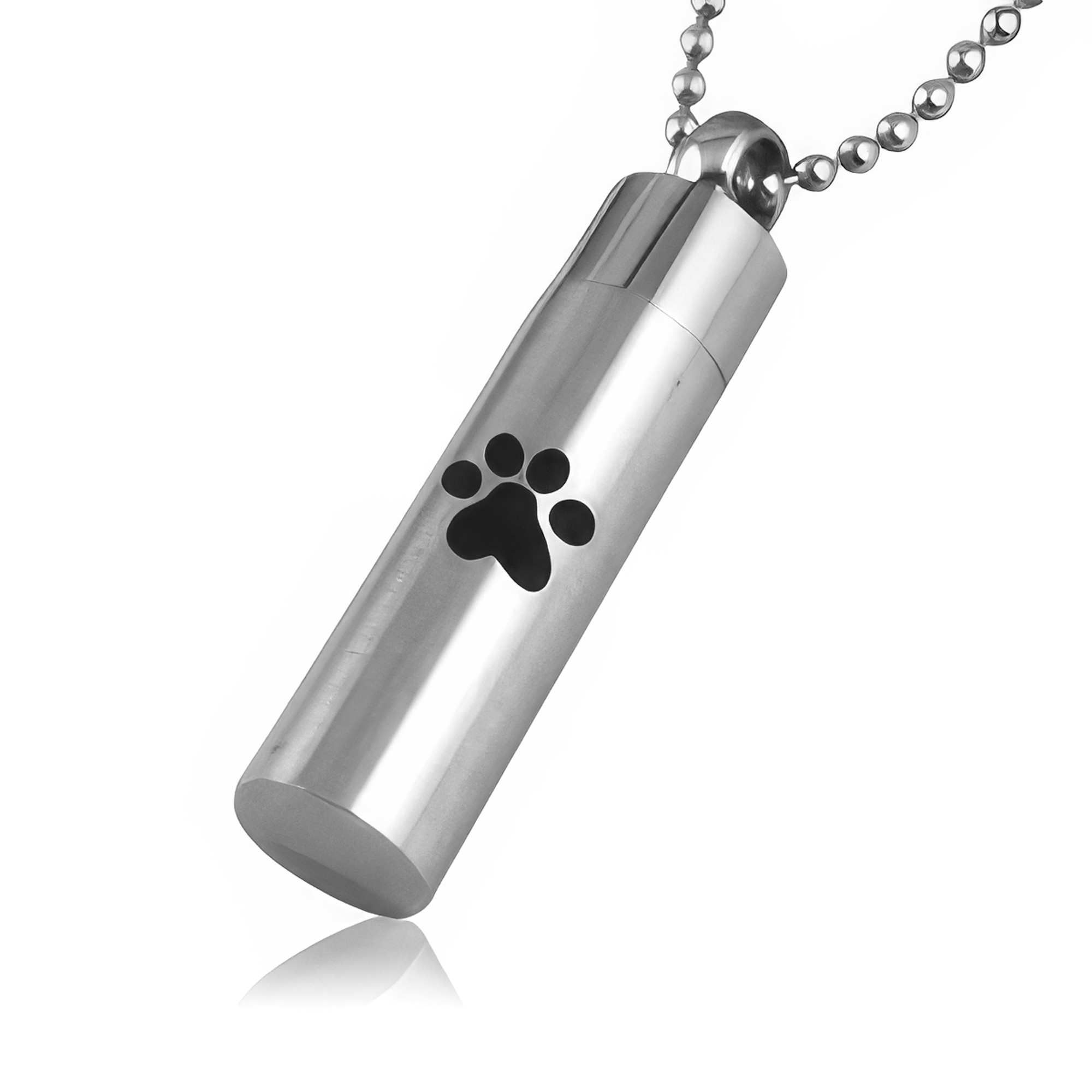
Not everyone wants to wear jewelry, and pet cremation keychains offer a practical alternative. These small keepsakes attach to your keys, bag, or even a pet's collar as a memorial tribute. Keychains use the same threaded-screw compartment found in pendants and are just as secure. They're a thoughtful option for family members who prefer something they carry rather than wear, or for children who want a tangible connection to a pet they've lost.
Paw Print and Custom Designs
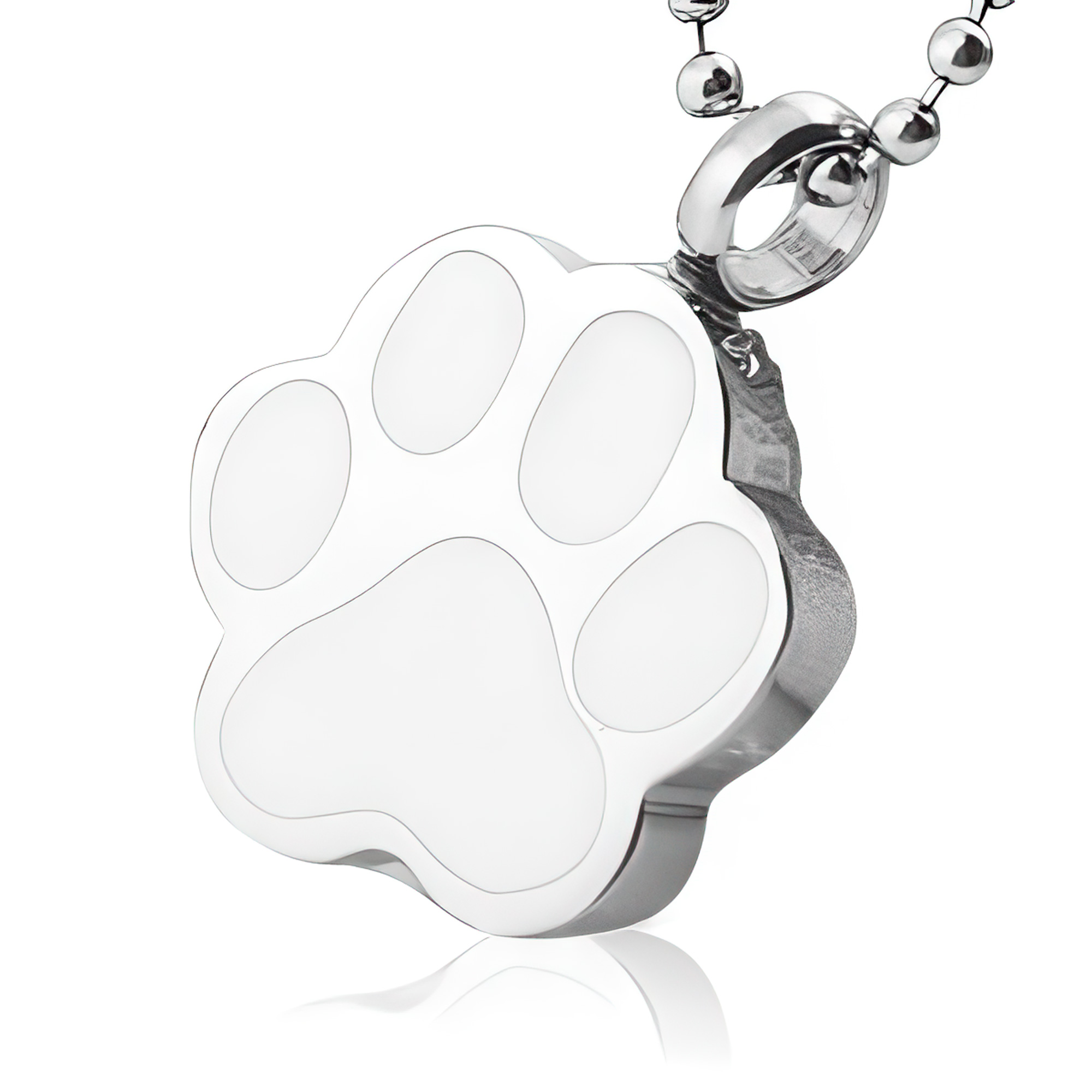
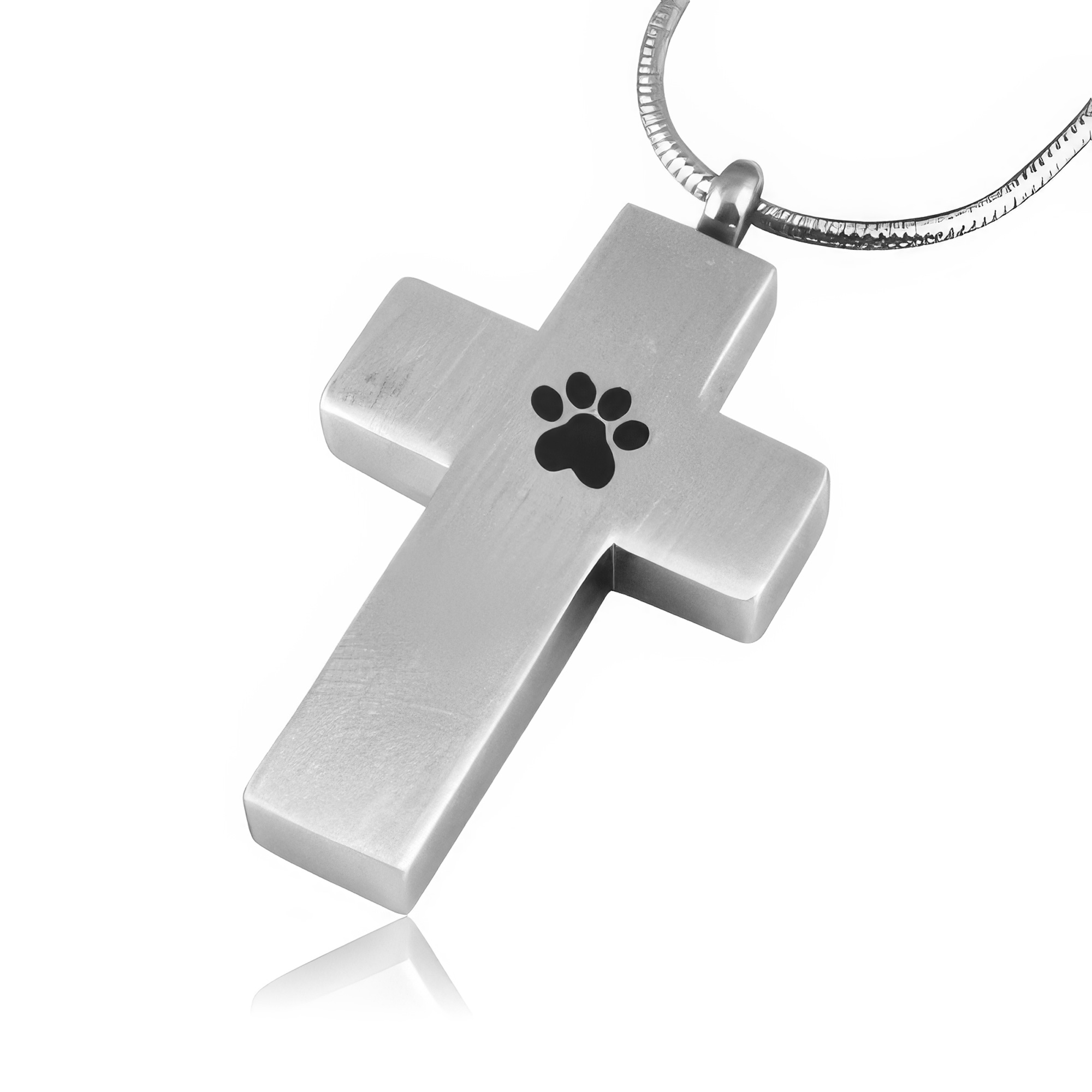
Pet paw print jewelry captures one of the most recognizable symbols of the bond between pet and owner. Some pieces use a standard paw print motif, while others can incorporate an actual impression of your pet's paw or nose print — either engraved or cast into the metal. These designs work across necklaces, bracelets, and rings, adding a layer of personalization that makes each piece one-of-a-kind.
Glass and Resin Memorial Pieces
For families drawn to the artistry of visible memorials, glass pet cremation jewelry blends your pet's ashes into hand-blown glass or resin. The result is a colorful, swirled bead or pendant where the remains are permanently fused into the material. These pieces tend to be larger and more visually striking than compartment jewelry, and each one is unique because of how the ashes interact with the glass during the crafting process. Glass and resin pieces are not fillable at home — you send ashes to the artisan, who creates the piece and ships it back, typically within four to six weeks.
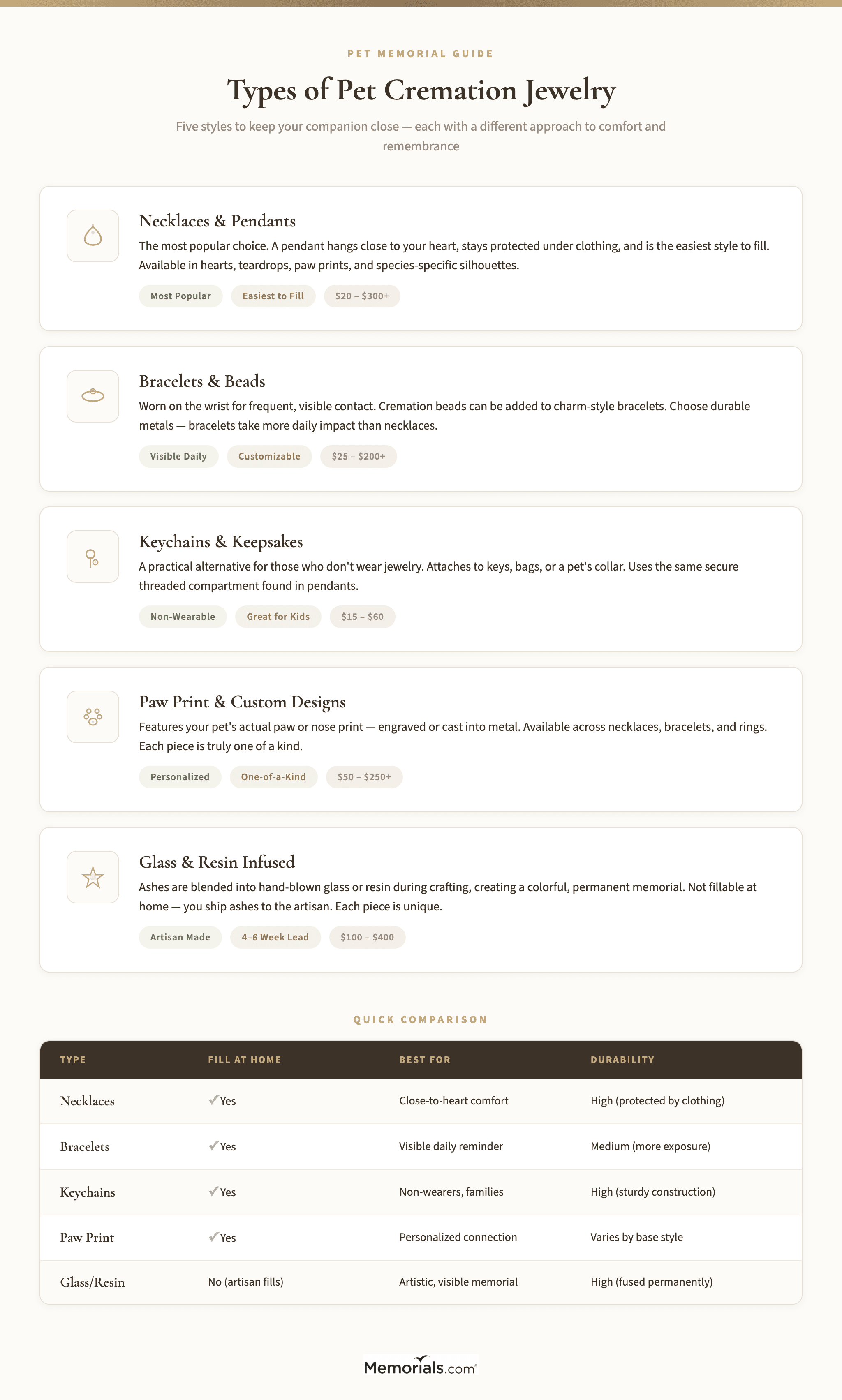
The five main types of pet cremation jewelry compared: necklaces, bracelets, keychains, paw print pieces, and glass or resin infused designs.
Selecting pet cremation jewelry involves balancing emotion with practicality. A few key factors help narrow the decision.
Material and Durability
The most common materials for pet cremation jewelry are stainless steel, sterling silver, and gold (or gold-plated). Stainless steel is the most durable and affordable option for daily wear — it resists tarnishing, holds up well against moisture, and rarely triggers skin sensitivities. Sterling silver offers a more refined look but needs occasional polishing and can tarnish if exposed to chemicals or humidity. Gold and gold vermeil are the premium choice, matching well with existing fine jewelry, though they come at a higher price point. If you have sensitive skin, look for pieces that clearly state the metal composition and avoid anything with vague material descriptions.
Style and Species
Consider whether you want a species-specific design. Dog owners might prefer a bone-shaped pendant or a breed silhouette, while cat owners may lean toward feline profiles or whisker details. Universal designs like hearts, teardrops, and angel wings work for any pet, including birds, rabbits, and horses. Think about whether you want the piece to be obviously memorial-themed or subtle enough to look like everyday jewelry — both approaches are equally valid, and the right answer is whichever one you'll reach for most often.
Compartment Size
Most pet cremation jewelry holds a symbolic amount — roughly a pinch, or about one-eighth of a teaspoon. That means the vast majority of your pet's cremated remains will stay in a primary urn or container. Many families pair jewelry with pet urns as the main memorial, using the jewelry as a personal, portable complement. If multiple family members each want a piece, there is more than enough to go around, especially for medium and larger pets.
Closure Type
Pay attention to how the compartment seals. Threaded screw closures are the most secure and common — they twist shut and can be sealed with a small drop of adhesive for permanent security. Snap-fit and bayonet-style closures are less common and generally less secure for long-term daily wear. Before purchasing, confirm that the listing specifies the closure type and whether a filling kit is included.
Pendants are the most common format because the chamber seals discreetly behind the design.
How to Fill and Seal Pet Cremation Jewelry
Filling pet cremation jewelry is more emotional than technical, so setting yourself up for a calm, controlled experience makes a real difference. Here's a step-by-step approach.
Prepare Your Workspace
Choose a well-lit, stable surface — a kitchen table or desk works well. Lay down a clean sheet of white paper or a small tray to catch any stray grains. Gather your tools before opening anything: the jewelry piece, a small funnel (most pieces ship with a filling kit that includes one), a toothpick or the tiny tool provided, and a clean cloth.
Portion First
Do not pour directly from the main urn or container into the jewelry. Instead, spoon or tap a small amount — roughly a pinch — onto the paper or into a small dish. This step matters both practically and emotionally. Working with a pre-measured portion means you're not holding the full container of remains over a tiny opening, which reduces the risk of spills and makes the task feel more manageable.
Fill the Compartment
Unscrew or open the closure over your tray. Use the funnel or a folded crease of paper to guide the cremated remains into the chamber. Let gravity do the work — don't force or pack the ashes in. If your piece also holds fur or a small memento, place that first and add ashes around it. Once filled, use a clean cloth to gently wipe any residue from the threads or rim of the opening.
Seal the Piece
Thread the screw back in gently, taking care not to cross-thread. For a permanent seal, apply one to two tiny drops of clear epoxy or jewelry adhesive to the screw threads before tightening. This prevents the closure from loosening over time, especially on pieces you'll wear daily. Allow the adhesive to cure fully (usually 24 hours) before wearing.
If the idea of filling the jewelry yourself feels overwhelming, that's completely understandable. A trusted family member, friend, or your pet's cremation provider can help with the process. There's no wrong way to approach this — what to do with pet ashes is a deeply personal decision, and taking your time is always the right call.
Caring for Pet Cremation Jewelry
Proper care keeps your memorial piece looking its best and ensures the compartment stays secure over the years.
Daily Wear Guidelines
Most pet cremation jewelry is designed for everyday use, but a few precautions help it last. Remove the piece before swimming in chlorinated pools or salt water, before applying lotions or perfumes, and before using household cleaning chemicals. These substances can degrade metal finishes over time, particularly on sterling silver and gold-plated pieces. Stainless steel is the most resistant to chemical exposure, but it's still good practice to keep any memorial jewelry away from harsh environments.
Cleaning
Use a soft, dry, lint-free cloth to gently polish the surface of your pendant, bracelet, or keychain. Avoid ultrasonic cleaners, abrasive polishing compounds, and steam cleaning — all of which can compromise the seal or finish. For sterling silver pieces that develop tarnish, a silver polishing cloth designed for delicate jewelry works well. Never submerge the piece in liquid cleaning solutions, as moisture near the compartment seal can cause problems over time.
Storage
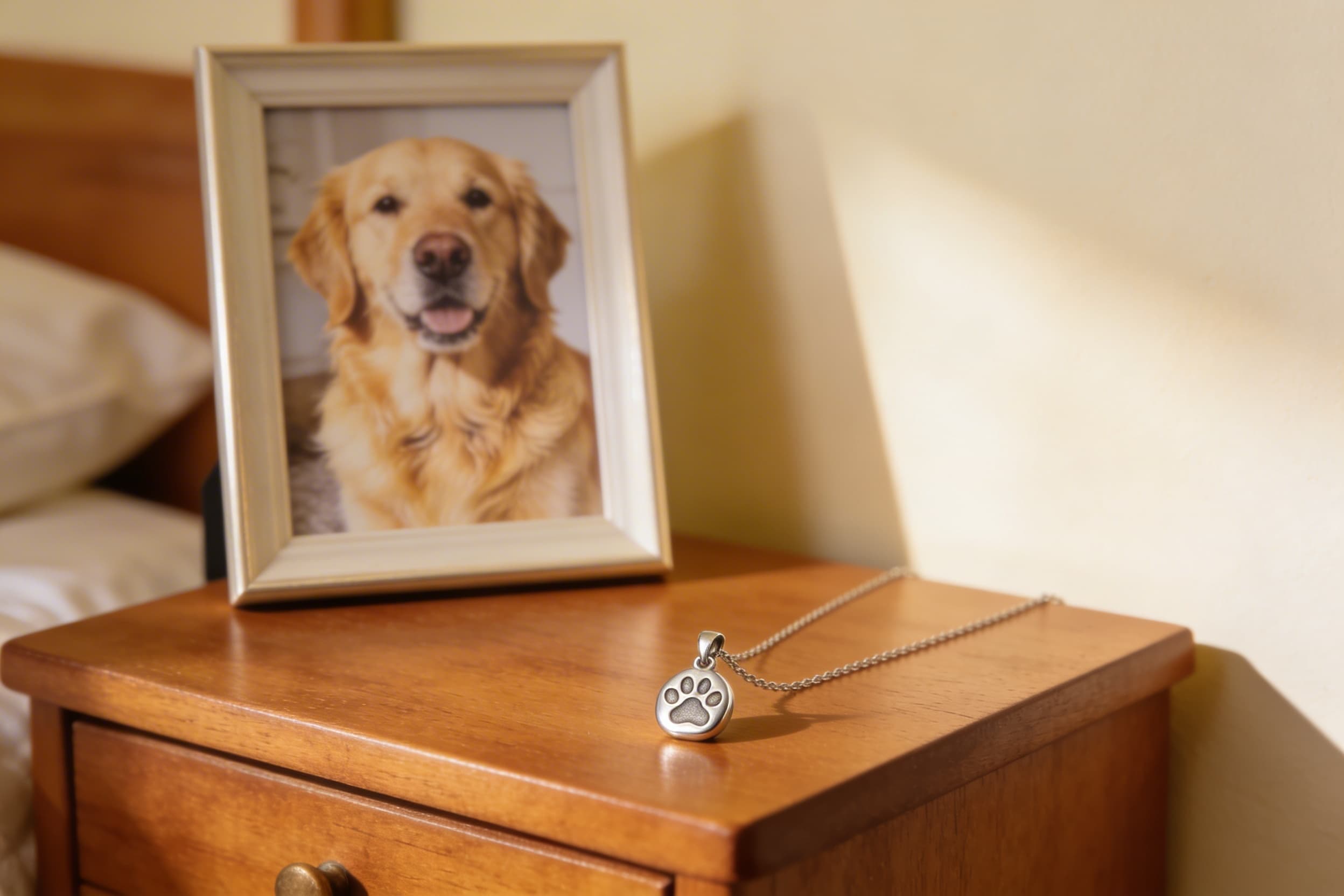
When you're not wearing the piece, store it in a soft pouch or lined jewelry box away from direct sunlight and humidity. Some families display their pet cremation jewelry in a small glass case or alongside a framed photo of their pet — a quiet, meaningful arrangement that honors the bond you shared. If you're looking for creative ways to remember your pet, combining wearable jewelry with a home display creates a memorial that feels both personal and present.
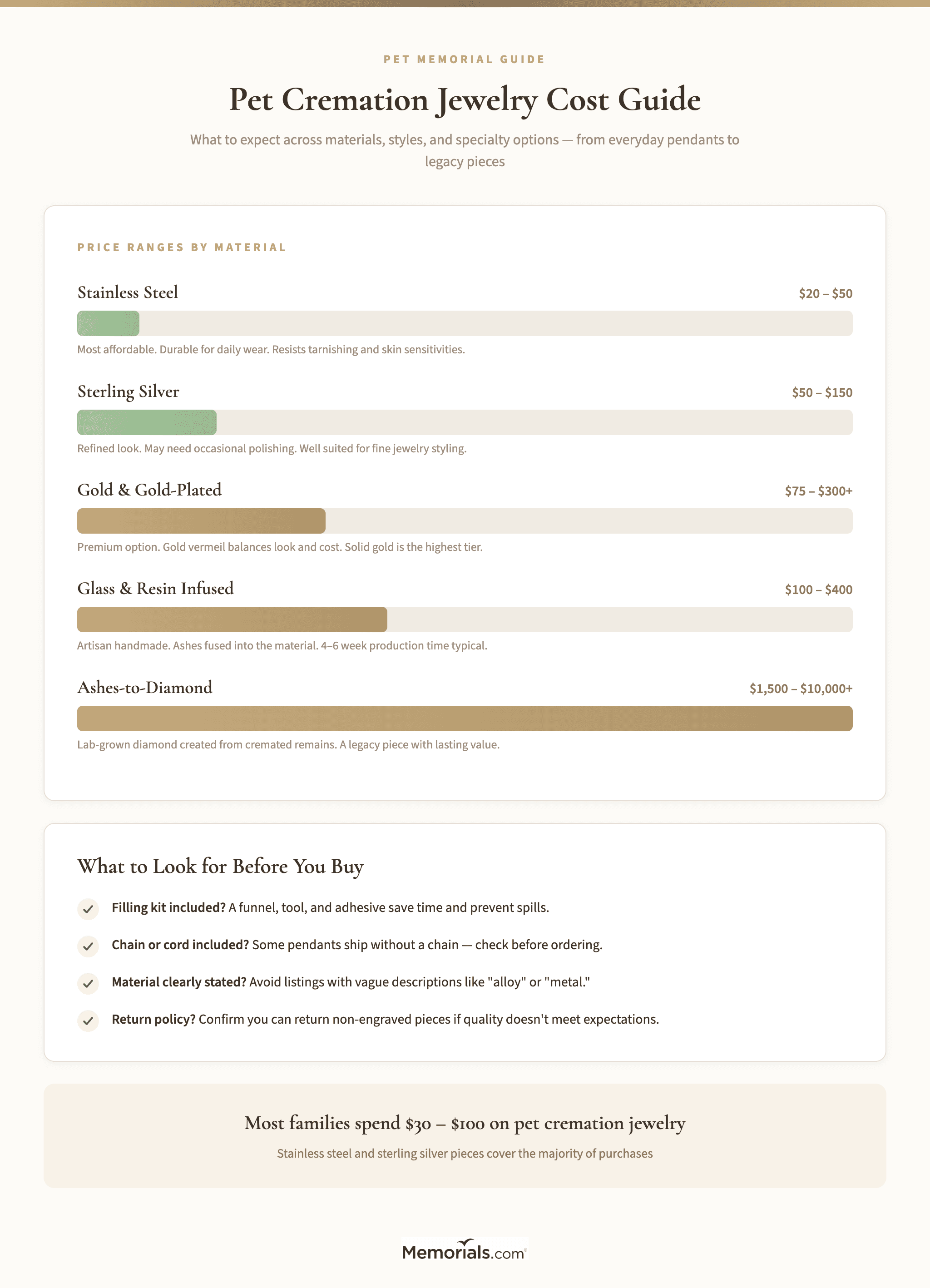
Pet cremation jewelry spans a wide price range depending on the material, craftsmanship, and type of piece. Here's a general breakdown of what to expect.
Stainless steel pendants and keychains typically start around $20 to $50. These are the most affordable option and offer excellent durability for daily wear. Most come with a filling kit included.
Sterling silver pieces generally range from $50 to $150, depending on the design complexity and whether engraving or personalization is included. Silver offers a more polished look and is well suited for pieces you want to wear as fine jewelry.
Gold and gold-plated jewelry ranges from $75 for gold-plated options to $300 or more for solid gold pieces. Gold vermeil (a thicker gold layer over sterling silver) sits in the middle of this range and offers a good balance of appearance and cost.
Glass and resin infused pieces — where ashes are incorporated directly into the material by an artisan — typically cost $100 to $400, with production times of four to six weeks. The variation in price reflects the handmade nature of each piece and the complexity of the artisan's process.
Ashes-to-diamond services represent the premium end, typically starting around $1,500 and reaching $10,000 or more depending on the carat size and cut. A portion of the pet's cremated remains is used to grow a lab-created diamond, which is then set into a ring, pendant, or other fine jewelry setting. This option appeals to families who want a legacy piece with lasting value.
When comparing prices, look beyond the sticker cost. Check whether the listing includes a filling kit, chain or cord, and clear care instructions. A $30 pendant that arrives with a funnel, sealing adhesive, and a protective pouch is often a better value than a $25 pendant sold without accessories. The cost of pet cremation itself is a separate expense, and understanding total memorial costs can help you budget for both the cremation and the keepsake.
What pet cremation jewelry costs by material, from stainless steel and sterling silver through gold, glass and ashes-to-diamond.
Frequently Asked Questions
How much ash does pet cremation jewelry hold?
Most pieces hold roughly one-eighth of a teaspoon — about the size of a large pencil eraser. That's a symbolic amount, meaning the vast majority of your pet's cremated remains stay in a primary urn or container. Even small pets produce enough cremated remains to fill several jewelry pieces if multiple family members each want one.
Is pet cremation jewelry safe to wear every day?
Yes, when made from quality materials like stainless steel, sterling silver, or gold. These metals are durable enough for regular wear and keep the compartment sealed securely. Avoid wearing the piece during activities involving chemicals, chlorine, or salt water to preserve both the finish and the seal.
Can I put fur or other mementos in cremation jewelry instead of ashes?
Many pieces are designed to hold alternatives to cremated remains. A small lock of fur, a pinch of soil from a favorite outdoor spot, dried flower petals, or sand from a beach you visited together all fit inside the compartment. The jewelry works the same way regardless of what you place inside.
What if I want jewelry for my cat specifically?
Cat-specific cremation jewelry designs include feline silhouettes, sitting cat pendants, whisker motifs, and paw prints. If you prefer a more universal design, hearts and teardrops also work beautifully. The compartment and filling process is identical regardless of the species-specific styling on the outside.
Do I need to seal pet cremation jewelry permanently?
Sealing is optional but recommended for daily-wear pieces. A small drop of clear epoxy on the screw threads creates a permanent, waterproof seal. If you prefer the option to reopen the compartment later — to add contents, share ashes with a family member, or transfer to a different piece — skip the adhesive and simply tighten the screw firmly.
Finding the Right Way to Remember
Pet cremation jewelry turns a quiet act of remembrance into something you carry with you — a small, steady connection to a companion who gave you years of loyalty and love. The right piece feels less like a purchase and more like a decision about how you want to hold that relationship going forward. It's one of many meaningful choices explored in our pet memorial guide.
If you're ready to explore your options, browse the full collection of pet memorial jewelry to see the range of styles, materials, and designs available. Whether you choose a simple stainless steel pendant or an artisan glass piece, the result is the same: a personal memorial that keeps your pet close, every day, in a way that feels right to you.