🏬Supersize Online Funeral Retailer🪦1000's of Headstones⚱️Over 10,000 Cremation Urns⚰️Caskets Overnight Delivery🛒Funeral & Memorial Superstore🚚FREE Shipping on ALL Orders👨👩👧👦Helping Families for over 20 Years💰Lowest Price Guarantee🏬Supersize Online Funeral Retailer🪦1000's of Headstones⚱️Over 10,000 Cremation Urns⚰️Caskets Overnight Delivery🛒Funeral & Memorial Superstore🚚FREE Shipping on ALL Orders👨👩👧👦Helping Families for over 20 Years💰Lowest Price Guarantee
🏬Supersize Online Funeral Retailer🪦1000's of Headstones⚱️Over 10,000 Cremation Urns⚰️Caskets Overnight Delivery🛒Funeral & Memorial Superstore🚚FREE Shipping on ALL Orders👨👩👧👦Helping Families for over 20 Years💰Lowest Price Guarantee🏬Supersize Online Funeral Retailer🪦1000's of Headstones⚱️Over 10,000 Cremation Urns⚰️Caskets Overnight Delivery🛒Funeral & Memorial Superstore🚚FREE Shipping on ALL Orders👨👩👧👦Helping Families for over 20 Years💰Lowest Price Guarantee
A garden has a way of holding memory. The spot where your dog used to nap in the sun or the patch of grass your cat claimed as a lookout — these places already carry meaning. Turning part of your yard into a dedicated pet memorial space gives that meaning a permanent home.
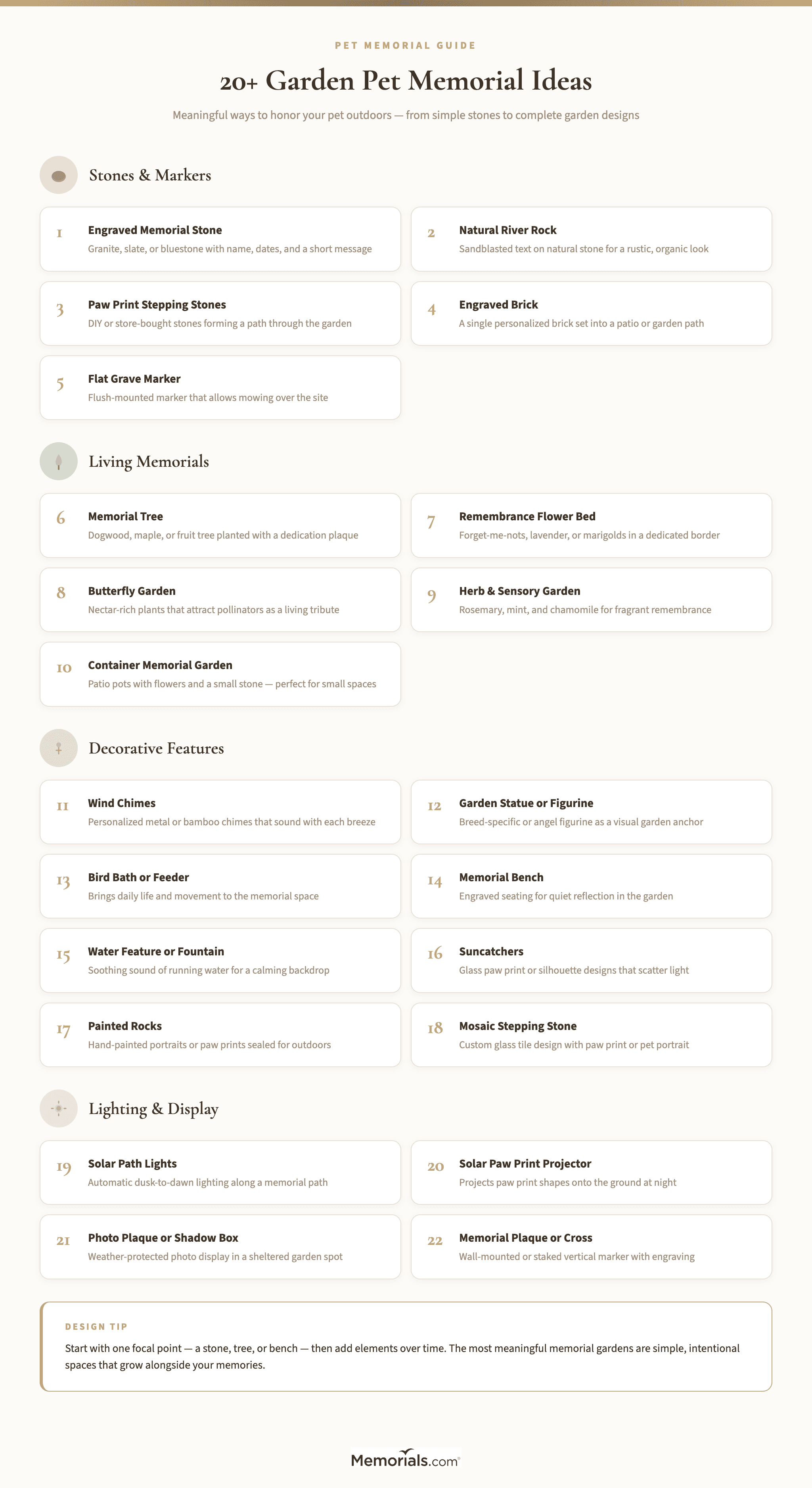
This guide covers more than 20 outdoor and garden pet memorial ideas, from simple engraved stones to full memorial garden designs. Each idea includes practical tips on materials, placement, and seasonal upkeep so you can build something that lasts through every season. If you are still exploring different ways to remember your pet, our broader guide to pet memorial ideas covers both indoor and outdoor options.
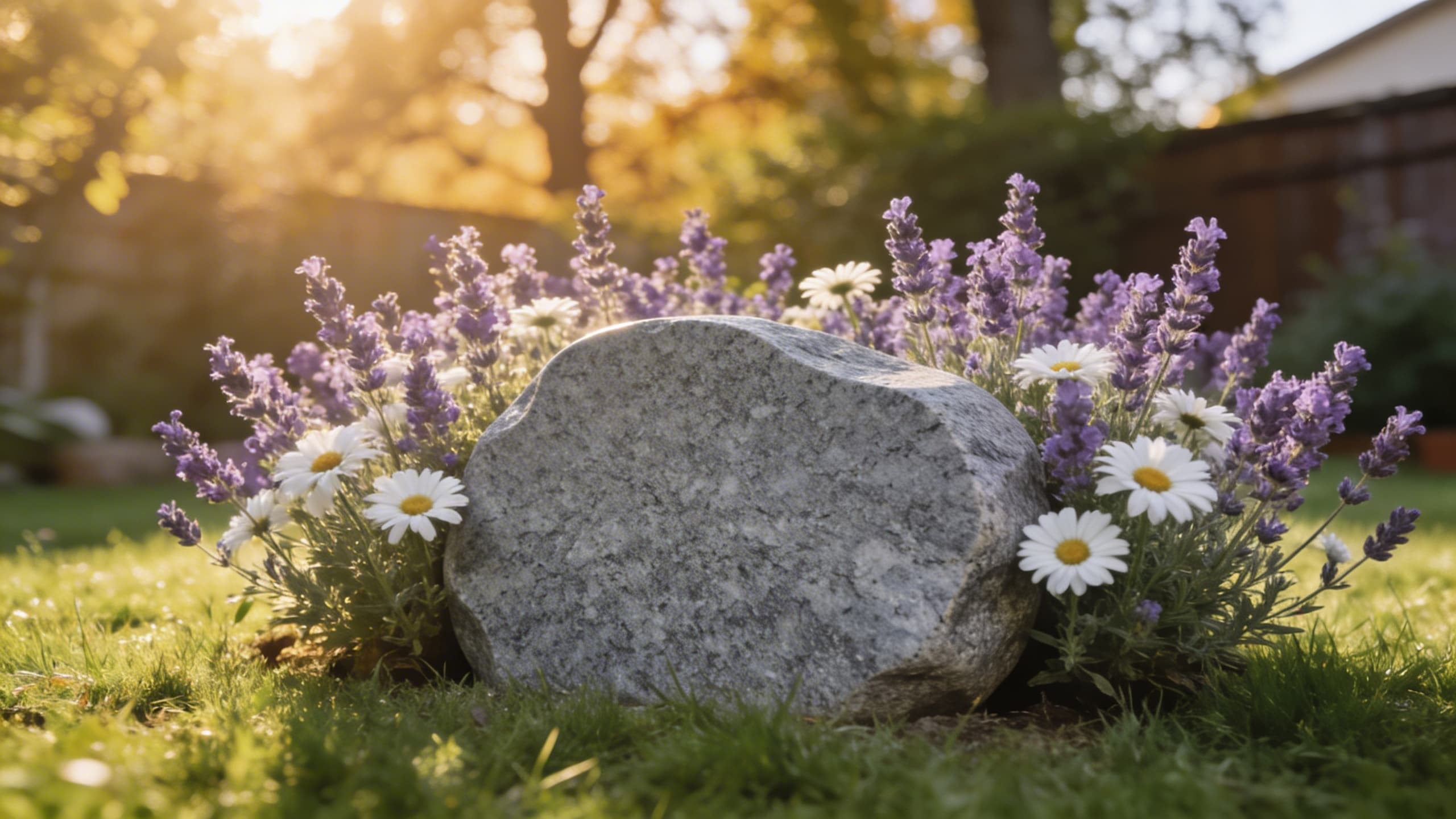
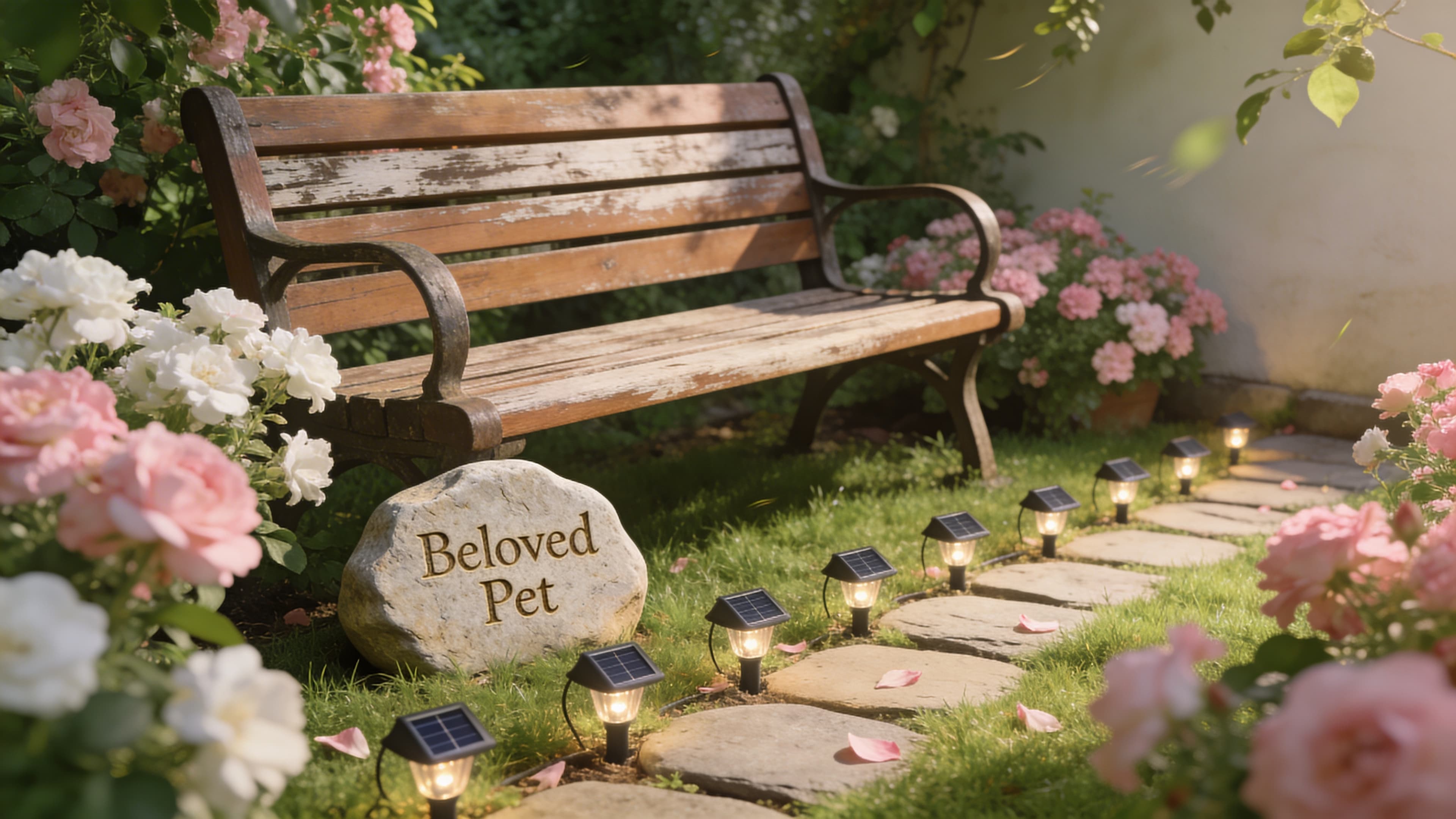
A memorial stone is one of the most enduring ways to mark your pet's place in the garden. Granite, slate, bluestone, and river rock all hold up well outdoors, and each carries a different feel — granite is polished and formal, while river rock is natural and understated.
You can engrave your pet's name, birth and passing dates, and a short phrase like "Forever Loved" or "Run Free." Some families add a laser-etched photo or paw print for an even more personal touch. Pet memorial grave stones come in a range of sizes, from small accent markers to substantial headstone-style monuments.
Placement matters. Set the stone where you will see it regularly — along a garden path, beside a favorite resting spot, or at the base of a tree. If your soil is soft, place a bed of gravel or sand beneath the stone to prevent it from sinking over the years.
For a more rustic look, natural pet memorial rocks blend into garden landscapes without looking out of place. River rocks with sandblasted text and color-filled engraving are weather-resistant and only improve with age as they develop a natural patina.
Stepping Stone Paths
A stepping stone path turns a walk through your garden into a quiet act of remembrance. You can purchase engraved stepping stones with paw prints, hearts, or custom text, or make your own using concrete molds and acrylic stamps.
DIY approach: Mix quick-set concrete in a round mold, press your pet's actual paw print (or a paw print stamp) into the surface before it sets, and use a stick to inscribe their name. After curing for 48 hours, seal it with an outdoor polyurethane to protect against moisture and frost.
Space the stones 18 to 24 inches apart along a natural walking line, leading toward a bench, tree, or central memorial feature. Fill the gaps between stones with low ground cover like creeping thyme, Irish moss, or dwarf mondo grass for a finished look that softens with time.
Memorial Trees
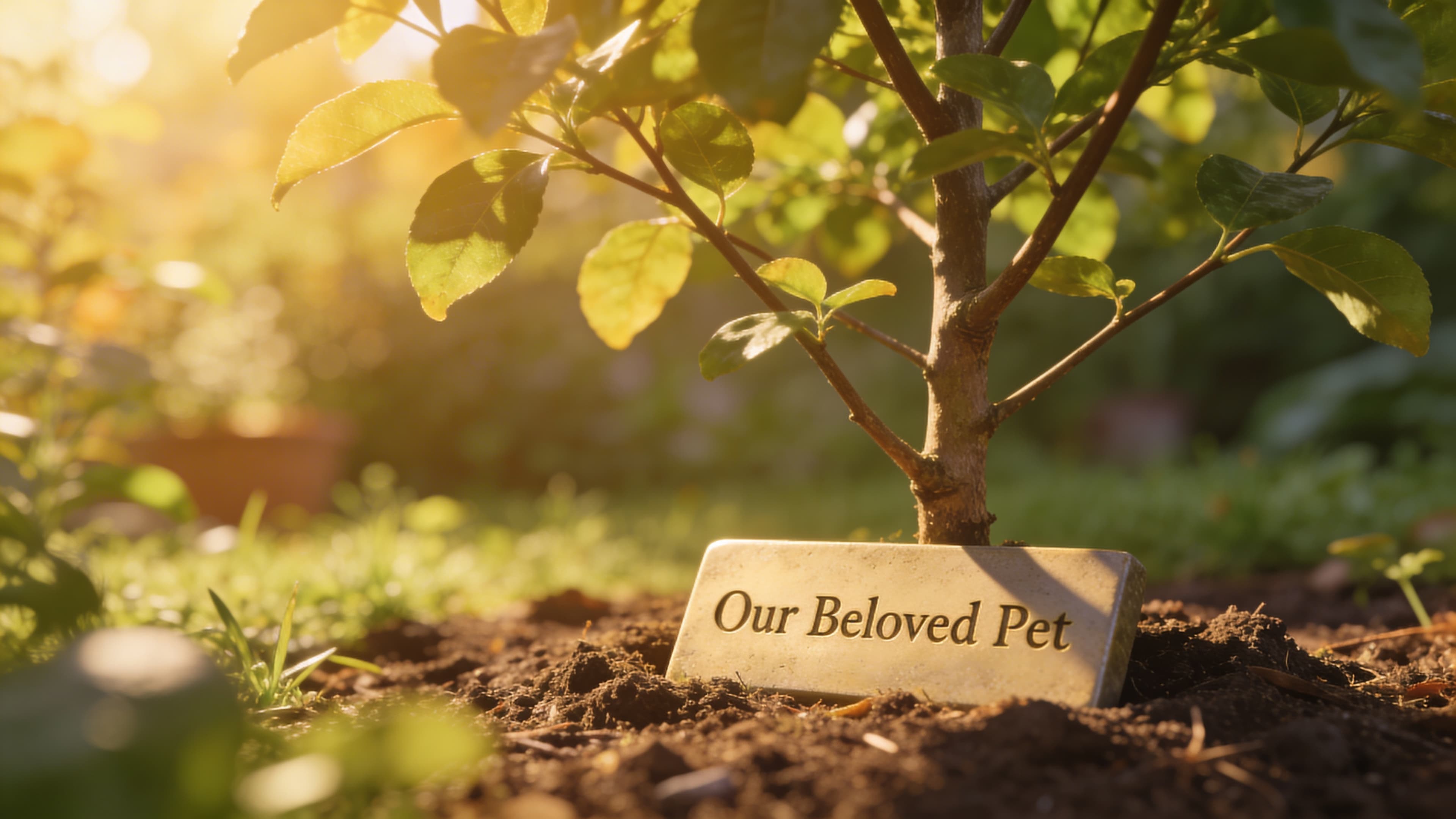
Planting a tree is a living tribute that grows alongside your memories. Choose a species suited to your climate zone and the amount of sunlight the area receives. Ornamental options like dogwood, Japanese maple, or redbud provide seasonal beauty with spring blooms or fall color. Fruit trees carry a practical warmth — a pet who loved the outdoors would be right at home beneath an apple or cherry tree that feeds the birds each year.
Pet memorial trees are available as ready-to-plant saplings with personalized plaques or tags. Some families bury a small portion of their pet's cremated ashes at the base of the tree. If you choose to do this, place the ashes at least 12 inches below the root ball so they do not interfere with root growth. For families considering what to do with their pet's remains, our guide to what to do with pet ashes walks through every option.
Garden Benches and Seating
A pet memorial bench gives you a place to sit, reflect, and feel close to your pet. Memorial benches can be engraved with a name, date, or message along the backrest or seat edge. Materials range from weather-treated wood to cast iron and recycled composite, each suited to different garden styles.
Position the bench facing your pet's favorite view — the garden bed they used to dig in, the fence line they patrolled, or simply the quietest corner of the yard. Surround it with fragrant plants like lavender or rosemary so the scent adds another layer to the experience.
For smaller spaces, a single memorial chair or a low garden stool can serve the same purpose without dominating the area.
Wind Chimes and Suncatchers
Wind chimes add presence to a memorial garden without adding visual clutter. Each breeze becomes a gentle reminder. Personalized wind chimes engraved with your pet's name or a short phrase are widely available in metal, bamboo, and glass.
Hang them from a tree branch, porch overhang, or a shepherd's hook staked into the ground near the memorial area. Deeper-toned metal chimes carry a resonant, calming sound, while bamboo chimes produce a softer, more natural tone.
Suncatchers work on a similar principle — they catch the light and scatter color across the garden. Glass suncatchers with embedded paw prints or pet silhouettes are a subtle, beautiful addition. Hang them where they will catch morning or afternoon sun for the best effect.
Solar Lights and Illuminated Displays
Solar-powered lights transform a memorial garden after dark. A single solar stake light beside a memorial stone creates a soft glow that is visible from inside the house — a quiet, nightly reminder that the space is still there.
Options include solar path lights along a stepping stone trail, solar lanterns near a bench, or solar-powered paw print lights that project the shape onto the ground at night. Because they charge during the day and turn on automatically at dusk, there is no wiring and no ongoing cost.
For a more dramatic effect, wrap solar string lights around a memorial tree or along a garden fence to outline the memorial area.
Bird Baths, Feeders, and Wildlife Gardens
Dedicating a bird bath or feeder to your pet's memory brings life into the garden in a way that feels fitting. Watching birds visit a space you created in your pet's honor adds daily movement and sound to the memorial.
Place the bird bath or feeder near (but not directly on top of) your pet's memorial stone or tree. This keeps the memorial area active and visited, which many families find comforting. You can engrave the pedestal of a bird bath with your pet's name or attach a small plaque.
Butterfly gardens are another option. Planting nectar-rich flowers like coneflower, black-eyed Susan, milkweed, and butterfly bush attracts pollinators and creates a vibrant, living memorial that changes through the seasons.
Garden Statues and Figurines
A pet statue or figurine placed among the plants adds a visual anchor to the memorial space. Dog, cat, and angel figurines made from resin, stone, or cast iron are designed for year-round outdoor display. Look for weather-resistant materials rated for UV exposure and freeze-thaw cycles.
Place the statue at a focal point — the center of a garden bed, beside a bench, or at the end of a stepping stone path. Some families choose a figurine that resembles their pet's breed, while others prefer a more symbolic piece like an angel with a paw print or a sleeping animal curled up on a pillow.
Water Features and Fountains
The sound of running water creates a sense of calm that suits a memorial space. A small recirculating fountain placed among garden plants provides a soothing backdrop for reflection. Tabletop fountains, wall-mounted spouts, and in-ground basin fountains all work in garden settings.
If you already have a pond or stream feature, placing a memorial stone at its edge ties the memorial into the existing landscape naturally. The combination of water, stone, and greenery mirrors the kind of peaceful setting many pets loved during their lives.
Keep it simple — a single fountain with one or two surrounding plants is more restful than an elaborate multi-tiered setup.
Planting a Memorial Flower Garden
Flowers speak a universal language of remembrance. A dedicated flower bed or border planted in your pet's honor can be as simple as a single row of perennials or as involved as a themed color garden.
Plants with memorial significance:
Forget-me-nots are the classic remembrance flower, producing tiny blue blooms from spring through early summer. Rosemary symbolizes remembrance and is evergreen in mild climates. Lavender represents devotion and fills the garden with fragrance. Marigolds symbolize grief and the sun — and their bright color attracts pollinators.
Practical planting tips:
Match plants to your light conditions. Full sun areas (6+ hours) support lavender, marigolds, coneflower, and rosemary. Partial shade (3–6 hours) works well for forget-me-nots, hostas, impatiens, and bleeding hearts. Deep shade favors ferns, lily of the valley, and astilbe.
Group perennials so something is blooming in every season: spring bulbs (tulips, daffodils), summer bloomers (daylilies, coneflower), fall color (asters, mums), and winter structure (ornamental grasses, evergreen shrubs).
Raised Beds and Container Gardens
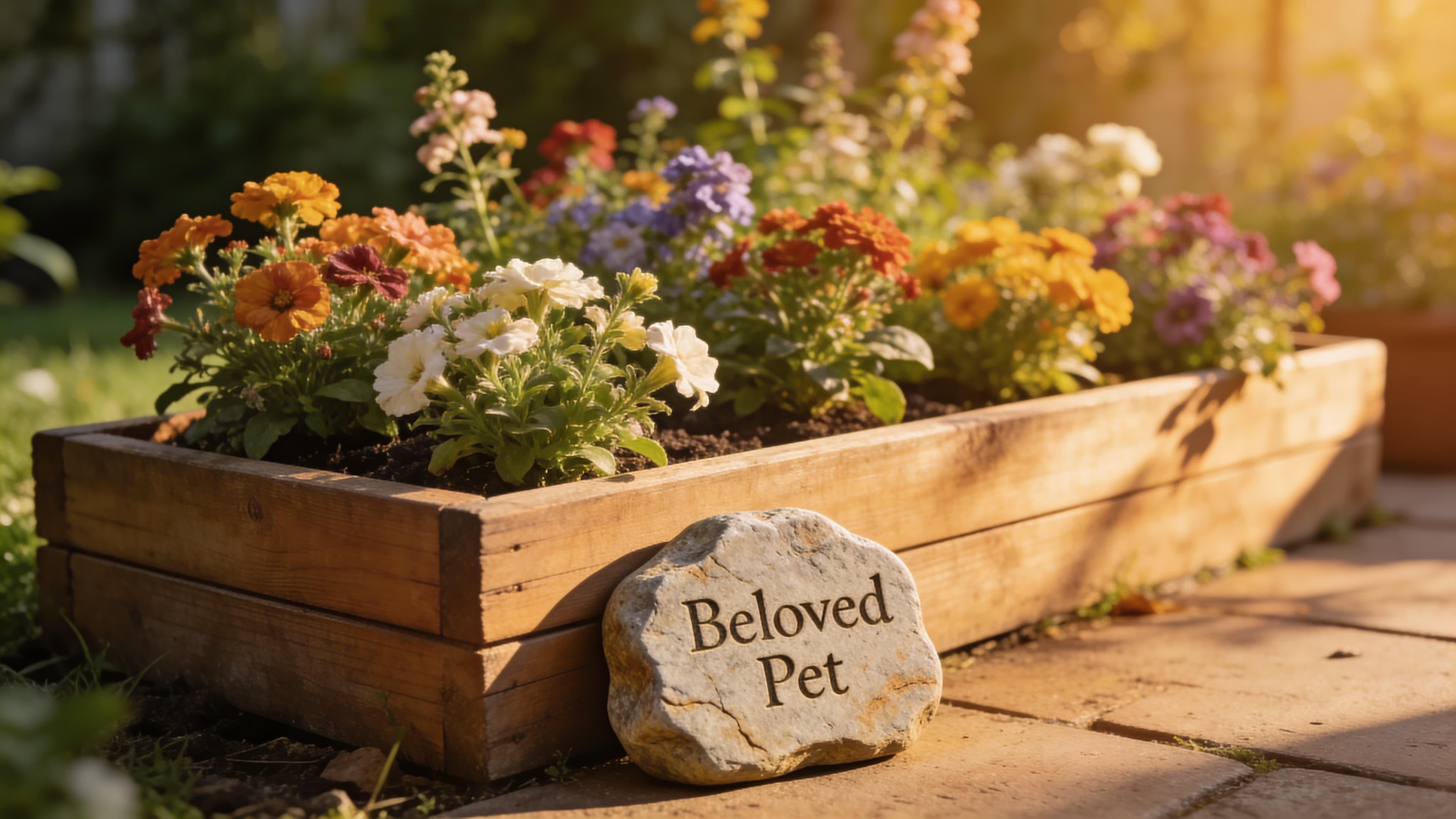
Not every memorial garden needs a large yard. Raised beds, planter boxes, and container gardens let you create a meaningful tribute on a patio, balcony, or small courtyard.
A single large ceramic pot planted with forget-me-nots and trailing ivy, set beside a small memorial stone, can carry just as much meaning as a full garden bed. Group three or four containers of different heights together to create depth and visual interest.
Raised beds also offer a practical advantage — they are easier to maintain, drain better than ground-level beds, and keep the memorial plantings separate from the rest of the yard.
Burial Memorials and Urn Placement
Some families choose to bury their pet's remains or cremated ashes in the garden and mark the spot with a memorial. If you are burying ashes, a biodegradable pet urn is designed to break down naturally in the soil over time, returning your pet to the earth.
Burial depth guidelines: Bury cremated ashes at least 12 to 18 inches below the surface. If burying a pet's body, the recommended depth is at least three feet to prevent disturbance by wildlife. Check local regulations — most jurisdictions allow pet burial on private property, but some have restrictions.
Mark the burial site with a memorial stone, planting, or both. A flat grave marker set flush with the ground allows you to mow over it, while an upright headstone provides a more visible landmark. For families weighing the decision to bury ashes, our article on burying pet ashes alongside human remains covers the legal and practical considerations.
If you prefer not to bury the urn, a weather-protected display shelf, a covered garden niche, or a lantern housing can keep a pet keepsake urn outdoors without exposing it directly to rain and sun.
Memorial Plaques and Crosses
A mounted plaque or cross adds a vertical element to a garden memorial. Metal and stone plaques engraved with your pet's name and a short message can be fixed to a garden wall, fence post, tree trunk, or freestanding stake.
Wooden crosses, often made from cedar or treated lumber, are a traditional and affordable option. Some families add a small photo frame or laminated photograph to the cross, though outdoor photos should be protected with UV-resistant laminate and placed in a sheltered spot.
For families looking at choosing a pet grave marker, our dedicated guide covers the full range of marker types, materials, and engraving options.
Photo Displays and Memory Boards
While photographs are more delicate outdoors, weather-protected options exist. Ceramic photo tiles, sealed photo plaques, and UV-resistant framed prints can all withstand outdoor conditions when placed under a porch overhang, pergola, or sheltered garden alcove.
A memory board or shadow box mounted in a protected area can hold your pet's collar, a favorite toy, and a printed photograph together in one display. Bring it inside during severe weather to extend its life.
For a simpler approach, a single laminated photo tucked into a clear glass frame and propped beside a memorial stone adds a deeply personal touch without requiring a large investment.
Personalized Garden Decor
Beyond the core memorial features, small personal touches make a garden memorial feel like your pet's space:
Painted rocks — Smooth river rocks hand-painted with your pet's portrait, name, or paw prints. Seal with outdoor polyurethane for durability.
Mosaic tiles — Create a small mosaic design on a stepping stone, pot, or bench surface using glass tiles in your pet's favorite colors or a paw print pattern.
Engraved bricks — A single engraved brick set into a garden path or patio is subtle, permanent, and nearly maintenance-free.
Garden flags — Seasonal or year-round garden flags with pet memorial designs add color and can be swapped out as the seasons change.
Collar displays — Wrap your pet's collar around a clay pot, hang it from a shepherd's hook, or mount it inside a sheltered shadow box in the garden.
Herb and Sensory Gardens
An herb garden planted in your pet's honor engages multiple senses — sight, smell, touch, and even taste. Rosemary, lavender, chamomile, lemon balm, and mint all thrive in garden beds or containers and produce fragrance that fills the air.
Each time you brush past the lavender or clip rosemary for cooking, the scent connects you back to the space you created for your pet. This kind of sensory layering makes a memorial garden feel alive rather than static.
If your cat loved catnip or your dog rolled in mint, planting those specific herbs adds a personal and even slightly humorous connection to their personality.
Weatherproofing and Seasonal Maintenance
An outdoor memorial needs to withstand sun, rain, frost, and wind. Choosing the right materials and performing basic seasonal care will keep your memorial looking good for years.
Material durability rankings:
Granite and natural stone last decades with virtually no maintenance. Cast iron and powder-coated metal hold up well but may need occasional rust treatment. Resin and composite are lightweight and weather-resistant but can fade in direct sunlight without UV protection. Untreated wood is the least durable outdoors — choose cedar, teak, or treated lumber, and refinish every one to two years.
Seasonal care checklist:
Spring: Clear debris from stones and markers. Prune winter-damaged plants. Refresh mulch around memorial plantings. Check that solar lights still charge properly.
Summer: Water memorial plants regularly, especially container gardens. Clean bird baths weekly to prevent algae. Move sensitive items like photo displays out of direct midday sun.
Fall: Plant spring bulbs around memorial features. Cut back perennials. Bring non-weatherproof items indoors before the first hard frost.
Winter: Brush snow off memorial stones and benches gently (avoid salt or ice melt on engraved surfaces). Check that stakes and markers are secure against wind.
Designing Your Memorial Garden Layout
Bringing several of these ideas together into a cohesive garden layout creates a space that feels intentional and complete. Here is a simple framework for planning your memorial garden, whether you have a full yard or a small corner.
Choose a focal point. This is the single most important element — typically a memorial stone, tree, or bench. Everything else radiates outward from this anchor.
Add a path. Stepping stones, gravel, or mulch leading to the focal point creates a sense of arrival and separation from the rest of the yard.
Layer plants around the edges. Taller plants and shrubs at the back, medium perennials in the middle, and low ground cover or border plants at the front. This frames the memorial space and gives it definition.
Include one sensory element. Wind chimes, a fountain, or fragrant herbs add a dimension beyond the visual. One is enough — too many compete for attention.
Add lighting. Solar path lights or a single solar lantern extends the memorial into the evening hours.
Keep it simple. The most meaningful memorial gardens are not the most elaborate. A stone, a tree, and a bench surrounded by forget-me-nots can carry more weight than a cluttered space.
Frequently Asked Questions
How do I start a pet memorial garden?
Start with a location that feels right — a favorite resting spot, a sunny corner, or a quiet section of the yard. Choose one focal piece (a memorial stone, tree, or bench), then add plants and personal touches around it. You do not need to build everything at once. Many families start with a stone and add elements over time as they find items that feel meaningful.
Can I bury my pet's ashes in a garden?
Yes, in most areas you can bury cremated pet ashes on private property. Use a biodegradable urn for a natural return to the earth, and bury at least 12 to 18 inches deep. Check local regulations for any restrictions. If you are considering how to bury a dog or other pet, depth and site selection are the two most important practical factors.
What plants are good for a pet memorial garden?
Forget-me-nots are the traditional remembrance flower. Rosemary symbolizes remembrance, lavender represents devotion, and marigolds symbolize grief and warmth. Choose plants suited to your light conditions and climate for the best long-term results.
How do I protect outdoor memorial items from weather?
Choose durable materials — granite, cast iron, and resin all hold up well outdoors. Seal wood with exterior polyurethane and refinish every one to two years. Move fragile items like photo displays to sheltered locations. Clean stones and metal annually to prevent buildup. Avoid using road salt near engraved surfaces.
Do pet memorial gardens have to be large?
Not at all. A single container garden on a patio with a small memorial stone and a few flowers can be just as meaningful as a full garden bed. Raised beds, window boxes, and balcony planters all work for apartment or small-space settings.
Create Your Pet's Outdoor Legacy
A garden memorial grows and changes just like the love behind it. Flowers bloom, trees stretch taller, and the stone that felt new last spring starts to settle into its place as though it has always been there. That kind of slow, natural beauty is fitting for a tribute to a pet who brought so much life into your world.
When you are ready to choose the right pieces for your pet's garden memorial, explore the full collection of pet memorials — including stones, rocks, trees, benches, and more — to find something that fits your space and your pet's spirit.