🏬Supersize Online Funeral Retailer🪦1000's of Headstones⚱️Over 10,000 Cremation Urns⚰️Caskets Overnight Delivery🛒Funeral & Memorial Superstore🚚FREE Shipping on ALL Orders👨👩👧👦Helping Families for over 20 Years💰Lowest Price Guarantee🏬Supersize Online Funeral Retailer🪦1000's of Headstones⚱️Over 10,000 Cremation Urns⚰️Caskets Overnight Delivery🛒Funeral & Memorial Superstore🚚FREE Shipping on ALL Orders👨👩👧👦Helping Families for over 20 Years💰Lowest Price Guarantee
🏬Supersize Online Funeral Retailer🪦1000's of Headstones⚱️Over 10,000 Cremation Urns⚰️Caskets Overnight Delivery🛒Funeral & Memorial Superstore🚚FREE Shipping on ALL Orders👨👩👧👦Helping Families for over 20 Years💰Lowest Price Guarantee🏬Supersize Online Funeral Retailer🪦1000's of Headstones⚱️Over 10,000 Cremation Urns⚰️Caskets Overnight Delivery🛒Funeral & Memorial Superstore🚚FREE Shipping on ALL Orders👨👩👧👦Helping Families for over 20 Years💰Lowest Price Guarantee
No parent expects to face the loss of a child. When that loss does happen, every decision that follows carries enormous emotional weight — and choosing a cremation urn for your son or daughter is among the most personal of those decisions. This guide walks you through the practical considerations — sizing, materials, design themes, and personalization — so you can focus less on logistics and more on honoring a life that mattered deeply.
The goal is not to rush you toward a purchase. It is to give you clarity during a time when clarity feels impossible. If you’re also weighing broader questions about urn types, materials, and cost, our guide to choosing a cremation urn covers the full decision from start to finish.
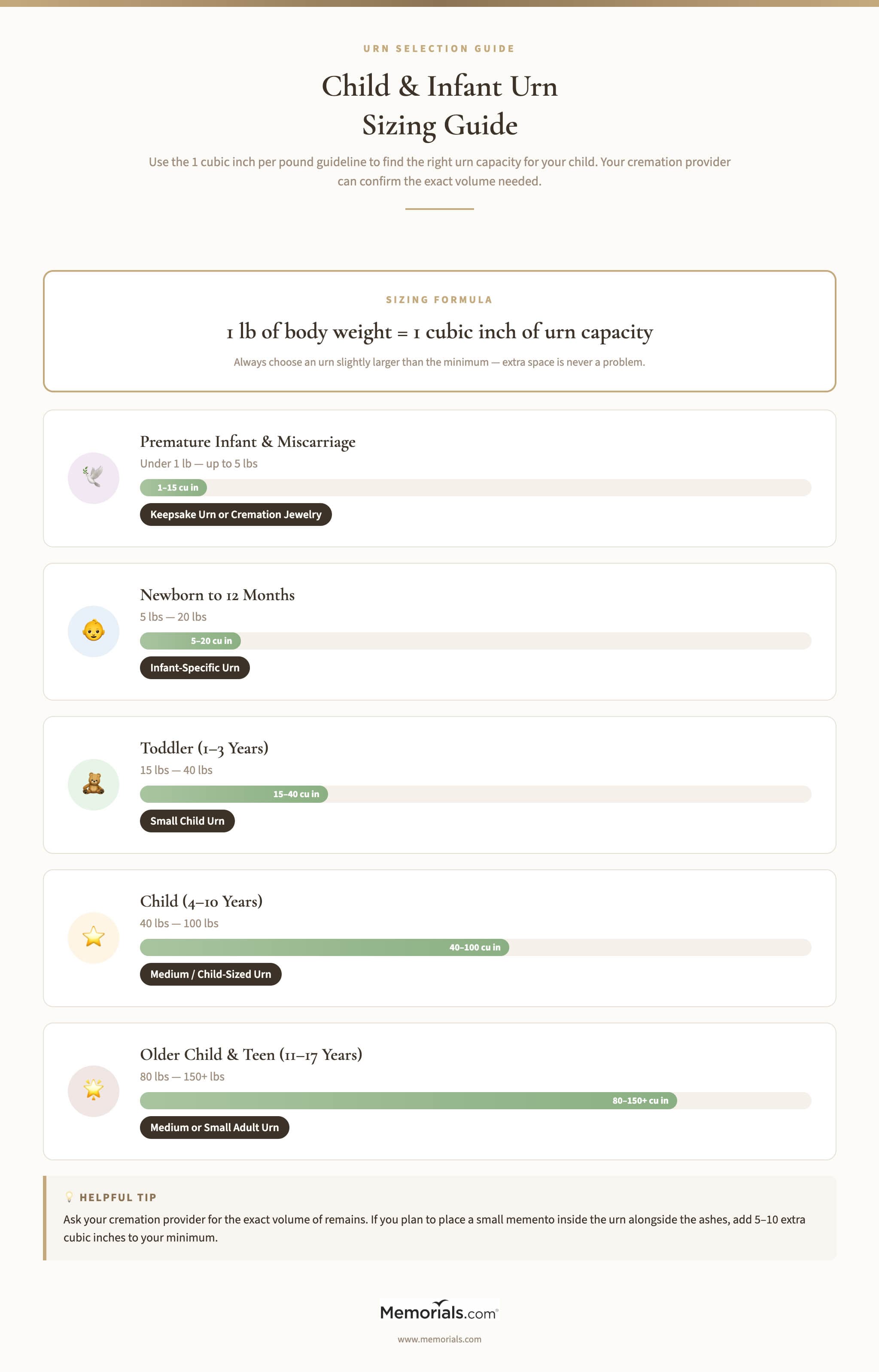
Urn capacity is measured in cubic inches, and the sizing formula for children follows the same rule used for adults: one cubic inch of urn space per pound of body weight. A child who weighed 30 pounds, for example, would need an urn with at least 30 cubic inches of capacity.
Here is how that breaks down by age group:
Premature infants and miscarriage remains: 1-15 cubic inches. Many keepsake urns in this range hold between 3 and 15 cubic inches, making them a fitting choice when remains are very small.
Newborns to 12 months: 5-20 cubic inches. Infant-specific urns are designed for this range and typically feature gentle, comforting designs.
Toddlers (1-3 years): 15-40 cubic inches. Small child urns or larger keepsake urns will accommodate remains in this weight range.
Children (4-10 years): 40-100 cubic inches. Medium-sized urns, sometimes called child-sized or youth urns, fit this capacity.
Older children and teens (11-17 years): 80-150+ cubic inches. Depending on the child's build, a medium or small adult urn may be needed.
The cremation provider can tell you the exact volume of cremated remains, which removes guesswork. For a detailed breakdown of urn capacities across all age groups, our guide on what size urn do I need includes a complete sizing chart. When in doubt, choose an urn slightly larger than the minimum. An urn can only be too small — extra space is never a problem, and some families place a small memento inside alongside the remains.
Materials for Child and Infant Urns
The material you choose affects both the look and the long-term durability of the urn. Here are the most common options for children's urns:
Brass and Bronze
Brass is one of the most popular materials for infant and child cremation urns. It is solid, heavy for its size, and resistant to corrosion. Many families describe a sense of reassurance from holding a brass urn — the weight and cool feel convey permanence. Brass urns can be polished to a high shine, brushed for a matte finish, or painted in soft pastels.
Marble and Stone
Marble urns offer a classic, dignified appearance. Natural stone varies in color and veining, which means each urn is unique. Marble is heavy and well-suited for permanent display. Cherub and angel figures carved from marble are a common choice for children's memorials.
Wood
Wood urns bring warmth and a natural feel. Cherry, maple, walnut, and oak are frequently used. Many wooden urns can be laser-engraved with names, dates, or short messages. Wood is suitable for both home display and burial, though burial-intended urns should be sealed or placed in a vault.
Ceramic and Porcelain
Ceramic urns allow for intricate hand-painted designs and soft color palettes that feel especially appropriate for young children. Porcelain urns with angel, butterfly, or floral motifs are widely available. Ceramic is more fragile than metal or stone, so it is best suited for display in a protected location.
Biodegradable
For families planning a natural burial or water ceremony, biodegradable urns are designed to break down naturally over time. Materials include recycled paper, sand, salt, and plant-based compounds. These urns offer an environmentally conscious way to return remains to the earth or sea. Our biodegradable cremation urns guide covers materials, timelines, and ceremony considerations in detail.
Soft and Plush (Teddy Bear Urns)
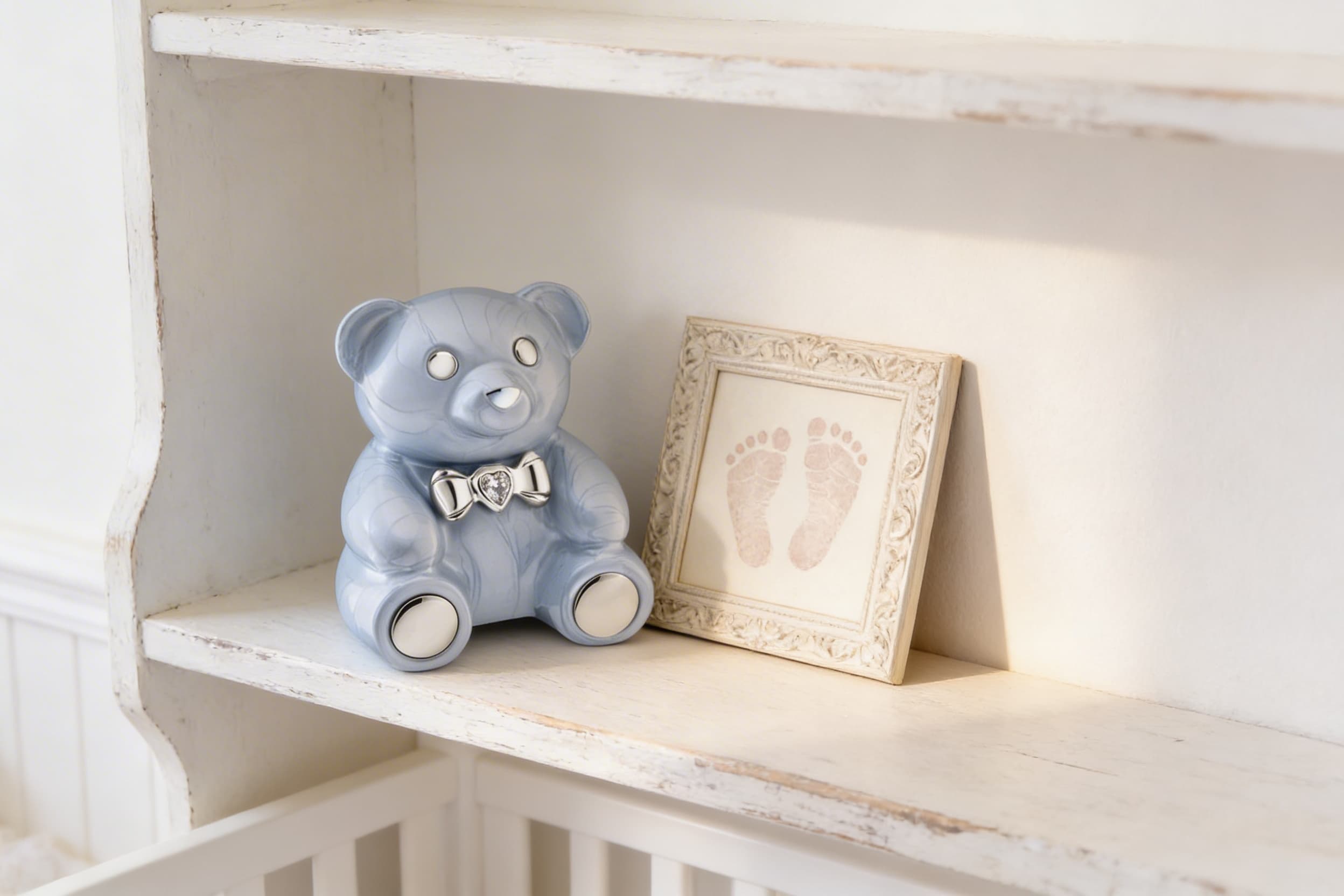
A category unique to infant and child memorials: plush urns shaped like teddy bears, lambs, or other stuffed animals. These urns contain a zippered compartment and an interior bag for the cremated remains. Families — especially those with other young children — sometimes find comfort in a memorial that can be held and hugged.
Design Themes and Motifs
Child and infant urns frequently feature themes that reflect innocence, love, and hope. The most common motifs include:
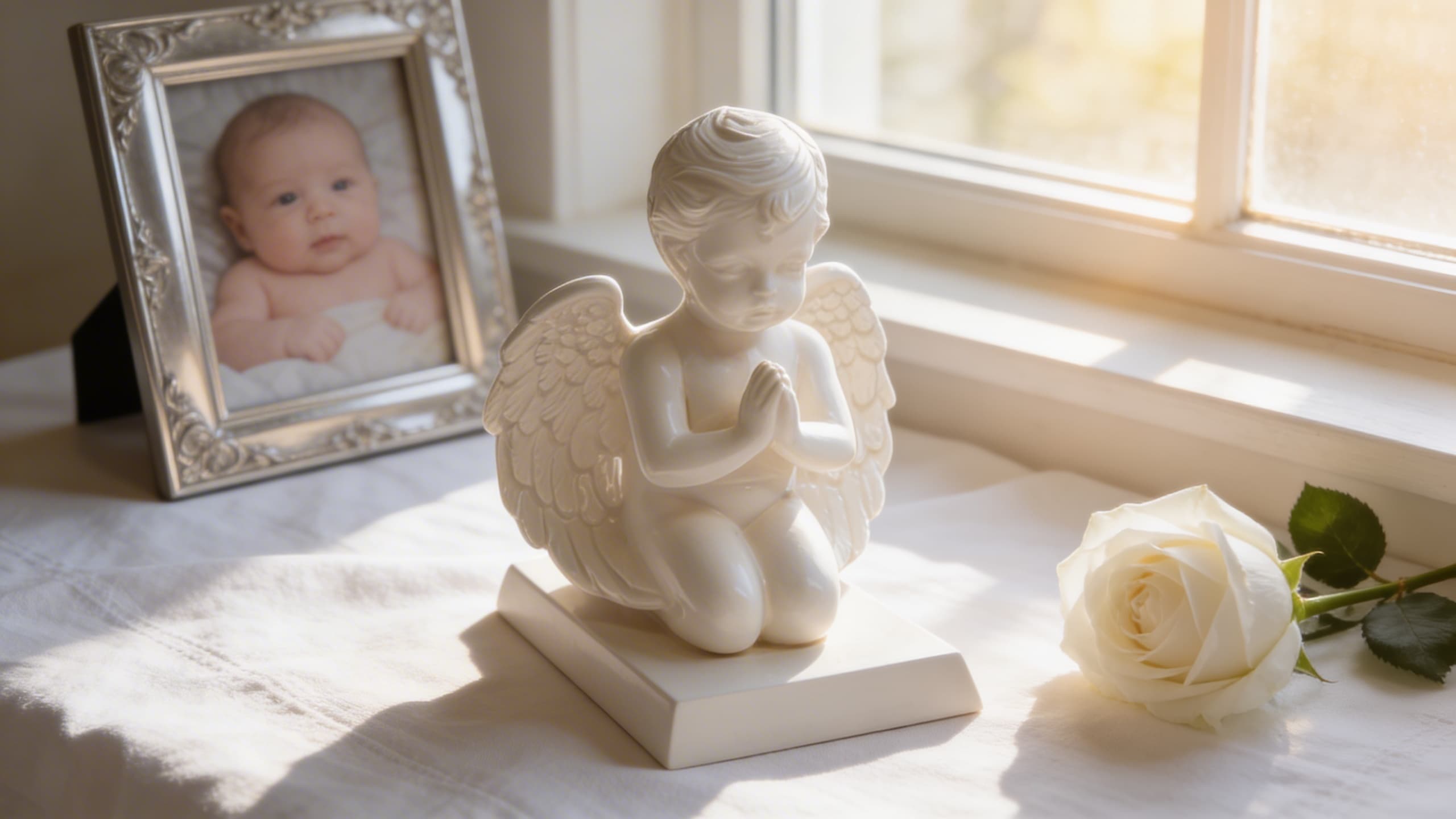
Angels and cherubs — Symbolizing protection and a heavenly resting place. Angel urns are among the most popular choices for children of all ages.
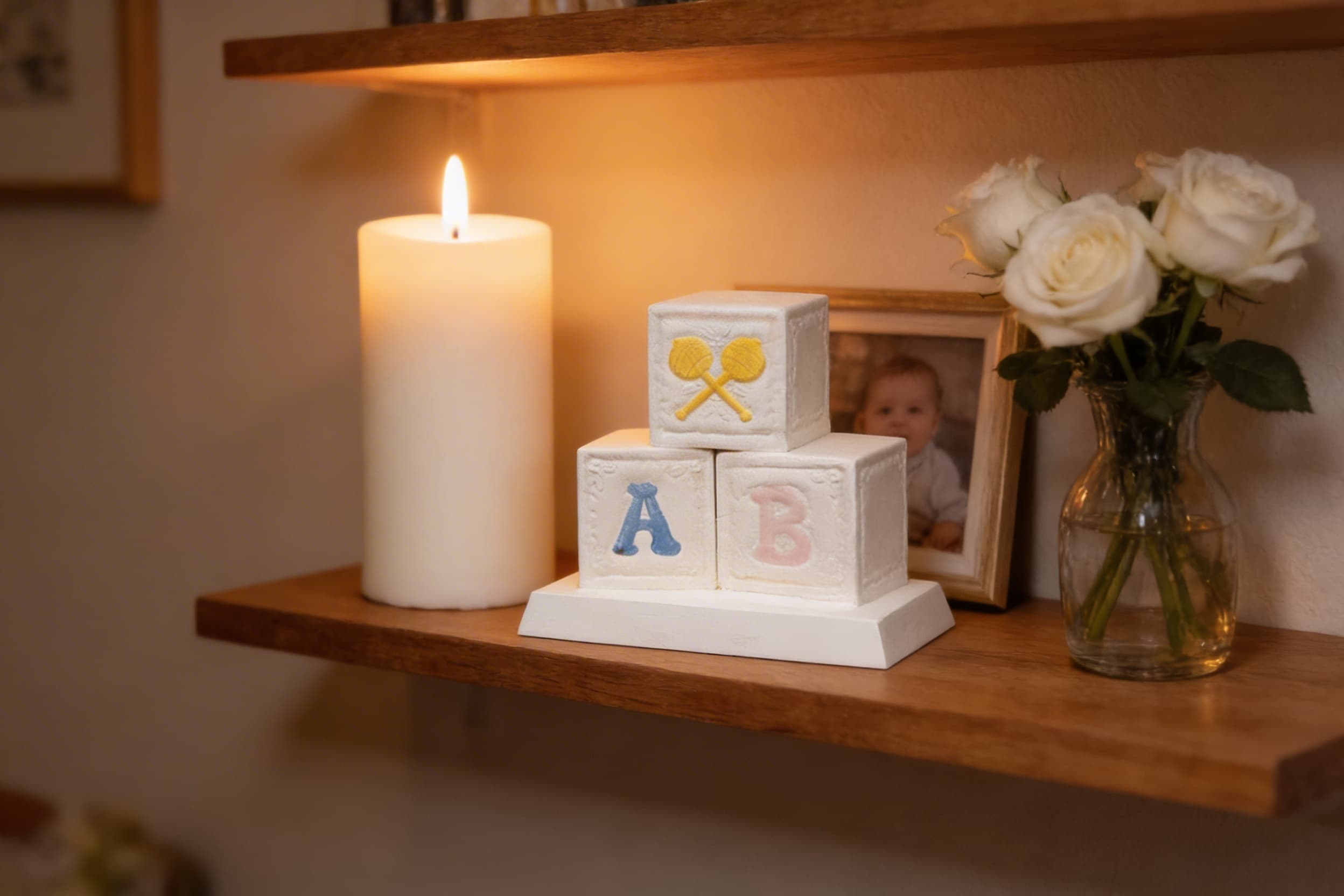
Teddy bears and building blocks — Playful, childhood-inspired imagery that celebrates the joy a child brought to the world.
Hearts — A universal symbol of love, often engraved or shaped into the urn itself.
Butterflies — Representing transformation and the continuation of the spirit beyond physical form.
Stars and moons — Evoking comfort, night-time lullabies, and the idea of a child watching over the family.
Religious symbols — Crosses, praying hands, and other faith-based imagery provide solace for families who draw strength from their spiritual beliefs. Our religious cremation urn guide covers denomination-specific traditions and options.
Soft pastels — Baby blue, pink, lavender, and white are common color choices that feel gentle and age-appropriate.
Many families choose a design that reflects something specific about their child — a favorite color, a beloved stuffed animal, or a symbol from a meaningful story or song.
Personalization and Engraving Options
Personalizing an urn transforms it from a vessel into a tribute. Common engraving options include:
The child's full name
Birth and death dates
A short phrase or quote (such as "Forever in our hearts" or "Too beautiful for earth")
A religious verse or prayer
A small image or symbol (angel wings, footprints, a heart)
Laser engraving produces precise, lasting detail on metal, wood, and stone surfaces. Some urns also accept photo inserts or engraved urn nameplates that attach to the exterior.
Our urn engraving and personalization guide walks through the full range of inscription styles and methods. If you are unsure what to engrave, take your time. Most urn retailers — including Memorials.com — allow you to order the urn first and add personalization later.
Keepsake Options for Families
Many families choose to divide cremated remains among multiple small vessels rather than placing everything in a single urn. This is especially common when parents, grandparents, or siblings each want to keep a portion close.
Keepsake urns hold between 3 and 15 cubic inches — enough for a small, symbolic portion of remains. They are available in the same materials and design themes as full-size urns and can be displayed on a nightstand, bookshelf, or in a memorial area.
Cremation jewelry offers a wearable way to carry a tiny amount of remains. Pendant necklaces, rings, bracelets, and lockets with small interior compartments are popular choices. For a parent grieving the loss of a child, wearing cremation jewelry can provide a physical sense of closeness throughout the day.
Sharing sets — some retailers offer matched sets of keepsake urns designed to hold divided remains. This allows multiple family members to receive a coordinated memorial piece.
If you choose to divide the remains, your cremation provider can assist with portioning. You can place the majority in a primary urn and distribute smaller amounts into keepsakes and jewelry. For help deciding between sizes, our comparison of keepsake urns vs full-size urns explains the practical differences.
Where to Place or Display the Urn
Once you have chosen an urn, the next decision is where it will rest. Common options include:
Home display: Many families create a dedicated memorial space — a shelf, mantelpiece, or small table — with the urn, a framed photograph, and meaningful objects like a baby blanket, first pair of shoes, or a handprint casting. This provides a daily focal point for remembrance and quiet reflection.
Columbarium niche: A columbarium is a structure in a cemetery or memorial garden with individual compartments (niches) designed to hold urns. Niche dimensions vary, so confirm the urn's exterior measurements fit before purchasing. Standard niches are typically 12 inches cubed.
Burial: Cremation urns can be buried in a cemetery plot, often in a smaller section designated for children. Some cemeteries require an urn vault — an outer container that protects the urn underground. Check local regulations before selecting an urn for burial.
Scattering: If the family plans to scatter remains at a meaningful location, a scattering urn or biodegradable urn can serve as a temporary vessel. Some families scatter a portion and keep the rest in a keepsake urn or cremation jewelry.
Special Circumstances: Miscarriage, Stillbirth, and Premature Loss
The loss of a baby through miscarriage, stillbirth, or shortly after premature birth carries its own set of considerations. Remains are often very small, and standard infant urns may be larger than necessary.
For these situations, keepsake-sized urns (1—15 cubic inches) are typically the best fit. Angel-themed keepsakes, heart-shaped lockets, and small porcelain urns are all appropriate options. Some families also choose cremation jewelry as the sole memorial vessel when remains are minimal.
Hospitals and cremation providers who work with infant loss can guide you on what to expect regarding the volume of remains. Organizations such as the National Share Office (nationalshare.org) and the March of Dimes provide additional support and resources for families navigating pregnancy and infant loss.
There is no wrong way to memorialize a baby lost too soon. Whether you choose a traditional urn, a piece of jewelry, or a biodegradable vessel for a private ceremony, the act of choosing is itself an expression of love.
Supporting Grieving Siblings
If the child who passed has brothers or sisters, their grief deserves acknowledgment too. Some families involve siblings in choosing the urn — asking them to pick a color, a design theme, or a word for the engraving. This participation can help younger children process loss and feel included in the family's memorial.
Small keepsake urns or cremation jewelry sized for children can also give siblings a tangible connection to their brother or sister. A tiny pendant or a small urn for their bedroom offers something they can see and touch when they miss their sibling.
Questions Families Often Ask
What size urn do I need for a baby?
The standard guideline is one cubic inch per pound of body weight. For a newborn weighing 7 pounds, an urn with at least 7 cubic inches of capacity is appropriate. For premature infants and miscarriage remains, keepsake urns in the 1—15 cubic inch range typically suffice. Your cremation provider can confirm the exact volume needed.
Can I split my child's ashes into multiple urns?
Yes. Many families divide cremated remains between a primary urn and one or more keepsake urns or pieces of cremation jewelry. This allows parents, grandparents, and siblings to each keep a portion. Your cremation provider can assist with portioning the remains.
What materials are safest for a child's urn?
All standard urn materials — brass, marble, wood, ceramic, and stone — are safe for holding cremated remains. The choice comes down to intended use (display, burial, or scattering), personal aesthetic preferences, and budget. Brass and marble are the most durable for long-term display.
Can I personalize a child's urn with a photo?
Many urns accept photo inserts, either as a built-in frame on the urn or as an engraved nameplate with a photo transferred onto it. Laser engraving can also reproduce a small image directly on metal or wood surfaces. Check with the retailer for specific personalization options.
Is it appropriate to choose a urn before the cremation takes place?
Selecting an urn before cremation is perfectly appropriate and can reduce time pressure during an already difficult period. If you know the child's approximate weight, you can use the one-cubic-inch-per-pound guideline to choose the right capacity. The cremation provider can hold the remains temporarily until your urn arrives.
Finding the Right Urn for Your Child
Choosing an urn for a child is not about finding the "perfect" option on the first try. It is about finding something that feels right to your family — something that honors your child's presence in your life and gives you a place to direct your love in the months and years ahead.
Memorials.com offers a thoughtfully curated collection of baby and child urns in a wide range of materials, sizes, and designs. Whether you are looking for a small keepsake for a premature infant or a personalized urn for an older child, the collection is designed to help you find a meaningful tribute without added stress. Personalization options including engraving and nameplates are available on most items.
If you need help with sizing or selecting the right urn, the Memorials.com team is available to assist you with care and discretion.