🏬Supersize Online Funeral Retailer🪦1000's of Headstones⚱️Over 10,000 Cremation Urns⚰️Caskets Overnight Delivery🛒Funeral & Memorial Superstore🚚FREE Shipping on ALL Orders👨👩👧👦Helping Families for over 20 Years💰Lowest Price Guarantee🏬Supersize Online Funeral Retailer🪦1000's of Headstones⚱️Over 10,000 Cremation Urns⚰️Caskets Overnight Delivery🛒Funeral & Memorial Superstore🚚FREE Shipping on ALL Orders👨👩👧👦Helping Families for over 20 Years💰Lowest Price Guarantee
🏬Supersize Online Funeral Retailer🪦1000's of Headstones⚱️Over 10,000 Cremation Urns⚰️Caskets Overnight Delivery🛒Funeral & Memorial Superstore🚚FREE Shipping on ALL Orders👨👩👧👦Helping Families for over 20 Years💰Lowest Price Guarantee🏬Supersize Online Funeral Retailer🪦1000's of Headstones⚱️Over 10,000 Cremation Urns⚰️Caskets Overnight Delivery🛒Funeral & Memorial Superstore🚚FREE Shipping on ALL Orders👨👩👧👦Helping Families for over 20 Years💰Lowest Price Guarantee
Losing a beloved pet is devastating. When the cat or dog who shared your life is suddenly gone, the grief can feel like it will swallow you whole. You might find yourself unable to focus, unable to sleep, and unable to stop the tears from coming at the most unexpected moments.
If your pet died and you can't stop crying, know that this is a completely natural response to a profound loss. Your animal companion gave you years of unconditional love, and the pain you feel now reflects the depth of that bond. Recovery is gradual, and there is no right timeline for healing. Some people begin to feel steadier after a few weeks, while others carry the heaviest weight for months.
This guide offers eight practical strategies to help you cope with the emotional pain of pet loss. These are things you can do right now — today, this week — to begin finding your footing again. For a broader look at every step of honoring your pet's memory, from aftercare decisions to long-term remembrance, our walks you through the full journey.
Before you can begin to heal, it helps to understand why the pain runs so deep. The grief you feel after losing a pet is not an overreaction — it is a reflection of a relationship that shaped your daily life in ways most people never fully appreciate until it ends.
They Were Family
Your pet was not "just a dog" or "just a cat." They were a companion who greeted you at the door every day, who slept beside you, who depended on you completely. You built your daily routines around their needs — feeding them before you fed yourself, walking them before work, scheduling vet appointments around your calendar. When they die, you lose the relationship and the structure it provided. That double loss is why the grief feels so disorienting.
Not Everyone Understands
One of the hardest parts of pet grief is that not everyone around you will recognize its severity. Well-meaning friends may say things like "it was just a pet" or "you can always get another one." This kind of dismissal — what psychologists call disenfranchised grief — can make you feel isolated in your pain, as if you need permission to mourn. You do not. Your grief is valid, your tears are earned, and anyone who has loved an animal the way you did understands exactly what you are going through.
A pet's death can also stir up grief from other losses in your life, compounding the emotional weight in ways that catch you off guard. If you had to make the euthanasia decision, the guilt of choosing when to let go can linger long after the loss itself. If you are finding that the pain feels bigger than the loss itself, that is normal too.
1. Journal Your Thoughts and Feelings
Grief scatters your thoughts. One moment you feel guilty — wondering if you could have caught the illness sooner or done something differently. The next, you feel angry that they were taken too soon. Then the sadness rushes back, and the cycle starts again.
Journaling gives you a way to slow that cycle down. When you put your feelings into words on paper, you are giving structure to the chaos in your mind. You stop spinning and start processing.
There is no wrong way to do this. Some people write first thing in the morning to set a calmer tone for the day. Others journal before bed to clear their minds. You can carry a small notebook throughout the day and write whenever a wave of emotion hits.
One approach that many grieving pet owners find helpful is writing letters directly to their pet. Tell them what you miss. Tell them about your day. Thank them for the years you shared. These letters will not bring them back, but they allow you to continue honoring the love between you.
When you look back at your entries after a week or two, you will start to see patterns — the triggers that hit hardest, the times of day that feel loneliest, and, eventually, the small moments where the weight begins to lift.
2. Learn About Healthy Coping Strategies
Grief is one of the most difficult emotions a person can face, and everyone handles it differently. The important thing is to avoid coping mechanisms that compromise your physical or mental health in the process.
There are many books, podcasts, and online resources dedicated to understanding grief and building healthy responses to it. Learning about how grief works — even at a basic level — can help you recognize that what you are experiencing is normal and temporary, even when it does not feel that way.
Understanding that the waves of sadness, guilt, and even anger are part of how humans process loss gives you a framework. You stop feeling broken and start recognizing the grief for what it is — your mind and body doing the hard work of adjusting to a world without your companion.
Be patient with yourself. Everyone processes grief at their own pace, and putting pressure on yourself to "get over it" quickly only makes things harder. The goal is not to stop feeling — it is to feel without being consumed.
3. Join a Pet Loss Support Group
Talking about your loss with people who truly understand can be one of the most healing things you do. Family and friends may offer comfort, but there is something uniquely powerful about connecting with other pet owners who have lived through the same experience.
Pet loss support groups — both in-person and online — provide a space where you can express your feelings without judgment. You do not have to explain why losing a cat or dog hurts this much, because everyone in the room already knows. Hearing how others cope, what has helped them, and how far they have come in their own healing can bring a sense of hope on the days when hope feels impossible.
Many groups are moderated by grief counselors who can offer guidance tailored to your situation. A quick online search for "pet loss support group near me" will show you local options, and there are several active online communities if you prefer the privacy of participating from home.
If group settings are not for you, even one conversation with a friend who has lost a pet can make a meaningful difference. The point is to break the isolation — to remind yourself that you are not grieving alone.
4. Lean on Your Family and Friends
If your partner, children, or other family members are also feeling the loss, this is a time to come together rather than grieve in separate corners. Sharing your pain openly with the people who knew and loved your pet can lighten the emotional load for everyone involved.
Be mindful that each person grieves differently. Your child may seem fine one day and then break down the next. Your partner may express grief through silence rather than tears. None of these responses are wrong. The most helpful thing you can do is create space for everyone to process at their own pace, without judgment or comparison.
Gathering to share favorite stories about your pet — the funny moments, the stubborn habits, the way they always seemed to know when someone needed comfort — can shift the focus from loss to gratitude. These conversations hurt, but they also heal.
If family members are struggling and you want to support a child through this, our article on helping a child through pet loss offers age-appropriate guidance for navigating those conversations.
Friends who knew your pet can also be a source of comfort. Reach out honestly — a walk together, a phone call, an evening where you do not have to pretend everything is fine. That is what friends are for.
5. Honor Your Pet With a Goodbye Ceremony
Holding a ceremony to say goodbye gives you a sense of closure that the sudden absence of your pet may not have allowed. It is an opportunity to channel your grief into something intentional — a loving send-off that honors the joy your companion brought to your life.
A ceremony does not need to be elaborate. It can be as simple as gathering your family in the backyard, sharing a few words about what your pet meant to each of you, and placing flowers at a burial spot. Some families light candles, play a song that reminds them of their pet, or read a short poem.
If you have space on your property for a burial, you can mark the spot with a small headstone or pet memorial stone. Children especially benefit from having a physical place they can visit, leave drawings, or place flowers on birthdays and anniversaries.
The act of planning and holding a ceremony also gives you something constructive to focus on during the hardest early days — a way to feel like you are doing something for your pet even after they are gone.
6. Create a Lasting Memorial
Many people find deep comfort in having something tangible that keeps their pet's memory present in their daily life. A memorial transforms the absence into a form of ongoing connection.
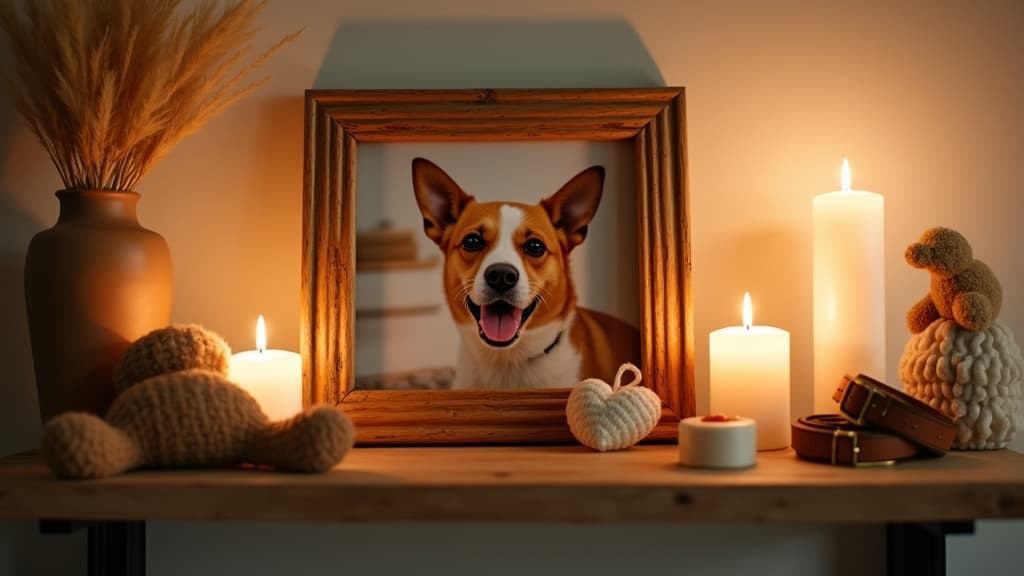
If your pet was cremated, you can choose a pet urn to display in a meaningful spot in your home. Some families dedicate a small shelf or table to their pet's memory — an urn alongside a favorite photo, a collar, a paw print casting, or a beloved toy.
Wearable memorials are another option. Pet cremation jewelry allows you to carry a small portion of your pet's ashes in a pendant, bracelet, or ring that stays with you throughout the day. For many grieving pet owners, this physical closeness provides quiet comfort during moments when the loss feels sharpest.
You can also create a virtual memorial — uploading photos, videos, and stories to a dedicated page where family and friends can contribute their own memories. For families spread across different cities, this is a meaningful way to grieve and celebrate together from a distance.
For more ideas on how to honor your pet's memory in both physical and creative ways, see our collection of pet memorial ideas.
If you have space on your property where you can bury the pet, this is a popular option for most families with small children. You can make a small tombstone to go with it and you all can write cards and place flowers on your pet’s birthday even after they have passed.
7. Maintain a Daily Routine
When your pet dies, the structure of your day changes overnight. The morning walk, the evening feeding, the bedtime routine — all of it vanishes, leaving empty spaces that magnify the sense of loss.
Rebuilding a daily routine is one of the most practical things you can do to protect your emotional well-being during this time. Going to bed and waking up at consistent times, eating regular meals, exercising, and completing daily tasks keeps you grounded in the present moment and prevents your mind from spiraling.
This does not mean you should ignore the grief or push through it without feeling. Give yourself permission to have hard days. But having a structure to return to — even a simple one — acts as an anchor. It keeps you functional when the emotional waves hit hardest.
Pay extra attention to the gaps your pet left. If you walked your dog every morning at seven, use that time for a walk on your own, a phone call with a friend, or a quiet cup of coffee outside. Filling the void with something intentional, rather than staring at the empty leash hook, makes a real difference.
8. Seek Professional Support
If your grief is interfering with your ability to sleep, eat, work, or function in daily life — or if you find yourself stuck in a cycle of guilt, anger, or despair that does not ease over time — talking to a professional can help.
A therapist or counselor who specializes in grief and loss can give you tools to process the pain in healthy ways. Even a few sessions can create a noticeable shift. They can help you separate productive grief from harmful thought patterns and guide you toward acceptance without rushing you there.
For people who were already managing mental health challenges before the loss, pet grief can intensify existing difficulties. Physical symptoms like insomnia, nausea, and anxiety are also common after losing a pet and can be addressed with professional support.
Online therapy has made this more accessible than ever — you do not need to leave home to talk to someone who understands. For a deeper look at understanding the grief process and recognizing when it is time to seek help, our companion article covers the stages and timeline of pet grief in detail.
When the Time Feels Right
At some point — and only you will know when — you may start thinking about welcoming a new animal into your life. This is a deeply personal decision, and there is no correct timeline for it.
A new pet will never replace the companion you lost. The bond you built over years of shared mornings, walks, and quiet evenings together is irreplaceable. Anyone who suggests otherwise does not understand the relationship you had.
But when the time does feel right, opening your heart to a new animal can be one of the most healing steps forward. You are not replacing your pet — you are honoring the love they taught you by giving it to another animal who needs it. Visiting a shelter and offering a home to a rescue can bring renewed purpose, routine, and companionship into your life.
If you are not ready, that is perfectly fine. There is no rush. And if you never want another pet, that is a valid choice too.
Frequently Asked Questions
Is it normal to cry for days after a pet dies?
Yes. Crying is the body's natural response to grief, and there is no time limit on it. Some people cry intensely for a few days and then gradually less. Others experience waves of tears that come and go for weeks or months, often triggered by reminders — a favorite sleeping spot, a sound that resembles their bark or meow, the quiet that fills the house. If you are crying, your body is processing the loss. Let it.
Why does pet grief feel so intense?
Pets are woven into every part of your daily routine in a way that few human relationships replicate. They are the first face you see in the morning and the last presence you feel at night. When they die, you lose not just the animal but the structure, purpose, and unconditional acceptance they provided. The grief is also complicated by the fact that society often minimizes pet loss, leaving you to process an enormous pain without the same support systems that exist for human bereavement.
How long does pet grief last?
There is no set timeline. Some people begin to feel steadier within a few weeks, while others carry significant grief for months or even years. The intensity typically decreases over time, but the love and the memories do not disappear — nor should they. If your grief feels stuck or is worsening rather than gradually easing after several months, consider speaking with a grief counselor.
When should I see a counselor for pet grief?
Consider professional support if you are unable to perform daily tasks, if you are experiencing persistent insomnia or appetite changes, if feelings of guilt or anger are intensifying rather than fading, or if you are withdrawing from the people and activities that normally sustain you. There is no shame in seeking help — grief is taxing on both the mind and body, and a trained counselor can offer tools that friends and family cannot.
Should I get a new pet right away?
Most grief counselors recommend waiting until you have processed the initial shock and heaviest grief before adopting a new pet. Rushing into adoption can prevent you from fully mourning the companion you lost, and it may not be fair to the new animal if you are still deeply grieving. When you feel ready to offer genuine care and attention — not just fill a void — that is typically the right time.
Your Pet Would Not Want You to Suffer
The grief you feel right now is a testament to how fully you loved your pet. You gave them the best life you could — the belly rubs, the long walks, the warm place to sleep, the voice that always said their name with love. They knew they were cherished.
Now it is time to be gentle with yourself. Use the strategies above at your own pace. Lean on the people who understand. Create a memorial that keeps your pet's memory alive. And when a wave of tears comes, let it come. Each one carries you a little closer to the day when thinking of your pet brings more warmth than pain.