🏬Supersize Online Funeral Retailer🪦1000's of Headstones⚱️Over 10,000 Cremation Urns⚰️Caskets Overnight Delivery🛒Funeral & Memorial Superstore🚚FREE Shipping on ALL Orders👨👩👧👦Helping Families for over 20 Years💰Lowest Price Guarantee🏬Supersize Online Funeral Retailer🪦1000's of Headstones⚱️Over 10,000 Cremation Urns⚰️Caskets Overnight Delivery🛒Funeral & Memorial Superstore🚚FREE Shipping on ALL Orders👨👩👧👦Helping Families for over 20 Years💰Lowest Price Guarantee
🏬Supersize Online Funeral Retailer🪦1000's of Headstones⚱️Over 10,000 Cremation Urns⚰️Caskets Overnight Delivery🛒Funeral & Memorial Superstore🚚FREE Shipping on ALL Orders👨👩👧👦Helping Families for over 20 Years💰Lowest Price Guarantee🏬Supersize Online Funeral Retailer🪦1000's of Headstones⚱️Over 10,000 Cremation Urns⚰️Caskets Overnight Delivery🛒Funeral & Memorial Superstore🚚FREE Shipping on ALL Orders👨👩👧👦Helping Families for over 20 Years💰Lowest Price Guarantee
Losing a dog is one of the most painful experiences a pet owner can face. Whether your dog passed away at home, at the veterinarian's office, or was euthanized after a long illness, the hours and days that follow are filled with both grief and practical decisions that need to be made. This guide walks you through each step — from the immediate moments after your dog's death through choosing cremation or burial, planning a memorial, and beginning to process your loss. For a broader overview of all the ways you can honor a pet's memory, see our complete guide to pet memorials.
Immediate Steps After Your Dog Dies
If your dog just died and you are not sure what to do first, start here. The most time-sensitive decisions involve confirming the death, caring for the body, and contacting your veterinarian.
If your dog died at home and you are unsure whether they have truly passed, check for a heartbeat by placing your hand firmly against the left side of their chest just behind the front leg. Watch for any chest movement indicating breathing. A deceased dog's eyes will be open and unresponsive — the pupils will be dilated and will not react to light or touch. Involuntary muscle twitching or the release of bodily fluids can occur after death and does not indicate that your dog is still alive. These are normal reflexes. If you have any uncertainty at all, call your veterinarian immediately for guidance.
Care for Your Dog's Body
Once you have confirmed your dog's passing, you will need to handle their remains carefully within the first few hours.
Place your dog on a towel or blanket on a cool, hard surface like a tile or concrete floor. Avoid carpet, which can absorb fluids. Gently position their limbs into a natural resting pose while the body is still flexible — rigor mortis begins within two to four hours after death and will make repositioning difficult. If you plan to have your dog cremated or buried within the next 12 to 24 hours, keeping the body in a cool room (below 65°F / 18°C) is usually sufficient. For longer preservation, some families place ice packs or bags of frozen vegetables around the body, covered by a towel. Wear gloves when handling your dog's remains, as bodily fluids may be present.
Contact Your Veterinarian
Call your veterinarian's office as soon as you are able. Even if your dog died at home outside of office hours, most clinics have an answering service or emergency line. Your vet can help you with several things: confirming the death if you are uncertain, discussing cremation or burial options, arranging for body pickup or transport if needed, and providing a referral to a pet cremation or funeral service. If your dog was under veterinary care and had a microchip, your vet can also help you update records and cancel any upcoming appointments or prescription refills.
Cremation vs. Burial: Choosing What Is Right for Your Family
The biggest decision you will face in the days after your dog's death is whether to choose cremation or burial. Both are dignified options, and the right choice depends on your family's preferences, budget, living situation, and local regulations. Our guide on whether to cremate or bury a pet explores both options in depth.
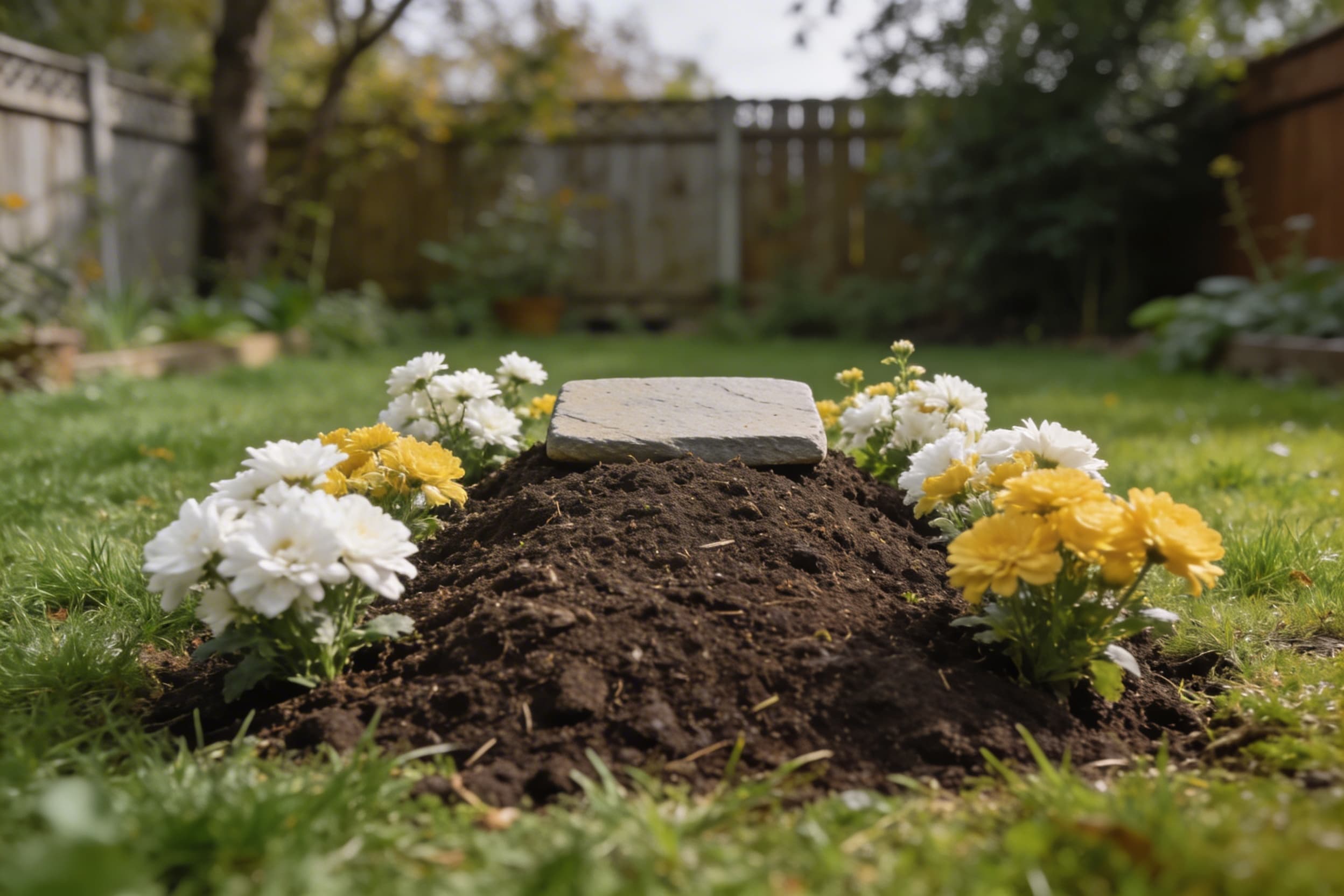
Home burial is legal in most states but not all, and never where it could reach groundwater — check local rules before choosing it.
Pet Cremation
Cremation is the most common choice for dogs in the United States. You can arrange cremation through your veterinarian, a pet cremation service, or a pet funeral home. There are two main types: private cremation, where only your dog is cremated and you receive the ashes back, and communal cremation, where multiple pets are cremated together and ashes are not returned. Private cremation typically costs between $100 and $300 depending on your dog's size and your location. For detailed pricing, see our guide on how much pet cremation costs.
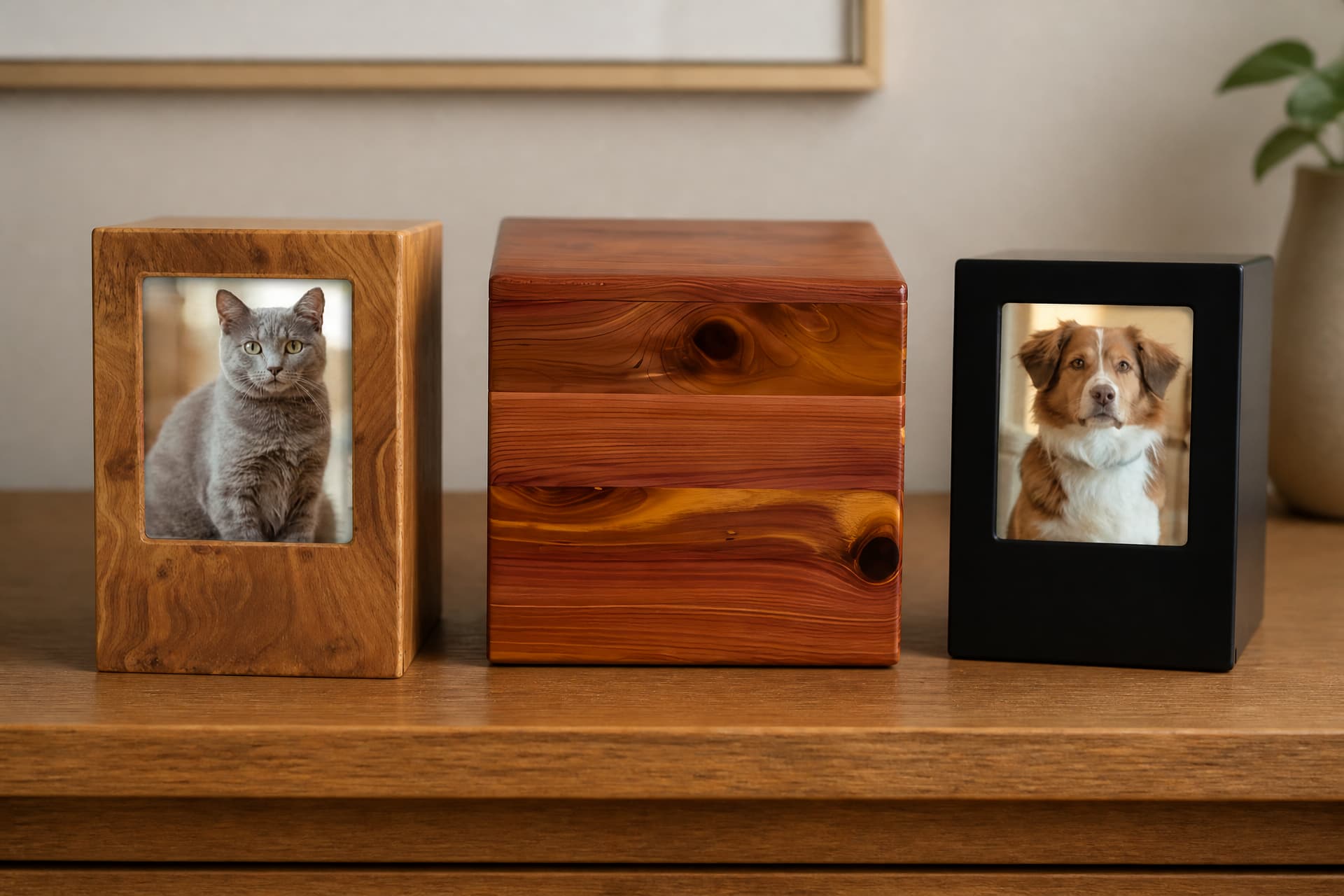
After receiving your dog's ashes, many families choose to keep them in a pet urn at home, scatter them in a meaningful location, or divide them among family members using pet keepsake urns. Some families wear a small portion of ashes in pet cremation jewelry — a pendant, bracelet, or ring that keeps your dog close to your heart every day. To explore all the options for your dog's ashes, see our guide on what to do with pet ashes.
Pet Burial
If you prefer a traditional burial, you have two main options: burial in your yard or burial at a pet cemetery.
Home burial is legal in many areas, though regulations vary by city and county. Most jurisdictions require the burial to be at least three to four feet deep and a minimum distance from water sources and property lines. Our guide on how to bury a dog covers depth requirements, legal considerations, and step-by-step instructions. Many families choose to bury their dog in a pet casket — available in cultured, metal, wood, and biodegradable materials — to provide a dignified resting place and protect the burial site from settling.
Pet cemetery burial offers a permanent, maintained plot with the option to visit and place flowers or other tributes. Most pet cemeteries require a casket or burial vault, and fees vary by location. Pet cemeteries may also offer services such as viewing, funeral ceremonies, and engraved pet grave markers to mark the site.
What If You Rent or Plan to Move?
If you rent your home, burying a pet in the yard may not be permitted by your landlord or lease agreement. Even if you own your home, moving in the future means leaving the burial site behind. Cremation offers the flexibility to take your dog's remains with you wherever you go. For families who want a permanent, accessible burial site, a pet cemetery is the most reliable long-term option.
Cremation and burial compared for a dog: cost ranges, how long each takes, and the questions worth asking before deciding.
A memorial gives your family a way to say goodbye, share memories, and begin the process of healing. Pet memorials can be as simple or as formal as you choose.
Holding a Pet Funeral or Memorial Service
Many families find comfort in holding a small service at home, in the yard, or at a pet cemetery. A pet funeral service might include sharing favorite memories, reading a poem or prayer, displaying photos of your dog, and allowing each family member — including children — to say a few words. If other pets live in the household, some families allow them to be present so they can experience the transition and begin their own adjustment. There is no right or wrong format — the service should reflect your family and the role your dog played in your lives.
Creating a Lasting Memorial
Beyond the funeral, there are many ways to keep your dog's memory alive. A pet keepsake such as a paw print impression, a memorial ornament, or a photo frame can serve as a daily reminder of the bond you shared. Some families commission a custom portrait, plant a pet memorial tree, or create a small garden tribute. If you chose cremation, displaying the urn in a meaningful spot in your home can become a comforting part of your daily life — see our guide on how to display a pet urn at home for placement ideas and etiquette.
Helping Your Family Cope With the Loss
Grieving Is Normal and Necessary
If your dog just died and the grief feels overwhelming, know that what you are feeling is completely normal. The bond between a dog and their owner is one of the deepest human-animal relationships, and losing that bond causes real, significant grief. You may feel sadness, anger, guilt, numbness, or all of these at once. Some people lose their appetite, have trouble sleeping, or find themselves crying unexpectedly throughout the day. There is no correct timeline for grief — it takes as long as it takes.
Allow yourself to feel whatever comes up without judgment. Talk to friends or family members who understand the significance of your loss. If the grief becomes debilitating or does not ease over time, consider reaching out to a pet loss support group or a counselor who specializes in grief. The Association for Pet Loss and Bereavement and many local veterinary schools offer free or low-cost support resources.
Helping Children Through Pet Loss
For many children, the death of a dog is their first experience with loss. Be honest with your child about what happened — avoid euphemisms like "went to sleep" that can create confusion or fear. Use age-appropriate language and let them ask questions. Including children in the memorial process — letting them write a letter, draw a picture, choose a pet memorial stone, or help pick out an urn — can give them a sense of participation and closure. Our article on how to help a child deal with a pet's death offers additional guidance.
Supporting Other Pets in the Household
Surviving dogs, cats, or other pets may notice the absence of their companion and exhibit signs of distress — changes in appetite, sleeping patterns, vocalization, or clinginess. Maintain their normal routine as much as possible. Spend extra time with them. Allow them to sniff the deceased pet's bedding or the area where the pet rested, as this can help them understand the loss. Most pets adjust within a few weeks, but if behavioral changes persist, consult your veterinarian.
Beyond the immediate decisions about cremation or burial, there are several practical tasks to address in the days following your dog's death.
Notify your veterinarian and cancel appointments. If you have not already called, inform your vet's office so they can update their records and cancel any upcoming visits, medication refills, or treatments.
Cancel pet insurance. Contact your pet insurance provider to cancel the policy. Some policies have a grace period or may owe you a partial refund for unused coverage.
Update registrations and microchip records. If your dog was registered with your city or county, notify the registration office. Contact the microchip company to update the record.
Decide what to do with your dog's belongings. Some families put collars, leashes, toys, and beds away immediately. Others find comfort in leaving them out for a while. There is no rush — handle belongings on your own timeline. Some families donate gently used items to a local shelter or rescue organization, which can be a meaningful way to honor your dog's memory by helping another animal in need.
Take care of yourself. Eat meals, stay hydrated, and try to maintain some structure in your day even if motivation is low. If you live alone, reach out to someone — a friend, family member, or neighbor — so you are not isolated during the hardest days.
Frequently Asked Questions
How long can I keep my dog's body at home after they die?
In a cool room (below 65°F / 18°C), a dog's body can be kept at home for 12 to 24 hours. In warmer conditions, decomposition begins more quickly. If you need more time before cremation or burial, wrapping the body in a blanket with ice packs can help preserve it for up to 48 hours. Contact your veterinarian or a pet cremation service promptly to arrange next steps.
Can I bury my dog in my backyard?
In many areas, yes — but regulations vary by city, county, and state. Most jurisdictions require a burial depth of at least three feet (some require four), a setback from water sources and property lines, and that the pet not have died from a contagious disease. Always check your local ordinances before proceeding. Our dog burial guide linked above covers the full process.
How much does it cost to cremate a dog?
Private cremation typically costs between $100 and $300, depending on your dog's weight and your geographic location. Communal cremation is less expensive, usually $30 to $70, but you will not receive ashes back. Additional costs may include the urn, a paw print keepsake, or engraving. See our full pet cremation cost guide linked above for a detailed breakdown.
Should I let my other pets see the deceased dog?
Many veterinarians and animal behaviorists recommend allowing surviving pets to briefly investigate the deceased pet's body. This can help them understand the absence rather than spending days searching for their missing companion. Watch for signs of distress and keep the interaction brief and supervised.
When is the right time to get another dog?
There is no universal answer. Some families find comfort in adopting again within weeks. Others need months or years before they are ready. Do not let anyone pressure you into a timeline. When you do consider a new dog, remember that a new pet does not replace the one you lost — they bring their own unique relationship into your life.