🏬Supersize Online Funeral Retailer🪦1000's of Headstones⚱️Over 10,000 Cremation Urns⚰️Caskets Overnight Delivery🛒Funeral & Memorial Superstore🚚FREE Shipping on ALL Orders👨👩👧👦Helping Families for over 20 Years💰Lowest Price Guarantee🏬Supersize Online Funeral Retailer🪦1000's of Headstones⚱️Over 10,000 Cremation Urns⚰️Caskets Overnight Delivery🛒Funeral & Memorial Superstore🚚FREE Shipping on ALL Orders👨👩👧👦Helping Families for over 20 Years💰Lowest Price Guarantee
🏬Supersize Online Funeral Retailer🪦1000's of Headstones⚱️Over 10,000 Cremation Urns⚰️Caskets Overnight Delivery🛒Funeral & Memorial Superstore🚚FREE Shipping on ALL Orders👨👩👧👦Helping Families for over 20 Years💰Lowest Price Guarantee🏬Supersize Online Funeral Retailer🪦1000's of Headstones⚱️Over 10,000 Cremation Urns⚰️Caskets Overnight Delivery🛒Funeral & Memorial Superstore🚚FREE Shipping on ALL Orders👨👩👧👦Helping Families for over 20 Years💰Lowest Price Guarantee
Losing a cat leaves a silence in your home that is hard to describe. The empty windowsill, the food bowl that no longer needs filling, the absence of a familiar purr at night — these are the small, quiet reminders that your feline companion is gone. One of the most natural questions that follows is: where did they go?
There is no single answer. What happens to cats after death depends on what you believe — and people across cultures, religions, and spiritual traditions have offered comforting perspectives for thousands of years. This article explores the most widely held beliefs about where cats go when they die, from the Rainbow Bridge to religious teachings to the simple, grounding idea that love does not end when life does. For families looking for practical ways to honor a cat who has passed, our covers every option from urns and cremation jewelry to and garden tributes.
The Rainbow Bridge is perhaps the most widely shared belief about where pets go when they die. The concept comes from a poem written in 1959 by Edna Clyne-Rekhy, who was identified as its author in February 2023 after sixty years of anonymous circulation. It describes a lush meadow just before heaven where pets wait for their owners. In this meadow, cats are restored to full health: old cats are young again, sick cats are whole, and every cat plays freely in warm sunlight with an endless supply of sunny spots and gentle breezes.
The poem describes the moment when a pet sees their owner arrive. The cat runs to greet them, and together they cross the Rainbow Bridge into heaven. The idea that your cat is not gone but waiting — healthy, happy, and aware of you — has provided comfort to millions of pet owners around the world.
The Rainbow Bridge is not tied to any single religion. It has become a universal concept embraced by people of all faiths and no faith at all. Whether you take it literally or simply as a beautiful metaphor for the enduring bond between a cat and their human, the message is the same: the connection you shared does not disappear.
Religious and Spiritual Perspectives
Christianity
The Bible does not explicitly state whether animals go to heaven, and Christian denominations hold varying views. Some point to Ecclesiastes 3:21, which asks whether the spirit of an animal goes upward or downward, as evidence of uncertainty. Others cite Romans 8:19–22, which describes all of creation awaiting redemption, as suggesting that animals are part of God's eternal plan.
Pope John Paul II stated in 1990 that animals possess a soul given by God, and Pope Francis has been quoted as saying that paradise is open to all of God's creatures. Many individual Christians find comfort in the belief that a loving God would not separate them from the companions who brought them joy in this life.
Islam
Islamic tradition teaches that animals have souls and will be resurrected on the Day of Judgment. The Quran references animals as communities like humans (Surah 6:38), and the Prophet Muhammad showed great compassion toward cats specifically — his cat Muezza is one of the most well-known animals in Islamic history. Many Muslims believe that animals who were treated well in this life will be at peace in the afterlife.
Buddhism
Buddhist teachings hold that all sentient beings cycle through death and rebirth. A cat's consciousness does not end at death but transitions into a new form based on karma. Many Buddhists believe that the love and care shown to an animal in this life positively influences their next incarnation. The idea of impermanence — that all things change but nothing is truly lost — offers a different kind of comfort than the promise of reunion, but comfort nonetheless.
Ancient Egypt
Cats held sacred status in ancient Egyptian civilization. The goddess Bastet, depicted as a cat or a woman with a cat's head, was worshipped as a protector of the home and family. Egyptians believed cats carried divine energy, and the death of a cat was mourned deeply — family members would shave their eyebrows as a sign of grief. Cats were frequently mummified and placed in tombs, sometimes alongside their owners, to ensure their passage into the afterlife. The Egyptian reverence for cats speaks to a belief that spans millennia: these animals are more than pets. They carry something sacred.
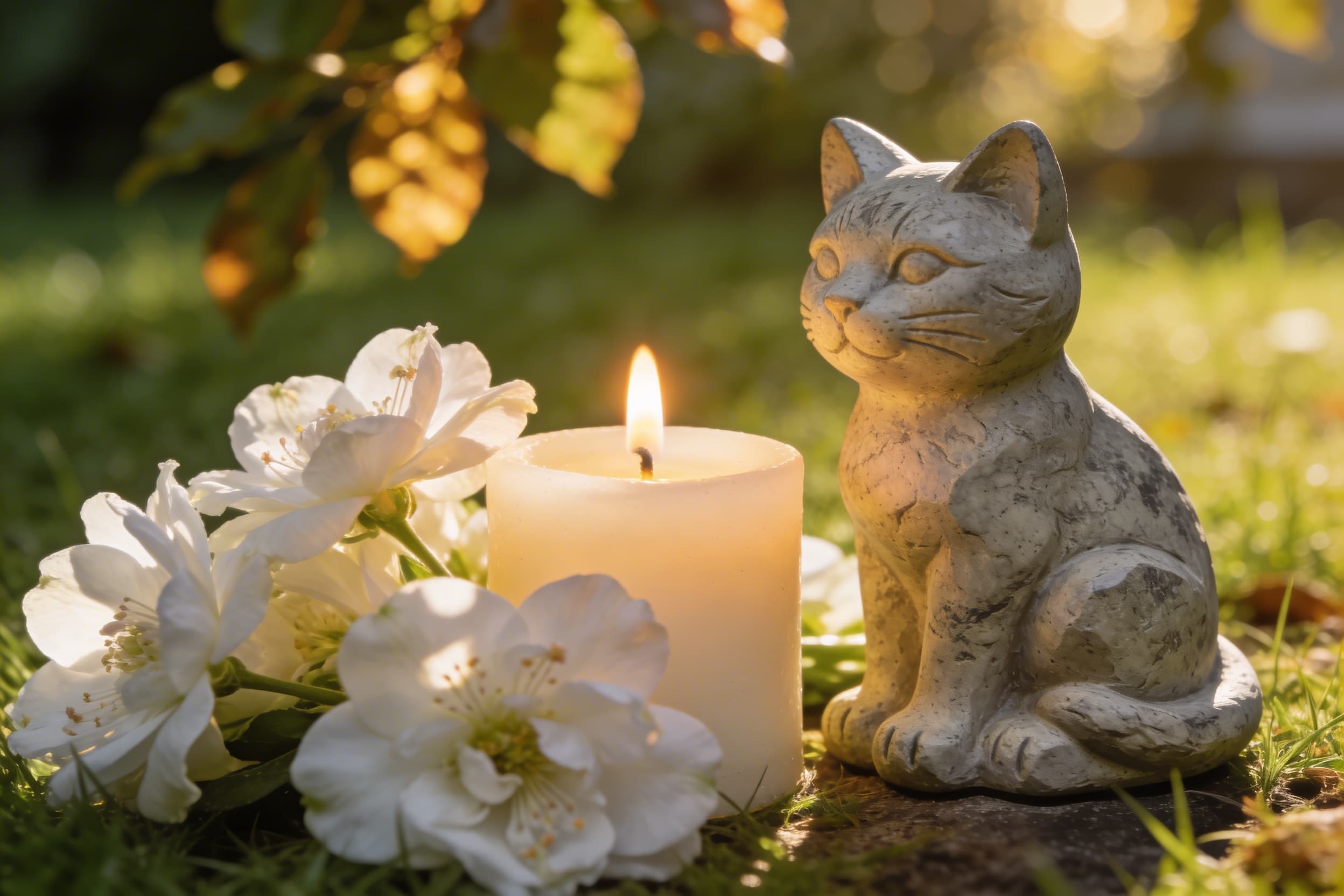
A small garden marker gives grief somewhere to go, which matters most in the first weeks.
Do Cats Have Souls?
This question has been debated by theologians, philosophers, and pet owners for centuries. There is no scientific consensus on what a soul is, let alone whether animals possess one. But the question itself reveals something important: anyone who has lived with a cat knows they have a personality, preferences, moods, and what can only be described as a presence. When that presence is gone, the loss is real and profound.
Many veterinarians and animal behaviorists note that cats form deep bonds with their humans, express grief when separated from companions, and display complex emotional responses that suggest a rich inner life. Whether you call that a soul, a spirit, or simply consciousness, the experience of losing it is the same.
For families processing this question, the answer often matters less than the act of asking it. The fact that you wonder where your cat went is itself evidence of the bond you shared — and that bond is not diminished by death.
Signs Your Cat May Still Be With You
Many grieving cat owners report experiences they interpret as signs from their deceased cat. While these are personal and subjective, they are remarkably common:
Familiar Sounds and Sensations
Some people hear a purr in a quiet room, feel a weight on the bed where their cat used to sleep, or hear the soft thud of paws landing on a floor. These moments can be startling and deeply comforting at the same time.
Visits in Dreams
Dreams about a deceased cat are one of the most frequently reported experiences. In these dreams, the cat often appears healthy and young, and the interaction feels vivid and real rather than dreamlike. Many people wake from these dreams feeling a sense of peace rather than renewed grief.
Other Animals Behaving Unusually
If you have other pets, you may notice them staring at a spot where your cat used to rest, or reacting to something invisible. Some owners report that a new cat entering the home displays habits remarkably similar to the cat who passed — a preferred sleeping position, a specific toy preference, or an unusual behavioral quirk.
There is no scientific framework for these experiences. But there is also no reason to dismiss them. If something brings you comfort, let it.
Grief and logistics arrive at the same time when a cat dies. While the spiritual questions are deeply personal, the practical decisions are concrete and time-sensitive. Here is what most families face:
Cremation
Cat cremation is the most common aftercare choice, with private cremation typically costing $100 to $200. You receive only your cat's ashes, which can be kept in a cat urn, scattered in a meaningful location, or incorporated into cat cremation jewelry — a pendant, bracelet, or ring that holds a small amount of cremated remains. For a detailed breakdown of all costs involved, see our guide on cat cremation costs.
Burial
Home burial is permitted in many areas, though some cities and HOAs restrict it. If you choose burial, pet caskets are available in wood and biodegradable options, and cat memorial stones can mark your cat's resting place with a personalized grave marker. Pet cemeteries are another option for families who want a maintained, visitable site.
Memorials and Keepsakes
Creating a memorial is one of the most meaningful things you can do after losing a cat. Options range from a simple framed photo to elaborate garden tributes. Our guide to cat memorial ideas covers dozens of ways to honor your cat, from paw print kits and keepsake ornaments to photo plaques and pet cremation memorials that incorporate ashes into a stone tribute. Pet memorial gifts — memory boxes, ornaments, and sympathy cards — are a thoughtful way to comfort a friend who is grieving the loss of their cat.
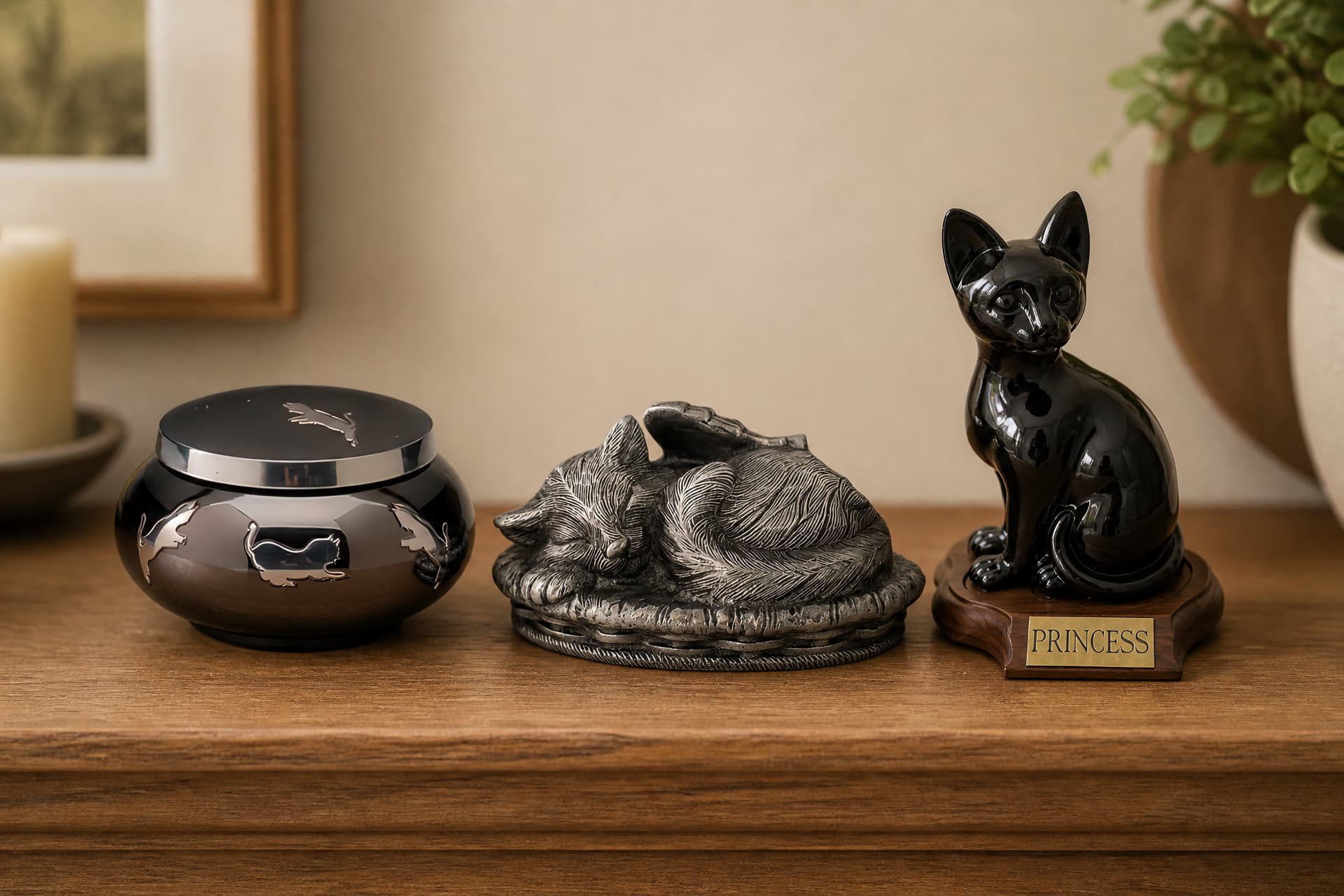
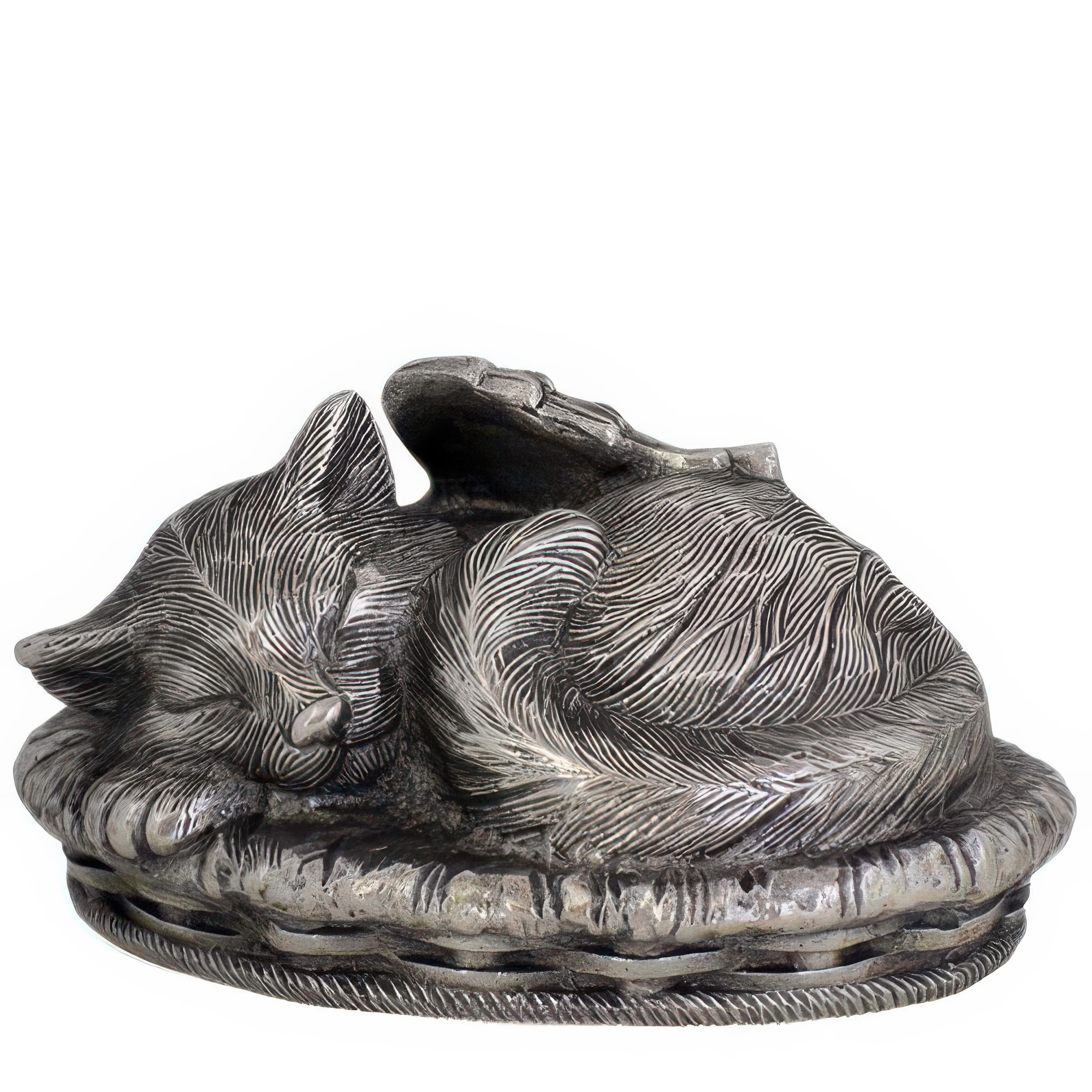
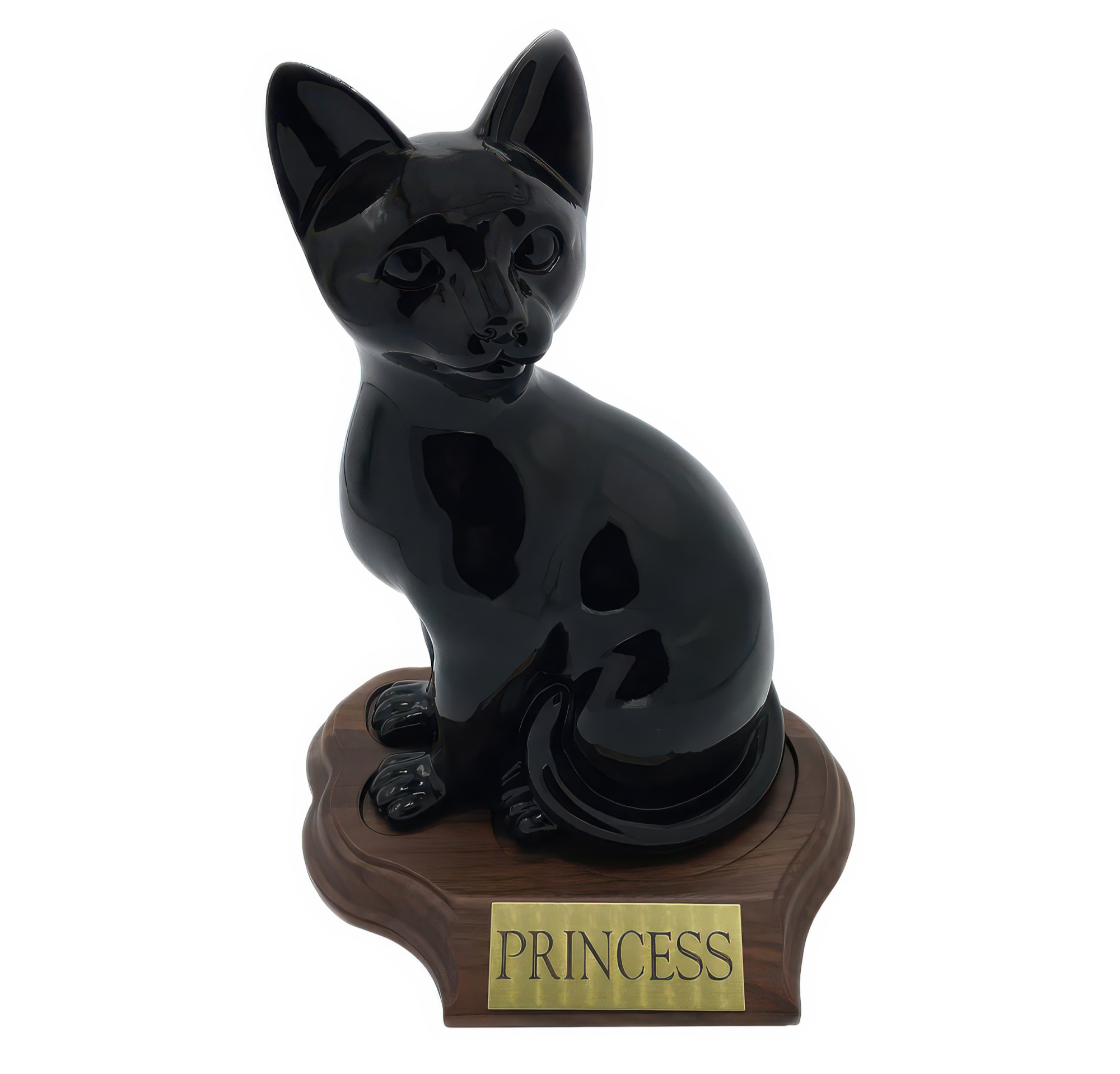
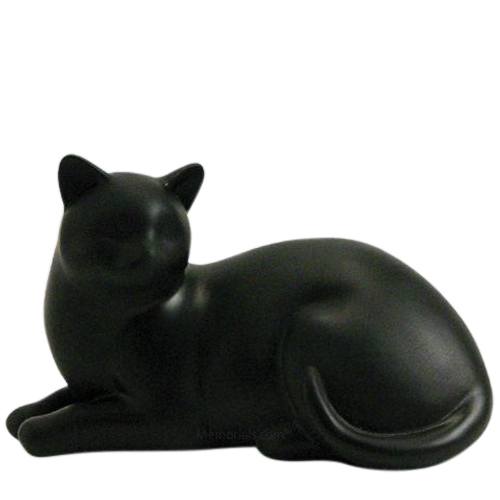
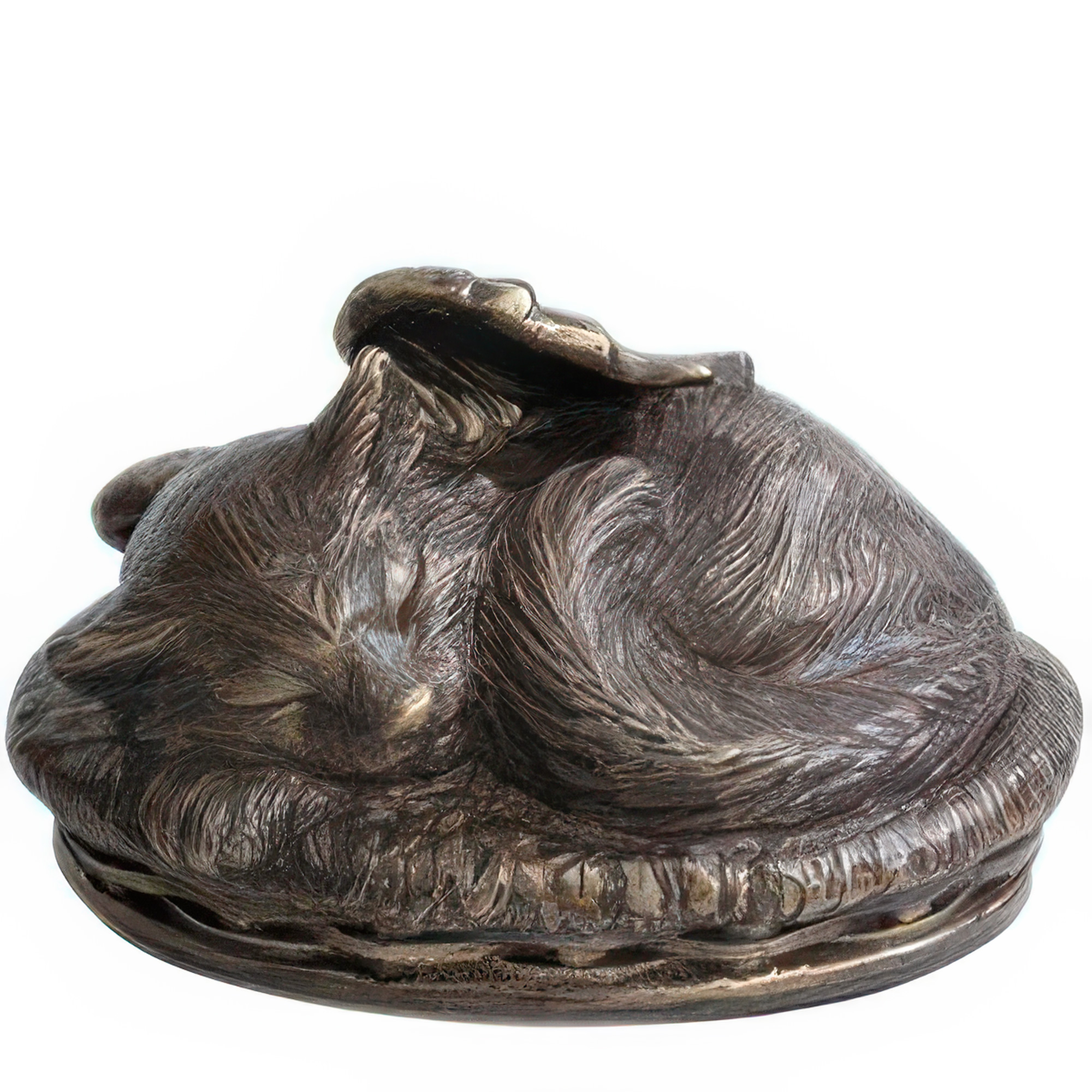
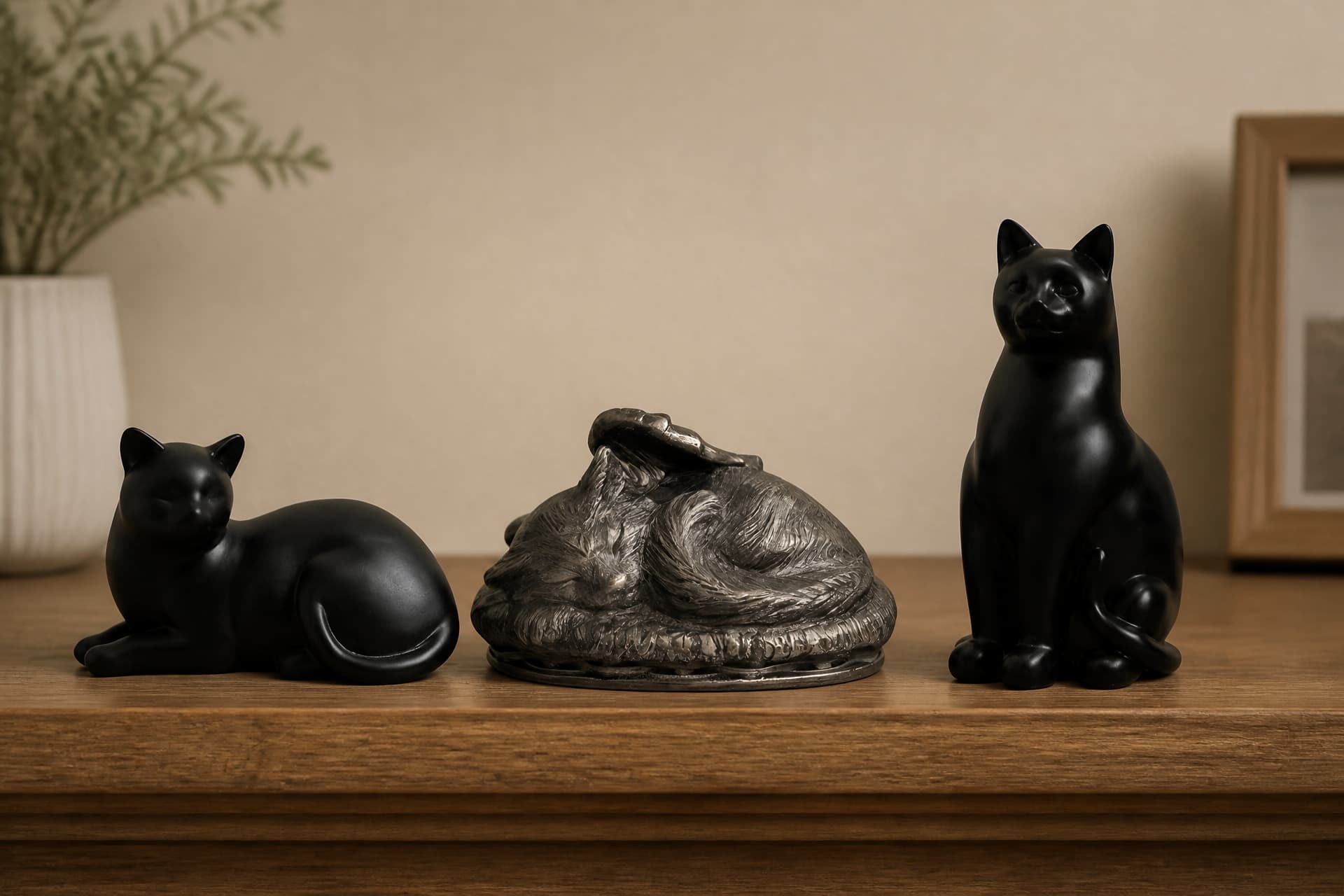
Cat urns are sized for pets under about 20 pounds, which covers nearly every domestic cat.
Coping with the Loss of a Cat
Grief after losing a cat is real, valid, and sometimes surprisingly intense. Cats are woven into daily routines in ways that become invisible until they are gone — the morning feeding ritual, the evening lap session, the sound of a bell on a collar moving through the house. When those rhythms stop, the silence can be overwhelming.
There is no timeline for grief. Some people feel better in weeks; for others, the loss resonates for months or longer. Both responses are normal. Here are some things that may help:
Allow Yourself to Grieve
Do not minimize your loss because your cat was "just a pet." Research consistently shows that the bond between humans and their companion animals triggers the same neurological responses as bonds between humans. Your grief is a measure of your love, and it deserves to be honored.
Talk About Your Cat
Share stories with friends, family, or online communities. Say your cat's name. Describe their personality. Talking about your cat keeps their memory present and gives your grief somewhere to go.
Create a Memorial
The act of creating something tangible — placing an urn on a shelf, planting a tree, framing a photo, writing a letter — can be profoundly therapeutic. It transforms grief from something you carry internally into something you can see and touch. Browse pet memorials for hundreds of options that honor your cat's memory with lasting, meaningful tributes.
Seek Support If You Need It
Pet loss grief counselors, hotlines, and support groups exist specifically for people mourning companion animals. If your grief feels unmanageable, these resources can help. Asking for support is not weakness — it is an acknowledgment that your cat mattered.
Many religions and spiritual traditions offer beliefs that support the idea of cats in an afterlife. Christianity, Islam, and Buddhism all contain teachings that can be interpreted to include animals. The Rainbow Bridge concept, while not tied to a specific religion, provides a widely embraced vision of a peaceful place where cats wait for their owners.
Do cats know they are dying?
Veterinary research suggests cats do not conceptualize death the way humans do. However, cats often exhibit behavioral changes as they near the end of life — seeking solitude, eating less, becoming unusually affectionate, or withdrawing to a quiet spot. These changes are driven by physical decline rather than an awareness of death, but they can feel deeply intentional to the people who know them best.
Is it normal to grieve a cat as much as a person?
Yes. Studies in human-animal bond research show that the grief response after losing a pet can be equivalent in intensity to grief after losing a close human family member. The depth of grief reflects the depth of the relationship, not the species of the one you lost.
What should I do with my cat's remains?
The most common options are cremation (private, individual, or communal) and burial (home or pet cemetery). Cremation gives you the flexibility to keep ashes in an urn, scatter them, or incorporate them into jewelry. For a full exploration of options, see our guide on what to do with pet ashes.
Can I bury my cat in my backyard?
In many areas, yes — but regulations vary by city, county, and HOA. Most jurisdictions require burial at a minimum depth of 2 to 3 feet, away from water sources, and in a biodegradable container. Check your local ordinances before proceeding.
Where your cat went after death is a question only you can answer for yourself. But wherever they are, the love you shared is not lost. It lives in the habits they taught you, the comfort they provided, and the memories that surface when you least expect them — a patch of sunlight, a cardboard box, the sound of birds outside a window.
Your cat changed your life. That is their legacy, and no amount of grief can take it away. If you are looking for a meaningful way to honor that legacy, Memorials.com carries hundreds of pet memorials — from cat urns and cremation jewelry to memorial stones and garden tributes. Every order ships free.