🏬Supersize Online Funeral Retailer🪦1000's of Headstones⚱️Over 10,000 Cremation Urns⚰️Caskets Overnight Delivery🛒Funeral & Memorial Superstore🚚FREE Shipping on ALL Orders👨👩👧👦Helping Families for over 20 Years💰Lowest Price Guarantee🏬Supersize Online Funeral Retailer🪦1000's of Headstones⚱️Over 10,000 Cremation Urns⚰️Caskets Overnight Delivery🛒Funeral & Memorial Superstore🚚FREE Shipping on ALL Orders👨👩👧👦Helping Families for over 20 Years💰Lowest Price Guarantee
🏬Supersize Online Funeral Retailer🪦1000's of Headstones⚱️Over 10,000 Cremation Urns⚰️Caskets Overnight Delivery🛒Funeral & Memorial Superstore🚚FREE Shipping on ALL Orders👨👩👧👦Helping Families for over 20 Years💰Lowest Price Guarantee🏬Supersize Online Funeral Retailer🪦1000's of Headstones⚱️Over 10,000 Cremation Urns⚰️Caskets Overnight Delivery🛒Funeral & Memorial Superstore🚚FREE Shipping on ALL Orders👨👩👧👦Helping Families for over 20 Years💰Lowest Price Guarantee
If you are reading this, you are likely facing one of the hardest decisions a dog owner will ever make. The fact that you are searching for guidance says everything about how much you love your dog and how seriously you take their wellbeing.
There is no formula that tells you exactly when it is time. Every dog is different, every illness follows its own course, and every family has its own threshold for what they can bear. What this guide can offer is a framework for thinking through the decision clearly, recognizing the physical signs that your dog's quality of life is declining, and understanding what happens if you choose euthanasia so that fear of the unknown does not add to your burden.
If you are also beginning to think about what to do when your dog dies, our step-by-step guide covers the practical decisions you will face afterward. For now, this article focuses entirely on the question in front of you.
Dogs cannot tell you they are in pain, and many breeds are remarkably stoic. Recognizing the subtle signs of decline is one of the most important things you can do for your companion in their final weeks or months.
Chronic Pain That Cannot Be Managed
Pain is the single most important factor in evaluating end-of-life quality. If your dog is already on pain medication and still showing signs of discomfort, the pain may have moved beyond what treatment can control. Watch for persistent panting that is not related to heat or exercise, restlessness or an inability to settle, trembling, reluctance to be touched in areas that were never sensitive before, and whimpering or vocalizing when changing positions.
Your veterinarian can adjust dosages or try different medications, but there is a ceiling to what pain management can achieve. If multiple adjustments have failed to bring relief, that is a significant signal.
Loss of Appetite and Dehydration
A dog that consistently refuses food, even hand-fed favorites, is telling you something important. Brief appetite dips happen with many illnesses, but a sustained refusal to eat or drink over several days indicates the body is beginning to shut down. Dehydration follows quickly and compounds every other symptom.
Difficulty Breathing
Labored breathing, persistent coughing, or episodes of respiratory distress are among the most urgent signs. Difficulty breathing ranks at the top of veterinary pain scales because oxygen deprivation causes significant suffering. If your dog struggles to breathe even at rest, speak with your vet immediately.
Loss of Mobility
When a dog can no longer stand, walk to the water bowl, or get outside to relieve themselves without falling, their independence is gone. Mobility loss can stem from arthritis, degenerative myelopathy, neurological conditions, or general muscle wasting. Aids like ramps, slings, and carts can extend quality of life for a time, but there comes a point when the dog can no longer participate in their own care.
Incontinence and Hygiene Breakdown
Urinary and fecal incontinence are common in dogs nearing the end of life. A dog that can no longer move away from their own waste and lies in soiled bedding is experiencing a loss of dignity that compounds physical discomfort. Chronic skin irritation and infection often follow.
Withdrawal and Behavioral Changes
Dogs that once greeted you at the door but now stay curled in a corner are withdrawing. Cognitive decline, sometimes called canine cognitive dysfunction, can cause confusion, nighttime anxiety, pacing, staring at walls, or failing to recognize familiar people. These changes are distressing for the dog and for the family watching them.
How to Assess Your Dog's Quality of Life
Emotions can cloud judgment during this time. A structured quality of life assessment gives you a more objective way to evaluate where your dog truly stands, rather than relying on one good afternoon to convince yourself everything is fine.
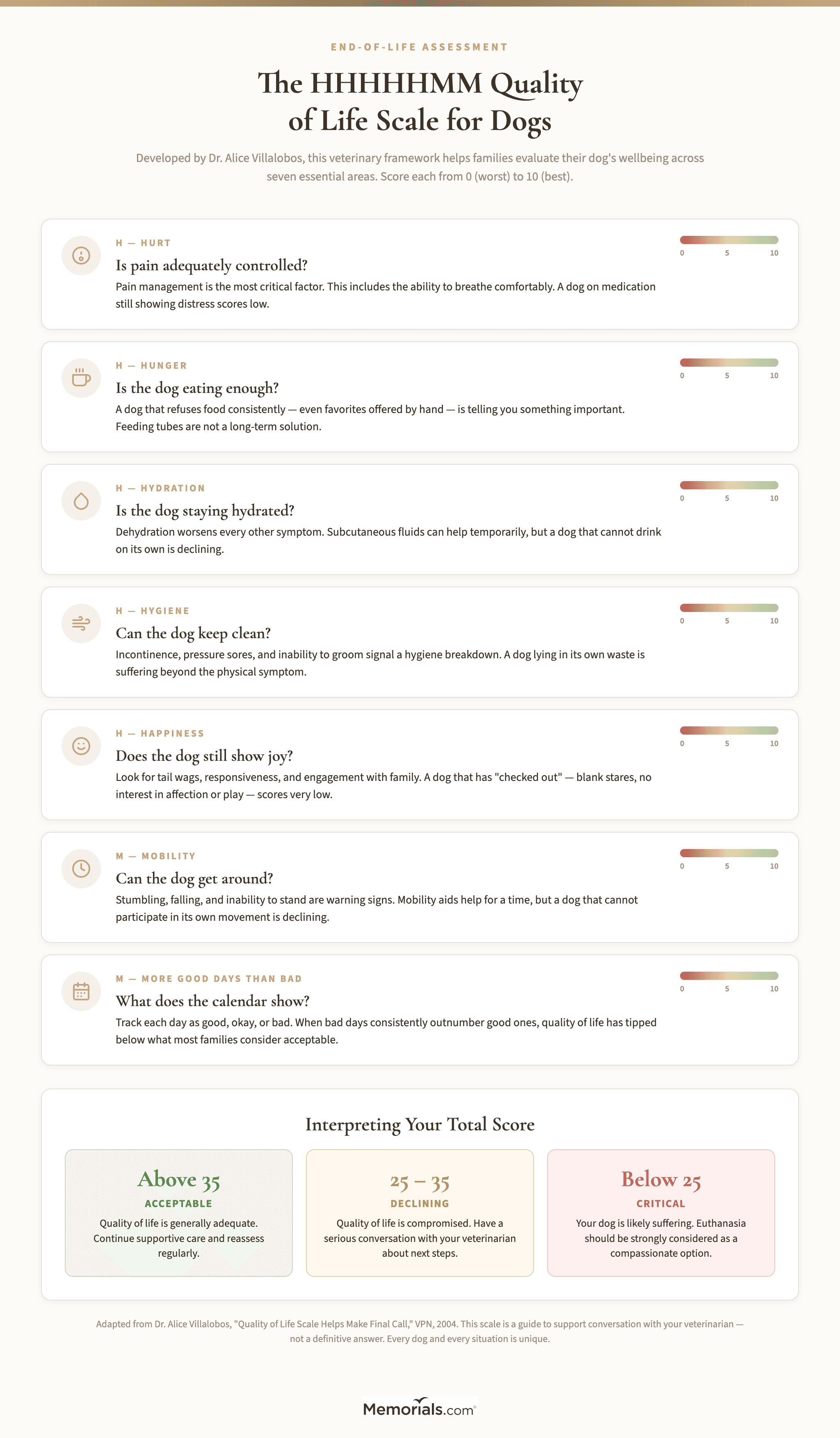
The HHHHHMM Quality of Life Scale
Developed by veterinary oncologist Dr. Alice Villalobos, the HHHHHMM scale is one of the most widely used tools in veterinary hospice care. The acronym stands for seven categories that together paint a picture of your dog's daily experience. Each is scored from 0 to 10, where 10 is the best possible condition.
Hurt. Is your dog's pain adequately controlled? This includes the ability to breathe comfortably. Pain control is the most critical factor on the scale. To evaluate, watch your dog at rest and during movement. A dog scoring high will sleep comfortably, shift positions without flinching, and breathe at a steady, relaxed pace. A dog scoring low may pant constantly even in cool rooms, guard certain body parts by snapping when touched, tremble while lying still, or vocalize when standing up or lying down. If your dog is on pain medication and still exhibits these behaviors after dosage adjustments, the score belongs in the 1 to 3 range.
Hunger. Is your dog eating enough to maintain nutrition? Observe not just whether your dog eats, but how. A dog scoring 8 to 10 approaches the food bowl with interest and finishes meals consistently. A dog scoring 4 to 6 may eat only when hand-fed, pick at food and walk away, or eat one day and refuse the next. A dog scoring 1 to 3 turns away from every offering, including high-value treats like chicken, cheese, or baby food that would normally be irresistible. Sustained refusal over multiple days is one of the clearest indicators that the body is shutting down.
Hydration. Is your dog drinking enough water on their own? You can check hydration by gently pinching the skin on the back of your dog's neck. In a well-hydrated dog, the skin snaps back immediately. If it returns slowly or stays tented, your dog is dehydrated. Some families learn to administer subcutaneous fluids at home under veterinary guidance, which can improve comfort temporarily, but the need for daily fluid supplementation is itself a sign of significant decline.
Hygiene. Can your dog keep themselves reasonably clean? A dog that lies in their own urine or feces, develops raw pressure sores on elbows or hips from immobility, or has open wounds that refuse to heal despite treatment is suffering a hygiene breakdown. Also consider whether your dog can be bathed or groomed without causing them significant pain or distress. A matted, soiled coat that your dog cannot maintain and resists having cleaned signals a very low score.
Happiness. Does your dog still show interest in life? This is the factor you are best equipped to judge because you know your dog's personality. A dog scoring high still perks up when you enter the room, follows household activity with their eyes, enjoys being petted, or gets excited about going outside. A dog scoring low stares at walls, does not respond when you call their name, hides in unusual places, or shows nighttime restlessness and anxiety that was not part of their baseline personality. The absence of joy matters just as much as the presence of suffering.
Mobility. Can your dog get around with or without assistance? A score of 8 to 10 means your dog moves freely or with minor stiffness. A score of 4 to 6 means they need help with stairs, struggle on slippery floors, or require a sling or harness for walks but can still bear weight. A score of 1 to 3 means your dog cannot stand without being lifted, falls repeatedly, or has lost the use of their hind legs entirely. Mobility aids like ramps and carts extend quality of life meaningfully for some dogs, but the question to ask is whether the aid allows your dog to participate in life or merely prevents them from lying in one spot.
More good days than bad. This is the summary measure and the one that ties everything together. A "good day" means your dog ate willingly, seemed comfortable, showed some spark of interest or engagement, and rested peacefully. A "bad day" means pain was visible, food was refused, there was vomiting or incontinence, or your dog seemed distressed or withdrawn for most of the day. Track each day on a simple calendar using colors or symbols. After two to three weeks, the pattern becomes undeniable.
How to Interpret the Scores
A total score above 35 out of 70 generally suggests acceptable quality of life and justifies continuing supportive care. Scores at or below 35 indicate that your dog's quality of life has deteriorated significantly. However, the total is less important than the individual categories. A dog scoring 2 on pain but 8 on everything else is still suffering deeply in the most critical area.
Dr. Villalobos designed the scale not as a pass-fail test but as a tool to help families have honest conversations with their veterinary team. Your vet can walk you through each category and help you see patterns you might be too close to notice.
The "Good Days vs. Bad Days" Calendar
Families experiencing a pet's decline for the first time tend to wait longer than those who have been through it before. Veterinary hospice professionals consistently report that experienced families choose euthanasia sooner, and that first-time families often reflect afterward that they wished they had not waited as long as they did.
That observation is not meant to rush you. It is meant to gently counter the fear of acting "too soon," because in practice, the greater risk is waiting too long.
The Emotional Side of the Decision
Guilt Is Normal
Nearly every pet owner feels guilty, regardless of when they make the decision. If you act early, you may worry you gave up. If you wait, you may regret your dog's final days of suffering. This impossible tension is a feature of loving someone who cannot speak for themselves.
What helps is remembering that euthanasia is not giving up on your dog. It is the last act of care you can provide — a decision to prioritize their comfort over your own need to keep them close.
You Know Your Dog Best
Veterinarians can provide medical assessments and guide you through options, but they cannot tell you exactly when it is time. They can tell you what is happening physiologically, what the prognosis looks like, and whether further treatment would improve or merely extend life. The final decision rests with you, because you are the one who knows your dog's personality, their baseline happiness, and what their life looked like before illness changed it.
If your dog's spark is gone — if the thing that made them them has faded — that matters, even if they are still eating.
Involving Your Family
If children are in the household, honest and age-appropriate conversations about what is happening help them process the loss. Sheltering them entirely can complicate their grief later. Many families find it helpful to let children say goodbye in their own way, whether that means drawing a picture, reading a note, or simply sitting with the dog.
What Happens During Euthanasia
Fear of the procedure itself stops some families from choosing it even when they know it is time. Understanding what actually happens can ease that fear.
The Two-Step Process
Modern veterinary euthanasia follows a two-step protocol designed to be as gentle as possible.
First, the veterinarian administers a sedative, typically injected into a muscle in the hind leg or under the skin. Over the next five to ten minutes, your dog will become deeply drowsy and then fall into a state comparable to surgical anesthesia. They will no longer feel their body or be aware of their surroundings. You can hold them, pet them, and talk to them throughout this stage.
Once the sedation is complete, the veterinarian administers the euthanasia solution, which is an overdose of a barbiturate called pentobarbital. This is given intravenously, often through a small catheter placed in a leg vein. The drug stops brain function first, followed by the heart and lungs. Your dog will pass within one to two minutes of the injection. They are already unconscious from the sedative and feel nothing.
What You May Notice Afterward
Your dog's eyes will likely remain open. There may be a final deep breath, brief muscle twitches, or a release of the bladder or bowels as muscles relax completely. These are reflexes, not signs of pain or consciousness. Your veterinarian will confirm that your dog has passed by listening for a heartbeat.
Being Present
Whether to stay in the room is a deeply personal choice. Some families find comfort in knowing their dog's last moments included a familiar voice and gentle hands. Others feel that their own distress would transfer to the dog. There is no right answer, and veterinary teams are compassionate and experienced either way.
Clinic vs. In-Home Euthanasia
Euthanasia can take place at a veterinary clinic or in your own home, and each setting has meaningful differences.
At a clinic, you will typically be brought to a quiet, private room separate from the main waiting area. Many practices set aside specific appointment times for end-of-life visits so the environment is calm and unhurried. The veterinary team will explain each step before it happens and give you as much time as you need. Most clinics also offer a private exit so you do not have to walk back through a busy lobby afterward. The practical advantage of a clinic is that all medical equipment is immediately available, and aftercare arrangements for your dog's remains can be handled on-site.
In-home euthanasia services, such as those offered by Lap of Love and similar veterinary networks, allow your dog to pass in familiar surroundings — on their own bed, in their favorite room, surrounded by family. The veterinarian brings everything needed and follows the same two-step sedation and injection protocol used in clinics. This option typically costs more than a clinic visit, but it removes the stress of a car ride and the anxiety many dogs feel in veterinary offices. For dogs with severe mobility issues or fear-based aggression triggered by unfamiliar environments, in-home euthanasia can be the more peaceful choice. Ask your regular veterinarian whether they offer in-home services or can refer you to a provider in your area.
Whether Other Pets Should Be Present
If you have other dogs or cats in the household, you may wonder whether they should be in the room. There is no veterinary consensus on this, but many animal behaviorists suggest that allowing other pets to see and sniff their companion after they have passed can help them understand the absence. Dogs are pack animals, and a housemate that simply disappears one day may search for them, wait by the door, or show signs of anxiety. Briefly allowing them to be present after the procedure — not during — gives them a form of closure. Your veterinarian can advise based on your specific household dynamics.
Browse Our Most Popular Dog Memorial Products
Handcrafted urns, headstones, and keepsakes to honor your beloved companion
Once your dog has passed, there are practical decisions to make about their remains and ways to honor the bond you shared.
Most families choose between cremation and burial. If you choose cremation, you will typically have the option of communal cremation, where ashes are not returned, or private cremation, where your dog's ashes are returned to you. For a detailed breakdown of pricing and what to expect, see our guide to pet cremation cost. If you are unsure which path is right, our article on cremation vs burial for pets compares both options.
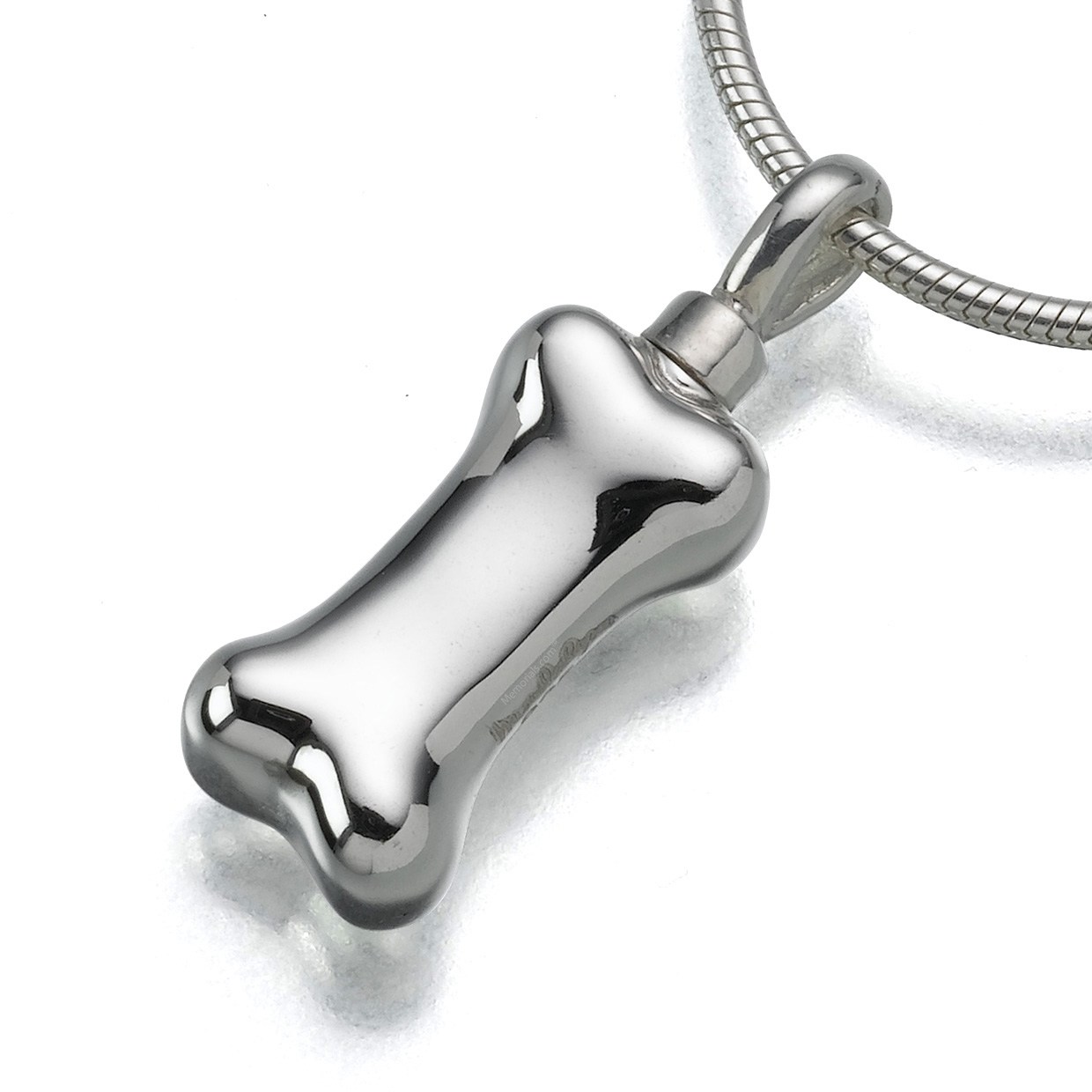
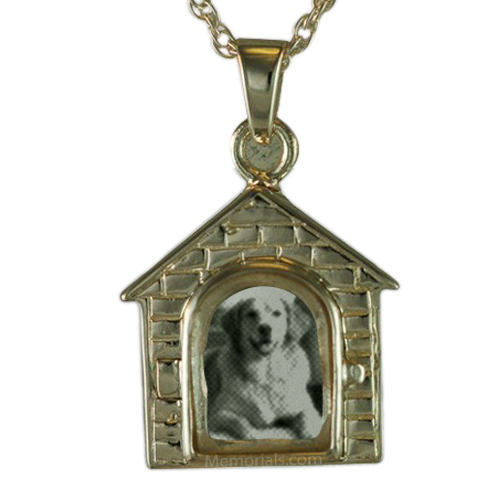
Many families find that creating a physical memorial helps with the grieving process. A pet urn gives your dog's ashes a permanent, dignified resting place in your home. Some families also choose pet cremation jewelry to carry a small portion of ashes with them, or pet keepsakes like paw print molds or engraved photo frames.
For a broader look at all the ways you can honor your dog after they pass, our complete guide to pet memorials covers every option from memorial stones to personalized keepsakes.
The grief that follows is real, and it deserves to be taken seriously. If you are struggling, our article on grieving the loss of a pet offers guidance, and our piece on coping with pet grief provides practical strategies for the hardest days.
Common Conditions That Lead to This Decision
While every case is unique, certain diagnoses frequently bring families to this crossroads.
Advanced cancer. When tumors have metastasized or treatment is no longer effective, the focus shifts from curing to managing pain. Dogs with osteosarcoma (bone cancer) may develop sudden lameness that progresses to an inability to bear weight. Hemangiosarcoma can cause internal bleeding episodes that leave a dog weak and disoriented. Oral cancers may make eating painful or impossible. In each case, the trajectory tends to follow the same arc: a period of manageable decline, then a sharper drop as the cancer overwhelms the body's ability to compensate. When pain medication no longer controls discomfort and your dog stops engaging with daily life, the quality of life threshold has been crossed.
End-stage organ failure. Chronic kidney disease is one of the most common diagnoses in aging dogs. In its early and middle stages, subcutaneous fluids, prescription diets, and medications can maintain reasonable quality of life for months or even years. In end-stage kidney failure, toxins build up faster than the body can clear them, causing persistent nausea, vomiting, mouth ulcers, and a refusal to eat. Congestive heart failure follows a similar pattern: initially manageable with diuretics and heart medications, but eventually producing episodes of severe breathing difficulty as fluid accumulates in the lungs. Liver failure can cause jaundice, confusion, and fluid buildup in the abdomen. In all three cases, the defining moment comes when treatment is no longer keeping the dog comfortable between episodes.
Degenerative neurological conditions. Degenerative myelopathy typically starts in the hind legs as a slight wobble or dragging of the paws, then progresses over months to full hind-leg paralysis and eventually affects the front legs as well. There is no pain in the early stages, which makes it deceptive — the dog seems happy but increasingly unable to move. Severe epilepsy that no longer responds to medication can cause cluster seizures that leave a dog exhausted, confused, and frightened. Advanced canine cognitive dysfunction produces nighttime pacing, vocalization, loss of housetraining, and a failure to recognize family members. When the brain can no longer coordinate the body or maintain awareness of surroundings, quality of life suffers profoundly even when physical pain is absent.
Catastrophic injury. A traumatic injury with extensive internal damage or spinal cord involvement may leave euthanasia as the most humane immediate option to prevent further suffering. Unlike progressive disease, catastrophic injuries often require a decision within hours rather than weeks.
Compounding age-related decline. Sometimes there is no single diagnosis. An elderly dog may face a combination of arthritis, partial blindness, incontinence, and reduced organ function that individually seem manageable but together push quality of life below an acceptable threshold. Each condition steals a small piece of the dog's independence, and the cumulative effect can be more debilitating than any one diagnosis alone.
Frequently Asked Questions
How do I know for sure it is time to put my dog down?
There is no single moment of certainty for most families. The HHHHHMM quality of life scale can help you evaluate your dog's condition across seven key areas. If your dog scores below 5 in multiple categories, particularly in pain and mobility, and bad days consistently outnumber good ones, it is reasonable to have a serious conversation with your veterinarian about euthanasia.
Is euthanasia painful for dogs?
No. The process uses a two-step approach. A sedative puts your dog into a deep sleep first, and the euthanasia solution then stops brain and heart function while they are already unconscious. The American Veterinary Medical Association endorses this method as humane and painless.
Can I be with my dog during euthanasia?
Yes. Most veterinary clinics and all in-home euthanasia providers welcome you to stay with your dog throughout the process. You can hold them, talk to them, and comfort them. If you prefer not to be present, that is also completely acceptable.
How much does dog euthanasia cost?
Costs vary by location and setting. At a veterinary clinic, euthanasia typically ranges from $50 to $300. In-home euthanasia services generally cost $200 to $500. These figures usually do not include aftercare such as cremation. Our pet cremation cost guide offers a full pricing breakdown.
Should I get another dog after losing one?
There is no timeline that applies to everyone. Some families find comfort in welcoming a new dog within weeks. Others need months or years. A new dog does not replace the one you lost — they create their own bond. Give yourself permission to grieve at your own pace.
A Final Word
You did not come to this page on a whim. You came because you love your dog and you want to do right by them, even when doing right is the hardest thing you have ever done. That instinct — to prioritize their comfort over your own heartbreak — is the purest expression of the bond you share.
Whatever you decide, and whenever you decide it, trust that your love for your dog has guided you well.