🏬Supersize Online Funeral Retailer🪦1000's of Headstones⚱️Over 10,000 Cremation Urns⚰️Caskets Overnight Delivery🛒Funeral & Memorial Superstore🚚FREE Shipping on ALL Orders👨👩👧👦Helping Families for over 20 Years💰Lowest Price Guarantee🏬Supersize Online Funeral Retailer🪦1000's of Headstones⚱️Over 10,000 Cremation Urns⚰️Caskets Overnight Delivery🛒Funeral & Memorial Superstore🚚FREE Shipping on ALL Orders👨👩👧👦Helping Families for over 20 Years💰Lowest Price Guarantee
🏬Supersize Online Funeral Retailer🪦1000's of Headstones⚱️Over 10,000 Cremation Urns⚰️Caskets Overnight Delivery🛒Funeral & Memorial Superstore🚚FREE Shipping on ALL Orders👨👩👧👦Helping Families for over 20 Years💰Lowest Price Guarantee🏬Supersize Online Funeral Retailer🪦1000's of Headstones⚱️Over 10,000 Cremation Urns⚰️Caskets Overnight Delivery🛒Funeral & Memorial Superstore🚚FREE Shipping on ALL Orders👨👩👧👦Helping Families for over 20 Years💰Lowest Price Guarantee
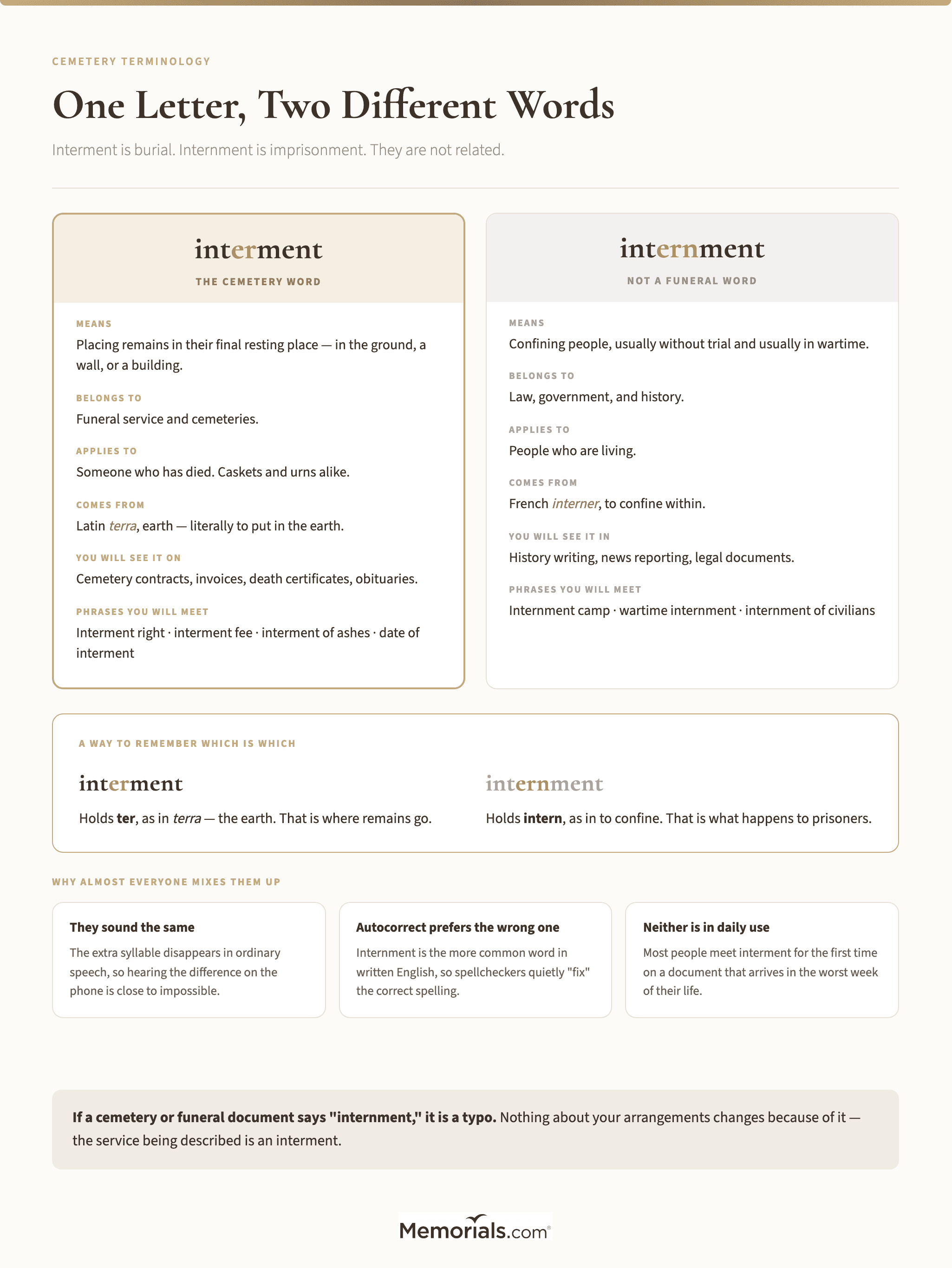
The internment definition is short and has nothing to do with funerals: internment is imprisonment, the confining of people, usually without trial and usually in wartime.
If you arrived here after reading a cemetery contract, a funeral home invoice, or a death certificate, the word you are looking for is almost certainly interment, which means burial or the placing of remains in their final resting place. The two words differ by a single letter in the middle, and they are not related in meaning, origin, or use.
That confusion is extremely common, and there is nothing careless about it. Autocorrect suggests the wrong one. Search engines quietly assume you meant the other. Both words are uncommon enough in daily speech that most people have never had to write either one down until the week they are arranging a funeral, which is not a week anyone has spare attention for spelling.
If you would like the wider picture rather than just the word, our complete cemetery planning guide covers plots, costs, regulations, and the decisions that surround this one.
The internment definition, precisely
The definition of internment is the confinement of people — most often civilians — by a government, typically during a war or a national emergency, and typically without the trial that ordinary imprisonment would require.
The word comes from the verb to intern, which arrived in English from the French interner, "to confine within." It is a term of law, politics, and history. Encyclopaedia entries about internment discuss wartime policy and civil liberties, and dictionaries define internment as detention or confinement rather than anything to do with burial.
You will meet it in phrases like internment camp or the internment of civilians during wartime. You will not meet it, correctly, on any document a cemetery or funeral home produces.
Marking the Place
Cremation grave markers for a plot, niche plaques for a columbarium
Interment is the placing of remains in their final resting place. Most often it means burial in the ground, but cemeteries use it as the umbrella term covering every kind of final placement — a casket lowered into a grave, an urn buried in a plot, or an urn placed into a niche.
This is the word that appears on the paperwork:
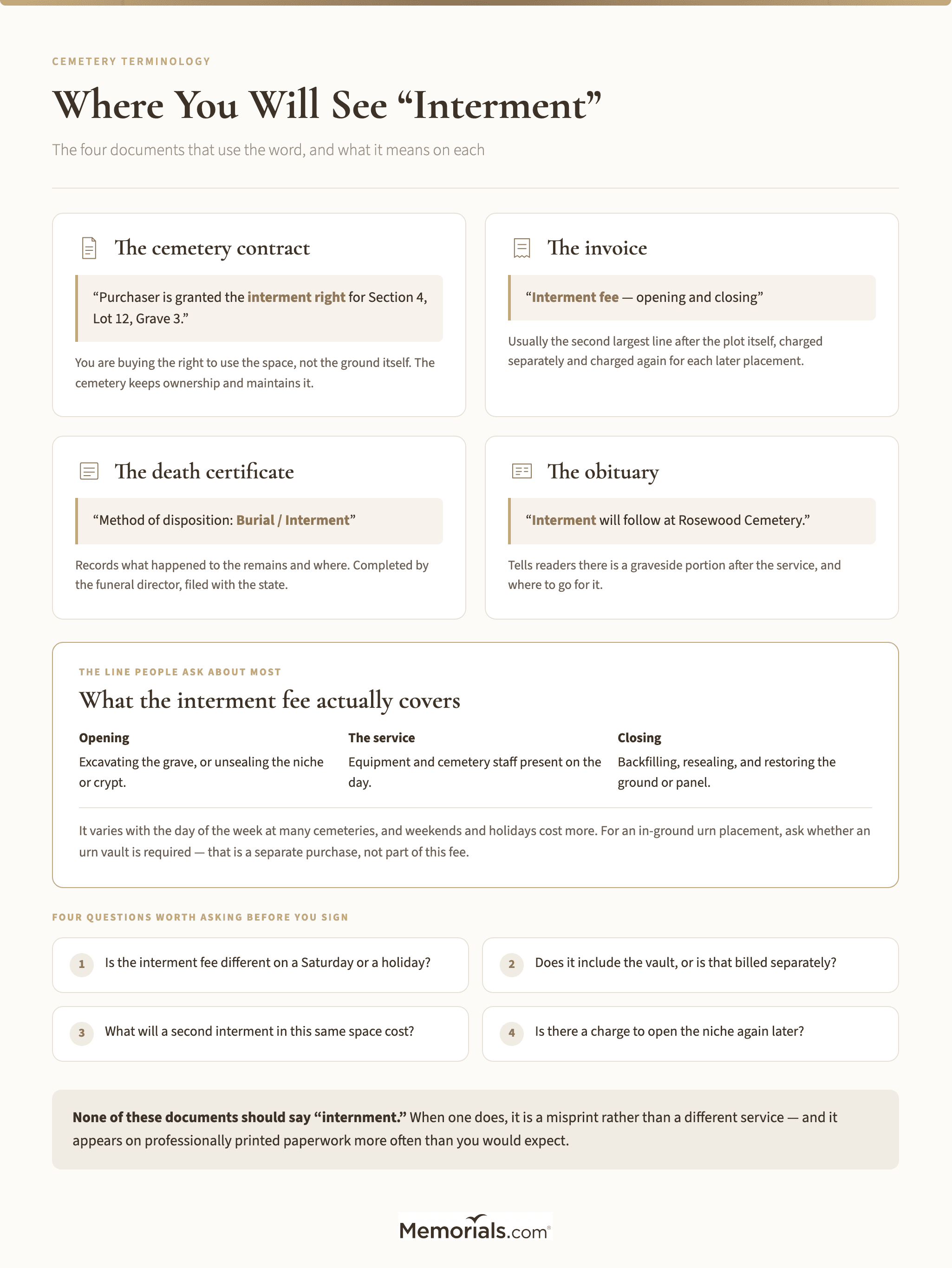
On a cemetery contract, as the interment right — the legal right to have someone placed in a specific space. You are buying that right, not the land itself.
On an invoice, as the interment fee or opening and closing fee — the cost of preparing the grave or niche and closing it afterwards.
On a death certificate, in the field recording the method and place of disposition.
In an obituary, in a line such as interment will follow at Rosewood Cemetery.
If any of those documents appears to say internment, it is a typo, and a fairly frequent one even in professionally printed material.
Interment is one of three related terms — the others are inurnment and entombment — and they are not interchangeable. Our guide to interment, inurnment, and entombment explains which act each one names and when you will hear it.
Interment vs internment at a glance
Interment
Internment
Means
Placing remains in a final resting place
Confining people, usually without trial
Field
Funeral service, cemeteries
Law, government, wartime history
Applies to
Someone who has died
People who are living
You will see it
Cemetery contracts, invoices, obituaries
History books, news reporting, legal writing
Root
Latin terra, earth — literally "to put in the earth"
French interner, to confine within
The spelling difference is the letter n: interment versus internment. A useful memory hook is that internment contains intern, as in confining someone, while interment contains ter, as in terra, the earth.
The interment vs internment question is worth settling once, because it decides which of two completely unrelated subjects you are reading about. Anyone asking what is internment in a funeral context, or what does internment mean on a cemetery invoice, has met the wrong word rather than an unfamiliar service.
Interment means placing remains in a final resting place and belongs to cemeteries; internment means confining living people and belongs to law and wartime history. The memory hook is the spelling itself — interment holds ter, as in terra, the earth, while internment holds intern, as in to confine. The two get mixed up because they sound almost identical, autocorrect prefers the more common word, and neither is in daily use.
Why the two get mixed up so often
Three things work together here.
They sound nearly identical. In ordinary speech the extra syllable in internment is easy to lose, so the two are close to homophones. Someone repeating what a funeral director said on the phone has no way to hear which was meant.
Autocorrect prefers the more common word. Across written English as a whole, internment appears more often than interment, because twentieth-century history is written about far more than cemetery procedure. Spellcheckers reflect that, and quietly "fix" the correct word into the wrong one.
Neither word is in daily use. Most people encounter interment for the first time on a document that arrives during the worst week of their life. There is no accumulated familiarity to fall back on.
"Internment fee" on a cemetery invoice
If a cemetery invoice lists an internment fee, it means the interment fee, and it is worth understanding because it is usually the second-largest line on the bill after the plot itself.
The interment fee covers opening the grave or niche, the equipment and staff on the day, and closing and restoring the ground afterwards. It is charged separately from the cost of the plot, it is charged again for each subsequent placement in the same space, and it commonly varies with the day of the week — weekend and holiday services cost more at many cemeteries.
For an in-ground urn placement, some cemeteries also require an urn vault, a rigid outer container that keeps the ground from settling over time. That is a separate purchase from the urn itself, and worth asking about before you assume a quoted interment fee includes it.
Four documents use the word: the cemetery contract grants an interment right, the invoice lists an interment fee, the death certificate records interment as the method of disposition, and the obituary says interment will follow. The interment fee covers opening the grave or niche, the staff and equipment on the day, and closing afterward — and it is charged again for each later placement.
What follows an interment
Once the placement itself is done, what remains is marking it.
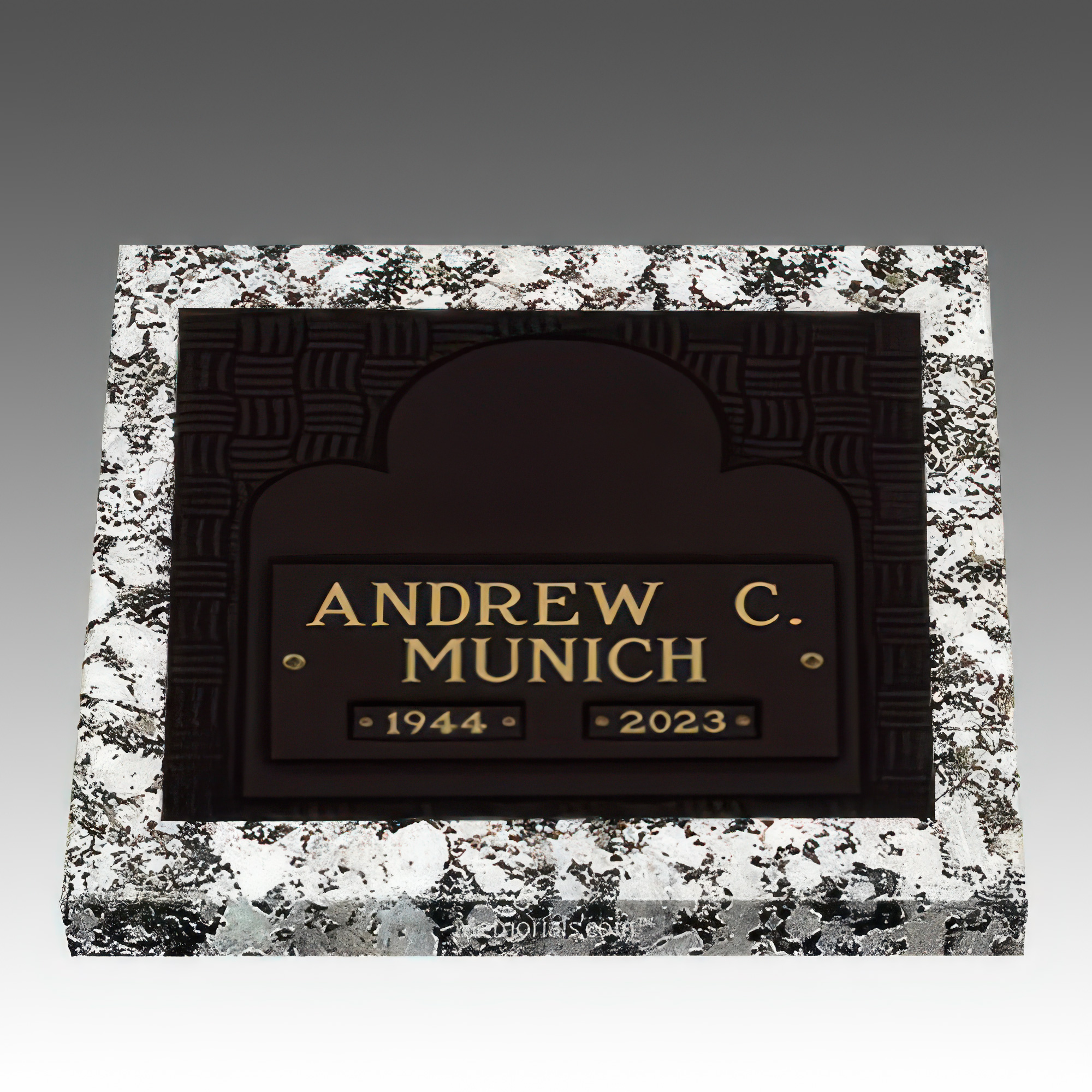
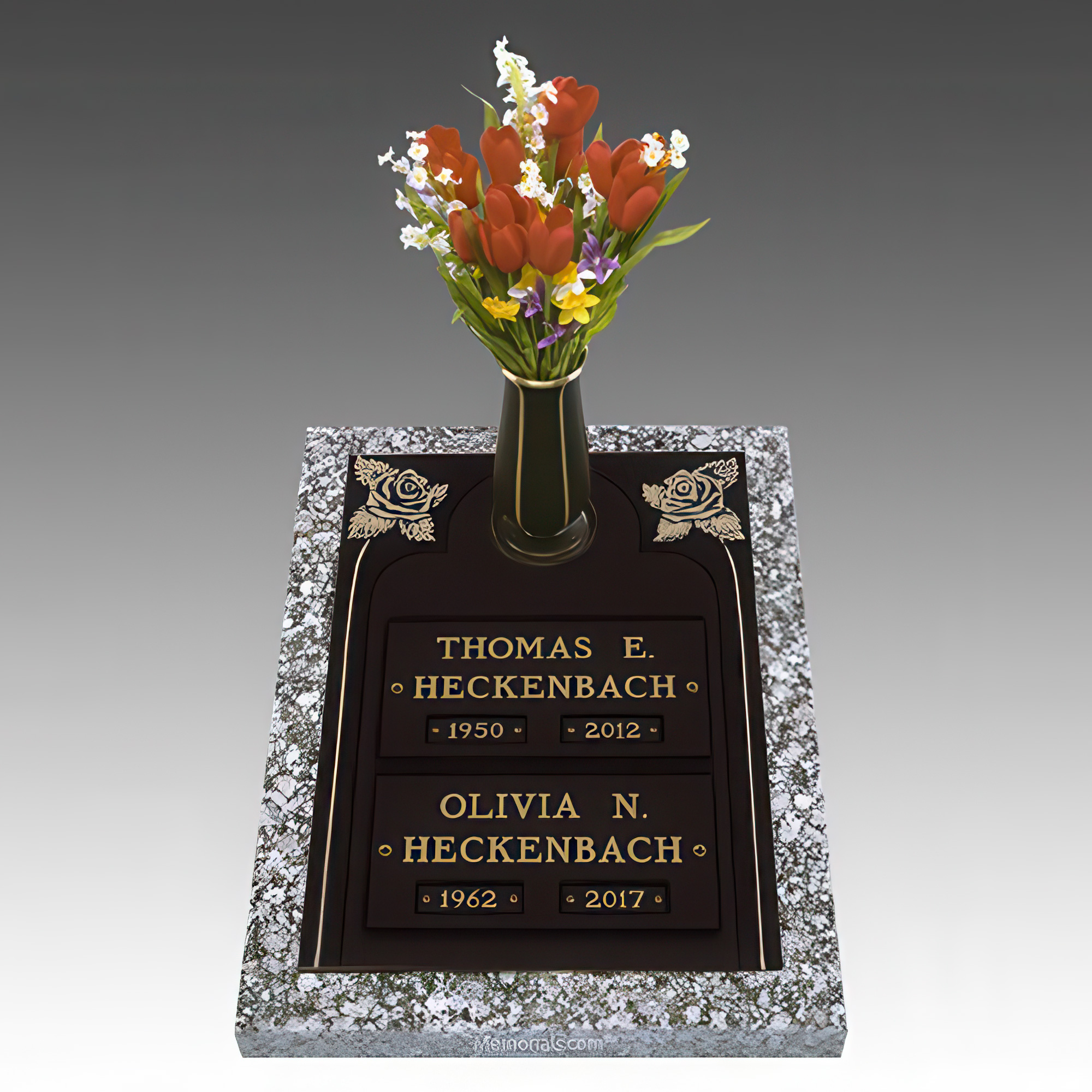
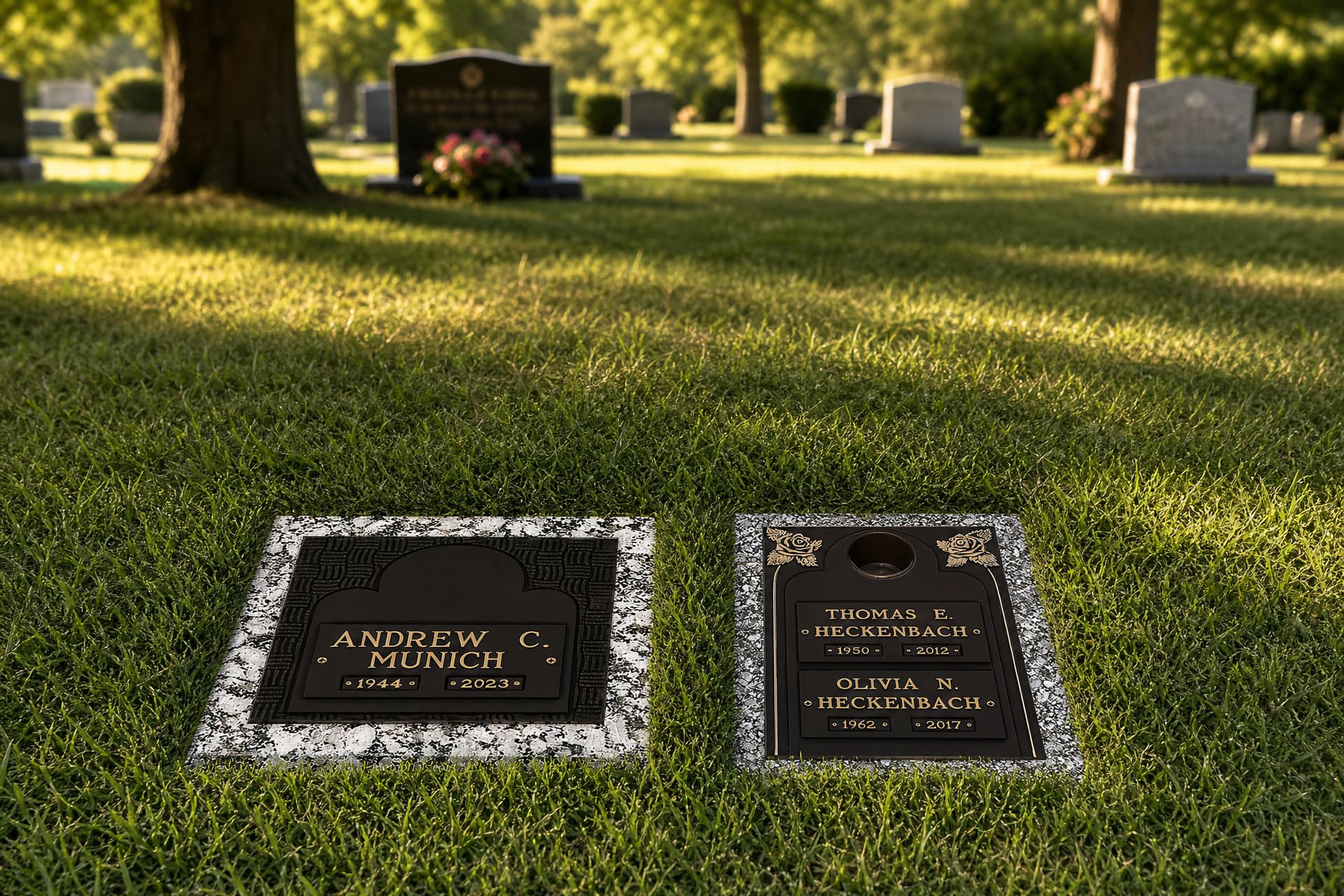
For a traditional grave, that means a headstone or a flat marker, and cemeteries usually set the permitted size and material rather than leaving it open. Our range of headstones covers the common formats, and there is a dedicated selection of cremation grave markers sized for urn plots, which take up considerably less ground than a casket grave.
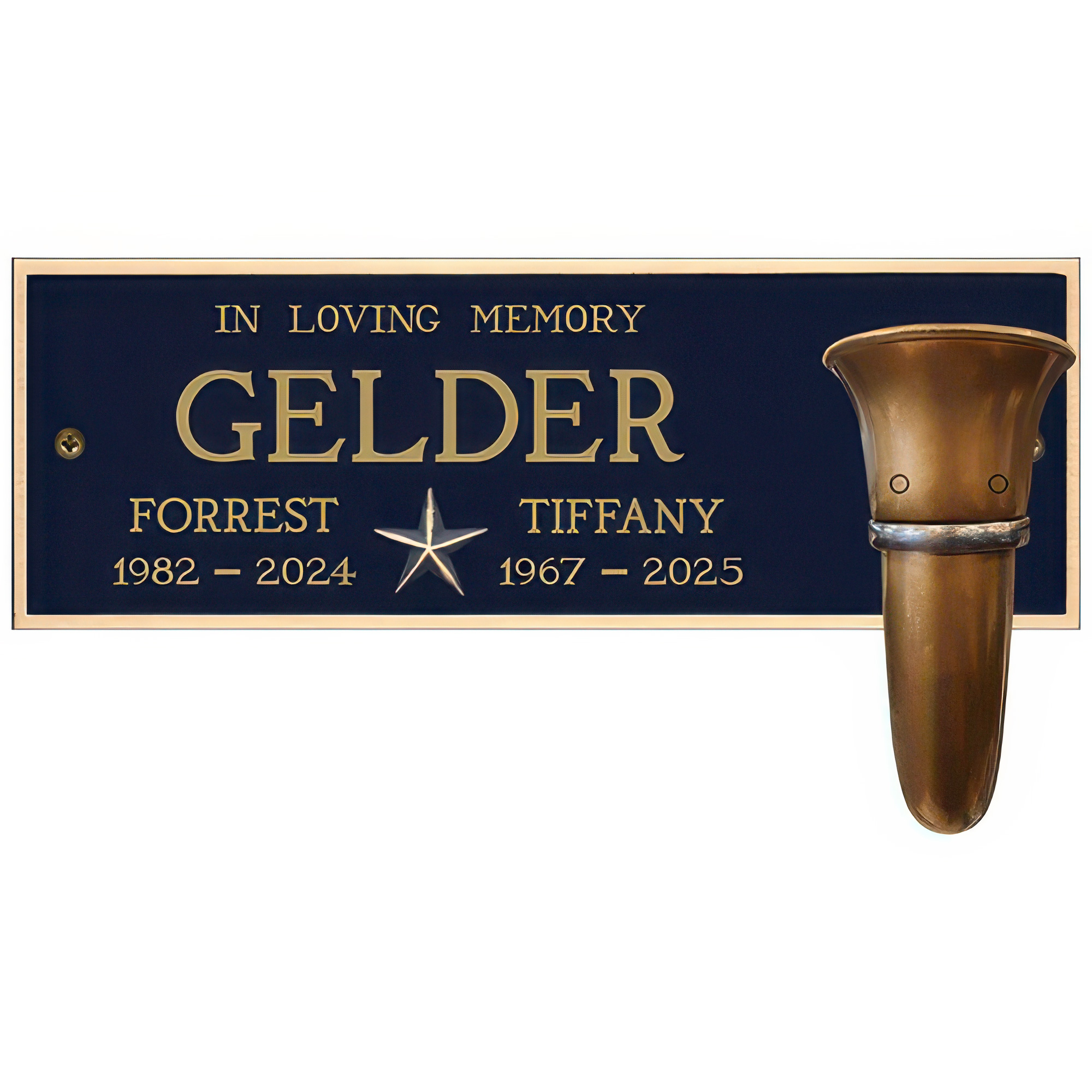
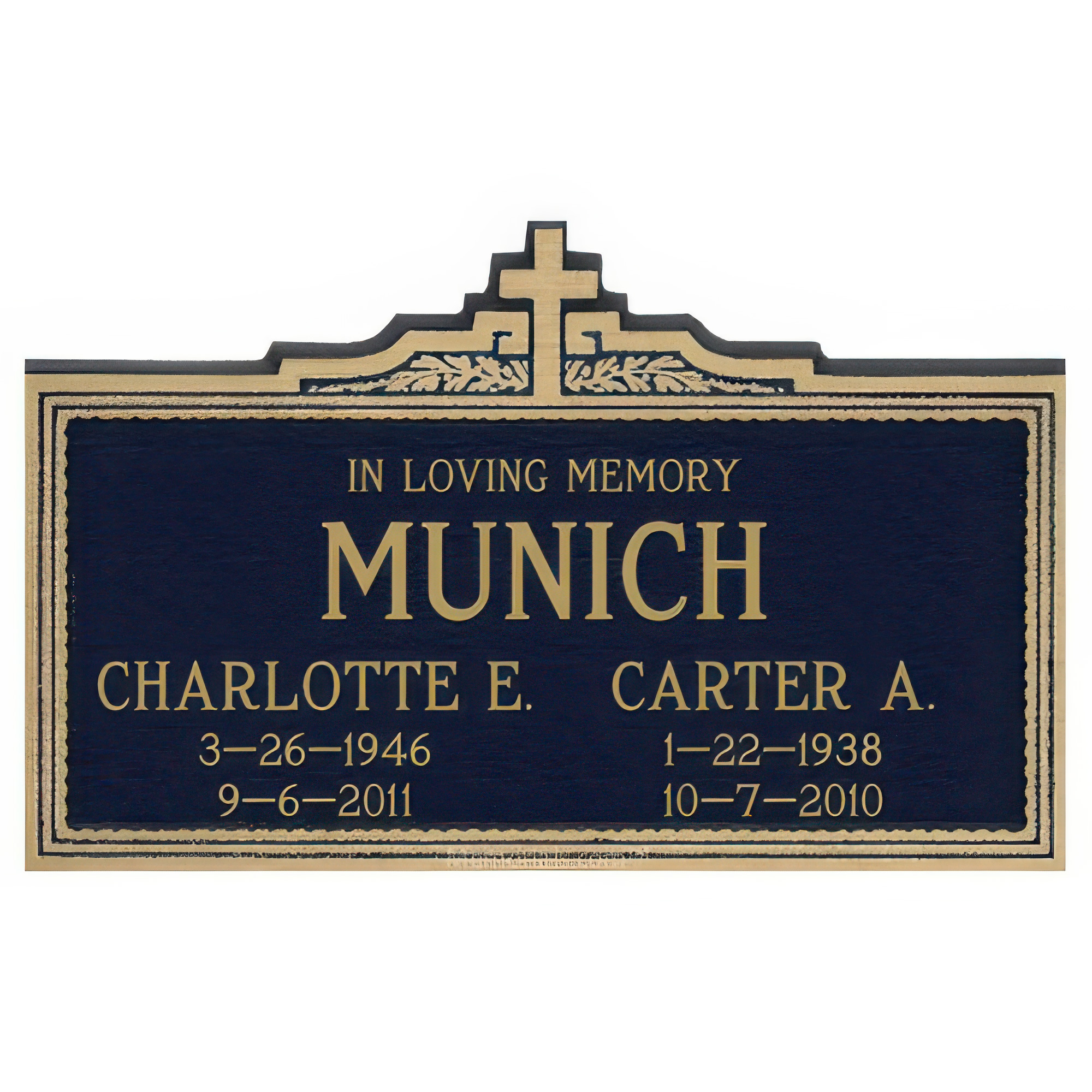
For an urn placed in a columbarium niche rather than the ground, the front panel is the memorial, and niche plaques carry the name, dates, and any short inscription the cemetery's rules allow.
Families still deciding what the remains will be placed in — before any of this — will find the options in our guide to choosing cremation urns, and for a traditional burial, caskets.
Frequently asked questions
Is internment ever the correct word at a funeral?
No. In any context involving a person who has died and a cemetery, the correct word is interment. Internment refers only to the confinement of living people.
What does internment mean in the context of death?
Nothing — that is the point of the confusion. Searches for phrases like internment death or internment meaning funeral are almost always people who mean interment. If you were asked about an internment at a funeral home, the person meant the burial or placement.
Is it internment or interment of ashes?
Interment of ashes. It describes burying an urn in the ground or placing it in a niche. Some cemeteries use inurnment for the same act when an urn is involved, and both terms appear on paperwork.
What happens at an interment?
An interment is the short graveside portion of a funeral, usually following the main service, where the casket or urn is placed and a few words are said. It is a distinct event from the funeral service itself, with its own etiquette about timing, attendance, and what to wear. What families usually mean by an interment funeral is this graveside part specifically, which follows a recognizable order from arrival to committal.
Do funeral homes ever spell it wrong?
Yes, regularly. The misspelling appears on printed programs, cemetery signage, and invoices from otherwise careful firms. If a document you have been given says internment, it is a typo rather than a different service, and nothing about your arrangements changes because of it.
What is an interment right?
It is the legal right to have someone placed in a specific space in a cemetery. Buying a plot does not make you the owner of that ground — the cemetery keeps ownership and maintains it, while you hold the right to use the space for a burial or placement.