🏬Supersize Online Funeral Retailer🪦1000's of Headstones⚱️Over 10,000 Cremation Urns⚰️Caskets Overnight Delivery🛒Funeral & Memorial Superstore🚚FREE Shipping on ALL Orders👨👩👧👦Helping Families for over 20 Years💰Lowest Price Guarantee🏬Supersize Online Funeral Retailer🪦1000's of Headstones⚱️Over 10,000 Cremation Urns⚰️Caskets Overnight Delivery🛒Funeral & Memorial Superstore🚚FREE Shipping on ALL Orders👨👩👧👦Helping Families for over 20 Years💰Lowest Price Guarantee
🏬Supersize Online Funeral Retailer🪦1000's of Headstones⚱️Over 10,000 Cremation Urns⚰️Caskets Overnight Delivery🛒Funeral & Memorial Superstore🚚FREE Shipping on ALL Orders👨👩👧👦Helping Families for over 20 Years💰Lowest Price Guarantee🏬Supersize Online Funeral Retailer🪦1000's of Headstones⚱️Over 10,000 Cremation Urns⚰️Caskets Overnight Delivery🛒Funeral & Memorial Superstore🚚FREE Shipping on ALL Orders👨👩👧👦Helping Families for over 20 Years💰Lowest Price Guarantee
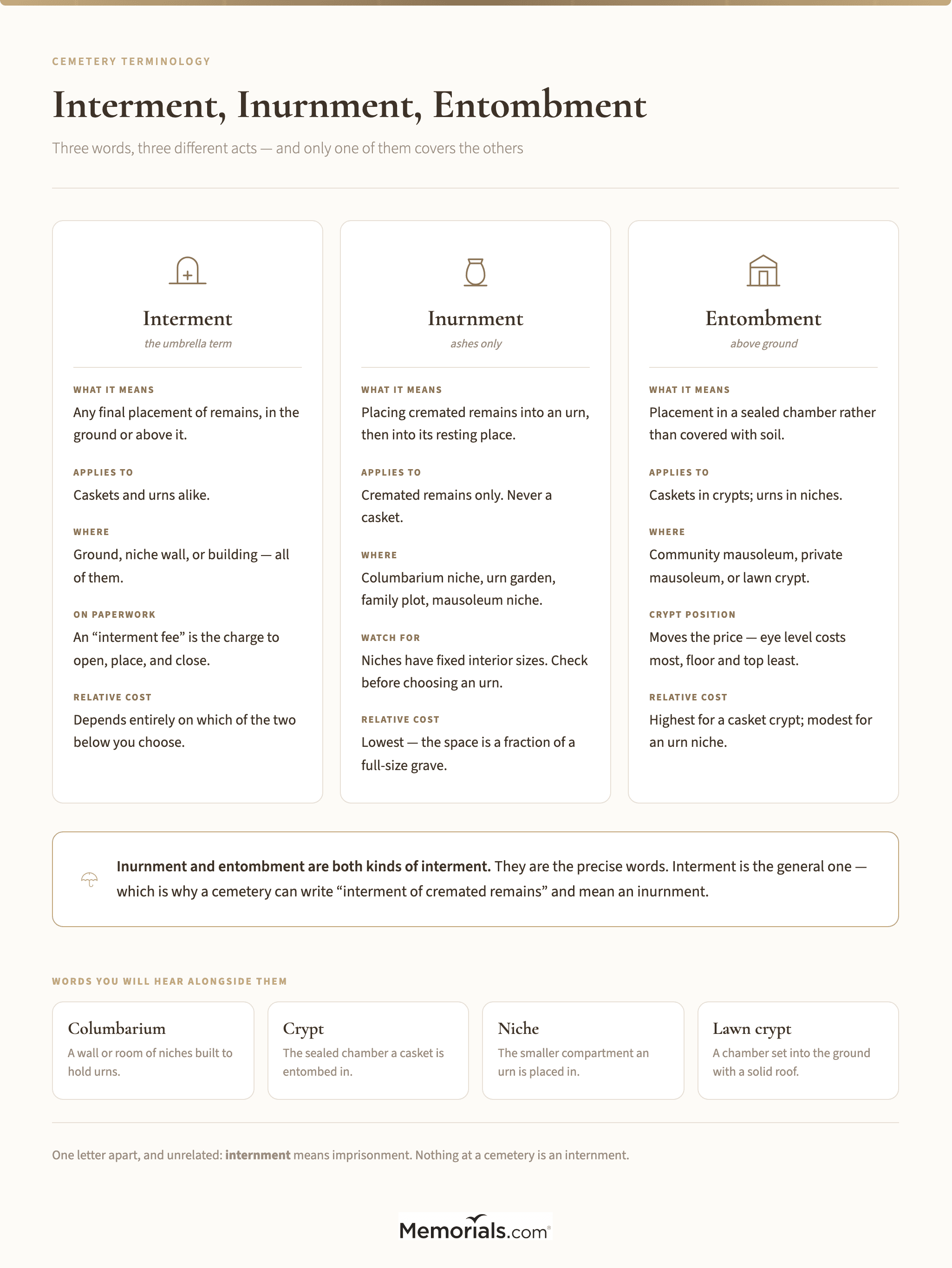
Interment is the placing of remains in their final resting place, and it is the word you are most likely to meet on a cemetery contract, a death certificate, or a funeral director's estimate. Alongside it you will hear inurnment and entombment, and the three are not interchangeable — each names a different physical act, and cemeteries price and schedule them differently. Learning which is which takes about five minutes, and it makes every conversation that follows easier.
If you are early in this process and want the wider picture first, our complete cemetery planning guide walks through plots, costs, regulations, and the decisions that come before this one.
What Interment Means
The interment meaning is straightforward: interment is the act of placing a body or cremated remains into their final resting place. The word comes from the Latin — "in the earth" — and for most of its history it meant exactly that, a burial in the ground.
So what is interment in practice? Modern usage is broader than the Latin suggests. Cemeteries and funeral homes now use interment as the umbrella term for any final placement, whether that is a casket in a grave, an urn in a niche, or a body in a crypt. When a cemetery quotes you an "interment fee," they mean the charge for opening and closing the resting place and carrying out the placement itself, separate from the cost of the plot or the marker.
That broad interment definition is why you will sometimes see the word used where you expected something more specific. A cemetery that says "interment of cremated remains" is describing an inurnment, and both are correct.
The Interment Process
The interment process is the sequence of events at the resting place itself, and it is shorter than most families expect. The plot or niche is opened before the family arrives. After any graveside words, the casket or urn is placed, and the family usually leaves before the space is closed — cemeteries generally prefer this, and there is no obligation to stay. Families arranging one often ask about the interment funeral as though it were a second service; it is the same day's graveside ceremony, and knowing its order in advance takes most of the uncertainty out of it.
Interment of ashes follows the same shape but with more flexibility. Cremated remains can be buried in a full-size plot, in a smaller urn garden plot, placed in a columbarium niche, or interred in an existing family grave. Our guide to where urns go in a cemetery covers the placement options in detail, and what to do with ashes after cremation covers the choices beyond the cemetery entirely.
Marking a Placement
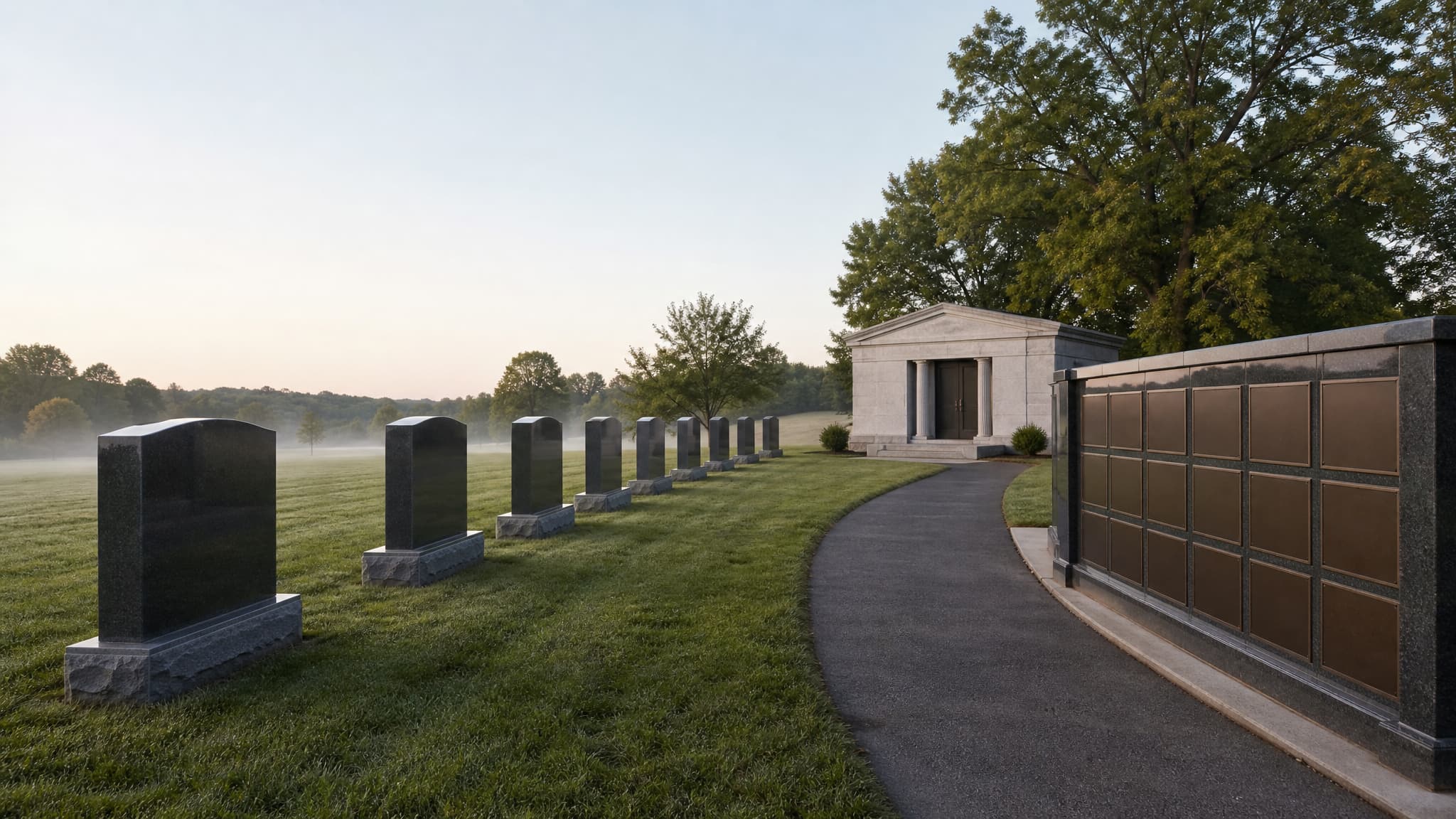
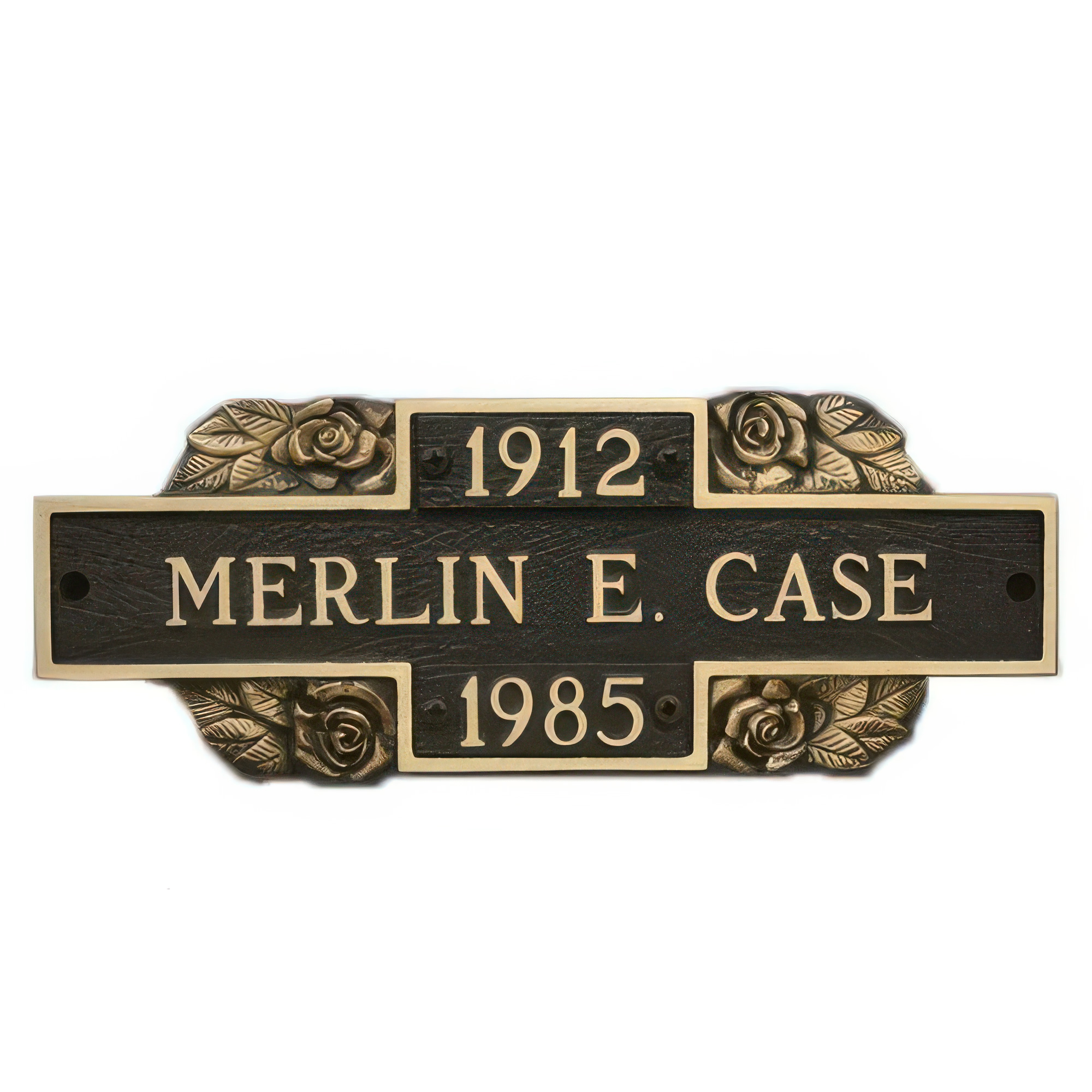
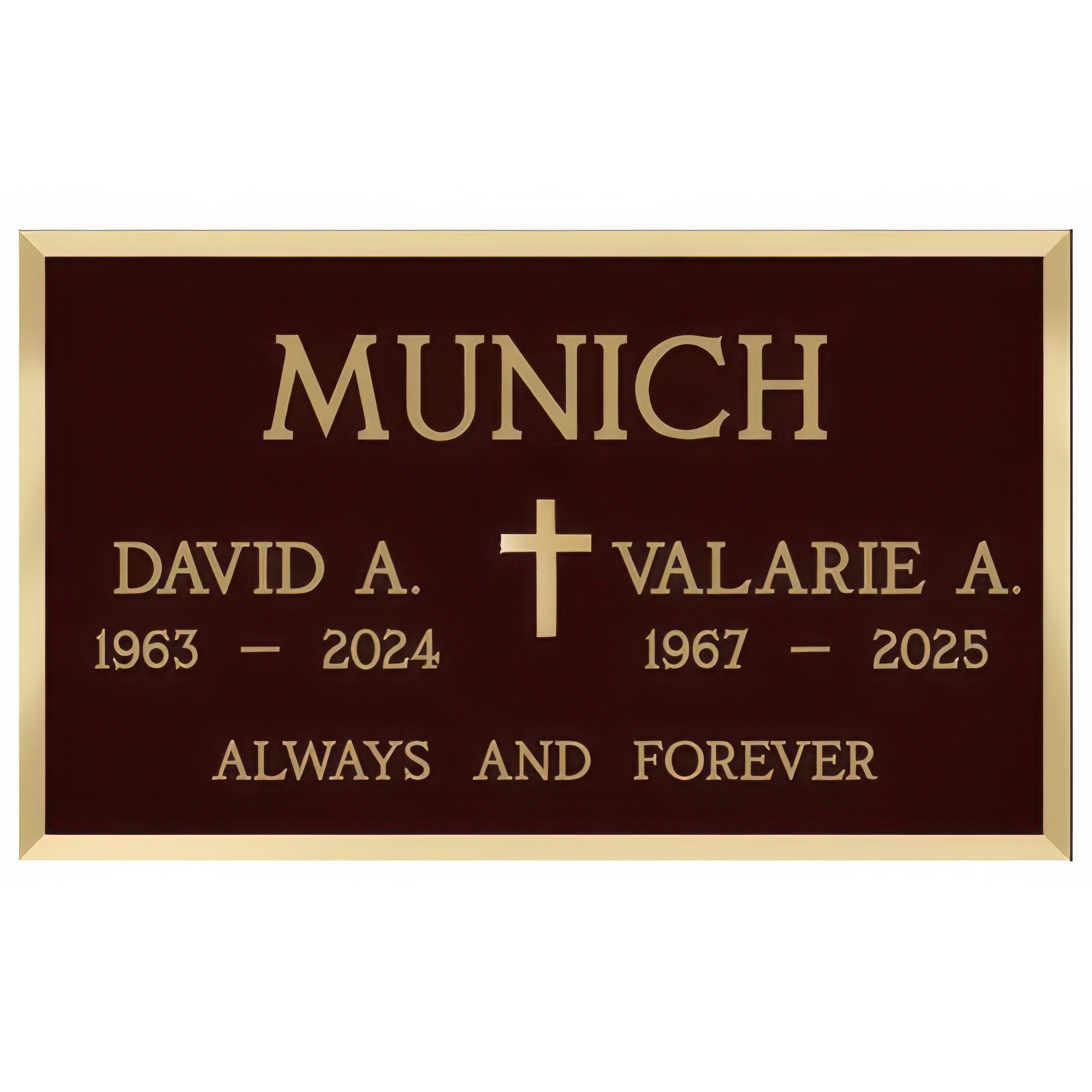
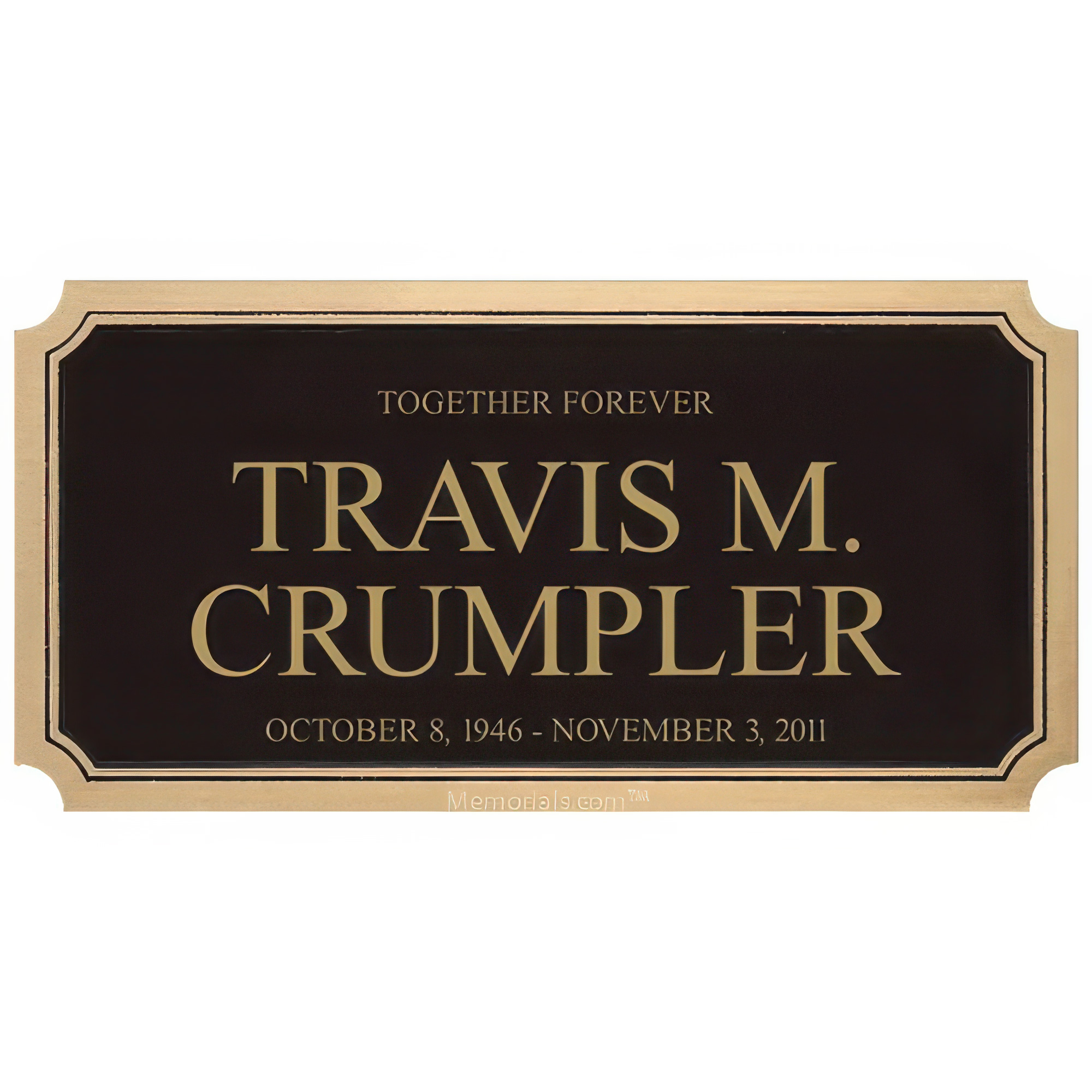
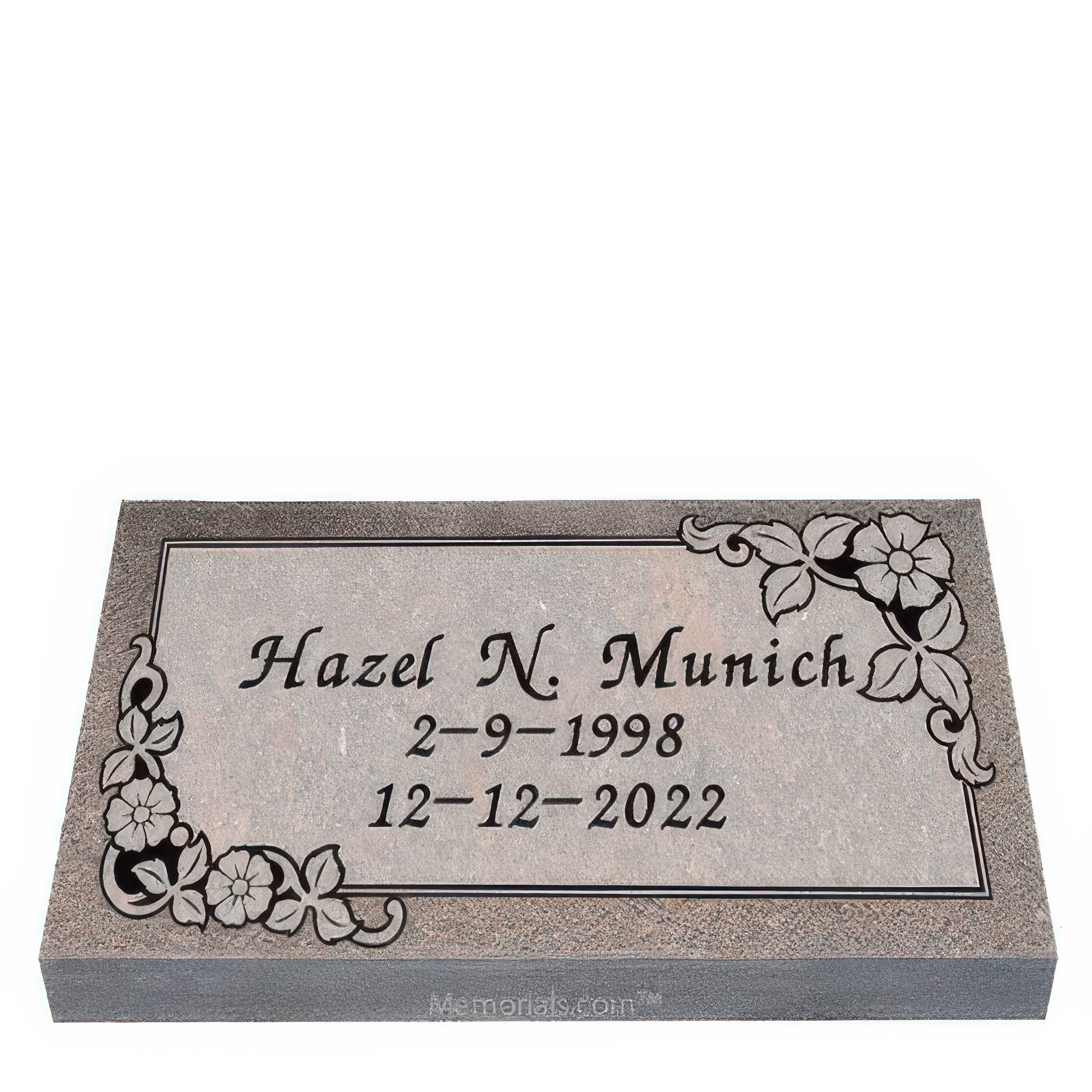
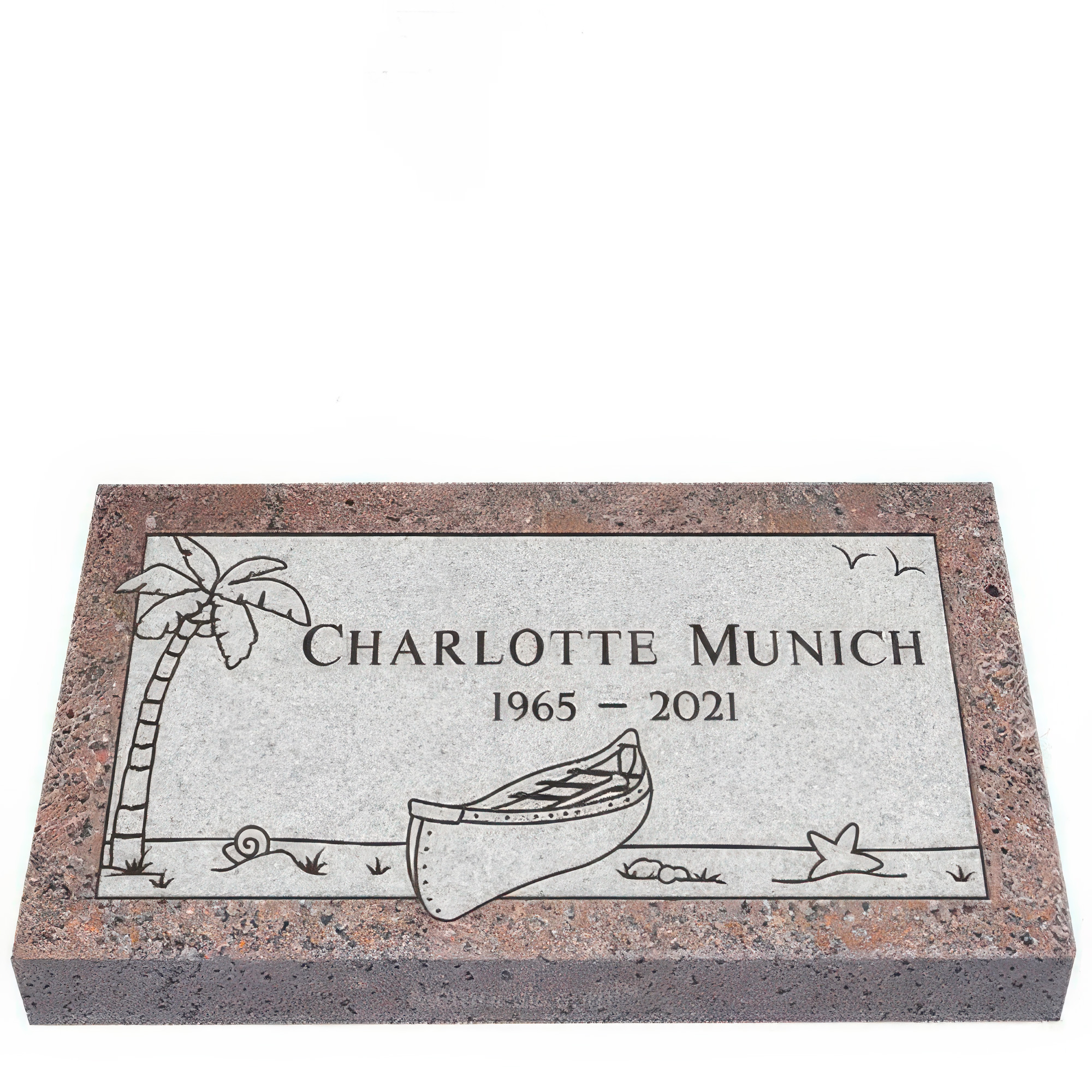
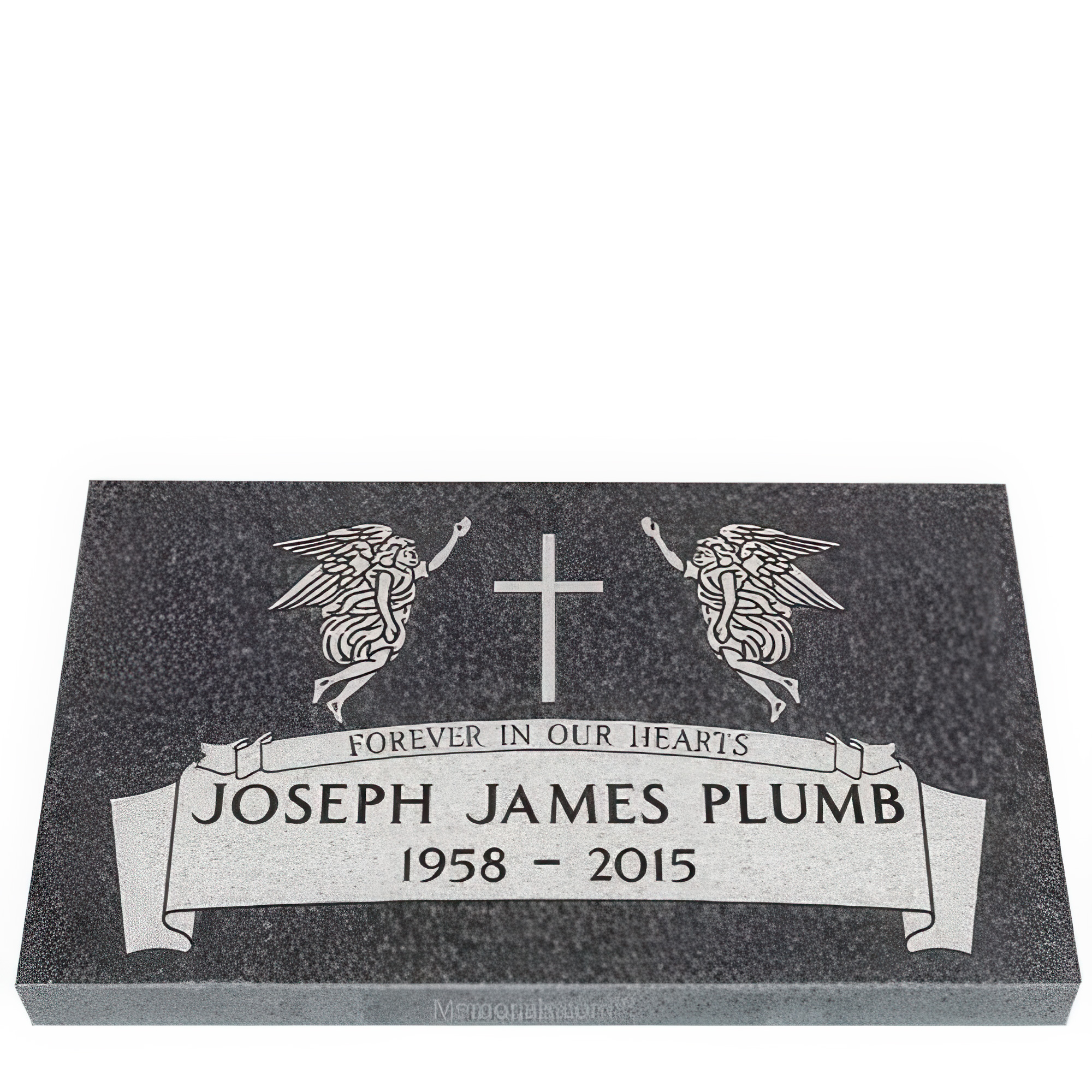
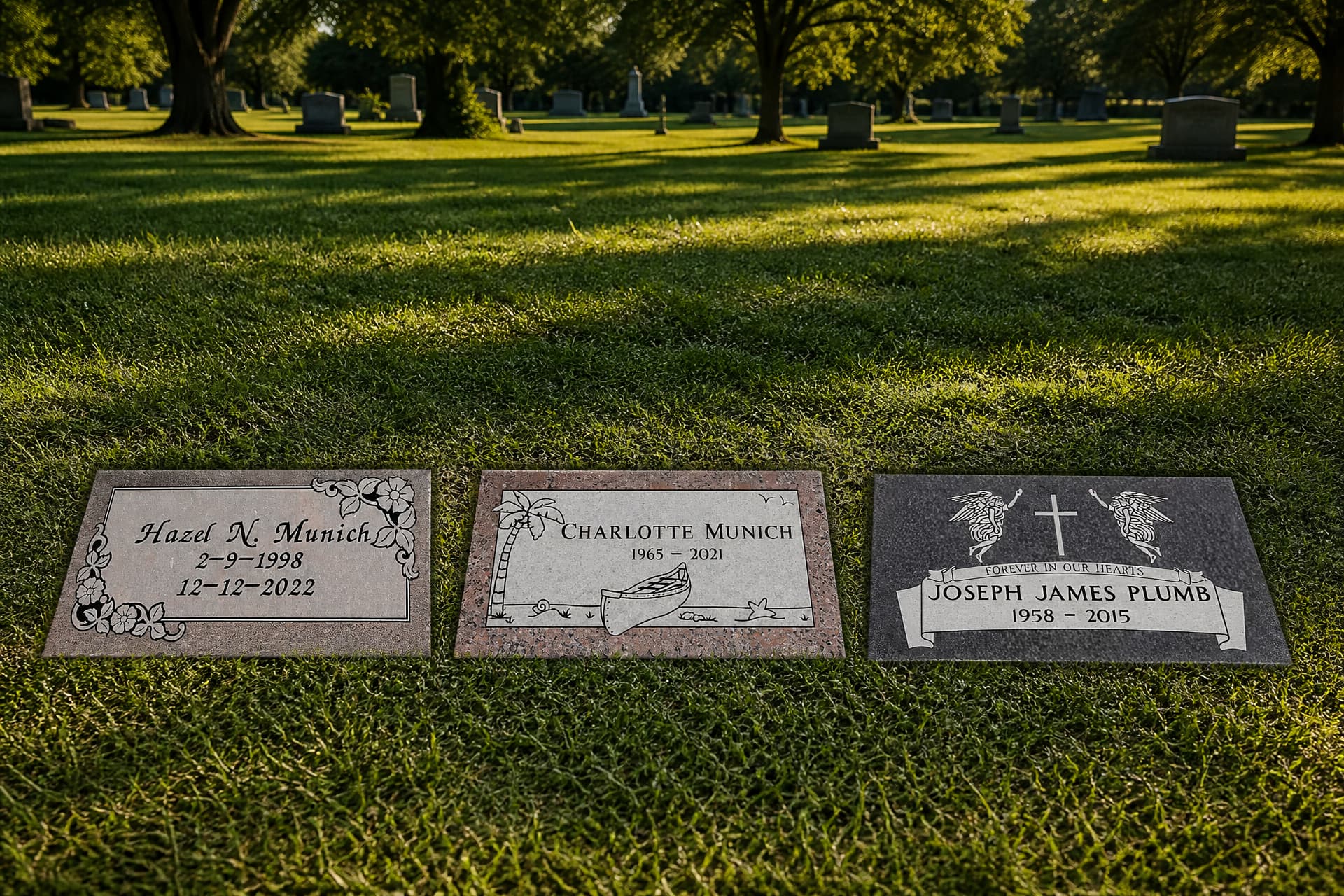
Niche plaques for a columbarium, granite markers for a grave
The inurnment meaning is narrower and easier to hold: inurnment is placing cremated remains into an urn, and then placing that urn in its resting place. It applies only to cremated remains. There is no such thing as the inurnment of a casket.
The word covers two moments that usually happen days or weeks apart. The first is the transfer of the cremated remains from the crematory's temporary container into the urn the family has chosen. The second is the placement of that urn — into a columbarium niche, an urn garden, a family plot, or a niche inside a mausoleum.
Because inurnment is specific to ashes, it appears most often on cemetery paperwork for columbaria and urn gardens. If you are choosing an urn for a cemetery placement rather than for home, the dimensions matter more than they otherwise would: niches have fixed interior measurements, and cemeteries publish them. Our guide to cremation urns for burial covers what changes when an urn is going into the ground or a wall rather than onto a shelf, and types of cremation urns covers the materials and styles available.
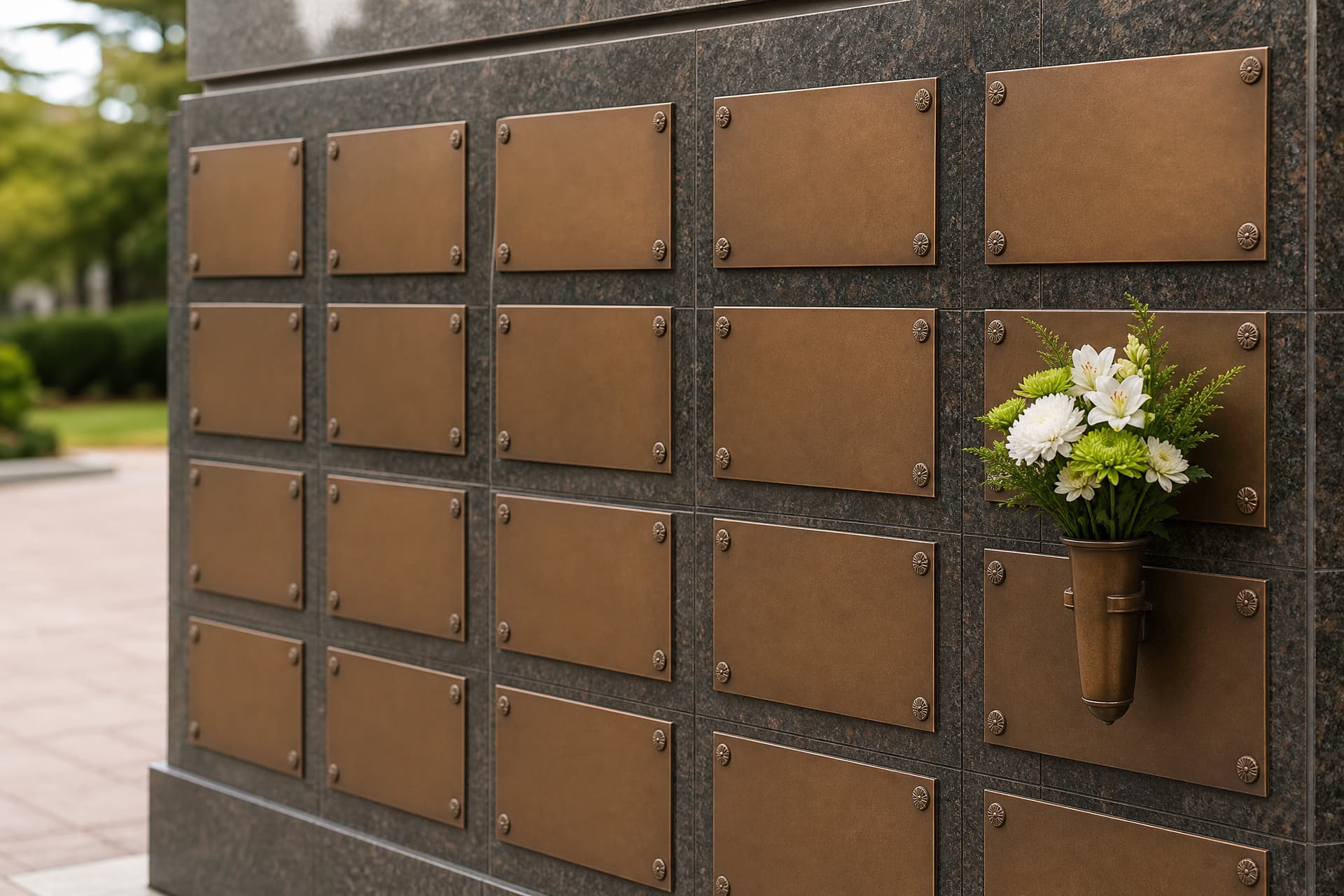
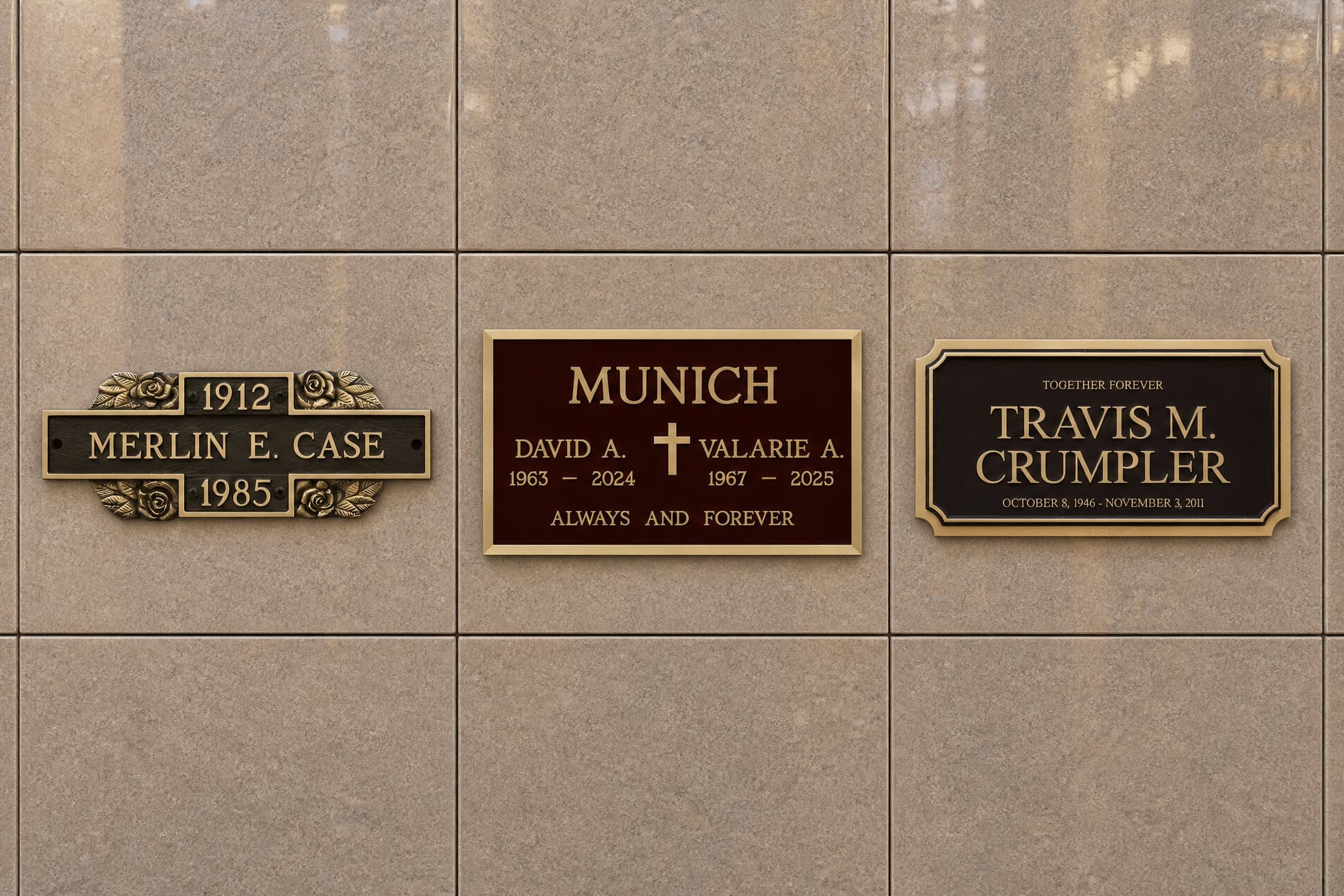
A columbarium wall: each small door fronts a niche holding one urn, which is what inurnment means in practice.
Interment is the umbrella term for any final placement and applies to both caskets and urns. Inurnment applies to cremated remains only and names the act of placing ashes in an urn. Entombment means placement in a sealed chamber above ground, in a mausoleum or lawn crypt, and is the most expensive of the three for a casket.
What Entombment Means
So what is entombment? It is placement above ground, in a structure rather than in the earth. The entombment meaning families need is a practical one, and the entombment definition that matters is that the remains rest in a sealed chamber — a crypt — with the chamber closed by a stone or marble front rather than covered with soil.
Entombment applies to caskets and to urns. A casket is entombed in a crypt; an urn can be entombed in a niche within the same building. Both are entombment, and both are also interment under the umbrella definition above.
There are three common forms. A community mausoleum holds many crypts in a shared building, and families buy individual spaces. A private mausoleum is a family structure built for one family's use. A lawn crypt is a pre-installed chamber set into the ground with a concrete or reinforced roof — technically below grade, but sold and described as entombment because the remains sit in a sealed chamber rather than in soil.
For how entombment actually works — what a crypt is made of, how it is sealed, how families visit — our guide to what a mausoleum is covers the structures themselves, their costs, and what to expect.
Entombment vs interment is the comparison families ask about most, and the answer is that they are not opposites — entombment is one kind of interment. If a cemetery offers you "interment options," entombment is among them.
Entombment vs burial is the more useful distinction, because those two genuinely differ. Burial places remains in the earth and covers them with soil. Entombment places remains in a sealed chamber above or within a structure. Cost, maintenance, and visiting all differ: entombment is generally more expensive, requires no grave maintenance, and allows visiting in any weather, which matters more to some families than others.
Entombing ashes is the same idea at smaller scale. An urn placed in a mausoleum niche or a columbarium is entombed, and cemeteries often price it well below a full casket crypt.
Interment vs Internment: One Letter, Two Very Different Words
Interment is burial or final placement. Internment is imprisonment, and nothing about a cemetery is an internment. If autocorrect or a search engine sent you the other way, our guide to what internment means covers the difference in full.
Cemetery staff prepare the space before the family arrives, and close it after they leave.
Which Term Applies to Your Situation
The quickest way through is to ask what physical form the remains take and where they are going.
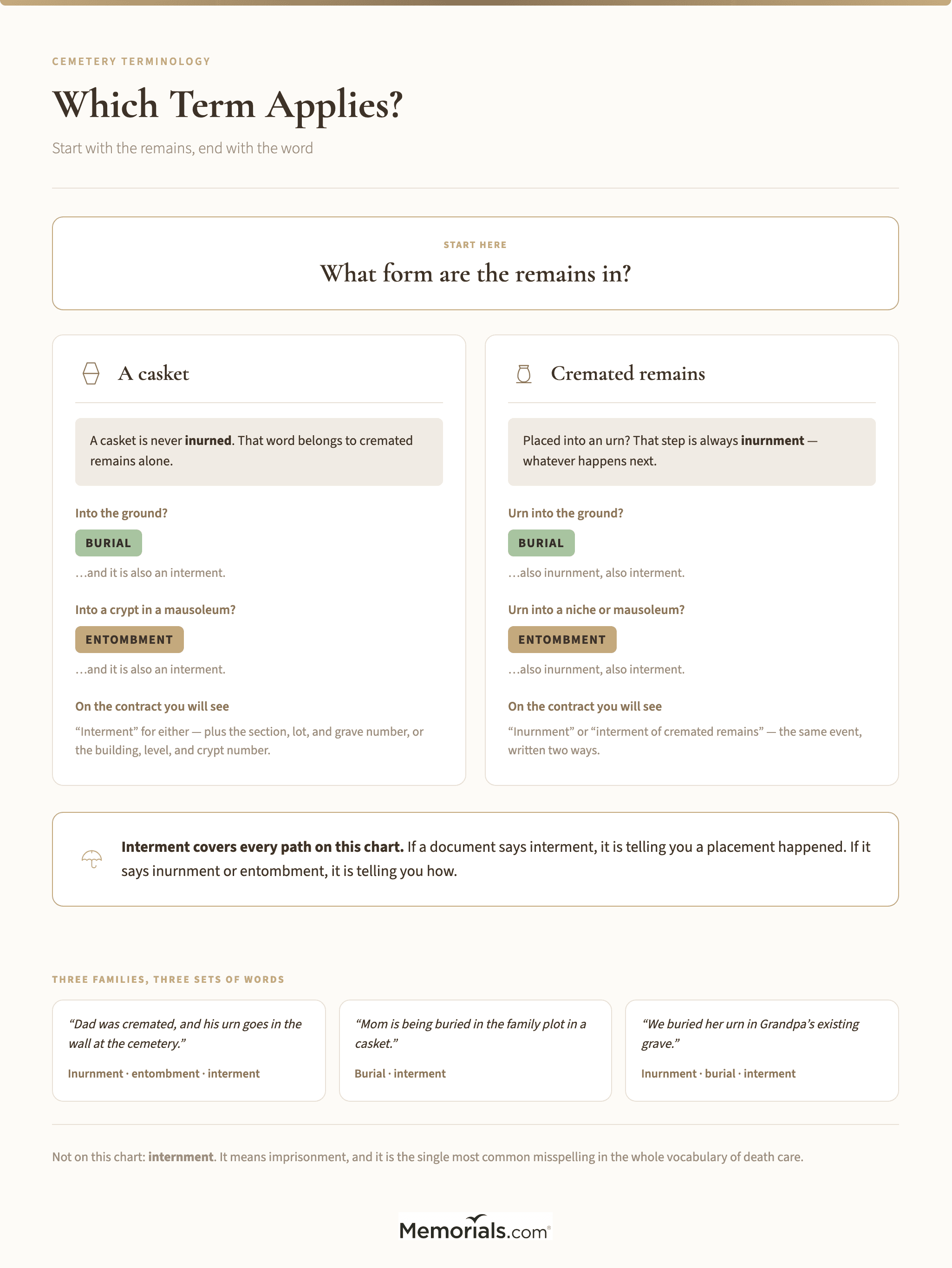
If the remains are in a casket and the casket goes into the ground, that is burial, and it is also interment. If the casket goes into a crypt in a mausoleum, that is entombment, and it is also interment.
If the remains are cremated and go into an urn, everything from that point is inurnment. If that urn goes into the ground, it is also burial and interment. If it goes into a columbarium niche or a mausoleum, it is also entombment.
Interment is the word that covers all of these. Inurnment and entombment are the more precise ones, and if a document uses them, it is telling you something specific about what will physically happen.
Start with the form the remains are in, then where they are going. A casket into the ground is a burial and an interment; a casket into a crypt is an entombment and an interment. Cremated remains placed in an urn are always an inurnment, and that urn going into the ground or a niche is also an interment. Interment covers every path on the chart.
What These Choices Cost
Cemeteries price the space and the placement separately, and the terms above tell you which line is which.
Ground burial of a casket carries the cost of the plot, the opening and closing fee, and usually a required outer burial container. Our breakdown of cemetery plot cost covers what drives the range in each region.
Inurnment costs less across the board, because the space is smaller. A columbarium niche or an urn garden plot is typically a fraction of a full-size grave, and our guide to the cost of burying cremated ashes sets out the figures. If you are weighing a niche against a plot, columbarium vs burial plot compares them directly.
Entombment in a community mausoleum sits between the two for an urn niche and above ground burial for a casket crypt, with the position of the crypt in the building affecting price — eye-level crypts cost more than those near the floor or high on the wall.
Whichever placement you choose, the marker is a separate decision and a separate cost. Bronze and granite headstones, niche plaques, and other cemetery products are usually bought from a supplier rather than the cemetery, and cemeteries publish specifications that any marker must meet.
Frequently Asked Questions
Is interment the same as burial?
Not quite. Burial specifically means placing remains in the ground and covering them with soil. Interment is the broader term for any final placement, including burial, entombment in a mausoleum, and inurnment in a columbarium. All burials are interments; not all interments are burials.
What is the difference between interment and inurnment?
Interment covers any final placement of remains. Inurnment is specifically the placing of cremated remains into an urn and then into their resting place. Inurnment only applies to ashes, and it is always also an interment.
What does entombment mean on a cemetery contract?
It means the remains will be placed in a sealed chamber above ground or within a structure — a crypt in a mausoleum, or a niche for an urn — rather than buried in the earth. The contract will usually specify the building, the level, and the crypt number.
Can cremated remains be entombed rather than buried?
Yes. An urn can be placed in a mausoleum niche or a columbarium wall, which is entombment, or buried in a plot or urn garden, which is burial. Both are forms of interment, and most cemeteries offer both.
Why do some documents say interment and others say inurnment?
Because interment is the umbrella term and inurnment is the specific one. A cemetery writing "interment of cremated remains" and one writing "inurnment" are describing the same event. Inurnment is the more precise word, so it tends to appear on paperwork specific to columbaria and urn gardens.
Choosing What Fits Your Family
The vocabulary matters less than the decision underneath it, and the decision is usually about how a family wants to visit. Ground burial gives a place to stand and to plant. A columbarium niche gives a sheltered wall and a smaller commitment. A mausoleum crypt gives somewhere to sit out of the weather on a difficult anniversary.
None of them is more respectful than another, and cemeteries will walk you through the options without pressure if you ask. When you know which term applies to what you have chosen, the paperwork stops being an obstacle.
Memorials.com offers cremation urns sized for cemetery niches and plots, bronze and granite markers, and caskets suitable for ground burial or mausoleum entombment, so the choice you have made is the one you can furnish.