🏬Supersize Online Funeral Retailer🪦1000's of Headstones⚱️Over 10,000 Cremation Urns⚰️Caskets Overnight Delivery🛒Funeral & Memorial Superstore🚚FREE Shipping on ALL Orders👨👩👧👦Helping Families for over 20 Years💰Lowest Price Guarantee🏬Supersize Online Funeral Retailer🪦1000's of Headstones⚱️Over 10,000 Cremation Urns⚰️Caskets Overnight Delivery🛒Funeral & Memorial Superstore🚚FREE Shipping on ALL Orders👨👩👧👦Helping Families for over 20 Years💰Lowest Price Guarantee
🏬Supersize Online Funeral Retailer🪦1000's of Headstones⚱️Over 10,000 Cremation Urns⚰️Caskets Overnight Delivery🛒Funeral & Memorial Superstore🚚FREE Shipping on ALL Orders👨👩👧👦Helping Families for over 20 Years💰Lowest Price Guarantee🏬Supersize Online Funeral Retailer🪦1000's of Headstones⚱️Over 10,000 Cremation Urns⚰️Caskets Overnight Delivery🛒Funeral & Memorial Superstore🚚FREE Shipping on ALL Orders👨👩👧👦Helping Families for over 20 Years💰Lowest Price Guarantee
Grief has a way of making intangible things feel urgent – the need to keep someone close, to hold something real. For many families, glass cremation jewelry offers exactly that: a wearable, permanent memorial where a small amount of a loved one's ashes are permanently fused into a handblown piece of glass.
But how does it actually work? What happens to the ashes? Can you see them? Will the piece last? This guide explains the entire process from start to finish – the techniques, the materials, the questions families ask most, and what makes each piece genuinely one of a kind. If you're still deciding which type of memorial is right for your family, our cremation jewelry guide covers the full range of options available.
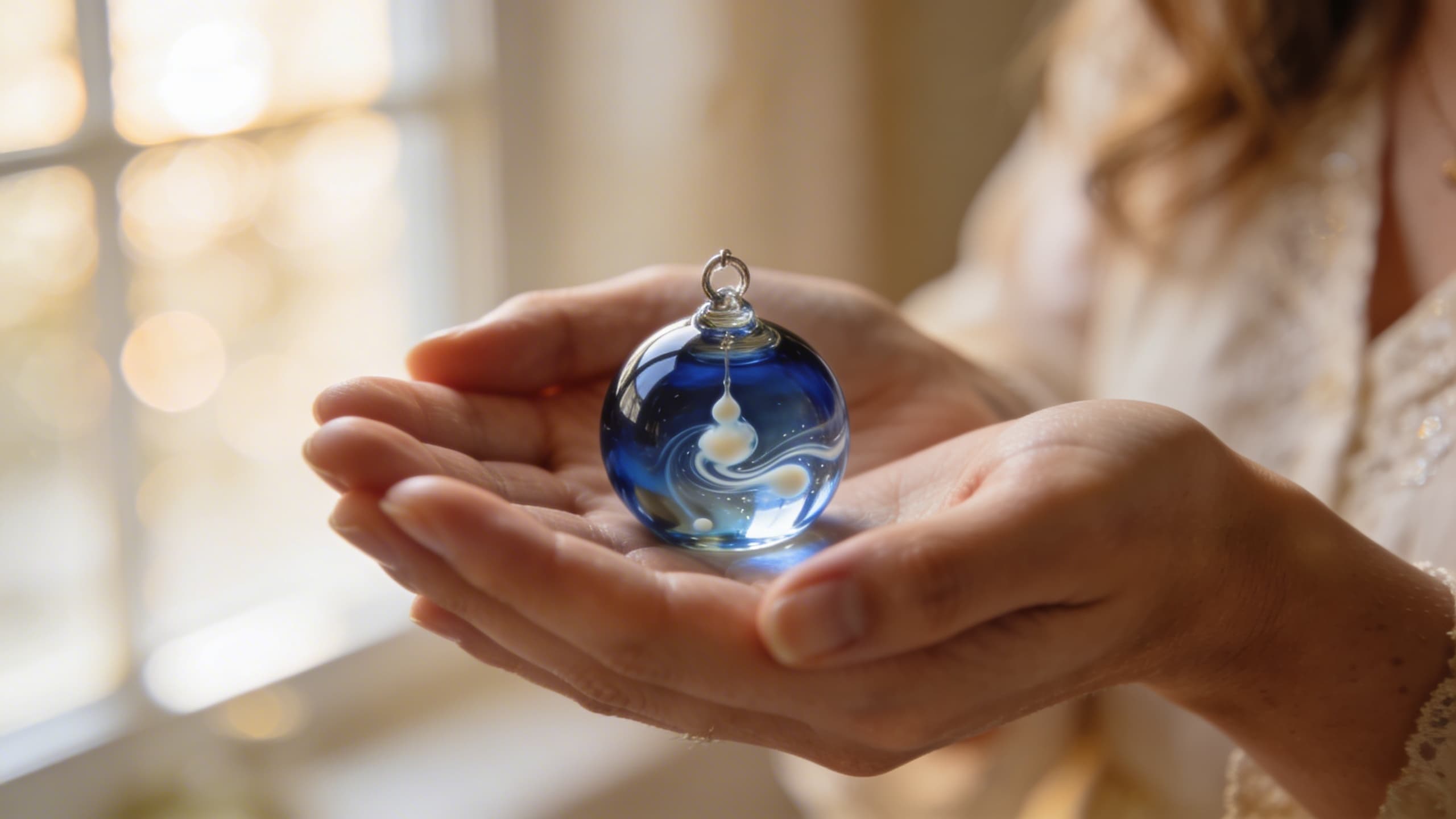
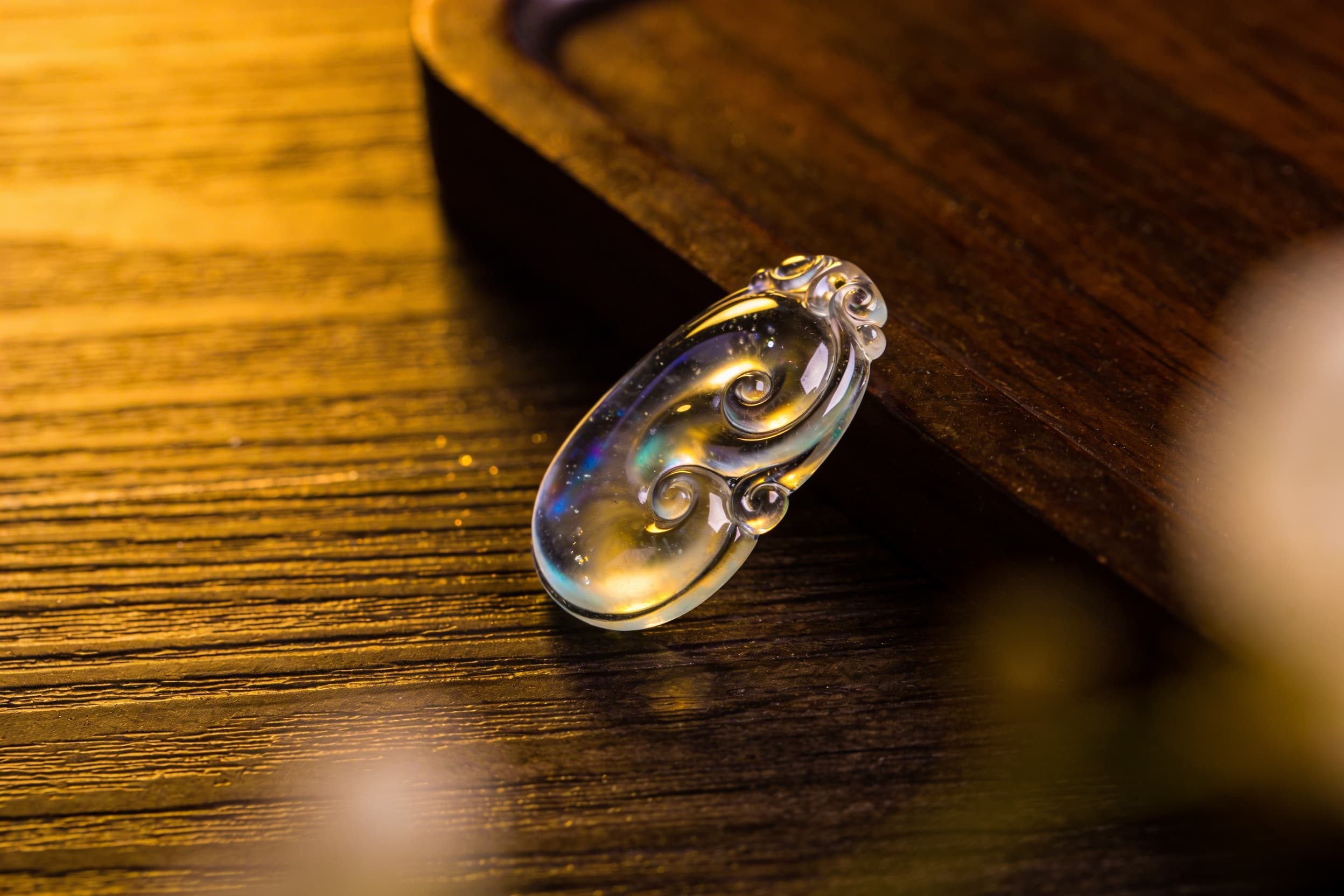
Ashes in glass jewelry is a category of cremation jewelry in which cremated remains are permanently infused into glass during the making of a pendant, bead, ring, or other keepsake. The ashes are not stored inside a hollow chamber – they become part of the glass itself, encased within and suspended in the molten material as it cools and hardens.
This is fundamentally different from a hollow urn necklace, where ashes can be added and removed. With ashes-in-glass pieces, once the glass solidifies, the cremated remains cannot be separated from the glass matrix. The result is a permanent, wearable memorial that is structurally one piece – not an urn you wear, but a memorial sculpted from the ashes themselves.
Glass is among the most popular materials for this type of jewelry for several reasons. It is affordable relative to precious metals or memorial diamonds. It can be made in virtually any color. And the visual effect of white ash suspended within swirling, translucent glass is widely considered one of the most beautiful of all cremation memorial forms.
The Two Main Techniques for Making Cremation Glass Jewelry
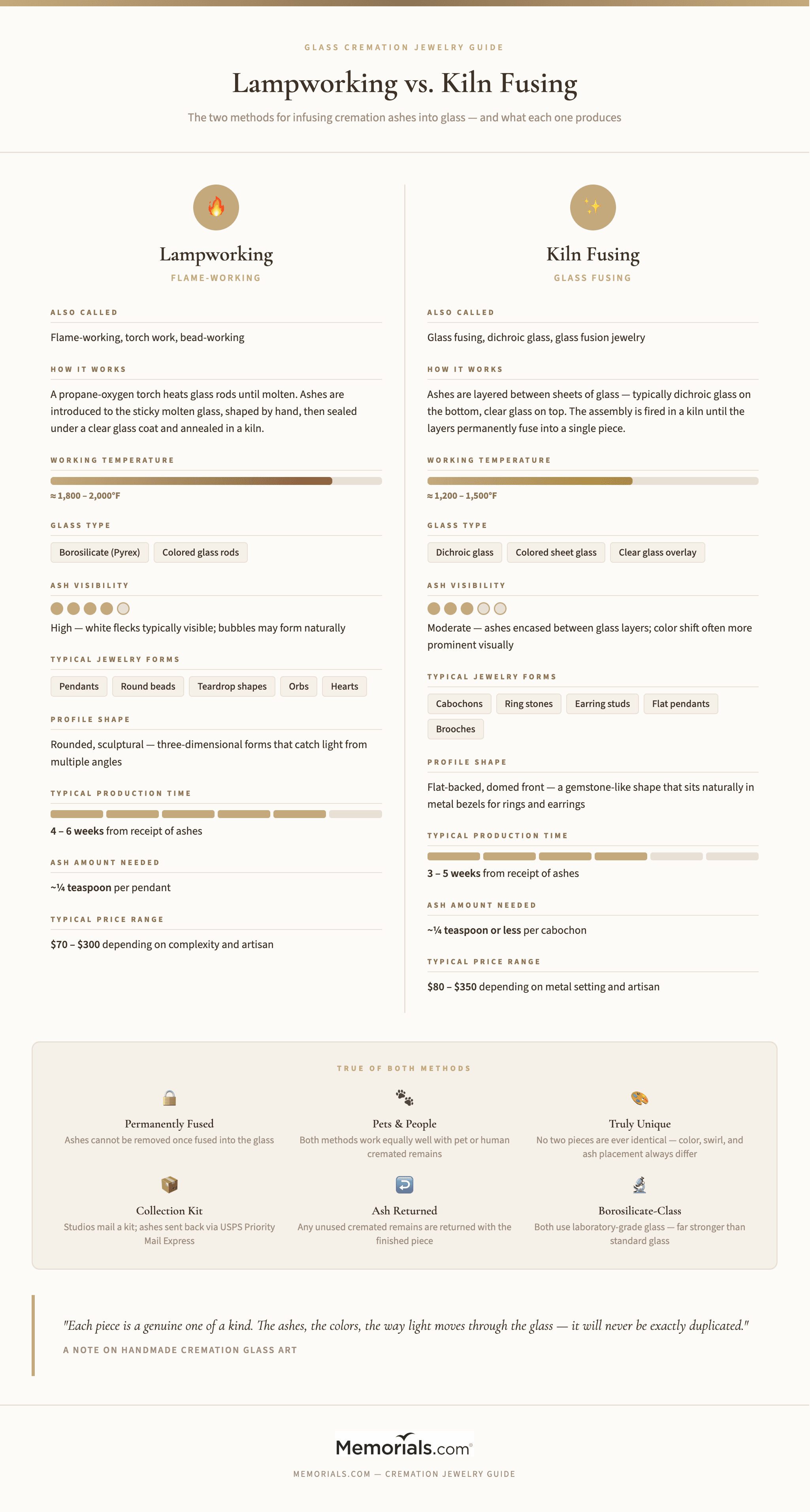
Not all glass cremation jewelry is made the same way. There are two primary methods, and understanding the difference helps you know what to expect from your piece.
1. Lampworking (Flame-Working)
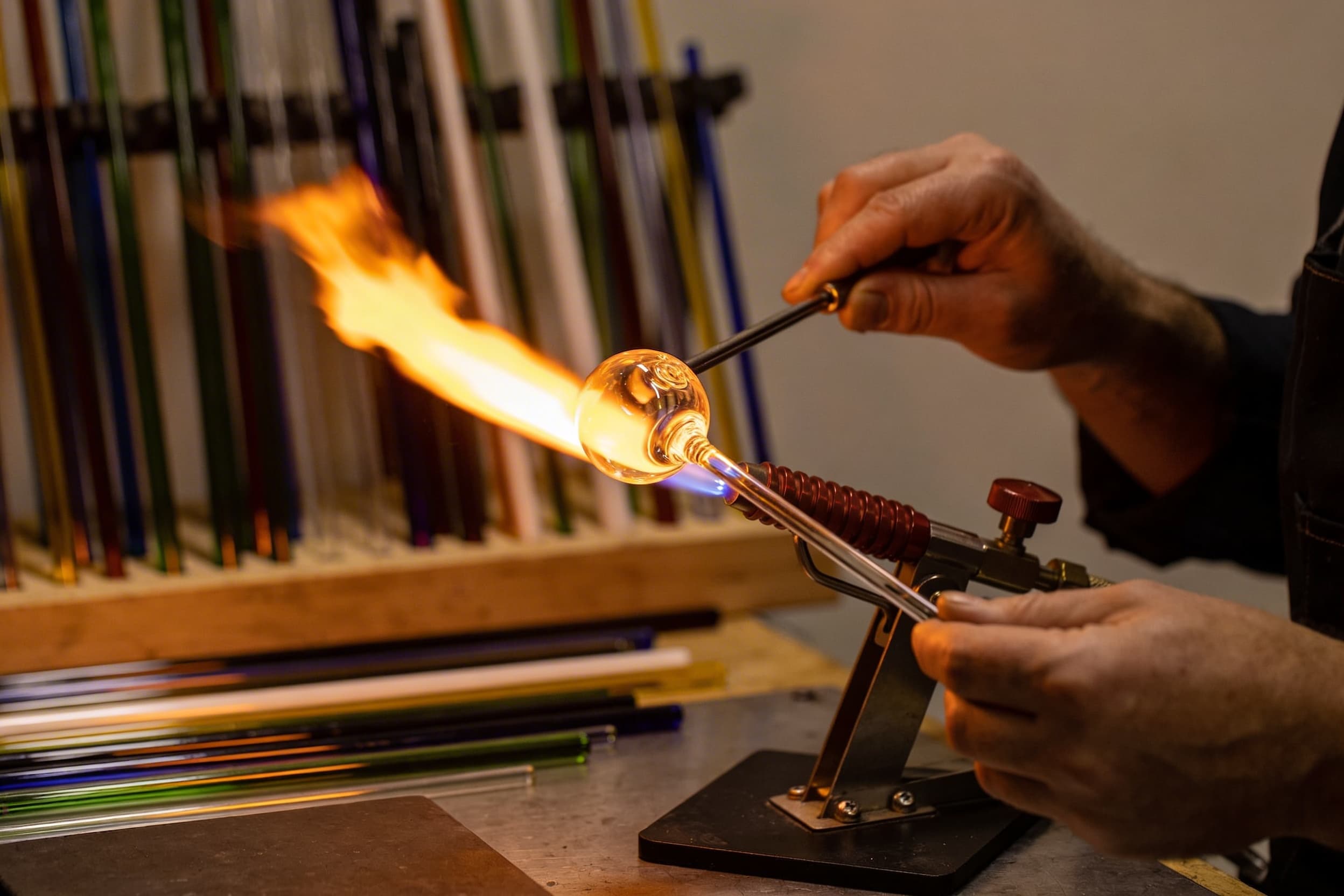
Lampworking – also called flame-working – is the most common technique for making cremation pendants, beads, and small jewelry pieces. An artisan uses a propane-and-oxygen torch to heat rods of colored borosilicate glass to approximately 1,800--2,000°F, at which point the glass becomes molten and workable, with a consistency similar to thick honey.
A small quantity of cremation ash – typically about a quarter of a teaspoon – is introduced to the molten glass. Because molten glass is adhesive, the ash adheres on contact. The artist incorporates it into the design and typically covers it with a clear coat of glass to permanently seal the ashes within. The piece is then placed into a digitally controlled kiln for annealing – a slow, controlled cooling process that relieves internal stress in the glass and makes the finished piece far stronger and more durable.
What you see in the finished piece depends on the composition of the ashes. Most families will notice white or cream-colored flecks suspended within the glass. In some cases, small bubbles form – a natural and expected characteristic of the chemical reaction between cremation ash and molten glass at high temperature. These bubbles are not a defect; they are a unique feature of each individual piece.
2. Kiln Fusing
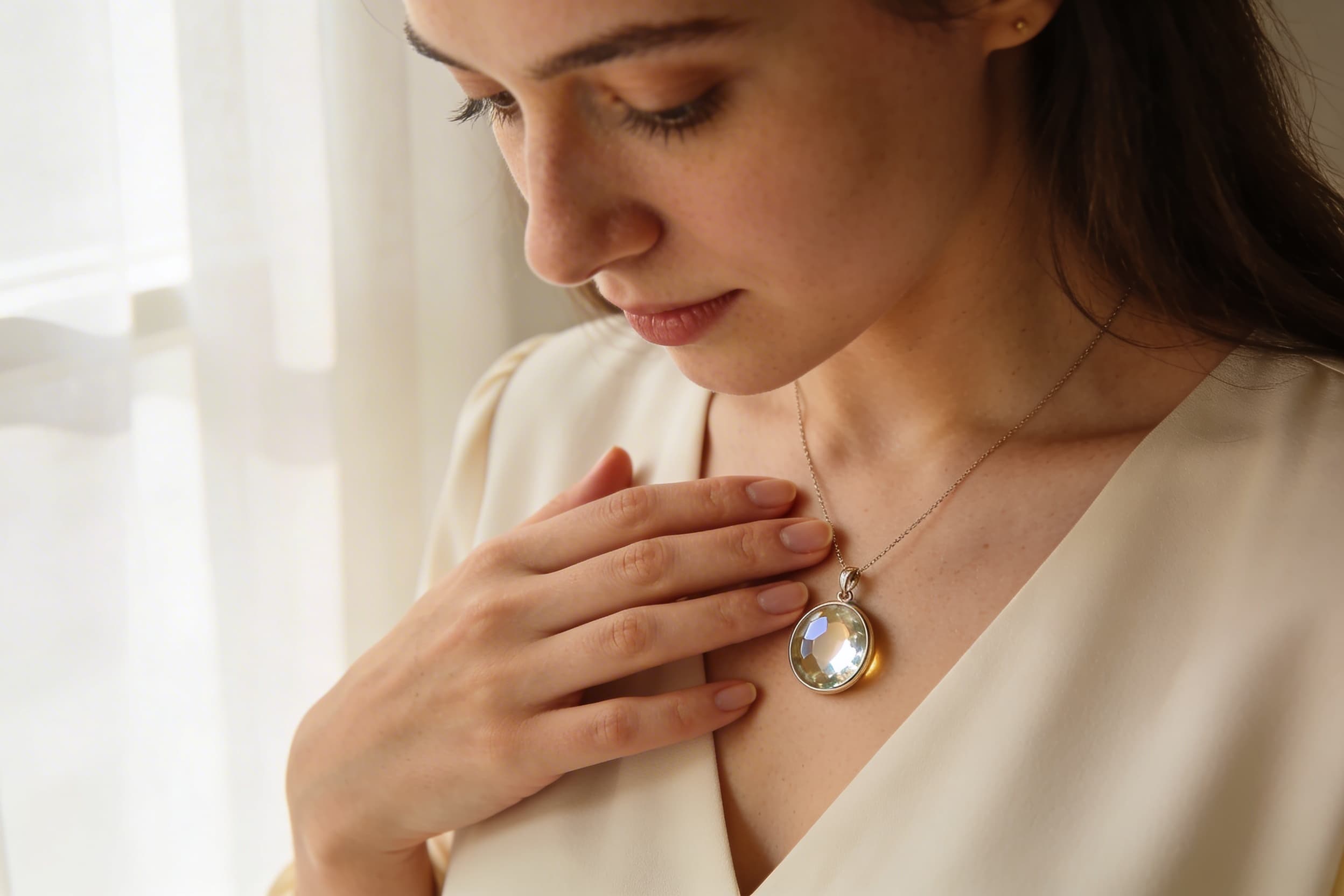
The second technique, kiln fusing, works differently. Rather than using a torch to melt and shape molten glass by hand, artisans build up layered sheets of glass – often dichroic glass, which produces a color-shifting, iridescent effect – and fuse them together in a kiln. The ashes are carefully placed between layers before firing, sandwiched between a colored glass base and a clear glass top layer. During kiln firing, the layers fuse into a single solid glass cabochon (a domed, flat-backed gemstone shape) that permanently encases the ashes inside.
Kiln-fused pieces tend to have a flatter, more gemstone-like profile compared to the rounder, more sculptural forms produced by lampworking. They are particularly popular for ring settings and earrings, where a gemstone shape sits naturally in a metal bezel.
What Kind of Glass Is Used?
The most common glass used in cremation jewelry is borosilicate glass, widely known by the brand name Pyrex. Borosilicate is a laboratory-grade glass with exceptionally high clarity, thermal resistance, and structural strength – properties that make it ideal for jewelry that will be worn daily and handled regularly.
Borosilicate glass also accepts color beautifully. Artists work with rods of pre-colored glass to introduce swirls, gradients, and layers to the design. The final piece may show a single deep color (like cobalt blue or forest green) or a complex, swirling combination – and the cremated remains appear within that color, often visible as luminous white flecks that some families describe as looking like stars suspended in the glass.
Dichroic glass, used in kiln fusing, is a specialty material coated with metallic oxides that cause it to shift color depending on the angle of light and the viewer's position. A dichroic piece might appear teal in one light and gold in another – making every viewing experience slightly different.
For a broader look at how glass compares to other cremation jewelry materials like metal, resin, and stone, our jewelry materials guide offers a full overview of the options available.
How Much Ash Is Needed?
One of the most common questions families have is how much of the cremated remains will be used. For a single lampworked pendant or bead, most artisans ask for approximately one-quarter teaspoon of ash. For kiln-fused cabochons, the amount is similar – often slightly less.
This is a genuinely small portion of the overall cremated remains. The average adult's ashes weigh between four and eight pounds, so a quarter teaspoon represents a negligible percentage. This matters practically because many families want to create multiple keepsakes – for siblings, for a spouse, for close friends – while still having enough remains for a burial, scattering, or display urn. The small amount needed per glass piece makes that possible.
After the piece is made, any unused ash is typically returned to the family in a sealed container, often along with the glass creation kit.
What to Expect During the Process
Most glass cremation jewelry studios operate on a commission model rather than producing pre-made pieces. The general process works as follows:
Step 1: Order placement. You select the style, color(s), and shape of the piece you want. At this point you will typically choose between pendant styles, bead forms, cabochon shapes for rings or earrings, and more.
Step 2: Ash collection kit. After placing your order, the studio mails you a collection kit containing a small measuring scoop and sealed containers, along with USPS mailing instructions. Cremated remains must be shipped via USPS Priority Mail Express – they cannot go by ground shipping or standard mail.
Step 3: Sending the ashes. You measure the requested amount of ash, seal it in the provided containers, and ship it back to the studio. The package should be shipped from the post office counter – not dropped in a mailbox – and you should keep the tracking number.
Step 4: Creation. Your memorial is created by an artisan. Most reputable studios track each order individually, working through commissions one at a time. The ashes from your loved one remain in their designated container at every step of the process to ensure chain of custody. Your piece will never be created in a batch alongside other customers' ashes.
Step 5: Annealing and finishing. After the piece is shaped, it is annealed in a kiln and polished. For lampworked pieces, this kiln process typically takes place overnight. For kiln-fused pieces, it is built into the firing cycle.
Step 6: Delivery. The finished jewelry is shipped back to you, usually with any unused ash included in the package.
Production timelines vary by studio but typically run four to six weeks from the receipt of ashes. Some studios offer expedited turnaround for an additional fee.
The Visual Characteristics of Glass Cremation Jewelry
Every piece of blown glass cremation jewelry is genuinely unique. Even if two customers order the same color combination and style, the swirling patterns of color and the placement of the ash flecks within the glass will never be exactly the same. This is a defining characteristic of handmade glass art – and for families, it means the piece is as individual as the person it honors.
A few things to understand about the appearance of the finished piece:
You will likely see the ashes. In lampworked pieces, cremation ash typically appears as white or cream-colored flecks suspended within the glass. Some pieces show them prominently; in others, the ash is more subtly integrated into the swirl of color. Either way, knowing that the ashes are present – visible or not – is the point.
Bubbles are expected and natural. Because cremation ash contains minerals that interact chemically with molten glass at high temperatures, small bubbles sometimes form during the creation process. They are not a manufacturing flaw. They are a natural outcome of the process and contribute to the uniqueness of each piece.
Color may look different indoors vs. outdoors. Borosilicate glass shows its most vibrant color in natural sunlight. Indoors, under artificial light, the same piece may appear softer or more muted. Dichroic glass shifts color more dramatically depending on light angle.
The piece cannot be duplicated exactly. If your pendant breaks and you want a replacement, the artisan can make another piece in the same style and colors – but it will not be identical. This is a feature of handmade glass art, not a limitation.
How Durable Is Glass Cremation Jewelry?
Borosilicate glass is significantly stronger than standard glass – it's the same material used in laboratory equipment. Properly annealed cremation glass pendants are made to be worn regularly. However, glass is still glass: it can crack or break if dropped on a hard surface or subjected to a sharp impact.
A few care guidelines apply to most glass cremation jewelry:
Remove the piece before physical activity, swimming, or sleeping
Clean with mild dish soap and warm water; avoid harsh chemical cleaners
Do not bring it to a local jewelry store for polishing – jewelers who are unfamiliar with glass can etch the surface with their polishing compounds
Store it in a soft pouch or lined jewelry box when not being worn
If a piece does break, some studios offer repair services; others can remake the piece if you have remaining ash. Always ask about the studio's policy before ordering.
Glass vs. Other Types of Ashes Jewelry
Families considering ashes jewelry often compare several material options. Here is how glass compares to the most common alternatives.
Glass vs. resin: Resin jewelry for ashes can be made at home and is typically less expensive, but resin is a synthetic polymer that can yellow, cloud, or degrade over time. Glass, by contrast, is inorganic and chemically stable – a properly made glass piece will remain clear and vibrant for generations. Many artisans who specialize in cremation memorials recommend glass over resin specifically for this reason.
Glass vs. memorial diamonds: Memorial diamonds require a significant portion of cremated remains (sometimes hundreds of grams), a lengthy production process, and a price point that starts at several thousand dollars. Glass cremation pendants can be made from as little as a quarter teaspoon and typically cost between $50 and $300 depending on complexity and the artisan. For families who want multiple keepsakes for different family members, glass is often the more practical choice. For a complete breakdown of pricing across all cremation jewelry types, see our jewelry pricing guide.
Glass vs. hollow urn pendants: A hollow urn pendant holds ashes inside a sealed chamber – the ashes are added after the jewelry is made and can, in theory, be removed. With ashes-in-glass jewelry, the cremated remains are fused permanently into the glass and cannot be separated. Both approaches have devoted fans; the choice comes down to whether families want the ashes to be an integrated part of the jewelry's physical structure or contained within it.
FAQ
Can you really see the ashes inside glass cremation jewelry? In most cases, yes. Cremation ash appears as white or cream-colored flecks suspended within the glass. In lampworked pieces where the ash is incorporated into the color design, it is typically visible upon close inspection. In heavily opaque or dark-colored pieces, the ash may be less prominent visually but is still present and permanently fused into the glass.
How much of my loved one's ashes are used to make glass jewelry? Most studios use approximately one-quarter teaspoon of cremated remains per pendant or bead. This is a very small portion – the vast majority of the remains are unaffected and returned to you with any unused ash after the piece is completed. The small amount needed makes it practical to create multiple pieces for different family members.
How is glass cremation jewelry made? The most common method is lampworking, in which an artisan uses a torch to heat borosilicate glass rods to approximately 1,800--2,000°F until they become molten. A small amount of ash is introduced to the molten glass, incorporated into the design, and sealed beneath a clear glass layer. The piece is then annealed slowly in a kiln to stabilize and strengthen it. The second method, kiln fusing, sandwiches ashes between layers of glass (often dichroic glass) and fires them in a kiln until the layers permanently fuse.
Is glass cremation jewelry durable enough for everyday wear? Borosilicate glass is laboratory-grade and significantly stronger than standard glass. Most pieces are intended for regular wear. However, glass can crack or break if dropped on hard flooring or struck sharply. Proper care – removing the piece during physical activity, cleaning gently, and storing it properly – extends its life significantly.
Can I get glass cremation jewelry made for a pet's ashes? Yes. The process is identical for pet cremated remains as for human remains – cremation ash is the same material in either case. Many studios that make glass cremation jewelry accept both pet and human ashes, and most of their ordering and shipping processes apply equally to both.
Choosing Glass Cremation Jewelry
The process of having ashes infused into glass is one of the more personal memorial decisions a family can make. The piece will be truly one of a kind – no two pieces ever come out exactly alike – and the selection of color, form, and style is an opportunity to reflect the personality of the person being remembered. Glass is one of several artistic memorial forms; glass sits alongside cremation art forms like ash paintings, sculptures, and touchstones. For a broader introduction to these handcrafted options, our guide to cremation sculptures and artistic keepsakes explores the full range beyond jewelry.
If you are ready to explore what is available, our collection of glass cremation jewelry includes handblown and hand-fused pendants and keepsakes that can hold the ashes of both people and pets. Every piece is made with care, and the process – from the first order to the moment the finished memorial arrives – is handled with respect for the trust families place in it.