🏬Supersize Online Funeral Retailer🪦1000's of Headstones⚱️Over 10,000 Cremation Urns⚰️Caskets Overnight Delivery🛒Funeral & Memorial Superstore🚚FREE Shipping on ALL Orders👨👩👧👦Helping Families for over 20 Years💰Lowest Price Guarantee🏬Supersize Online Funeral Retailer🪦1000's of Headstones⚱️Over 10,000 Cremation Urns⚰️Caskets Overnight Delivery🛒Funeral & Memorial Superstore🚚FREE Shipping on ALL Orders👨👩👧👦Helping Families for over 20 Years💰Lowest Price Guarantee
🏬Supersize Online Funeral Retailer🪦1000's of Headstones⚱️Over 10,000 Cremation Urns⚰️Caskets Overnight Delivery🛒Funeral & Memorial Superstore🚚FREE Shipping on ALL Orders👨👩👧👦Helping Families for over 20 Years💰Lowest Price Guarantee🏬Supersize Online Funeral Retailer🪦1000's of Headstones⚱️Over 10,000 Cremation Urns⚰️Caskets Overnight Delivery🛒Funeral & Memorial Superstore🚚FREE Shipping on ALL Orders👨👩👧👦Helping Families for over 20 Years💰Lowest Price Guarantee
Hair endures in ways that almost nothing else does. Locks saved in the 1800s still retain their color and form today, tucked into lockets, shadow boxes, and archival envelopes passed down through families across generations. That remarkable resilience – combined with the deeply intimate connection we feel toward someone's physical presence – is why a lock of hair has served as a memorial keepsake for centuries.
Keeping a lock of hair from someone you love is not an unusual impulse. It is a human one. This guide covers the types of lock of hair keepsakes available today, ideas for creating meaningful memorials, and a practical preservation guide so your keepsake lasts as long as memory itself. For a broader look at wearable memorial options, our guide to choosing cremation jewelry covers the full range of memorial jewelry formats available today.
Why a Lock of Hair Makes a Powerful Memorial
Unlike most keepsakes, hair does not decompose the way other organic material does. In the right conditions, a lock of hair can remain intact for well over a century. This stability makes it uniquely suited to serve as a physical bond – a tangible piece of someone's presence that can be held, worn, or displayed long after they are gone.
A lock of hair carries personal meaning that no purchased object can replicate. Its color, texture, and curl pattern are specific to that person alone. Keeping a strand close – whether inside a locket worn daily or sealed beneath glass in a quiet corner of the home – creates a lasting connection that families often describe as a comfort during grief and beyond.
Hair keepsakes are appropriate for a wide range of circumstances: the loss of a parent, spouse, or sibling; the death of a child or infant; the passing of a beloved pet; or even a milestone life event like a baby's first haircut. The impulse is the same in each case – to hold onto something real.
The Victorian Tradition of Hair Memorial Jewelry
The practice of preserving a lock of hair as a memorial keepsake has deep historical roots. During the Victorian era, hair jewelry became an elaborate art form. Families commissioned skilled artisans to weave strands of hair into wreaths, brooches, rings, and lockets – often incorporating the hair of multiple generations into a single piece.
Queen Victoria herself famously wore a locket containing a lock of Prince Albert's hair after his death in 1861 and reportedly instructed that strands of hair from her closest family members be placed in her coffin. Her mourning practices shaped the customs of the entire era, and hair jewelry became a widely accepted symbol of love, grief, and memory.
Today's hair memorial keepsakes draw from that same tradition while reflecting modern tastes. Where Victorian pieces were often ornate and visible, contemporary options range from delicate pendant necklaces to subtle resin beads – wearable forms of remembrance designed for everyday life. For a deeper look at how this tradition evolved, our article on the history of mourning jewelry traces the full arc from Victorian practice to today's memorial pieces.
Types of Lock of Hair Keepsakes
There is no single right way to keep a lock of hair. The best option depends on how you want to use it – whether as something worn daily, displayed in the home, or stored safely as a family heirloom.
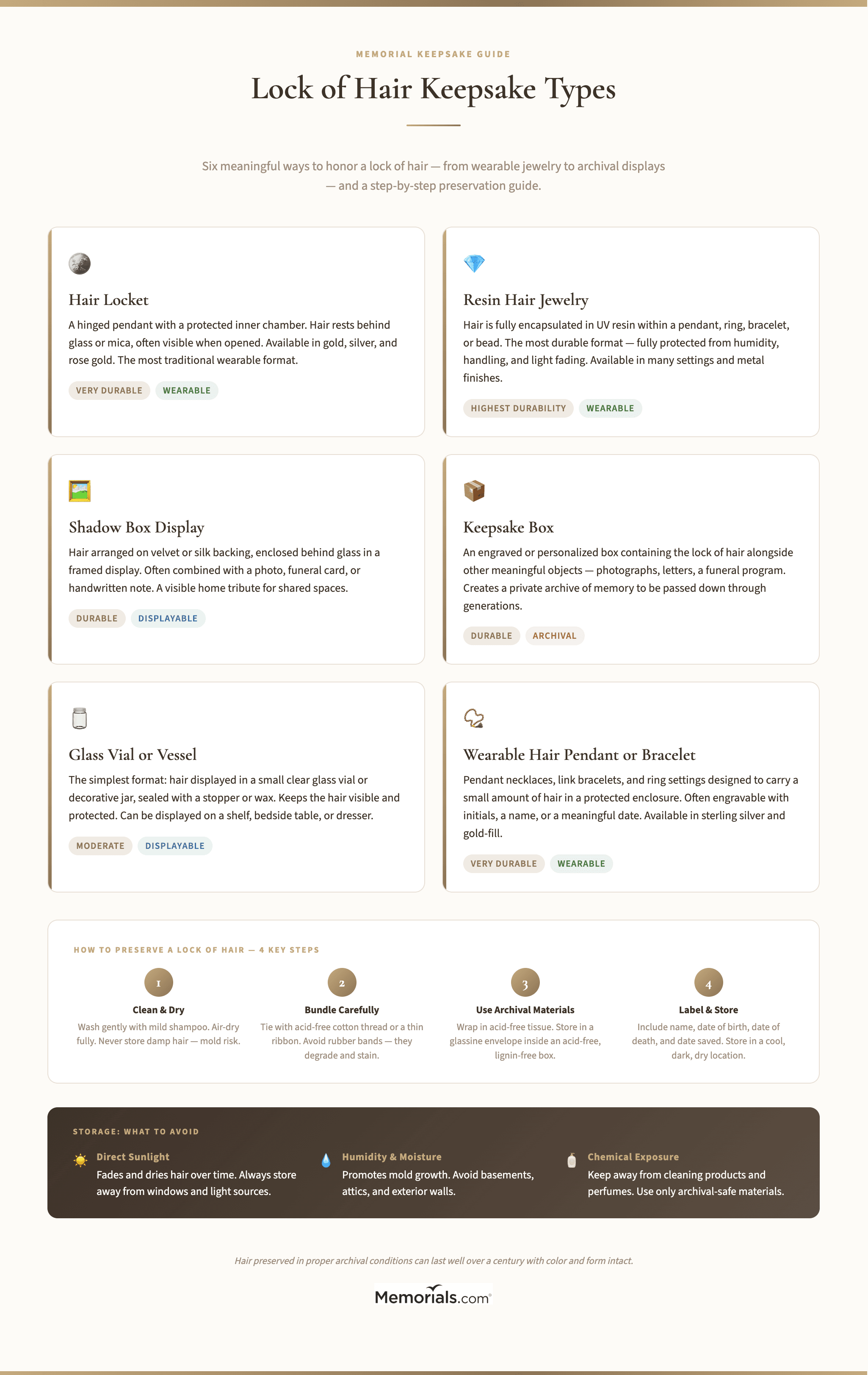
1. Hair Lockets
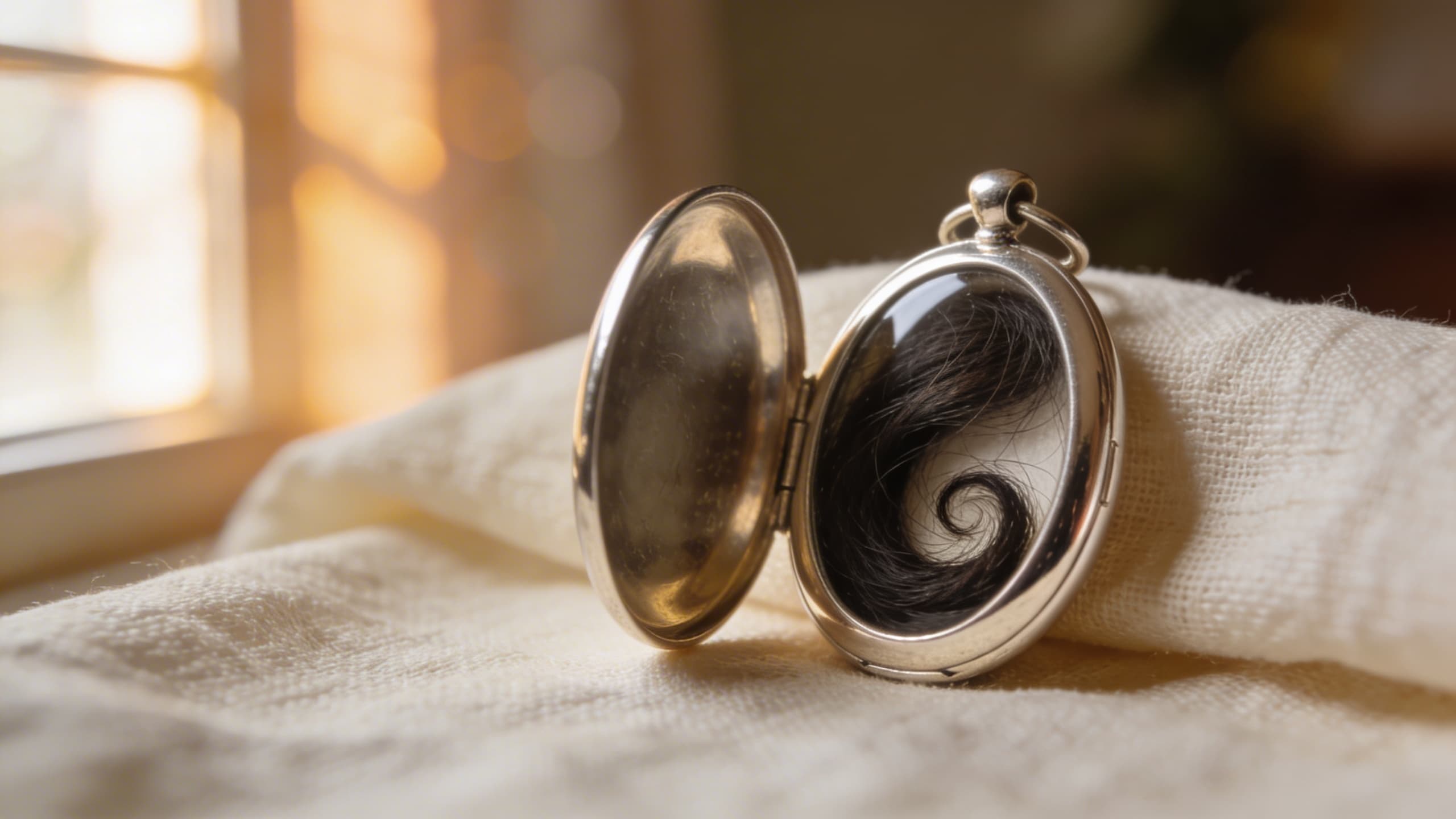
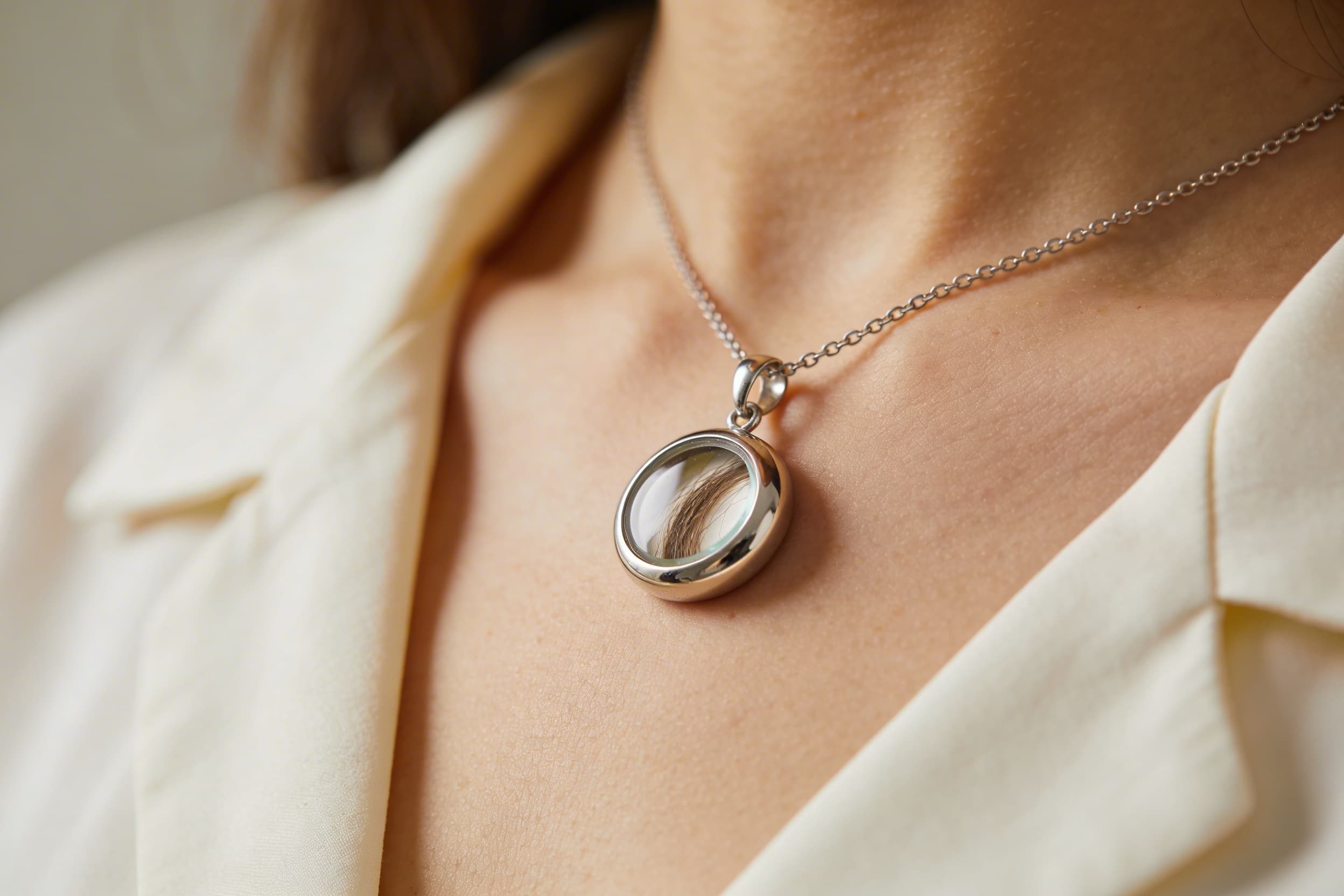
A hair locket is perhaps the most traditional format. These small hinged pendants open to reveal a small chamber where a lock of hair is placed. Lockets come in gold, silver, and rose gold finishes, in shapes ranging from oval to heart to round. Some include a small pane of glass or clear mica over the hair so it is visible when the locket is opened.
Hair lockets can be worn as a necklace, incorporated into a charm bracelet, or carried in a pocket. They are among the most wearable and longest-lasting formats, since the hair is enclosed and protected from handling.
2. Resin Hair Jewelry
Resin encapsulation is a modern technique that suspends strands of hair in clear UV resin to create a solid, durable keepsake. The result is often embedded within a pendant, ring, bead, or bracelet. Because the resin fully encases the hair, it is protected from humidity, light, and handling – making resin hair jewelry one of the most durable formats available.
Professional artisans who specialize in hair memorial jewelry can incorporate additional elements into a resin piece: birthstones, pressed flowers, metallic leaf, or pigment to complement the hair's natural color. The finished piece is as individual as the person it honors.
3. Keepsake Shadow Boxes and Memory Frames
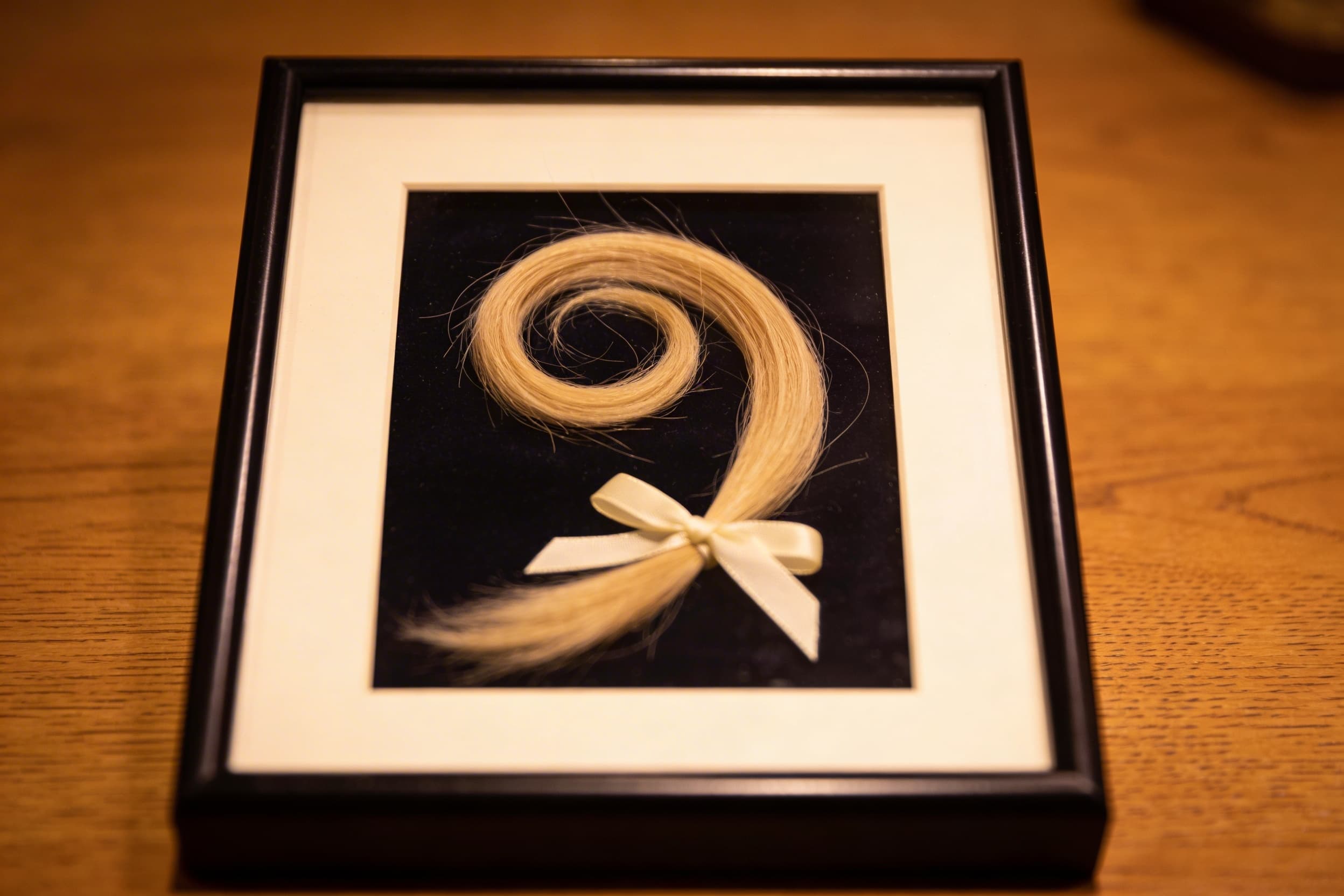
A shadow box display arranges the lock of hair – often tied with a small ribbon – against a velvet or silk backing, typically combined with a photograph, a funeral card, or a handwritten note. Enclosed behind glass and mounted in a frame, a shadow box becomes a quiet focal point in the home.
This format is well suited for families who want a visible, displayable tribute rather than wearable jewelry. It is also a meaningful way to combine several mementos in one place, inviting other family members to add a keepsake that matters to them.
4. Keepsake Boxes and Memory Boxes
A keepsake box holds the lock of hair alongside other meaningful objects: a photograph, a piece of jewelry, handwritten letters, a funeral program, or a pressed flower from the service. A personalized engraved box adds another layer of meaning.
This format works especially well when hair is combined with other materials – including, for families who chose cremation, a small amount of cremated remains. A keepsake box creates a private archive of memory that can be passed to the next generation intact.
5. Glass Vials and Display Vessels
A small glass vial or clear decorative jar is one of the simplest and most accessible options. It allows the hair to remain visible – preserving its color and texture – while keeping it protected. Vials can be sealed with wax, cork, or a small stopper and displayed on a shelf or dresser.
For those who appreciate a more unconventional display, hair can be encased in a glass suncatcher panel, suspended in a window to catch the light – a particularly meaningful tribute for loved ones who treasured time in the garden or outdoors.
Beyond lockets, hair can be incorporated into a wide range of wearable formats. Lock of hair keepsakes are available as pendant necklaces, link bracelets, and ring settings – each designed to carry a small amount of hair in a protected enclosure. These pieces are often available in sterling silver and gold-fill finishes and can be engraved with initials, a name, or a meaningful date.
Lock of Hair Memorial Ideas for Specific Circumstances
For a Deceased Parent or Grandparent
A lock of hair from a parent or grandparent is often one of the most cherished heirlooms in a family. For an adult loved one, a hair locket or resin pendant worn daily keeps their memory close without being conspicuous. A shadow box combining their lock of hair with a favorite photograph creates a lasting tribute that can be displayed in the family home for generations.
For a Child or Infant
Hair from a child or infant – whether saved from their first haircut or following an unexpected loss – is among the most tender of keepsakes. Small lockets, delicate pendant necklaces, and resin beads are all appropriate formats. Many families also preserve baby hair in a personalized keepsake box alongside a hospital bracelet, a birth announcement, or a small blanket square.
If you are navigating the loss of a child, cremation jewelry offers a range of options designed specifically for infant and baby memorials, including petite locket styles suited to fine hair.
For a Pet
A lock of fur from a beloved pet carries the same emotional weight as hair from a human loved one. The same formats apply: lockets, resin jewelry, shadow boxes, and keepsake boxes. The texture of pet fur – particularly from long-haired breeds – often renders beautifully in resin, where the natural colors and layered strands are visible within the finished piece.
Many families who lose a pet prefer a discrete wearable memorial – something worn to work or during the day that keeps the pet's memory quietly present without requiring explanation.
As a Baby's First Haircut Keepsake
Preserving a baby's first curl is a long-standing tradition with no grief attached – it is a simple celebration of a milestone. A small glass vial, a hinged locket, or a keepsake box engraved with the baby's name and the date of the first haircut are all appropriate. Some families include the lock in a baby book alongside footprints, milestone cards, and newborn photos.
How to Preserve a Lock of Hair
Proper preservation ensures the lock retains its color, texture, and integrity for decades – or generations. The techniques are straightforward, and most of the materials required are inexpensive.
Step 1: Prepare the Hair Before Storage
Before storing or sending hair to an artisan, it should be clean and completely dry. Gently wash with a mild shampoo and allow the hair to air-dry fully. Do not use heat styling tools to dry it, as heat can alter the hair's structure and make it brittle over time.
For pet fur, remove any debris and allow the fur to dry thoroughly before handling. Fur that is stored while even slightly damp can develop mold or mildew in a sealed container.
Step 2: Bundle the Lock Carefully
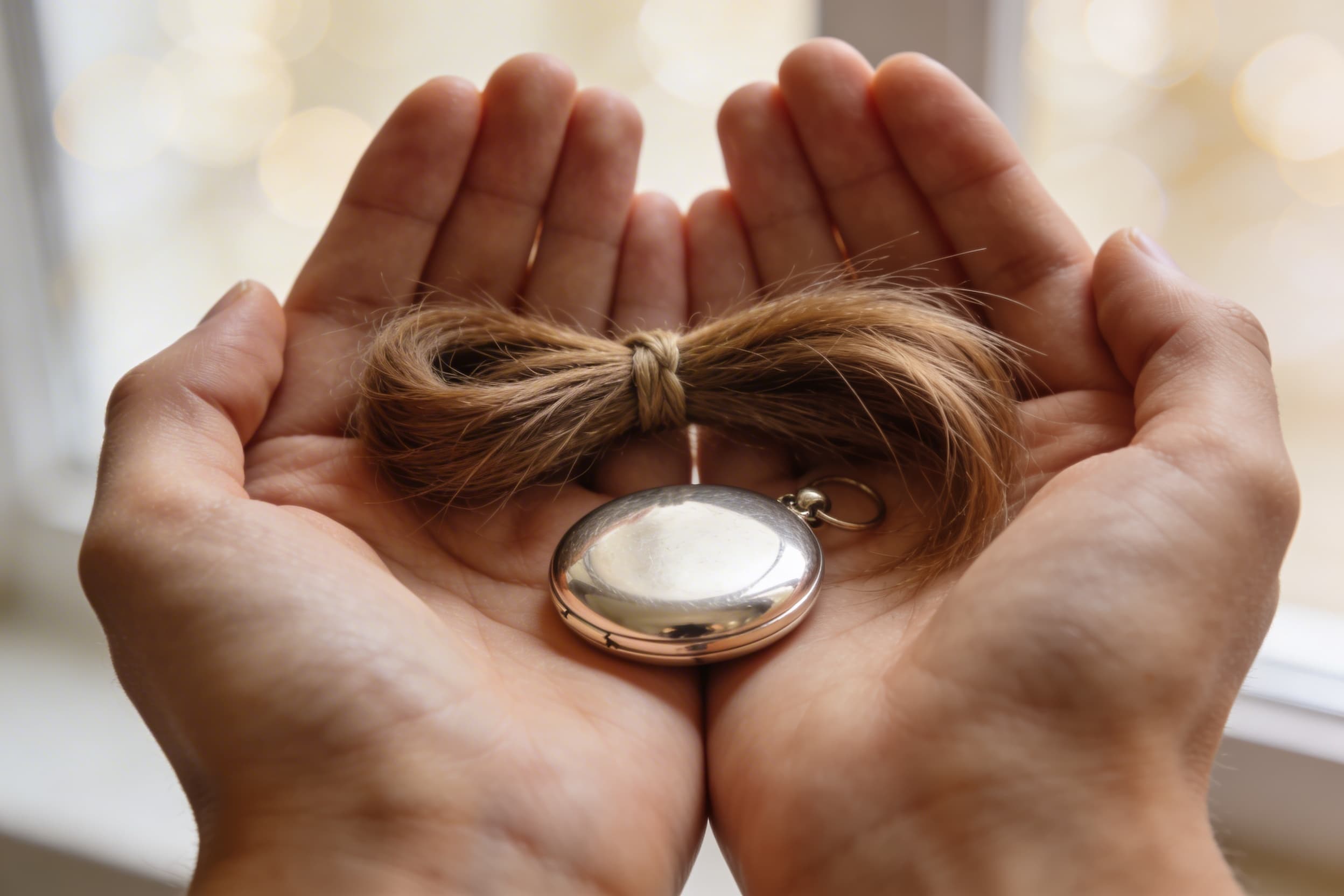
Gather the strands and bundle them into a small lock. Secure one end with a piece of acid-free cotton thread or a thin ribbon – avoid rubber bands, which can degrade and stain the hair over time. Trim the ends evenly to create a tidy bundle. For longer hair, the lock can be coiled gently for storage.
Step 3: Use Archival Materials
This is the most important step for long-term preservation. Standard plastic bags, regular paper, and rubber bands all introduce chemicals that gradually break down organic material over time. Archival-quality materials are designed specifically to prevent this.
Materials to use:
Acid-free tissue paper for wrapping
A glassine envelope or archival-safe sleeve for containment
An acid-free, lignin-free storage box for outer protection
These materials are available from archival supply retailers, museum supply shops, and many craft stores.
Step 4: Label the Container
Future generations will not know whose hair is in the envelope unless it is labeled. Write the person's full name, date of birth, date of death, and the date the hair was saved on a small archival card or piece of acid-free paper tucked alongside the lock. Pencil is more stable than ink for long-term archival use.
Step 5: Store in the Right Environment
The single greatest threat to a preserved lock of hair is environmental: humidity, light, and temperature fluctuations. Store the lock in a cool, dark, dry location. A closet, cedar chest, or dedicated archival box kept away from exterior walls (which are prone to moisture fluctuations) is ideal.
Avoid:
Attics and basements, where temperature and humidity are
inconsistent
Direct sunlight, which fades and dries out hair over time
High humidity environments, which promote mold growth
Proximity to cleaning chemicals or perfumes
Hair that has been stored in proper archival conditions has been documented surviving well over a century with its color and form intact.
Sending Hair to a Keepsake Artisan
If you plan to have the hair incorporated into jewelry or another memorial piece, most artisan studios will send a collection kit with full instructions. You will typically be asked to send a small measured amount of hair – usually just a few strands are needed for resin work, or slightly more for a locket. Always retain a portion of the hair for your own archival storage, separate from what you send. If the piece you're ordering includes an ash compartment as well, our guide on how to fill cremation jewelry walks through the process step by step.
Combining Hair Keepsakes with Cremation Jewelry
For families who have chosen cremation, it is possible to combine a lock of hair with cremated remains in a single memorial piece. If you are new to this category, our overview of what is cremation jewelry explains how modern wearable memorial pieces work. Some locket and pendant designs include separate chambers – one for a small amount of ash, one for hair – so both forms of remembrance can be carried together.
Resin pieces can also incorporate both elements, with hair suspended alongside a small amount of ash within the same casting. Families who want both types of memorial in a single wearable piece should look for artisans who specialize in combination keepsakes.
FAQ: Lock of Hair Keepsakes
How long does a lock of hair last if preserved properly? Hair preserved in archival conditions – acid-free materials, kept away from humidity, heat, and direct light – can last well over a century. Examples of hair preserved in the mid-1800s exist in museum and archival collections today with their color and form largely intact.
How much hair is needed for a keepsake? For a hair locket, a small bundle of strands – roughly the size of a thin pencil – is typically sufficient. Resin artisans often need just a few strands to a small pinch, depending on the size of the piece. For a shadow box display, there are no strict requirements. Retain more than you need and store the remainder archivally.
Can hair be taken from a deceased loved one at the funeral home? Yes. Funeral directors regularly accommodate requests to clip a small lock of hair before burial or cremation. It is best to make this request explicitly when meeting with the funeral director to ensure it is noted and carried out. Many families are not aware this is an option.
Is it appropriate to keep a lock of hair from a deceased loved one? Hair preservation is one of the oldest forms of memorial practice across nearly every culture. There is nothing unusual or inappropriate about keeping a lock of hair as a tribute to someone you love. The impulse to hold onto something tangible is a natural part of grief and remembrance.
Can pet fur be used the same way as human hair for keepsakes? Yes. Pet fur can be preserved, stored, and incorporated into memorial jewelry using the same methods as human hair. The results – particularly in resin work – are often beautiful, as the natural layering of fur captures well in clear encapsulations.
Choosing the Right Keepsake for Your Family
The right lock of hair keepsake is the one that fits how you want to remember. For those who want daily, private connection – a locket or pendant worn around the neck is the most natural choice. For those who want a visible tribute in the home – a shadow box or framed display brings the memory into a shared space. For those who want a protected, archival record to pass down – a thoughtfully stored keepsake box serves families across generations.
Explore Memorials.com's collection of lock of hair keepsakes to find a format and style that honors the person you are remembering.