🏬Supersize Online Funeral Retailer🪦1000's of Headstones⚱️Over 10,000 Cremation Urns⚰️Caskets Overnight Delivery🛒Funeral & Memorial Superstore🚚FREE Shipping on ALL Orders👨👩👧👦Helping Families for over 20 Years💰Lowest Price Guarantee🏬Supersize Online Funeral Retailer🪦1000's of Headstones⚱️Over 10,000 Cremation Urns⚰️Caskets Overnight Delivery🛒Funeral & Memorial Superstore🚚FREE Shipping on ALL Orders👨👩👧👦Helping Families for over 20 Years💰Lowest Price Guarantee
🏬Supersize Online Funeral Retailer🪦1000's of Headstones⚱️Over 10,000 Cremation Urns⚰️Caskets Overnight Delivery🛒Funeral & Memorial Superstore🚚FREE Shipping on ALL Orders👨👩👧👦Helping Families for over 20 Years💰Lowest Price Guarantee🏬Supersize Online Funeral Retailer🪦1000's of Headstones⚱️Over 10,000 Cremation Urns⚰️Caskets Overnight Delivery🛒Funeral & Memorial Superstore🚚FREE Shipping on ALL Orders👨👩👧👦Helping Families for over 20 Years💰Lowest Price Guarantee
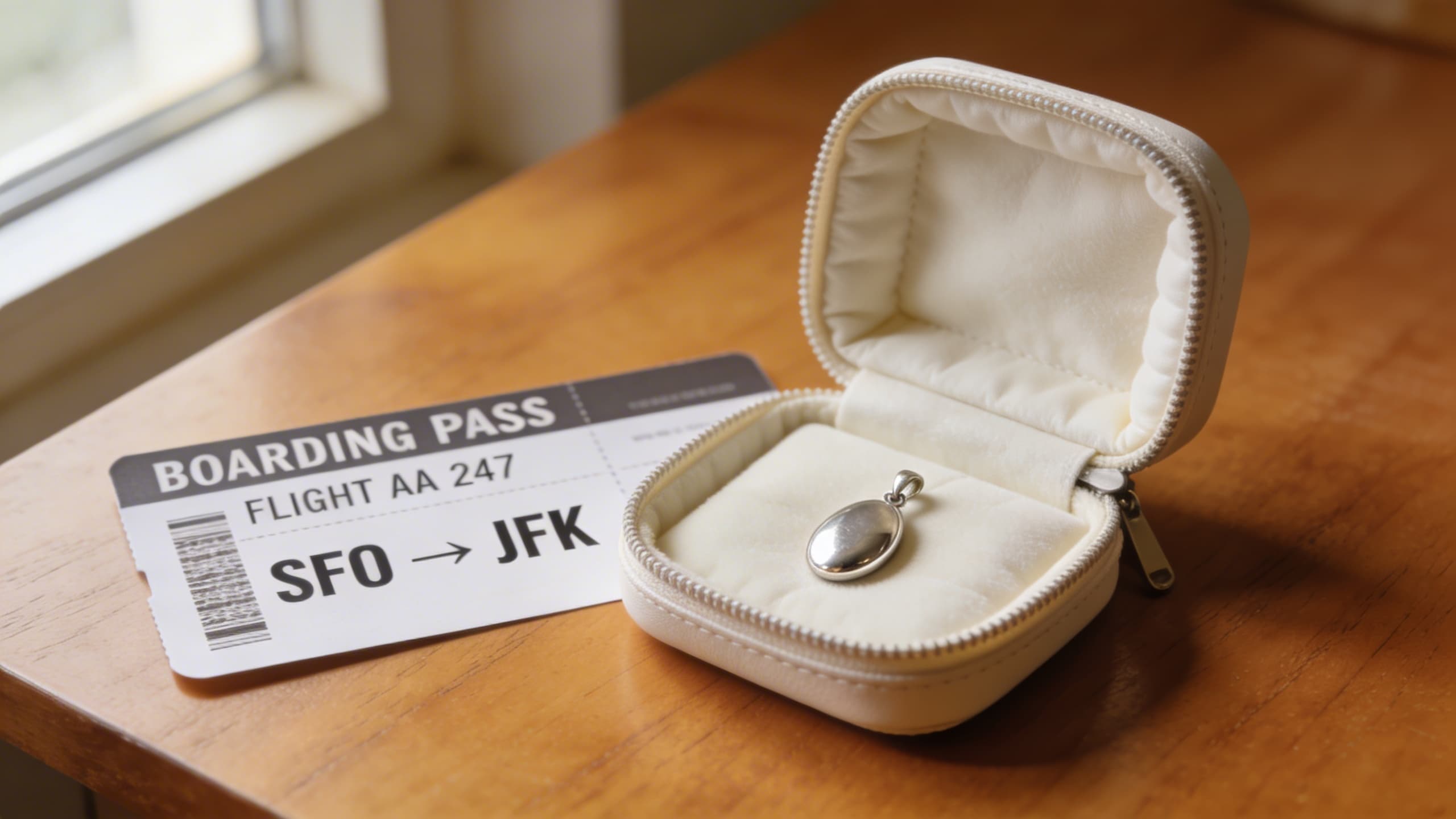
Traveling with cremation jewelry? TSA has no restrictions on passengers wearing or bringing memorial jewelry on board a flight. That's the short answer – and for most families, it's the only answer they need.
Still, knowing the details ahead of time makes a meaningful difference. A small pendant or ring holding a loved one's ashes is one of the most emotionally significant items a person can carry through an airport. The last thing anyone needs on travel day is uncertainty at the security line. This guide — part of the — walks through exactly what to expect: TSA rules, how to pack, what to do if you're flying internationally, and how to keep your jewelry safe from the moment you leave home to the moment you arrive. If you're new to , our article on covers how ashes are held and sealed inside a pendant or ring.
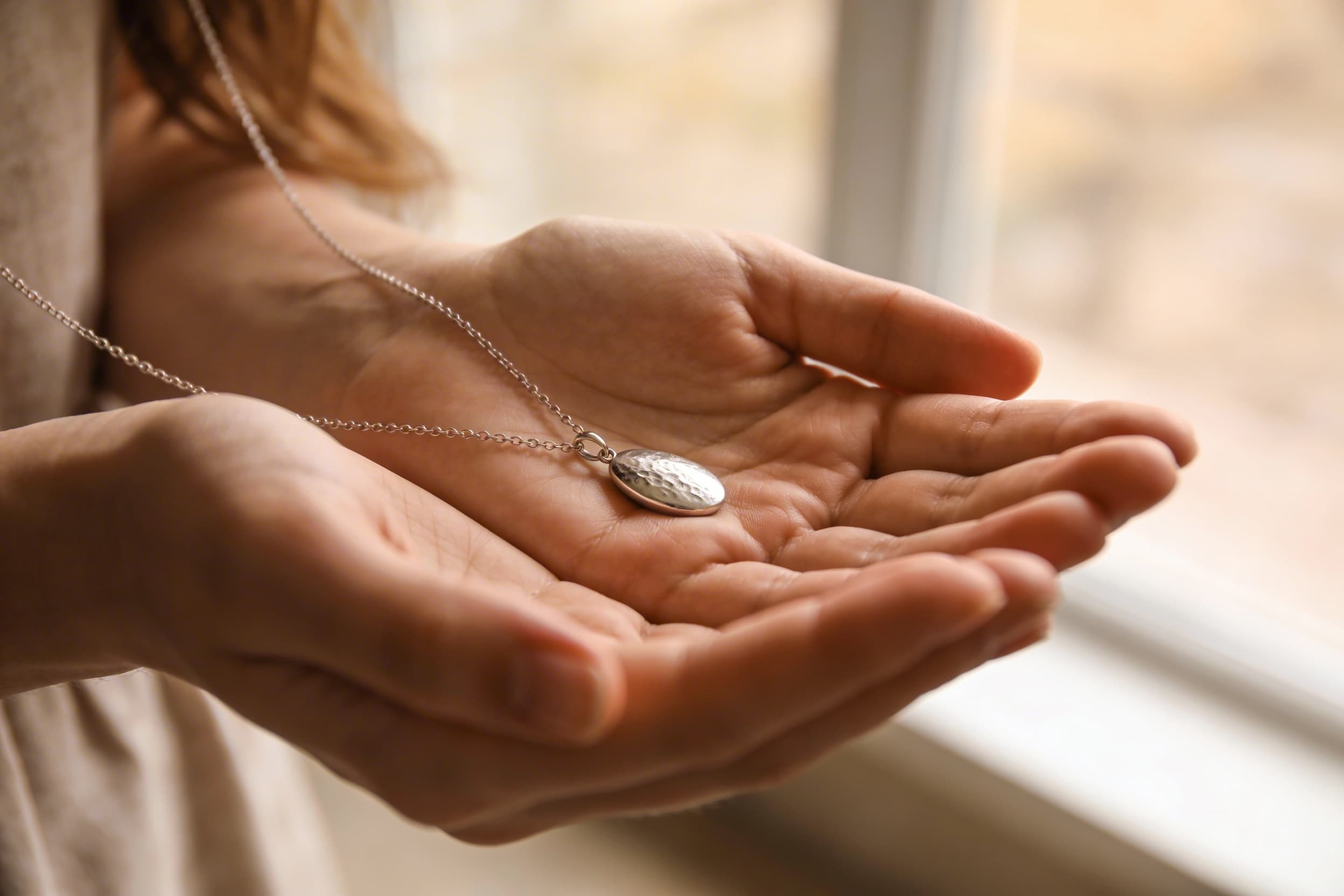
The Transportation Security Administration does not prohibit wearing or traveling with memorial jewelry of any kind. Small jewelry items – necklaces, rings, earrings, bracelets – are among the least problematic items at any checkpoint. In general, they do not need to be removed during the standard screening process, and they are highly unlikely to trigger an alarm that causes a delay.
This includes cremation jewelry that contains a small portion of ashes. The amount of cremated remains inside a pendant or ring is minimal – typically less than a quarter teaspoon – and TSA does not treat cremation jewelry the way it treats urns or larger containers of cremated remains. The ashes inside a pendant are enclosed, sealed, and far too small in quantity to require any special documentation or screening procedure.
The short version: your memorial pendant is jewelry. TSA treats it like jewelry.
Wear It or Pack It – Both Are Fine
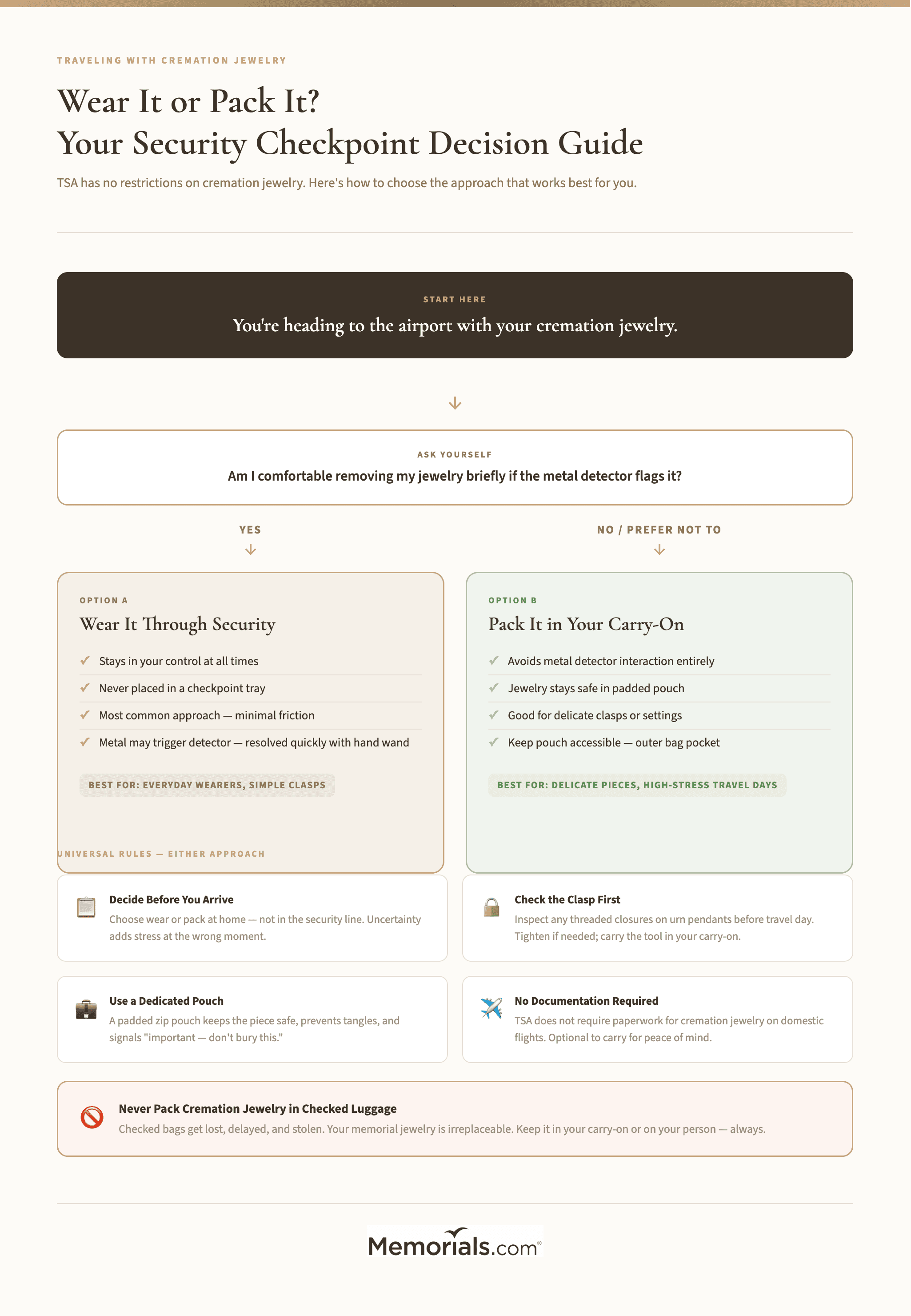
The first decision to make before you reach the airport is whether you'll wear your cremation jewelry through security or keep it stored in your bag. Both approaches work well. The choice comes down to what feels right for you on that particular day.
Wearing it through security is the option most families prefer. When the piece stays on your body, it stays in your control. You never have to set it down in a tray. There's no moment of watching it move through an X-ray belt while you're occupied with shoes and bags. For a pendant with deep emotional significance, keeping it on your person is often the calmest path.
The one consideration: if your cremation jewelry is made of metal – sterling silver, stainless steel, gold – it may trigger a metal detector, just as any metal jewelry would. This doesn't indicate a problem. A quick hand-wand check or a pat-down in the jewelry area resolves it immediately, and TSA officers handle this routinely. If you prefer to avoid even that brief interaction, you can remove the piece before stepping through and carry it in your hand or a small pouch through the X-ray.
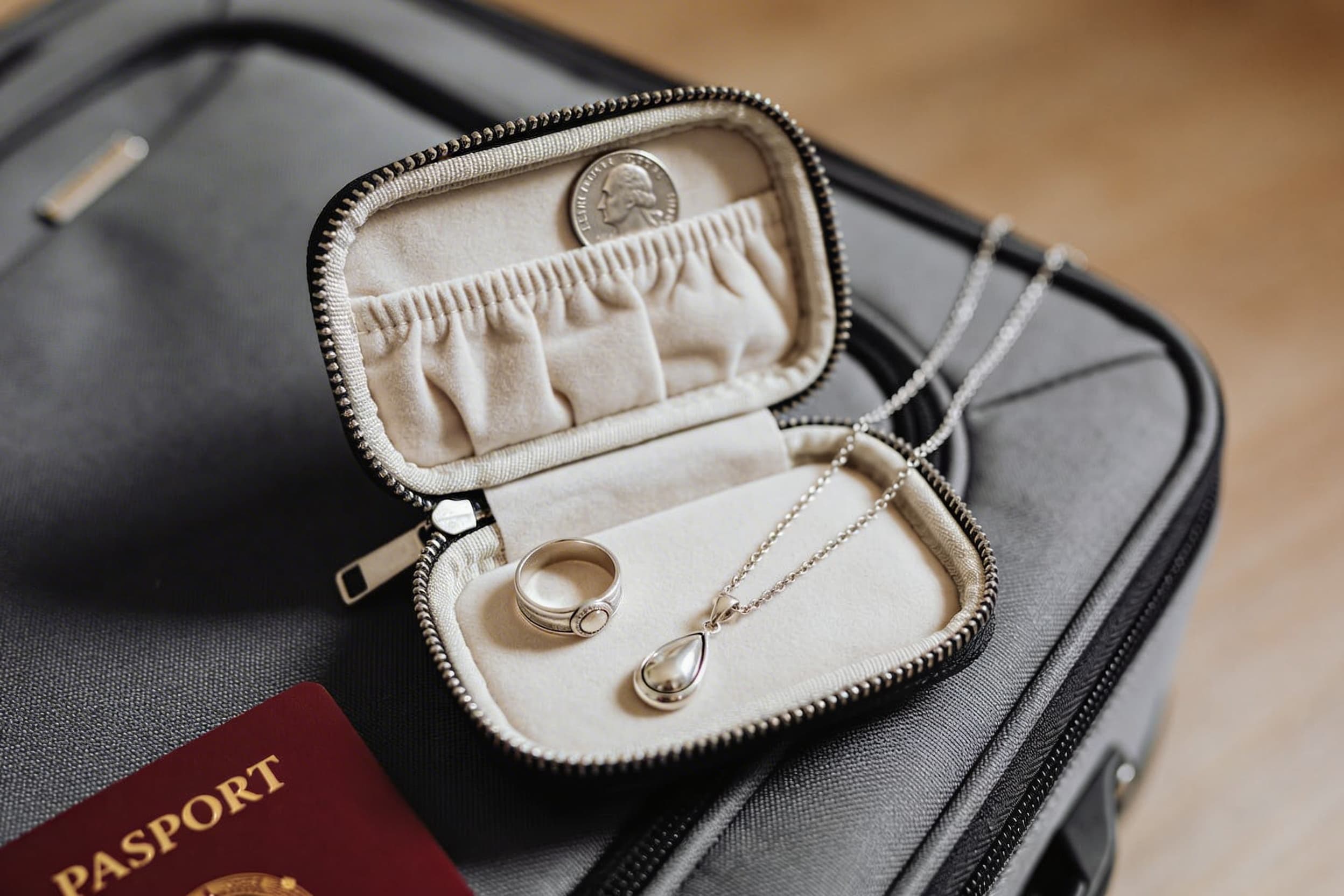
Packing it in your carry-on is the better choice for some travelers, particularly if the security checkpoint environment feels stressful that day, or if the jewelry has a delicate clasp or setting that you'd rather not risk at a busy checkpoint. Place it in a dedicated zip pouch or padded jewelry case, and keep that case in the top or outer pocket of your carry-on so it stays accessible and never gets buried under other items.
Never Pack Cremation Jewelry in Checked Luggage
This is the clearest guidance for any traveler: do not check your cremation jewelry. Ever.
Checked baggage introduces risks that simply don't apply to a carry-on: mishandled bags, delays, lost luggage, and the occasional theft. A piece of cremation jewelry is irreplaceable. No airline insurance policy, no reimbursement, and no apology restores what's been lost. Keep it in your carry-on or on your person at all times – from home to destination and back.
If you're carrying a small urn necklace or ash pendant alongside a full-size cremation urn, the jewelry travels with you in your carry-on while the urn (if you're carrying one) also travels in the cabin. Neither belongs in the hold.
What to Do if You're Asked About Your Jewelry
It's uncommon, but not impossible, for a TSA officer to notice a cremation pendant and ask about it – particularly if the piece is unusually shaped or if the X-ray produced a detail that prompted a follow-up look. If this happens, simply explain that the piece is memorial jewelry containing a small amount of cremated remains. TSA officers are trained to handle this situation with care and discretion.
You do not need documentation for cremation jewelry under TSA rules. No death certificate, cremation certificate, or funeral home letter is required for domestic travel with a memorial pendant, ring, or bracelet. The piece is jewelry – it is not subject to the same documentation guidance that applies to urns or larger containers of ashes.
That said, if having a copy of the cremation certificate in your bag gives you peace of mind, bring it. It won't cause any problems, and for some travelers the presence of documentation feels like a form of reassurance.
International Travel: Different Rules Apply
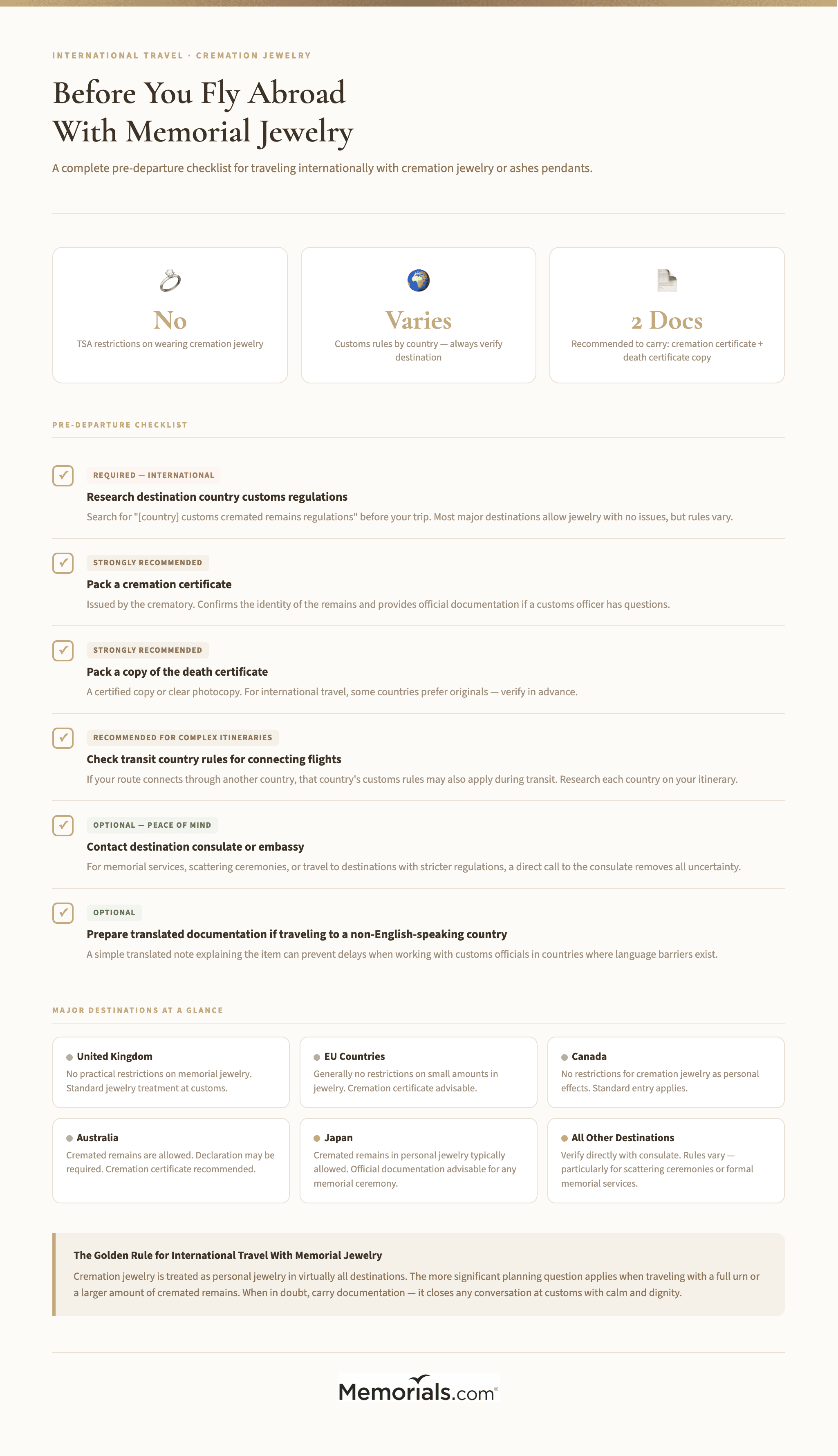
TSA rules apply within the United States. Once you're crossing an international border, the rules shift – and cremation jewelry falls into a category that varies by country.
For most international destinations, small memorial jewelry containing ashes travels without incident. The piece is sealed, the quantity is negligible, and it reads as jewelry at customs. But certain countries have stricter regulations around transporting human remains in any form, and a small number may require documentation even for pendants.
Before any international trip with cremation jewelry, take these steps:
Research the destination country's customs regulations. Look specifically for language around "cremated remains" and "personal effects." Most major travel destinations (UK, EU countries, Canada, Australia) have no practical restrictions on memorial jewelry.
Bring a cremation certificate and a copy of the death certificate. For international travel, this documentation is worth having regardless of whether it's strictly required. A customs official who has a question will be satisfied by it quickly, and it spares you from explaining the situation verbally in a stressful moment.
Contact the destination country's consulate or embassy if the trip is emotionally significant – a memorial service, a scattering ceremony, a family reunion abroad. You want no surprises at arrival.
Check connecting airports. If your flight connects through a country with stricter regulations, the transit may create its own documentation expectations. A one-stop routing through an additional country is worth a quick research check.
How to Pack Cremation Jewelry for Any Trip
Whether you're taking a short domestic flight or a long international journey, the same packing habits protect your memorial jewelry.
Use a dedicated jewelry pouch. A small zip-close pouch or a hard-shell travel jewelry case keeps the piece from tangling with other items or getting buried in a bag pocket. Some travelers use a velvet or padded pouch specifically for the pendant – something that feels appropriate for what it carries.
Check the clasp before you leave home. Cremation jewelry closures – particularly the small threaded screws on urn pendants – can loosen with handling. Before travel day, inspect the seal carefully. If the piece came with a small tool for tightening the closure, pack it in your carry-on (not checked luggage). For a full step-by-step walkthrough, our guide to filling cremation jewelry covers sealing and closure inspection in detail.
Decide your approach before you arrive at the airport. Will you wear the jewelry or store it? Make that decision at home, not in the security line. If you're going to wear it, think through whether you're comfortable removing it briefly if the metal detector flags it. If you'd rather not risk that interaction, pack it in your carry-on before you leave.
Travel with a backup. If the jewelry includes a chain, consider carrying a spare chain. Chains are the most likely component to snag, tangle, or break during busy travel days.
If layovers are long, keep it secure. During long connections, it's easy to absent-mindedly set something down at a café table or charging station. A jewelry pouch that stays inside your bag – rather than in your jacket pocket – reduces that risk.
Cremation Jewelry vs. Traveling With a Full Urn
Some families carry both: a full-size cremation urn in a carry-on and a piece of cremation jewelry for day-to-day wear. The two items are treated very differently by TSA.
A full-size urn containing cremated remains must pass through the X-ray machine like any other carry-on item, and the container must produce a screenable image. If the X-ray cannot clearly identify the contents – which happens with dense metal containers – TSA may not allow it through the checkpoint. The officer cannot open the urn, so if the image isn't clear, the options are limited.
Cremation jewelry has none of those complications. The piece is small, the amount of ashes enclosed is negligible, and it reads as jewelry at the X-ray. It's one of the most travel-friendly ways to keep a loved one close during a journey – whether that's a trip to scatter ashes, visit family, or simply a vacation you need to take while grief is still fresh.
For families navigating travel with cremated remains in multiple forms, the jewelry often becomes the most reliable companion: always wearable, always within reach, and never subject to the screening complications that apply to larger containers.
Families researching broader options for dividing or sharing remains can also explore keepsake urns for a small, discreet alternative to full-size urns when traveling.
A Note on Fingerprint Jewelry and Other Memorial Keepsakes
Fingerprint jewelry – pieces cast from an actual fingerprint impression – travels identically to any other memorial jewelry. These pieces don't contain ashes, so there's no additional screening consideration. The same guidance applies: carry-on, not checked; wear or pack, but keep it in your possession.
Memorial keepsakes that are slightly larger – small urn-shaped holders designed to contain a portion of ashes – may attract more attention at the X-ray, simply because of their shape. If the item resembles a small container rather than a pendant, TSA may apply the same screening logic as they would to a small urn. In practice, the tiny volume of ashes in a keepsake still resolves without issue, but it's worth expecting a possible secondary look.
For any keepsake with an unusual shape or construction, pack it in an accessible spot in your carry-on so you can retrieve it easily if a TSA officer wants to examine it separately.
FAQ: Traveling With Cremation Jewelry
Can you wear a cremation necklace through airport security? Yes. TSA has no restrictions on passengers wearing memorial jewelry through the security checkpoint. If the piece is metal, it may trigger the metal detector – the same way any metal necklace would – but this is resolved quickly with a hand-wand check. Most travelers choose to wear their cremation necklace through security and have no issues.
Do you need documentation to fly with cremation jewelry? For domestic U.S. travel, no documentation is required. Cremation jewelry is treated as personal jewelry by TSA. For international travel, it's worth carrying a cremation certificate and a copy of the death certificate, even if they're not strictly required – particularly if the trip involves crossing multiple borders.
Can cremation jewelry go in checked luggage? Technically yes, but it's strongly inadvisable. Checked bags are lost, delayed, and occasionally stolen. A piece of cremation jewelry is irreplaceable. Always keep it in your carry-on or on your person.
What if TSA asks about the ashes in my jewelry? Calmly explain that the piece is memorial jewelry containing a small amount of cremated remains. TSA officers are familiar with this and handle it respectfully. You're not required to have documentation, but having a cremation certificate available can speed things along if questions arise.
Is cremation jewelry allowed on international flights? Generally yes, though customs regulations vary by destination. For most major international destinations, memorial jewelry travels without complications. Before any international trip, research the specific customs requirements for your destination country and consider carrying a cremation certificate.
Is cremation jewelry safe to wear throughout a trip? For extended travel where the piece stays on for multiple days, our guide on is cremation jewelry safe to wear every day covers durability, material care, and what to watch for with daily wear.
Closing Thoughts
Traveling with cremation jewelry is one of the quieter ways families keep a loved one close during life's journeys – vacations, memorial services, visits to places that mattered, ordinary trips that somehow feel less ordinary now. The logistics are simple: TSA has no restrictions, carry-on is the right choice, and a few minutes of preparation before travel day removes all the uncertainty.
If you're still choosing the right piece to carry, explore cremation pendants and cremation bracelets at Memorials.com – including styles designed for everyday wear that travel as naturally as they live.