🏬Supersize Online Funeral Retailer🪦1000's of Headstones⚱️Over 10,000 Cremation Urns⚰️Caskets Overnight Delivery🛒Funeral & Memorial Superstore🚚FREE Shipping on ALL Orders👨👩👧👦Helping Families for over 20 Years💰Lowest Price Guarantee🏬Supersize Online Funeral Retailer🪦1000's of Headstones⚱️Over 10,000 Cremation Urns⚰️Caskets Overnight Delivery🛒Funeral & Memorial Superstore🚚FREE Shipping on ALL Orders👨👩👧👦Helping Families for over 20 Years💰Lowest Price Guarantee
🏬Supersize Online Funeral Retailer🪦1000's of Headstones⚱️Over 10,000 Cremation Urns⚰️Caskets Overnight Delivery🛒Funeral & Memorial Superstore🚚FREE Shipping on ALL Orders👨👩👧👦Helping Families for over 20 Years💰Lowest Price Guarantee🏬Supersize Online Funeral Retailer🪦1000's of Headstones⚱️Over 10,000 Cremation Urns⚰️Caskets Overnight Delivery🛒Funeral & Memorial Superstore🚚FREE Shipping on ALL Orders👨👩👧👦Helping Families for over 20 Years💰Lowest Price Guarantee
For families of faith navigating end-of-life decisions, one question comes up again and again: can Christians be cremated? The short answer is that most Christian denominations now permit cremation, though they differ in the specific guidelines surrounding the practice. Understanding where your denomination stands can bring clarity during an already difficult time.
This article walks through the Catholic, Protestant, and Orthodox positions on cremation so you can make an informed decision that honors both your faith and your family's wishes. For a broader look at the entire end-of-life planning process, our cremation guide covers everything from costs and timelines to choosing cremation urns and memorial services.
The Bible does not contain a direct commandment for or against cremation. Scripture describes burial as the standard practice among God's people — Abraham, Sarah, Moses, and Jesus himself were all buried — but it never declares cremation a sin or prohibits it outright.
Many Christians find reassurance in 1 Corinthians 15:42–49, where Paul teaches that the resurrection body will be spiritual rather than physical, suggesting that the state of earthly remains does not limit God's power to raise the dead. Others point to Luke 1:37 — "For with God nothing will be impossible" — as evidence that cremation poses no obstacle to bodily resurrection.
For a deeper exploration of the scriptural passages relevant to this question, see our article on what the Bible says about cremation. The focus here is on the practical, denominational side: what does your church actually teach, and what guidelines should you follow?
Catholic Church Cremation Rules
The Catholic Church's position on cremation has shifted significantly over the past sixty years. For centuries, cremation was forbidden because of its historical association with pagan funeral rites and because the Church viewed burial as the practice most consistent with belief in the resurrection of the body.
The 1963 Turning Point
In 1963, the Vatican lifted the formal prohibition against cremation. This change was later incorporated into the Code of Canon Law in 1983. Canon 1176 now states that the Church does not forbid cremation unless it has been chosen for reasons contrary to Christian teaching — for example, as a deliberate denial of the resurrection.
The 2016 Vatican Instruction
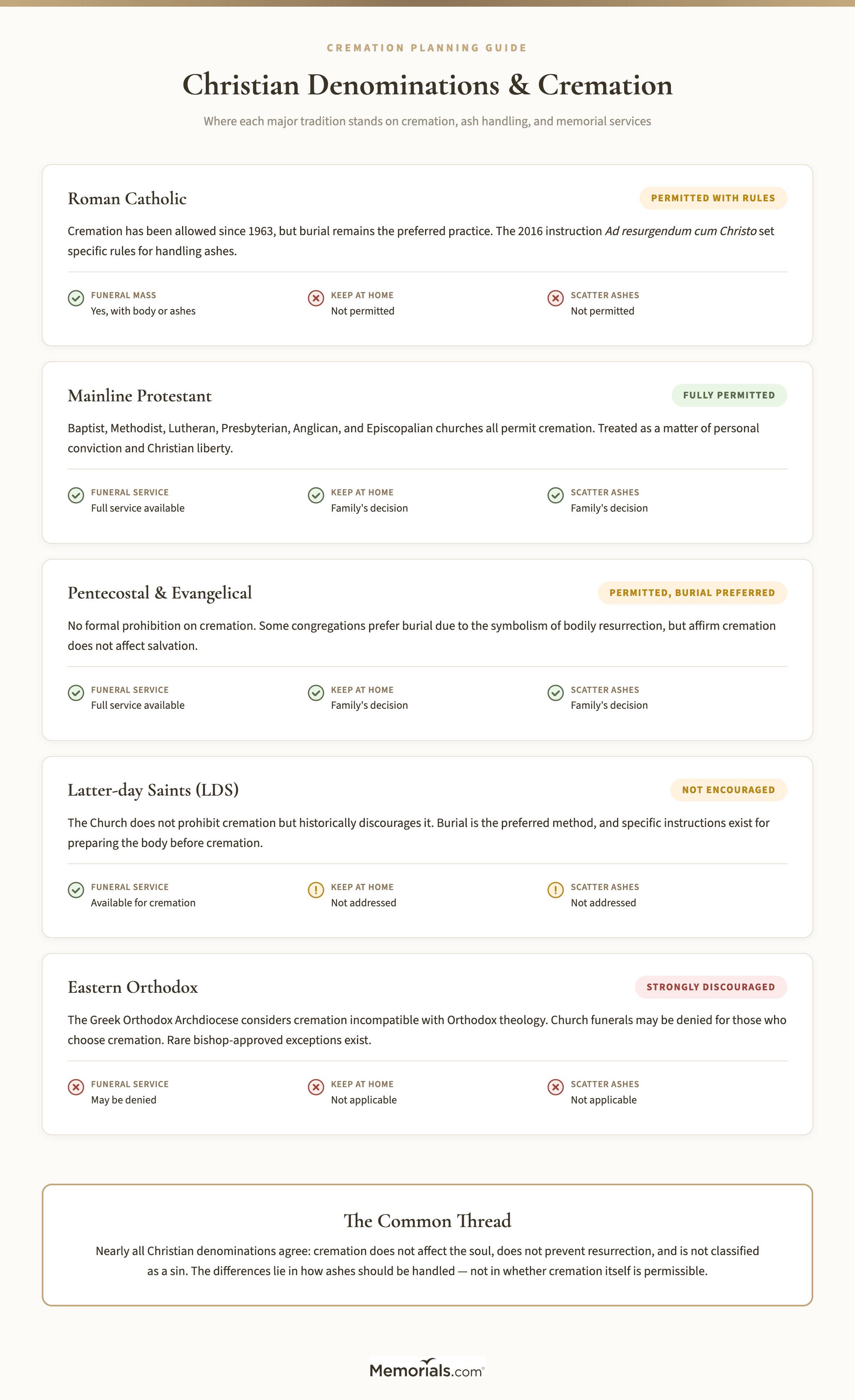
The most significant modern guidance came in 2016 when the Congregation for the Doctrine of the Faith published the instruction Ad resurgendum cum Christo ("To Rise with Christ"). This document did three important things for Catholic families considering cremation.
First, it reaffirmed that cremation is permitted. The instruction explicitly states that cremation does not affect the soul and does not prevent God from raising the deceased body to new life.
Second, it confirmed that the Church still prefers burial. The document describes burial in a cemetery or sacred place as the practice that best corresponds to the piety and respect owed to the body, which through Baptism became a temple of the Holy Spirit.
Third — and this is where many Catholic families need the most clarity — it set specific rules for handling cremated remains:
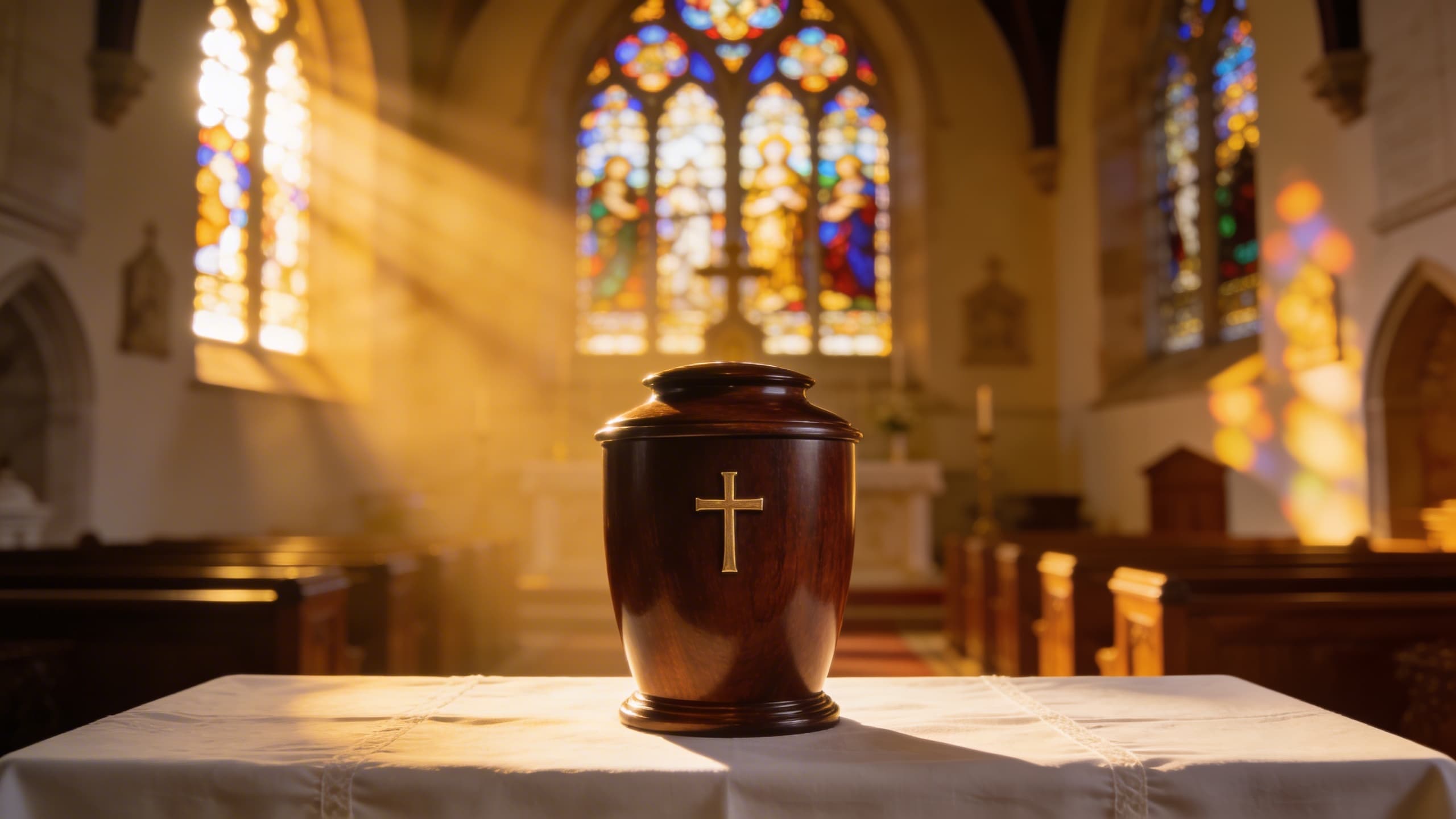
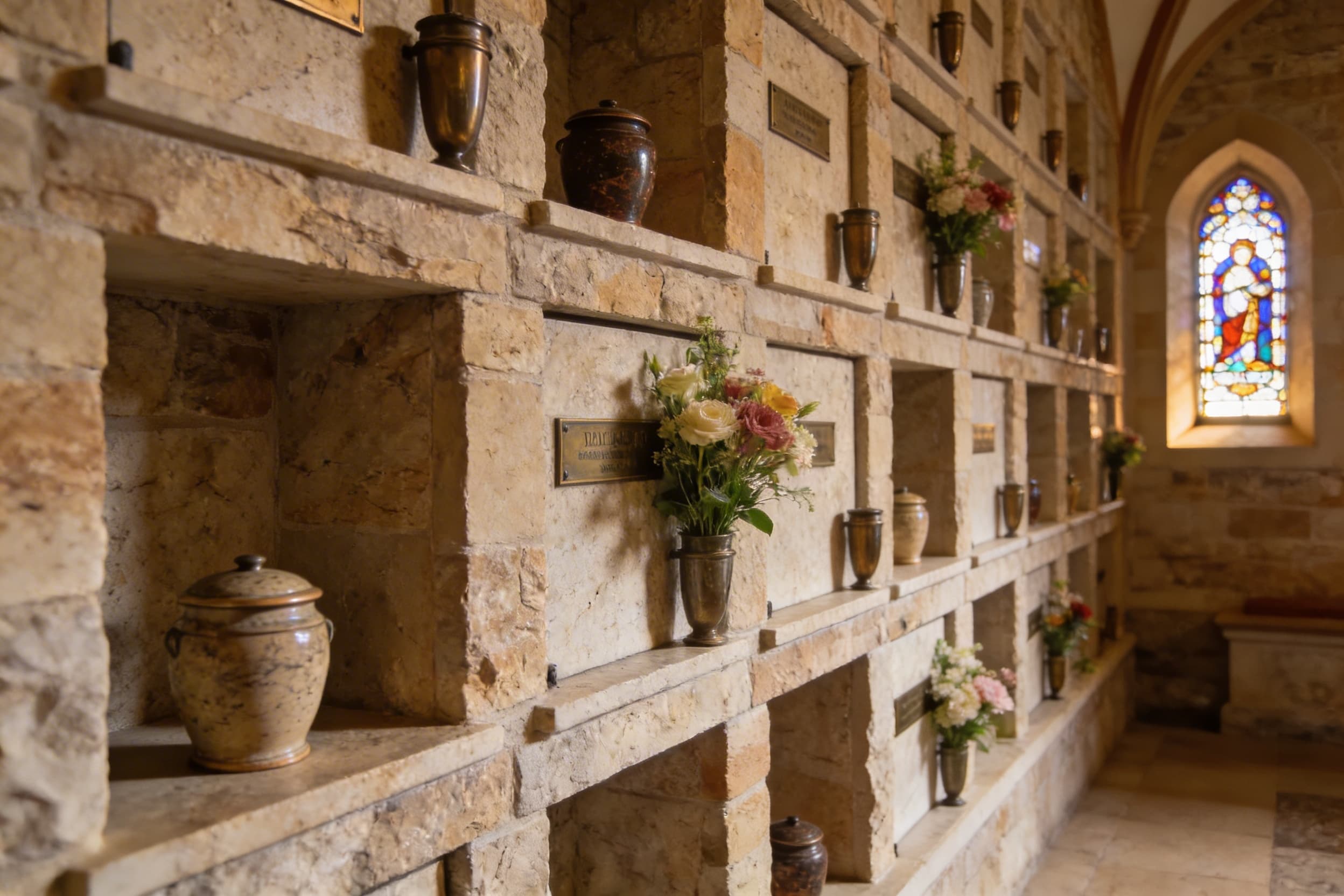
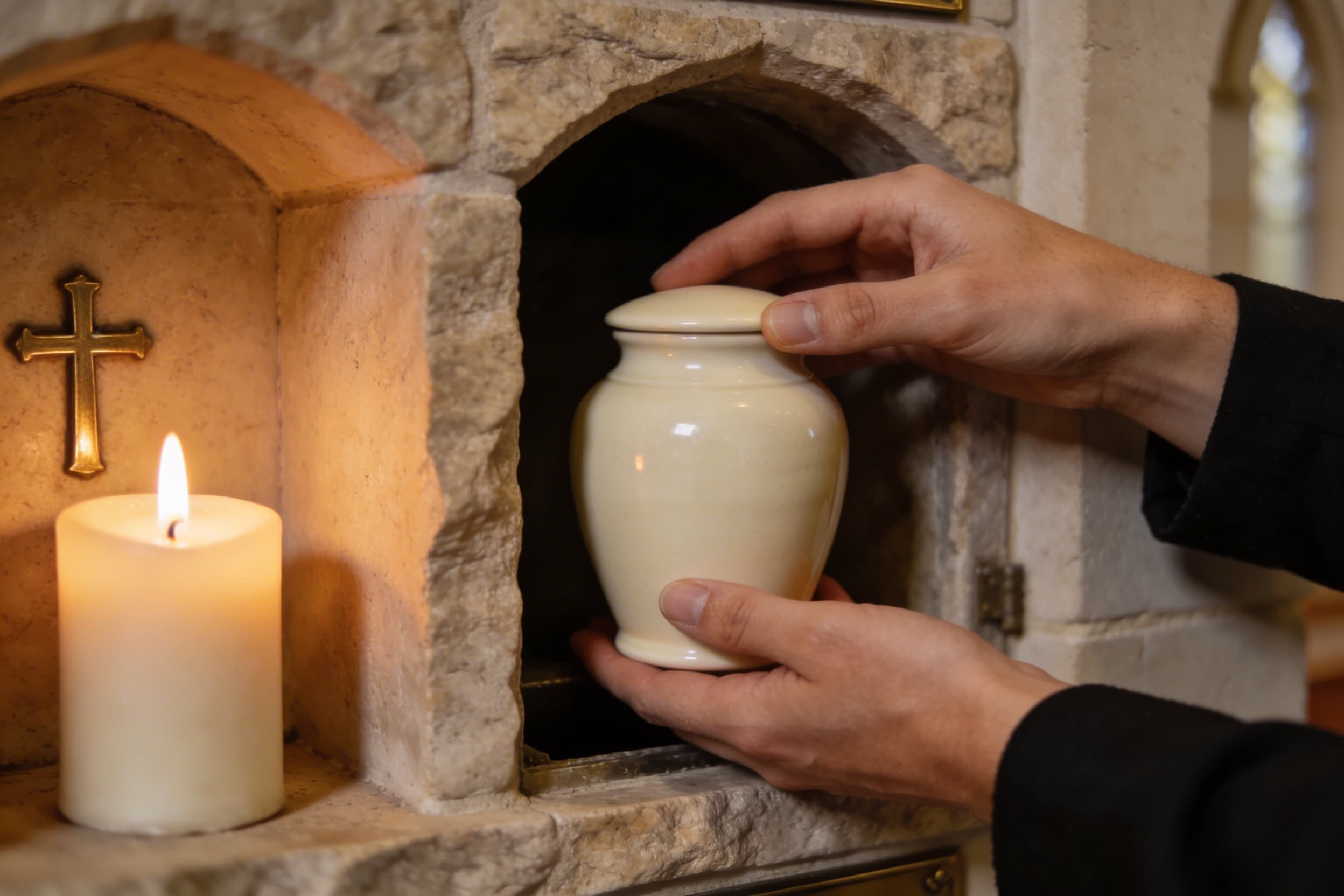
Ashes must be preserved in a sacred place, such as a cemetery or columbarium. The instruction uses the term "worthy vessel," and many families choose a religious urn adorned with a cross, praying hands, or other symbols of faith.
Ashes may not be kept at home as a permanent arrangement. While the Church understands the desire to keep a loved one close, the instruction directs families to inter ashes in consecrated ground where the community can pray for and remember the deceased.
Scattering ashes is not permitted. The Church prohibits scattering in the air, on land, or at sea, and also prohibits dividing ashes among family members or preserving them in jewelry or mementos. For families navigating these Catholic-specific restrictions on ash disposition, our article on biblical views on scattering ashes provides additional context on how scripture and tradition inform these guidelines.
What This Means in Practice
Catholic families who choose cremation can still have a full funeral Mass with the body present before cremation takes place — this is the Church's preferred sequence. If cremation occurs first, the diocese typically permits cremated remains to be present for the funeral liturgy, though adapted prayers are used. After the service, the ashes should be interred in a Catholic cemetery, placed in a columbarium niche, or entombed in a mausoleum.
Protestant Denominations and Cremation
Protestant churches have generally been more open to cremation than the Catholic Church, and most major denominations leave the decision to individual families and their consciences. Here is where the major Protestant traditions stand.
Baptist
The Southern Baptist Convention and most Baptist bodies do not have an official doctrinal statement on cremation. Baptist theology emphasizes personal interpretation of Scripture and individual decision-making, and since the Bible does not explicitly forbid cremation, most Baptist churches treat it as a matter of personal conviction. Baptist funeral services can proceed in the same way regardless of whether the family chooses burial or cremation.
Methodist
The United Methodist Church permits cremation and has no restrictions on how families handle ashes. Methodist theology focuses on the assurance that God's power to resurrect is not limited by the condition of earthly remains. Cremation services are treated with the same liturgical care as burial services.
Lutheran
Lutheran churches generally permit cremation. The Evangelical Lutheran Church in America (ELCA) views cremation as an acceptable choice, and many Lutheran congregations have built columbarium walls within their church buildings or on their grounds. Scandinavian Lutheran traditions, where cremation rates have historically been high, treat ashes with the same dignity as any earthly remains.
Presbyterian
The Presbyterian Church (USA) does not prohibit cremation and views it as a personal decision for families. Presbyterian funeral and memorial services can accommodate either burial or cremation without any liturgical restrictions.
Anglican and Episcopalian
The Church of England and the American Episcopal Church have been among the most accepting of cremation within Christianity. Many Episcopal parishes have built columbaria into their churches, chapels, and gardens. Anglican canon law does direct that ashes should be reverently disposed of by a minister in a churchyard or designated area, reflecting a continued emphasis on respectful treatment of remains even when cremation is chosen.
Pentecostal
While Pentecostal Christians do not forbid cremation, many Pentecostal churches express a preference for traditional burial. Some congregations view cremation as having pagan roots, though the Assemblies of God and other Pentecostal bodies affirm that cremation does not affect salvation or the promise of resurrection.
Latter-day Saints (LDS)
The Church of Jesus Christ of Latter-day Saints does not prohibit cremation but has historically discouraged it. Church leaders have stated that burial is the preferred method, and specific instructions exist for properly preparing the body before cremation. Families are counseled to make this decision prayerfully.
The common thread across Protestant denominations is Christian liberty — the recognition that Scripture does not dictate a single method of disposition, and that faithful families can make this decision based on personal conviction, financial considerations, and family circumstances. If you are weighing the practical and philosophical dimensions of this choice, our guide on choosing between cremation and burial covers both sides in detail.
Eastern Orthodox Views on Cremation
The Eastern Orthodox Church holds the most conservative position on cremation among the major Christian traditions. The Greek Orthodox Archdiocese of America considers cremation to be the deliberate desecration of the body, which Orthodox theology regards as a sacred vessel created in the image of God.
Orthodox Christians who choose cremation may be denied a church funeral and the sacramental rites that accompany it. While some jurisdictions allow the bishop to approve cremation in exceptional circumstances — such as when the manner of death necessitates it or local laws require it — this remains rare.
The Orthodox preference for burial is deeply rooted in the Church's understanding of the body as integral to human identity, not merely a temporary shell. Orthodox funeral rites include washing and anointing the body, an open casket vigil, and burial in consecrated ground. These rituals reflect the theological conviction that death is a temporary separation of body and soul, and that the body will be reunited with the soul at the general resurrection.
For families who are part of an Orthodox community or have Orthodox relatives, it is important to discuss plans with your priest well in advance. Understanding these expectations can prevent painful situations during an already difficult time.
Is Cremation a Sin in Christianity?
This is perhaps the most common question Christian families ask, and the consensus across most traditions — including Catholic, evangelical, and mainline Protestant — is that cremation is not a sin.
The reasoning is straightforward: the Bible does not forbid cremation. While burial carries deep scriptural precedent and symbolic meaning, the absence of a direct prohibition means cremation falls into the category of adiaphora — matters neither commanded nor condemned by Scripture.
The more nuanced question is whether burial better represents the Christian hope. Some theologians argue that laying a body in the ground mirrors the imagery of planting a seed that will one day be raised (1 Corinthians 15:42–44), and that burial more clearly proclaims the Christian belief in bodily resurrection. Others counter that all physical bodies eventually decompose regardless of the method of disposition, and that God's power to resurrect is absolute.
What nearly all Christian leaders agree on is this: the manner of disposition does not determine salvation or affect the soul's eternal destiny. A cremated Christian is no less saved, no less loved by God, and no less assured of resurrection than one who is buried.
The practical question for families, then, is not "is this a sin?" but rather "how can we handle this decision in a way that honors our faith, respects the body, and brings comfort to those who are grieving?" Comparing Jewish perspectives on cremation alongside Christian views can also be helpful for interfaith families navigating these questions together.
Honoring Your Faith Through Cremation Choices
If you or your family have decided that cremation is the right choice, there are meaningful ways to honor your Christian faith throughout the process.
Choose a Service That Reflects Your Beliefs
A cremation does not mean you cannot have a full religious service. Many families hold a traditional funeral or memorial service at their church with hymns, scripture readings, prayers, and a message from their pastor. The service can take place before cremation with the body present, or after cremation with the urn displayed. Catholic families should coordinate with their parish to ensure the funeral liturgy follows diocesan guidelines.
Select an Urn That Reflects Your Faith
Choosing a cross necklace for ashes allows family members to carry a small portion of their loved one's remains close to their heart, while a cremation rosary offers Catholic families a way to combine prayer and remembrance. For the primary urn, many Christian families select one featuring a cross, dove, or other symbol of faith — our collection of religious urns includes designs suited to Catholic, Protestant, and non-denominational traditions. Before choosing either piece, read what the Church permits a family to wear — the 2016 instruction discussed above bears directly on that question, and the answer differs by tradition.
Consider Where Ashes Will Rest
Catholic families should plan for interment in a Catholic cemetery, a parish columbarium, or a mausoleum. Protestant families have more flexibility but may still find comfort in placing ashes in a church columbarium, a family cemetery plot, or a memorial garden. The important thing is to choose a resting place where loved ones can visit, reflect, and pray.
Communicate Your Wishes
Whatever your denomination, putting your cremation preferences in writing is one of the most compassionate things you can do for your family. Include your wishes for the type of service, the handling of ashes, and the final resting place. If your faith tradition has specific requirements — as the Catholic Church does — make sure your family understands those guidelines so they can honor both your wishes and your beliefs.
Frequently Asked Questions
Does cremation prevent resurrection?
No. The vast majority of Christian denominations affirm that God's power to raise the dead is not limited by the state of earthly remains. Whether a body has decomposed over centuries in a grave or been cremated, Christians believe God can and will resurrect believers. The new resurrection body, as described in 1 Corinthians 15, will be a transformed spiritual body — imperishable, glorious, and powerful.
Can you have a Catholic funeral Mass if you choose cremation?
Yes. The Catholic Church permits a full funeral Mass when cremation is chosen. The Church prefers that the body be present for the funeral liturgy with cremation occurring afterward, but most dioceses also allow cremated remains to be present for the Mass. The ashes must then be interred in a sacred place — not kept at home, scattered, or divided.
What does the Protestant church say about keeping ashes at home?
Most Protestant denominations do not have official rules against keeping ashes at home. This is generally treated as a matter of personal preference and family decision. Some families keep the urn on display in their home, while others choose to inter ashes in a church columbarium or cemetery. There is no doctrinal prohibition in most Protestant traditions.
Is cremation a sin according to the Bible?
The Bible does not call cremation a sin. There is no scriptural verse that explicitly forbids the practice. While burial is the consistent pattern in both the Old and New Testaments, the absence of a prohibition has led most biblical scholars and Christian denominations to conclude that cremation is permissible. Some traditions view it as less ideal than burial, but none of the major denominations classify it as sinful.
Can Orthodox Christians be cremated?
The Eastern Orthodox Church strongly discourages cremation and considers it incompatible with Orthodox theology about the body and resurrection. In most Orthodox jurisdictions, choosing cremation may result in the denial of a church funeral. However, there are rare exceptions where a bishop may grant approval due to extraordinary circumstances. Orthodox Christians considering cremation should speak with their priest before making any decisions.
Deciding how to honor a loved one — or planning for your own end-of-life care — is deeply personal. If faith plays a role in your family's life, knowing where your denomination stands on cremation can help you move forward with confidence and peace. Browse our full collection of cremation jewelry and religious memorial options to find something that reflects both your love and your beliefs.