🏬Supersize Online Funeral Retailer🪦1000's of Headstones⚱️Over 10,000 Cremation Urns⚰️Caskets Overnight Delivery🛒Funeral & Memorial Superstore🚚FREE Shipping on ALL Orders👨👩👧👦Helping Families for over 20 Years💰Lowest Price Guarantee🏬Supersize Online Funeral Retailer🪦1000's of Headstones⚱️Over 10,000 Cremation Urns⚰️Caskets Overnight Delivery🛒Funeral & Memorial Superstore🚚FREE Shipping on ALL Orders👨👩👧👦Helping Families for over 20 Years💰Lowest Price Guarantee
🏬Supersize Online Funeral Retailer🪦1000's of Headstones⚱️Over 10,000 Cremation Urns⚰️Caskets Overnight Delivery🛒Funeral & Memorial Superstore🚚FREE Shipping on ALL Orders👨👩👧👦Helping Families for over 20 Years💰Lowest Price Guarantee🏬Supersize Online Funeral Retailer🪦1000's of Headstones⚱️Over 10,000 Cremation Urns⚰️Caskets Overnight Delivery🛒Funeral & Memorial Superstore🚚FREE Shipping on ALL Orders👨👩👧👦Helping Families for over 20 Years💰Lowest Price Guarantee
Do jewish people get cremated? The short answer is that it depends on the denomination. Traditional Jewish law — halakha — has prohibited cremation for thousands of years, and both Orthodox and Conservative authorities continue to uphold that prohibition. Reform Judaism, however, has adopted a more flexible position, and a growing number of Jewish families are choosing cremation for practical, financial, or personal reasons. If you are navigating this decision for yourself or a loved one, our cremation planning guide walks through the full range of options families face.
This article explores what each major Jewish denomination teaches about cremation, the theological and historical reasons behind the traditional prohibition, and how families can approach the decision with sensitivity and respect.
The foundations of the Jewish prohibition against cremation come from multiple sources within Jewish sacred texts. The Torah describes the human body as created in the image of God (Genesis 1:27), which establishes a principle that the body retains sanctity even after death. Deuteronomy 21:23 commands that the deceased must be buried, stating that a body left unburied is a violation of divine law. These scriptural foundations are shared across the Abrahamic traditions — for a broader look at the scriptural roots, see our article on what the Bible says about cremation.
The Talmud expands on this principle significantly. Rabbinic commentary in Sanhedrin 46b clarifies that burial is performed for the benefit of the dead, not merely the living. The Talmud also establishes that because Jewish law mandates burial of the body, and because cremated remains are ashes rather than a body, cremation does not allow the commandment of kevurah (burial) to be fulfilled in the traditional sense.
Maimonides, one of the most influential Jewish legal scholars, listed bodily resurrection as one of his thirteen fundamental principles of faith. Under this framework, deliberately destroying the body through cremation is viewed as an act that conflicts with the belief in physical resurrection in the Messianic era.
Why Judaism Traditionally Forbids Cremation
Several interconnected reasons undergird the traditional prohibition against cremation in Judaism.
The body belongs to God. Jewish teaching holds that human beings are stewards of their bodies, not owners. Because the body was created in God's image and served as the vessel for performing mitzvot (sacred commandments), it retains holiness after death. According to Jewish law, even objects that facilitated the fulfillment of a mitzvah — such as a Torah scroll or prayer shawl — must be treated with respect and cannot be casually discarded. The body itself, which carried the soul through a lifetime of sacred acts, deserves at least the same reverence.
The soul separates gradually after death. In the Kabbalistic (Jewish mystical) tradition, the soul does not leave the body immediately at death. Instead, the natural process of decomposition in the earth allows for a gentle, gradual separation. Cremation, by contrast, causes an abrupt and — according to this teaching — painful disengagement of the soul from the body. This is one reason Jewish law emphasizes burial in the ground using biodegradable wooden caskets, which allow the body to return to the earth naturally.
Historical association with pagan practices. The Torah instructs the Jewish people not to follow the customs of surrounding nations (Leviticus 18:3). Cremation was a widespread practice in many ancient pagan cultures, and Jewish law identifies it as a ritual associated with those traditions. This prohibition still carries weight in Orthodox and Conservative legal reasoning.
The principle of resurrection. The concept of t'chiyas hamaysim — the resurrection of the dead — is a core tenet of traditional Jewish belief. The Talmud references the "luz bone," a small bone at the base of the spine that, according to mystical tradition, never decays and from which the body will be rebuilt in the Messianic era. Cremation destroys this bone, and some authorities teach that choosing cremation may affect one's participation in the future resurrection.
The Holocaust and Jewish Cremation
Any honest discussion of Judaism and cremation must acknowledge the profound impact of the Holocaust. Six million Jewish people were murdered by the Nazis, and the vast majority were cremated in the death camps. This history has made cremation an intensely painful subject for many Jewish communities and families.
For some Jewish people, the association between cremation and the Holocaust is reason enough to reject the practice entirely. The memory of loved ones who were denied proper burial — who were burned not by choice but by systematic cruelty — creates a moral weight that goes beyond halakhic debate. Many rabbis and scholars have observed that choosing cremation voluntarily, given this history, carries a significance that families should consider carefully.
At the same time, it would be wrong to suggest that every Jewish person who chooses cremation is acting out of disrespect for this history. People arrive at end-of-life decisions through deeply personal reasoning, and the diversity of Jewish thought allows room for families to navigate these choices with the guidance of their own rabbi and community.
Orthodox Judaism: Cremation Is Strictly Forbidden
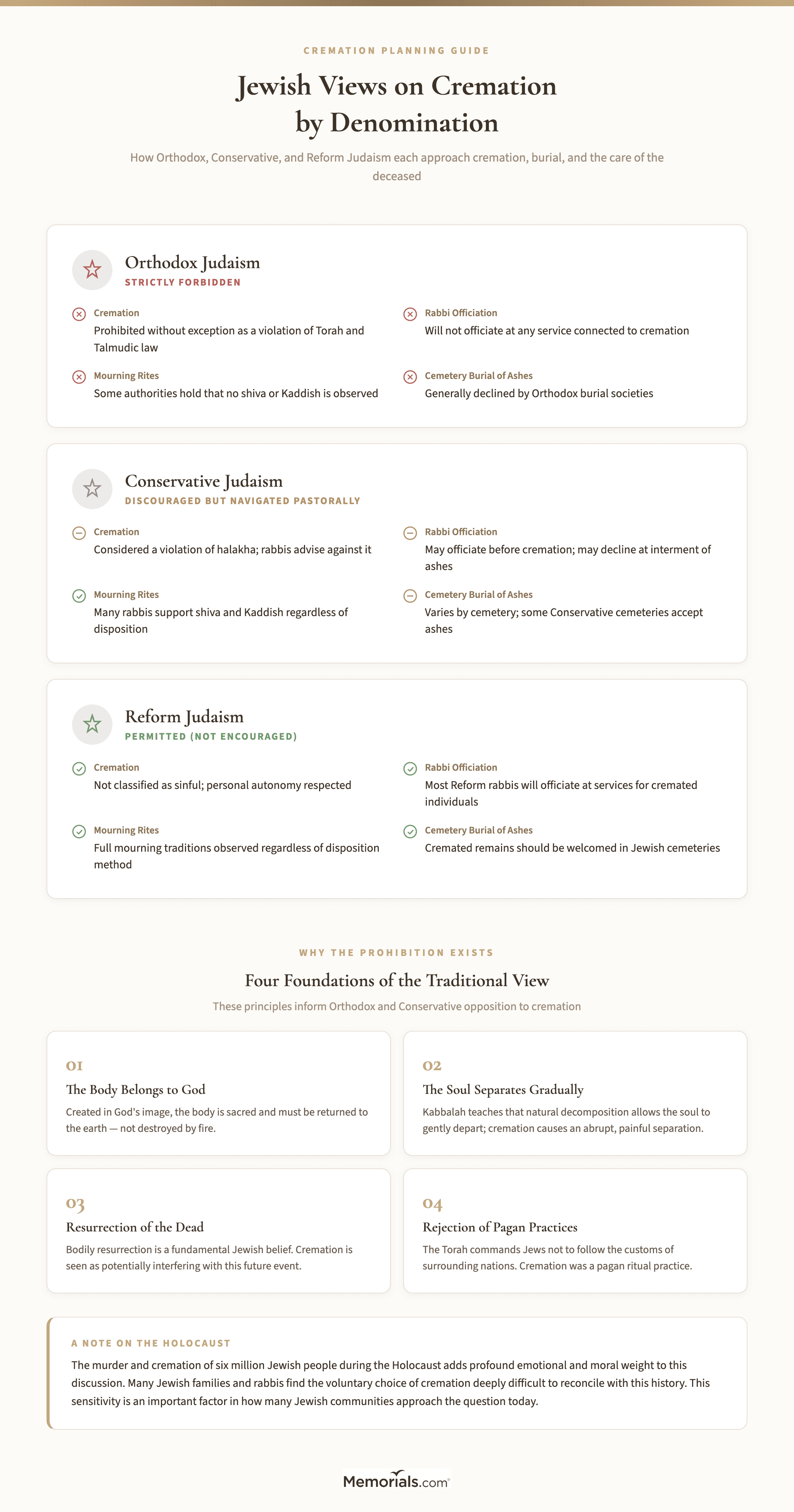
Orthodox Judaism maintains the clearest and most consistent position: cremation is prohibited without exception. Orthodox halakha treats the prohibition as binding Jewish law rooted in Torah, Talmud, and centuries of rabbinic consensus.
Under Orthodox practice, choosing cremation may carry serious consequences. Some Orthodox authorities teach that cremation constitutes a form of self-mutilation that violates the prohibition against damaging one's body. Certain traditional sources hold that no shiva is observed and no Mourner's Kaddish is recited for someone who was willfully cremated, as the act is viewed as a departure from Jewish covenant obligations.
Orthodox rabbis will not officiate at services involving cremation. Orthodox burial societies — the chevra kadisha — do not handle cremated remains. For families who observe Orthodox practice and are exploring the broader landscape of cremation restrictions and rules, understanding that the Orthodox prohibition is absolute is an important starting point.
Conservative Judaism: Cremation Is Discouraged but Navigated Pastorally
The Conservative movement upholds the traditional prohibition against cremation as a matter of halakha but takes a more pastoral approach when families choose it despite rabbinic counsel.
The Committee on Jewish Law and Standards — Conservative Judaism's authoritative legal body — ruled in 1986 that rabbis should discourage cremation and advise families toward traditional burial whenever possible. If a family proceeds with cremation against this advice, the ruling allows rabbis to decline officiating at the interment of ashes while still potentially participating in a ceremony held before the cremation takes place.
In practice, many Conservative rabbis work compassionately with families who have chosen cremation, helping them integrate elements of Jewish mourning tradition — such as reciting Kaddish and observing shiva — even when the disposition of remains does not follow traditional halakha. The Conservative position recognizes the prohibition while acknowledging the pastoral reality that families sometimes make choices that depart from Orthodox standards.
Reform Judaism: Cremation Is Permitted but Not Encouraged
Reform Judaism represents the most flexible position among the major denominations. The movement recognizes personal autonomy as a guiding value, and while Reform authorities do not encourage cremation, they do not classify it as sinful or forbidden.
The Reform movement's stance holds that there is no explicit, unambiguous prohibition against cremation in the halachic literature. While traditional burial is still considered the preferred and encouraged practice, Reform rabbis generally will officiate at services for individuals who have been cremated. The movement has also stated explicitly that cremated remains of a Jewish person should be welcomed for burial in a Jewish cemetery.
For families weighing the broader question of cremation versus burial considerations, the Reform position offers more latitude — but many Reform rabbis still encourage families to explore traditional burial first, particularly given the historical and spiritual weight the practice carries within Judaism. The denomination's openness to cremation exists alongside a strong emphasis on honoring the dead with dignity and care, whatever form the disposition takes.
This range of positions mirrors the diversity found across other faiths. Families interested in how Christianity approaches the same question may find it helpful to read about Christian perspectives on cremation, where denominational differences also shape the conversation.
Traditional Jewish Burial Practices
Understanding why cremation is so deeply discouraged in Judaism requires some familiarity with the richness of Jewish burial tradition. These practices reflect a theology that views death not as an ending but as a transition, and the care given to the body as one of the highest forms of kindness — a chesed shel emet, or "act of true kindness," because the deceased cannot repay it.
Tahara: Ritual Purification
Before burial, the body is washed and ritually purified in a ceremony called tahara. Members of the chevra kadisha — a volunteer burial society — perform this sacred act while reciting psalms and prayers. The tahara is rooted in the belief that, just as a person enters the world clean and pure, they should leave it the same way.
Tachrichim: Burial Shrouds
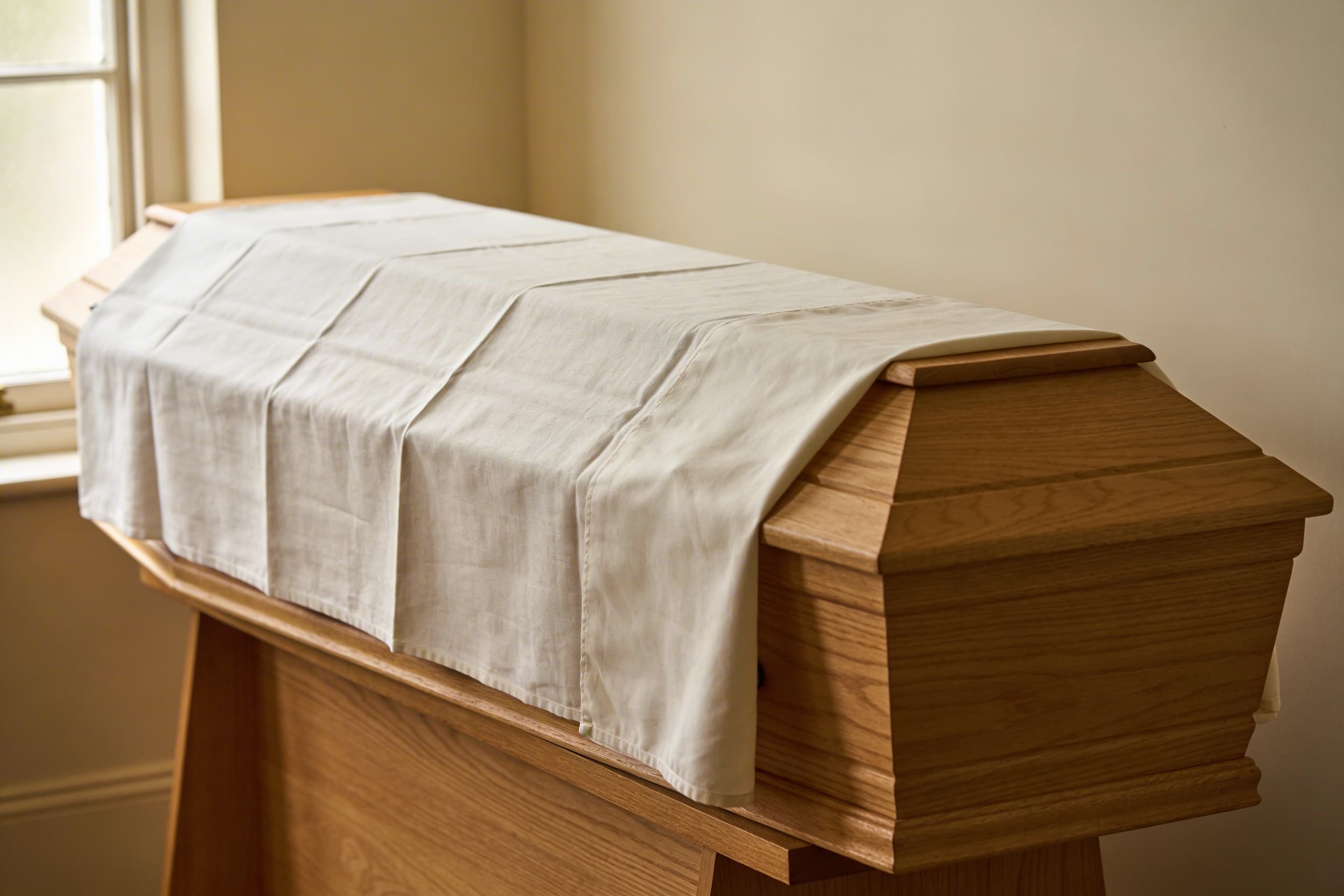
Jewish tradition prescribes burial in simple white linen shrouds called tachrichim. This practice ensures equality between rich and poor — in death, all are dressed the same. The shrouds intentionally have no pockets, symbolizing that material wealth has no place in the world to come. A man may also be wrapped in his tallit (prayer shawl).
Shmira: Watching Over the Body
From the time of death until burial, the body is never left alone. A shomer (watcher) sits with the deceased, often reading psalms, as an act of respect and comfort for the departing soul. This tradition, called shmira, reflects the deep care Judaism places on the dignity of the dead.
Kevurah: Burial in the Earth
Jewish law requires burial as soon as possible — ideally within 24 hours, though modern circumstances often require a short delay to allow family to gather. The body is placed in a simple wooden casket made entirely of biodegradable materials, with no metal hardware. Some caskets have holes drilled in the bottom to allow direct contact with the earth, fulfilling the principle of Genesis 3:19: "For dust you are, and to dust you shall return."
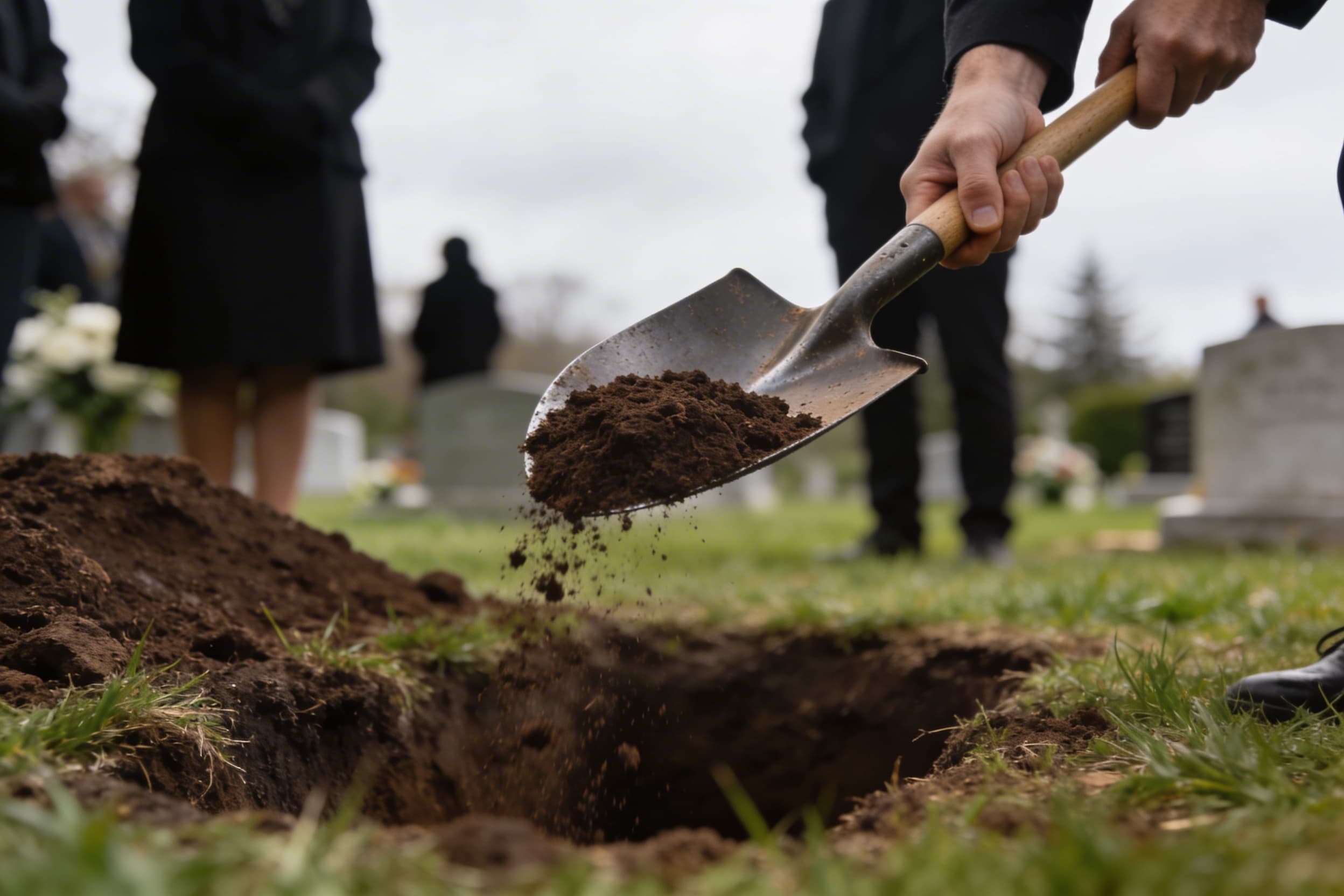
After the casket is lowered, mourners participate in filling the grave with earth — an act of profound love and finality. The shovel is traditionally held with the back facing upward, symbolizing reluctance and the departure from life's usual purposes.
Mourning Traditions
Jewish mourning follows a structured timeline. Keriah — the tearing of a garment or black ribbon — is performed before the funeral to symbolize the tear in the mourner's heart. Shiva, a seven-day mourning period, begins after burial, during which family members receive visitors and recite the Mourner's Kaddish. These practices provide a framework for grief that has sustained Jewish communities for millennia.
Can Cremated Ashes Be Buried in a Jewish Cemetery?
This is one of the most common practical questions families face, and the answer varies by community.
There is no blanket prohibition in Jewish law against burying cremated remains. Many Jewish cemeteries do accept ashes for interment, and the Reform movement has explicitly stated that cremated remains should be welcome in Jewish burial grounds. Some Conservative-affiliated cemeteries also accommodate ashes, though individual policies vary.
Orthodox cemeteries and burial societies, however, may decline to inter cremated remains, in part as a deterrent against cremation. Some communities maintain this policy firmly, while others handle requests on a case-by-case basis.
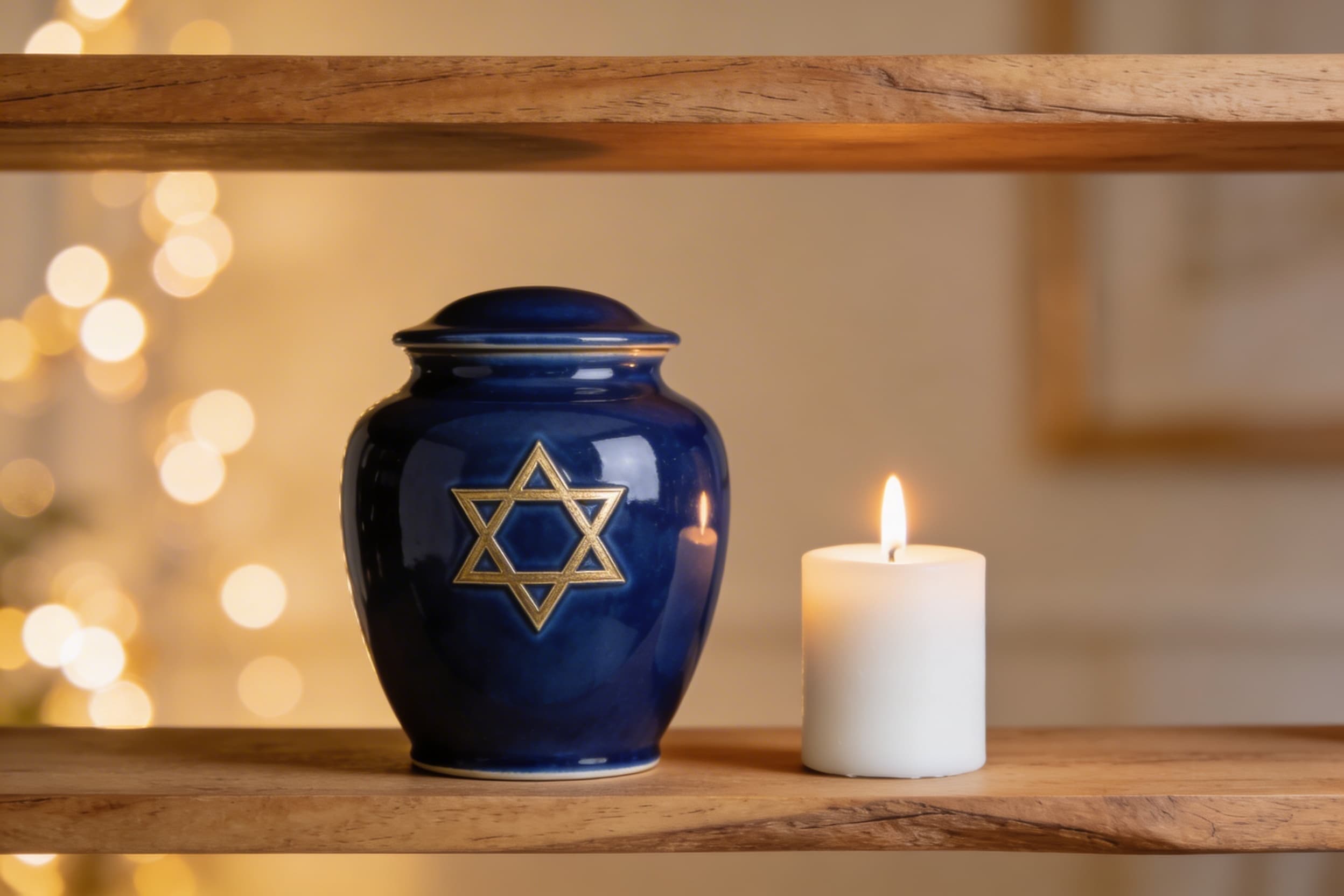
If burial of ashes in a Jewish cemetery is important to your family, contact the cemetery or burial society directly to ask about their policy. Many families choose to place cremated remains in an urn for ashes before interment, and some select a religious urn featuring a Star of David or other meaningful symbol.
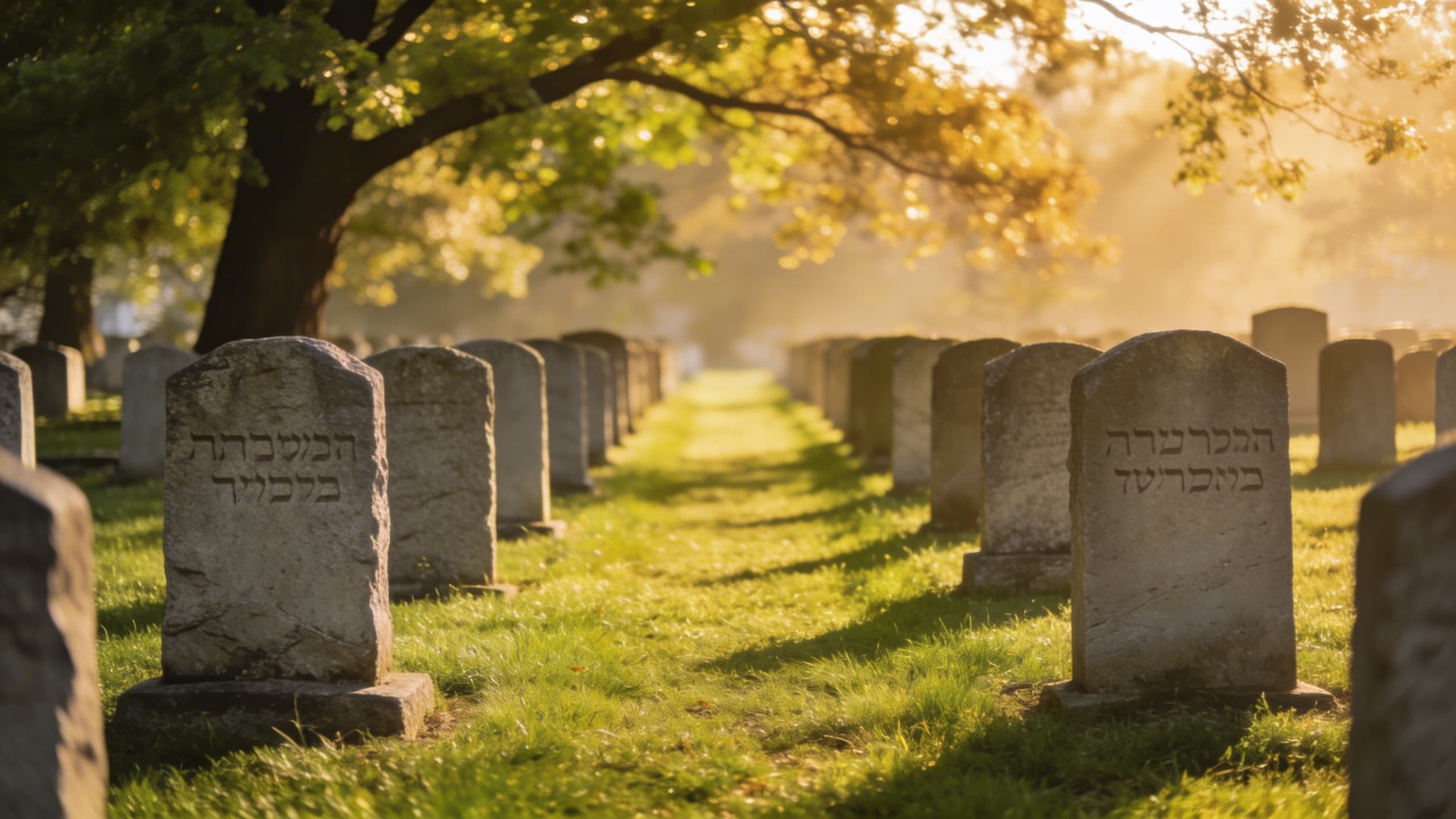
Families who choose traditional burial may also wish to select a headstone or memorial plaque to mark the gravesite — a practice that aligns with the longstanding Jewish custom of placing a matzevah (monument) at the grave, typically unveiled approximately one year after burial.
What If a Family Member Chose Cremation?
One of the most emotionally complex situations arises when a Jewish person expresses a wish to be cremated, and family members must decide whether to honor that request.
Jewish legal authorities across denominations have addressed this question. Both Orthodox and Conservative authorities hold that next of kin are not obligated to fulfill a request for cremation if it conflicts with halakha. The reasoning is that the body belongs to God, and a person's wishes about disposition do not override religious law.
Reform authorities take a different approach: the movement has stated that children are not forbidden from honoring a parent's cremation request, but neither are they obligated to do so if it conflicts with their own religious convictions. This position respects both personal autonomy and the conscience of surviving family members.
Whatever the family decides, Jewish tradition offers comforting resources. A rabbi can help navigate the decision, provide guidance on which mourning rituals remain appropriate, and support the family through grief regardless of how the body was ultimately handled. The priority in every case is compassion — for the deceased and for the living.
Frequently Asked Questions
Is cremation a sin in Judaism?
Orthodox and Conservative authorities classify cremation as a violation of halakha (Jewish law). The prohibition is grounded in Torah commandments about burial, the sanctity of the body, and the belief in resurrection. Reform Judaism does not classify cremation as sinful, though the movement still encourages traditional burial as the preferred practice.
Can a rabbi perform a funeral for someone who was cremated?
This depends on the denomination and the individual rabbi. Orthodox rabbis will not officiate at any service connected to cremation. Conservative rabbis may participate in a ceremony before the cremation but are permitted to decline officiating at the interment of ashes. Most Reform rabbis will officiate at funeral services for cremated individuals.
Do Jewish families sit shiva after a cremation?
Traditional sources suggest that shiva is not observed for someone who was willfully cremated, and some Orthodox authorities uphold this position. In practice, many Conservative and Reform communities observe shiva and recite Kaddish regardless of the method of disposition, prioritizing comfort for the mourners and honor for the deceased.
Why do Jewish people leave stones on headstones?
Leaving a small stone on a headstone is a Jewish custom that signals someone has visited the grave. The practice connects to the ancient tradition of marking burial sites with cairns (piles of stones) and serves as a lasting, non-perishable tribute — unlike flowers, which wilt. It is also considered a way of participating in the mitzvah of burial by tending the gravesite.
How much does a Jewish funeral cost compared to cremation?
Traditional Jewish funerals involve a simple wooden casket, tahara preparation, and burial — costs that vary widely by region but are often comparable to or lower than elaborate secular funerals, because Jewish custom avoids embalming, expensive caskets, and elaborate displays. Cremation is typically less expensive, but many Jewish communities maintain free burial societies (chevra kadisha) or subsidized burial programs to help families who face financial hardship, reducing the cost incentive for cremation.
Honoring Memory With Dignity
The question of whether Jewish people get cremated has no single answer — it depends on denomination, personal belief, family circumstances, and individual interpretation of Jewish law. What unites every branch of Judaism is a deep commitment to honoring the dead with dignity, caring for the bereaved, and treating end-of-life decisions with the seriousness they deserve.
If your family is exploring options for memorializing a loved one, Memorials.com offers religious urns with Star of David and Menorah designs for families who choose cremation, as well as headstones, grave markers, and cemetery memorial products for those who follow the path of traditional burial. Whatever you choose, we are here to help you find a memorial that reflects the life and values of the person you love.