🏬Supersize Online Funeral Retailer🪦1000's of Headstones⚱️Over 10,000 Cremation Urns⚰️Caskets Overnight Delivery🛒Funeral & Memorial Superstore🚚FREE Shipping on ALL Orders👨👩👧👦Helping Families for over 20 Years💰Lowest Price Guarantee🏬Supersize Online Funeral Retailer🪦1000's of Headstones⚱️Over 10,000 Cremation Urns⚰️Caskets Overnight Delivery🛒Funeral & Memorial Superstore🚚FREE Shipping on ALL Orders👨👩👧👦Helping Families for over 20 Years💰Lowest Price Guarantee
🏬Supersize Online Funeral Retailer🪦1000's of Headstones⚱️Over 10,000 Cremation Urns⚰️Caskets Overnight Delivery🛒Funeral & Memorial Superstore🚚FREE Shipping on ALL Orders👨👩👧👦Helping Families for over 20 Years💰Lowest Price Guarantee🏬Supersize Online Funeral Retailer🪦1000's of Headstones⚱️Over 10,000 Cremation Urns⚰️Caskets Overnight Delivery🛒Funeral & Memorial Superstore🚚FREE Shipping on ALL Orders👨👩👧👦Helping Families for over 20 Years💰Lowest Price Guarantee
The idea of becoming a tree after death has a quiet, powerful appeal. Rather than a headstone or a niche in a columbarium, your remains nurture a living, growing thing — a red maple in the backyard, an oak in a memorial forest, a flowering dogwood near the garden path. Tree cremation makes this possible by combining cremated ashes with a and a young tree, creating a memorial that grows stronger with each passing season.
If you are exploring end-of-life options and want to understand how tree burial and tree pod burial actually work — not just the concept, but the products, costs, planting steps, and practical considerations — this guide covers all of it. For a broader look at every disposition option available, see our complete guide to cremation planning.
What Is Tree Cremation?
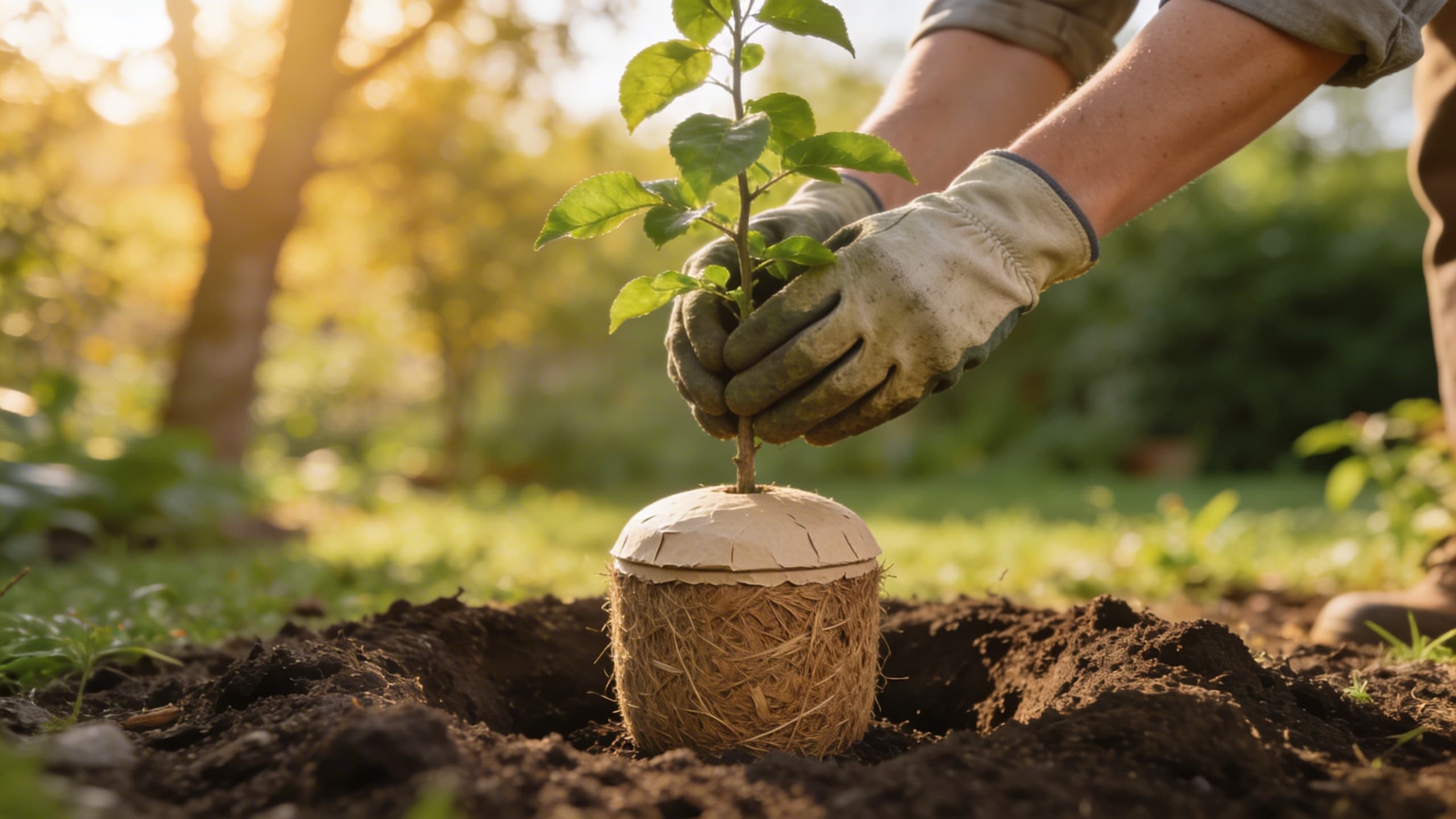
Tree cremation is the practice of using cremated ashes to grow a memorial tree. The process involves placing remains inside a specially designed biodegradable urn that is buried in the ground with a tree seedling or sapling planted directly above or within it. As the urn breaks down over weeks and months, the materials blend into the surrounding soil, and the tree takes root in the enriched earth.
The term covers a range of approaches. Some families use commercial bio urn systems like the Bios Urn or The Living Urn. Others work with memorial forest services like Better Place Forests, which plant and maintain the tree in a protected conservation setting. A few families simply mix a small amount of ash into the soil around an existing tree on private property.
What ties all of these approaches together is the core idea: cremated remains become part of a living ecosystem rather than being stored in a container or scattered and dispersed.
How Tree Burial Works: The Step-by-Step Process
The planting process varies slightly by product, but the general steps follow the same pattern.
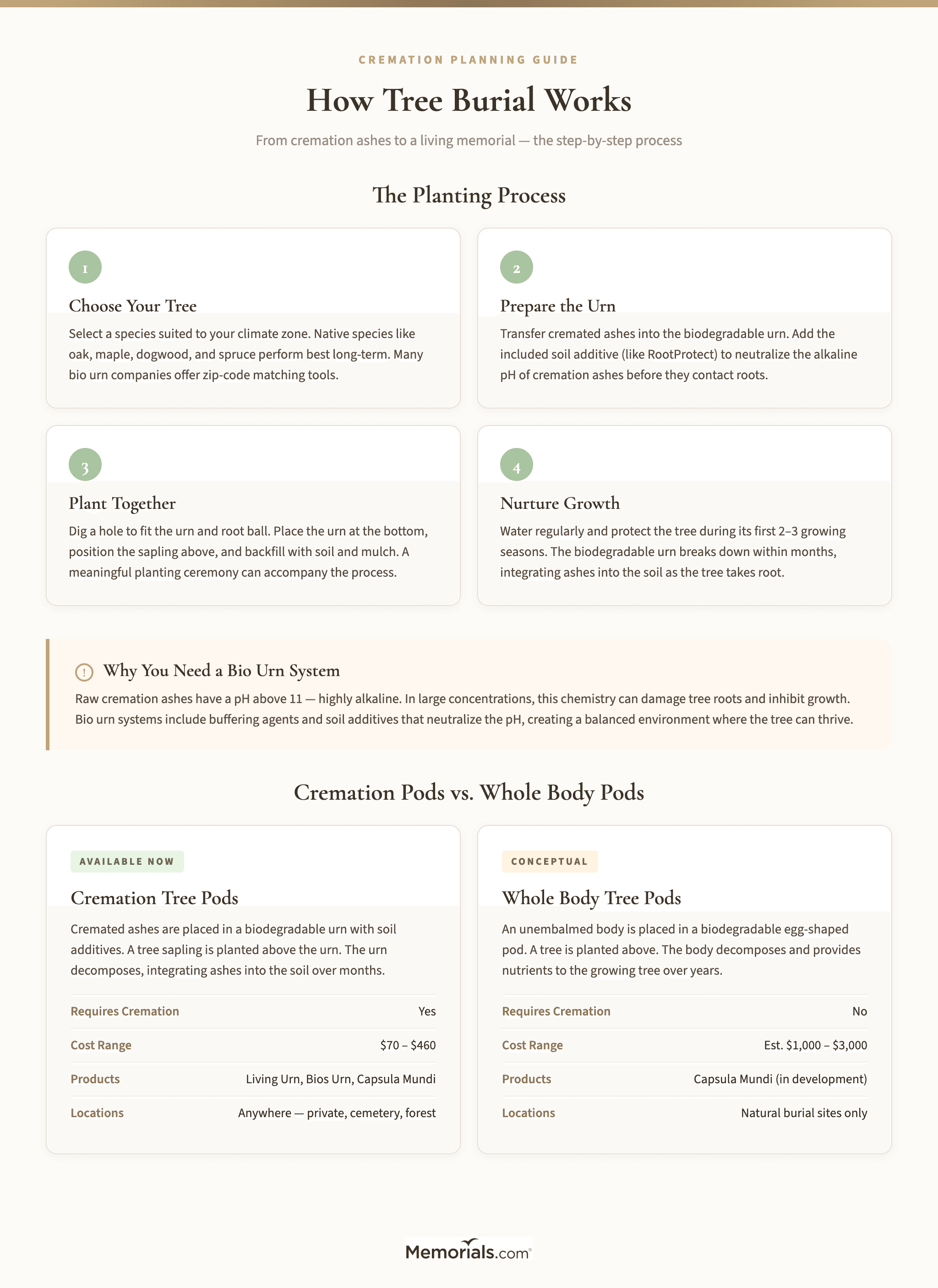
Choosing a tree. Most bio urn companies offer a selection of tree species tailored to your region and climate zone. The Living Urn, for example, provides over seventy species through a zip-code-based matching tool. Common choices include red maple, dogwood, blue spruce, oak, and Japanese maple. Native species tend to require less ongoing maintenance and support local wildlife, making them the strongest long-term choice.
Preparing the urn. Cremated ashes are transferred from their original container into the biodegradable urn. Commercial systems like the Bios Urn include a growth medium and seed compartment built into the design. The Living Urn uses a patented BioUrn with a proprietary soil additive called RootProtect, which helps neutralize the alkaline properties of cremation ashes before they contact the tree's root system.
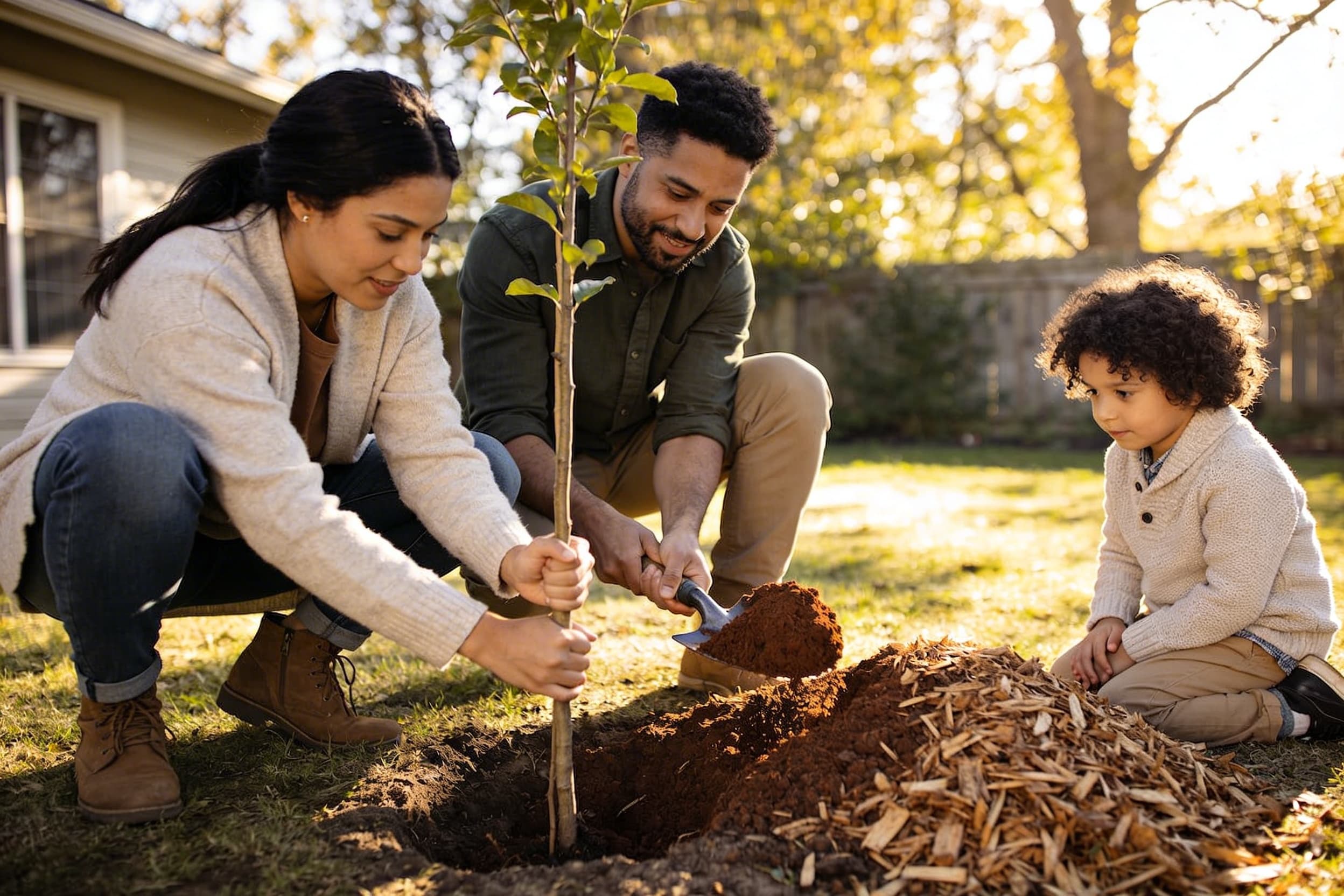
Planting. A hole is dug to accommodate both the urn and the root ball of the young tree. The urn is placed at the bottom, the tree is positioned above it, and the surrounding space is backfilled with soil and mulch. The entire process can be completed in an afternoon and can serve as a meaningful planting ceremony for family and friends.
Ongoing care. Like any young tree, a memorial tree needs regular watering, mulching, and protection during its first two to three growing seasons. After the tree is established, maintenance becomes minimal. The biodegradable urn fully decomposes within a few months to a year, depending on soil conditions and moisture levels.
Why Cremation Ashes Need Special Handling Around Trees
One of the most important things to understand about tree cremation is that raw cremation ashes are not inherently good for plant life. Cremated remains have a high pH (typically above 11) and contain concentrated salts, phosphates, and calcium. In large amounts, this alkaline concentration can damage root systems and inhibit growth rather than support it.
This is why purpose-built bio urn systems include soil additives, buffering agents, or growth mediums designed to balance the chemistry before the ashes reach the tree roots. Simply dumping a full container of ashes at the base of a tree is likely to harm it. If you are planting without a commercial system, the general recommendation is to use only a small portion of the ashes (a few tablespoons), mix them thoroughly with nutrient-rich compost, and spread them over a wide area rather than concentrating them at the root ball.
Comparing Tree Burial Products
Several companies offer bio urn and tree burial systems. Here are the most established options.
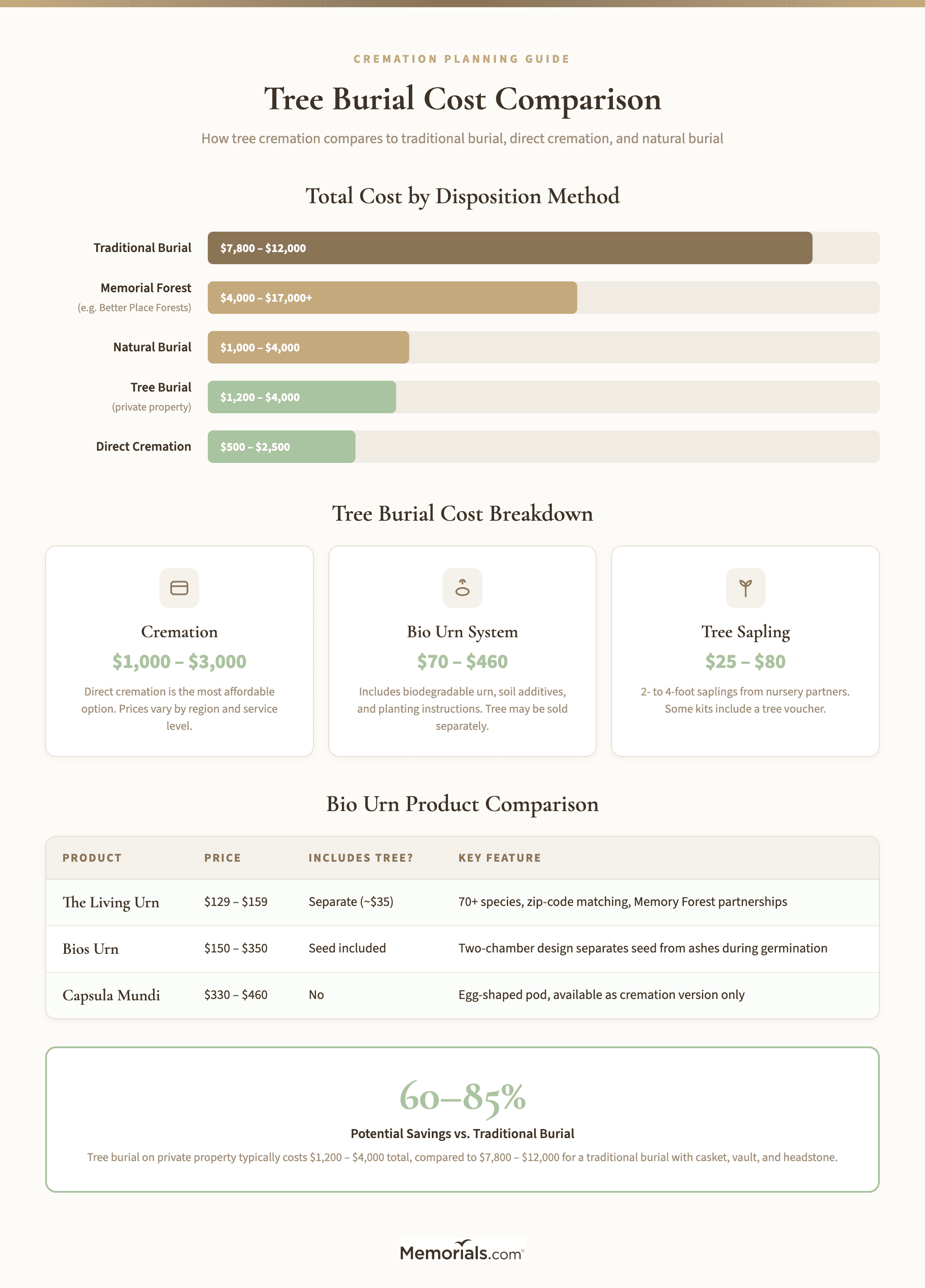
The Living Urn. The most widely available tree burial system in the United States. The patented BioUrn and Planting System includes a biodegradable urn, RootProtect additive, aged wood chips, and planting instructions, all packaged in a bamboo container. Trees are ordered separately from a partner nursery and arrive as 2-to-4-foot saplings. The Living Urn also partners with memorial parks and cemeteries that offer designated Memory Forest locations where families can plant and visit their tree. Pricing starts at approximately $129 to $159 for the system, plus $35 for a tree.
Bios Urn. Originally developed in Spain, the Bios Urn is a two-chamber biodegradable container. The lower chamber holds the ashes, and the upper chamber contains soil and a seed (typically maple or pine). The two chambers are separated so that the seed begins germinating in clean soil before the urn breaks down and integrates the ashes into the surrounding earth. Pricing runs approximately $150 to $350 depending on the retailer.
Capsula Mundi. An Italian design concept that received global media attention for its egg-shaped pod. The company offers a cremation-ash version of their pod, which works similarly to other bio urns. Their larger concept — placing an entire unembalmed body inside a pod and planting a tree above it — remains conceptual and is not yet commercially available for whole-body burial. The cremation pod version is available and costs around $330 to $460.
Each system takes a slightly different approach to the same challenge: protecting the young tree from the harsh chemistry of raw cremation ashes while still integrating the remains into the soil over time.
Whole Body Tree Pods vs. Cremation Tree Pods
Media coverage of tree burial often features images of a body curled in a fetal position inside an egg-shaped pod, with a tree growing from above. This vision — full-body tree pod burial without cremation — is still largely conceptual. While companies like Capsula Mundi and Transcend are developing whole-body pod systems, none are commercially available at scale as of early 2026.
What is widely available today are cremation-based tree pods and bio urns. These require standard cremation first, followed by the planting process described above. If the idea of bypassing cremation altogether appeals to you, emerging alternatives worth exploring include mushroom coffin alternatives like the Coeio Infinity Burial Suit or green and natural burial, which allows an unembalmed body to be buried in a biodegradable shroud or casket without a concrete vault.
Where to Plant a Memorial Tree
Choosing the right location is one of the most personal decisions in the tree burial process.
Private property. The most common and often simplest option. No permits are required in most jurisdictions for burying cremated ashes on land you own. Many families plant in backyards, along property edges, or near garden memorials for ashes. The tradeoff is that access to the tree depends on continued ownership of the property.
Memorial forests. Companies like Better Place Forests and Life Forest offer protected forest properties where families can select and dedicate a specific tree. The tree is maintained by the organization, and families receive visitation access. Costs are higher — individual trees range from roughly $3,000 to $17,000 depending on species, size, and location — but the site is protected in perpetuity. The Living Urn partners with memorial parks and cemeteries to offer Memory Forest locations as a more affordable middle ground.
Cemeteries and memorial parks. Some traditional cemeteries now offer green burial sections or living memorial areas that accommodate tree plantings. Availability varies by region, and not all cemeteries allow trees due to maintenance and root system concerns. Check with your local cemetery before planning.
Public land and parks. Burying cremated ashes on public land is permitted in many areas, but planting a tree may require permission from the city or park authority. National parks and federal land have additional restrictions. Always verify local regulations before planting.
How Much Does Tree Burial Cost?
Tree cremation is significantly less expensive than traditional burial and comparable to other green disposition methods. Here is a general cost breakdown.
Bio urn or tree pod system: $70 to $460, depending on the product. The Living Urn system runs $129 to $159. Bios Urn costs $150 to $350. Capsula Mundi cremation pods range from $330 to $460.
Tree: $25 to $80 for a nursery sapling. Some bio urn kits include a tree voucher; others require a separate purchase.
Cremation: $1,000 to $3,000, depending on your location and whether you choose direct cremation or a service with a viewing.
Location fees: Free on private property. Memorial forest sites range from $950 for community trees to $17,000 for individual premium trees. Cemetery green burial plots vary by location.
Total estimated cost: $1,200 to $4,000 for most families (cremation plus bio urn plus private planting). Memorial forest options can bring the total to $5,000 or more.
By comparison, a traditional burial with a casket, vault, and headstone averages $7,800 to $12,000 in the United States.
Indoor Tree and Plant Memorials
Not every family has outdoor space for a full-size tree. Indoor options let you keep the living memorial inside your home.
The Living Urn offers indoor versions of their system designed for bonsai trees, succulents, and houseplants. These work the same way — ashes are placed in a smaller biodegradable container with soil additives, and a potted plant grows from the enriched medium. The result is a living tabletop or windowsill memorial that you can care for daily.
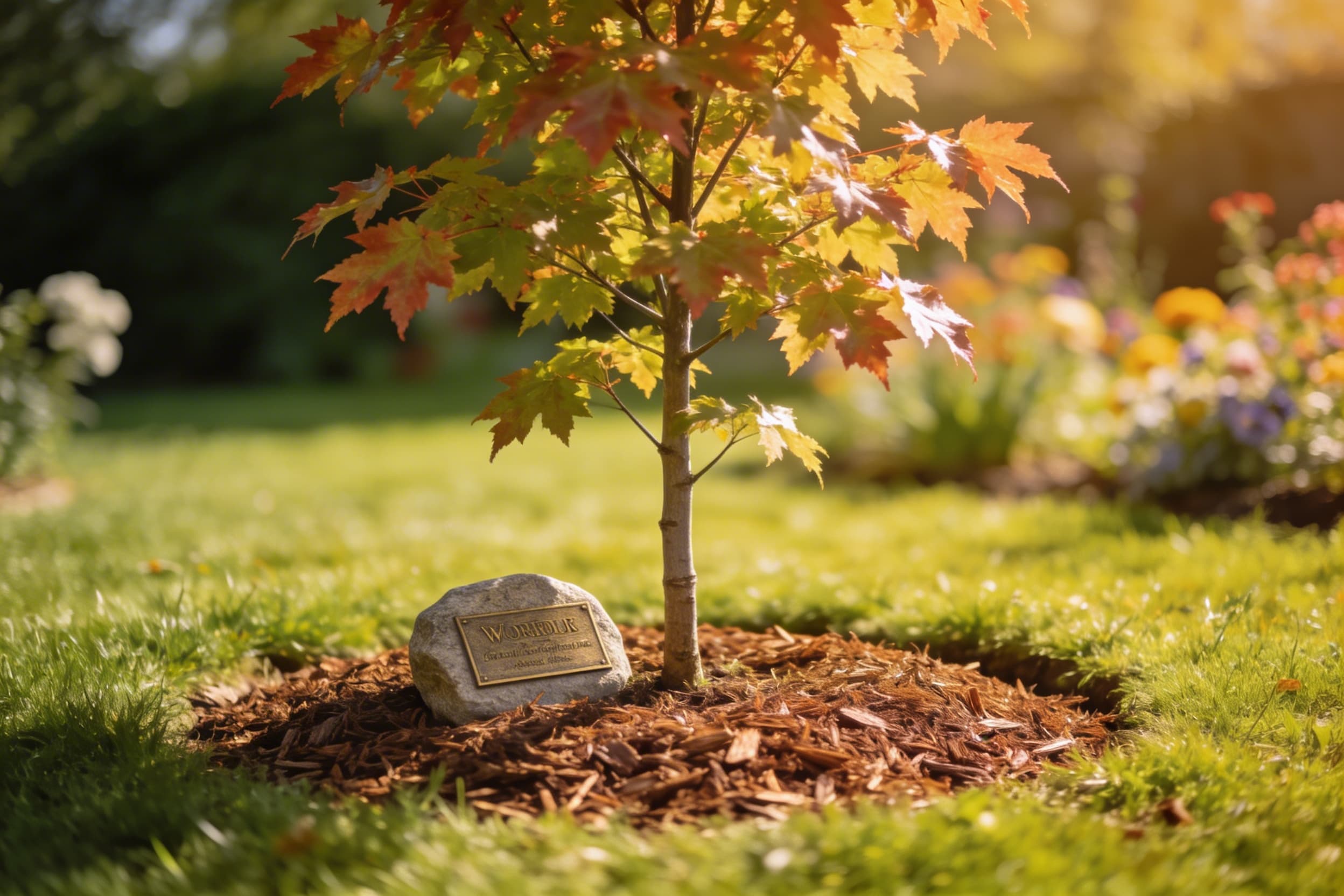
Families who plant outdoors can also pair their memorial tree with ashes alongside a cremation stone marker at the base of the tree, combining a living memorial with a permanent physical tribute.
Best Trees for Memorial Planting
The best tree for a memorial planting is one that thrives in your specific climate and growing conditions. Here are popular options by region.
Northern climates (USDA zones 3–5): Sugar maple, red oak, white birch, blue spruce, eastern white pine.
Mid-Atlantic and Southeast (zones 6–8): Dogwood, red maple, southern magnolia, eastern redbud, live oak.
Pacific Northwest (zones 7–9): Western red cedar, Douglas fir, vine maple, Pacific dogwood.
Southern and Gulf Coast (zones 8–10): Crape myrtle, bald cypress, live oak, magnolia.
When selecting a species, consider the tree's mature size, expected lifespan, and growth rate. Long-lived species like oaks and maples create multi-generational memorials, while faster-growing species like birch provide visual impact sooner but have shorter lifespans. Your local cooperative extension office or nursery can help match species to your specific soil conditions.
Environmental Benefits of Tree Burial
One of the strongest appeals of tree cremation is its environmental profile. While cremation itself produces carbon emissions and uses natural gas — a point worth understanding through a closer look at cremation environmental impact — the tree planted afterward acts as a long-term carbon sink, absorbing CO₂ from the atmosphere over decades.
A single mature tree absorbs approximately 48 pounds of carbon dioxide per year. Over a 50-year lifespan, that represents a meaningful offset against the roughly 500 pounds of CO₂ produced by a standard cremation. Tree burial also eliminates the land use, concrete, and chemical impacts associated with traditional burial — no embalming fluid, no concrete vault, no permanent ground disturbance.
For families whose environmental values are driving their end-of-life decisions, tree burial sits within a growing spectrum of options. Other approaches in this category include aquamation (water cremation), natural burial without embalming, and human composting — each with different availability, cost, and ecological profiles.
Pet Tree Burial: An Option for Animal Companions
Tree burial is not limited to human remains. Many of the same bio urn products — including The Living Urn and Bios Urn — offer pet-specific versions designed for smaller volumes of cremated ashes. Families who have lost a dog, cat, or other companion animal can plant a memorial tree using the same process. For more about how cremation works for animal companions and the memorial options available, see our guide to pet cremation tree memorials.
Frequently Asked Questions
Can you really grow a tree from human ashes?
Yes, but not from the ashes alone. Cremated remains are highly alkaline and contain concentrated minerals that can harm plant roots if applied directly. Bio urn systems like The Living Urn and Bios Urn include soil additives and buffering agents that neutralize the pH and create a balanced growing environment. The ashes integrate into the soil gradually as the biodegradable urn breaks down, supporting — rather than harming — the tree's growth.
Is tree pod burial legal?
Yes, in all 50 U.S. states. There are no federal or state laws prohibiting the burial of cremated ashes with a tree on private property. Some jurisdictions require notification or permits for burial on public land or in cemeteries. Memorial forest services handle all permitting and legal compliance as part of their package.
How long does a biodegradable urn take to decompose?
Most bio urns fully decompose within a few months to one year, depending on soil moisture, temperature, and microbial activity. The urn is designed to break down gradually, releasing the ashes into the surrounding soil in a way that does not overwhelm the tree's root system.
Can I split the ashes and use some for a tree burial?
Absolutely. Many families use a portion of the ashes for a tree burial while keeping the rest in a traditional urn, cremation jewelry, or other keepsake. The Living Urn system requires only a portion of the total remains — you do not need to use all of the ashes.
What happens if the tree dies?
If a memorial tree does not survive, you can replant at the same location. The biodegradable urn will have already decomposed, and the ashes will be integrated into the soil. Some memorial forest services include replanting guarantees. On private property, families can plant a new tree in the same enriched soil.
Choosing the Right Path Forward
Tree cremation offers a way to honor someone's life through growth rather than permanence — a memorial that changes with the seasons, provides shade, attracts songbirds, and becomes part of the landscape for generations. The process is straightforward, affordable, and available now through multiple commercially proven products.
If a tree burial feels right for your family, start by choosing a tree species that suits your climate and a location that you can access and care for long-term. Browse memorial trees designed for planting with ashes, or explore the full range of eco-friendly urn options to find the right fit.